Bastard Toadflax
Comandra umbellata
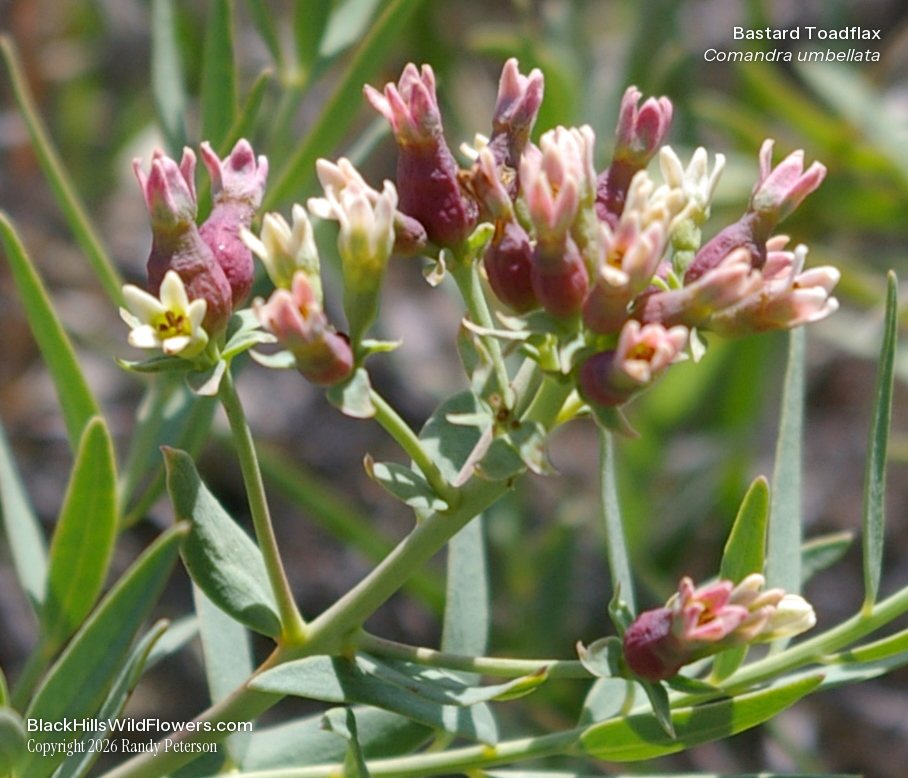
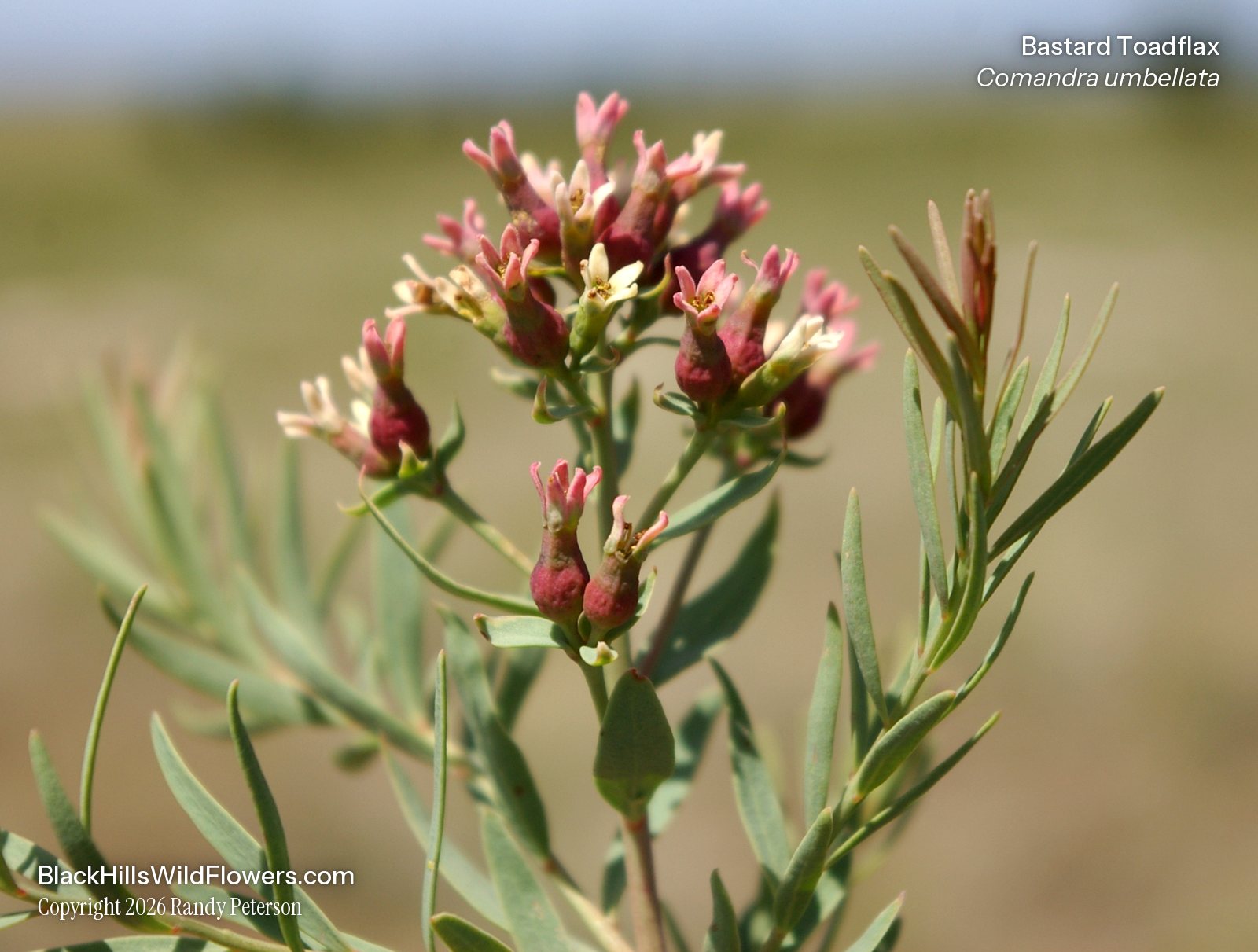
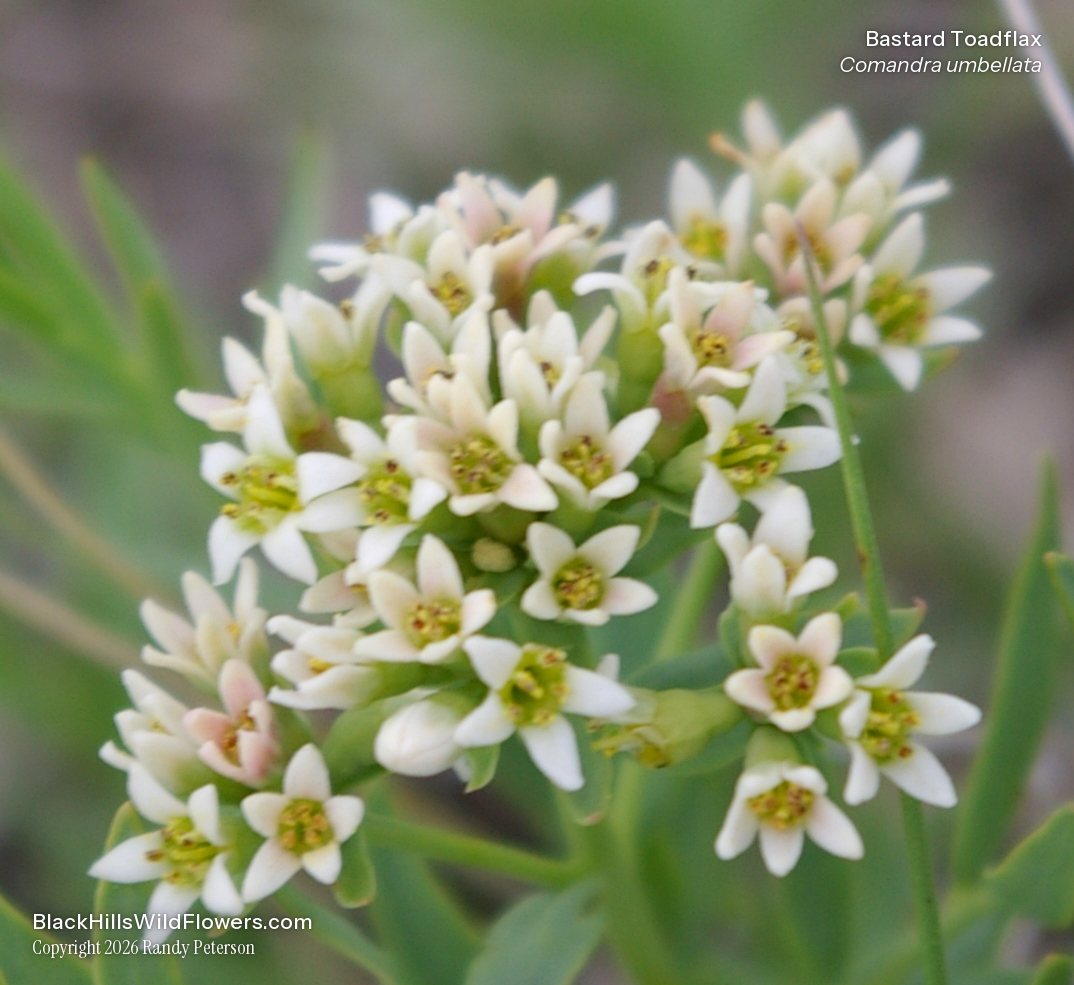
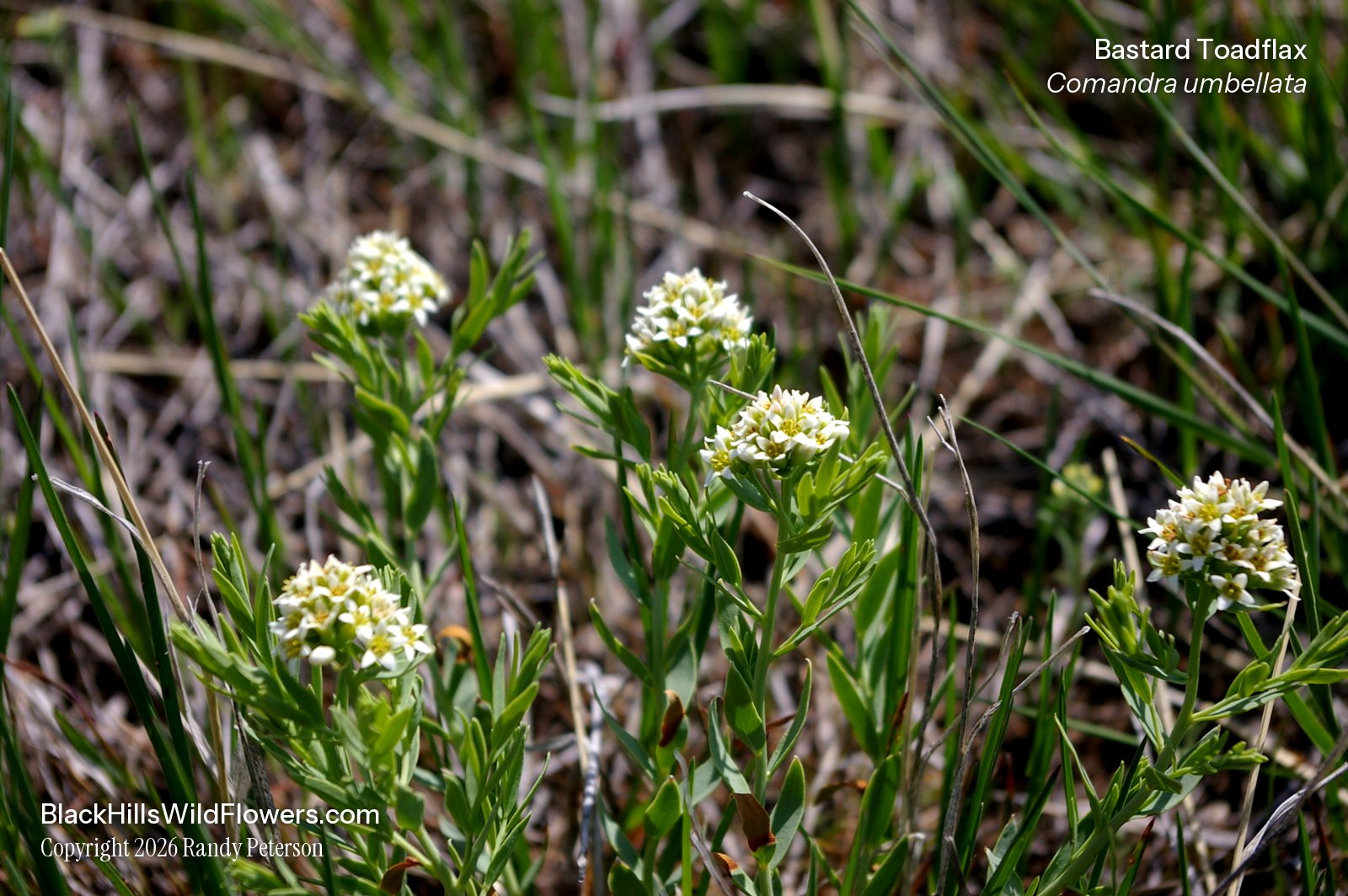
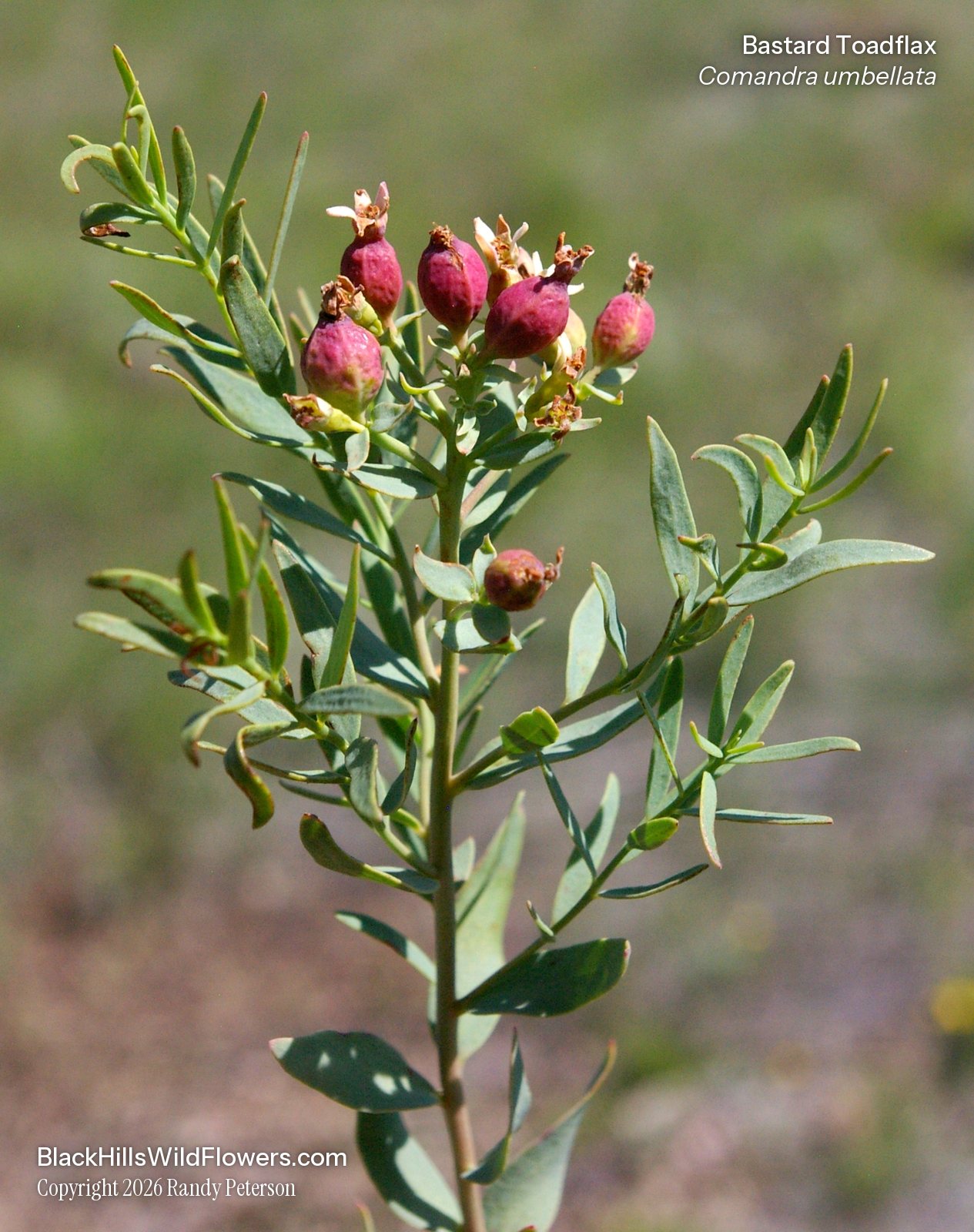
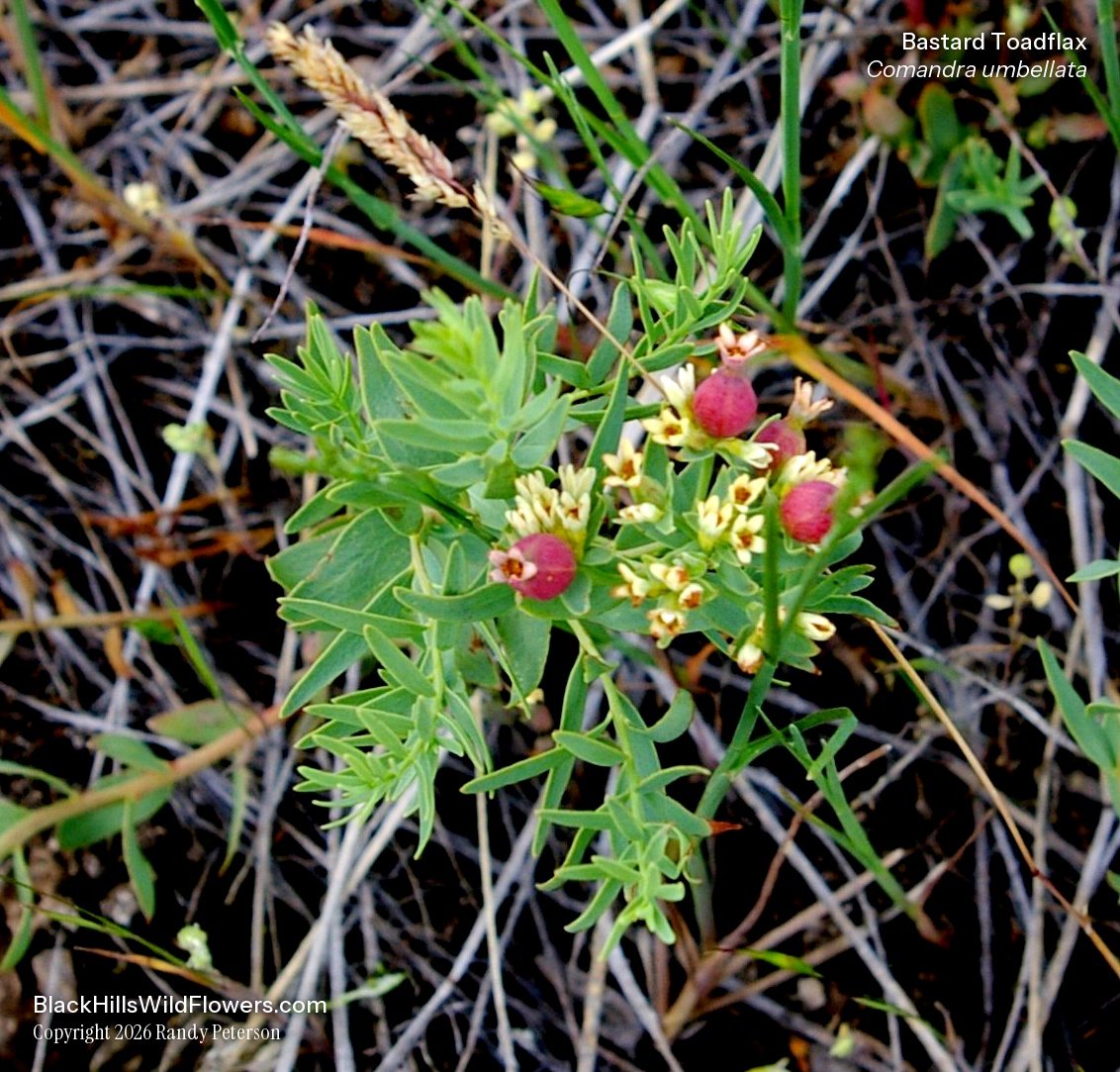
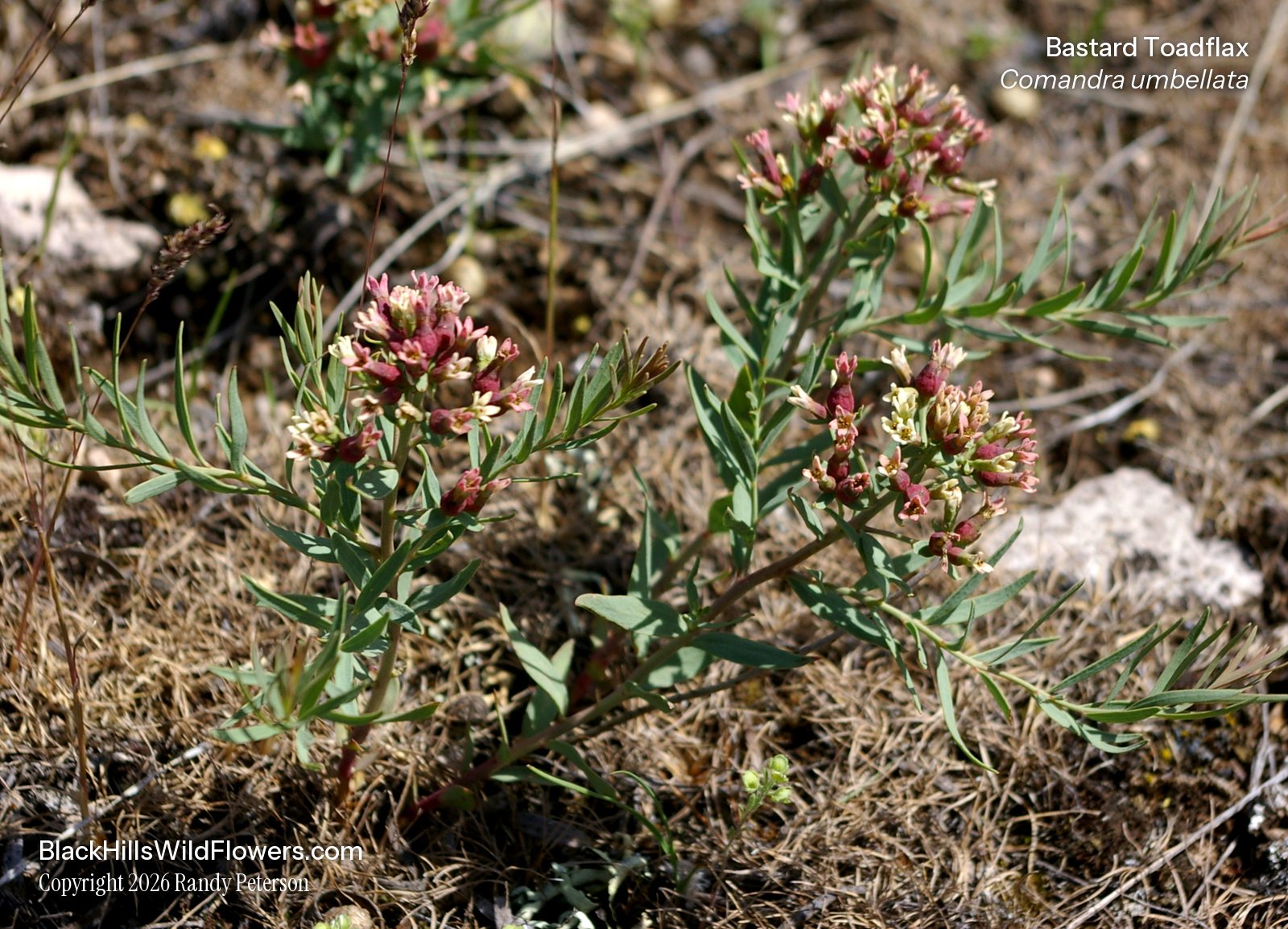
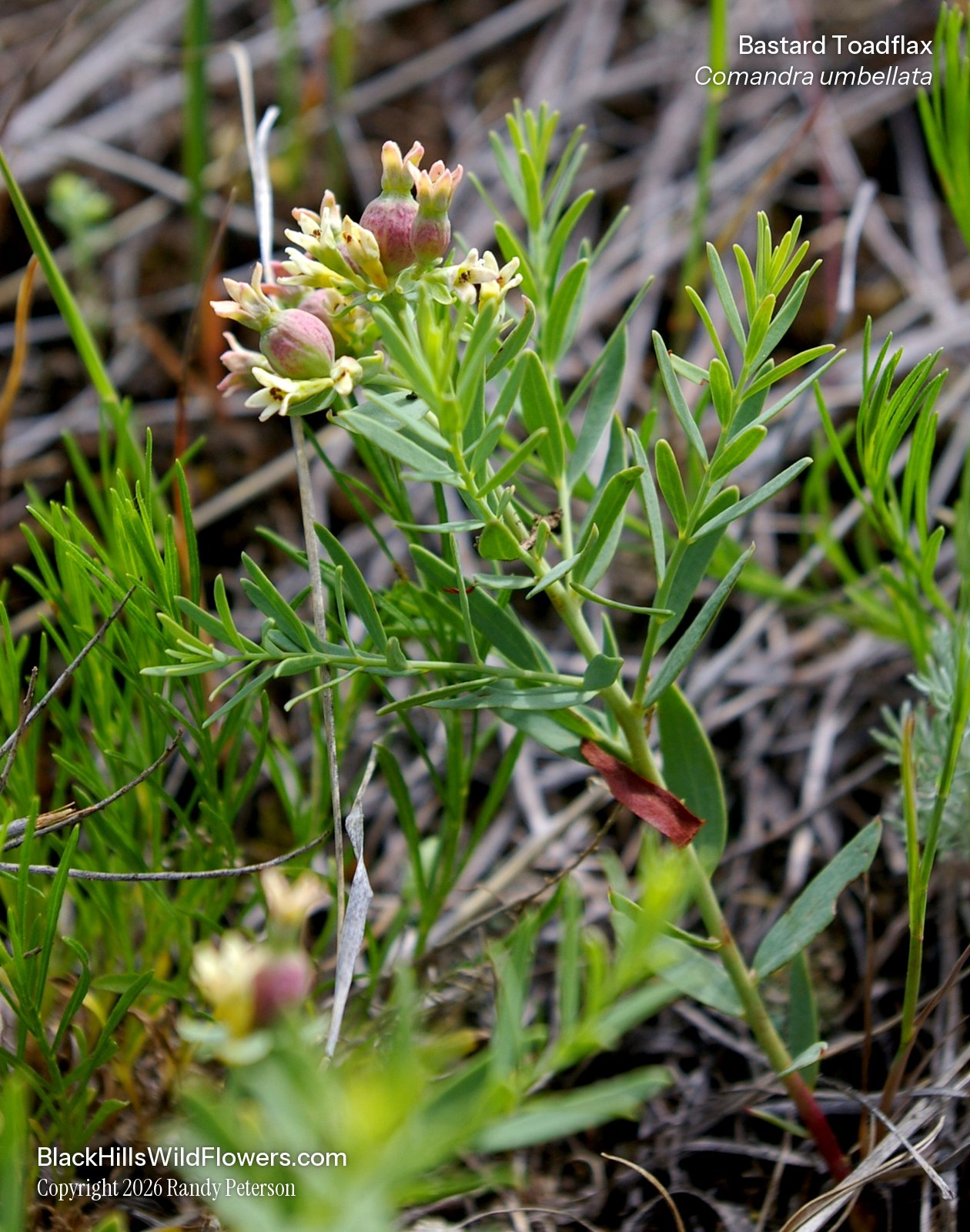
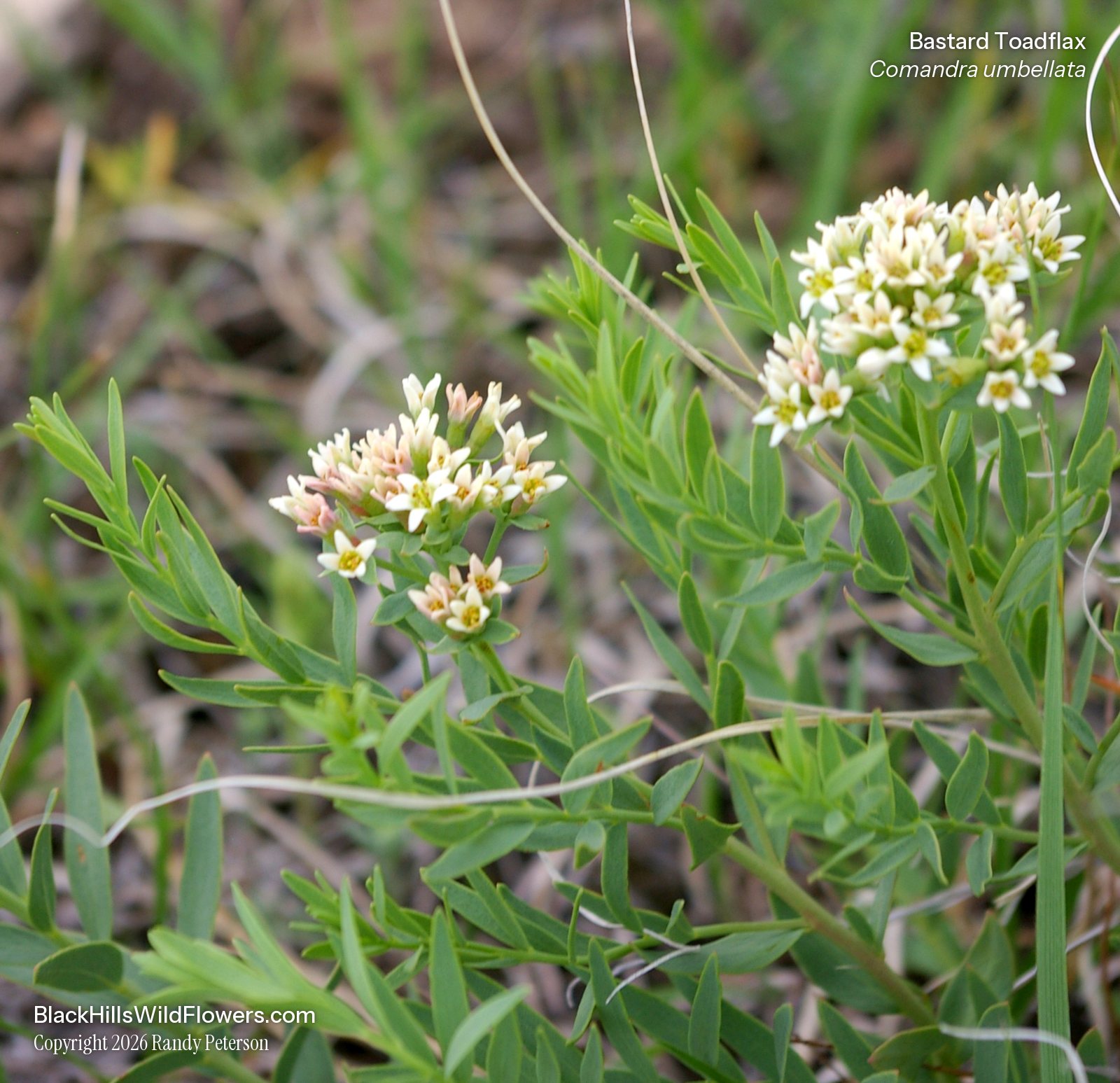
Bastard Toadflax (Comandra umbellata) is a low native perennial with flat clusters of tiny white to greenish, star-shaped flowers and smooth, untoothed leaves. On the northern plains it blooms May into July on dry prairies and in open woods, and it is partly parasitic on the roots of other plants. Photographed in the Black Hills.
| Family | Santalaceae · Sandalwood |
|---|---|
| Status | Native perennial |
| Blooms | May into July |
| Height | 8–38 cm (3–15 in) |
| Where | Dry prairies and open woods; sandy or rocky soil |
| Also called | False Toadflax, Pale Comandra |
| Synonym | Comandra pallida |
| Toxicity | The fruit may accumulate toxic levels of selenium. |
| Traditional use | A University of Alberta fact sheet records Cherokee use on cuts and sores, Meskwaki use for lung pains and colds, and Navajo use in foot baths, mouthwash and eye medicine. |
Roots, seeds & germination
Root: Long, creeping rhizomes (underground stems) form colonies. Minnesota Wildflowers says they are whitish in subsp. umbellata and blue in subsp. pallida. The roots are parasitic on neighboring plants, and the National Park Service says it can parasitize over 200 plant species.
Seed: Each fruit holds one smooth, light brown, round seed, 5–7 mm long.
Germination: Germination is poor and the way dormancy breaks isn't worked out. Seeds don't need a host to sprout, and seedlings can establish without touching a host.
How do you identify Bastard Toadflax?
Look for flat, tight clusters of tiny white to greenish flowers at the stem tops, each with five pointed lobes that form a star around a green tube and five yellow-tipped stamens. The smooth stems carry alternate, untoothed leaves that are green to gray-green. The small one-seeded fruit is round to oval, about ¼ inch long, and turns blue to brown with bits of sepal left at the tip.
When does it bloom?
May into July.
Where does it grow?
Dry prairies, open woods and sandy or rocky soil, in sun or part shade, in Minnesota. In Alberta it grows on prairie grasslands, gravelly slopes and in dry open pine woods. The Wildflower Center lists it for South Dakota and Wyoming.
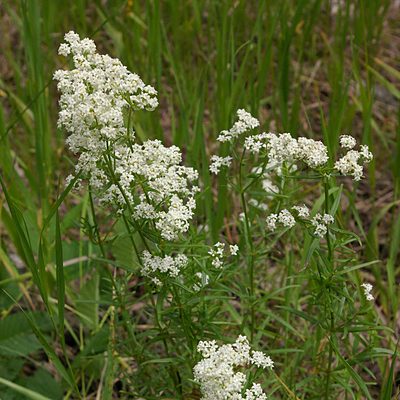
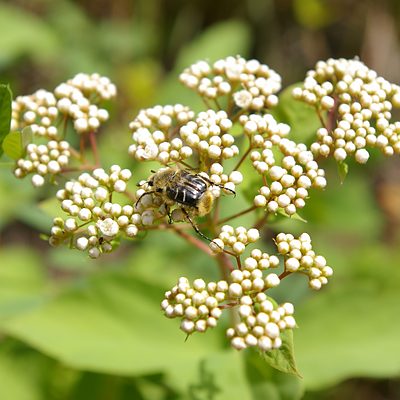
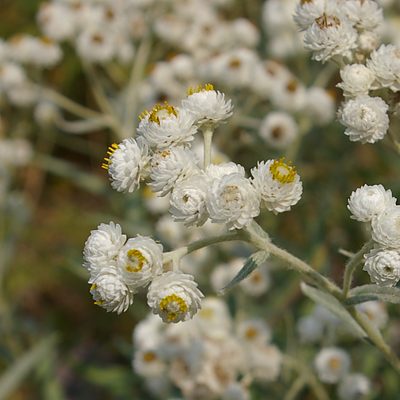
Other flowers to compare
Sources: Minnesota Wildflowers: Comandra umbellata; Lady Bird Johnson Wildflower Center: Comandra umbellata; University of Alberta, ACRRE: Comandra umbellata; Colorado Wildflowers (coloradowildbuds): Comandra umbellata ssp. pallida; Minnesota Seasons: Pale bastard toadflax; National Park Service, Arches National Park: Bastard Toadflax.