Blue Lettuce
Lactuca tatarica
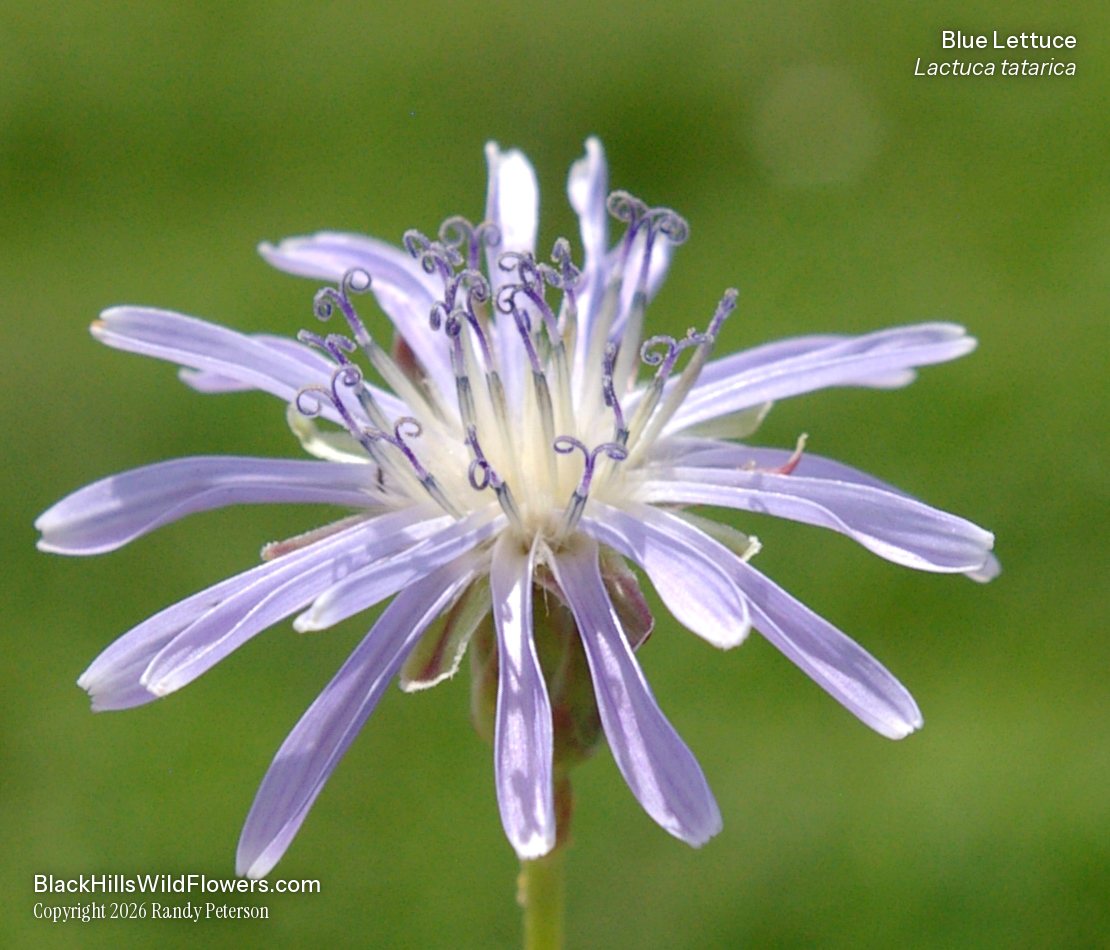
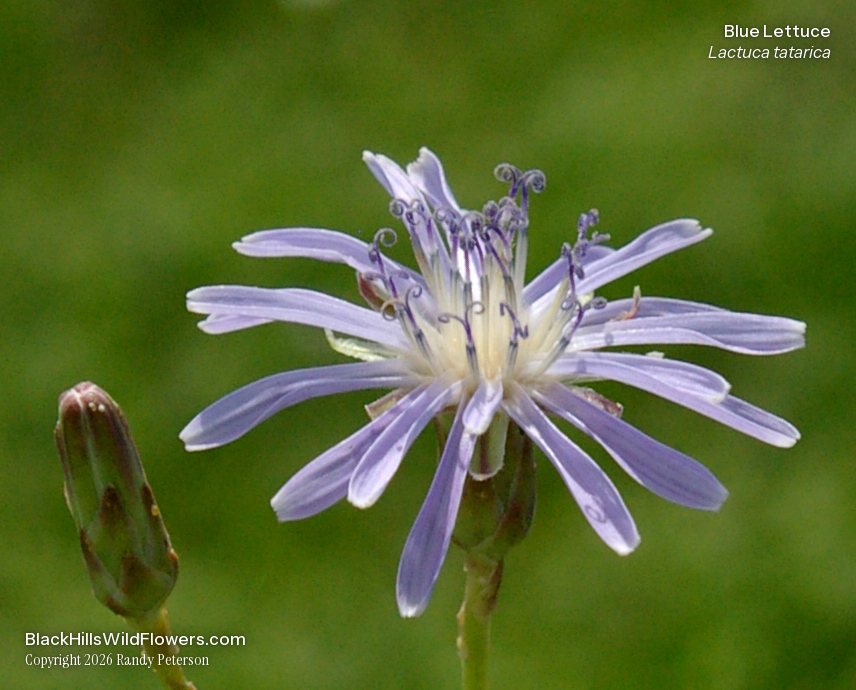
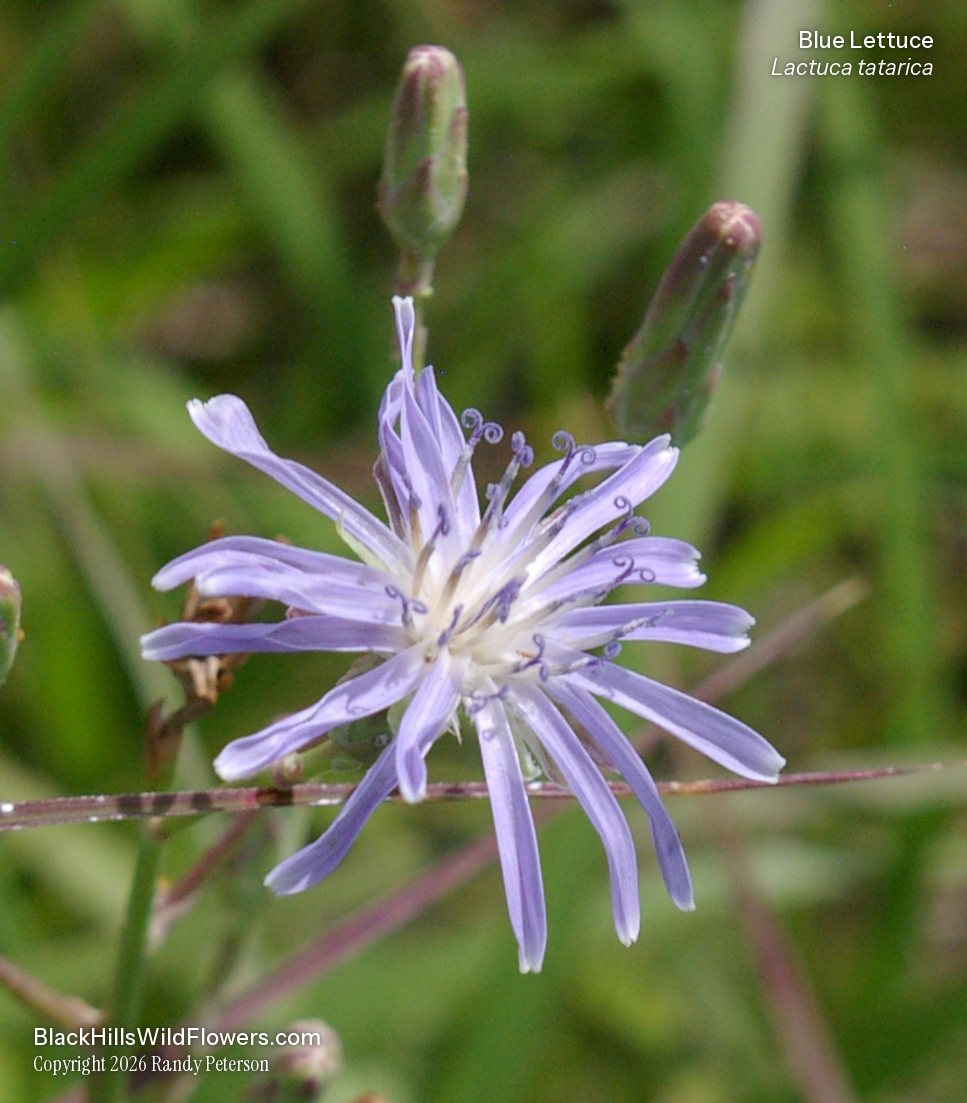
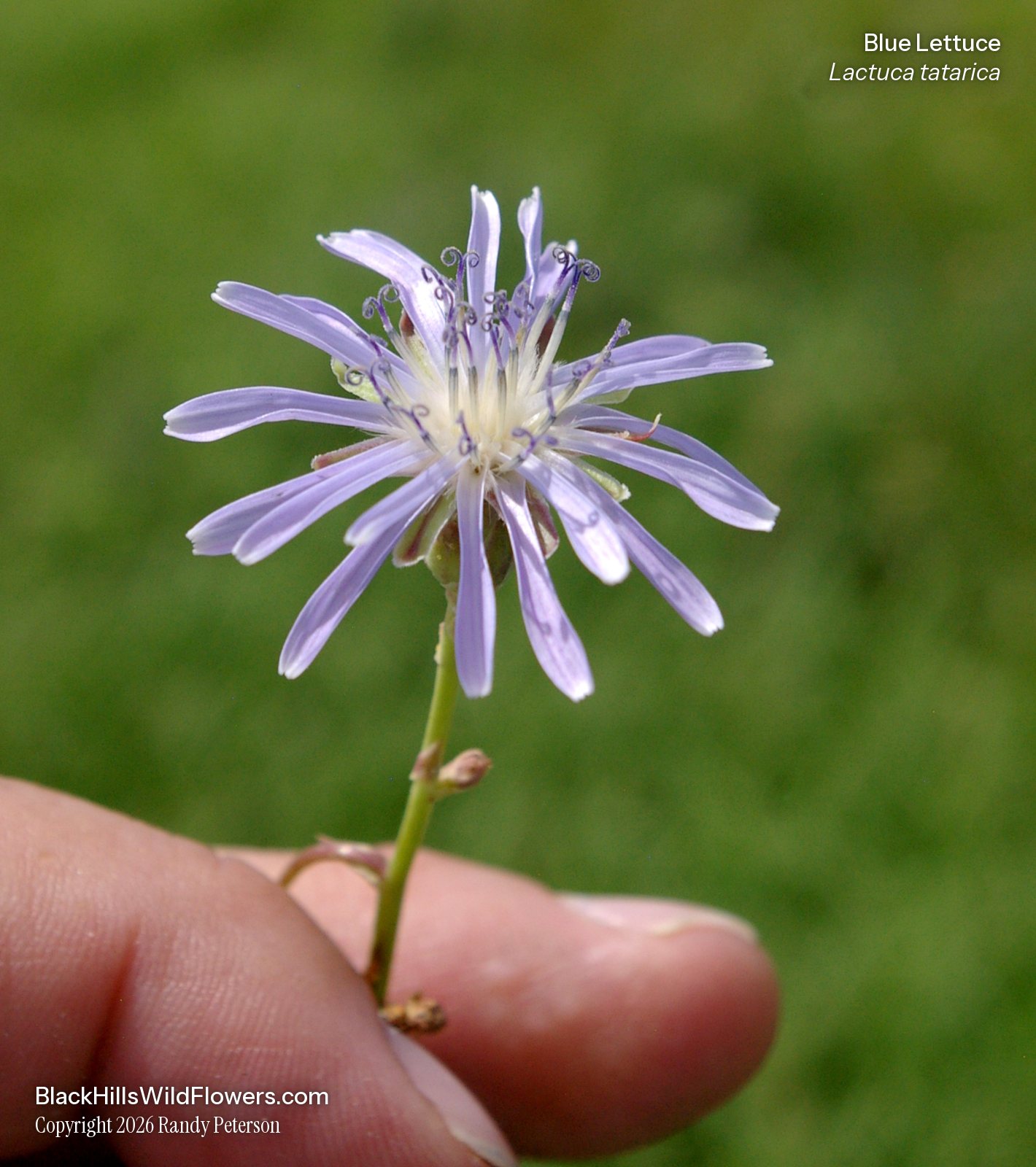
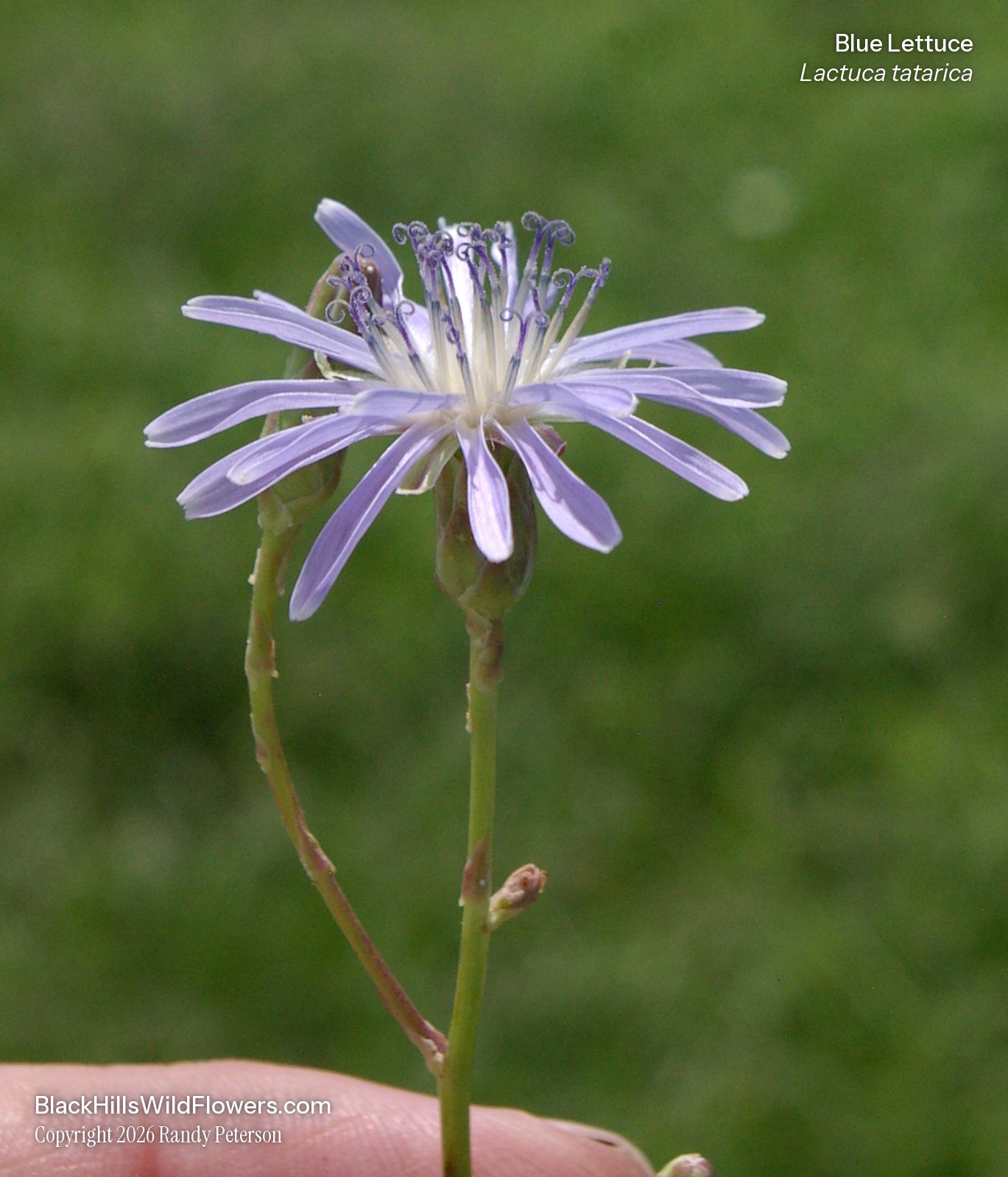
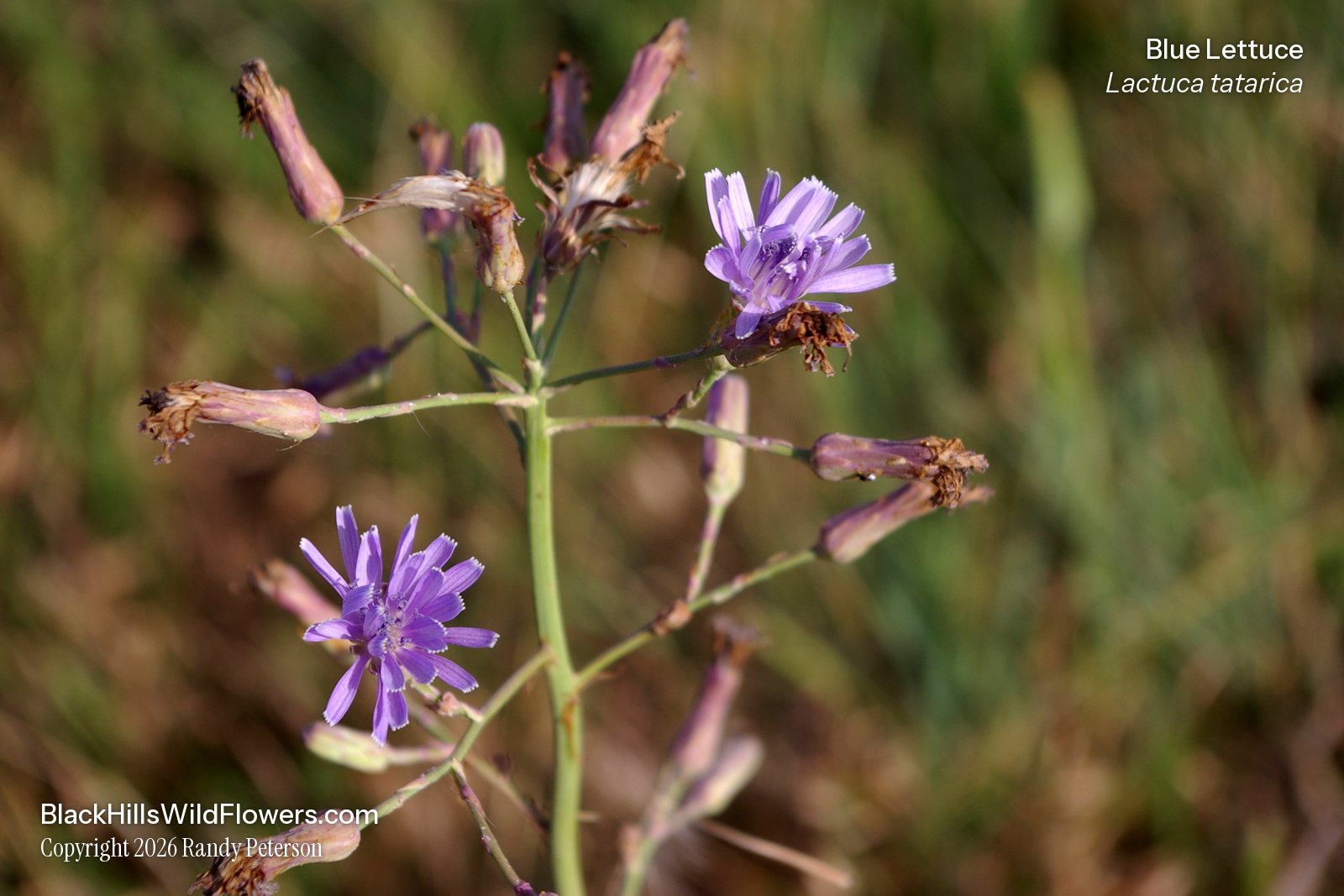
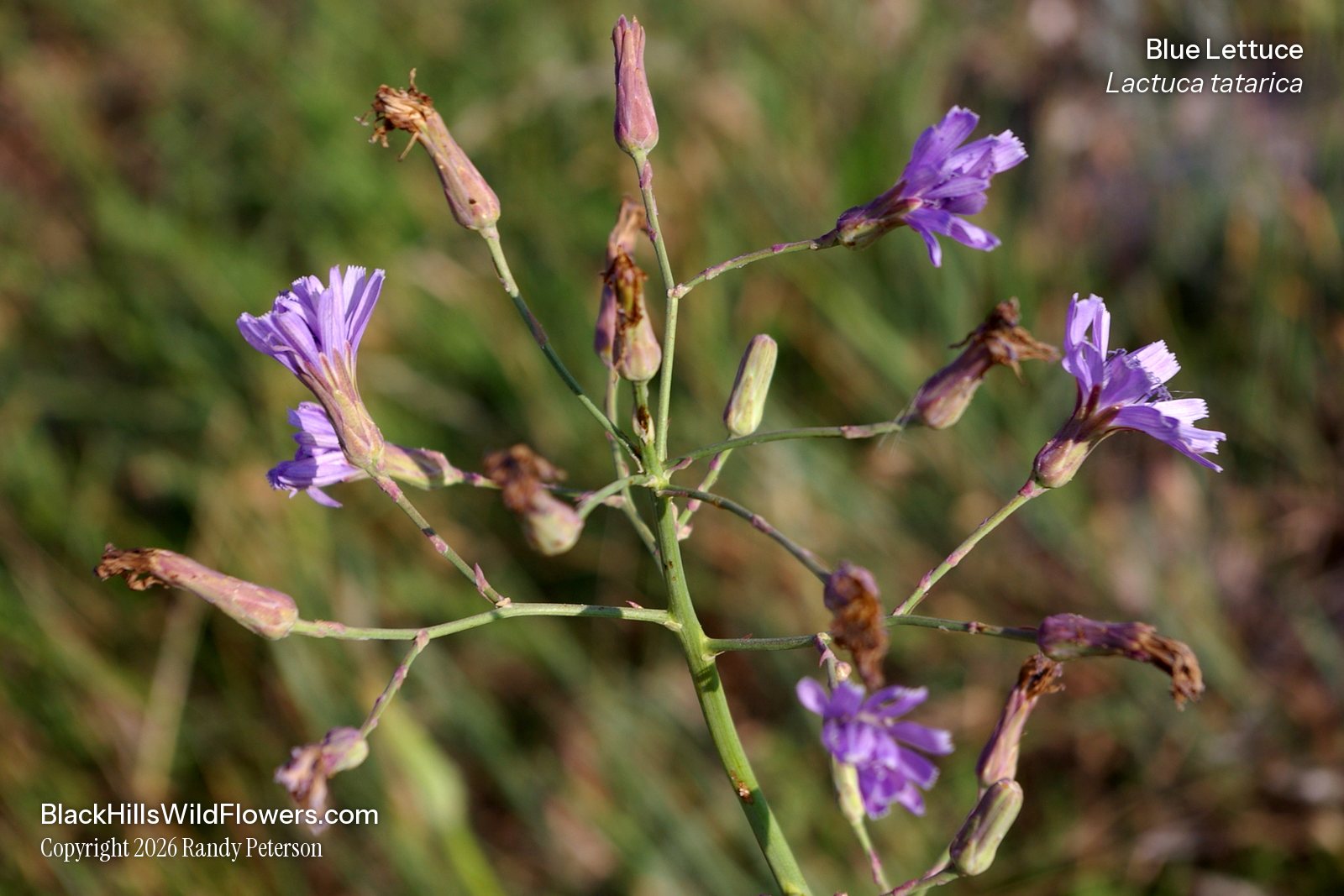
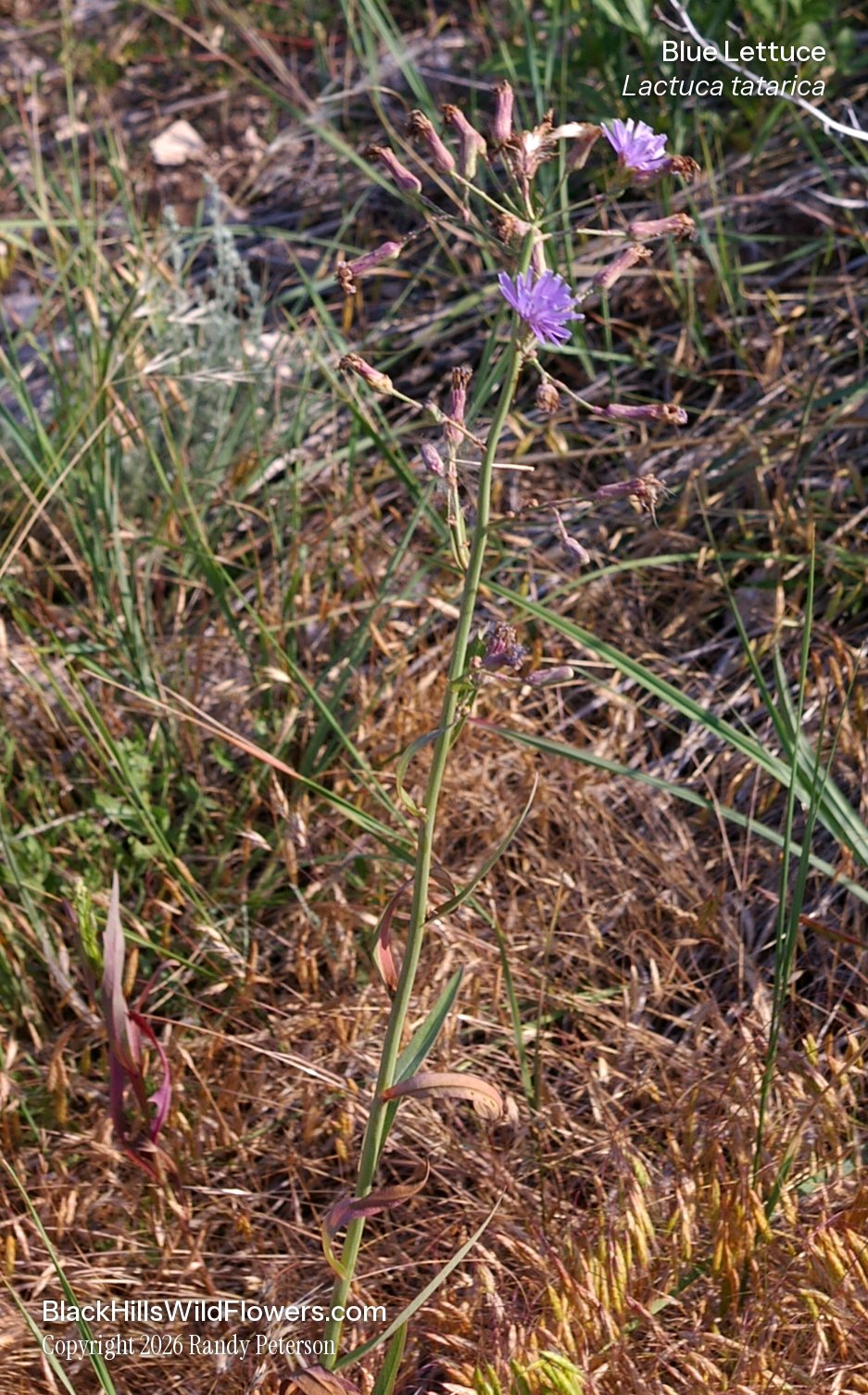
Blue Lettuce (Lactuca tatarica) is a native perennial with bluish-green leaves, milky sap and showy blue to lavender heads 2–3 cm across. It is found in every South Dakota county on prairies, in open woods and along roadsides, and it blooms June into September. Photographed in the Black Hills.
| Family | Asteraceae · Aster |
|---|---|
| Status | Native perennial |
| Blooms | June into September |
| Height | 30–100 cm (12–39 in) |
| Where | Dry to moist prairies, open woods, meadows, river valleys, roadsides and railroad edges |
| Also called | Wild Blue Lettuce, Showy Blue Lettuce, Common Blue Lettuce, Russian Blue Lettuce, Beautiful Blue Lettuce, ažúŋtka yazáŋpi (Lakota), wablúška hiŋšmá iyéčheča (Lakota) |
| Synonym | Mulgedium pulchellum, Lactuca pulchella, Lactuca tatarica subsp. pulchella, Lactuca tatarica var. pulchella, Lactuca oblongifolia |
| Traditional use | A 1998 Sitting Bull College list of culturally important Lakota plants records that the milky resin from the roots was sometimes used as a type of chewing gum. |
Roots, seeds & germination
Root: Deep roots with an extensive network of creeping rhizomes (underground stems).
Seed: A flattened, ribbed, dark brown to blackish achene (a dry one-seeded fruit), 4–6 mm long, with a tuft of fine white bristles 8–10 mm long that carries it on the wind. Ripens August to October.
Germination: Seeds don't strictly need cold treatment. Sow no deeper than ⅛ inch, because they need light to break dormancy.
How do you identify Blue Lettuce?
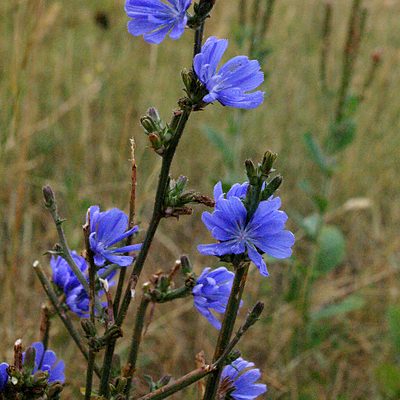
Cut stems leak a bitter milky sap. Leaves are hairless, stalkless and bluish-green; lower ones may be deeply cut with backward-pointing lobes, and upper ones are smaller and smooth-edged. The heads have only strap-shaped florets with five small teeth at the tip, in a loose, branching cluster at the top of a stem that is otherwise unbranched. Chicory has larger flowers, is taller, and carries its heads in elongated spikes rather than a branching cluster.
When does it bloom?
June into September.
Where does it grow?
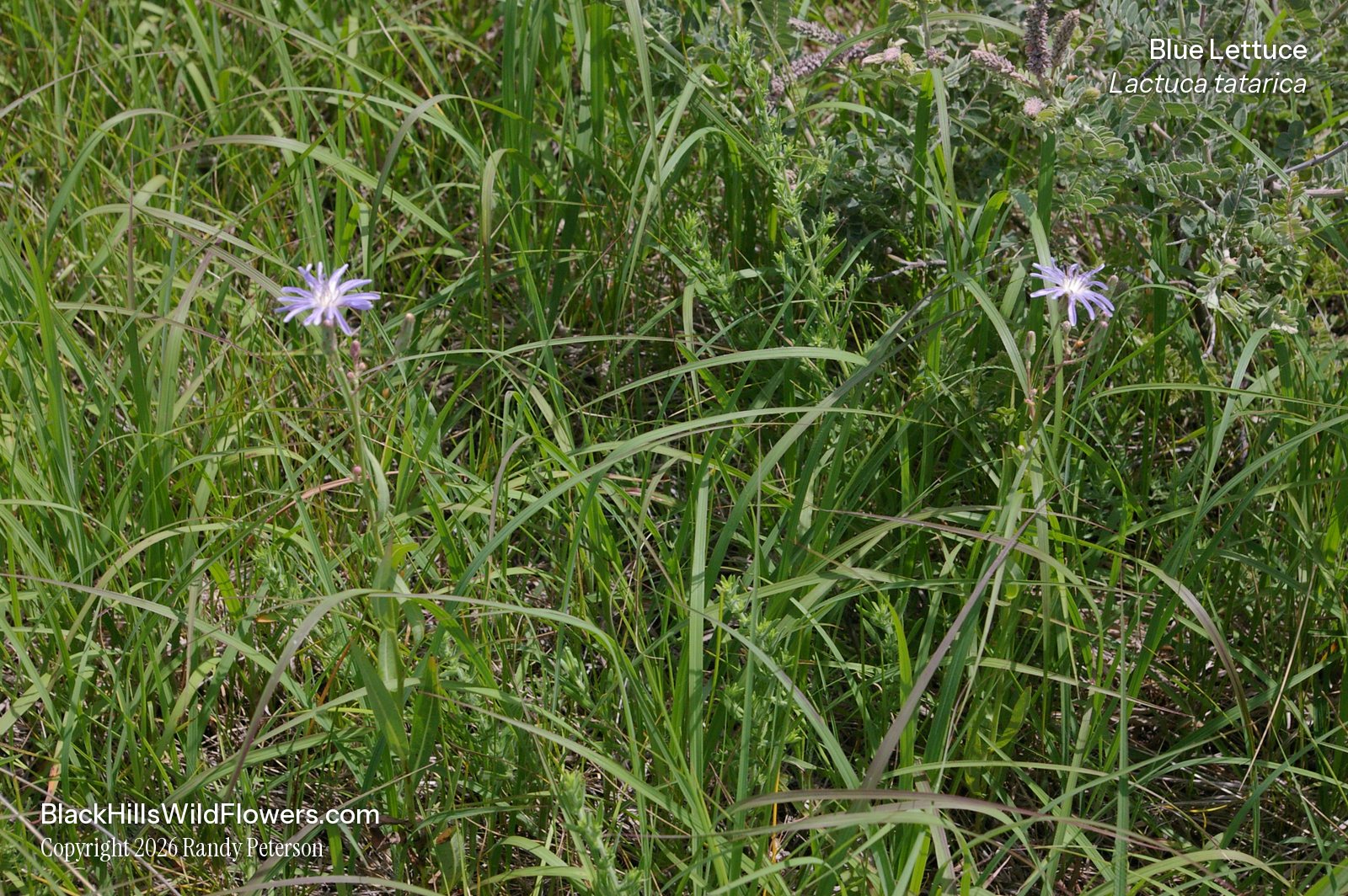
Dry-to-moist prairies, open woodlands, river valleys, coulees, pastures, and disturbed railway and roadside ground in all South Dakota counties. It spreads into colonies by underground stems. A 1986 plant survey in the Black Hills recorded it under the older name Lactuca oblongifolia.
Other flowers to compare
Sources: SDSU Open PRAIRIE: Lactuca pulchella (R. Neil Reese); Minnesota Wildflowers: Mulgedium pulchellum (Showy Blue Lettuce); New York Botanical Garden, Gleason and Cronquist Manual treatment: Lactuca pulchella; Culturally Important Plants of the Lakota (Black Elk and Flying By, Sitting Bull College, 1998), filed with the South Dakota PUC; A Survey of the Vegetation of Jewel Cave National Monument, with vascular plant checklist (Marriott and Hartman, 1986).