Bachelor's Button
Centaurea cyanus
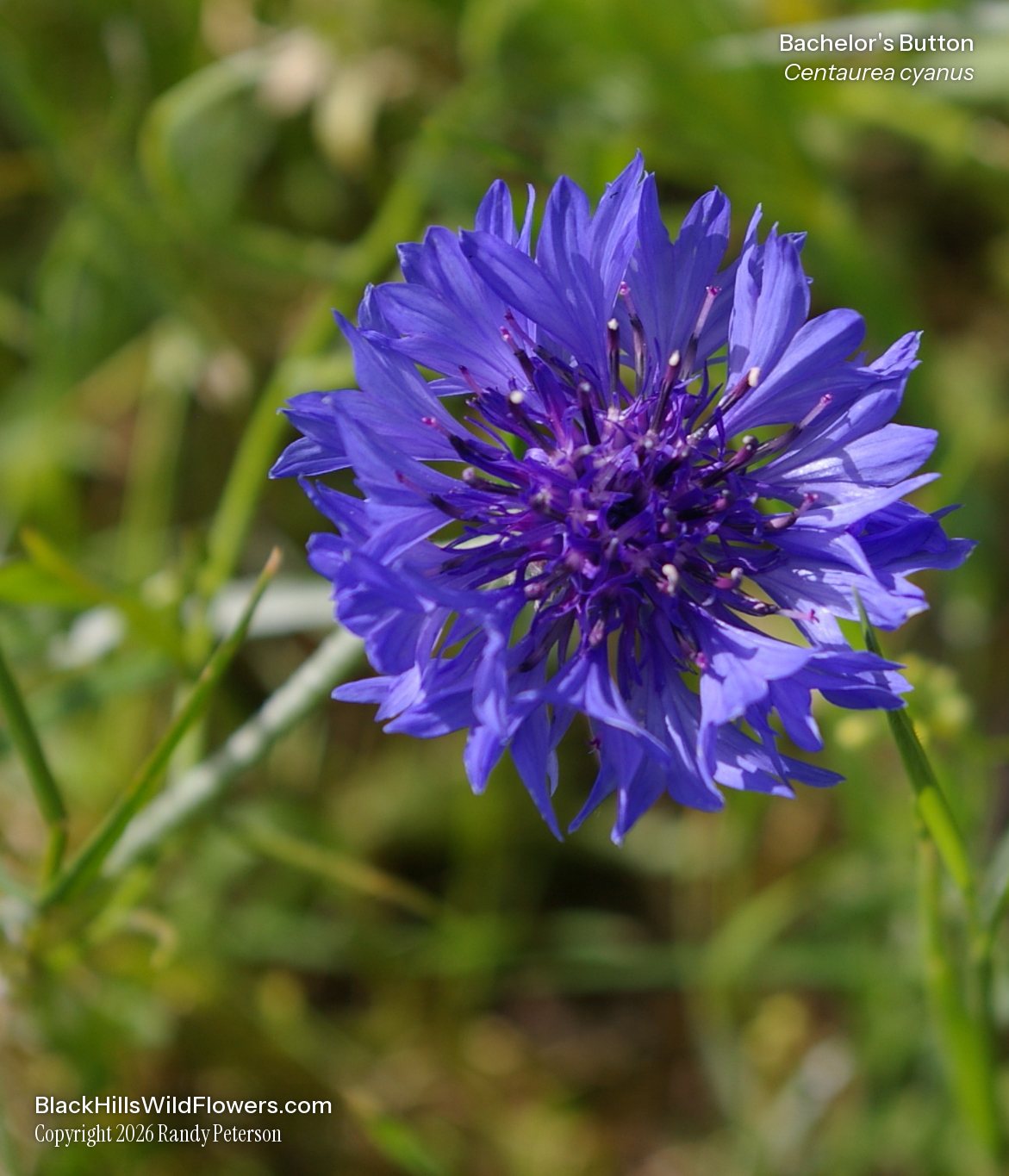
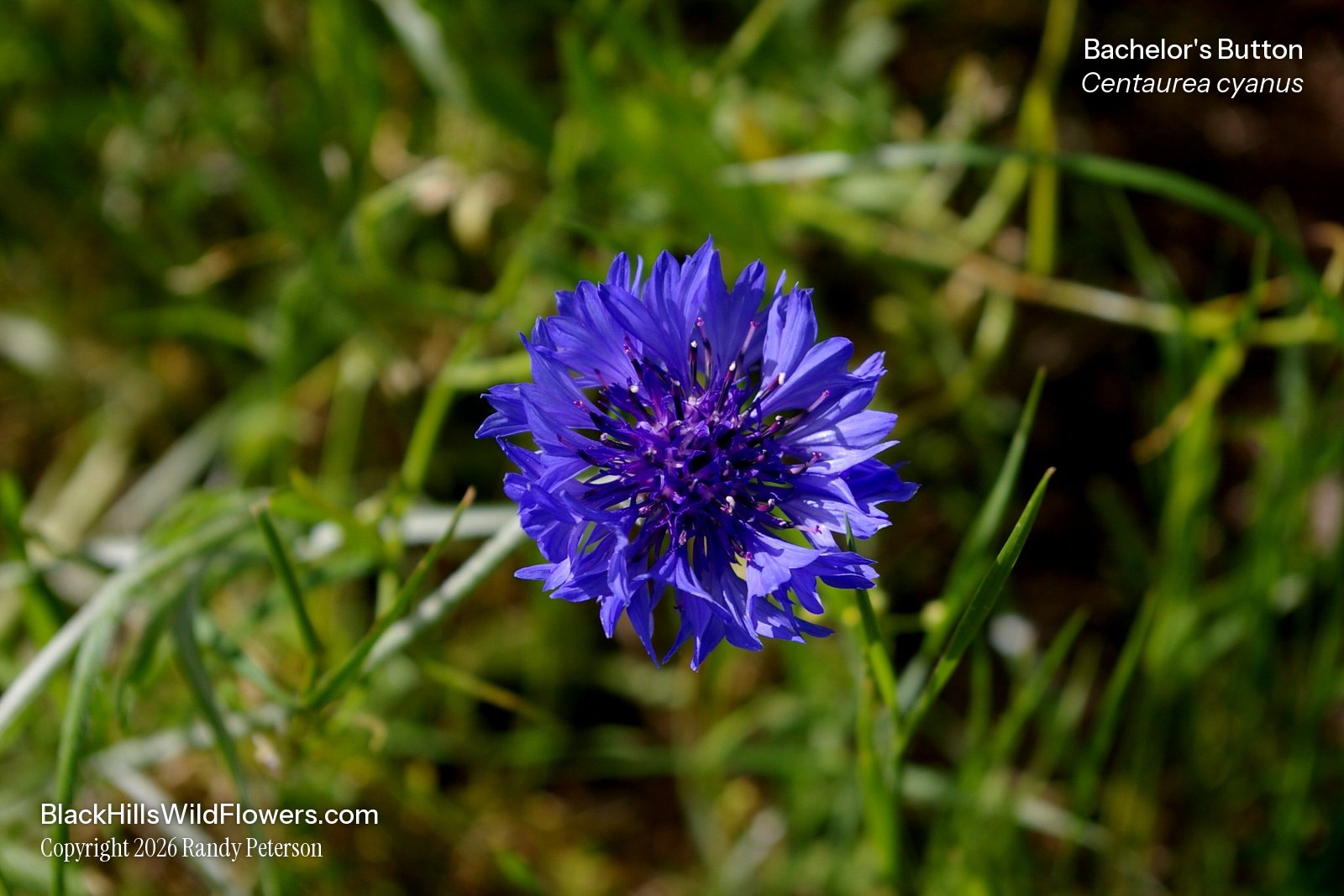
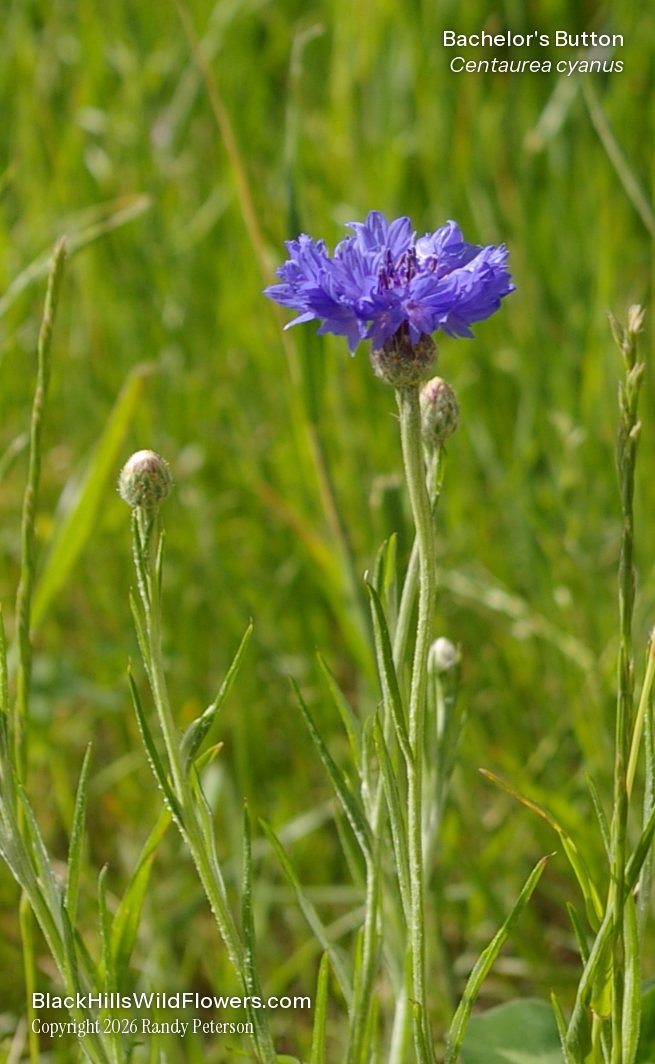
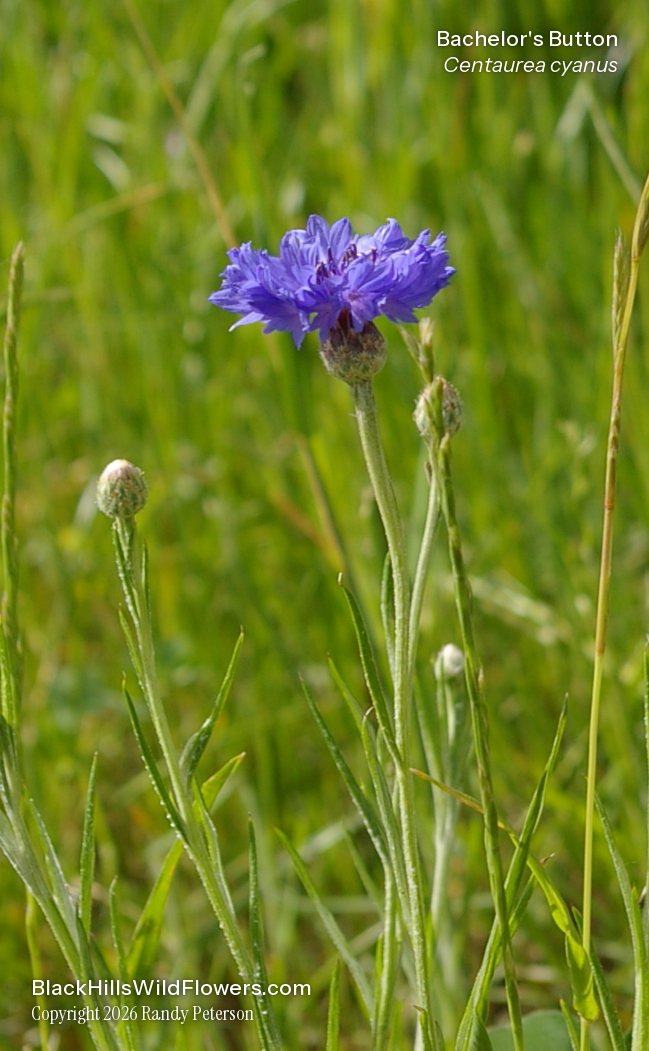
Bachelor's Button (Centaurea cyanus), also called cornflower, is an introduced annual garden flower with showy blue heads on slender, woolly stems. It escapes to roadsides, fields and other disturbed ground, and in nearby Minnesota it blooms June into September. Photographed in the Black Hills.
| Family | Asteraceae · Aster |
|---|---|
| Status | Introduced annual |
| Blooms | June into September |
| Height | 20–100 cm (8–40 in) |
| Where | Roadsides, fields, waste places and other disturbed soil |
| Also called | Cornflower, Bluebottle, Garden Knapweed, Garden Cornflower |
Roots, seeds & germination
Seed: An oblong seed 4–5 mm long, finely hairy and straw-colored when ripe, with a tuft of short, stiff bristles at the tip.
How do you identify Bachelor's Button?
Look for one head at each branch tip, up to about 1¼ inches across, with enlarged outer florets that are usually blue but can be purple, pink or white. Stems and narrow leaves carry matted white hairs, and the bracts under the head have a narrow, finely toothed fringe near the tip.
When does it bloom?
June into September.
Where does it grow?
Disturbed soil in part shade to sun: roadsides, fields, shores and gardens. It is commonly included in "wildflower" seed mixes and occasionally escapes from cultivation. A Kansas guide says it appears sporadically and does not persist long.
Other flowers to compare
Sources: Minnesota Wildflowers: Centaurea cyanus (Cornflower); Kansas Wildflowers and Grasses: Bachelor's Button; New York Botanical Garden, Gleason and Cronquist Manual treatment: Centaurea cyanus; NPSpecies, National Park Service: Centaurea cyanus; Plants of the World Online, Kew: Cyanus segetum.