Chicory
Cichorium intybus
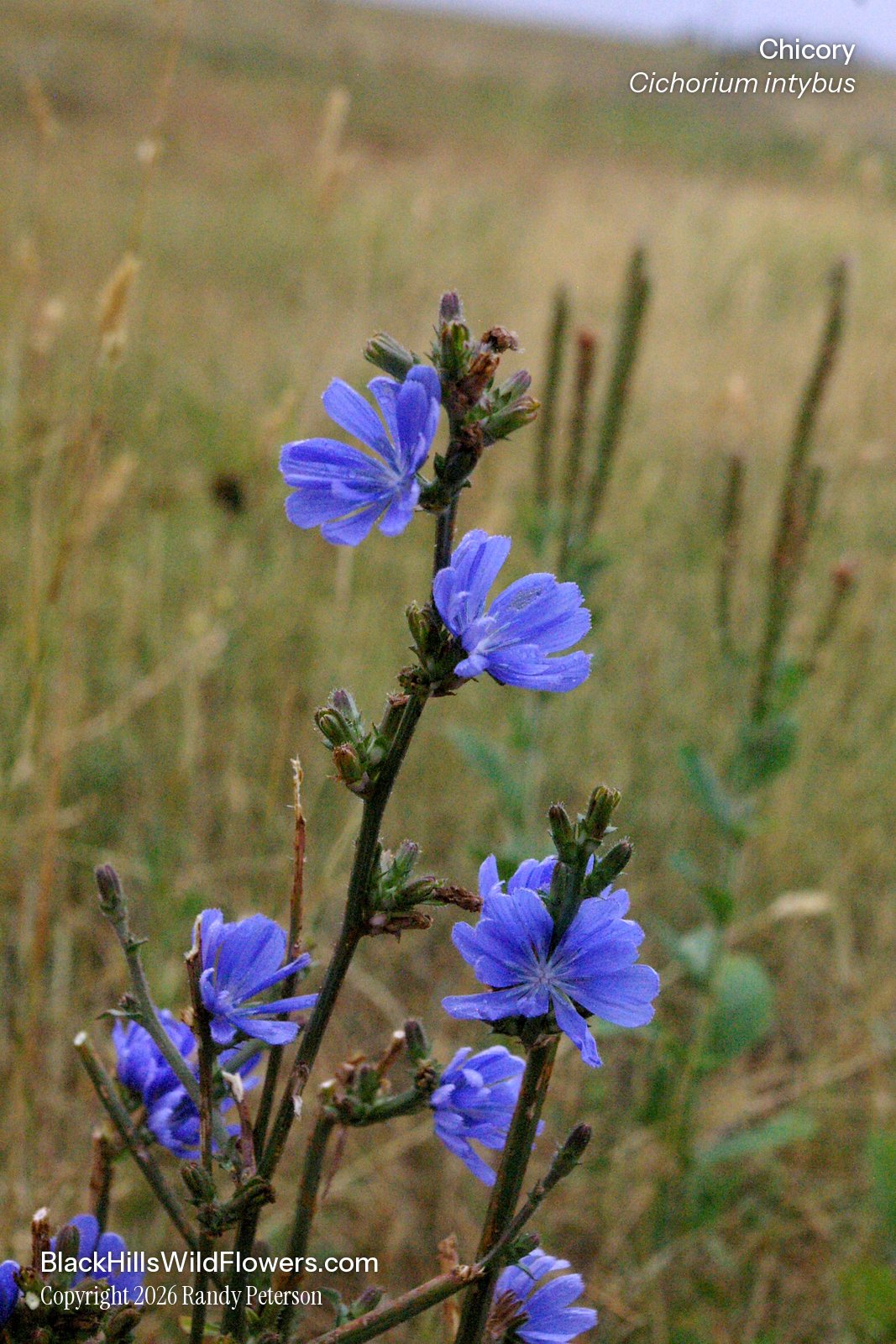
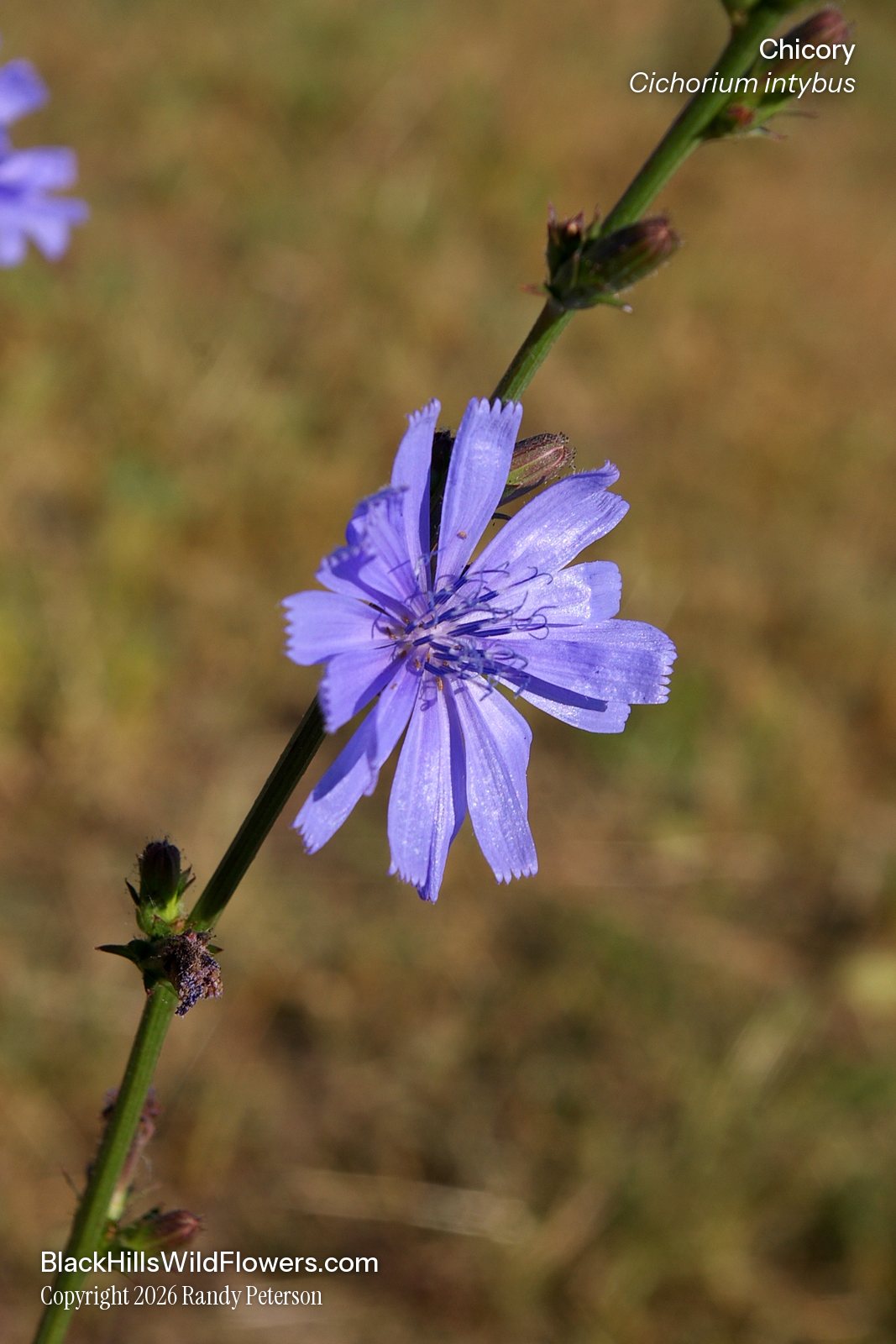
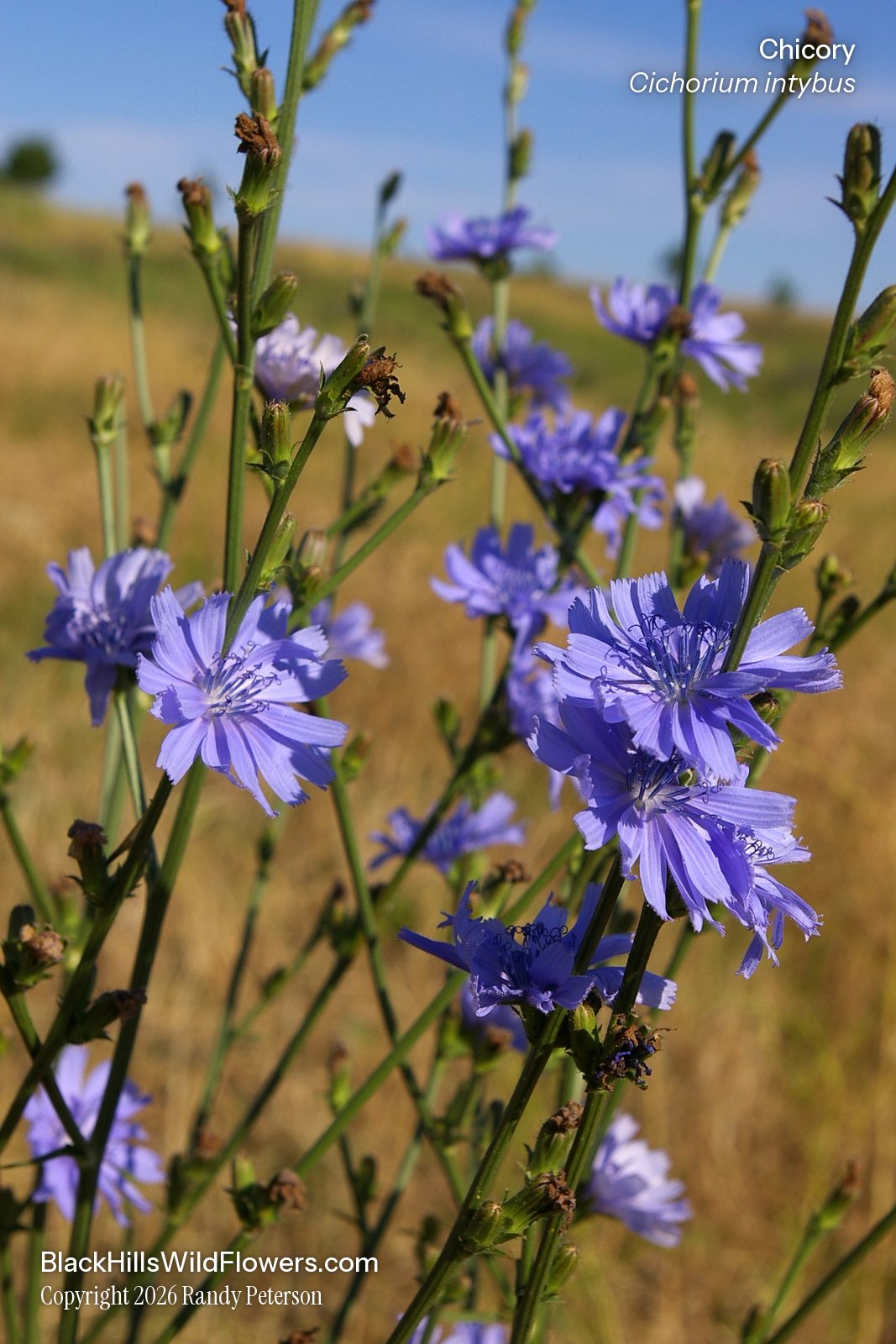
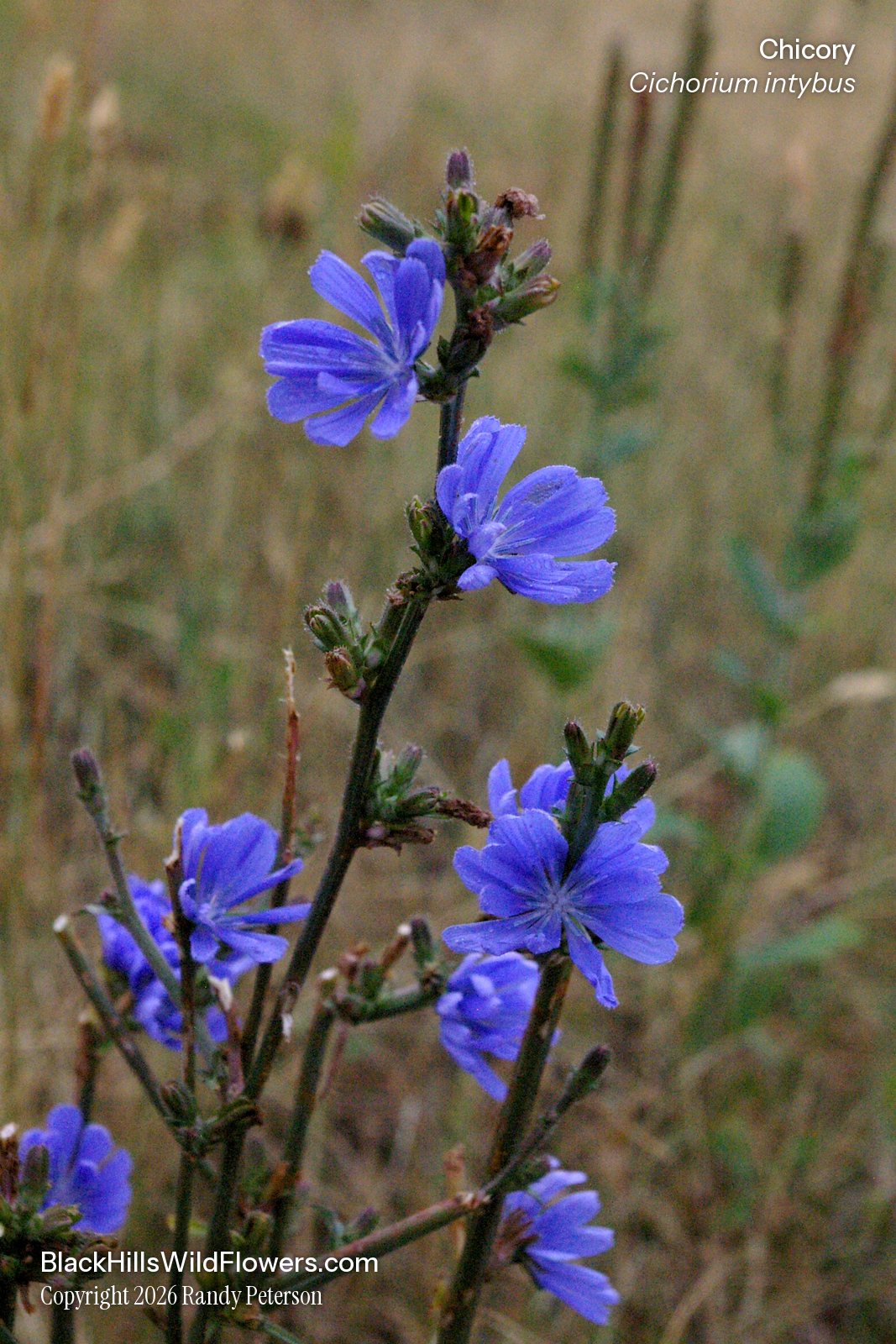
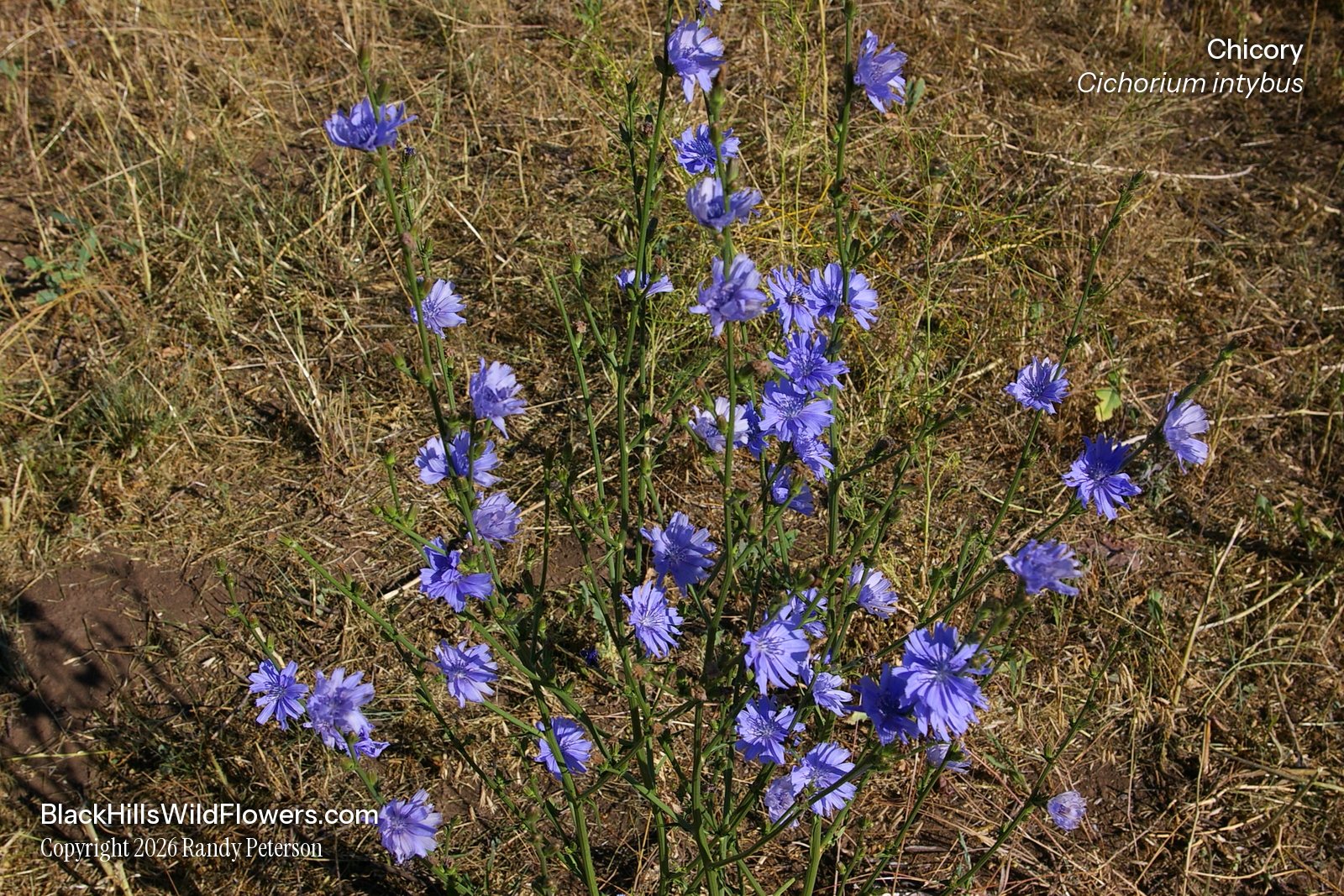
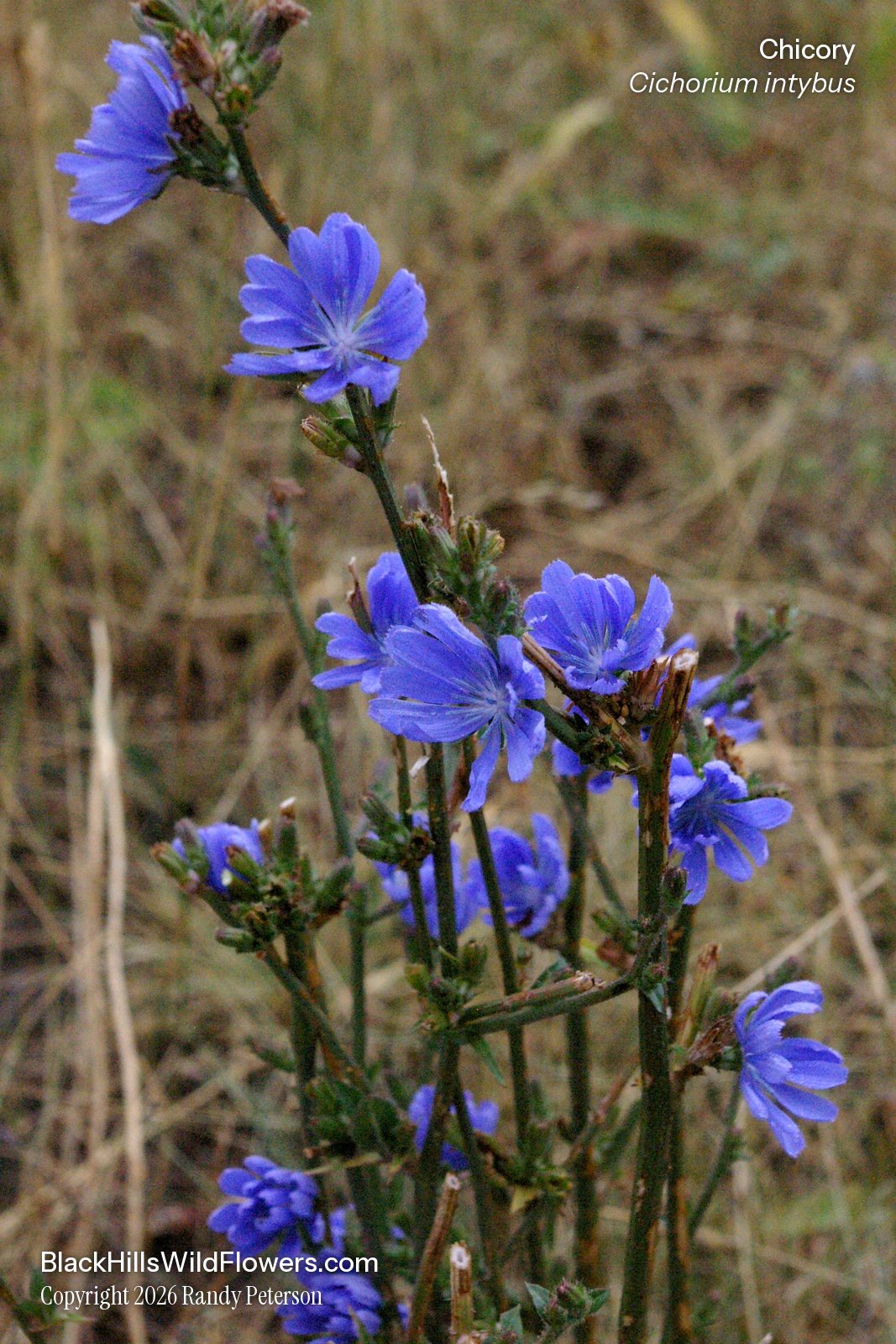
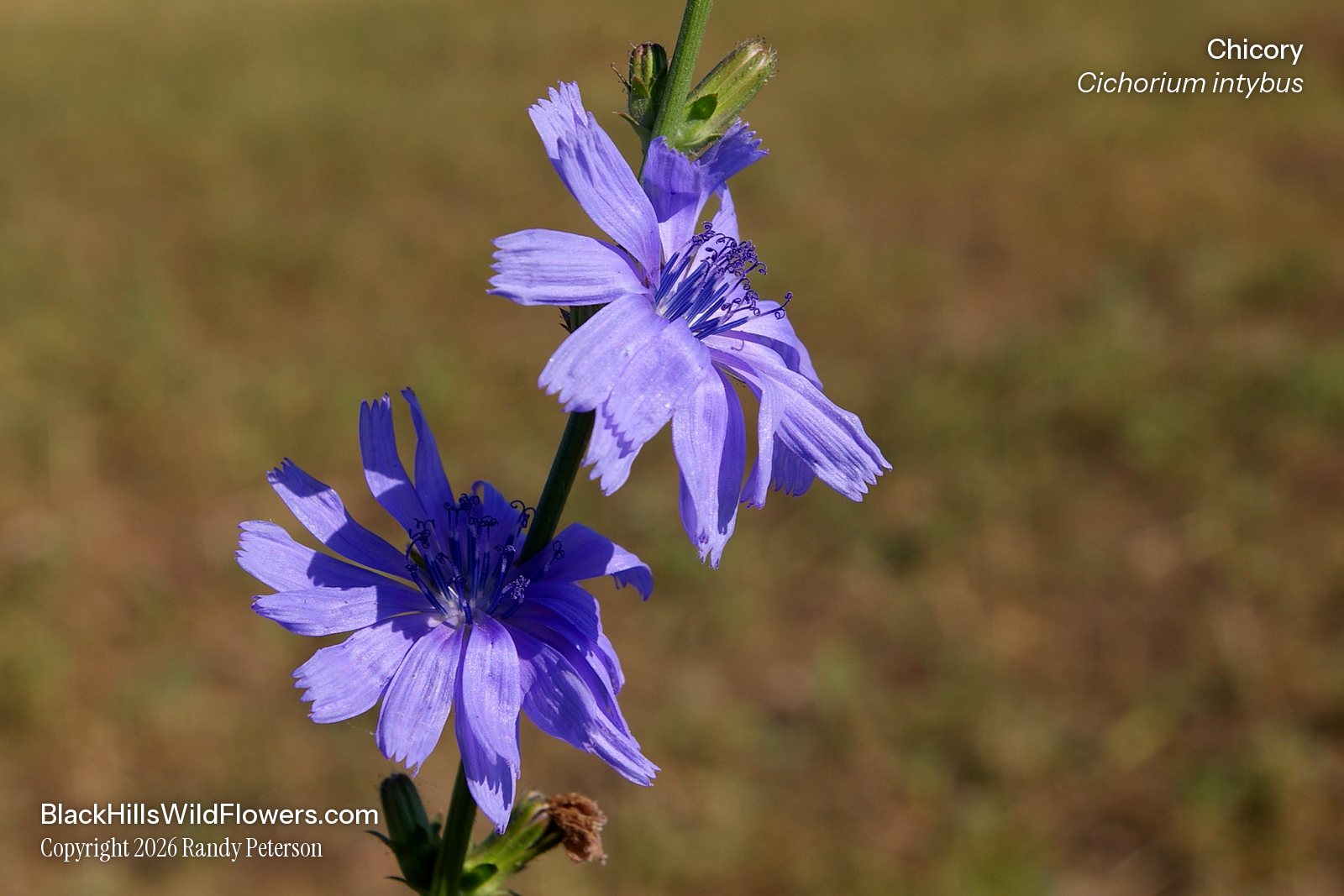
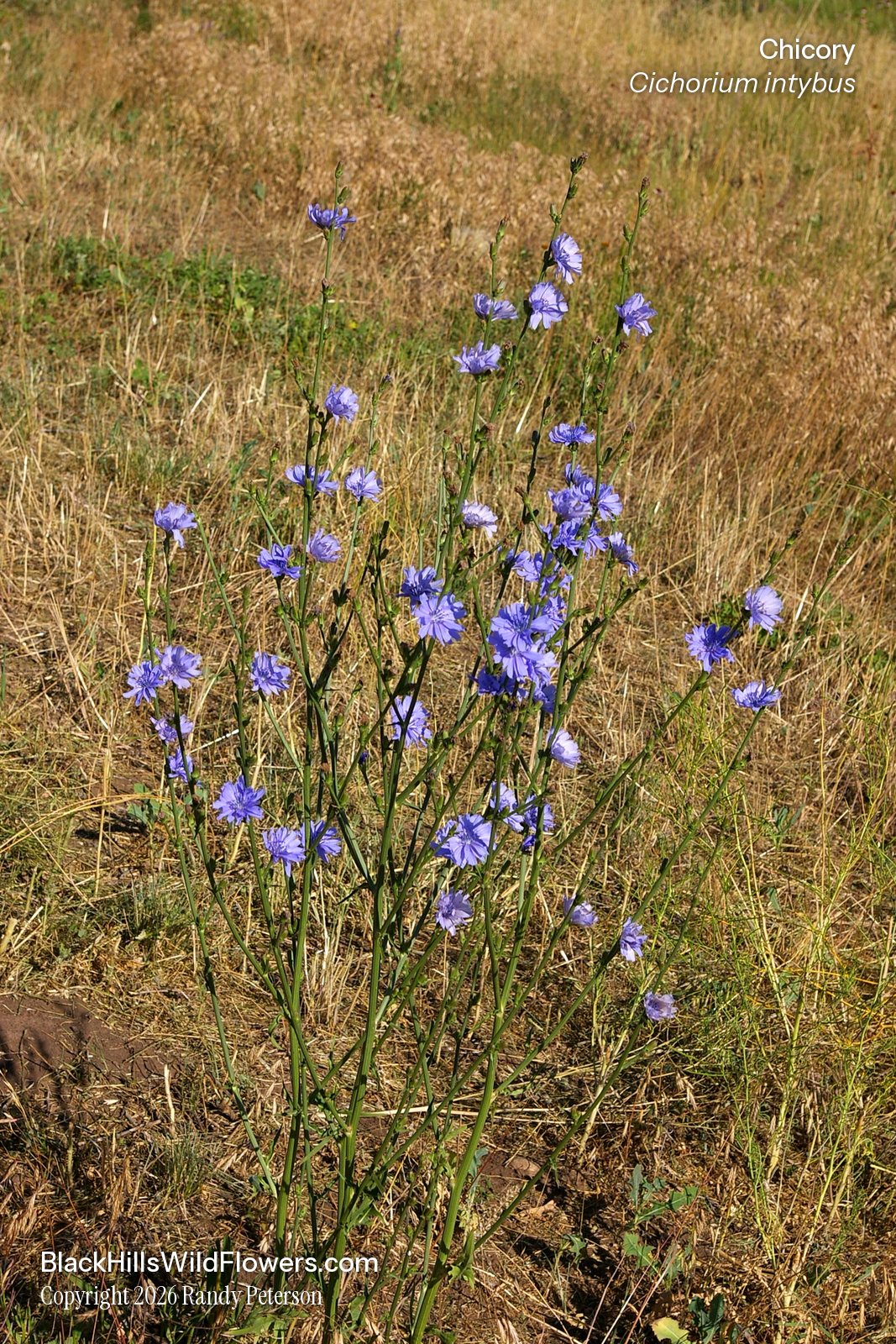
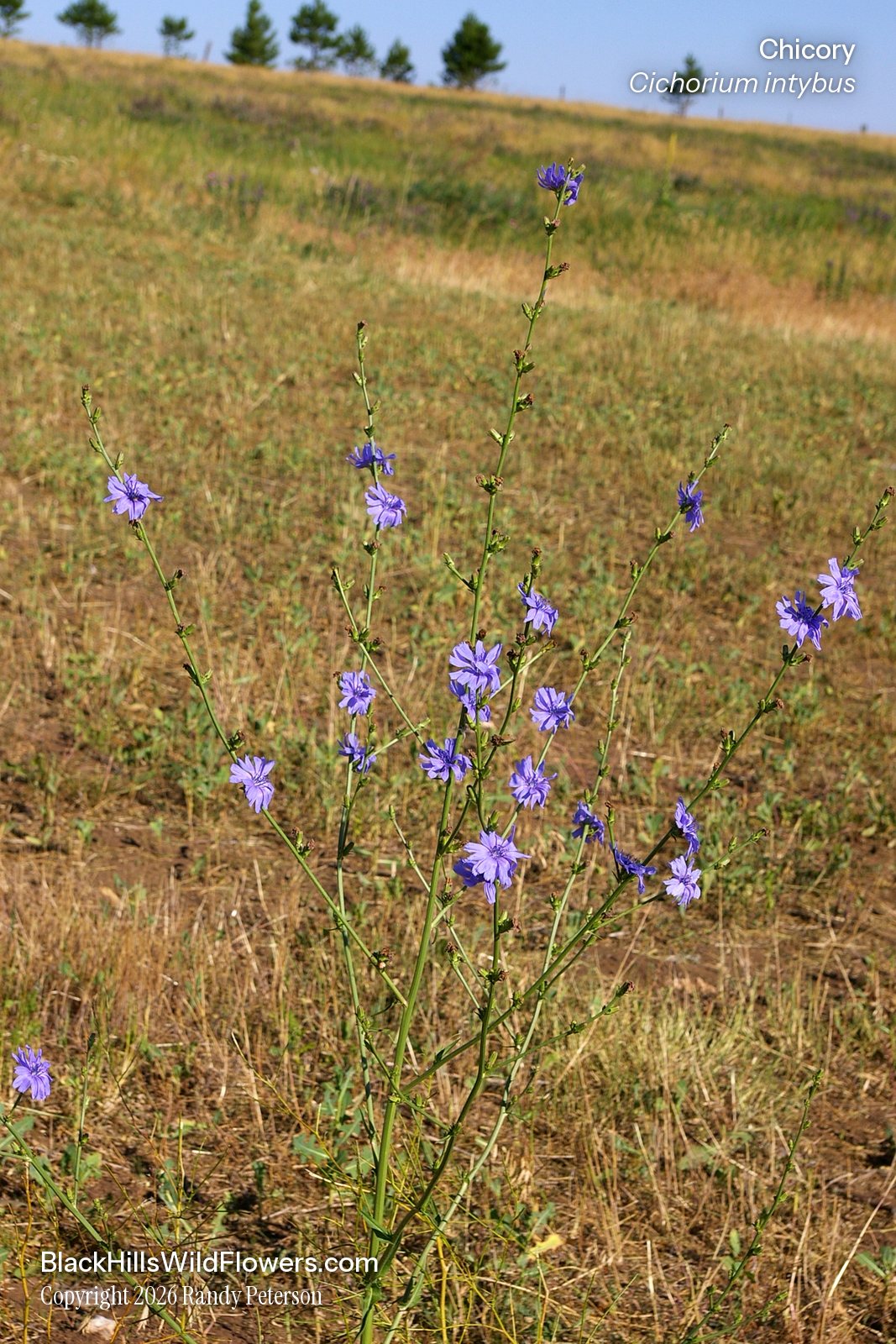
Chicory (Cichorium intybus) is an introduced perennial from Eurasia, with blue dandelion-type heads 1 to 2 inches across set along tough, mostly bare branches. It grows on roadsides, in fields and on other disturbed ground, and in nearby Minnesota it blooms June into October. Photographed in the Black Hills.
| Family | Asteraceae · Aster |
|---|---|
| Status | Introduced perennial |
| Blooms | June into October |
| Height | 30–180 cm (12–72 in) |
| Where | Roadsides, fields, waste places and other disturbed sites |
| Also called | Blue Sailors, Wild Succory, Blue Dandelion |
Roots, seeds & germination
Root: A long, deep taproot.
Seed: A smooth, ribbed achene (a dry one-seeded fruit) tipped with many tiny scales.
How do you identify Chicory?
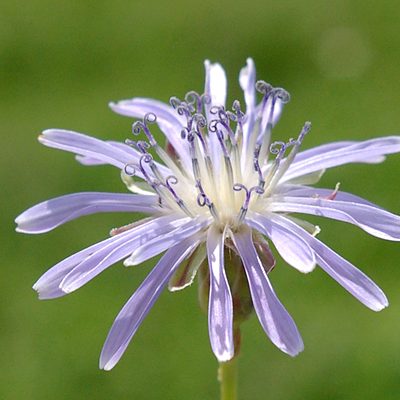
Look for clusters of 1 to 4 blue heads spaced along tough stems that branch at about 45 degrees. Each head has about 17 strap-shaped rays with five small teeth at the tip and no central disk. Lower leaves look like dandelion leaves and upper leaves are small and clasp the stem. Flowers open in the morning and close later in the day. Blue Lettuce is a smaller plant, with smaller flowers in a looser, more open cluster.
When does it bloom?
June into October.
Where does it grow?
Part shade to sun on roadsides, disturbed sites, waste places and fields. It can encroach on higher-quality dry prairies.
Other flowers to compare
Sources: Minnesota Wildflowers: Cichorium intybus (Chicory); Kansas Wildflowers and Grasses: Chicory; Al Schneider's Rocky Mountains Plant Descriptions: Cichorium intybus; South Dakota Locally Noxious Weed Pest List (SD Department of Agriculture and Natural Resources).