Prairie False Dandelion Nothocalais cuspidata also listed as Microseris cuspidata
Also called Prairie Dandelion, Wavy-leaf False Dandelion, Sharp-point Prairie Dandelion, Goat Chicory
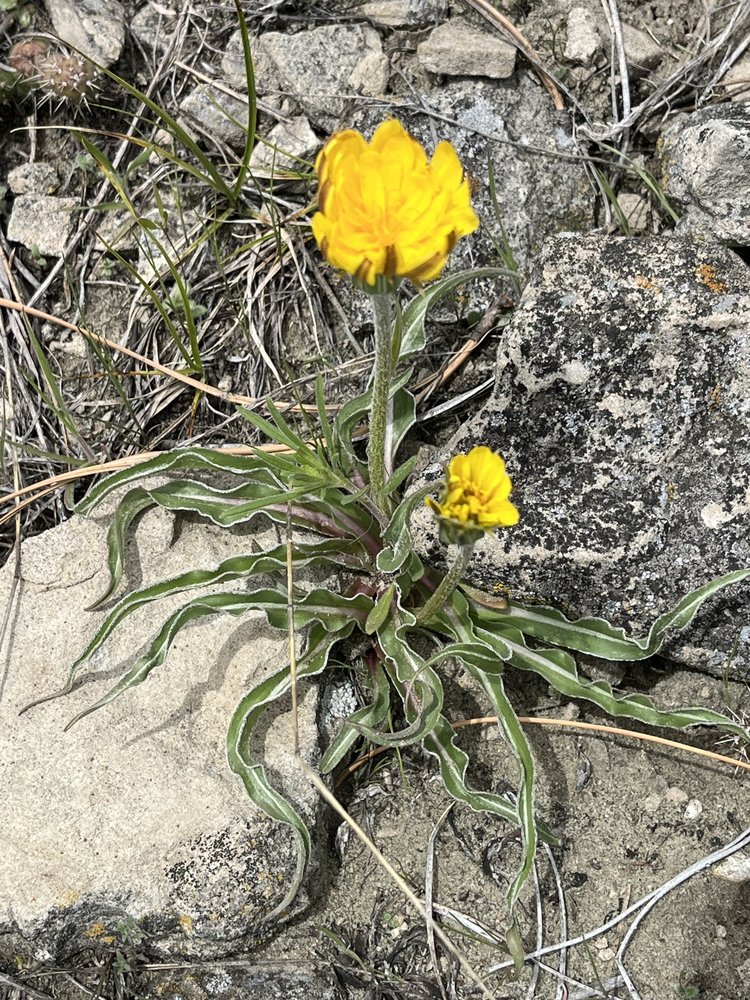
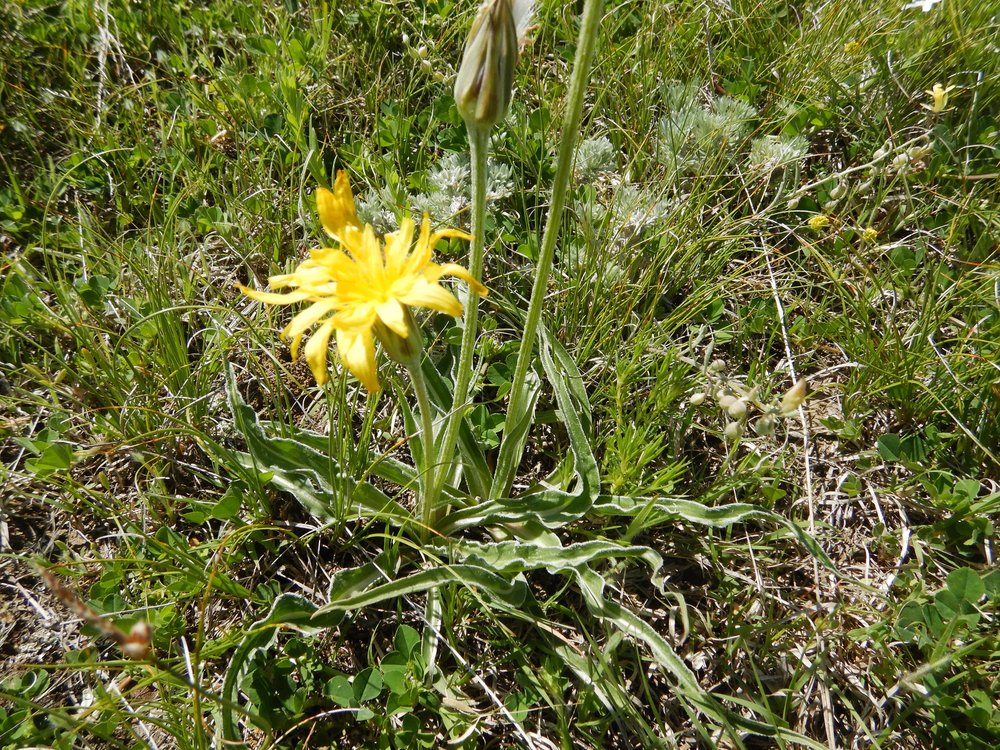
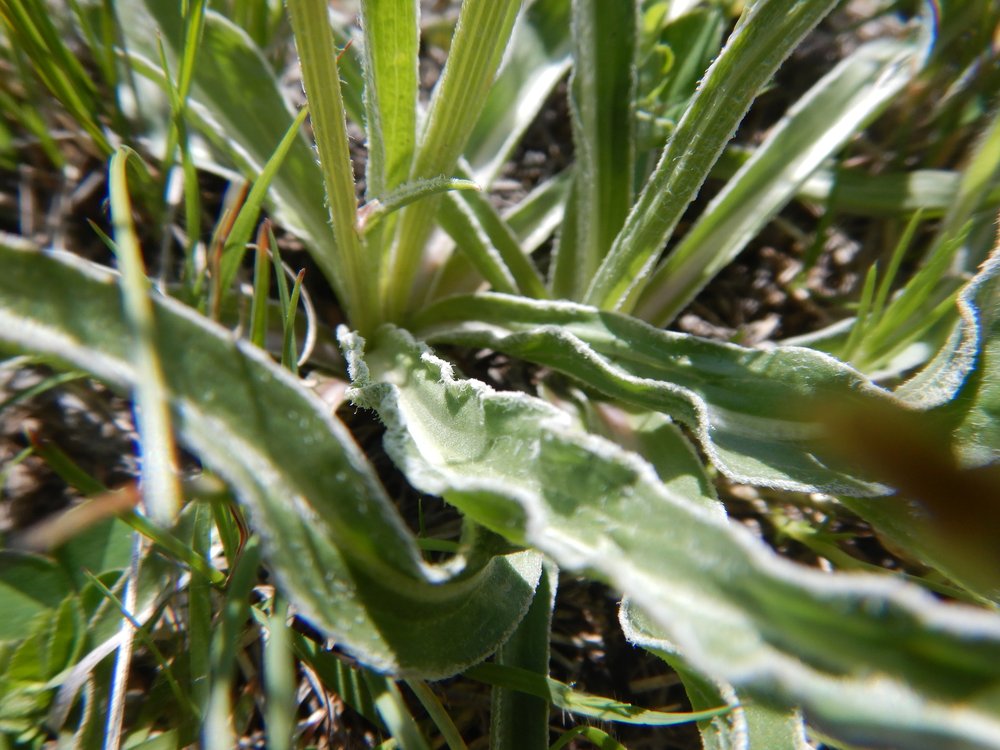
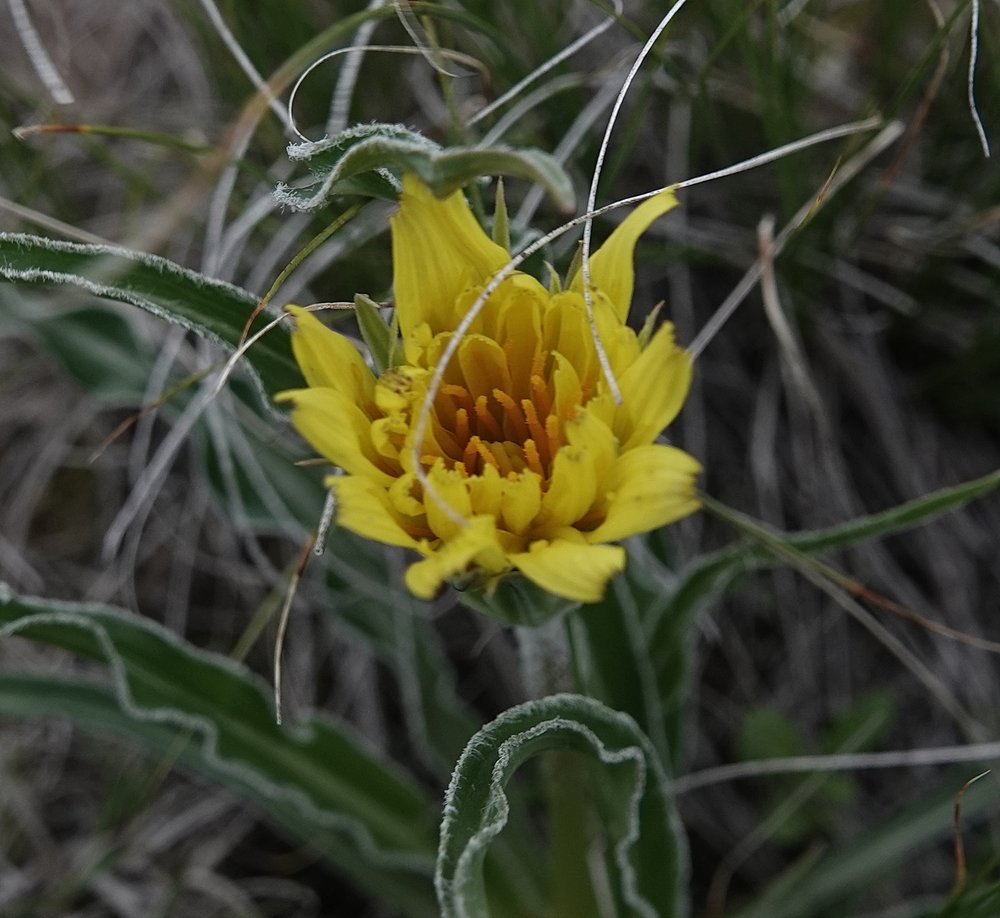
Prairie False Dandelion (Nothocalais cuspidata, also listed as Microseris cuspidata) is a native perennial of dry prairie that carries one yellow, dandelion-like head 2.5–5 cm (1–2 in) across on a leafless stalk 7–35 cm (3–14 in) tall above a rosette of long, narrow, grass-like leaves with crisp, wavy edges that are often downy white. It blooms from April into June, and in the Black Hills the National Park Service lists it at Wind Cave, Jewel Cave and Devils Tower.
Free photos from other sources
| Family | Asteraceae · Aster |
|---|---|
| Status | Native perennial |
| Blooms | April into June |
| Height | 7–35 cm (3–14 in) |
| Where | Dry open prairie, gravelly and rocky hillsides, ridges and slopes |
| Also called | Prairie Dandelion, Wavy-leaf False Dandelion, Sharp-point Prairie Dandelion, Goat Chicory |
| Synonym | Microseris cuspidata, Agoseris cuspidata, Troximon cuspidatum |
Roots, seeds & germination
Root: A stout taproot, large for the size of the plant. The leaves and stalks hold a white milky sap, and the plant spreads by reseeding.
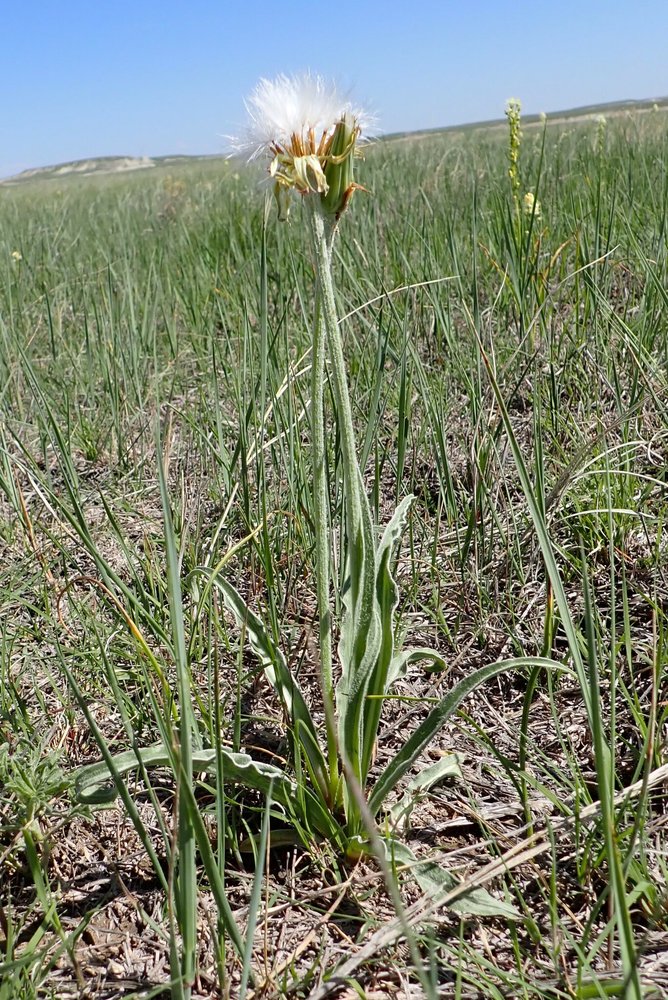
Seed: Each head ripens into a white puff of brown seeds 7–10 mm long, narrowed toward the top but not beaked, each topped with 40 to 80 fine bristles and narrow scales 8–10 mm long that carry it on the wind. One plant can send up several heads in succession through the spring.
How do you identify Prairie False Dandelion?
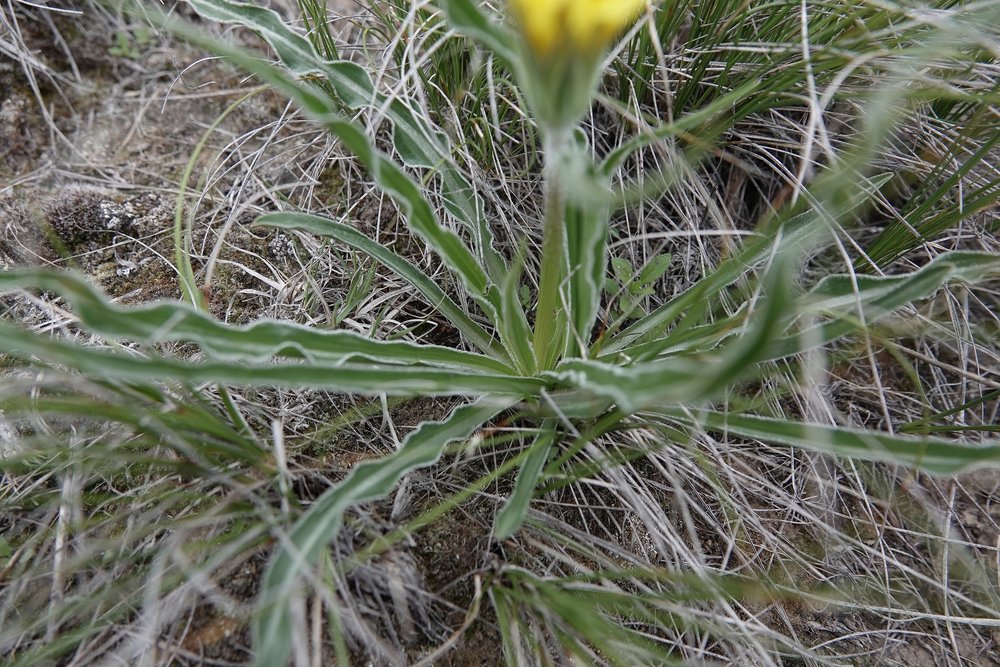
Look for a single yellow head 2.5–5 cm (1–2 in) across on a leafless, often woolly stalk, made only of strap-shaped rays with 5 teeth at the squared tip, backed by one row of sharp-pointed, hairless bracts that are often striped or dotted with red. The leaves all grow from the base and are long and narrow like grass blades, 7–30 cm (3–12 in) long, with a pale midrib and crisp, wavy edges fringed with short white hairs, and they are often folded lengthwise. After bloom the head turns into a white puff of seeds, each 7–10 mm long with a tuft of 40 to 80 bristles. It could pass for a Common Dandelion at a glance, but the long, narrow, grass-like leaves set it apart. Mountain Dandelion looks very similar too, but its long narrow leaves are more limber and glossy smooth, and its seeds narrow sharply below the tip, while these narrow only slightly or not at all.
When does it bloom?
April into June.
Where does it grow?
Dry open prairie, gravelly and rocky hillsides, ridges and slopes in sandy, gravelly or clay soil, from the plains up to about 2,300 m (7,500 ft) across its range, usually on undisturbed ground. The National Park Service lists it at Wind Cave, Jewel Cave and Devils Tower. Herbarium specimens from 1924 to 2007 come from open range, an old meadow, a dry hillside at 1,097 m (3,600 ft) and a red-beds roadside at 1,219 m (4,000 ft) in Lawrence County; low places in the hills at 975 m (3,200 ft) in Pennington County; bare buttes and a juniper slope on clay soil on the Buffalo Gap National Grassland in Fall River County; sandy soil on high divides at 1,372 m (4,500 ft) and a flat hilltop of rich, dark, moist soil in Crook County, Wyoming; and Weston County, Wyoming, at 1,341 m (4,400 ft). The labels show it in flower from early May to mid-June. iNaturalist has 8 research-grade Black Hills records, April to June.
Other dandelions in this guide
Aster family (Asteraceae): 62 other plants in this guide
- Aromatic Aster
- Arrowleaf Balsamroot
- Arrowleaf Sweet Coltsfoot
- Bachelor's Button
- Balsam Ragwort
- Black-eyed Susan
- Blanket Flower
- Blue Lettuce
- Broom Snakeweed
- Bull Thistle
- Canada Hawkweed
- Canada Lettuce
- Canada Thistle
- Chicory
- Common Burdock
- Common Dandelion
- Common Sunflower
- Common Tansy
- Common Yarrow
- Curlycup Gumweed
- Cutleaf Coneflower
- Dotted Gayfeather
- Drummond's Thistle
- Easter Daisy
- False Boneset
- Fetid Marigold
- Field Pussytoes
- Fringed Sagewort
- Hairy Golden Aster
- Heart-leaved Arnica
- Hooker's Townsend Daisy
- Horseweed
- Jerusalem Artichoke
- Lambstongue Groundsel
- Maximilian Sunflower
- Missouri Goldenrod
- Mountain Dandelion
- Musk Thistle
- Oxeye Daisy
- Pearly Everlasting
- Pineapple Weed
- Prairie Coneflower
- Purple Coneflower
- Rocky Mountain Blazing Star
- Rosy Pussytoes
- Rubber Rabbitbrush
- Rush Skeletonplant
- Scotch Thistle
- Silver Sagebrush
- Smooth Blue Aster
- Spotted Joe-Pye Weed
- Stemless Four-nerve Daisy
- Stiff Goldenrod
- Stiff Sunflower
- Threenerve Fleabane
- Wavyleaf Thistle
- Western Ragweed
- White Hawkweed
- White Prairie Aster
- White Sagebrush
- Woolly Groundsel
- Yellow Salsify
Sources: Flora of North America Vol. 19: Nothocalais cuspidata (Chambers), eFloras; Minnesota Wildflowers: Nothocalais cuspidata (Prairie False Dandelion); Kansas Wildflowers and Grasses: Nothocalais cuspidata (prairie dandelion); Illinois Wildflowers: Prairie Dandelion, Nothocalais cuspidata; USDA PLANTS Database: Nothocalais cuspidata (NOCU), profile API; GBIF species page: Microseris cuspidata (Pursh) Sch.Bip., the name GBIF and POWO accept; NPSpecies checklist, Wind Cave National Park vascular plants; NPSpecies checklist, Jewel Cave National Monument vascular plants; NPSpecies checklist, Devils Tower National Monument vascular plants; GBIF occurrence search: Nothocalais cuspidata (Microseris cuspidata), South Dakota and Wyoming herbarium specimens; iNaturalist: research-grade Nothocalais cuspidata observations in the Black Hills.