Round Leaf Monkey Flower Erythranthe geyeri also listed as Erythranthe glabrata
Also called Geyer's Monkeyflower, Geyer's Yellow Monkeyflower, Roundleaf Monkeyflower, čheškíkȟaŋ iyéčheča (Lakota)
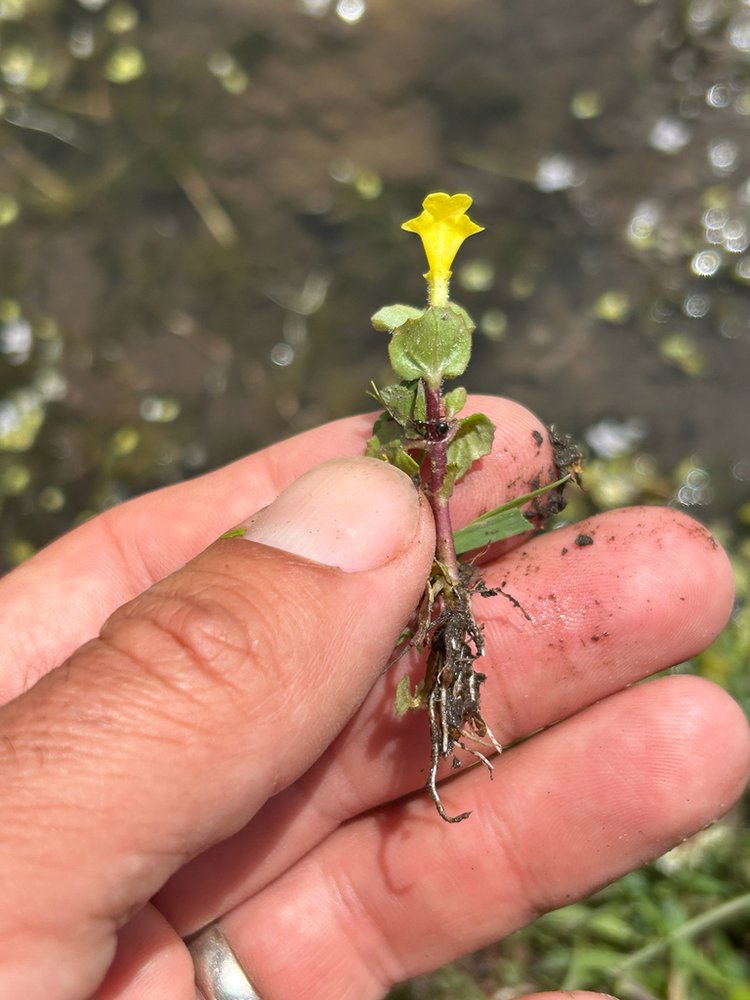
Round Leaf Monkey Flower (Erythranthe geyeri, long listed as Mimulus glabratus) is a low, creeping native perennial with small yellow, two-lipped flowers, blooming from May into August in shallow water and on muddy stream banks. In the Black Hills, herbarium specimens from Lawrence and Pennington counties record it in creeks, and the National Park Service lists it at Wind Cave.
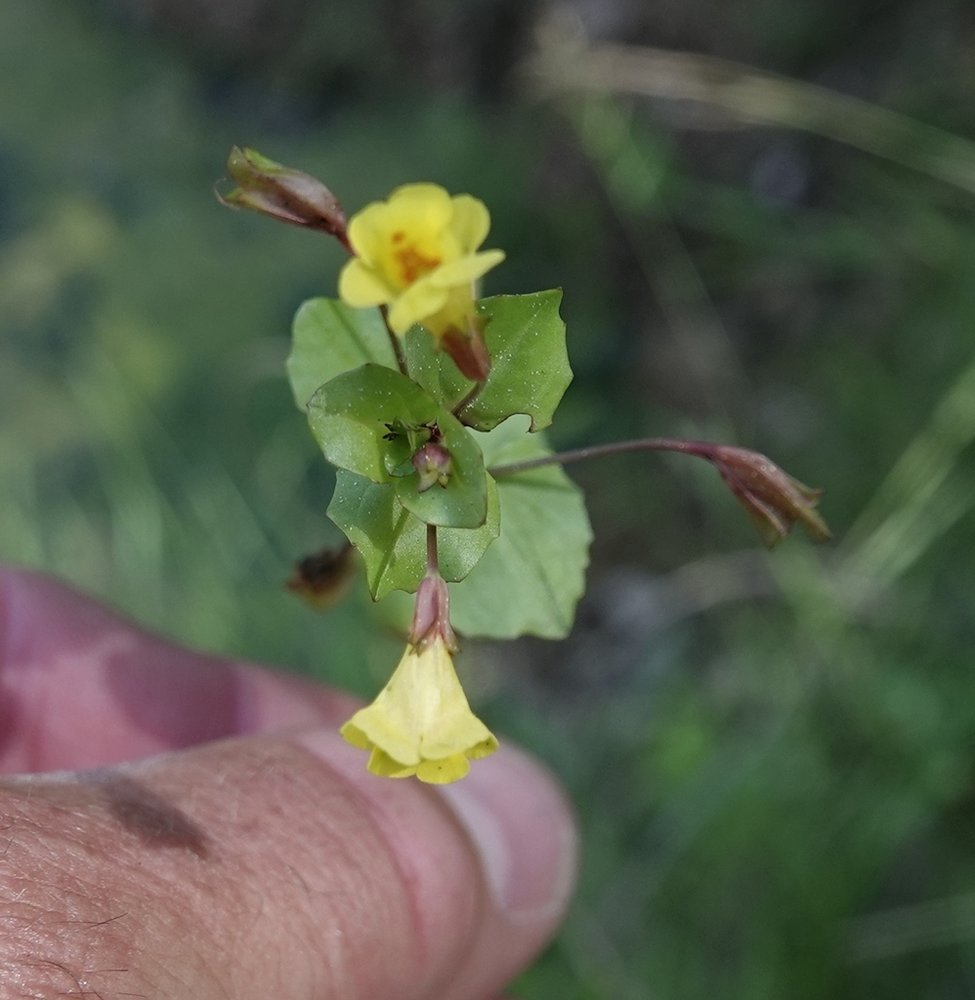
Free photos from other sources
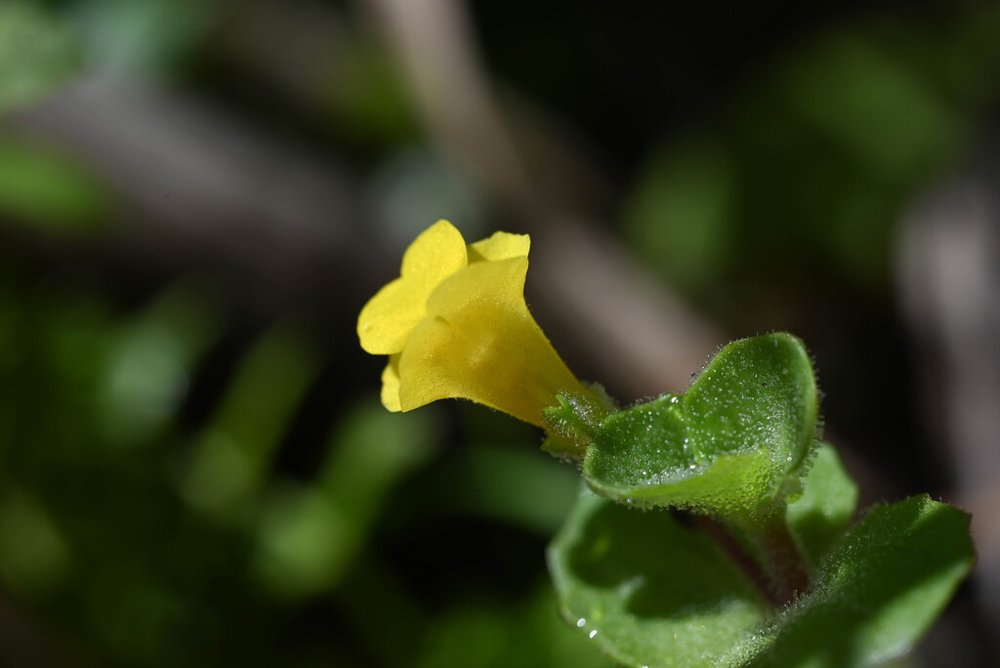
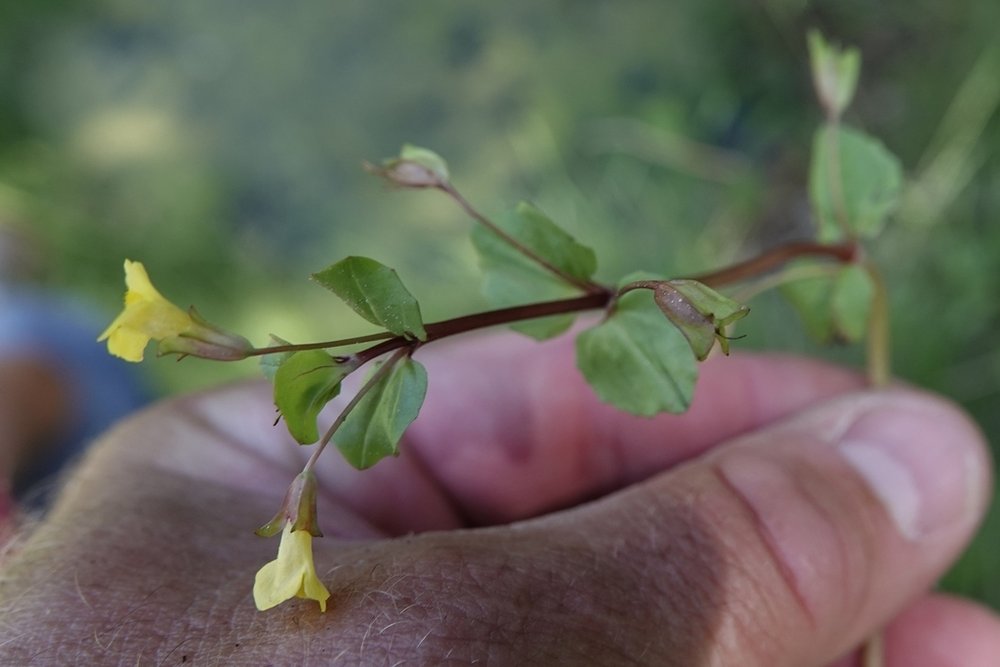
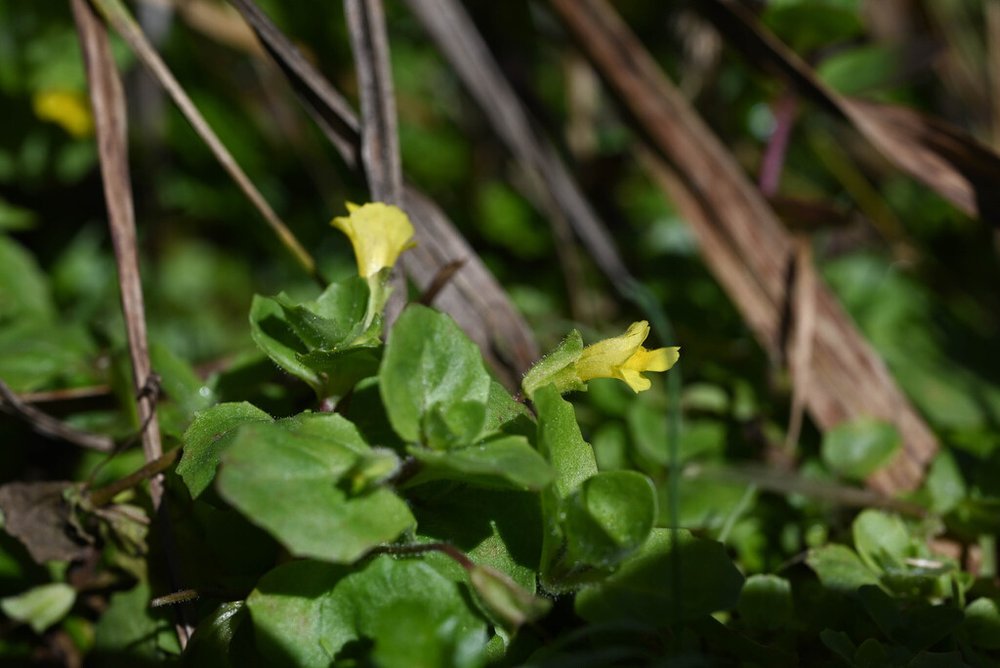
| Family | Phrymaceae · Lopseed |
|---|---|
| Status | Native perennial |
| Blooms | May through August |
| Height | 3–40 cm (1–16 in) |
| Where | Shallow water, springs and muddy banks of slow streams |
| Also called | Geyer's Monkeyflower, Geyer's Yellow Monkeyflower, Roundleaf Monkeyflower, čheškíkȟaŋ iyéčheča (Lakota) |
| Synonym | Mimulus geyeri, Mimulus glabratus var. jamesii, Mimulus glabratus var. fremontii, Mimulus jamesii |
| Traditional use | Black Elk and Flying By (1998) list this plant, under the name Mimulus glabratus, with the Lakota name čheškíkȟaŋ iyéčheča, and say the leaves are eaten raw or cooked, with a bitter flavor that fades with cooking. Moerman's database records, for the plant under the name Mimulus glabratus var. jamesii, that the Isleta of New Mexico ate the tender young leaves as a salted salad (Jones 1931; Castetter 1935) and that the Western Keres used it as an indicator of surface water (Swank 1932). |
| Note | Older books and USDA PLANTS list this plant as Mimulus glabratus (Erythranthe glabrata). Flora of North America, as quoted by the Wildflower Center, says true E. glabrata does not reach the United States and treats the plants here as E. geyeri; the National Park Service uses that name too. |
Traditional use: first drafted by Google AI, then checked against the sources on this page.
How do you identify Round Leaf Monkey Flower?
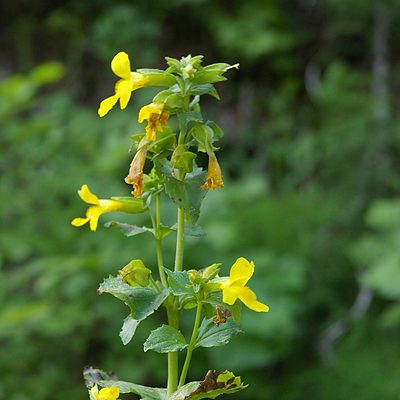
Look for a sprawling, mat-forming plant with weak, branched, hollow stems that root where they touch mud, growing in or beside water. The leaves come in pairs and are nearly round to kidney-shaped, 1–3 cm (0.4–1.2 in) long, with 3 to 5 main veins and shallow teeth. The yellow flowers are bell-shaped and two-lipped, 8–13 mm (⅓–½ in) long, with a bearded throat, sometimes a few reddish-brown dots, and a calyx (the green cup under the flower) that swells after the petals fall. The other yellow monkeyflower in this guide, Yellow Monkeyflower (Erythranthe guttata), is described by a Colorado flora as erect, to about 55 cm (22 in), with flowers about 2.5 cm (1 in) long and red spots at the base of the lower lip; that flora calls this plant smaller-flowered, sprawling and mat-forming, with just two reddish-brown spots on the lower lip.
When does it bloom?
May through August.
Where does it grow?
Shallow water and muddy banks of slow streams, springs and ponds, at 200 to 2,500 m (650 to 8,200 ft) across its range, and usually on lime-rich sites in Kansas. Black Hills herbarium specimens from 1935 to 1977 come from a creekbank, the running water of an old flume channel, and the edge and bed of a creek in Lawrence County, plus a creek bed in Pennington County in 1968; they were filed under the older name Mimulus glabratus. The National Park Service lists it as present at Wind Cave National Park.
Other monkeyflowers in this guide
Sources: Lady Bird Johnson Wildflower Center: Erythranthe geyeri (Geyer's monkeyflower); Kansas Wildflowers and Grasses: Erythranthe geyeri (round-leaf monkey-flower); Rocky Mountain Flora: Yellow Monkeyflower and Roundleaf Monkeyflower; NPSpecies checklist, Wind Cave National Park vascular plants; USDA PLANTS Database: Mimulus glabratus (MIGL), roundleaf monkeyflower; GBIF specimen 3071262349: Black Hills State University herbarium, Lawrence County SD, 16 June 1977; GBIF specimen 3071262446: Black Hills State University herbarium, Lawrence County SD, 4 August 1946; GBIF specimen 3071262356: Black Hills State University herbarium, Lawrence County SD, 30 June 1935; GBIF specimen 2565957834: Pennington County SD, 14 July 1968; Native American Ethnobotany Database (BRIT): Mimulus glabratus; Culturally Important Plants of the Lakota (Black Elk and Flying By, 1998), entry 192.