Smooth Blue Aster
Symphyotrichum laeve
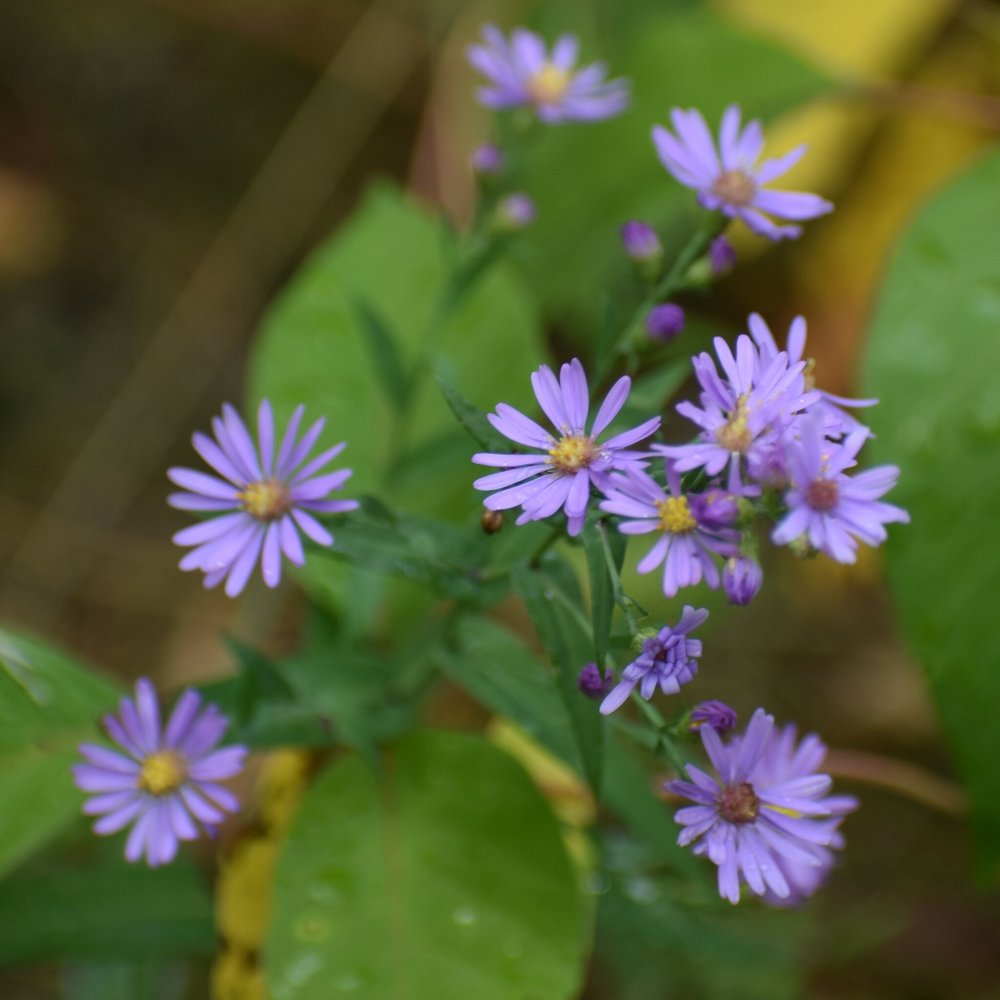
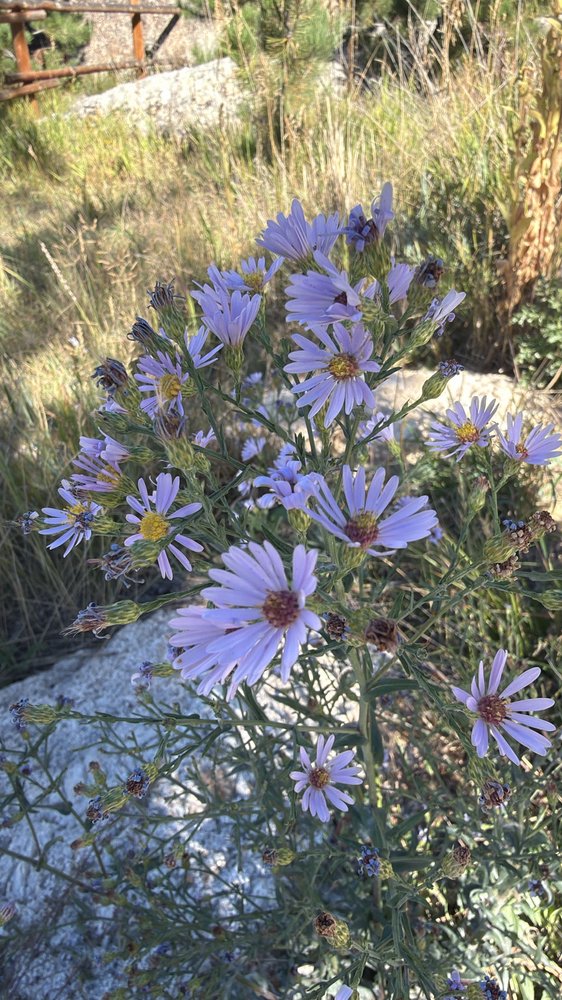
Smooth Blue Aster (Symphyotrichum laeve) is a native perennial whose light-violet flower heads with yellow centers open from late summer into October, above smooth, waxy, blue-green leaves that wrap around the stem. It grows in open pine woods, meadows and on rocky hillsides, and it is one of the most widely collected asters in the Black Hills.
Free photos from other sources
| Family | Asteraceae · Aster |
|---|---|
| Status | Native perennial |
| Blooms | Late July into October, mostly August and September |
| Height | 30–100 cm (12–40 in) |
| Where | Open pine woods, meadows, rocky hillsides, roadsides and prairie edges |
| Also called | Smooth Aster, Geyer's Aster, Purple Aster, Glaucous Aster |
| Synonym | Aster laevis, Aster laevis var. geyeri |
| Traditional use | Smith (1928) recorded that the Meskwaki burned the plant as a smudge to revive an unconscious person and used it in the sweat bath. Marles and others (2012) record that the Cree chewed the root for toothache and drank a root tea for fever. |
Roots, seeds & germination
Root: A short, stout rhizome (underground stem) with a branching crown and fibrous roots. It spreads slowly into loose clumps or small patches and sprouts again from the rhizome after fire.
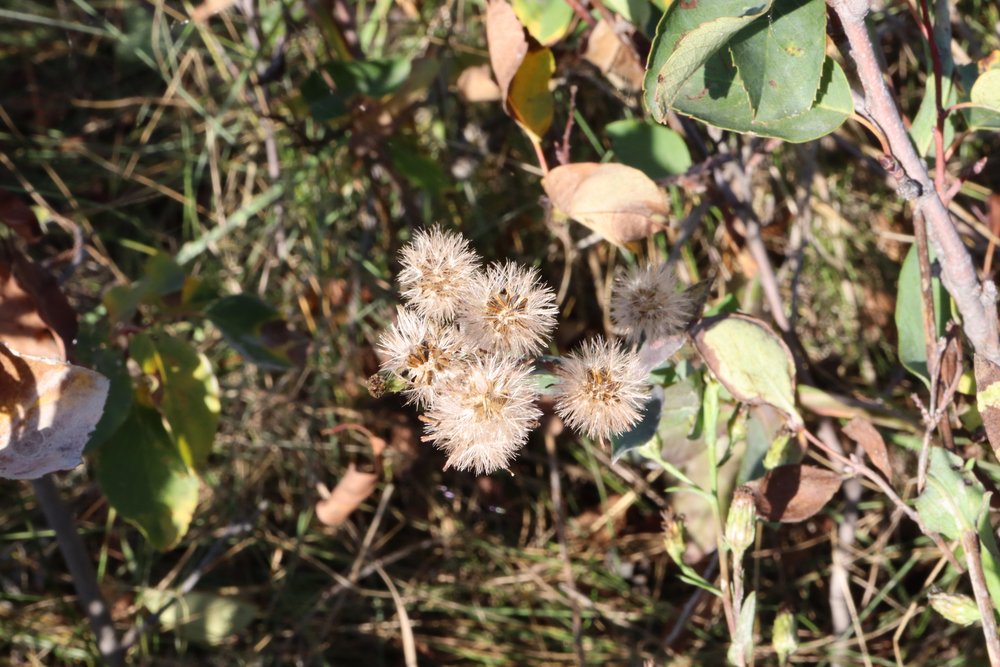
Seed: A small, flattened, ribbed seed 2–4 mm long, brown to purple, topped with a tuft of tan to reddish bristles that carry it on the wind. Seed ripens from September into late fall, and soil samples have shown no lasting seed bank.
Germination: Easy. Fresh seed needs no pretreatment and began sprouting in about a week in greenhouse trials, while stored seed does better after 30–60 days of cold, moist stratification. SDSU notes the seed needs light, so it is sown on the surface.
How do you identify Smooth Blue Aster?
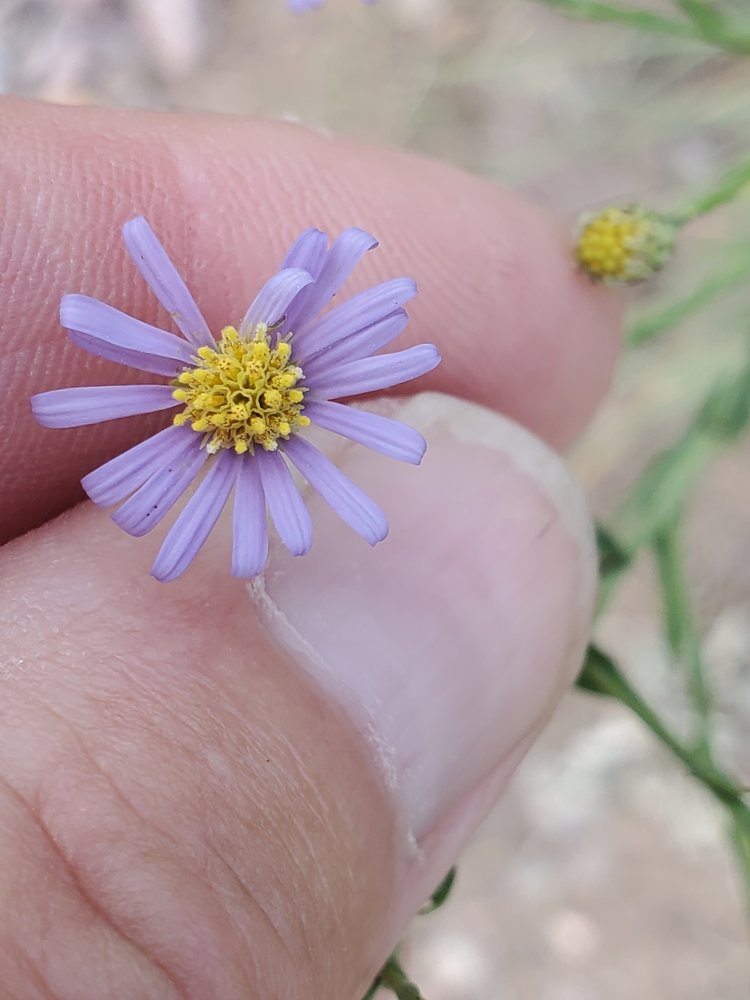
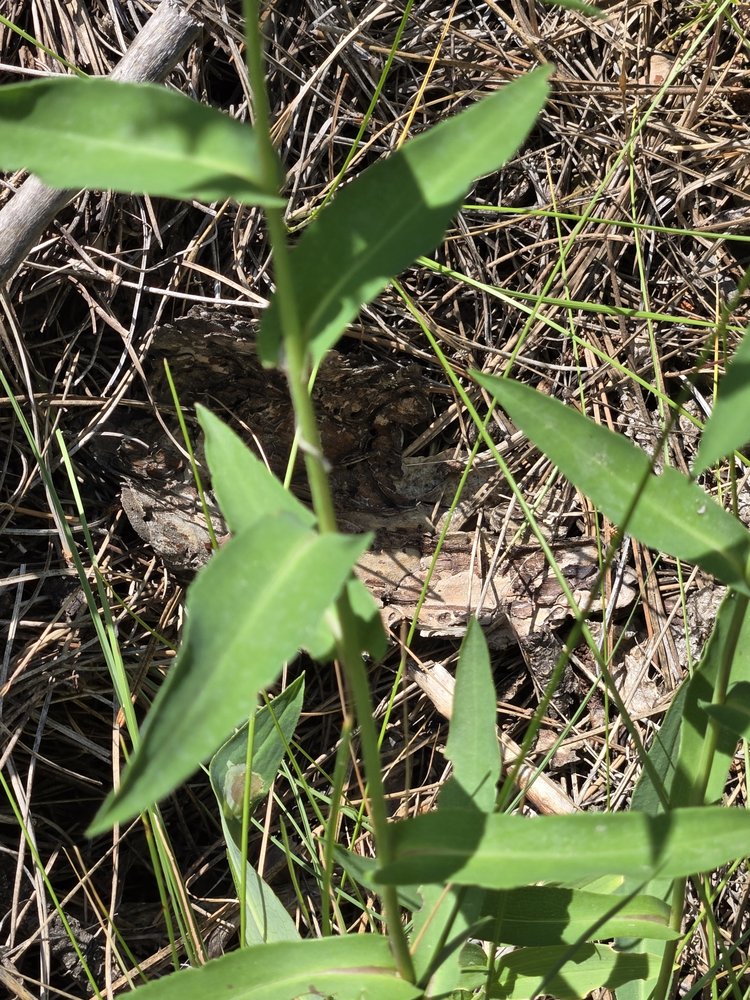
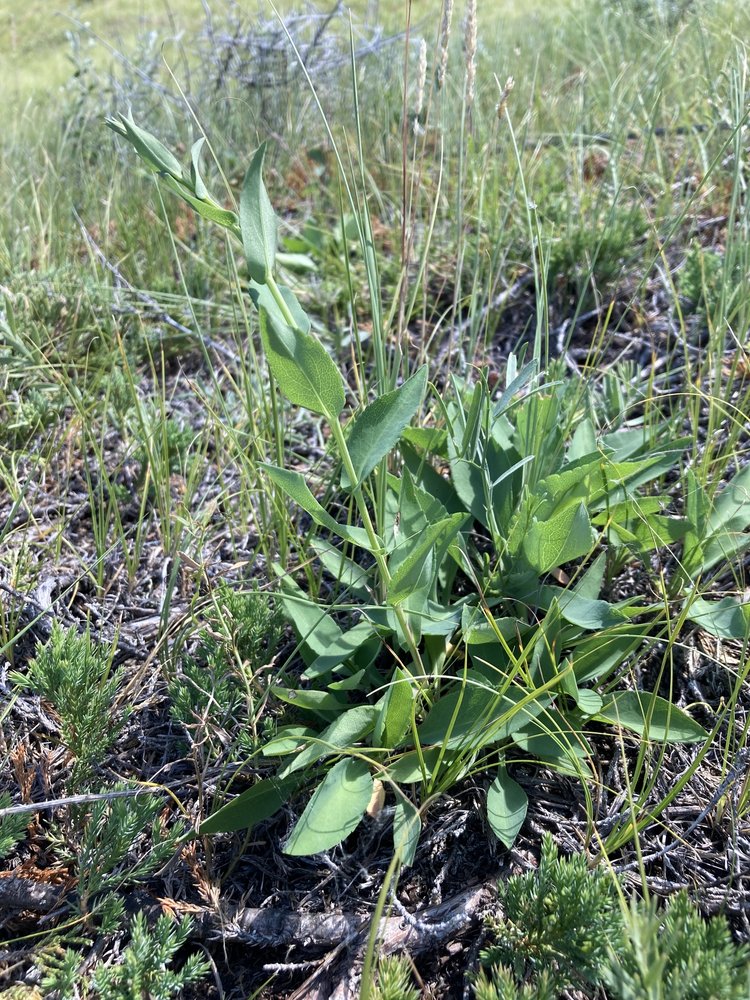
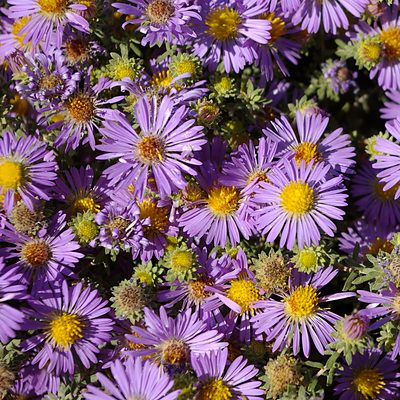
Check the leaves first: they are hairless, thick, slightly waxy and blue-green, often without teeth, and the upper ones have no stalk and wrap around the stem at the base. The stem is smooth too, often with a bluish or reddish cast. Heads are 1.3–2.5 cm (½–1 in) across, with 13–25 light blue to lavender rays around a yellow center that turns reddish-purple with age, in an open, branching cluster. Aromatic Aster, which blooms at the same time in the same colors, is low and bushy, with small, narrow, rough leaves, sticky hairs and a pleasant smell when crushed.
When does it bloom?
Late July into October, mostly August and September.
Where does it grow?
Open, sunny to lightly shaded ground: ponderosa pine and pine-oak woods, aspen and spruce edges, meadows, rocky and granite slopes, creek banks, roadsides and prairie edges. The 1986 Jewel Cave survey lists it as Aster laevis var. geyeri, and National Park Service lists record it at Wind Cave, Jewel Cave, Mount Rushmore and Devils Tower. About 125 herbarium specimens come from all seven Black Hills counties, including Custer State Park and the Bear Lodge Mountains.
Other flowers to compare
Sources: Flora of North America: Symphyotrichum laeve var. laeve (with notes on var. geyeri); Flora of North America (eFloras): Symphyotrichum laeve var. geyeri; University of Waterloo Astereae Lab: Symphyotrichum laeve; USDA Forest Service, Fire Effects Information System: Symphyotrichum laeve; USDA PLANTS: Symphyotrichum laeve var. geyeri (SYLAG); SDSU Open PRAIRIE, South Dakota Native Plant Research: Symphyotrichum laeve (Reese); Native Plant Network propagation protocols for SYLA3 (Scianna 2003, NRCS Bridger PMC; Blessman et al. 2001), compiled by Univ. of Washington ESRM 412; Prairie Moon Nursery: Smooth Blue Aster; Minnesota Wildflowers: Smooth Blue Aster; Minnesota Wildflowers: Lindley's Aster; Kansas Wildflowers and Grasses: Smooth Aster; UW-Eau Claire Putnam Park: Symphyotrichum laeve notes (Meskwaki use, Smith 1928); University of Saskatchewan Indigenous garden: Smooth Aster (Cree use, Marles et al. 2012); Marriott & Hartman 1986, Vegetation of Jewel Cave National Monument; NPSpecies checklist, Wind Cave National Park; NPSpecies checklist, Jewel Cave National Monument; NPSpecies checklist, Devils Tower National Monument; NPSpecies checklist, Mount Rushmore National Memorial; GBIF occurrence search, Symphyotrichum laeve in the Black Hills bounding box; Black Elk & Flying By 1998, Culturally Important Plants of the Lakota (checked; no entry for this species); University of Waterloo Astereae Lab: Eurybia conspicua (Black Hills disjunct); Galt Museum & Archives, Ethnobotany: Smooth Blue Aster (citing Wilkinson 1999); Black Hills Wildflowers: Aromatic Aster.