Canada Lettuce Lactuca canadensis
Also called Wild Lettuce, Tall Lettuce, Canada Wild Lettuce
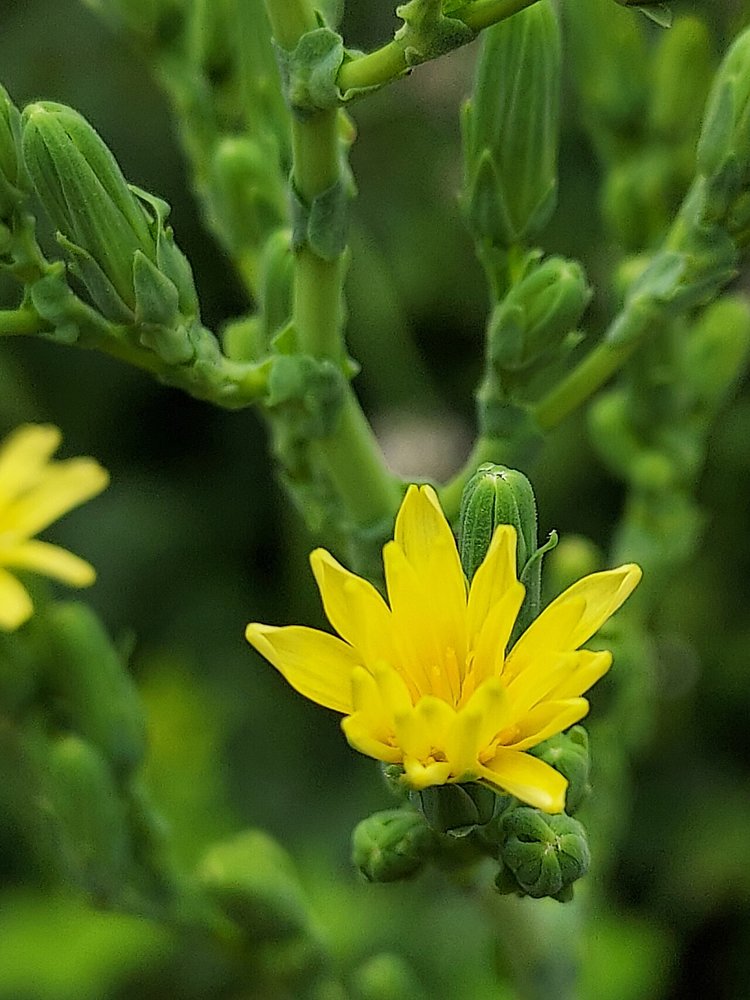
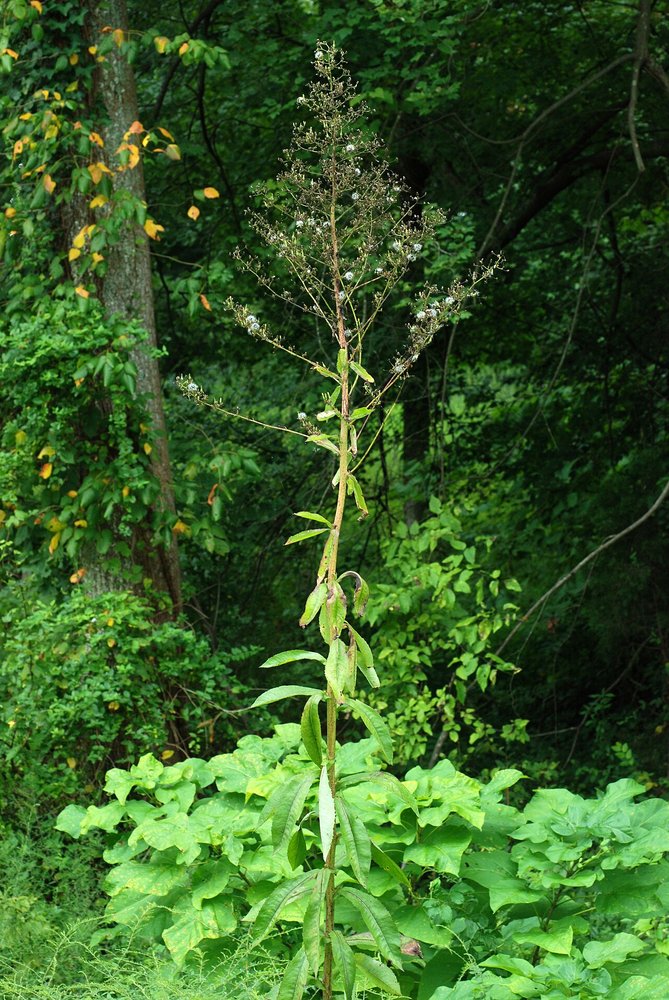
Canada Lettuce (Lactuca canadensis) is a tall native annual or biennial, 40–200 cm (16–79 in) and sometimes taller, with a single, mostly smooth stem, green to purplish or spotted with purple, that branches only at the top into an open cluster of small yellow dandelion-like flower heads from July into September. Its sap is pale orange-brown rather than milky white; in the Black Hills it grows in moist, shady bottoms under hardwoods, in grassy openings along streams and on disturbed ground, and a 2023 Forest Service draft lists it as a species of conservation concern there.

Free photos from other sources
| Family | Asteraceae · Aster |
|---|---|
| Status | Native annual or biennial |
| Blooms | July into September |
| Height | 40–200 cm (16–79 in), sometimes taller |
| Where | Moist, shady hardwood bottoms, grassy openings along streams and disturbed ground |
| Also called | Wild Lettuce, Tall Lettuce, Canada Wild Lettuce |
| Synonym | Lactuca canadensis var. latifolia, Lactuca canadensis var. longifolia, Lactuca canadensis var. obovata, Lactuca sagittifolia |
| Traditional use | Moerman's ethnobotany database lists the Cherokee as cooking the leaves and eating them as greens (Hamel and Chiltoskey 1975), the Ojibwe as rubbing the milky sap from the fresh plant on warts (Densmore 1928), and the Menominee as rubbing the milky juice on poison ivy rashes (Smith 1923). |
| Note | The Forest Service's 2023 draft assessment for the Black Hills forest plan lists Canada Lettuce as a species of conservation concern. This page gives no locations. |
Traditional use: first drafted by Google AI, then checked against the sources on this page.
Roots, seeds & germination
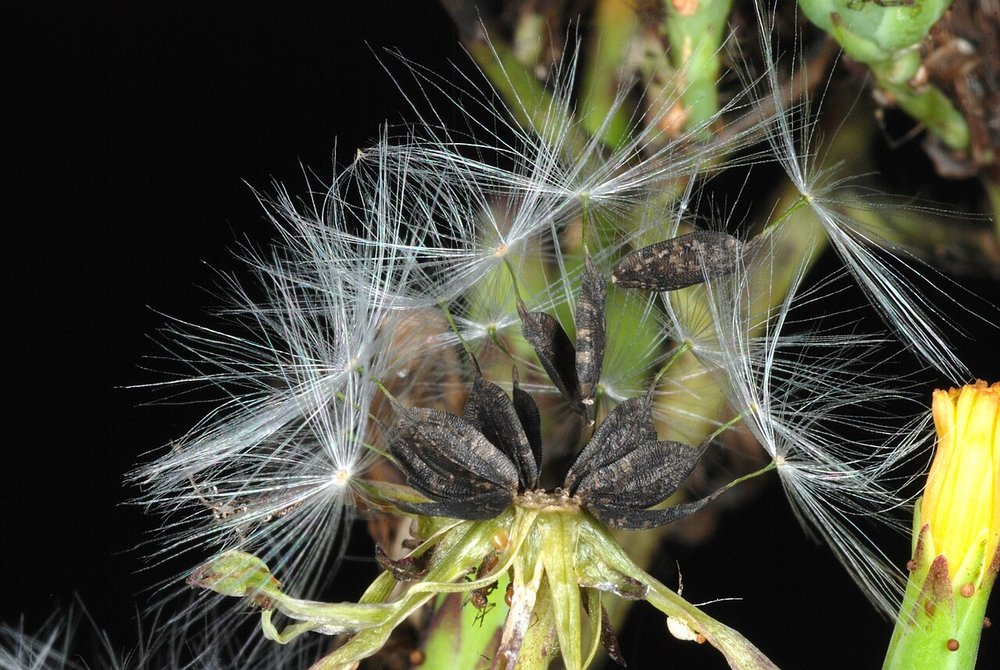
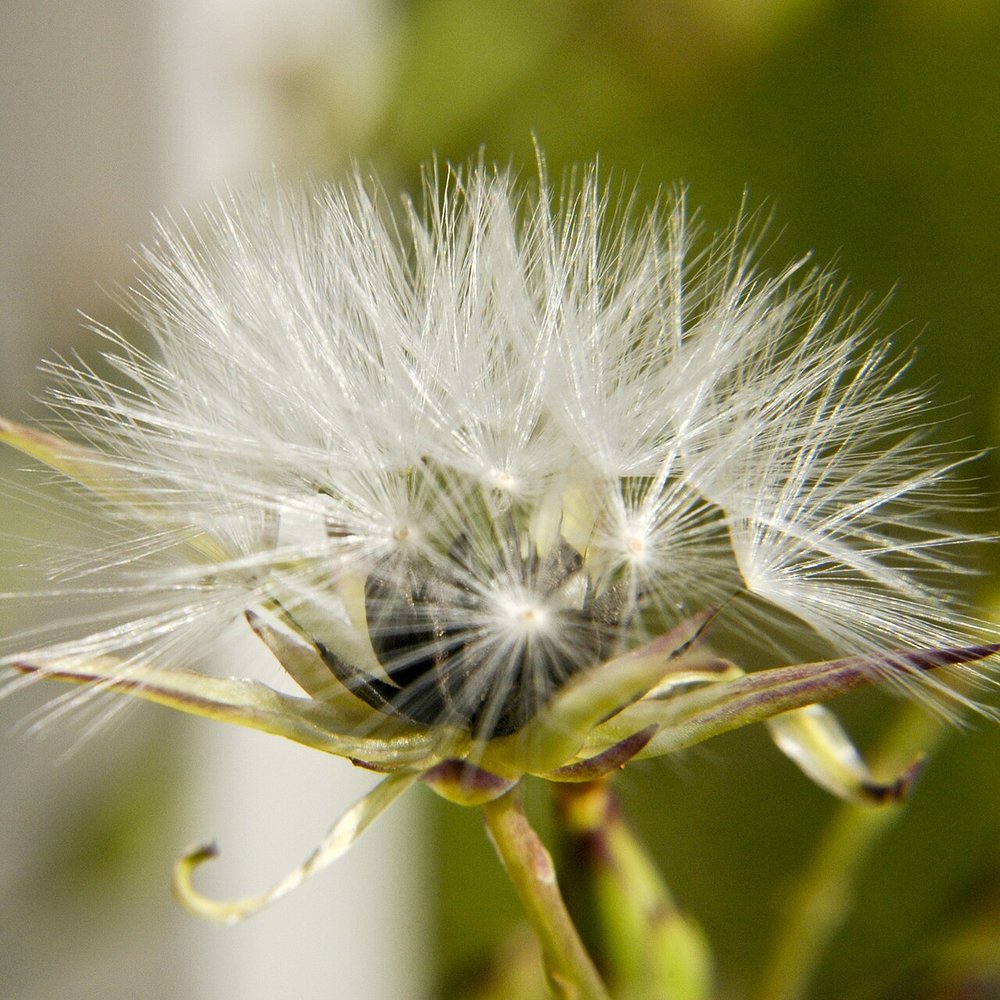
Seed: Each head ripens into a cluster of flat, oval, brown and often mottled seeds 2.5–3.5 mm long, each with a thread-like beak 1–3 mm long that ends in a tuft of white hairs 5–6 mm long, which carries the seed on the wind. As the seeds ripen the bracts bend back and the head opens to about 2.5 cm (1 in) across.
How do you identify Canada Lettuce?
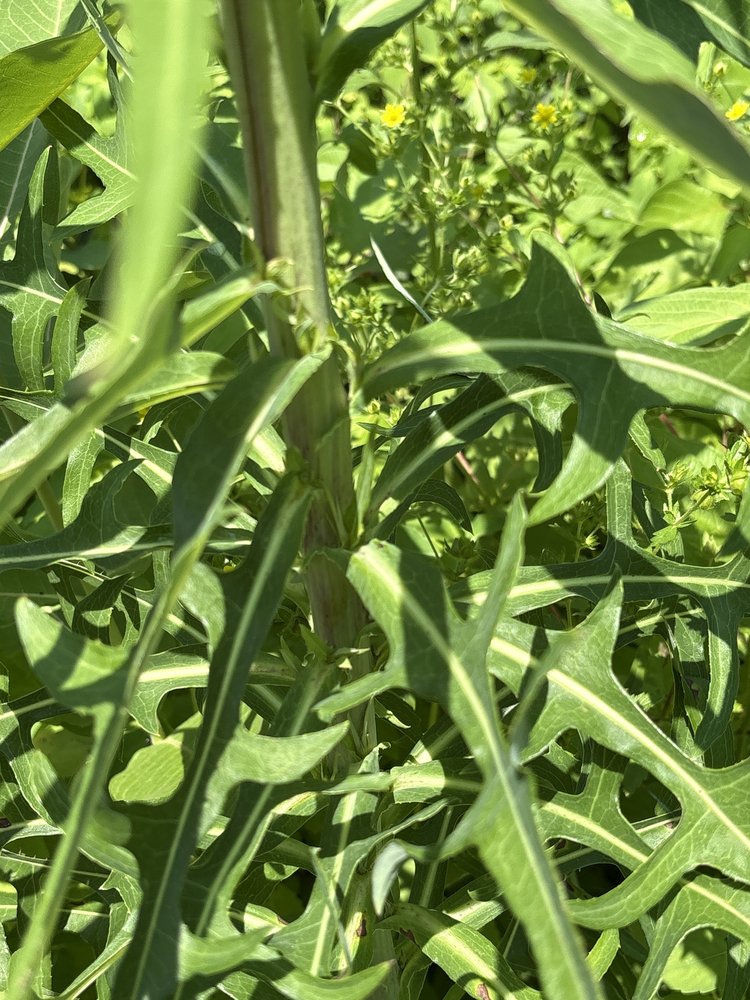
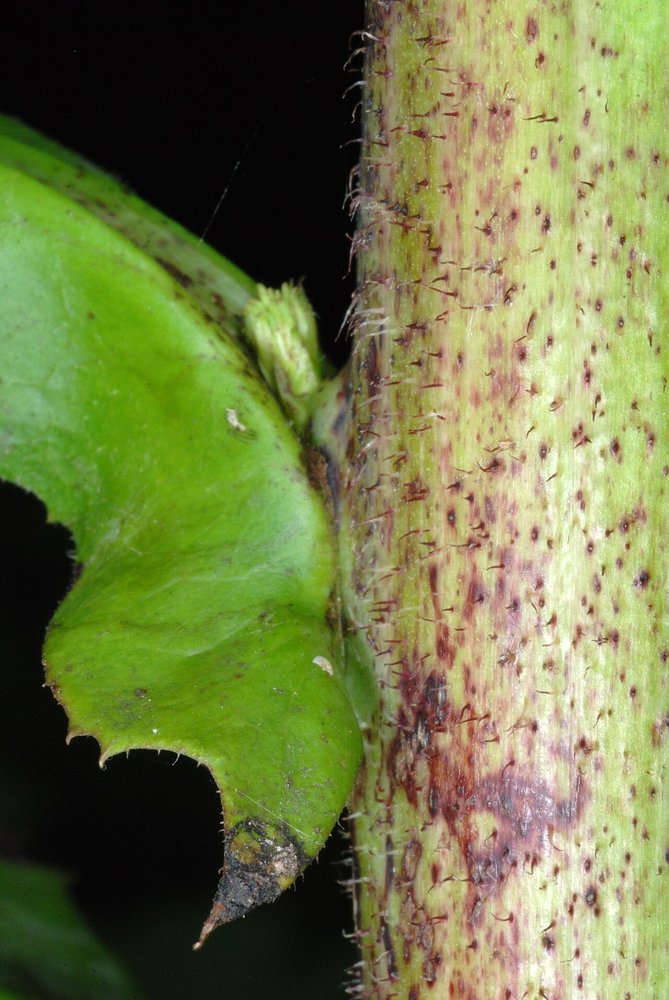
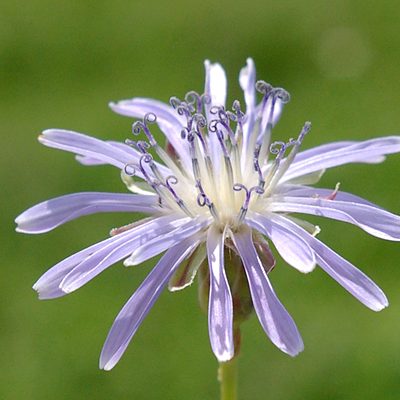
Break a leaf or a bit of stem: the sap is pale orange-brown, not milky white like most other wild lettuces. The flower heads are small, 6–8 mm (¼–⅓ in) across, with 15 to 20 or more yellow rays, sometimes tinged red or orange, and the green, often purple-tipped bracts under each head form a tube 10–12 mm long; they spread and usually bend back as the seeds ripen. The stem is single, erect, mostly smooth, green to purplish or purple-spotted, sometimes with a waxy bloom, and branches only in the flower cluster. The leaves are alternate and vary a great deal: the lower ones deeply lobed and 10–35 cm (4–14 in) long, the upper ones smaller and often unlobed, mostly stalkless and often clasping the stem with a pair of small lobes, hairless except for a few hairs along the midrib underneath. The seed is brown, often mottled, flat and oval, 2.5–3.5 mm, with a thread-like beak half to about as long as the seed body and a tuft of white hairs at its tip. Prickly Lettuce, a non-native weed, may grow as tall but has somewhat larger yellow heads, prickly hairs along the leaf edges and midrib, milky sap, and paler seeds that taper at the base with a beak one to two times as long as the seed body. Blue Lettuce is a perennial with much larger blue to violet flowers, 1.3–2.5 cm (½–1 in) across, and its mid and upper stem leaves are usually unlobed and toothless; most other lettuces have lobed or toothed leaves, though Canada Lettuce varies a lot in this.
When does it bloom?
July into September.
Where does it grow?
In the Black Hills, herbarium labels place it in moist, shady bottoms under paper birch, elm, bur oak and ironwood, at the edge between pine-and-oak woods and streamside hardwoods, in grassy openings along streams, in grassland sheltered by trees, and on poor, disturbed soil, once in a sidewalk crack. Elsewhere it grows from shady, moist woods to dry, gravelly roadsides, fields, prairies and wetland edges.
Other wild lettuces in this guide
Aster family (Asteraceae): 62 other plants in this guide
- Aromatic Aster
- Arrowleaf Balsamroot
- Arrowleaf Sweet Coltsfoot
- Bachelor's Button
- Balsam Ragwort
- Black-eyed Susan
- Blanket Flower
- Blue Lettuce
- Broom Snakeweed
- Bull Thistle
- Canada Hawkweed
- Canada Thistle
- Chicory
- Common Burdock
- Common Dandelion
- Common Sunflower
- Common Tansy
- Common Yarrow
- Curlycup Gumweed
- Cutleaf Coneflower
- Dotted Gayfeather
- Drummond's Thistle
- Easter Daisy
- False Boneset
- Fetid Marigold
- Field Pussytoes
- Fringed Sagewort
- Hairy Golden Aster
- Heart-leaved Arnica
- Hooker's Townsend Daisy
- Horseweed
- Jerusalem Artichoke
- Lambstongue Groundsel
- Maximilian Sunflower
- Missouri Goldenrod
- Mountain Dandelion
- Musk Thistle
- Oxeye Daisy
- Pearly Everlasting
- Pineapple Weed
- Prairie Coneflower
- Prairie False Dandelion
- Purple Coneflower
- Rocky Mountain Blazing Star
- Rosy Pussytoes
- Rubber Rabbitbrush
- Rush Skeletonplant
- Scotch Thistle
- Silver Sagebrush
- Smooth Blue Aster
- Spotted Joe-Pye Weed
- Stemless Four-nerve Daisy
- Stiff Goldenrod
- Stiff Sunflower
- Threenerve Fleabane
- Wavyleaf Thistle
- Western Ragweed
- White Hawkweed
- White Prairie Aster
- White Sagebrush
- Woolly Groundsel
- Yellow Salsify
Sources: Flora of North America Vol. 19: Lactuca canadensis (J. L. Strother), eFloras; Minnesota Wildflowers: Lactuca canadensis (Wild Lettuce); Minnesota Wildflowers: Lactuca serriola (Prickly Lettuce); Minnesota Wildflowers: Mulgedium pulchellum (Showy Blue Lettuce); Montana Field Guide: Canada Lettuce; USDA PLANTS profile, LACA (API); USDA Forest Service Rocky Mountain Region, Revised Forest Assessment: At-Risk Species, draft, October 2023; South Dakota Game, Fish and Parks: Rare plants table (checked; Lactuca canadensis not listed); Culturally Important Plants of the Lakota (Black Elk and Flying By, 1998), filed with the South Dakota PUC (checked; L. serriola and L. pulchella only); Moerman, Native American Ethnobotany database (BRIT): Lactuca canadensis.