Oxeye Daisy
Leucanthemum vulgare
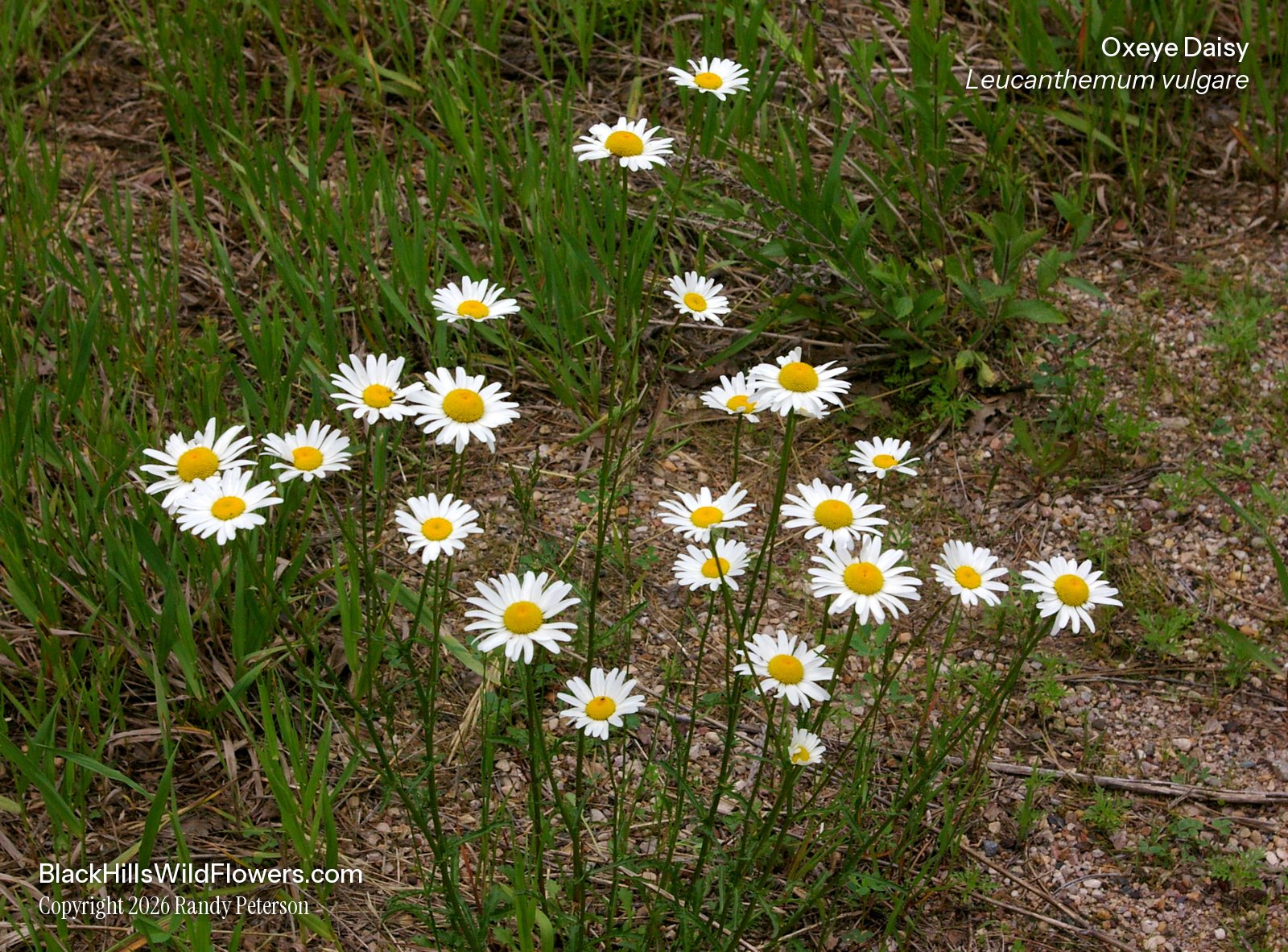
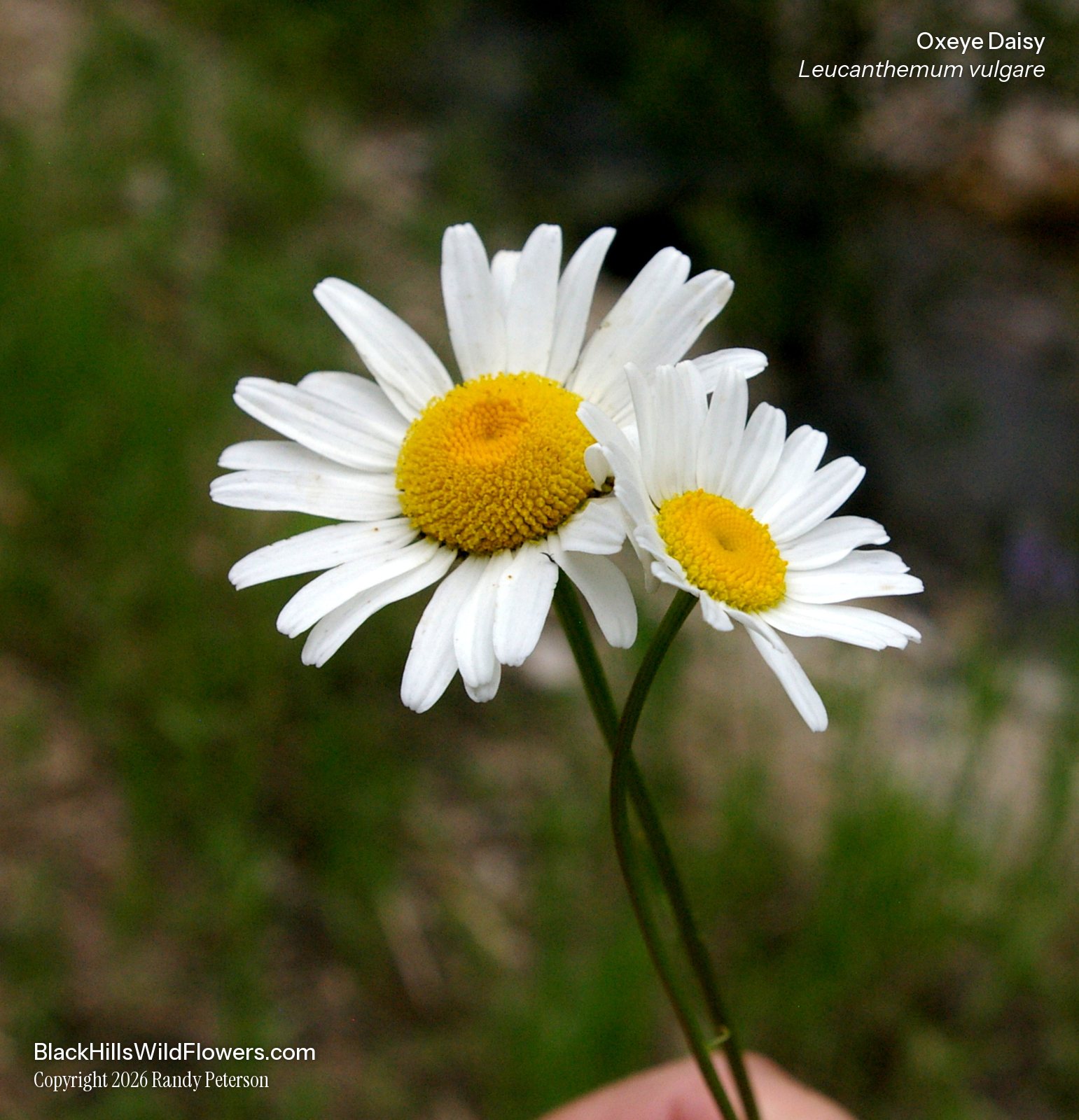
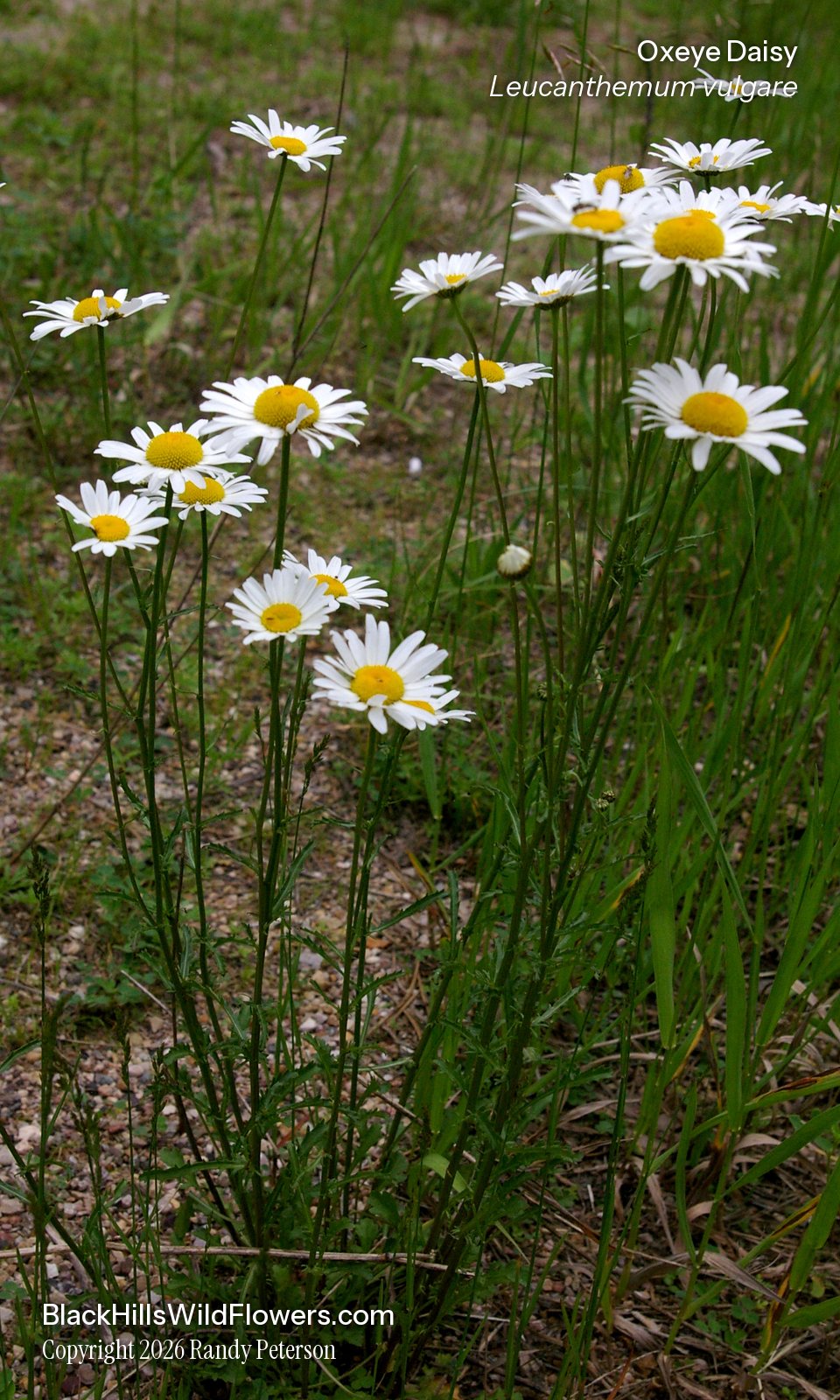
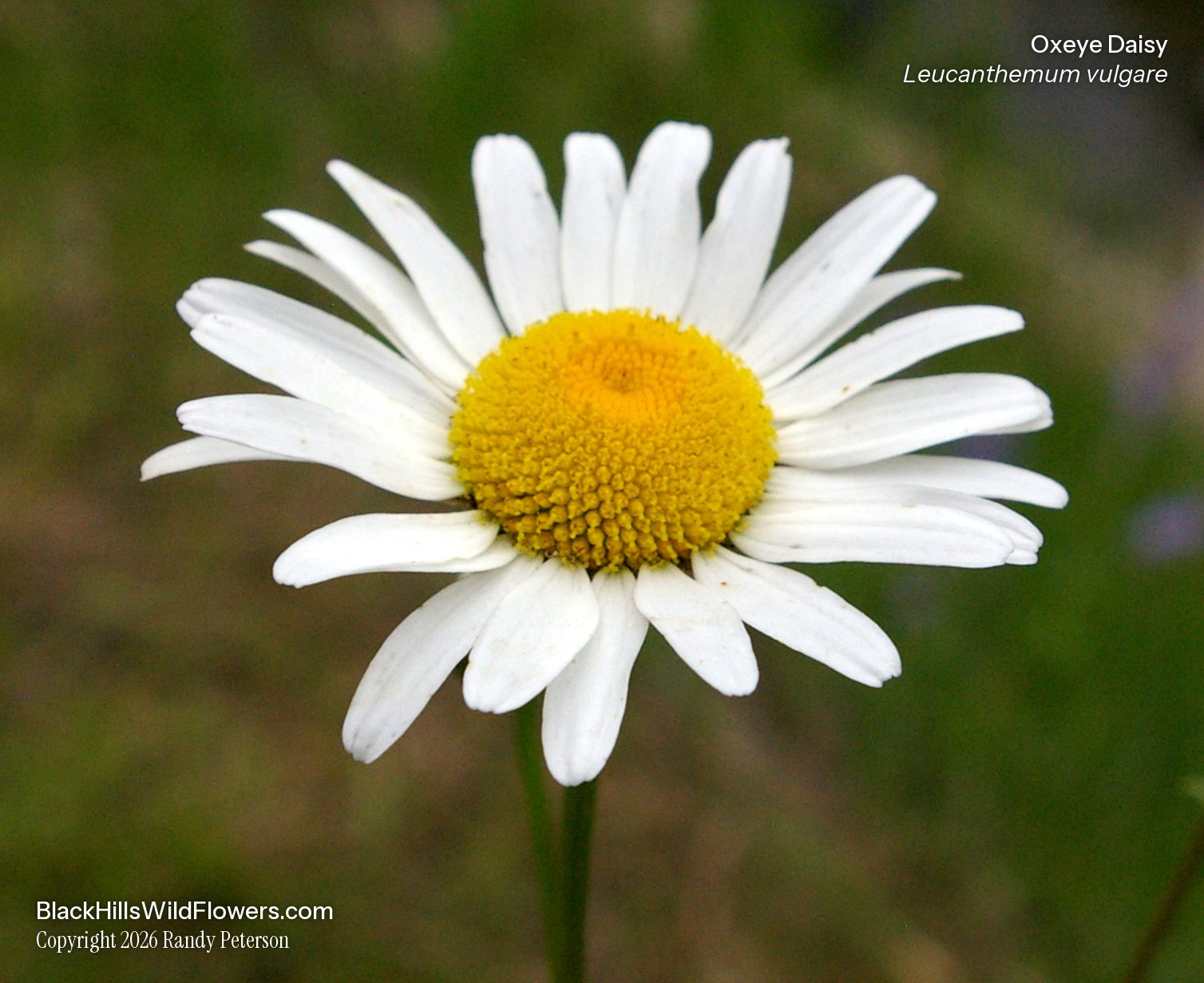
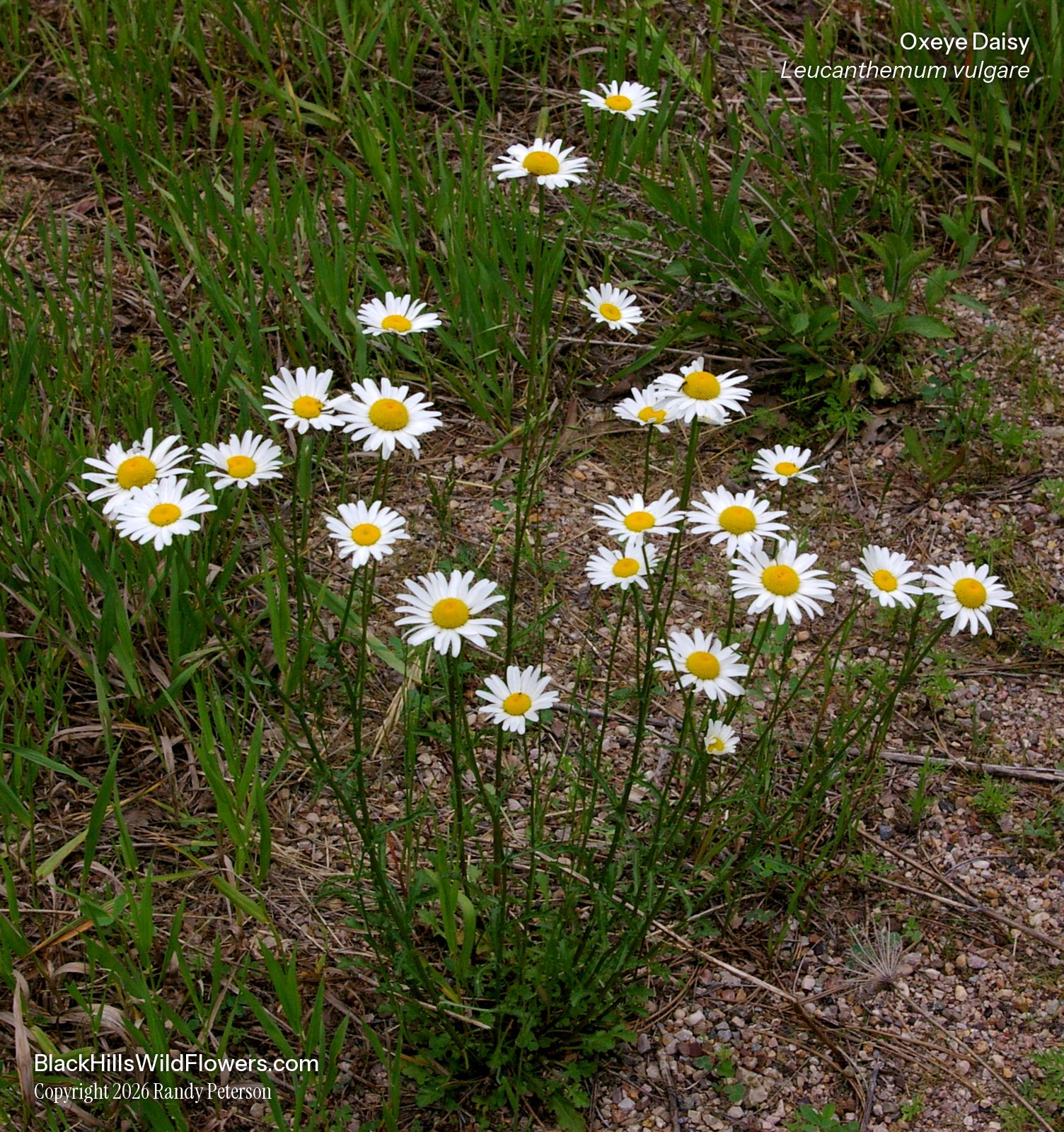
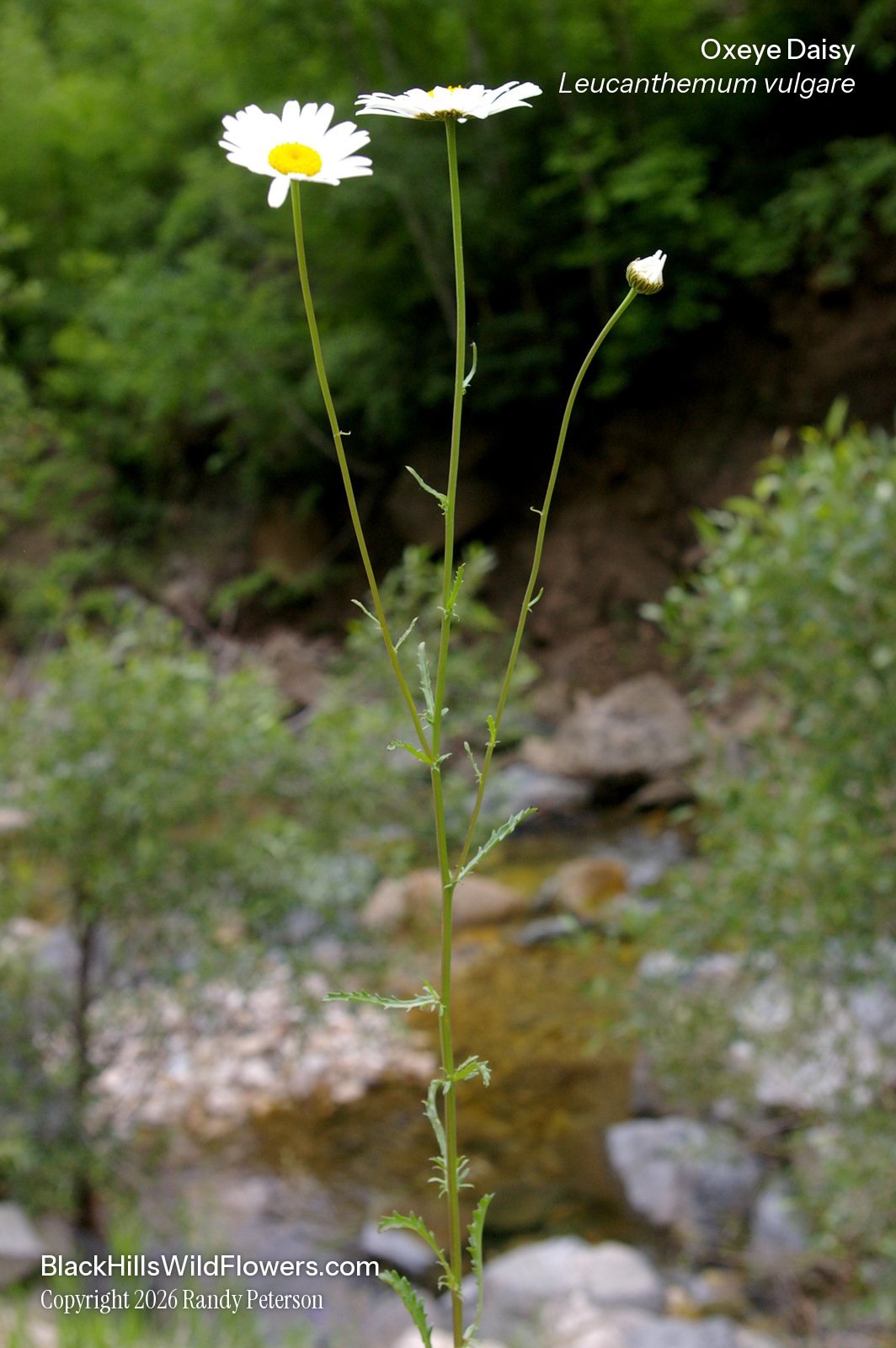
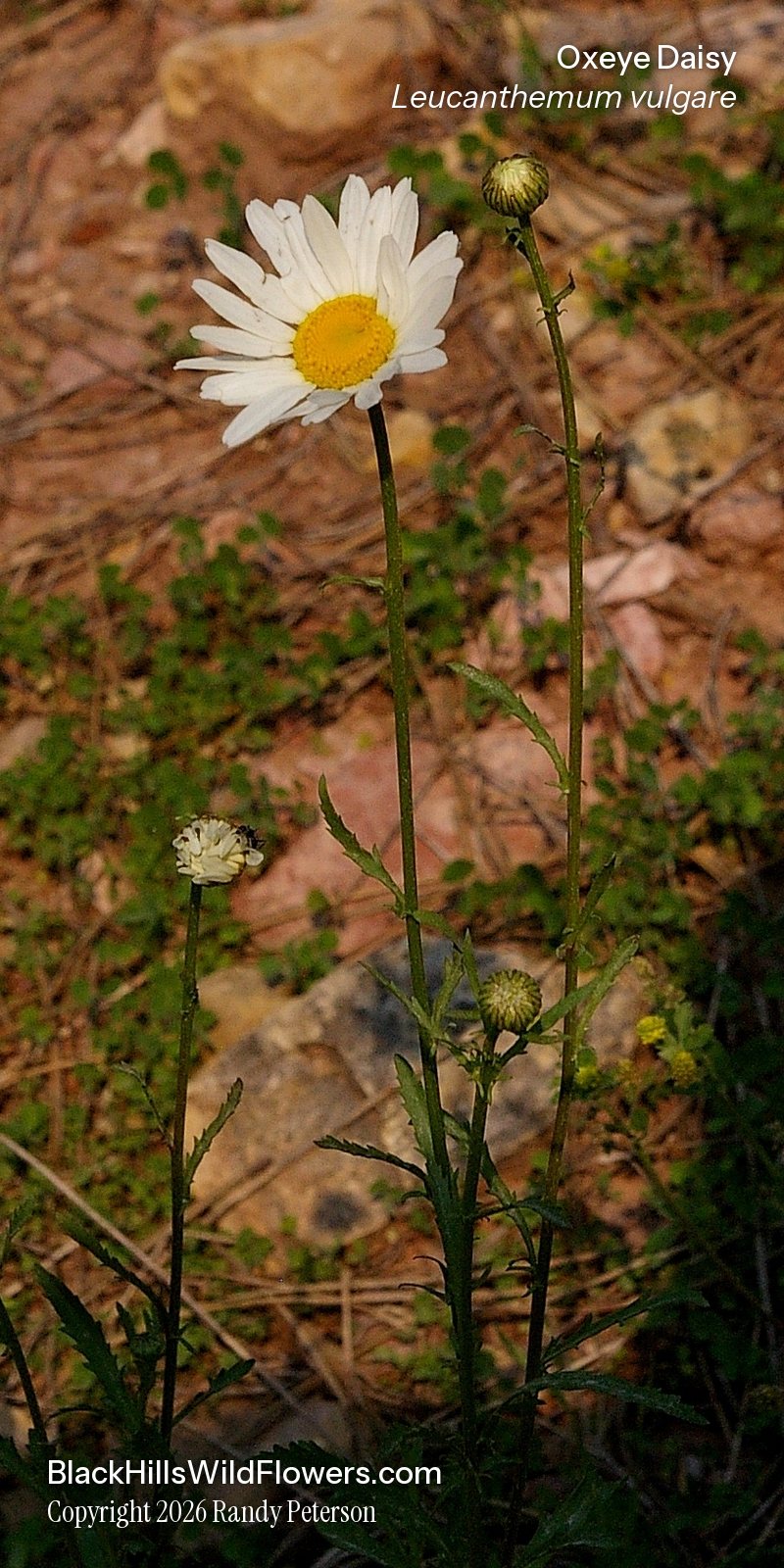
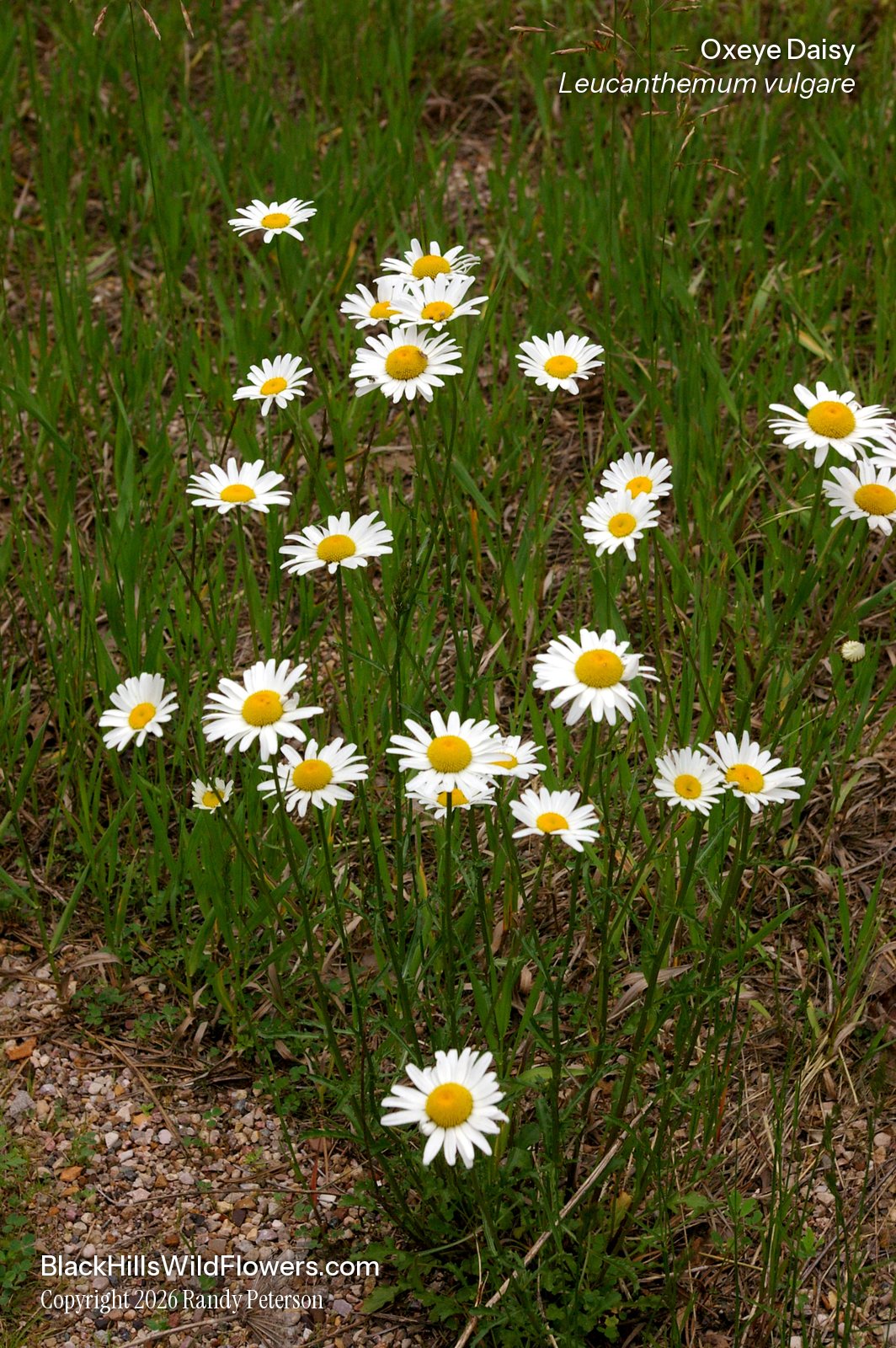
Oxeye Daisy (Leucanthemum vulgare) is a European perennial with one white-rayed, yellow-centered flower head, 3–6 cm across, on each stalk. In South Dakota it blooms May into August on disturbed prairie, meadows and roadsides, and it is a priority invasive plant on the Black Hills National Forest. Photographed in the Black Hills.
| Family | Asteraceae · Aster |
|---|---|
| Status | Introduced perennial |
| Blooms | May into August |
| Height | 20–80 cm (8–31 in) |
| Where | Disturbed prairie, grasslands, meadows, fields and roadsides |
| Also called | Common Daisy, Marguerite |
| Synonym | Chrysanthemum leucanthemum |
| Listed | Locally noxious weed in Pennington County, South Dakota (2023 through 2027), and a state designated noxious weed in Wyoming. On Wyoming's prohibited noxious weed seed list (Wyo. Code R. 010-63-3). |
Roots, seeds & germination
Root: Fibrous roots with short, creeping rhizomes (underground stems) that can form large colonies.
Seed: A small, ribbed brown achene (dry one-seeded fruit), 2–3 mm long. One flower head can make up to 200 seeds, and one plant up to 26,000.
Germination: Seeds germinate readily without special treatment. Most seedlings come up in spring, and seed that doesn't sprout may stay viable for many years.
How do you identify Oxeye Daisy?
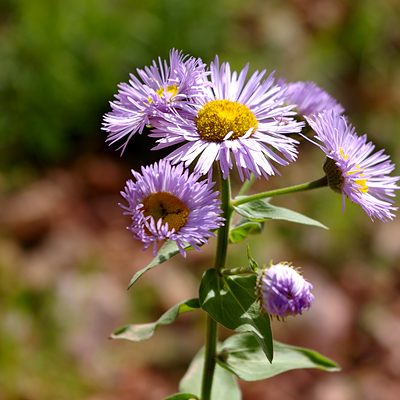
Look for a single flower head on a long, nearly bare stalk, with 15 to 35 white rays around a golden-yellow button center, and spoon-shaped lower leaves with narrow lobes or large teeth. Fleabanes have many very thin white rays, and chamomiles have very fine, thin leaves.
When does it bloom?
May into August.
Where does it grow?
Disturbed prairie, grasslands, meadows, fields and roadsides, in full sun to part shade. On the Black Hills National Forest it is most common in the northern Hills and appears to be moving south.
Other flowers to compare
Sources: Wyoming Department of Agriculture rules, Chapter 63: Prohibited Noxious Weeds, 010-63 Wyo. Code R. § 63-3 (Cornell LII); SDSU Open PRAIRIE: Leucanthemum vulgare; Minnesota Wildflowers: Ox-eye Daisy; Minnesota DNR: Oxeye daisy; South Dakota DANR: Locally Noxious Weed Pest List; Custer County, SD: Noxious Weeds; Black Hills National Forest: Invasive plants species accounts; University of Wyoming CAPS, Plants as Pests: Chrysanthemum leucanthemum (oxeye daisy).