Broom Snakeweed Gutierrezia sarothrae
Also called Broomweed, Matchbrush, Kindlingweed, Turpentine Weed, Snakeweed, Matchweed
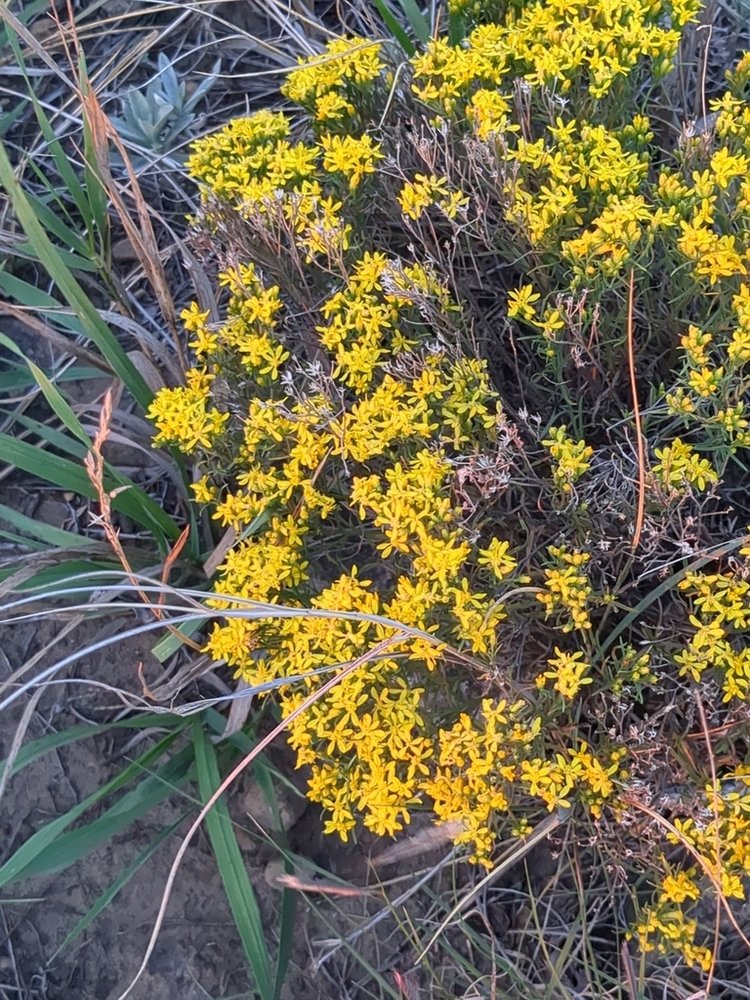
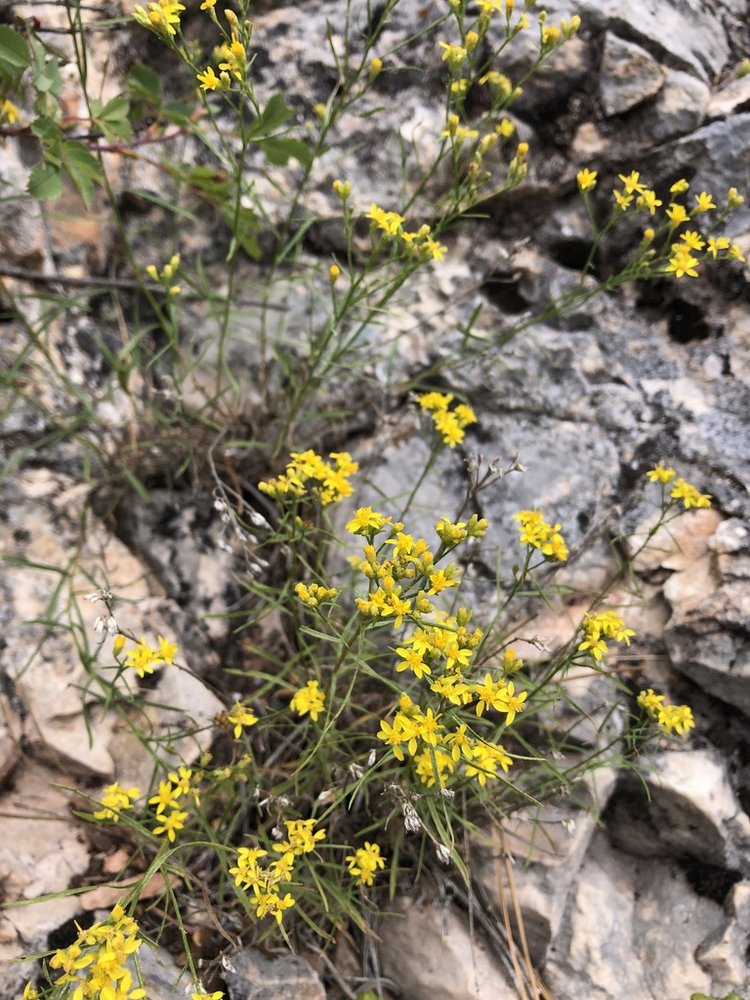
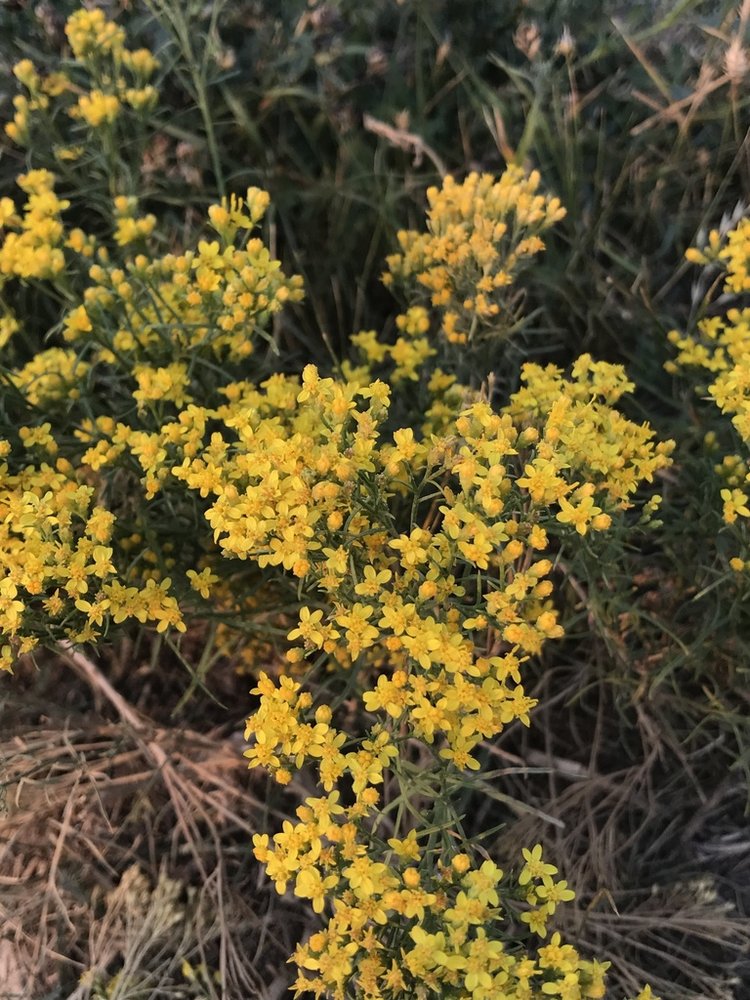
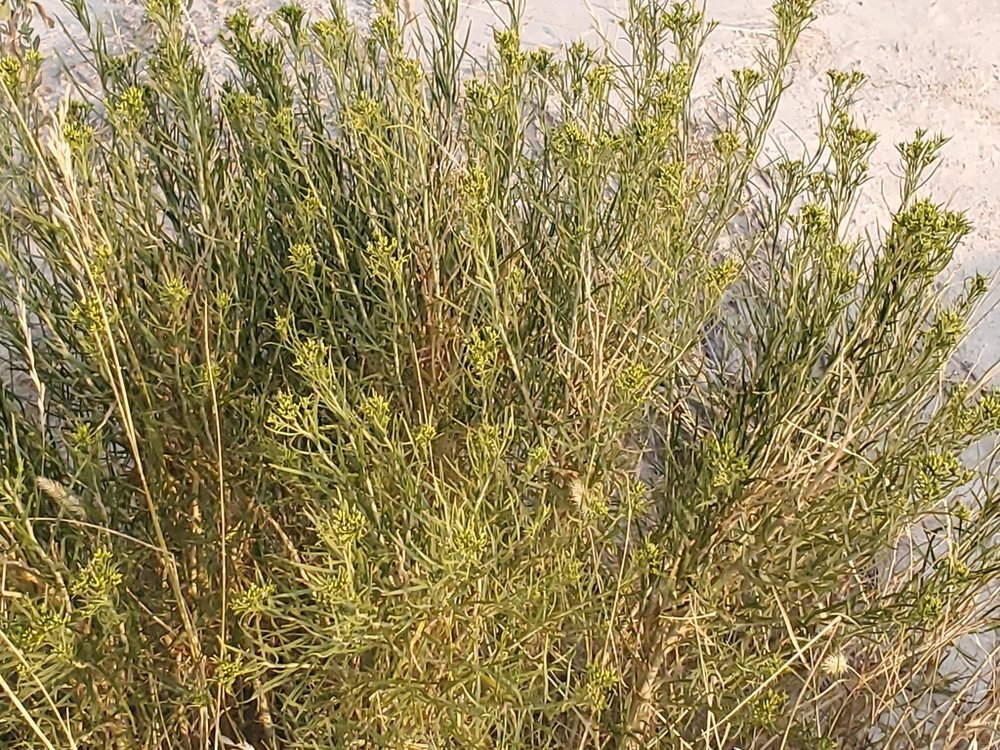
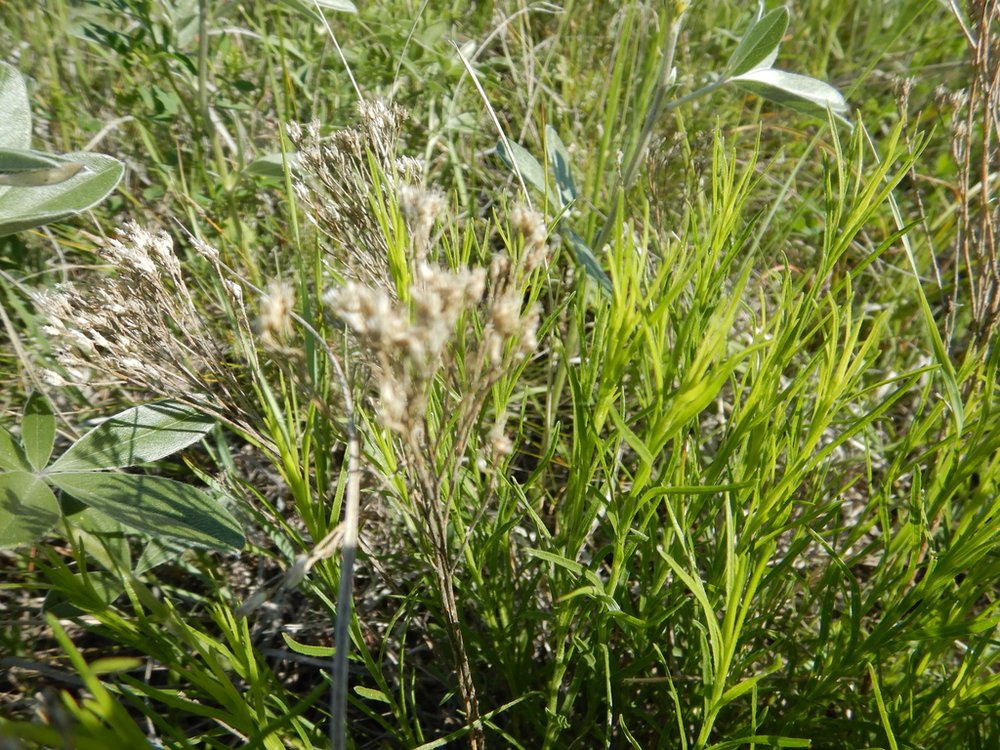
Broom Snakeweed (Gutierrezia sarothrae) is a low, rounded native subshrub, usually under 60 cm (2 ft), with many fine upright stems from a woody base, threadlike sticky leaves and flat-topped clusters of tiny yellow flower heads from late July into October. It grows on dry, barren, rocky ground and open low-elevation woodland in the Black Hills, where the Forest Service names it among the late-summer wildflowers and the National Park Service lists it at Wind Cave, Jewel Cave and Devils Tower.
Free photos from other sources
| Family | Asteraceae · Aster |
|---|---|
| Status | Native perennial subshrub |
| Blooms | Late July into October, mostly August and September |
| Height | 10–60 cm (4–24 in) |
| Where | Dry, barren, rocky or gravelly ground: prairie, ridges, limestone rims, road cuts and open ponderosa pine at low elevations |
| Also called | Broomweed, Matchbrush, Kindlingweed, Turpentine Weed, Snakeweed, Matchweed |
| Synonym | Xanthocephalum sarothrae, Gutierrezia linearis, Solidago sarothrae |
| Toxicity | Its foliage contains saponins that can sicken or kill cattle and sheep and cause abortion, mostly in winter and early spring when other forage is scarce. |
| Traditional use | Black Elk and Flying By (1998) record that the Lakota drank a decoction of fetid marigold and broomweed for cough from colds. The USDA plant guide adds that the Lakota took a decoction of the plant for colds, coughs and dizziness, that the Dakota made a laxative for horses from the flowers, that the Blackfoot steamed the roots for breathing ailments, and that the Comanche bundled the stems into brooms. |
| Note | A subshrub: woody at the base, with green stems that die back each winter. The Forest Service lists it among the Black Hills wildflowers, so it is filed under Yellow. |
Roots, seeds & germination
Root: A deep woody taproot forms in the first year, and wide-spreading side roots develop as the plant ages, sitting at about the same depth as the roots of many perennial grasses.
Seed: One plant can make more than 9,000 seeds a year. Each is a tiny hairy achene under 2 mm long with a crown of 8 to 10 pointed scales that soon fall off. The seed is light enough to blow on the wind, but most of it drops under the parent plant, and some stays in the dried heads for months; it has stayed viable for at least two years in the lab and can last several years in the soil.
Germination: The Fire Effects Information System and the USDA plant guide say the seed is dormant when it ripens and needs 4 to 6 months of after-ripening, then sprouts best at 15–30 °C (59–86 °F) on or just under the soil surface, with light helping; most seedlings come up in winter and spring. The Wildflower Center says no seed pretreatment is needed.
How do you identify Broom Snakeweed?
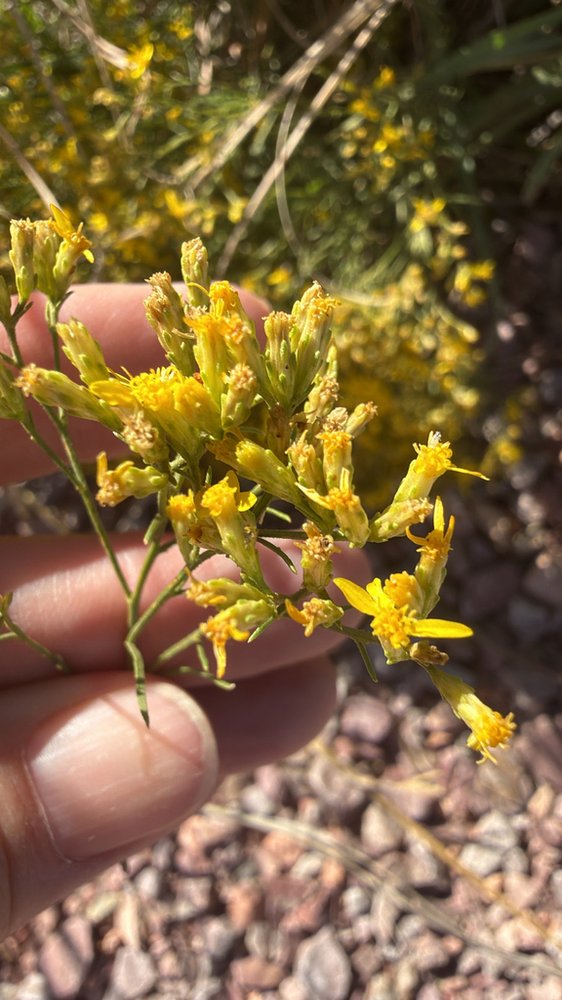
Look for a low, compact, rounded bush of many slender upright stems rising from a short woody base, with alternate threadlike leaves 5–60 mm long and only 1–3 mm wide that feel slightly sticky; crushed plants smell of pine. In late summer the stem tips carry dense, flat-topped clusters of tiny heads, each only 1.5–3 mm wide, with 3 to 8 short yellow rays and a few yellow disk florets, over narrow green-tipped bracts. The green stems die back in winter, so a plant carries a broom of dead twigs from the year before. Utah State University says it is commonly confused with rabbitbrush and separates them two ways: snakeweed heads have ray florets and rabbitbrush heads have none, and snakeweed stems die back in winter while rabbitbrush stems do not. Rubber Rabbitbrush, also in this guide, is the rabbitbrush the Forest Service describes for the Hills: a branched, mound-shaped shrub with gray-green stems in dry grassland and foothills of the western Black Hills.
When does it bloom?
Late July into October, mostly August and September.
Where does it grow?
Dry, barren, rocky or gravelly ground at low elevations: prairie, ridges and limestone rims, road cuts, hogbacks, disturbed ground and open ponderosa pine, best on limestone clay loams and shallow rocky or sandy soil; it is often abundant in overgrazed pasture, and its numbers usually rise after a fire because wind-blown seed recolonizes the burn. The Black Hills National Forest names it among its late-summer wildflowers, the National Park Service lists it at Wind Cave, Jewel Cave and Devils Tower, and the 1986 Jewel Cave plant survey records it. Herbarium specimens come from all five Black Hills counties in South Dakota and from Crook and Weston counties in Wyoming, from about 915 m (3,000 ft) to 1,710 m (5,600 ft), most of them from Lawrence County. Their labels give dry, rocky hilltops and roadsides, grassy ground along the top of a limestone rim, a rocky outcrop with scattered pine, an open meadow on a rocky bench, a rocky sandstone ridge, ponderosa pine forest, a dry meadow, a disturbed area at Jewel Cave National Monument, upland grassland, and sandstone rimrock under pine and bur oak in the Bear Lodge Mountains.
Other flowers to compare
Aster family (Asteraceae): 62 other plants in this guide
- Aromatic Aster
- Arrowleaf Balsamroot
- Arrowleaf Sweet Coltsfoot
- Bachelor's Button
- Balsam Ragwort
- Black-eyed Susan
- Blanket Flower
- Blue Lettuce
- Bull Thistle
- Canada Hawkweed
- Canada Lettuce
- Canada Thistle
- Chicory
- Common Burdock
- Common Dandelion
- Common Sunflower
- Common Tansy
- Common Yarrow
- Curlycup Gumweed
- Cutleaf Coneflower
- Dotted Gayfeather
- Drummond's Thistle
- Easter Daisy
- False Boneset
- Fetid Marigold
- Field Pussytoes
- Fringed Sagewort
- Hairy Golden Aster
- Heart-leaved Arnica
- Hooker's Townsend Daisy
- Horseweed
- Jerusalem Artichoke
- Lambstongue Groundsel
- Maximilian Sunflower
- Missouri Goldenrod
- Mountain Dandelion
- Musk Thistle
- Oxeye Daisy
- Pearly Everlasting
- Pineapple Weed
- Prairie Coneflower
- Prairie False Dandelion
- Purple Coneflower
- Rocky Mountain Blazing Star
- Rosy Pussytoes
- Rubber Rabbitbrush
- Rush Skeletonplant
- Scotch Thistle
- Silver Sagebrush
- Smooth Blue Aster
- Spotted Joe-Pye Weed
- Stemless Four-nerve Daisy
- Stiff Goldenrod
- Stiff Sunflower
- Threenerve Fleabane
- Wavyleaf Thistle
- Western Ragweed
- White Hawkweed
- White Prairie Aster
- White Sagebrush
- Woolly Groundsel
- Yellow Salsify
Sources: Black Hills Native Plants — Black Hills National Forest, USDA Forest Service; Flora of North America vol. 20: Gutierrezia sarothrae — eFloras; Fire Effects Information System: Gutierrezia sarothrae (Tirmenstein 1999) — USDA Forest Service; Plant Guide: Broom Snakeweed, Gutierrezia sarothrae (Hurteau 2002) — USDA NRCS; Range Plants of Utah: Broom Snakeweed — Utah State University Extension; Kansas Wildflowers and Grasses: Gutierrezia sarothrae, broom snakeweed; Lady Bird Johnson Wildflower Center: Gutierrezia sarothrae (GUSA2); ITIS: Gutierrezia sarothrae, TSN 37483; NPSpecies checklist, Wind Cave National Park vascular plants; NPSpecies checklist, Jewel Cave National Monument vascular plants; NPSpecies checklist, Devils Tower National Monument vascular plants; Marriott and Hartman 1986, A Survey of the Vegetation of Jewel Cave National Monument; GBIF occurrence search: Gutierrezia sarothrae herbarium specimens, South Dakota and Wyoming; GBIF specimen 3454983442: Lawrence County, 2013, flowering August 29, 1279 m; GBIF specimen 4851206146: Pennington County, 1984, flowering August 25, west-facing rocky ridge, 914 m; GBIF specimen 4912300724: Bear Lodge Mountains, Crook County, Wyoming, 1996, sandstone rimrock under pine and bur oak, 1707 m; GBIF specimen 3034738228: Jewel Cave National Monument, 1985, disturbed area, flowering July 25; GBIF specimen 2512332033: Lawrence County, 2011, grassy ground along the top of a limestone rim, flowering; Culturally Important Plants of the Lakota (Black Elk and Flying By, 1998), entry 109, filed with the South Dakota PUC.