Common Yarrow
Achillea millefolium
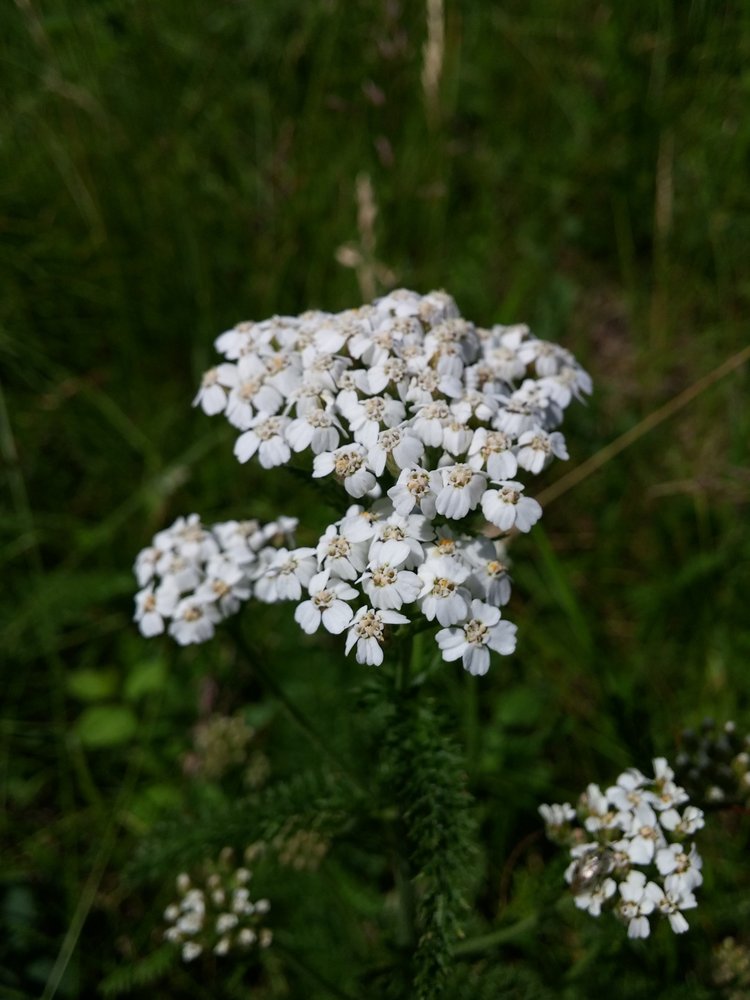
Common Yarrow (Achillea millefolium) is a native perennial of the sunflower family, with soft, feathery, strongly scented leaves and flat-topped clusters of tiny white flower heads. It blooms from June into September and is one of the most widespread wildflowers in the Black Hills, from the prairie foothills to the high country, and the National Park Service lists it at Wind Cave, Jewel Cave, Mount Rushmore and Devils Tower.
Free photos from other sources
| Family | Asteraceae · Aster |
|---|---|
| Status | Native perennial |
| Blooms | June into September |
| Height | 30–100 cm (12–40 in) |
| Where | Open, sunny ground: prairie, meadows, pine openings, rocky slopes and roadsides |
| Also called | Western Yarrow, Woolly Yarrow, Milfoil, ȟaŋté čhaŋȟlóǧaŋ (Lakota), tȟaópi pȟežúta (Lakota) |
| Synonym | Achillea lanulosa, Achillea millefolium var. lanulosa, Achillea millefolium var. occidentalis, Achillea borealis, Achillea gracilis |
| Toxicity | It contains volatile oils, alkaloids and glycosides, but it is not generally considered toxic because livestock seldom eat it. |
| Traditional use | Sitting Bull College's 1998 Culturally Important Plants of the Lakota says it was used as a poultice for wounds and bites, chewed for toothache, put in the ear as a plug of moistened leaves for earache, and made into a leaf tea for stomach ache, cough and sore throat. |
| Note | Black Hills plants are the native western form; European garden strains also turn up near towns and on reseeded roadsides. |
Roots, seeds & germination
Root: Fibrous roots plus long, branching rhizomes just below the surface, which let one plant spread into a patch. Broken rhizome pieces can resprout from as deep as 30 cm (12 in), which is why yarrow comes back quickly along trails and after fire.
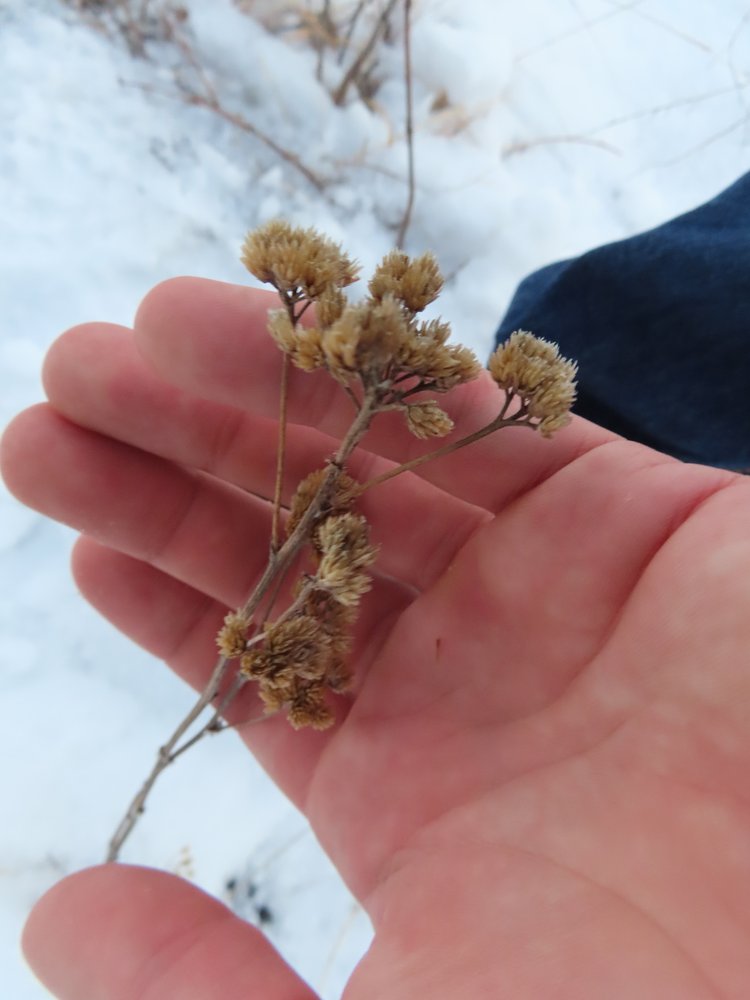
Seed: Tiny, flattened, gray-brown achenes about 2 mm (1/12 in) long, with no fluff. A single flowering stem can make several thousand, and most fall within 1–2 m (3–6 ft) of the parent. The dry brown seed heads often stand into winter.
Germination: Easy. Fresh seed needs no treatment and sprouts in about 2–14 days. It needs light, so it is pressed onto the surface or covered no more than 3–6 mm (⅛–¼ in), and the NRCS plant guide suggests a month of cold, moist stratification for best results.
How do you identify Common Yarrow?
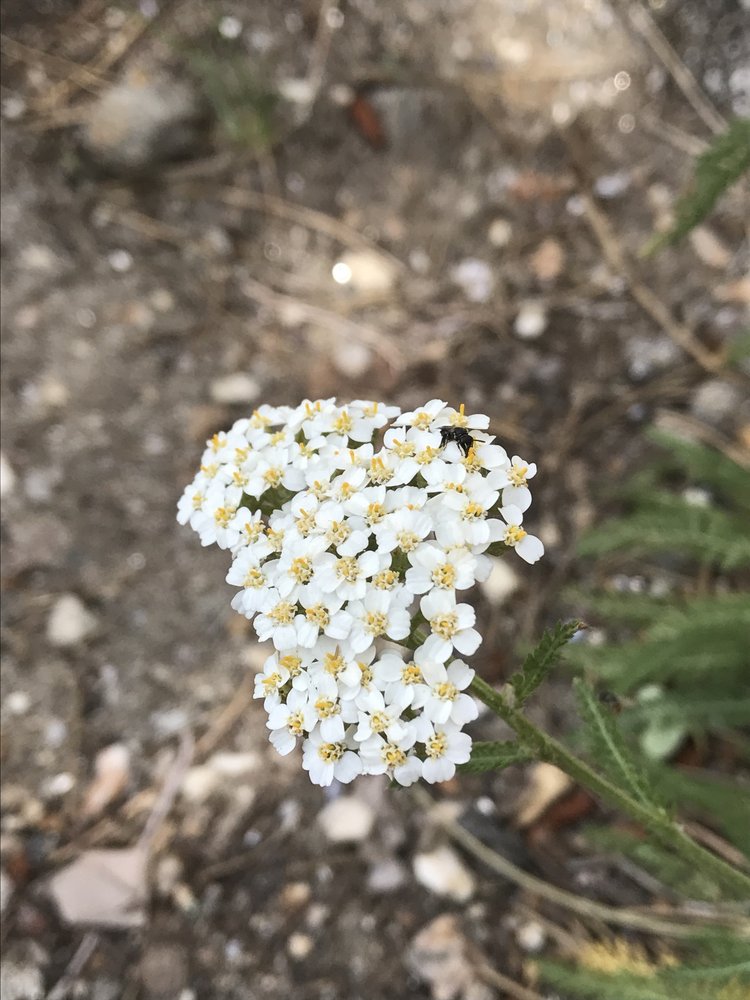
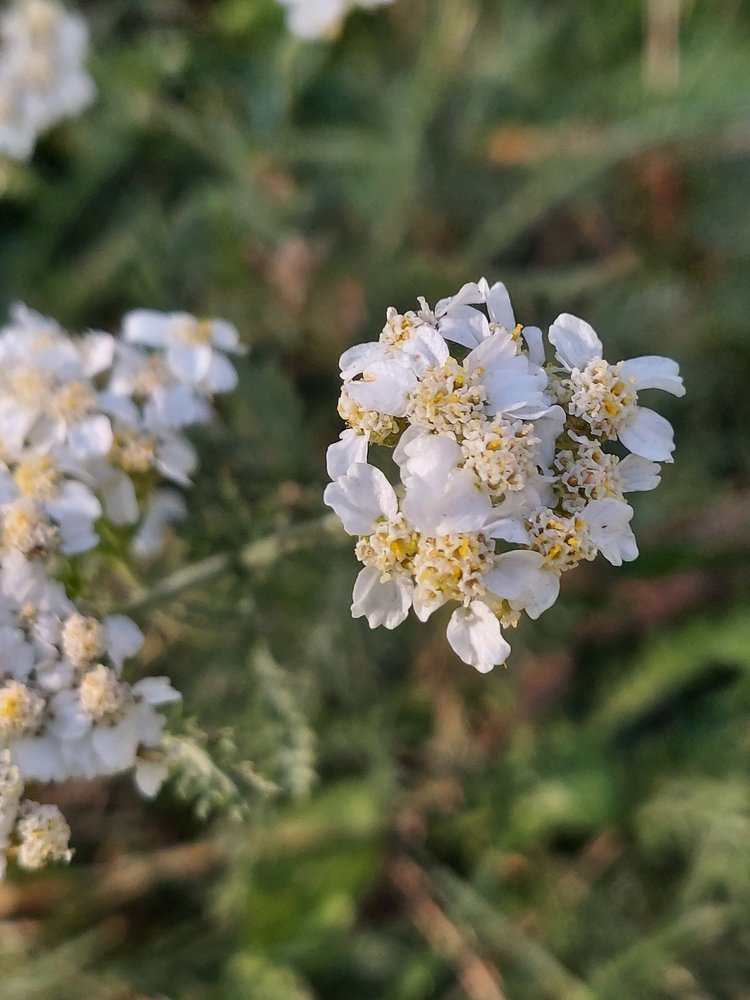
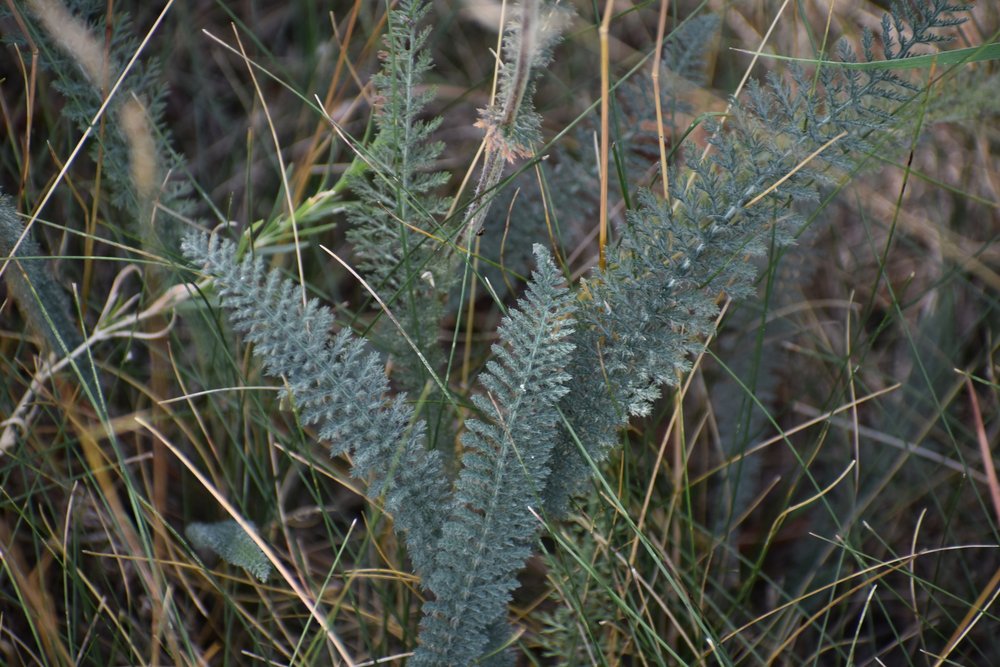
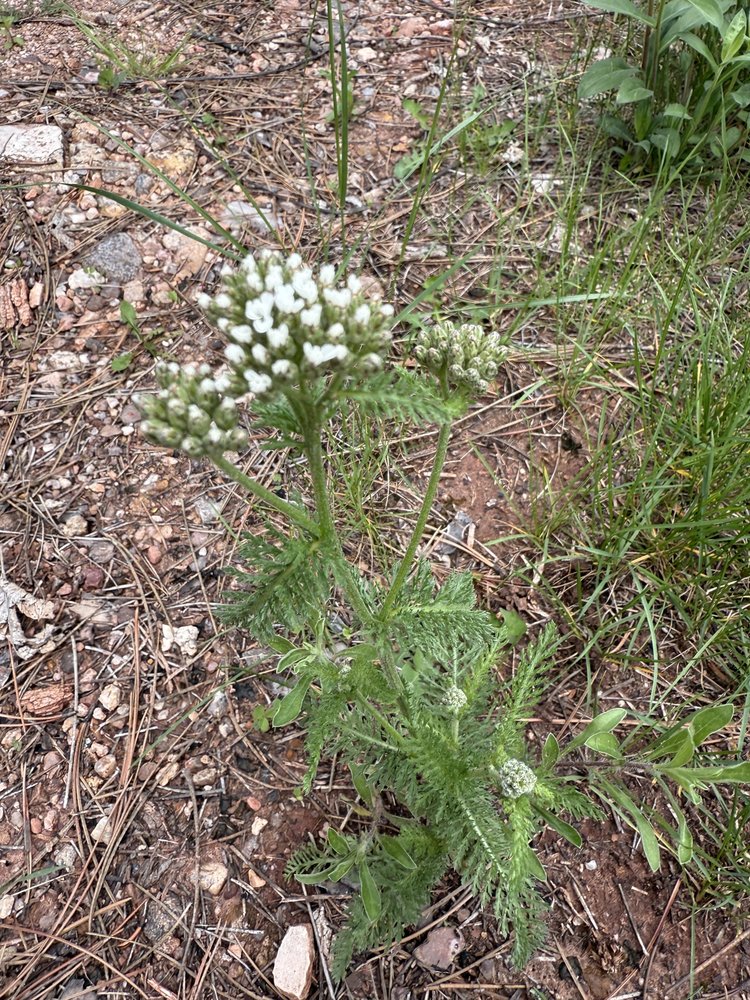
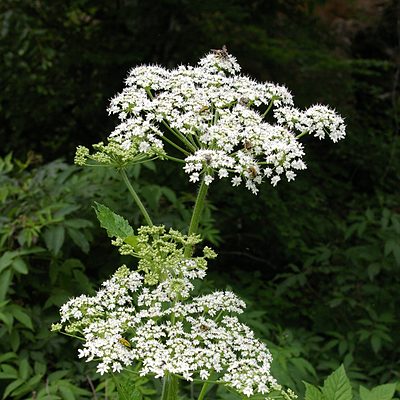
Look for a flat or slightly domed cluster 5–10 cm (2–4 in) across, made of many tiny flower heads, each about 4–6 mm (¼ in) across with a few short, broad white rays around a cream to pale yellow center. The leaves are cut into many very fine segments, so each looks like a feather, and they are usually soft and woolly-gray, with a strong, sharp, sage-like smell when crushed. Poison Hemlock and Water Hemlock carry white flowers in true umbels, with all the flower stalks spreading from one point and plain five-petaled flowers with no daisy center, on much larger plants with broader, divided leaflets.
When does it bloom?
June into September.
Where does it grow?
Open, sunny, usually well-drained ground: mixed-grass prairie, mountain meadows, ponderosa pine openings, aspen stands, rocky slopes, trailsides and roadsides, but not dense shade. The Black Hills National Forest says it grows throughout the Black Hills, and herbarium specimens from Lawrence, Pennington, Custer, Meade and Fall River counties and Crook and Weston counties in Wyoming range from about 1,100 to 2,160 m (3,600–7,100 ft). The National Park Service lists it at Wind Cave, Jewel Cave, Mount Rushmore and Devils Tower, and iNaturalist also has records from Custer State Park.
Other flowers to compare
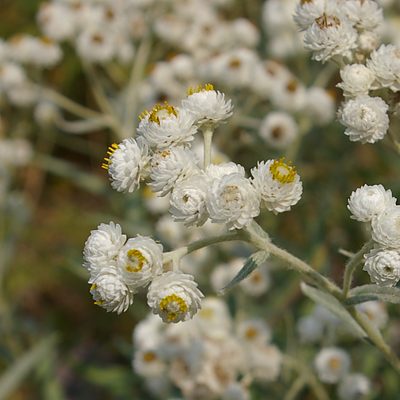
Sources: NPS, Jewel Cave National Monument: Wildflowers (Common Yarrow, marked * nonnative); Marriott and Hartman 1986, A Survey of the Vegetation of Jewel Cave National Monument (lists A. millefolium var. lanulosa, no exotic code; species list p. 11 of PDF); USDA Forest Service, Black Hills National Forest: Black Hills Native Plants; NPSpecies checklist, Wind Cave National Park vascular plants; NPSpecies checklist, Jewel Cave National Monument vascular plants; NPSpecies checklist, Mount Rushmore National Memorial vascular plants; NPSpecies checklist, Devils Tower National Monument vascular plants; GBIF occurrence search: Achillea millefolium preserved specimens, Black Hills bounding box; iNaturalist: Achillea millefolium research-grade observations, Black Hills radius; Culturally Important Plants of the Lakota (Black Elk and Flying By, Sitting Bull College, 1998), filed with the South Dakota PUC; Gilmore 1919, Uses of Plants by the Indians of the Missouri River Region (Internet Archive); Native American Ethnobotany Database (BRIT): Achillea millefolium, Lakota (Kraft 1990); USDA NRCS Plant Guide: Common Yarrow, Achillea millefolium; USDA NRCS Plant Guide: Western Yarrow, Achillea millefolium var. occidentalis (archived); USDA Forest Service Fire Effects Information System: Achillea millefolium; USDA Forest Service Celebrating Wildflowers: Common Yarrow; Montalvo et al. 2010, Species Profile: Achillea millefolium (Riverside-Corona RCD / UC Riverside); Plants of the World Online (Kew): Achillea millefolium L.; Plants of the World Online (Kew): Achillea gracilis Raf.; Plants of the World Online (Kew): Achillea millefolium var. occidentalis DC.; Minnesota Wildflowers: Common Yarrow; Minnesota Wildflowers: Poison Hemlock; SDSU Open PRAIRIE: Apiaceae: Cicuta maculata (R. Neil Reese); Kansas Wildflowers and Grasses: Water Hemlock.