Blanket Flower
Gaillardia aristata
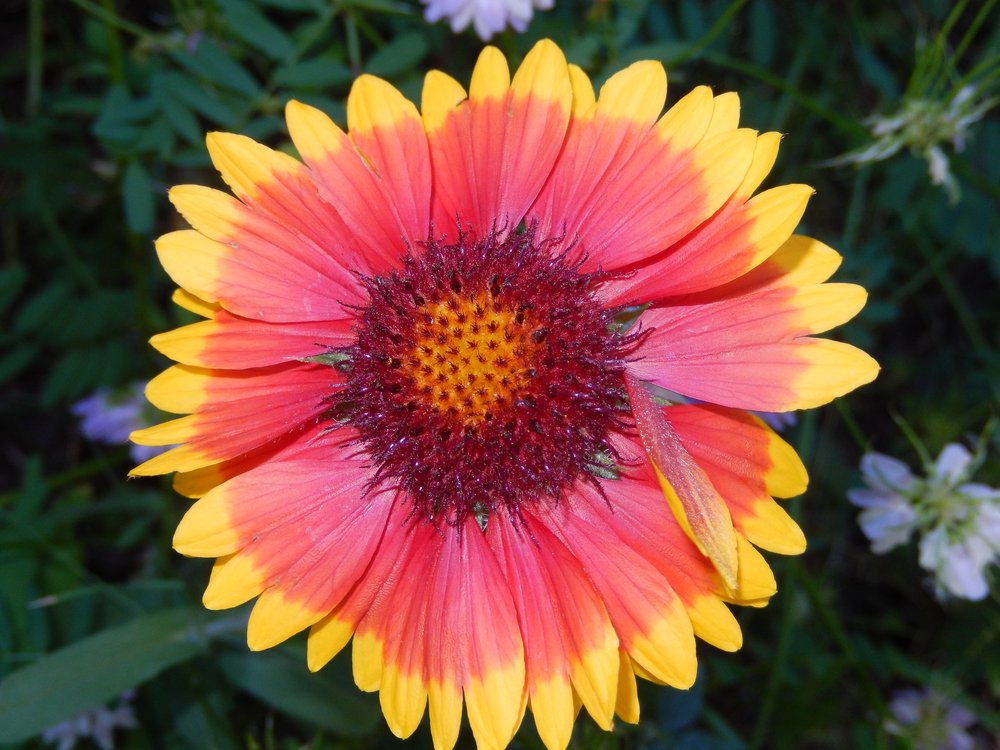
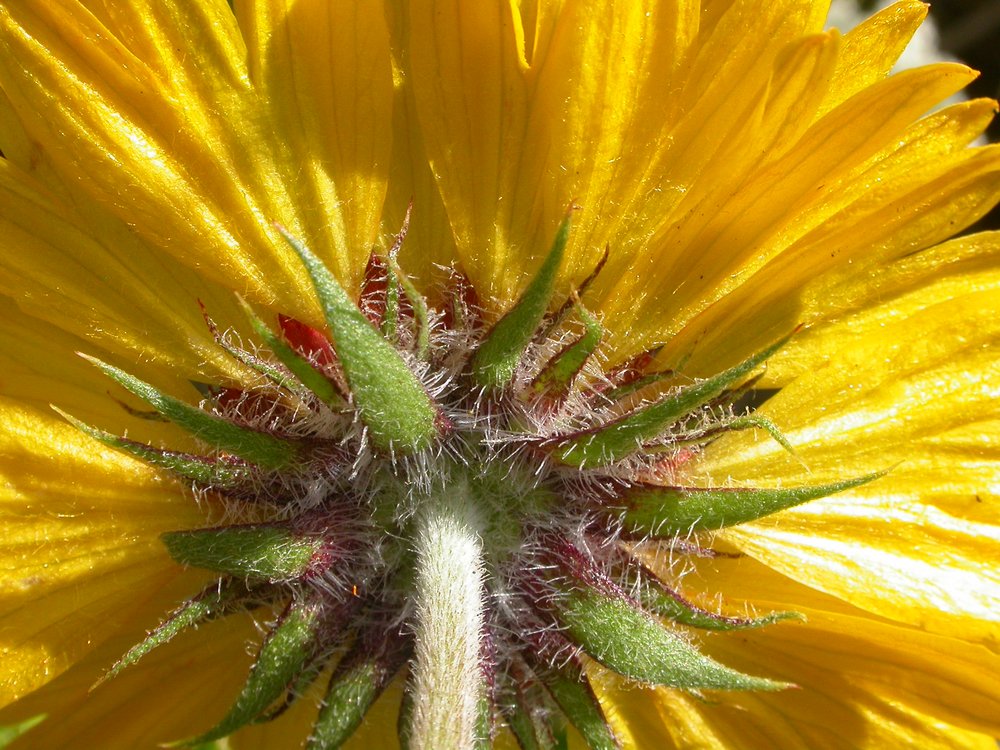
Blanket Flower (Gaillardia aristata) is a short-lived native perennial of the sunflower family, with large flower heads that have a domed, red-purple center and rays that are red at the base and yellow at the tips. It blooms from late June through August in sunny meadows and on open slopes, most often on the limestone plateau of the western Black Hills, and is listed at Jewel Cave and Wind Cave.
Free photos from other sources
| Family | Asteraceae · Aster |
|---|---|
| Status | Native perennial |
| Blooms | Late June into August, with a few into September |
| Height | 20–80 cm (8–31 in) |
| Where | Sunny meadows, prairie, open pine parks, rocky slopes and roadsides, especially on the limestone plateau |
| Also called | Gaillardia, Common Blanketflower, Common Gaillardia, Great Blanket-flower |
| Synonym | Gaillardia hallii |
| Traditional use | The Botanical Research Institute of Texas ethnobotany database, citing Hellson’s 1974 study of the Blackfoot, says the Blackfoot rubbed the flower heads on rawhide bags to waterproof them, drank a root tea for stomach trouble, put a poultice of chewed or powdered root on skin disorders, and rubbed root tea on horses' saddle sores. |
Roots, seeds & germination
Root: A tapering taproot with many fibrous side roots near the surface, reaching at least about 40 cm (16 in) deep. Plants are short-lived, often only a few years, and keep a stand going by seeding heavily.
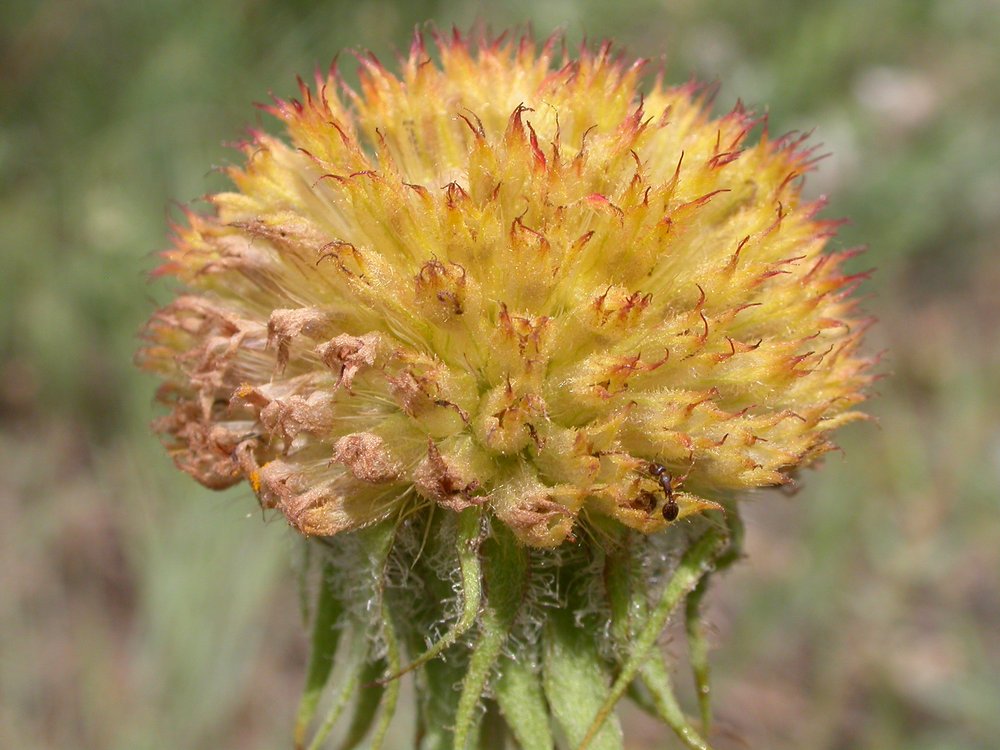
Seed: Hairy achenes about 3–6 mm (⅛–¼ in) long, each with a crown of 6–10 papery scales that end in long bristles. A ripe head becomes a pale, fuzzy, bristly ball, and the seed ripens in August.
Germination: An easy seed. The USDA plant guide says it needs no cold treatment, and sprouts appear in 5–7 days. The seed needs light, so it is sown shallow, no deeper than 6–12 mm (¼–½ in), in spring or fall.
How do you identify Blanket Flower?
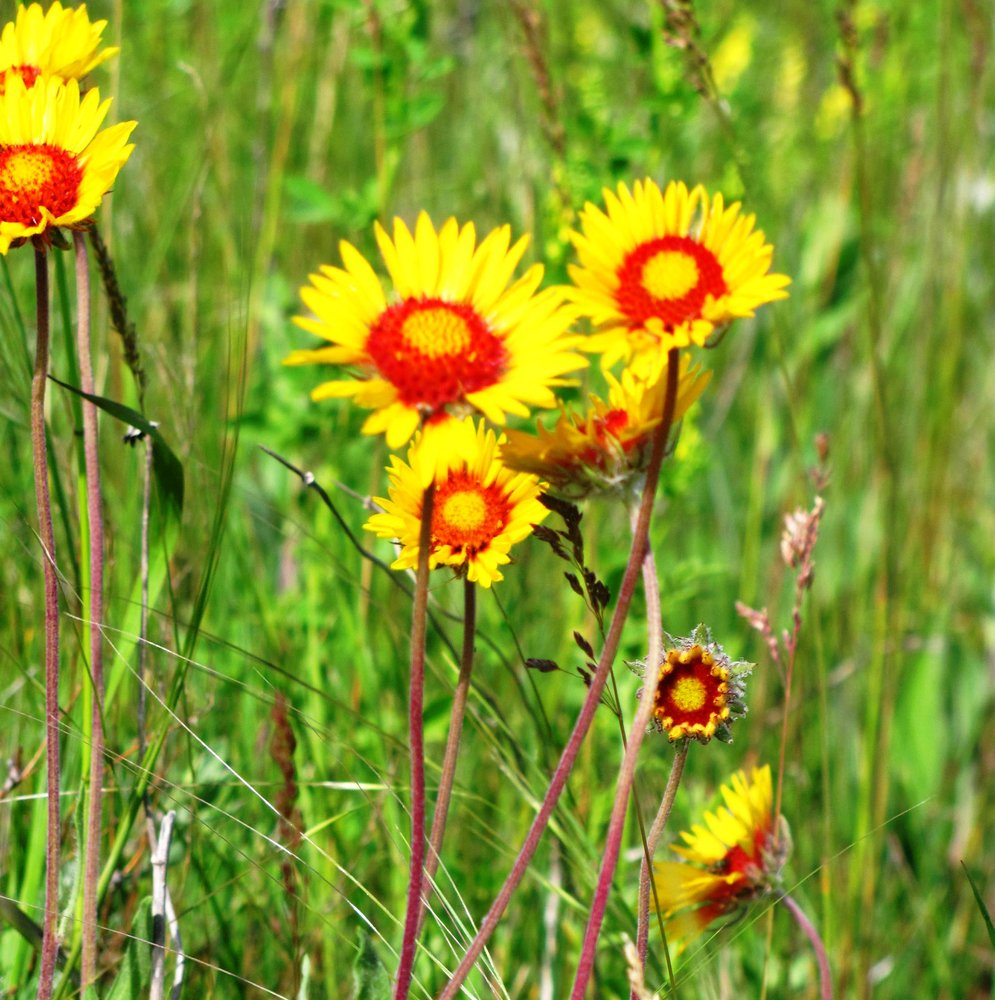
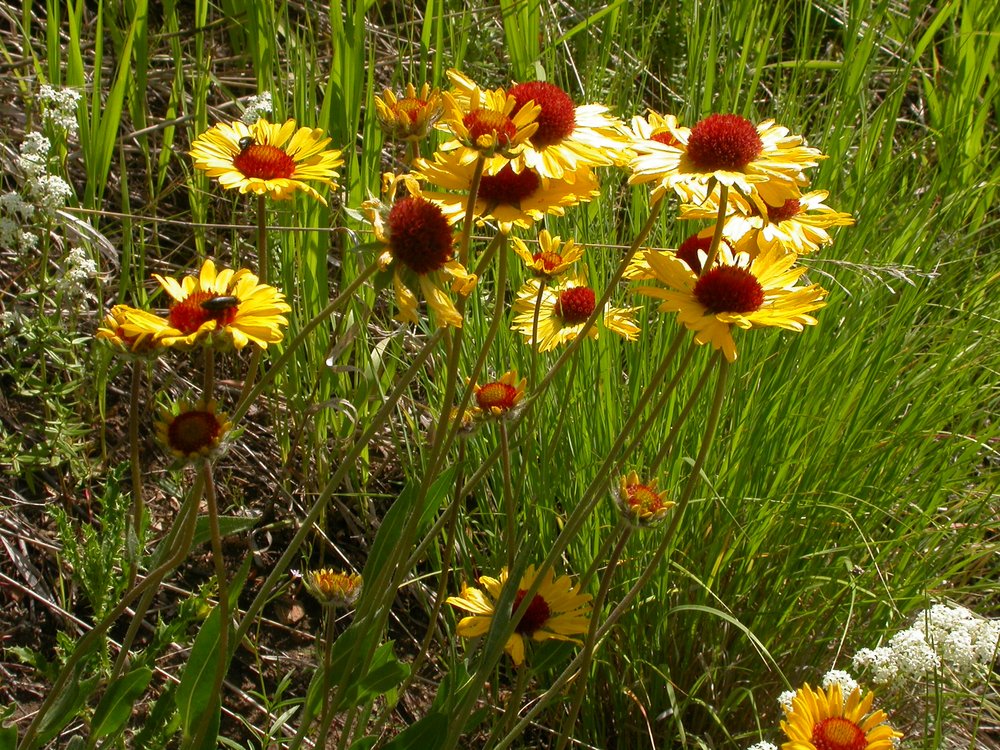
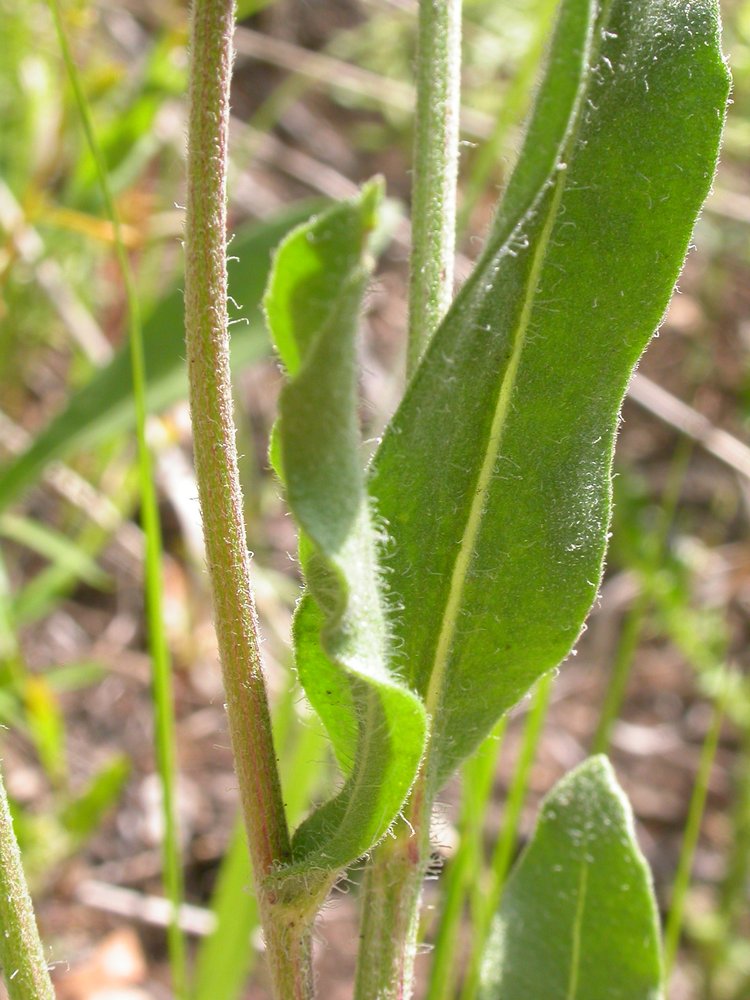
Look for one head, 4–8 cm (1½–3 in) across, at the top of each long, hairy stalk with few leaves. The 6–18 rays have three teeth at the tip and are usually yellow with a red-purple band at the base, though on some plants the red runs most of the way out. The center is a fuzzy, domed disk of maroon florets, and the grayish, rough-hairy leaves are mostly in a clump at the base. Gaillardia pulchella, an annual from roadside seed mixes, looks red from a distance, with only narrow yellow ray tips, and is a bushy, branched plant with many smaller heads, leaves up the stem and no clump of leaves at the base. After bloom the head turns into a round, bristly, straw-colored ball of seeds.
When does it bloom?
Late June into August, with a few into September.
Where does it grow?
Sun on dry to moist, well-drained soil in meadows, mixed-grass prairie, open ponderosa pine parks, rocky and south-facing slopes, and roadsides. It does well after fire and light disturbance. In the Black Hills it is most common on the high limestone plateau of the western Hills and also grows down into the foothills, from about 1,000 to 2,000 m (3,300–6,560 ft). The 1986 Jewel Cave survey and the Wind Cave species list include it, and herbarium specimens since 1912 come from Lawrence, Pennington, Custer, Meade and Fall River counties, SD, and Crook and Weston counties, WY.
Other flowers to compare
Sources: Marriott and Hartman 1986, A Survey of the Vegetation of Jewel Cave National Monument; NPSpecies checklist, Jewel Cave National Monument vascular plants; NPSpecies checklist, Wind Cave National Park vascular plants; NPS, Mount Rushmore National Memorial: Wildflowers; USDA Forest Service, Black Hills National Forest: Black Hills Native Plants; Black Hills National Forest on Flickr: Blanket flower, Dugout Gulch Botanical Area; GBIF occurrence search: Gaillardia aristata, Black Hills area; GBIF occurrence search: Gaillardia pulchella, Black Hills area; Custer SD: Wildflowers of the Black Hills; USDA NRCS Plant Guide: Blanketflower, Gaillardia aristata (Winslow et al., Bridger PMC); SDSU Open PRAIRIE: Asteraceae: Gaillardia aristata (R. Neil Reese); Native Plant Network propagation protocol: Gaillardia aristata (USDA NRCS Pullman PMC); Western Forbs: Blanketflower (Gucker & Shaw 2025); Montana State University fact sheet: Blanket Flower (Delphia, Burkle & O'Neill); Minnesota Wildflowers: Gaillardia aristata (Blanketflower); Native American Ethnobotany Database (BRIT): Gaillardia search; Galileo Educational Network, Kainai plants: Common Gaillardia; USDA NRCS ND PMC, Wildflowers of North Dakota and their Medicinal Uses, Part II (2011, archived); Flora of North America descriptions via Encyclopedia of Life: Gaillardia aristata; Flora of North America descriptions via Encyclopedia of Life: Gaillardia pulchella; Missouri Plants: Gaillardia pulchella; Plants of the World Online (Kew): Gaillardia aristata; USDA PLANTS: Gaillardia aristata (GAAR); Wikipedia: Gaillardia aristata (synonym list).