Hooker's Townsend Daisy Townsendia hookeri
Also called Hooker's Townsendia, Hooker's Townsend-daisy
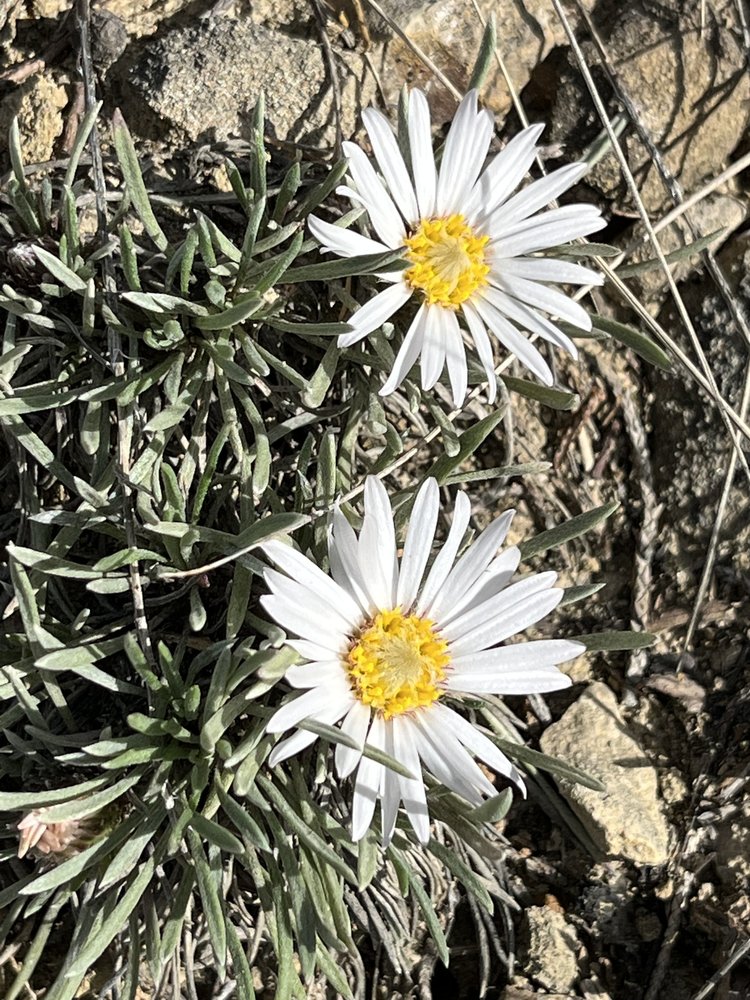
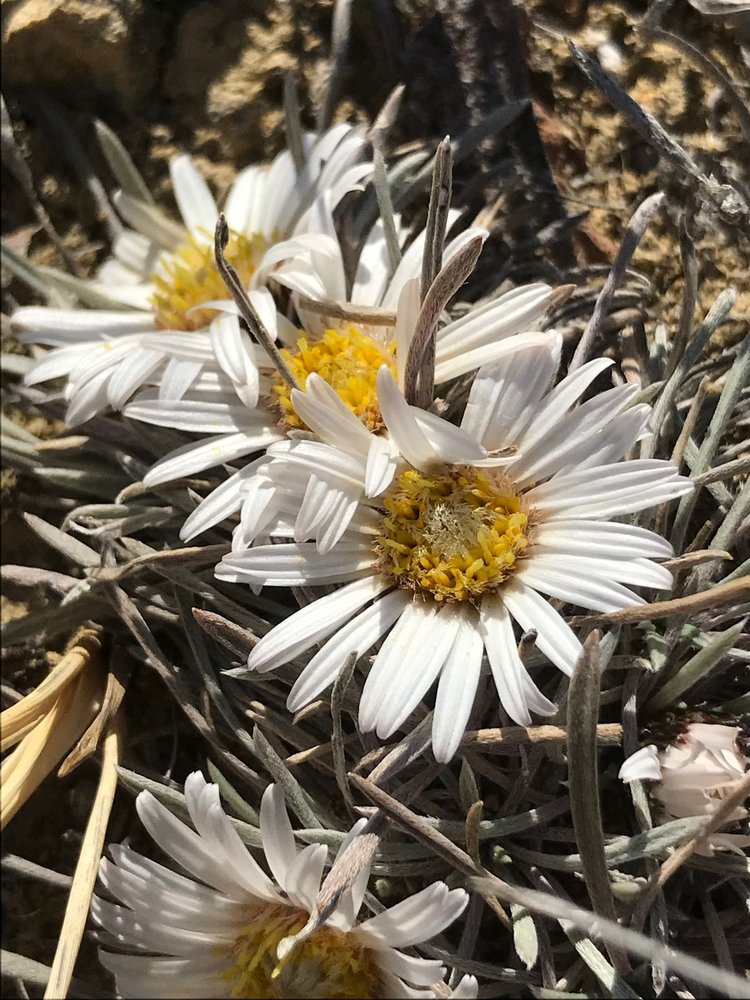
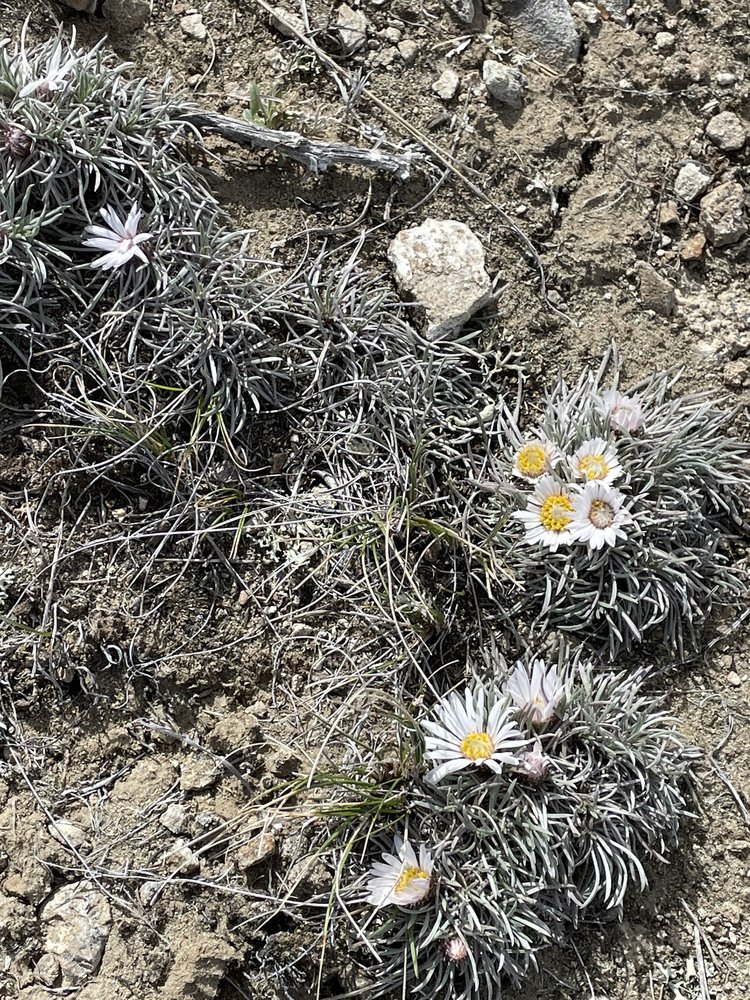
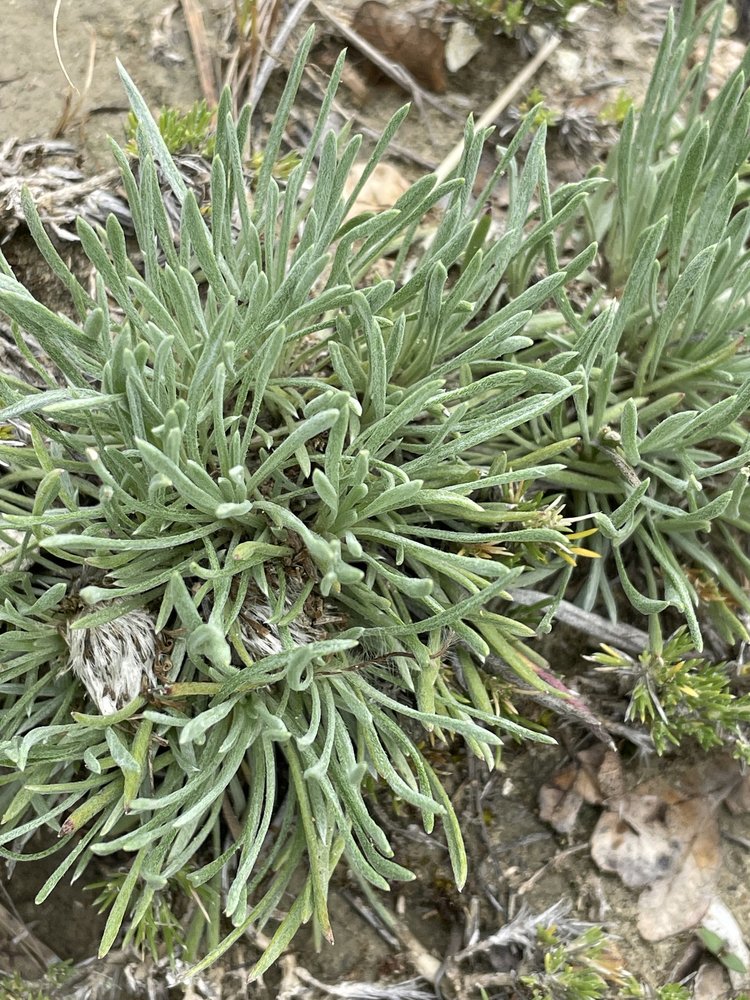
Hooker's Townsend Daisy (Townsendia hookeri) is a native perennial that forms a small, silvery cushion of narrow leaves 1–3 cm (0.5–1 in) tall, with white to pink daisies sitting right on the mat from April into June. It has been recorded in the Black Hills, and South Dakota ranks it S3, vulnerable, listing it from sparse grassland and bare ground.
Free photos from other sources
| Family | Asteraceae · Aster |
|---|---|
| Status | Native perennial |
| Blooms | April into June |
| Height | 1–3 cm (0.5–1 in) |
| Where | Sparse grassland, bare ground, gravelly benches and sandy slopes |
| Also called | Hooker's Townsendia, Hooker's Townsend-daisy |
| Synonym | Townsendia nuttallii |
| Note | South Dakota ranks Hooker's Townsend Daisy S3, vulnerable in the state. This page gives no locations. |
Roots, seeds & germination
Root: A perennial from a woody, branched crown (a caudex) that builds a small mat.
Seed: Each head makes many small, dry, one-seeded fruits 3.5–4.5 mm (about 0.15 in) long, covered with hairs that end in tiny barbs and topped with a ring of about 30 bristle-like scales 5–7.5 mm (0.2–0.3 in) long that stays on the seed.
How do you identify Hooker's Townsend Daisy?
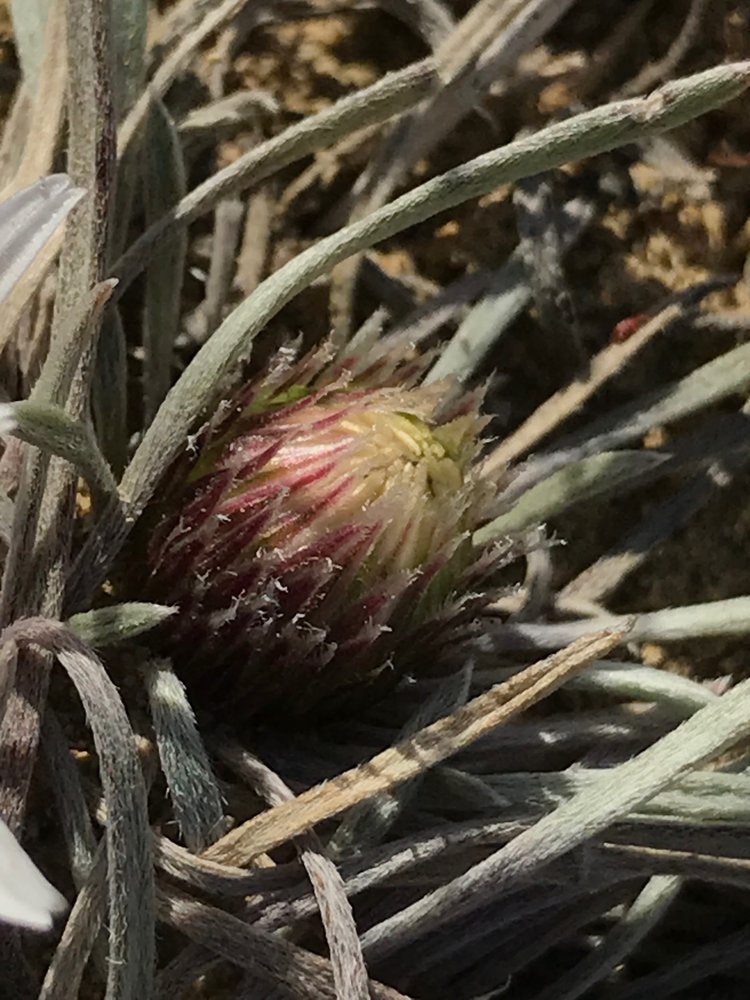
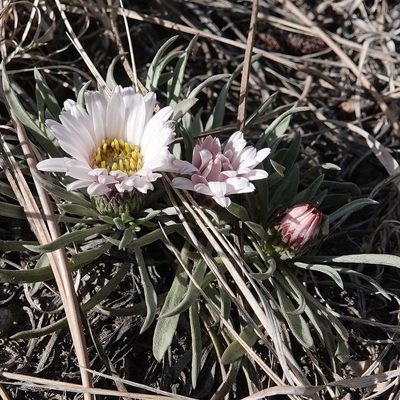
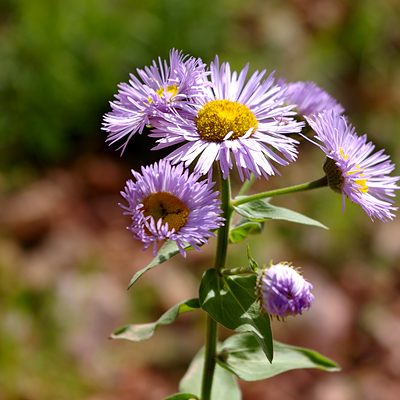
The whole plant is a tight cushion of narrow, silvery-hairy, fleshy leaves 5–30 mm (0.2–1.2 in) long, and the flower heads sit on it with almost no stalk. Each head is 8–18 mm (0.3–0.7 in) across the cup of bracts, with 15 to 35 white rays (pink on some plants) 8–12 mm (0.3–0.5 in) long around a yellow center. The cup of bracts under the head is 7–12 mm (0.3–0.5 in) high, and each bract tapers to a fine point with a tuft of hairs at the tip and hairy edges. Easter Daisy (Townsendia exscapa) grows in the same kind of grassland and looks much alike, but its heads are bigger, with a bract cup 12–20 mm (0.5–0.8 in) high and rays 12–18 mm (0.5–0.7 in) long, its bracts have hairy edges but no tuft of hairs at the tip, and its leaves are longer, 10–40 mm (0.4–1.6 in), and not fleshy.
When does it bloom?
April into June.
Where does it grow?
Sparse grassland and bare ground in South Dakota. Across its range it grows on gravelly benches and sandy slopes at 700–1,800 m (2,300–5,900 ft), and in Montana in grassland, sagebrush and open conifer woodland.
Other daisies in this guide
Aster family (Asteraceae): 62 other plants in this guide
- Aromatic Aster
- Arrowleaf Balsamroot
- Arrowleaf Sweet Coltsfoot
- Bachelor's Button
- Balsam Ragwort
- Black-eyed Susan
- Blanket Flower
- Blue Lettuce
- Broom Snakeweed
- Bull Thistle
- Canada Hawkweed
- Canada Lettuce
- Canada Thistle
- Chicory
- Common Burdock
- Common Dandelion
- Common Sunflower
- Common Tansy
- Common Yarrow
- Curlycup Gumweed
- Cutleaf Coneflower
- Dotted Gayfeather
- Drummond's Thistle
- Easter Daisy
- False Boneset
- Fetid Marigold
- Field Pussytoes
- Fringed Sagewort
- Hairy Golden Aster
- Heart-leaved Arnica
- Horseweed
- Jerusalem Artichoke
- Lambstongue Groundsel
- Maximilian Sunflower
- Missouri Goldenrod
- Mountain Dandelion
- Musk Thistle
- Oxeye Daisy
- Pearly Everlasting
- Pineapple Weed
- Prairie Coneflower
- Prairie False Dandelion
- Purple Coneflower
- Rocky Mountain Blazing Star
- Rosy Pussytoes
- Rubber Rabbitbrush
- Rush Skeletonplant
- Scotch Thistle
- Silver Sagebrush
- Smooth Blue Aster
- Spotted Joe-Pye Weed
- Stemless Four-nerve Daisy
- Stiff Goldenrod
- Stiff Sunflower
- Threenerve Fleabane
- Wavyleaf Thistle
- Western Ragweed
- White Hawkweed
- White Prairie Aster
- White Sagebrush
- Woolly Groundsel
- Yellow Salsify
Sources: Flora of North America Vol. 20: Townsendia hookeri, eFloras; Flora of North America Vol. 20: Townsendia exscapa, eFloras; Montana Field Guide: Hooker's Townsend-daisy, Townsendia hookeri (Montana Natural Heritage Program); Rare Plants of South Dakota, SD Natural Heritage Program / SD Game, Fish & Parks; USDA PLANTS profile: Townsendia hookeri (TOHO).