Yellow Salsify
Tragopogon dubius
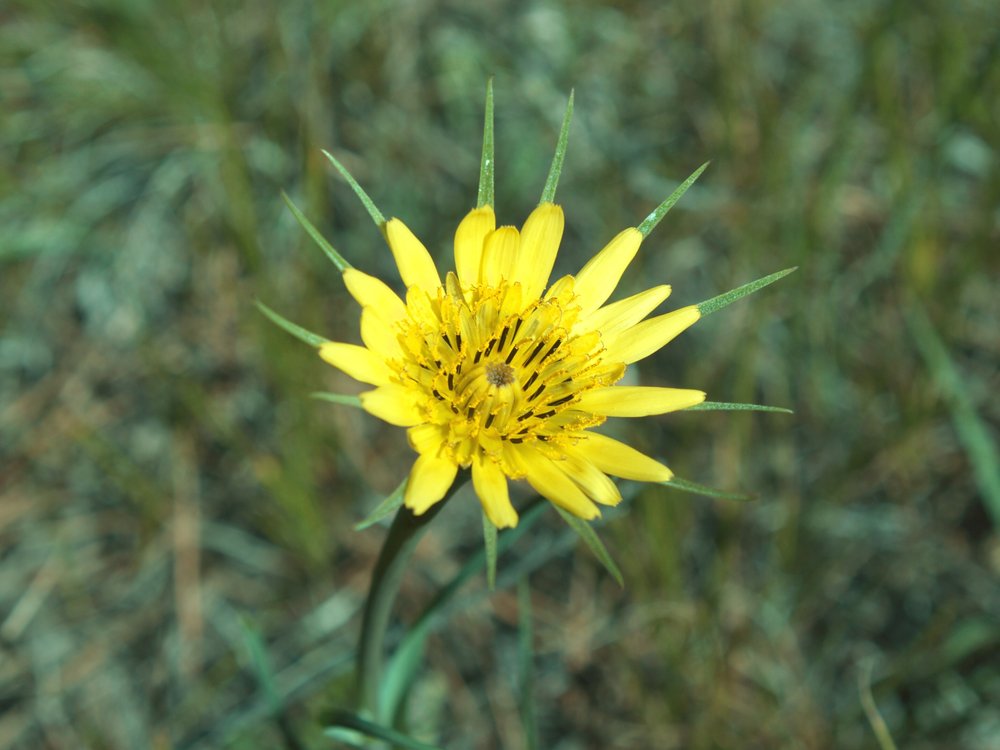
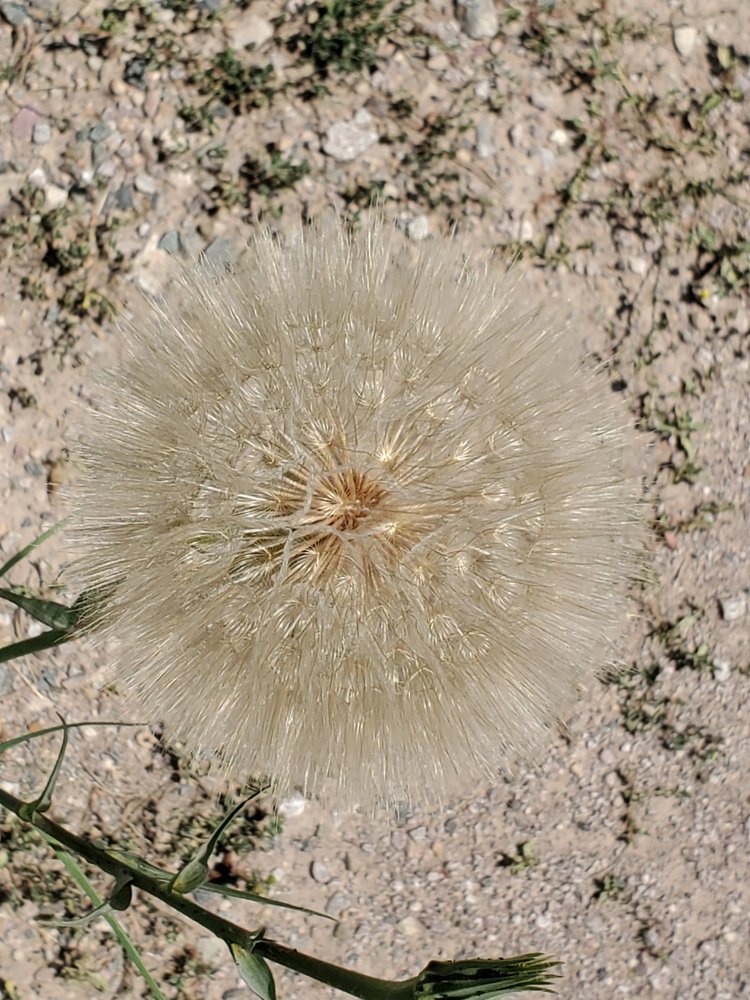
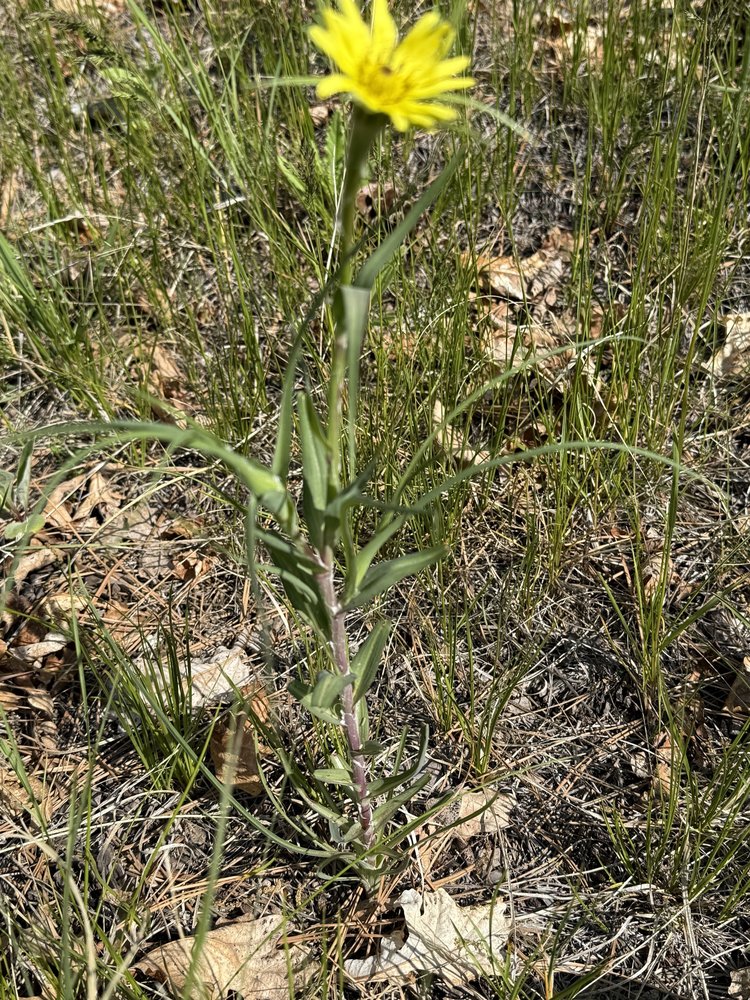
Yellow Salsify (Tragopogon dubius) is a tall, grass-leaved weed from Europe and western Asia, with a pale yellow flower head ringed by long, pointed green bracts and a seed head like a giant dandelion. It blooms from late May into September, mostly in June and July, on roadsides, pastures and open pine woods across the Black Hills, and its flowers are open only on sunny mornings.
Free photos from other sources
| Family | Asteraceae · Aster |
|---|---|
| Status | Introduced biennial |
| Blooms | Late May into September, mostly June and July |
| Height | 30–90 cm (12–36 in) |
| Where | Roadsides, pastures, old fields, open prairie, creek banks and open pine woods |
| Also called | Western Salsify, Goatsbeard, Yellow Goat's Beard, Wild Oysterplant, Noonflower, waȟčá zí iyéčheča (Lakota) |
| Synonym | Tragopogon major |
Roots, seeds & germination
Root: A thick, fleshy taproot that oozes milky sap when cut. The plant is a tuft of grass-like leaves for a year or more, sometimes several years, and dies once it flowers and sets seed.
Seed: Each seed is ribbed, 2.5–4 cm (1–1.6 in) long, with a slender beak tipped by a feathery, umbrella-like parachute, and one head makes about 20–130 seeds. Most land within 5 m (16 ft) of the plant, but updrafts can carry some more than 250 m (820 ft).
Germination: Seed sprouts best at 15–22 °C (59–72 °F) in full light, on or near the surface, and seedlings don't come up from deeper than about 5 cm (2 in). Some seed lots sprout right after harvest and others need about two months of after-ripening. The seed lasts only 1–2 years in the soil, so the plant depends on each year's fresh seed.
How do you identify Yellow Salsify?
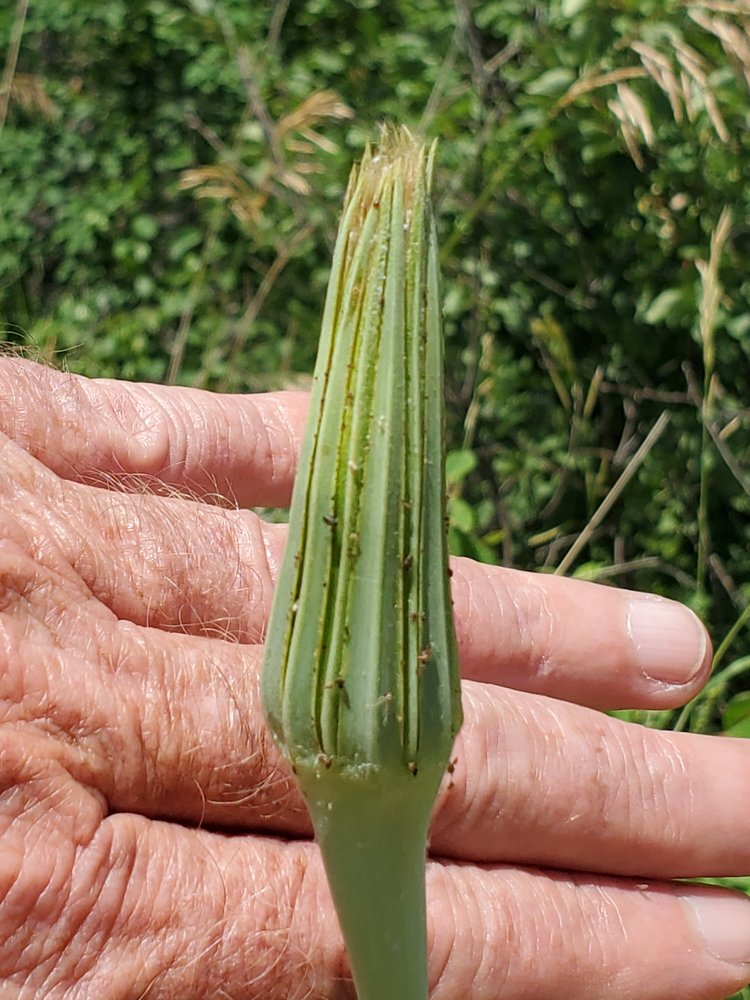
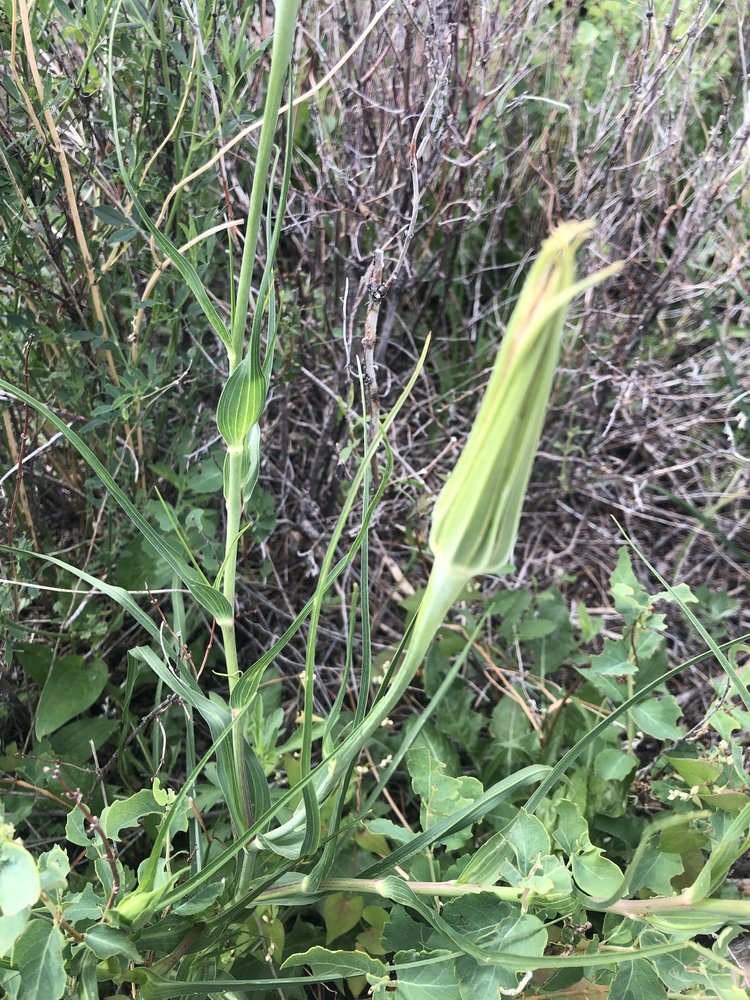
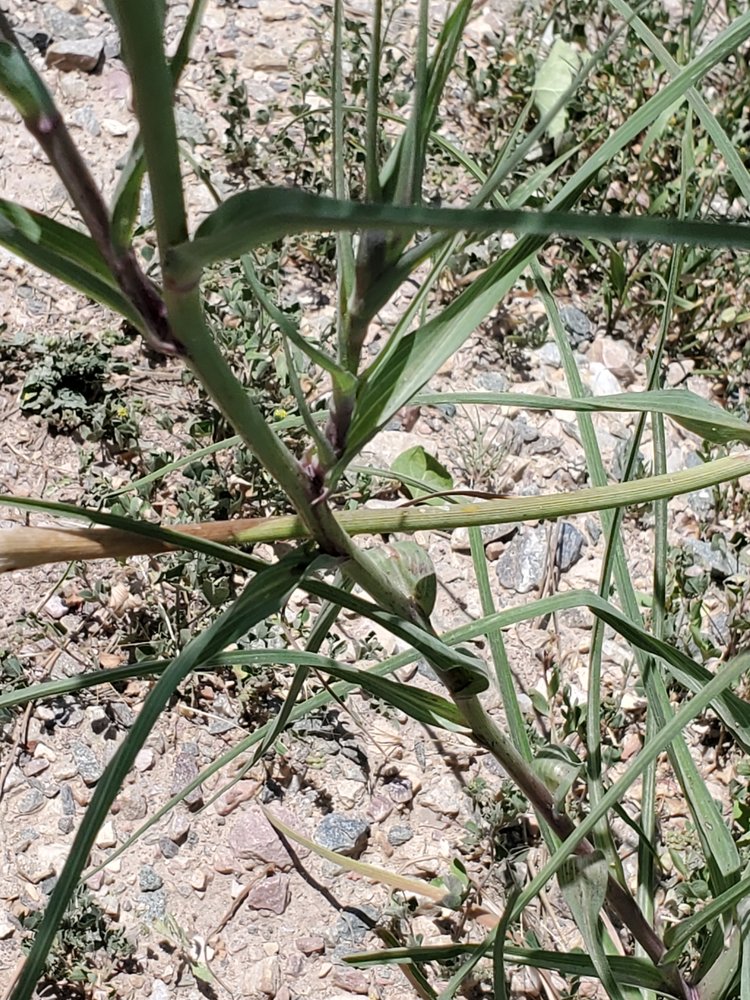
Look for a single head 4–6 cm (1½–2½ in) across on each stem, made only of pale lemon-yellow rays, with about 13 narrow green bracts that stick out well past the rays like a star. The leaves are long, narrow, smooth and bluish-green, clasping the stem, and bleed white latex when broken, and the stalk just under the head is swollen and hollow. Heads close by late morning into a long, narrow green cone, then turn into a tan, baseball-sized globe of parachuted seeds 7–10 cm (3–4 in) across. Mountain Dandelion has all its leaves at the base and a single head on a leafless stalk.
When does it bloom?
Late May into September, mostly June and July.
Where does it grow?
Open, sunny, disturbed ground: roadsides, pastures, old fields, waste ground, mine reclamation, open prairie, creek banks and open ponderosa pine woods. The 1986 plant survey of Jewel Cave National Monument lists it, and the Forest Service's FEIS review notes it was one of the most important pronghorn foods on Bison Flats at Wind Cave in one study year. Herbarium specimens from 1913 on come from every Black Hills county in South Dakota and Wyoming.
Other flowers to compare
Sources: Wildflowers – Jewel Cave National Monument (NPS); Western Salsify, Wind Cave NP, NPGallery (NPS); A Survey of the Vegetation of Jewel Cave National Monument, Marriott & Hartman 1986; Tragopogon dubius – Fire Effects Information System, USDA Forest Service; Asteraceae: Tragopogon dubius, R. Neil Reese 2025, SDSU Open PRAIRIE; Western Salsify Weed Post, Aug. 2022, MSU Extension; A Northern Nevada Homeowner's Guide to Western Salsify, Donaldson & Hanson Mazet 2011, UNR Extension; Western Goat's Beard (Yellow Salsify), Missouri Dept. of Conservation; Tragopogon dubius (Yellow Goat's Beard), Minnesota Wildflowers; Yellow Goat's Beard (T. pratensis), Illinois Wildflowers; Tragopogon dubius, Wildflowers of New Mexico, Native Plant Society of NM; Mountain Dandelion, Utah State University Extension Range Plants; Tragopogon dubius – USDA PLANTS; GBIF occurrence search, Tragopogon dubius; Yellow Salsify observations, iNaturalist; Culturally Important Plants of the Lakota (Black Elk & Flying By, Sitting Bull College, 1998), filed with the SD PUC; NPS Devils Tower National Monument: Native Plants (bloom list).