Rush Skeletonplant Lygodesmia juncea
Also called Rush Skeletonweed, Skeletonweed, Prairie Pink, čhaŋȟlóǧaŋ hú čháŋ (Lakota), swúla un hé tuktéktel yuŋké (Lakota), makȟá čhaŋš’iŋhu (Lakota)
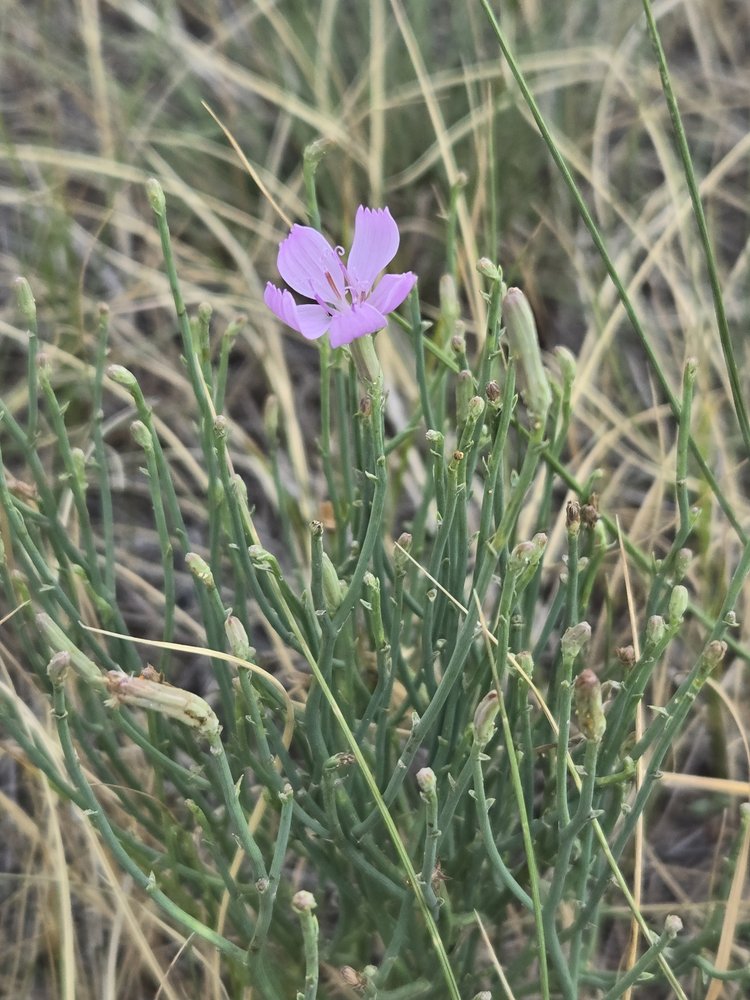
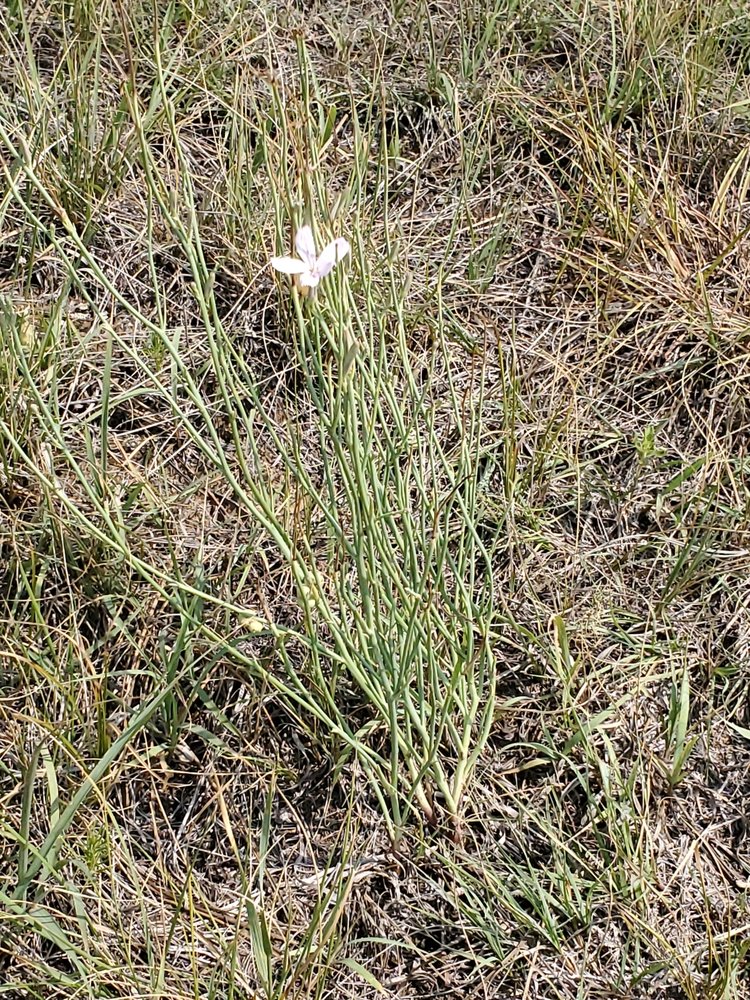
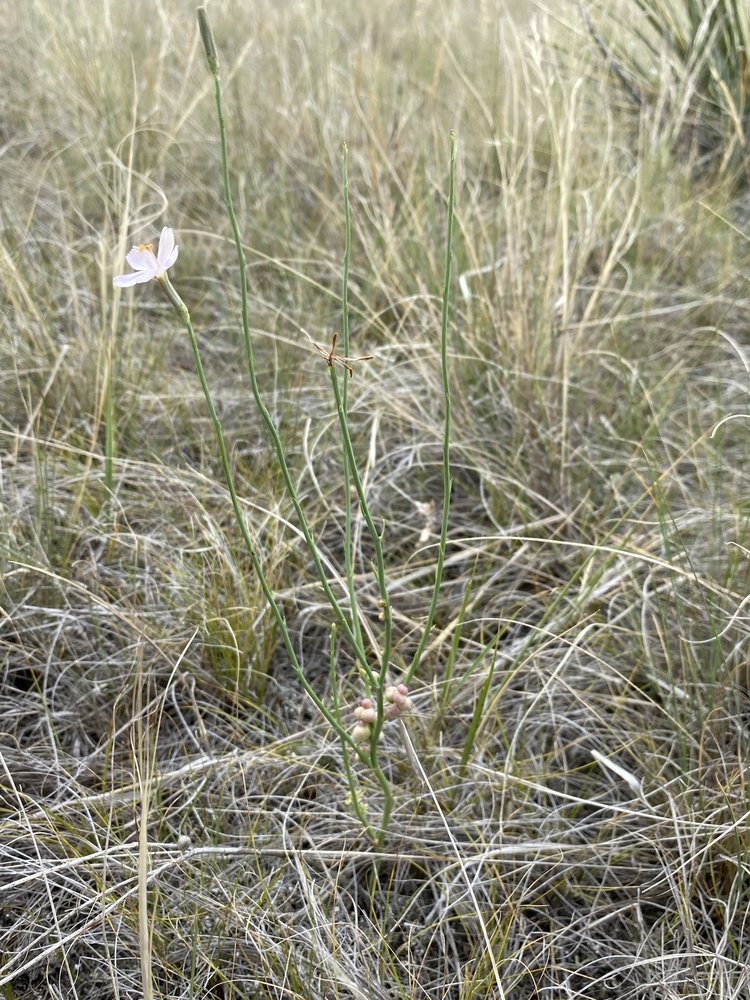
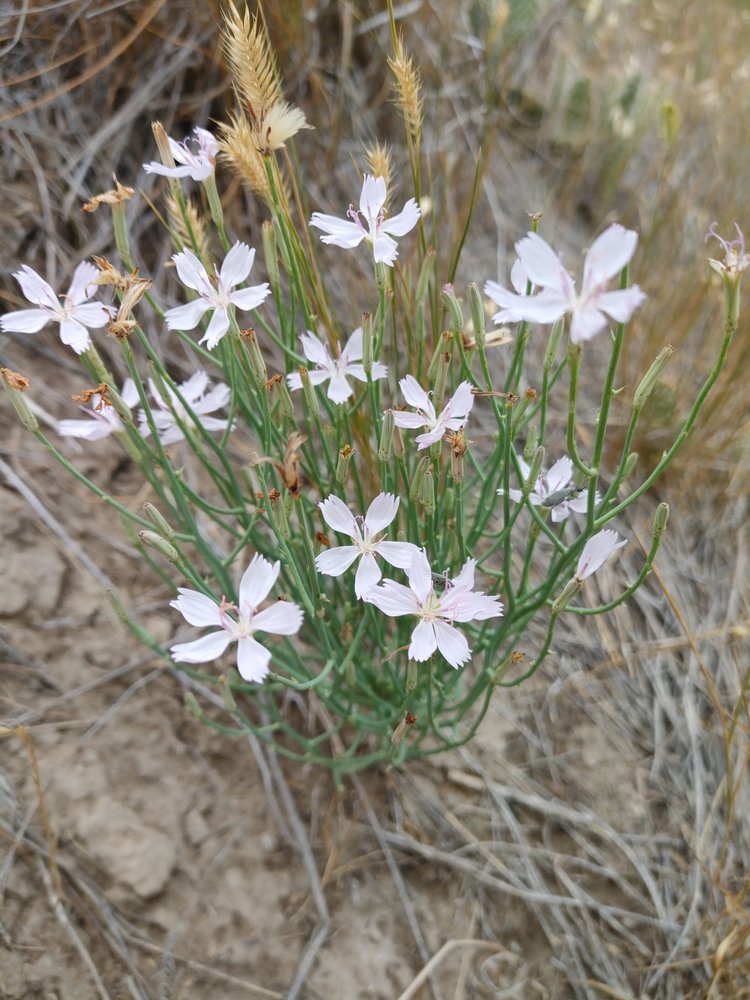
Rush Skeletonplant (Lygodesmia juncea) is a native perennial of dry prairie that grows in bushy clumps of stiff, much-branched, nearly leafless green stems 10–70 cm (4–28 in) tall, each branch tipped from June into September by a single pink flower head with five square-tipped, toothed rays. Round wasp galls up to 1 cm (⅜ in) across often sit on the stems. SDSU calls it common in dry grasslands throughout South Dakota, and in the Black Hills the National Park Service lists it at Wind Cave, Jewel Cave and Devils Tower.
Free photos from other sources
| Family | Asteraceae · Aster |
|---|---|
| Status | Native perennial |
| Blooms | June into September |
| Height | 10–70 cm (4–28 in) |
| Where | Dry prairie, grassland and open pine woodland, roadsides and disturbed ground |
| Also called | Rush Skeletonweed, Skeletonweed, Prairie Pink, čhaŋȟlóǧaŋ hú čháŋ (Lakota), swúla un hé tuktéktel yuŋké (Lakota), makȟá čhaŋš’iŋhu (Lakota) |
| Synonym | Prenanthes juncea |
| Toxicity | The plant can accumulate nitrates, and it is unpalatable to livestock because it is bitter. |
| Traditional use | Black Elk and Flying By record that the Lakota made an infusion of the whole plant for children with diarrhea and sometimes chewed the milky sap like gum, rubbing it on mosquito bites. Gilmore recorded in 1919 that the Omaha used an infusion of the stems as a wash for sore eyes and that nursing mothers drank it, and Howard recorded in 1965 that the Ponca put an infusion of the plant on sore eyes. |
Roots, seeds & germination
Root: A deep, vertical taproot with branched, woody rhizomes (underground stems). Flora of North America says mature seeds are rarely found and the plants probably spread mainly underground.
Seed: A cylindrical fruit 6–10 mm long with a tuft of white to light-brown bristles 6–9 mm long. Flora of North America says mature fruits are rarely found on this species and the plants are presumably sterile; SDSU says seed can be collected in July and August as it leaves the head.
Germination: SDSU: 60 to 90 days of cold treatment, or sow in fall, in well-drained soil in full sun.
How do you identify Rush Skeletonplant?
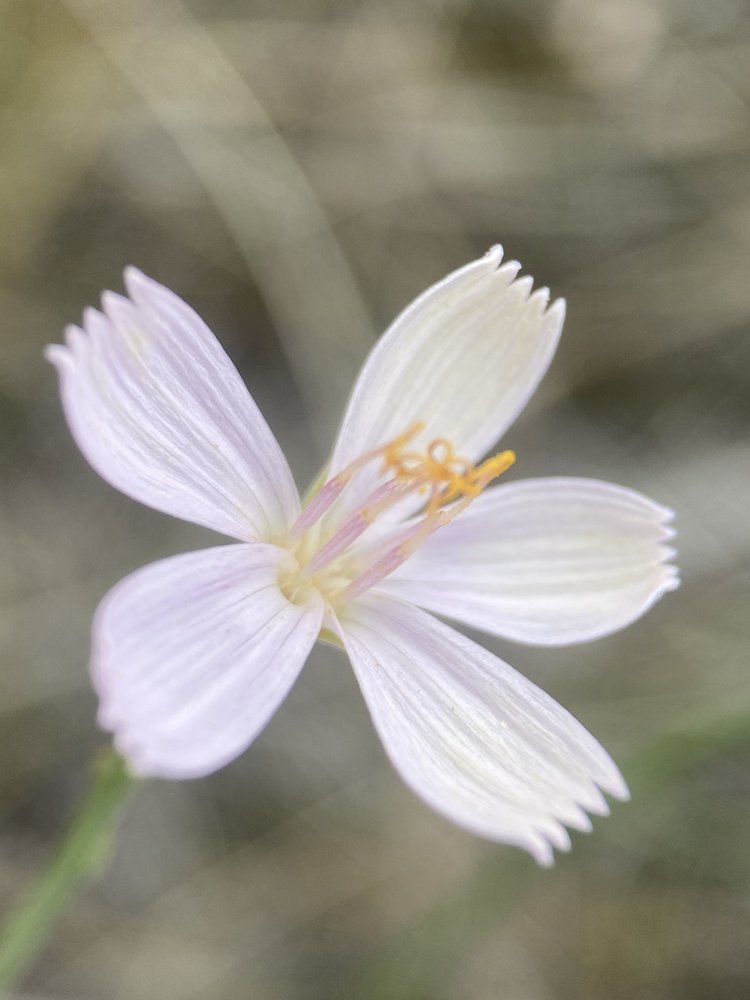
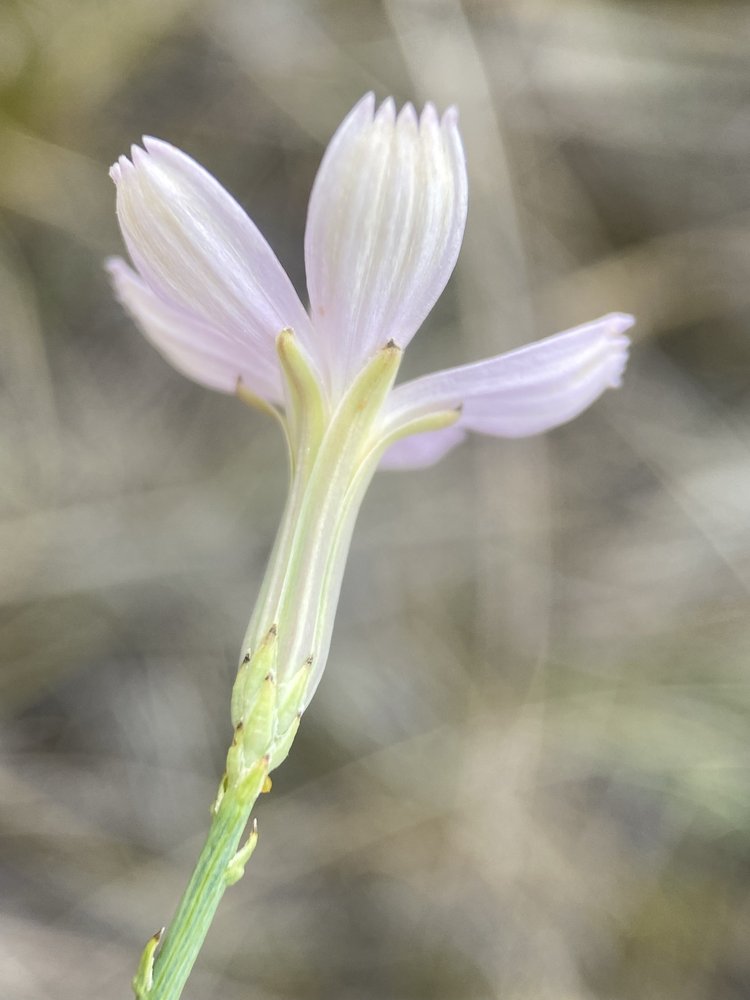
Look for a bushy clump of stiff, green, waxy, ribbed, hairless stems that branch again and again and seem to have no leaves; the lowest leaves are narrow and 5–30 mm long, and the rest are tiny awl-shaped scales. Each branch ends in one flower head, and a plant can carry one to fifty or more. Under the head is a narrow green cylinder of bracts 10–16 mm tall, and the head itself is usually just five ray florets, light pink to lavender and rarely white, 18–20 mm long, each with a square tip cut into five small teeth; there are no disk florets. The sap is yellowish. Round galls up to 10 mm across, made by a small wasp, often sit on the stems; Flora of North America says they appear to be unique to this species. It also says the bushy habit, much-reduced stem leaves and small heads set it apart from the other skeletonplants.
When does it bloom?
June into September.
Where does it grow?
Dry prairie and short-grass grassland, blufftop prairie, sandy to silty soils, roadsides, railroads and disturbed ground, from the plains up to about 2,300 m (7,500 ft); SDSU calls it common from low to mid elevations throughout South Dakota in dry grasslands, sagebrush steppe and open pine woodland. In the Black Hills the National Park Service lists it at Wind Cave National Park, Jewel Cave National Monument and Devils Tower National Monument, and Devils Tower's wildflower page lists it. Herbarium specimens from 1924 to 2018 come from Lawrence, Custer, Fall River and Meade counties in South Dakota and Crook and Weston counties in Wyoming; their labels describe cinders along a railroad, bare roadside banks, the shaded slope of an oak and ash ravine, prairie on red sandy soil, an open meadow and the sandstone hogback (a steep ridge) around the Hills. iNaturalist has 10 research-grade Black Hills records, June to October.
Aster family (Asteraceae): 62 other plants in this guide
- Aromatic Aster
- Arrowleaf Balsamroot
- Arrowleaf Sweet Coltsfoot
- Bachelor's Button
- Balsam Ragwort
- Black-eyed Susan
- Blanket Flower
- Blue Lettuce
- Broom Snakeweed
- Bull Thistle
- Canada Hawkweed
- Canada Lettuce
- Canada Thistle
- Chicory
- Common Burdock
- Common Dandelion
- Common Sunflower
- Common Tansy
- Common Yarrow
- Curlycup Gumweed
- Cutleaf Coneflower
- Dotted Gayfeather
- Drummond's Thistle
- Easter Daisy
- False Boneset
- Fetid Marigold
- Field Pussytoes
- Fringed Sagewort
- Hairy Golden Aster
- Heart-leaved Arnica
- Hooker's Townsend Daisy
- Horseweed
- Jerusalem Artichoke
- Lambstongue Groundsel
- Maximilian Sunflower
- Missouri Goldenrod
- Mountain Dandelion
- Musk Thistle
- Oxeye Daisy
- Pearly Everlasting
- Pineapple Weed
- Prairie Coneflower
- Prairie False Dandelion
- Purple Coneflower
- Rocky Mountain Blazing Star
- Rosy Pussytoes
- Rubber Rabbitbrush
- Scotch Thistle
- Silver Sagebrush
- Smooth Blue Aster
- Spotted Joe-Pye Weed
- Stemless Four-nerve Daisy
- Stiff Goldenrod
- Stiff Sunflower
- Threenerve Fleabane
- Wavyleaf Thistle
- Western Ragweed
- White Hawkweed
- White Prairie Aster
- White Sagebrush
- Woolly Groundsel
- Yellow Salsify
Sources: Flora of North America Vol. 19-21: Lygodesmia juncea — eFloras; Asteraceae: Lygodesmia juncea (R. Neil Reese) — SDSU Open PRAIRIE; Lygodesmia juncea, Rush skeletonplant — Kansas Wildflowers and Grasses; Lygodesmia juncea (Skeletonweed) — Minnesota Wildflowers; Lygodesmia juncea — Lady Bird Johnson Wildflower Center; Wildflowers, Devils Tower National Monument — National Park Service; NPSpecies checklist, Wind Cave National Park vascular plants — National Park Service; NPSpecies checklist, Jewel Cave National Monument vascular plants — National Park Service; NPSpecies checklist, Devils Tower National Monument vascular plants — National Park Service; Occurrence search: Lygodesmia juncea herbarium specimens in the Black Hills — GBIF; Research-grade Lygodesmia juncea observations in the Black Hills — iNaturalist; Lygodesmia juncea — Native American Ethnobotany Database (BRIT); Culturally Important Plants of the Lakota (Black Elk and Flying By, 1998), entry 180 — South Dakota PUC docket HP14-001.