Purple Coneflower
Echinacea angustifolia
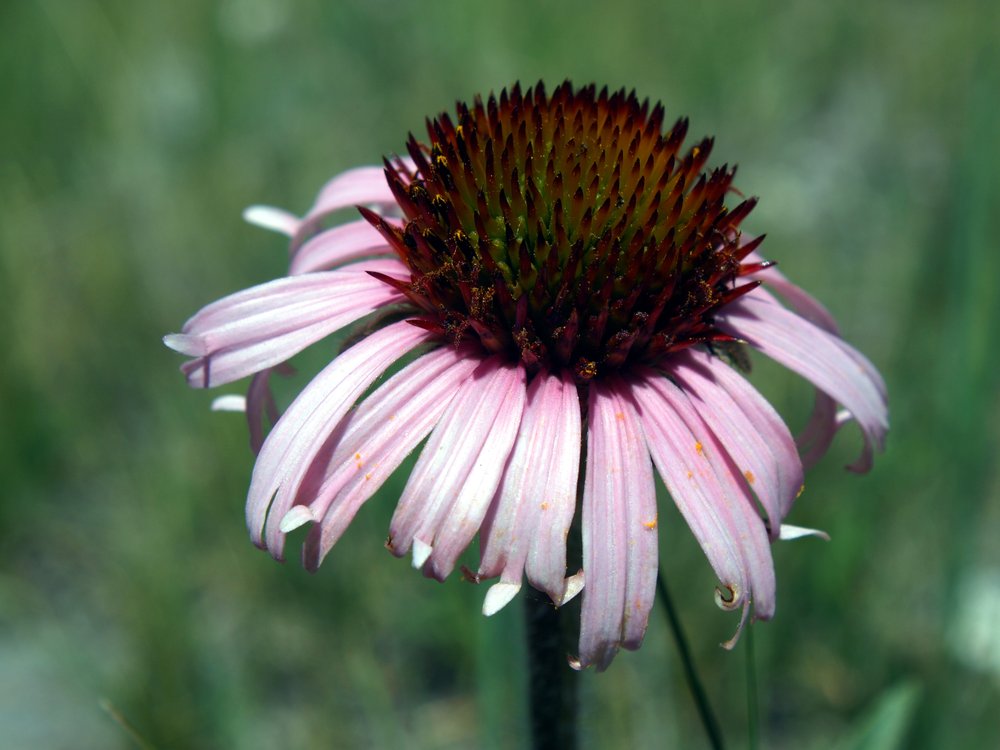
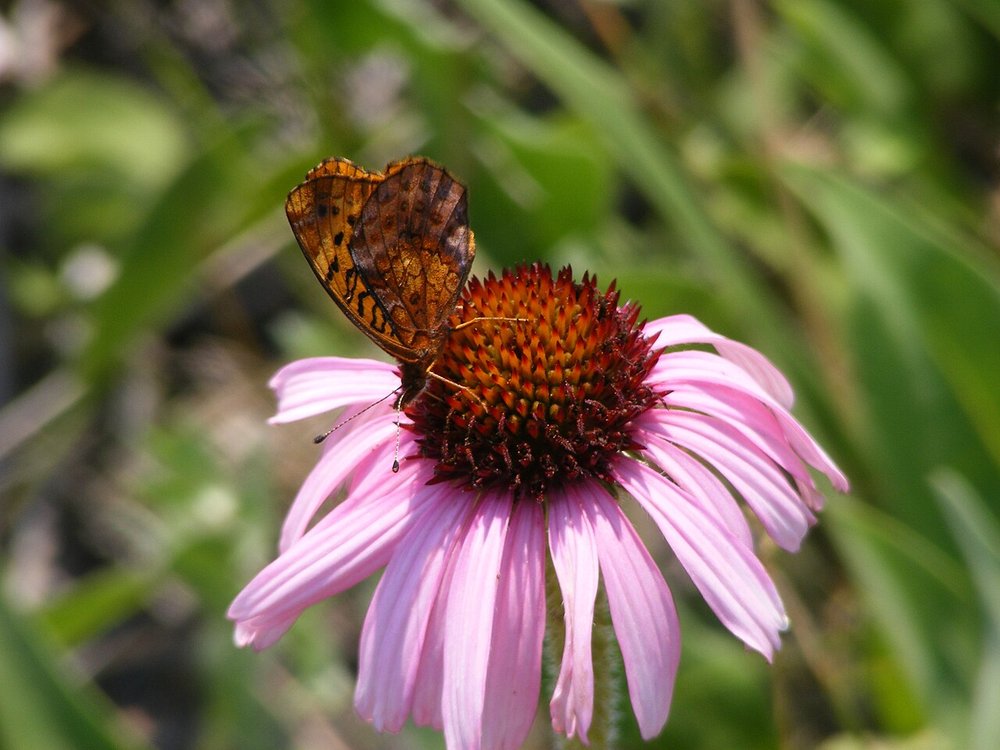
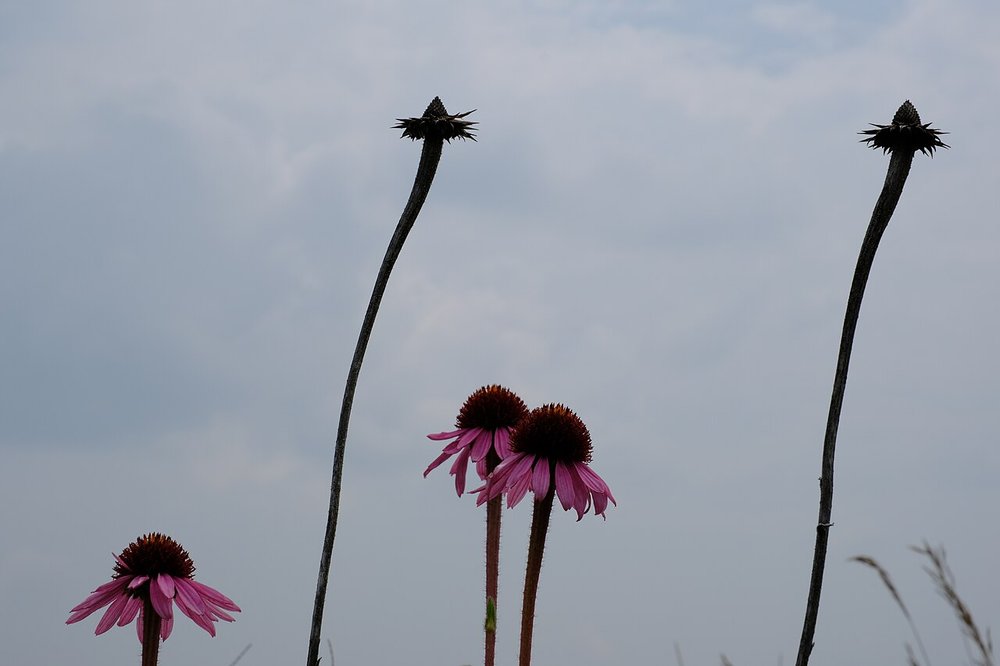
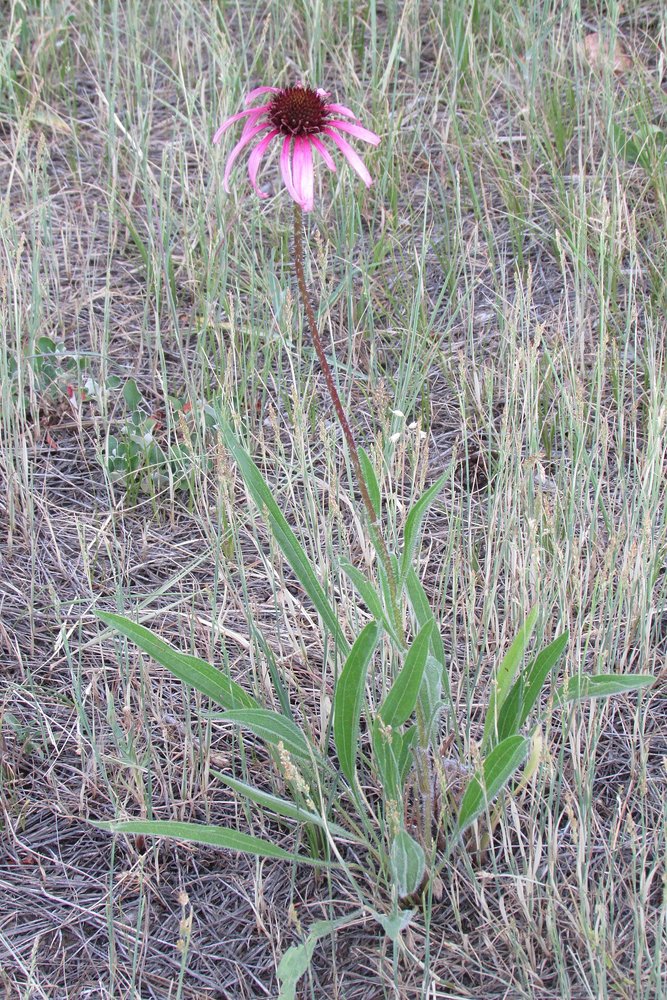
Purple Coneflower (Echinacea angustifolia) is a native perennial of the sunflower family, with pink to pale purple rays that hang down from a domed, spiny brown cone. It blooms in June and July on dry, open prairie and rocky slopes, and the National Park Service lists it at Jewel Cave, Wind Cave and Devils Tower in the Black Hills.
Free photos from other sources
| Family | Asteraceae · Aster |
|---|---|
| Status | Native perennial |
| Blooms | June into July, with a few into August |
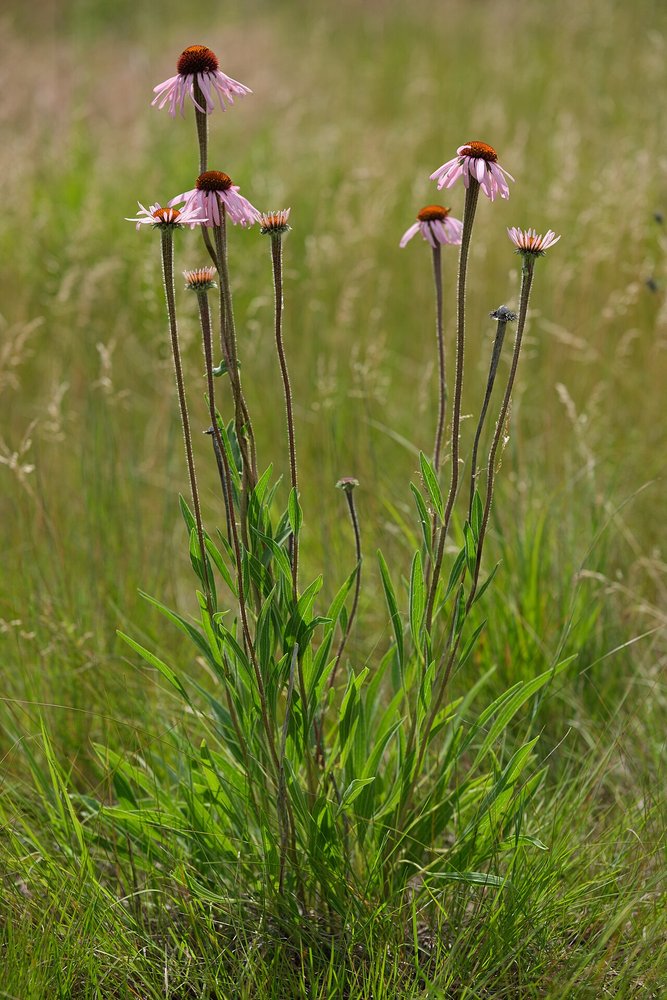
| Height | 10–60 cm (4–24 in) |
| Where | Dry, open, often rocky prairie, grassy hillsides and open pine edges in the foothills |
| Also called | Narrow-leaved Purple Coneflower, Black Samson, Blacksamson Echinacea, Blackroot, Kansas Snakeroot, ičháȟpe hú (Lakota), uŋglákčapi (Lakota) |
| Synonym | Echinacea pallida var. angustifolia, Brauneria angustifolia |
| Toxicity | Handling the plants and seeds often irritates the skin. |
| Traditional use | Sitting Bull College's 1998 Culturally Important Plants of the Lakota says the root and seed heads were chewed for toothache and sore throat, and the chewed root was put on snake, spider and bee bites and on burns. |
Roots, seeds & germination
Root: A thick, woody, often branched taproot that can reach about 1.5–2 m (5–6.5 ft) deep, which lets the plant ride out drought.
Seed: Dark, four-sided achenes about 4–5 mm (1/6 in) long, with a short, papery, toothed crown. They fall slowly from the spiny old cone from fall into the next summer. Plants rarely flower before their third year.
Germination: The seed needs a cold, moist period before it sprouts. The USDA plant guide recommends about 12 weeks of cold stratification, and SDSU suggests 2–4 months in damp peat moss in the refrigerator, after which seedlings usually appear in about two weeks.
How do you identify Purple Coneflower?
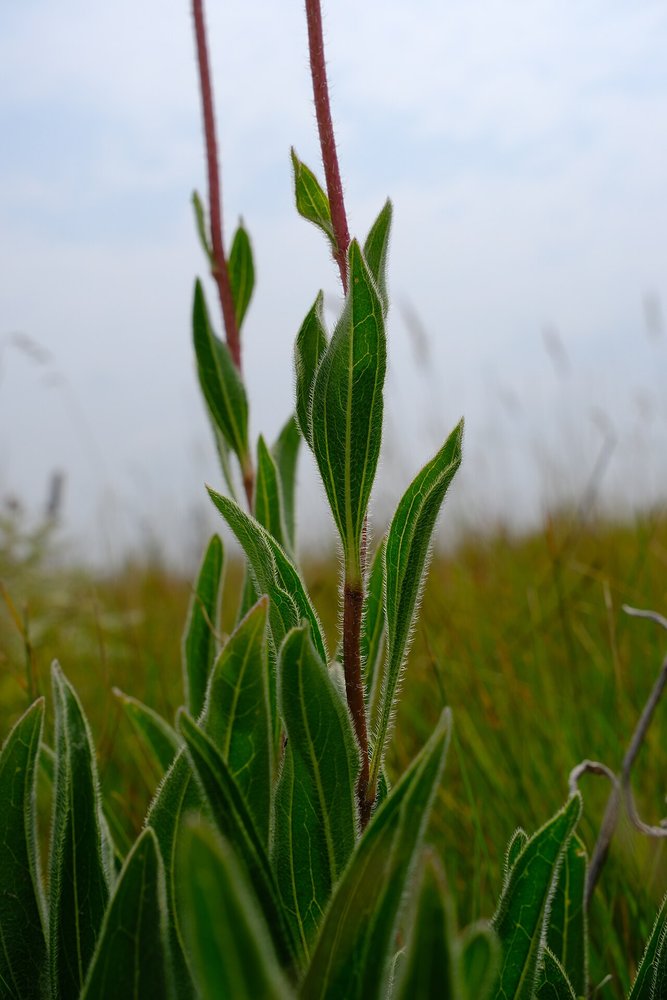
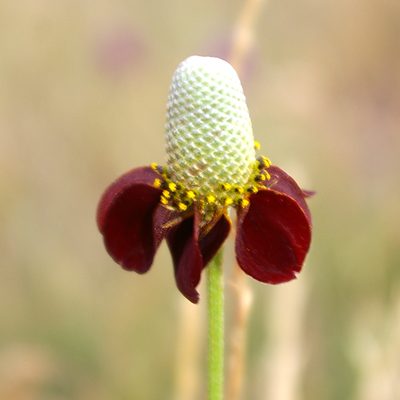
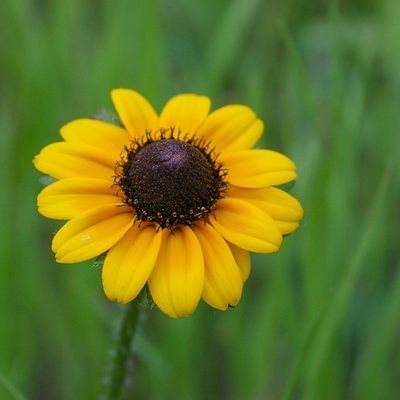
Look for one flower head on each long, stiff stalk, with 12–20 pink to pale purple rays, 2–4 cm (¾–1½ in) long, drooping around a domed, prickly cone of brownish-purple disk flowers. The leaves are narrow and lance-shaped, rough with stiff hairs, with three to five veins running lengthwise. Prairie Coneflower has a tall, thimble-shaped cone and yellow or red-brown rays, and Black-eyed Susan has golden rays. The dark, spiny cones stand through winter.
When does it bloom?
June into July, with a few into August.
Where does it grow?
Dry, open prairie and rocky hillsides with well-drained soil and full sun, including mixed-grass prairie, open ponderosa pine edges and drainages. In the Black Hills it is recorded from the grassy foothills and open parks at Wind Cave, Jewel Cave and Devils Tower. SDSU says it grows throughout South Dakota.
Other flowers to compare


Sources: Marriott and Hartman 1986, A Survey of the Vegetation of Jewel Cave National Monument; NPS, Jewel Cave National Monument: Wildflowers; NPSpecies checklist, Wind Cave National Park vascular plants; NPSpecies checklist, Devils Tower National Monument vascular plants; NPGallery: Purple Coneflower, Wind Cave National Park; Culturally Important Plants of the Lakota (Black Elk and Flying By, Sitting Bull College, 1998), filed with the South Dakota PUC; Gilmore 1919, Uses of Plants by the Indians of the Missouri River Region (Internet Archive); National Library of Medicine, Native Voices: Purple coneflower (Ichahpe hu); Linda Black Elk, "Echinacea angustifolia, the Purple Coneflower: ichahpe hu" (2012); USDA NRCS Plant Guide: Purple Coneflower, Echinacea angustifolia; SDSU Open PRAIRIE: Asteraceae: Echinacea angustifolia (R. Neil Reese); USDA Forest Service Fire Effects Information System: Echinacea angustifolia; Kansas Wildflowers and Grasses: Black-sampson Echinacea; Plants of the World Online (Kew): Echinacea angustifolia DC.; Wikipedia: Echinacea angustifolia (synonyms, FNA treatment); Wikipedia: Echinacea pallida (range, white pollen).