Horseweed
Erigeron canadensis
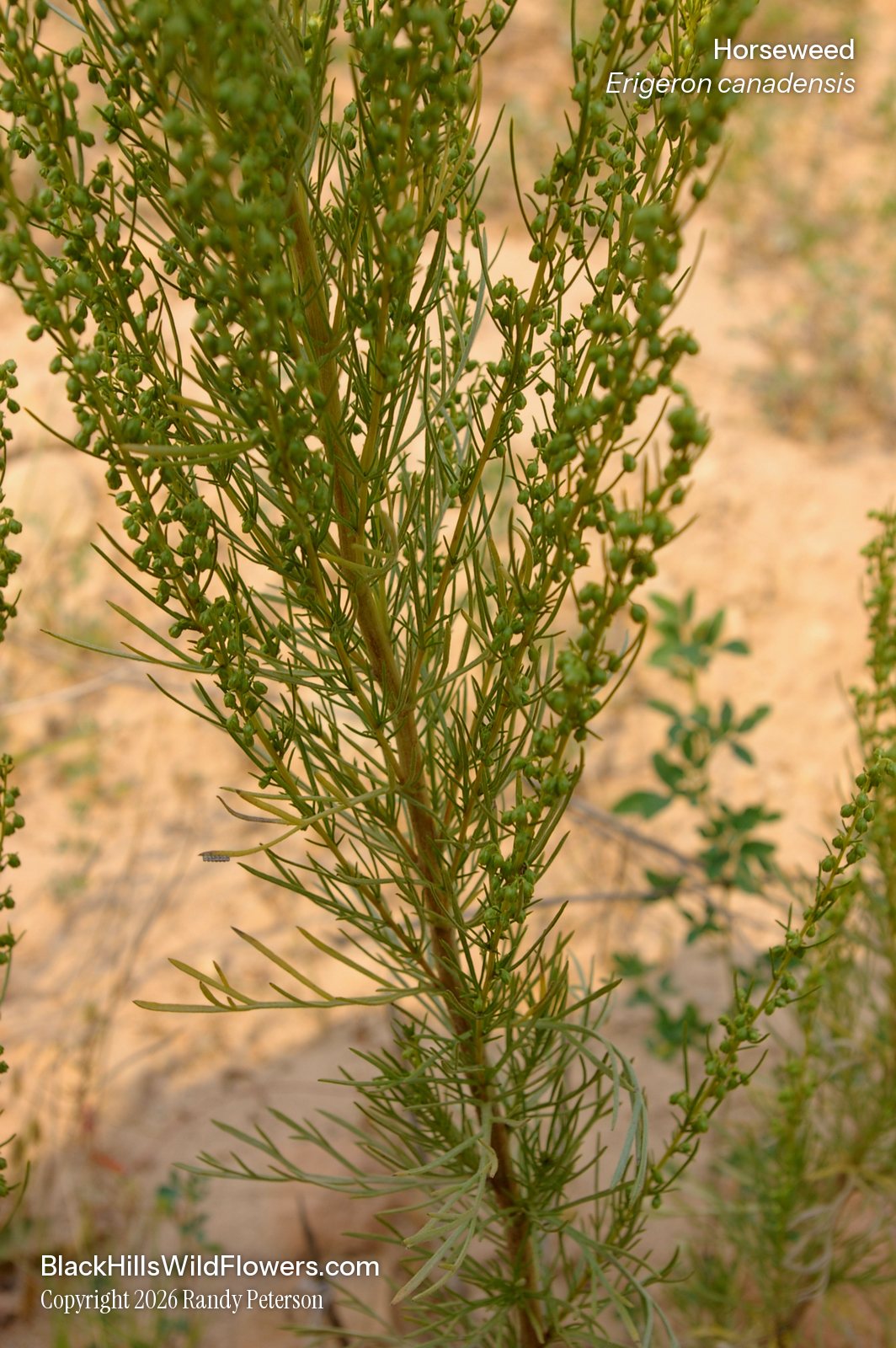
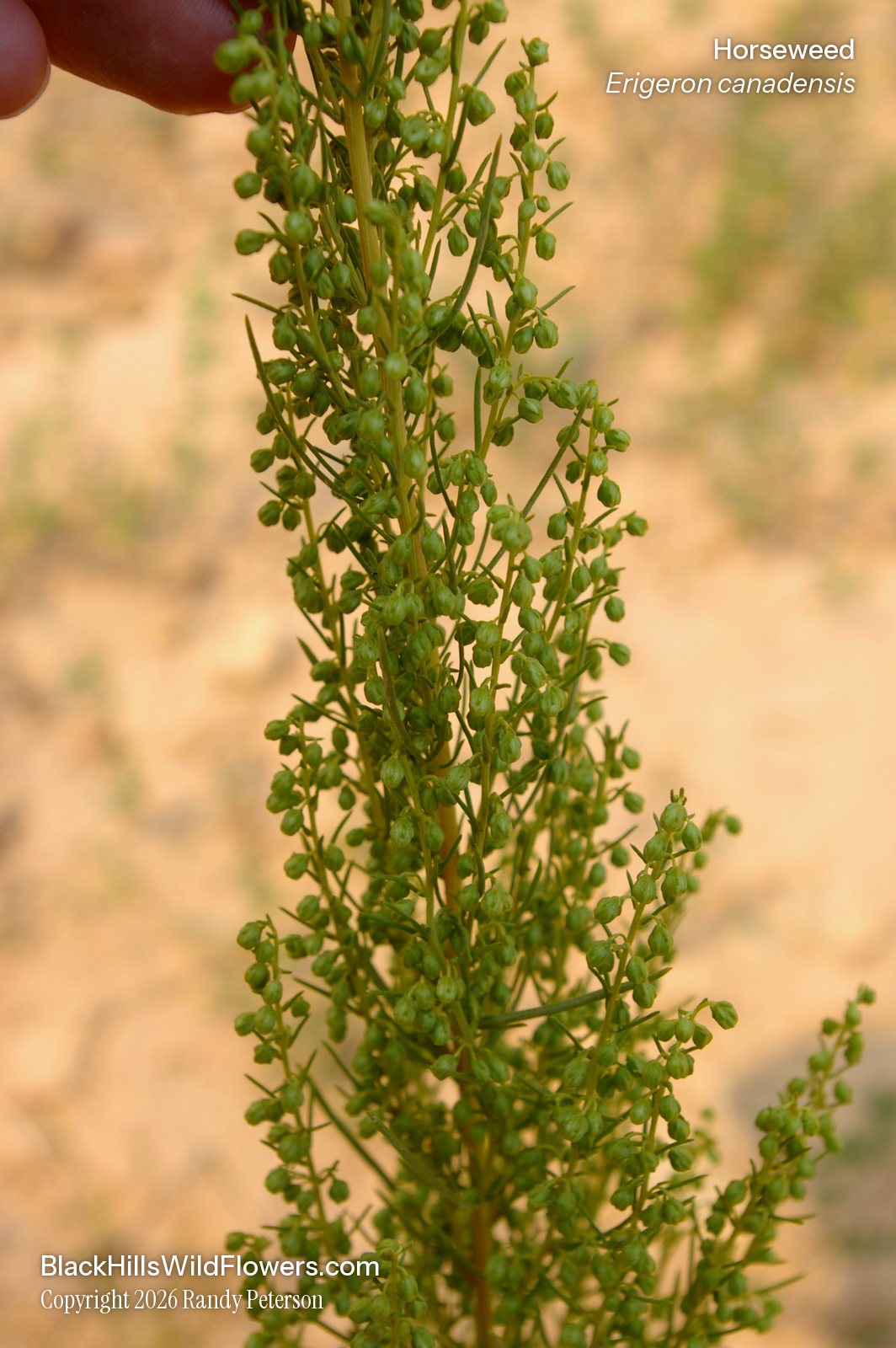
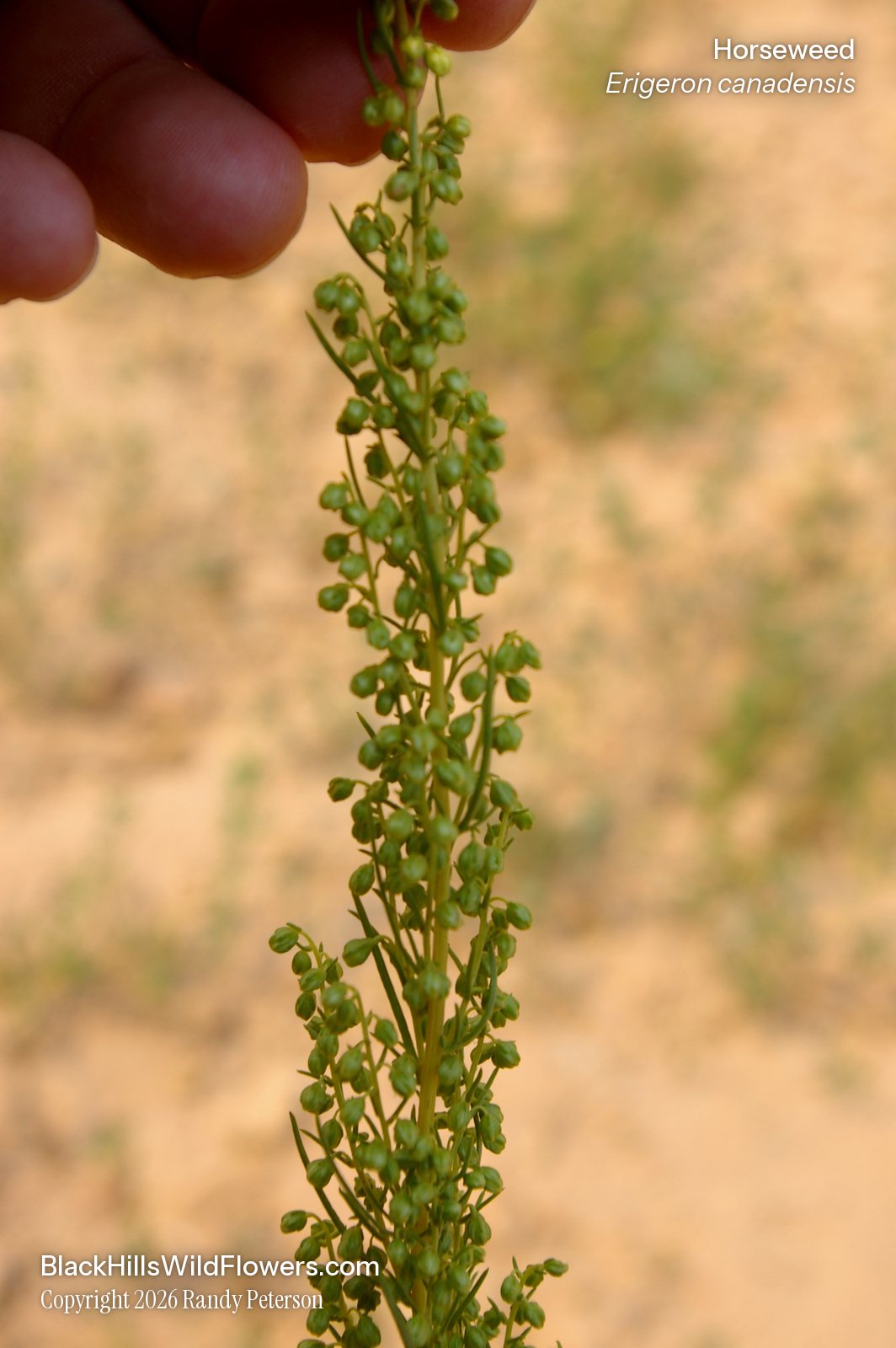
Horseweed (Erigeron canadensis) is a native annual with a stiff, leafy stem, 30–150 cm tall, topped by many tiny white-rayed flower heads that look unopened even in full bloom. It blooms July into October on disturbed ground, roadsides and fields throughout South Dakota, and the 1986 plant survey of Jewel Cave National Monument lists it in the Black Hills. Photographed in the Black Hills.
Free photos from other sources
| Family | Asteraceae · Aster |
|---|---|
| Status | Native annual |
| Blooms | July into October |
| Height | 30–150 cm (12–60 in) |
| Where | Disturbed ground, roadsides, fields and open areas |
| Also called | Canadian Horseweed, Canadian Fleabane, Canada Fleabane, čhaŋȟlóǧaŋ waštémna iyéčheča (Lakota) |
| Synonym | Conyza canadensis |
| Traditional use | Sitting Bull College's 1998 Culturally Important Plants of the Lakota records an infusion of the roots and lower stalks for diarrhea and bowel pain, and burning the plant for smoke that repels insects. |
Roots, seeds & germination
Root: A fibrous root system.
Seed: An achene (dry one-seeded fruit) about 1–1.5 mm long, pale tan to light gray-brown, with 15–25 white bristles that carry it on the wind.
Germination: Seeds germinate readily without dormancy, on disturbed or bare soil.
How do you identify Horseweed?
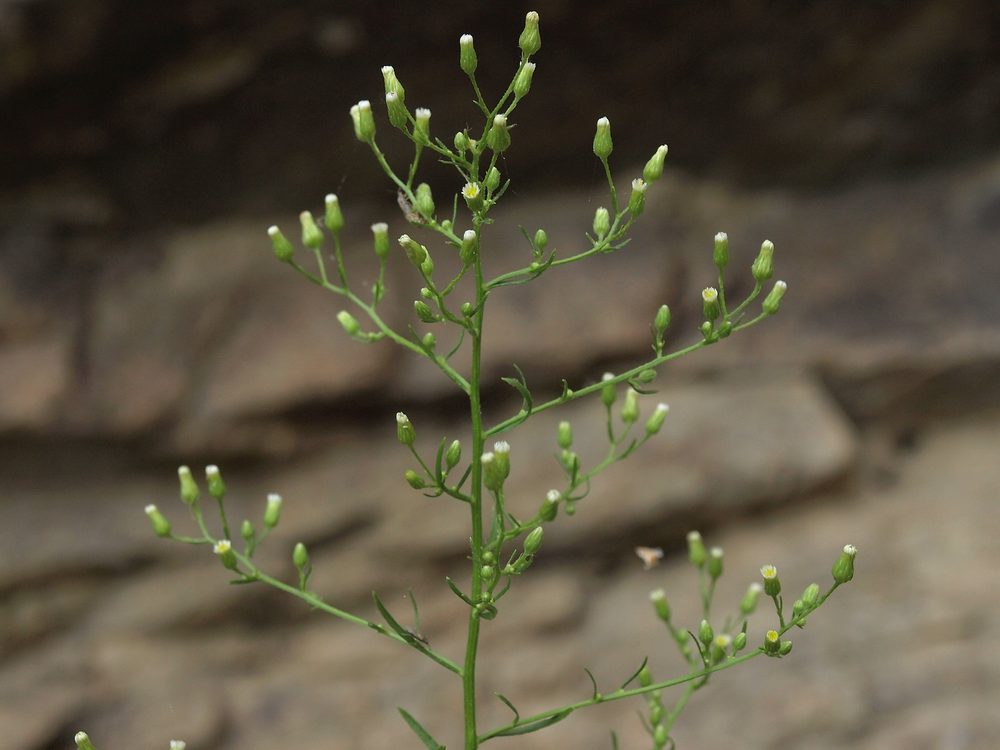
Look for a stout, stiff-hairy stem crowded with narrow leaves up to 10 cm long that get smaller going up, the lower ones with small, widely spaced teeth. The top branches into a loose cluster of many heads only about 1/8 inch (3 mm) across, with tiny white or pinkish rays and a yellow center, which look unopened even in full bloom. In seed, each fruit carries a tuft of white bristles.
When does it bloom?
July into October.
Where does it grow?
Disturbed ground, roadsides, fields, gravel pits and open areas throughout South Dakota, in sun and often on dry soil. The 1986 Jewel Cave survey lists it under its older name, Conyza canadensis.
Other flowers to compare
Sources: SDSU Open PRAIRIE: Erigeron canadensis; SDSU Open PRAIRIE: Conyza canadensis; Minnesota Wildflowers: Canadian Horseweed; Kansas Wildflowers: Conyza canadensis; Flora of North America: Conyza canadensis; Marriott and Hartman 1986, A Survey of the Vegetation of Jewel Cave National Monument; Culturally Important Plants of the Lakota (Black Elk and Flying By, Sitting Bull College, 1998), filed with the South Dakota PUC.