Fringed Sagewort Artemisia frigida
Also called Prairie Sagewort, Fringed Sage, Fringed Sagebrush, Pasture Sage, Sage Wormwood, Northern Wormwood, Sweet Sage, Little Wild Sage, pȟeží ȟóta waštémna (Lakota), waȟčá zí sutá (Lakota), makȟá čheyáka (Lakota)
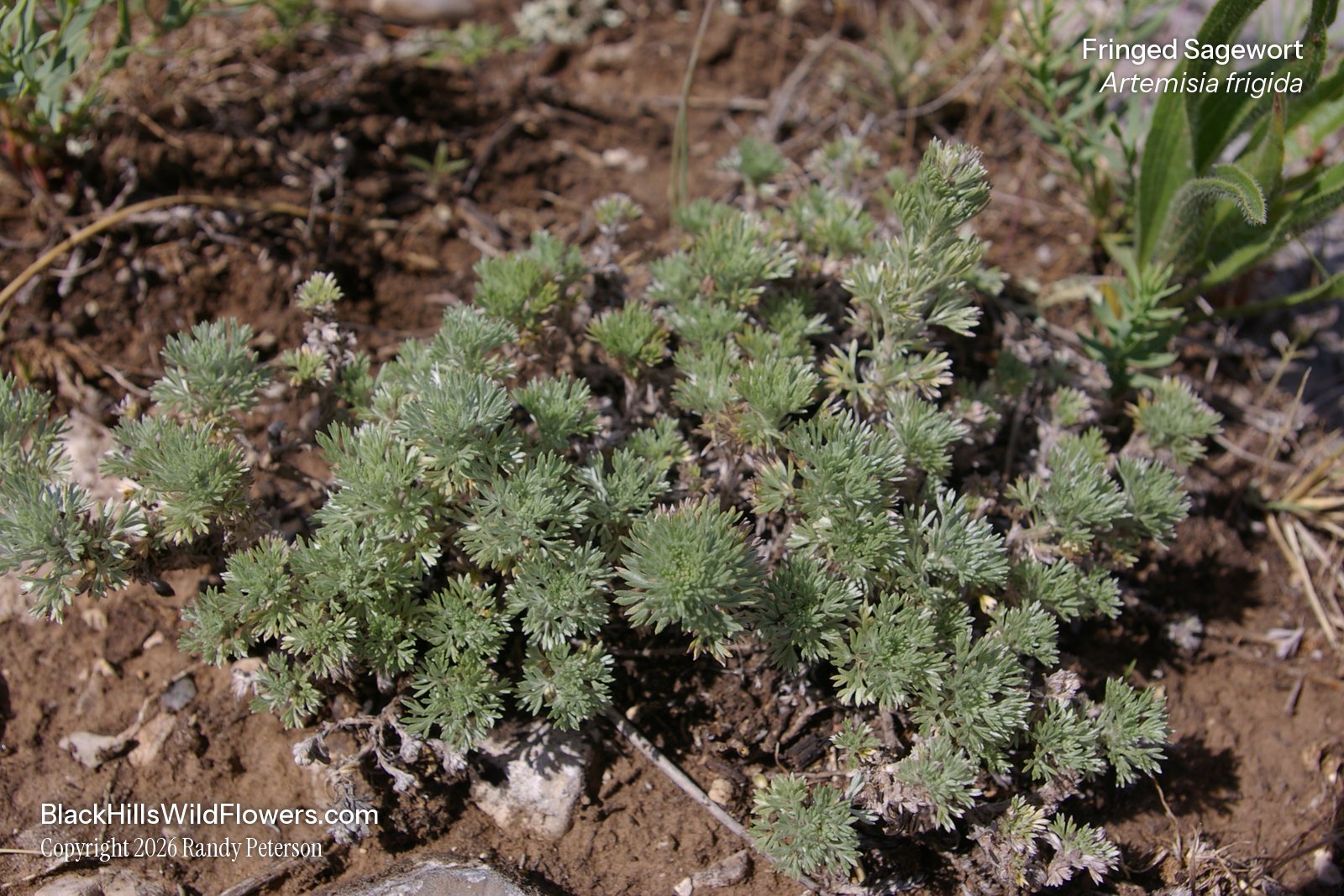
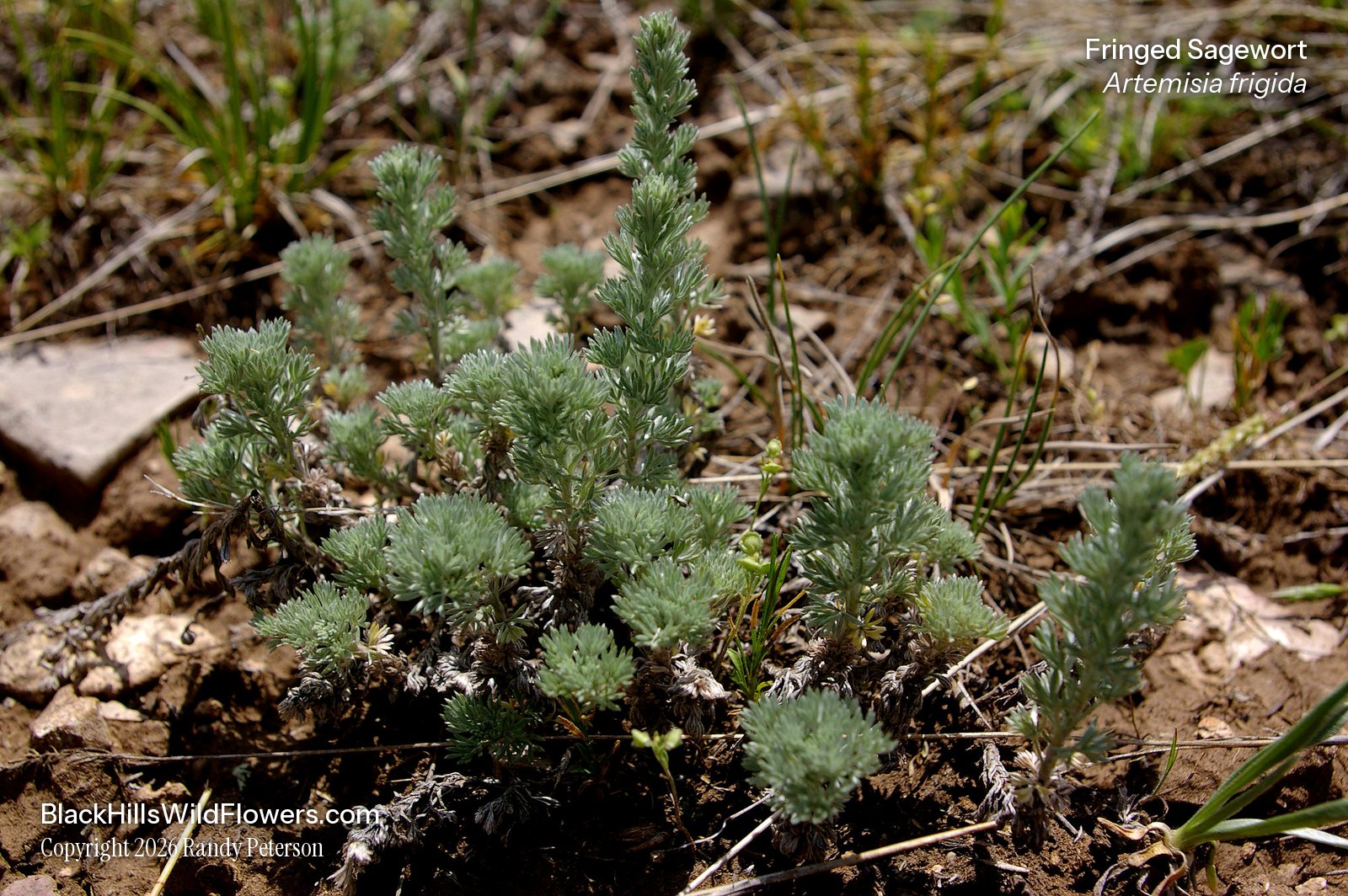
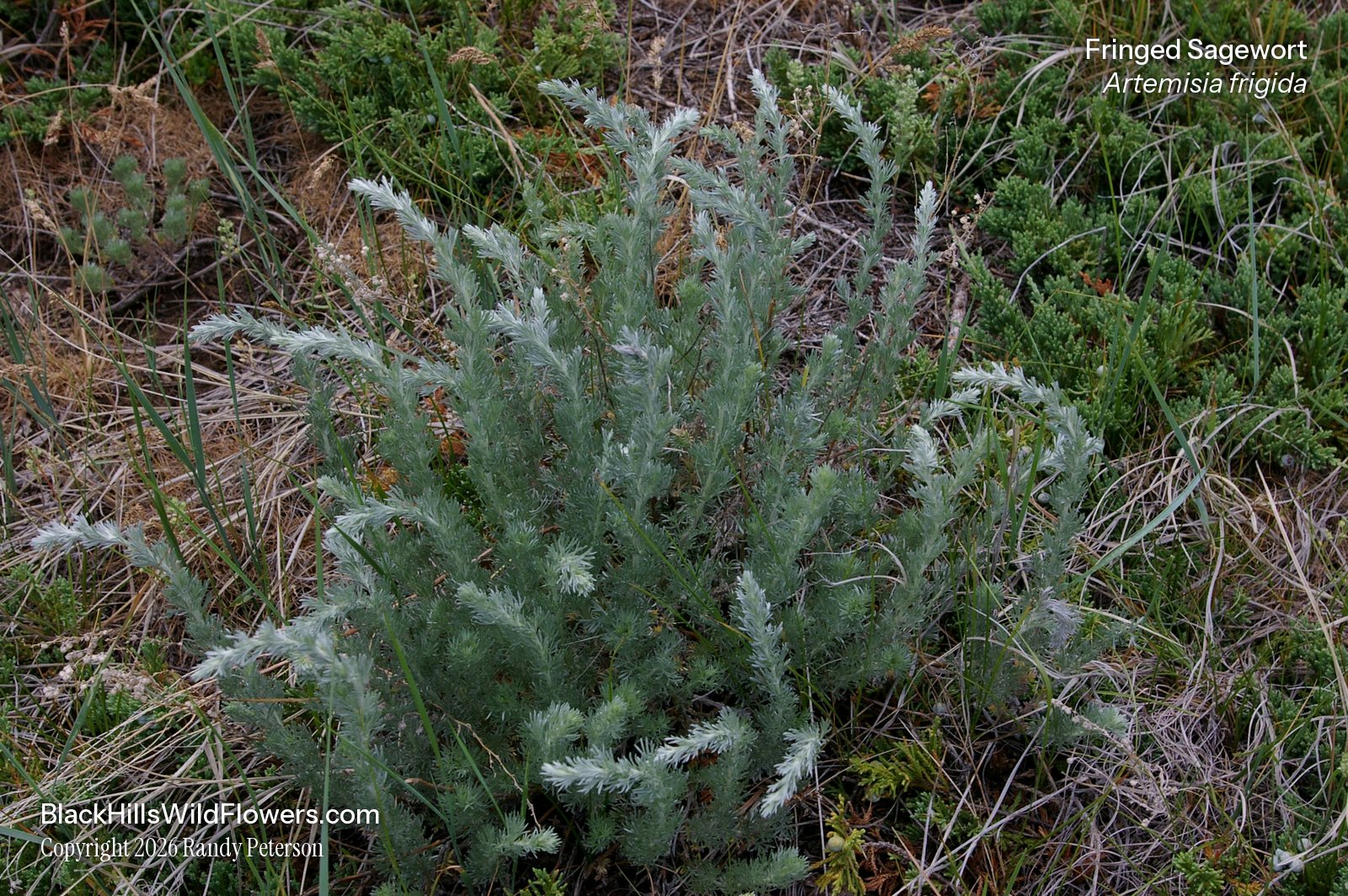
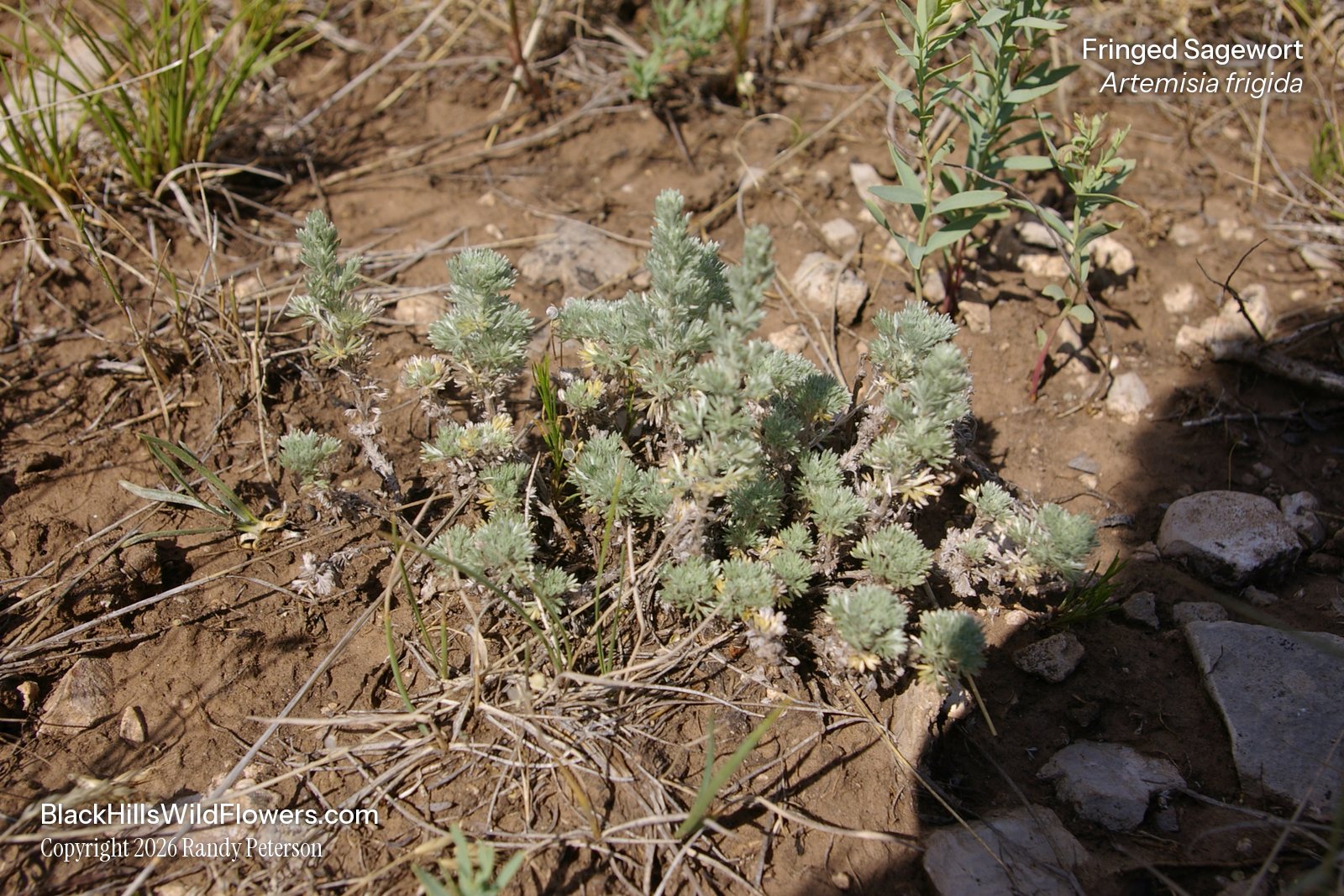
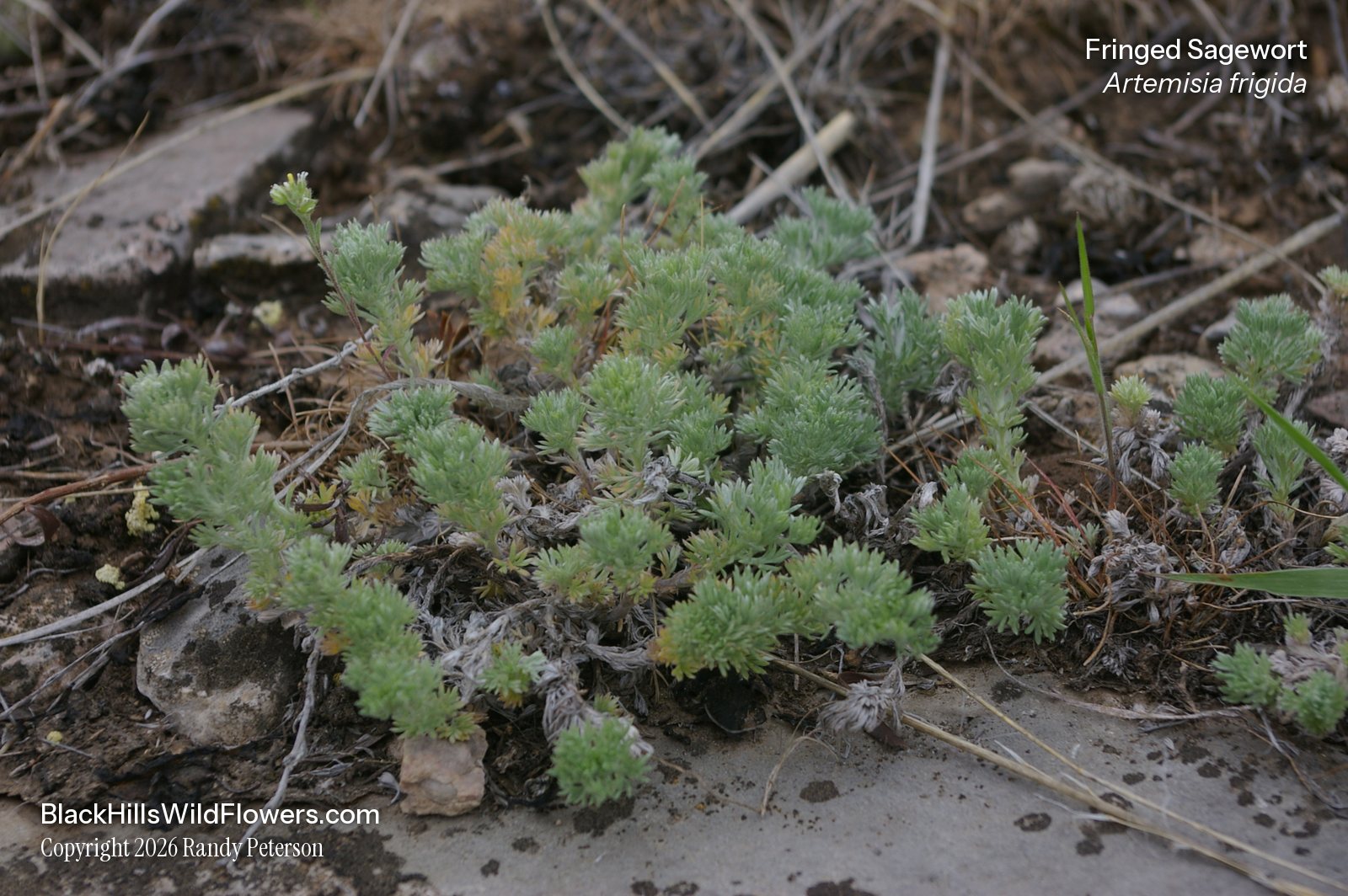
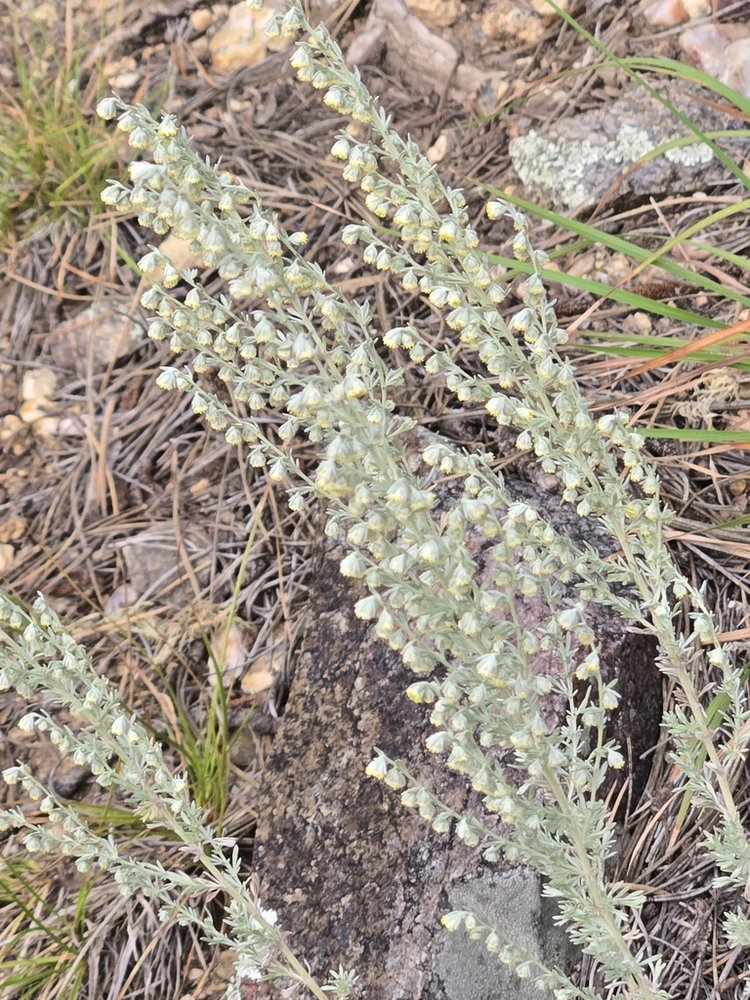
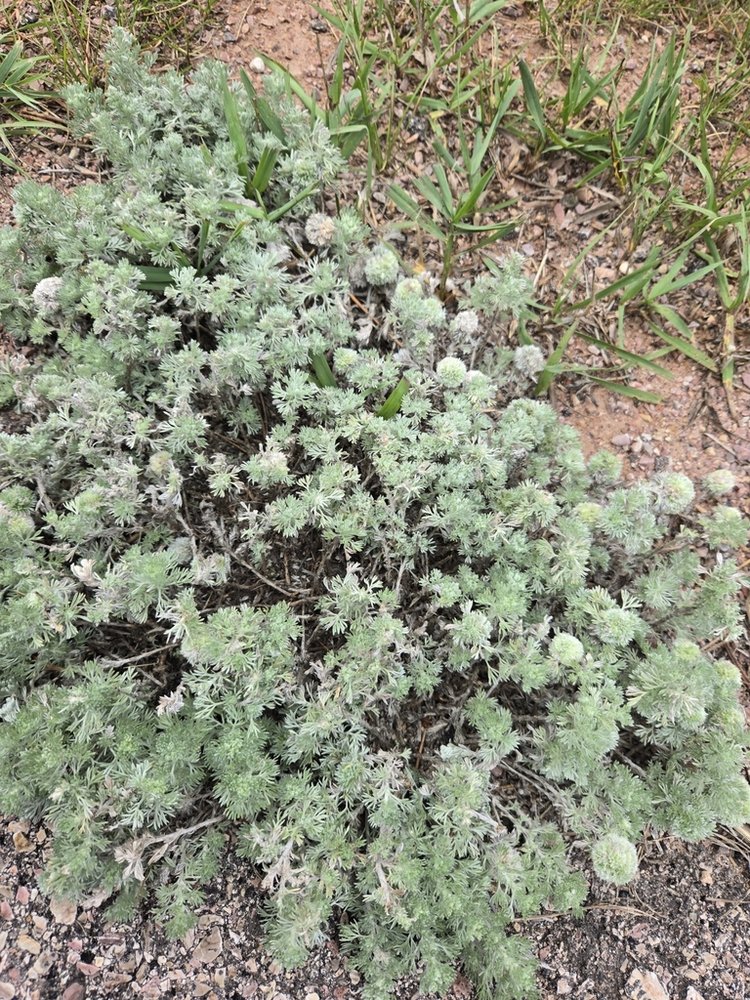
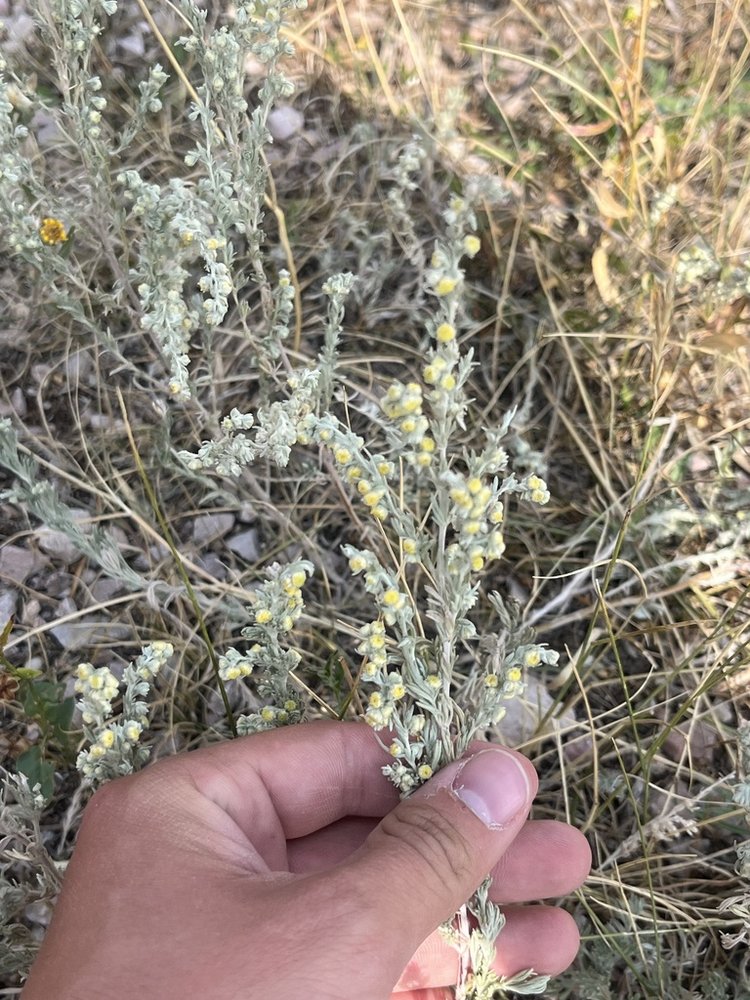
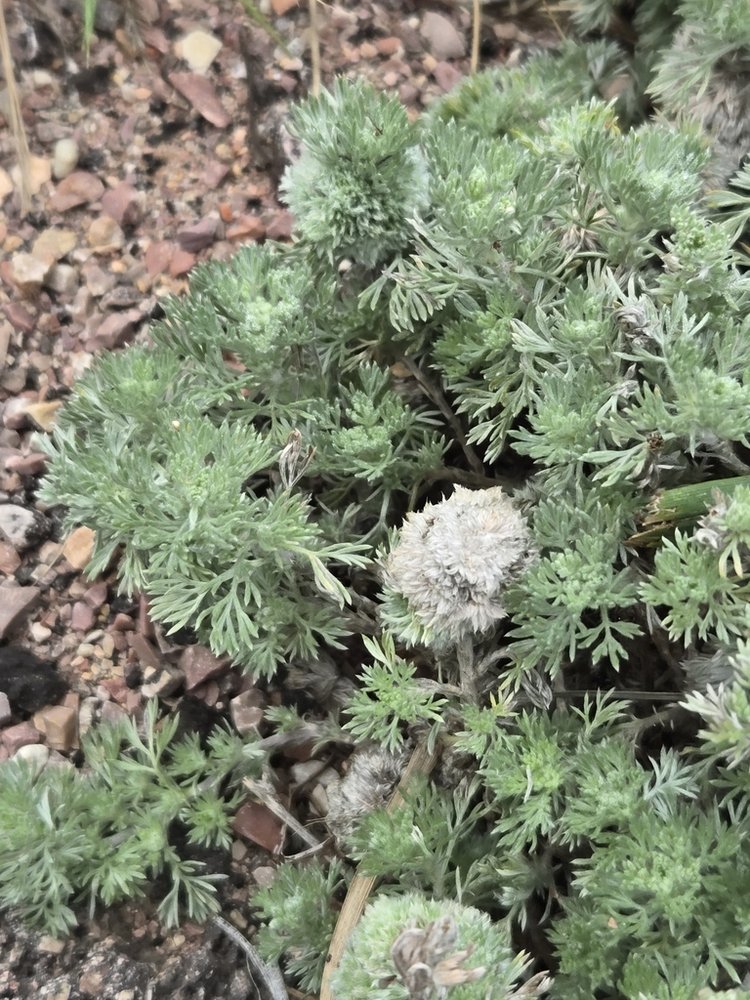
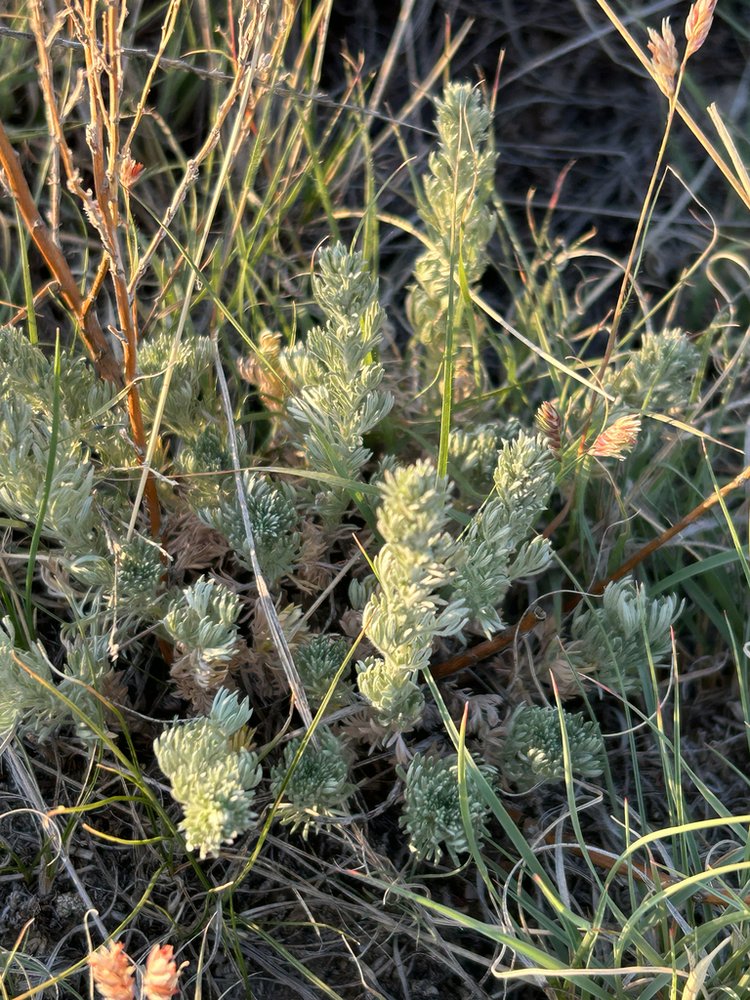
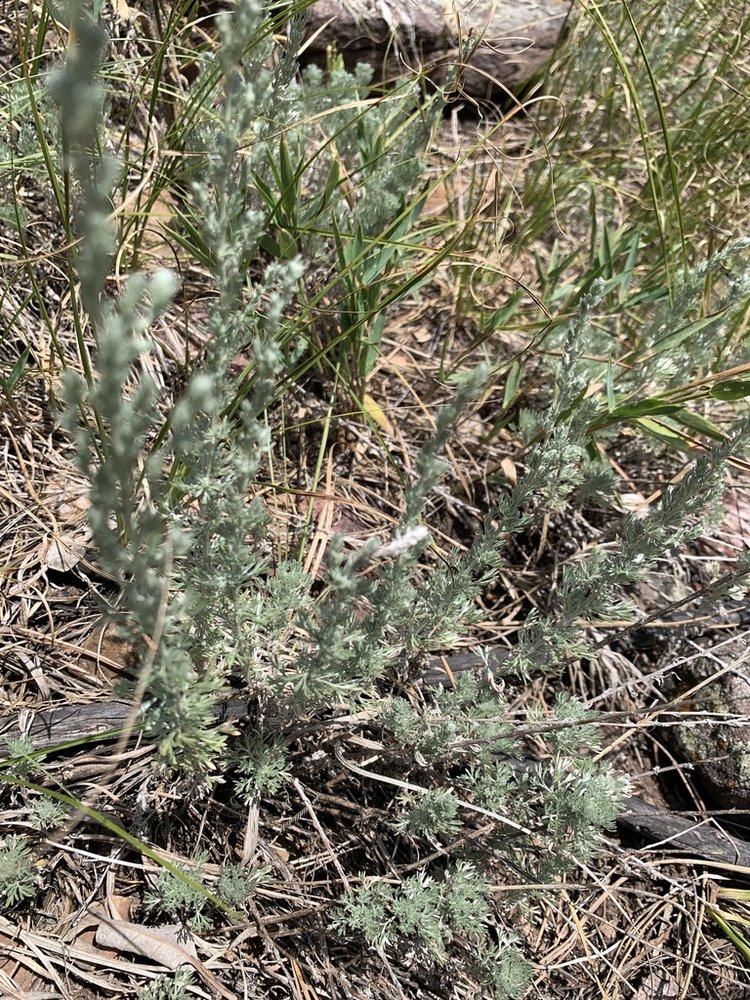
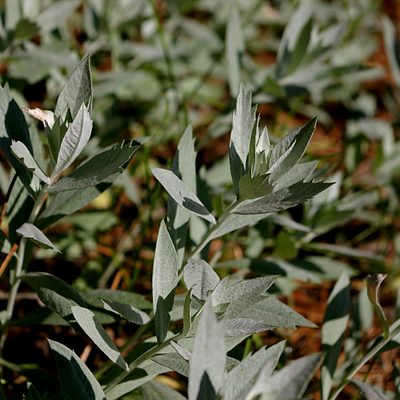
Fringed Sagewort (Artemisia frigida) is a low, silver-gray sage of dry ground in the Black Hills: a mat or mound 10–40 cm (4–16 in) tall, woody at the base, with tiny, thread-fine, fringe-cut leaves that have a strong, pungent smell when crushed, and small nodding yellow heads from July into October. The National Park Service lists it at Wind Cave, Jewel Cave, Mount Rushmore and Devils Tower. Photographed in the Black Hills.
Free photos from other sources
| Family | Asteraceae · Aster |
|---|---|
| Status | Native perennial subshrub |
| Blooms | July into October, a few plants into early November |
| Height | 10–40 cm (4–16 in) |
| Where | Dry, open, stony or sandy ground in full sun: prairie, pastures, rocky ridges, roadsides and open pine woods |
| Also called | Prairie Sagewort, Fringed Sage, Fringed Sagebrush, Pasture Sage, Sage Wormwood, Northern Wormwood, Sweet Sage, Little Wild Sage, pȟeží ȟóta waštémna (Lakota), waȟčá zí sutá (Lakota), makȟá čheyáka (Lakota) |
| Synonym | Artemisia frigida var. gmeliniana, Artemisia frigida var. williamsiae |
| Toxicity | The USDA plant guide says the plant's oil (thujone) is poisonous in large doses. |
| Traditional use | Black Elk and Flying By (1998) call it women's medicine: Lakota women used it in bath water or as a bitter infusion to regulate menstruation and to bring on labor when a birth was overdue. The USDA plant guide adds that Dakota, Omaha, Pawnee and Ponca women used a decoction of the plant for irregular periods, and that the Cheyenne burned it as a purifying smudge in the Sun Dance; the BRIT ethnobotany database (NAEB) records Dakota, Omaha and Ponca use of bunches of the plant as towels. The same database records that the Blackfoot drank a leaf infusion for colds and coughs, took a decoction of the roots and tops for "mountain fever," and mixed crushed leaves with stored meat to keep a good odor, and that the Arapaho took a leaf infusion for coughs. |
Traditional use: first drafted by Google AI, then checked against the sources on this page.
Roots, seeds & germination
Root: A tough, woody crown over a taproot that can reach 1.6 m (5 ft) deep where moisture soaks in deeply, with many side roots starting just under the surface. Where runoff keeps water from soaking in, it forms no taproot, and in the driest soils studied the roots spread 20–25 cm (8–10 in) sideways. Low branches can root where they touch the ground (layering) and widen the mat.
Seed: Each head makes tiny dry seeds (achenes) 1–1.5 mm long. Plants set no seed in dry years, and even in good years fewer than half of them do, but the seed can stay alive in the soil for years; in a North Dakota study it still sprouted after three and four years in the soil.
Germination: No pretreatment is needed, and seed in the soil can sprout any time in the growing season. In one laboratory study the best germination came at a steady 17 °C (63 °F) and light made no difference; in another, seed sown on the surface sprouted best but the seedlings dried out easily. SDSU says to sow in late fall for best results, or in early spring. Plants also grow from division of the rootstock or from softwood cuttings taken in early summer.
How do you identify Fringed Sagewort?
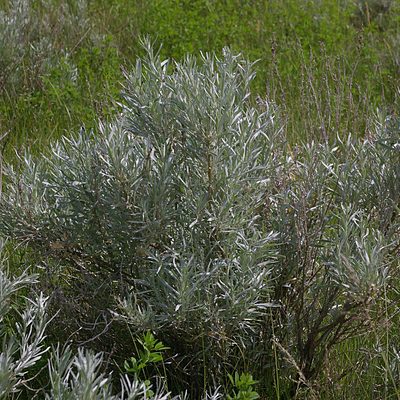
Look for a low silver-gray mat or mound 10–40 cm (4–16 in) tall rising from a tough, woody base, with tiny leaves 0.5–1.5 cm (¼–½ in) long, divided once or twice into threes, with thread-like lobes less than half a millimeter wide, densely white-hairy on both sides; crushed, they have a strong, pungent smell. From July the slender upright stems carry loose leafy sprays of small round nodding heads about 5 mm across with yellow florets. White Sagebrush can look similar from a distance, since both are covered in dense, silky white hairs, but White Sagebrush has broader, flat leaf blades where Fringed Sagewort has short, wispy, fringe-like leaves, and White Sagebrush spreads into colonies by rhizomes rather than forming clumps.
When does it bloom?
July into October, a few plants into early November.
Where does it grow?
Dry, open, stony or sandy ground in full sun: prairie, pastures, rocky ridges and hilltops, roadsides, and open ponderosa pine woods; it tolerates some shade and turns up along ditch banks and streams too. Black Hills herbarium labels record it on ridgelines, rocky south-facing slopes, dry prairie on ridges, meadows in pine forest, granitic sand in Custer State Park, the short-grass plains at Wind Cave, and sandstone ridges and meadows in the Wyoming Black Hills, with specimens from Lawrence, Pennington, Custer, Fall River and Meade counties and from Crook and Weston counties in Wyoming. The National Park Service lists it at all four Black Hills parks, the 1986 Jewel Cave survey lists it, and iNaturalist has 211 research-grade Black Hills records. The Fire Effects Information System calls it an important fall, winter and spring food of the elk at Wind Cave.
Other sagebrushes and sageworts in this guide
Aster family (Asteraceae): 62 other plants in this guide
- Aromatic Aster
- Arrowleaf Balsamroot
- Arrowleaf Sweet Coltsfoot
- Bachelor's Button
- Balsam Ragwort
- Black-eyed Susan
- Blanket Flower
- Blue Lettuce
- Broom Snakeweed
- Bull Thistle
- Canada Hawkweed
- Canada Lettuce
- Canada Thistle
- Chicory
- Common Burdock
- Common Dandelion
- Common Sunflower
- Common Tansy
- Common Yarrow
- Curlycup Gumweed
- Cutleaf Coneflower
- Dotted Gayfeather
- Drummond's Thistle
- Easter Daisy
- False Boneset
- Fetid Marigold
- Field Pussytoes
- Hairy Golden Aster
- Heart-leaved Arnica
- Hooker's Townsend Daisy
- Horseweed
- Jerusalem Artichoke
- Lambstongue Groundsel
- Maximilian Sunflower
- Missouri Goldenrod
- Mountain Dandelion
- Musk Thistle
- Oxeye Daisy
- Pearly Everlasting
- Pineapple Weed
- Prairie Coneflower
- Prairie False Dandelion
- Purple Coneflower
- Rocky Mountain Blazing Star
- Rosy Pussytoes
- Rubber Rabbitbrush
- Rush Skeletonplant
- Scotch Thistle
- Silver Sagebrush
- Smooth Blue Aster
- Spotted Joe-Pye Weed
- Stemless Four-nerve Daisy
- Stiff Goldenrod
- Stiff Sunflower
- Threenerve Fleabane
- Wavyleaf Thistle
- Western Ragweed
- White Hawkweed
- White Prairie Aster
- White Sagebrush
- Woolly Groundsel
- Yellow Salsify
Sources: Flora of North America vol. 19: Artemisia frigida (eFloras); Asteraceae: Artemisia frigida — SDSU Open PRAIRIE; Artemisia frigida — USDA Forest Service Fire Effects Information System; Plant Guide: Prairie Sagewort, Artemisia frigida — USDA NRCS; USDA PLANTS Database: Artemisia frigida (ARFR4); Artemisia frigida (Prairie Sagewort) — Minnesota Wildflowers; NPSpecies checklist, Wind Cave National Park vascular plants; NPSpecies checklist, Jewel Cave National Monument vascular plants; NPSpecies checklist, Mount Rushmore National Memorial vascular plants; NPSpecies checklist, Devils Tower National Monument vascular plants; Marriott and Hartman 1986, A Survey of the Vegetation of Jewel Cave National Monument; GBIF occurrence search: Artemisia frigida, South Dakota herbarium specimens; GBIF occurrence search: Artemisia frigida, Wyoming herbarium specimens; iNaturalist: research-grade Fringed Sagewort observations near the Black Hills; Culturally Important Plants of the Lakota (Black Elk and Flying By, 1998), filed with the South Dakota PUC; Native American Ethnobotany Database (BRIT): Artemisia frigida.