Dock
Rumex sp.
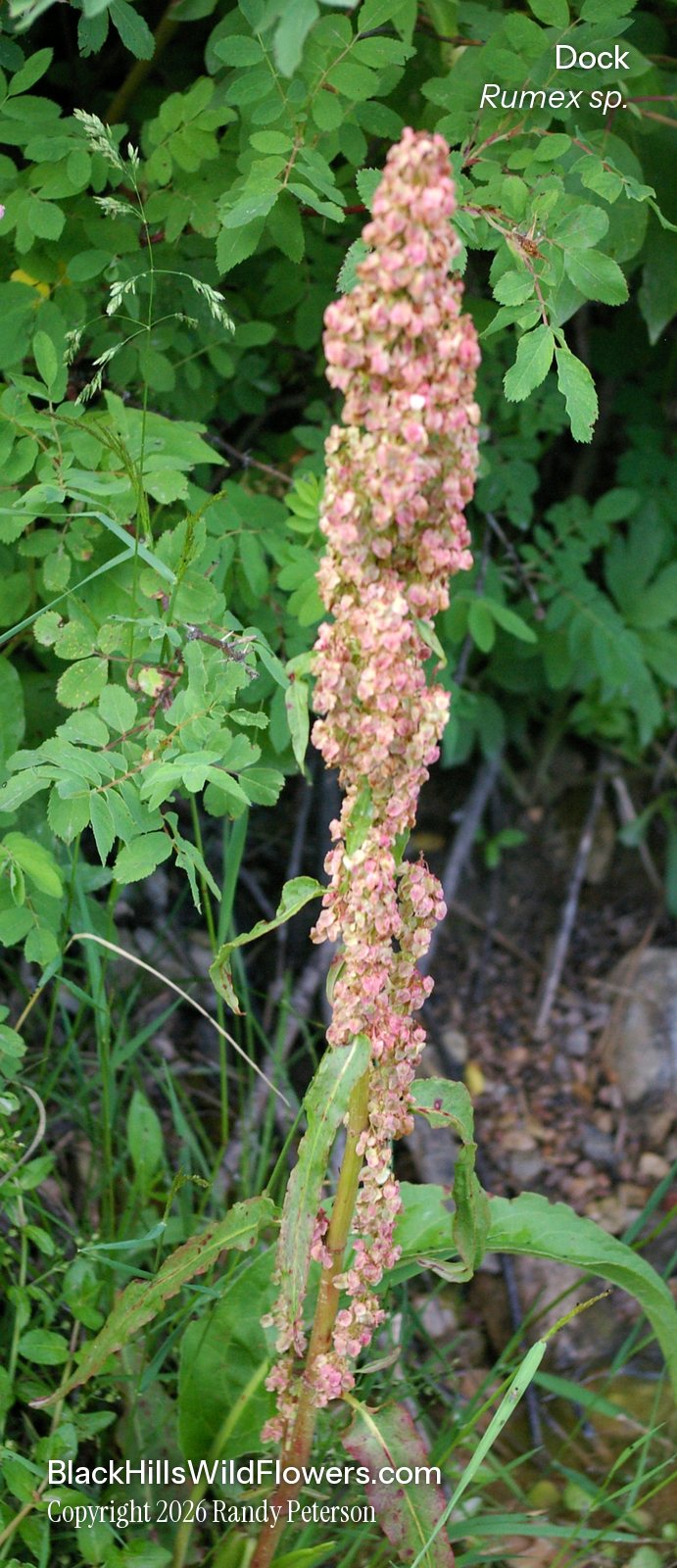
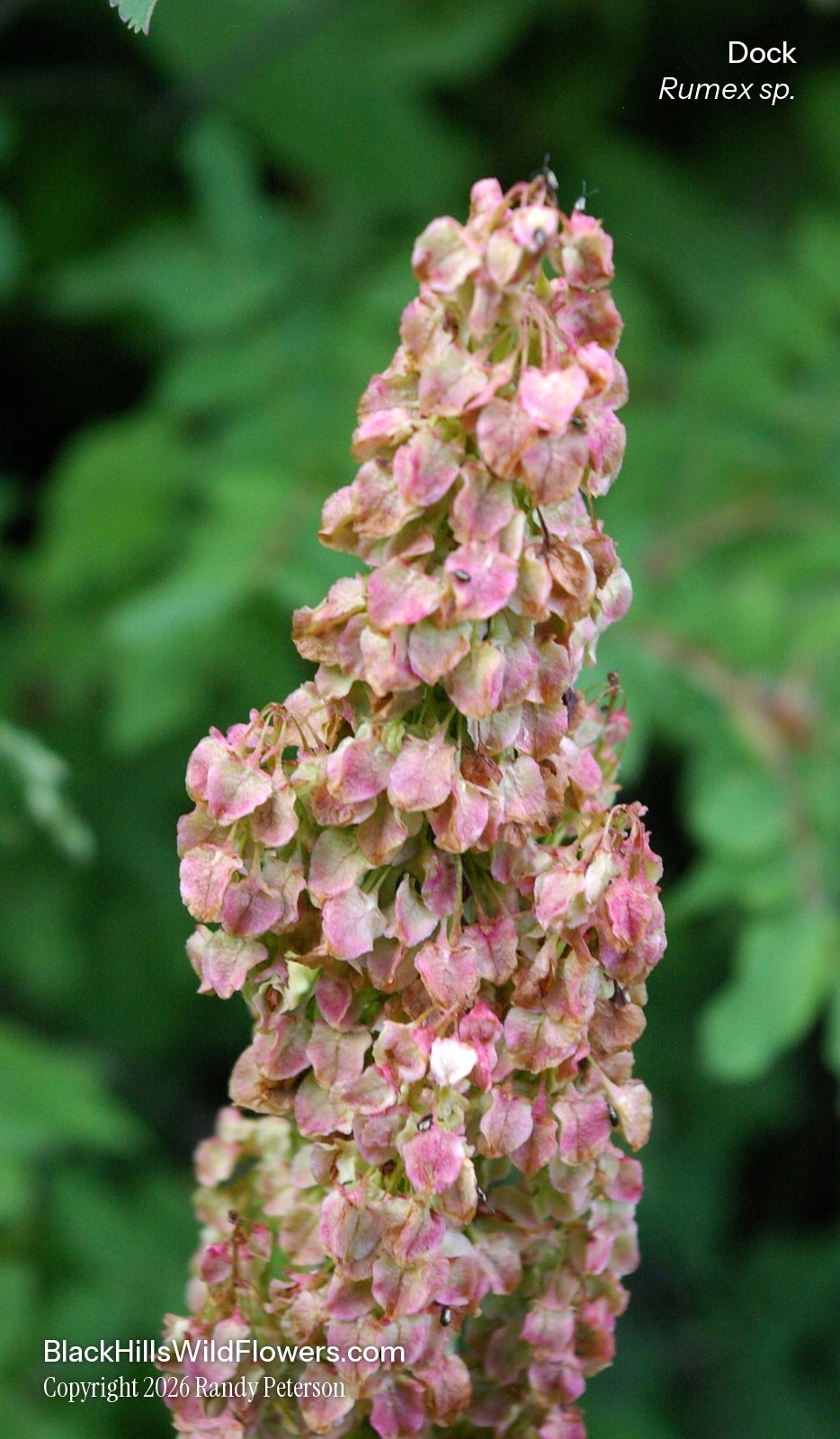
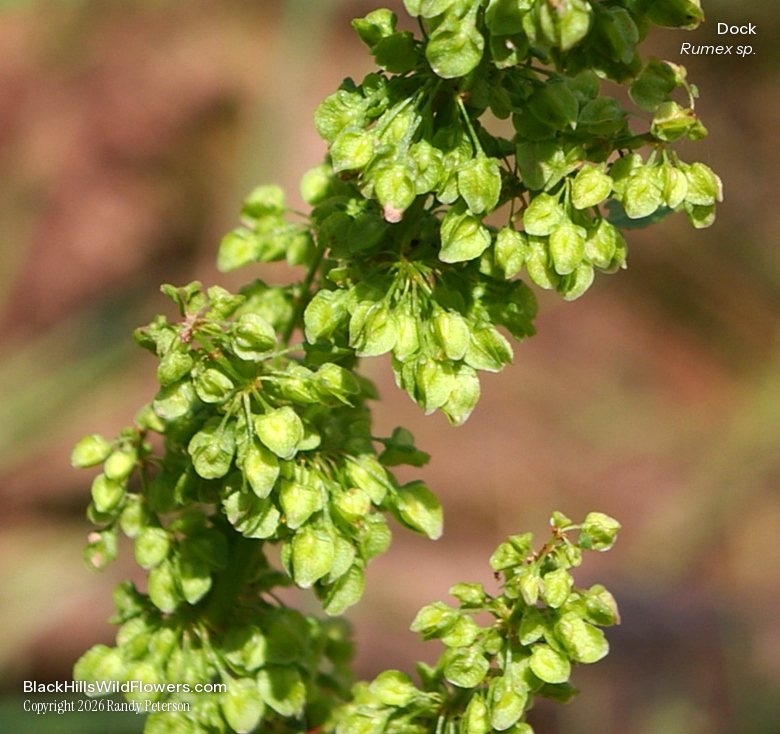
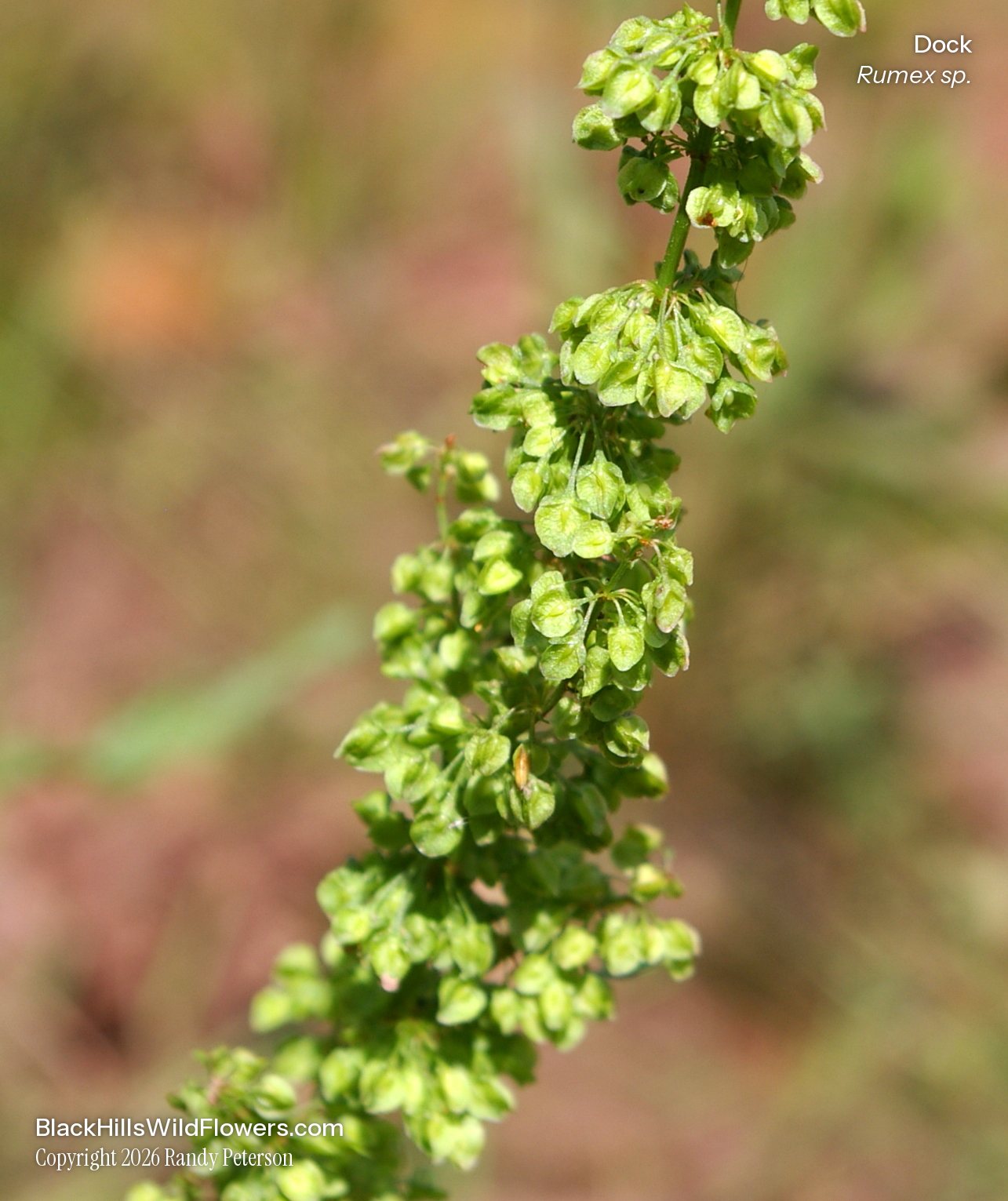
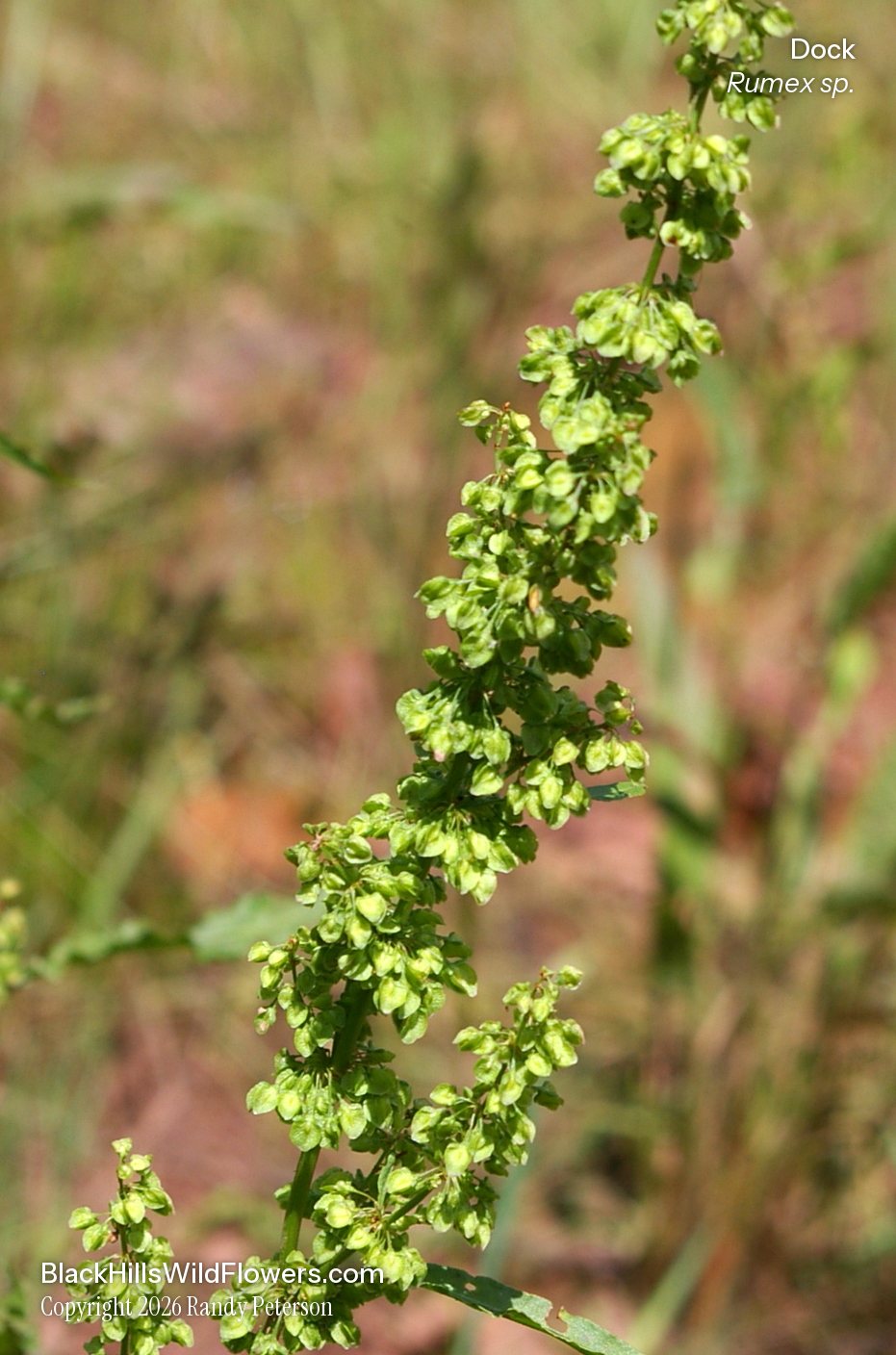
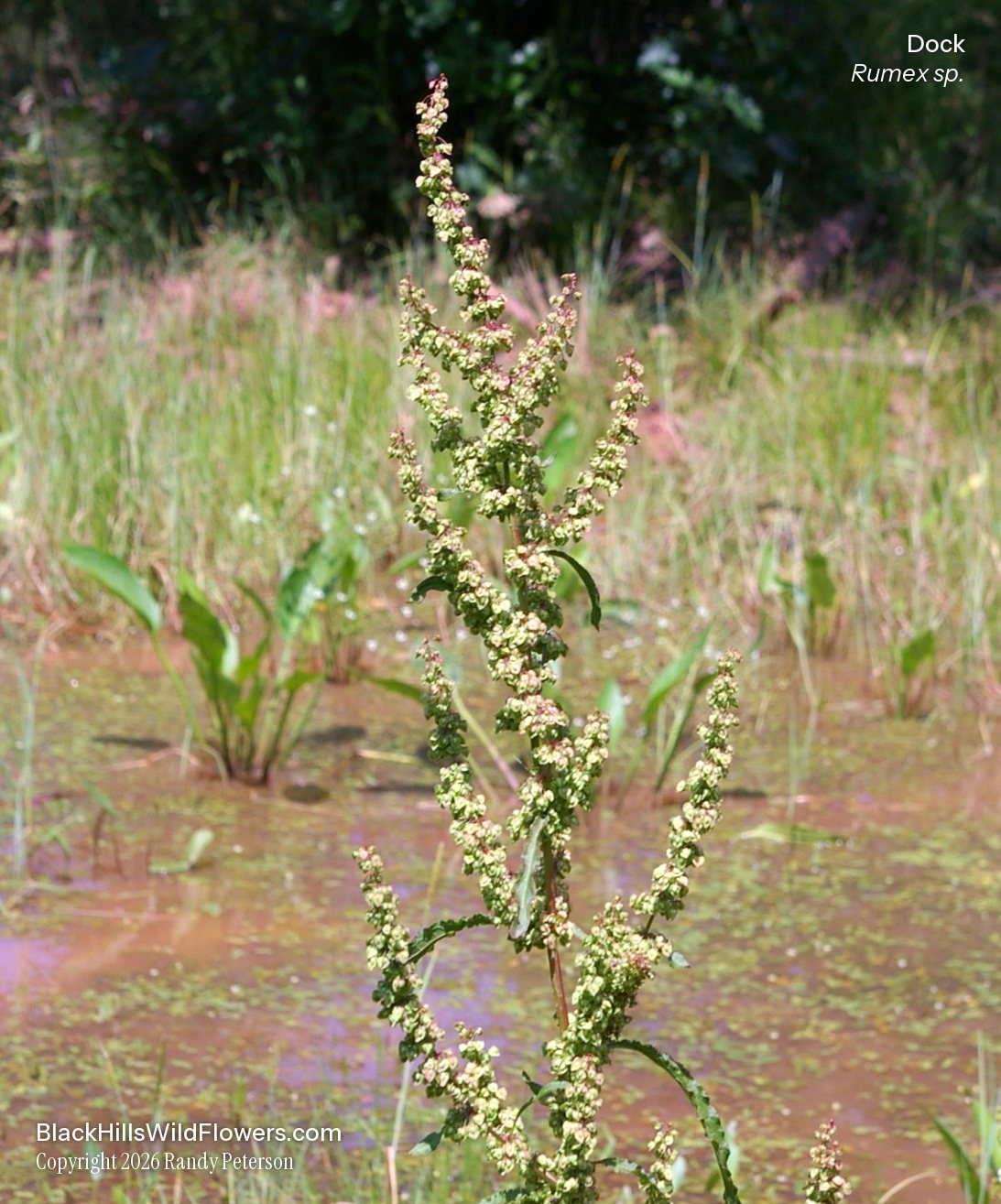
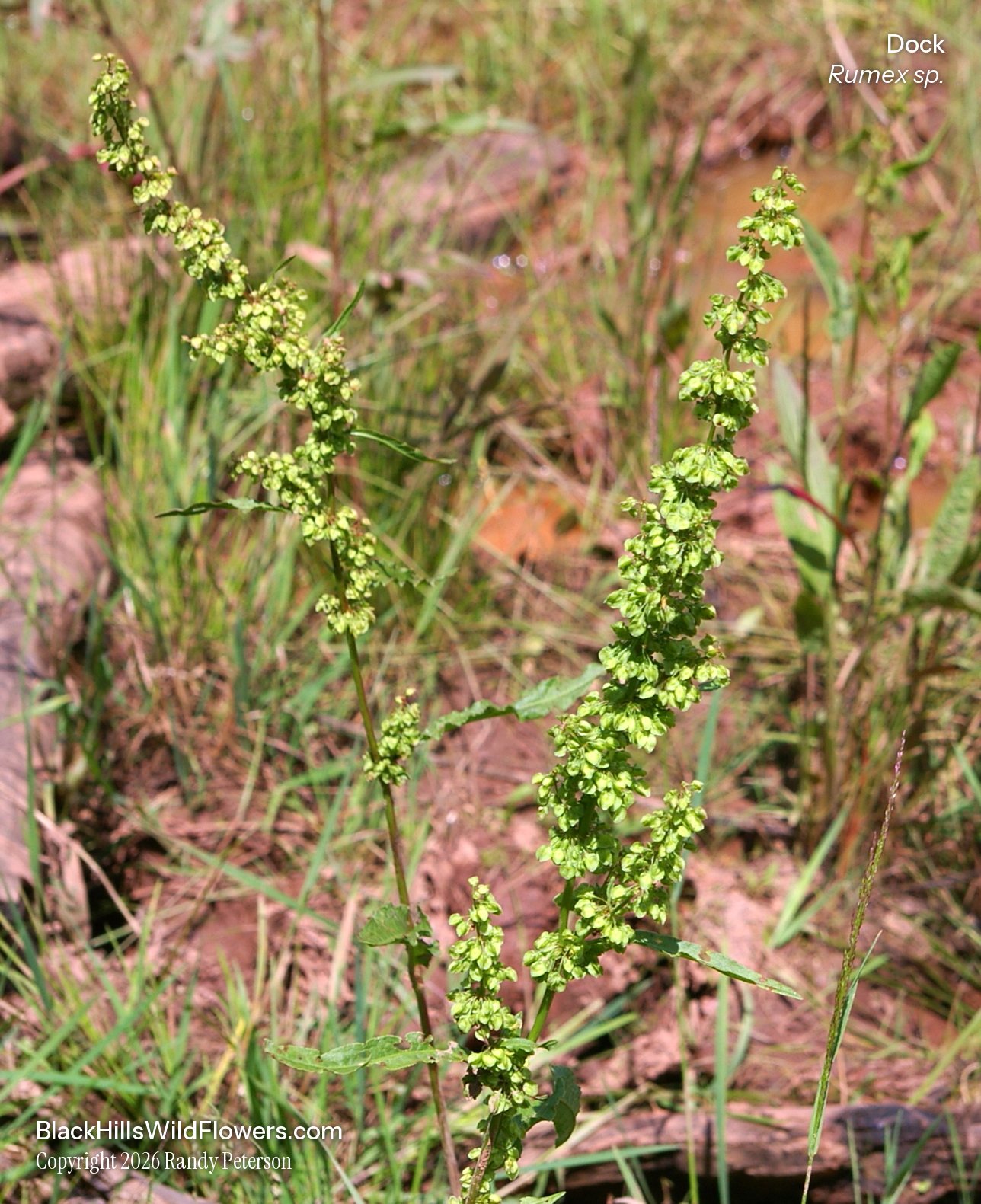
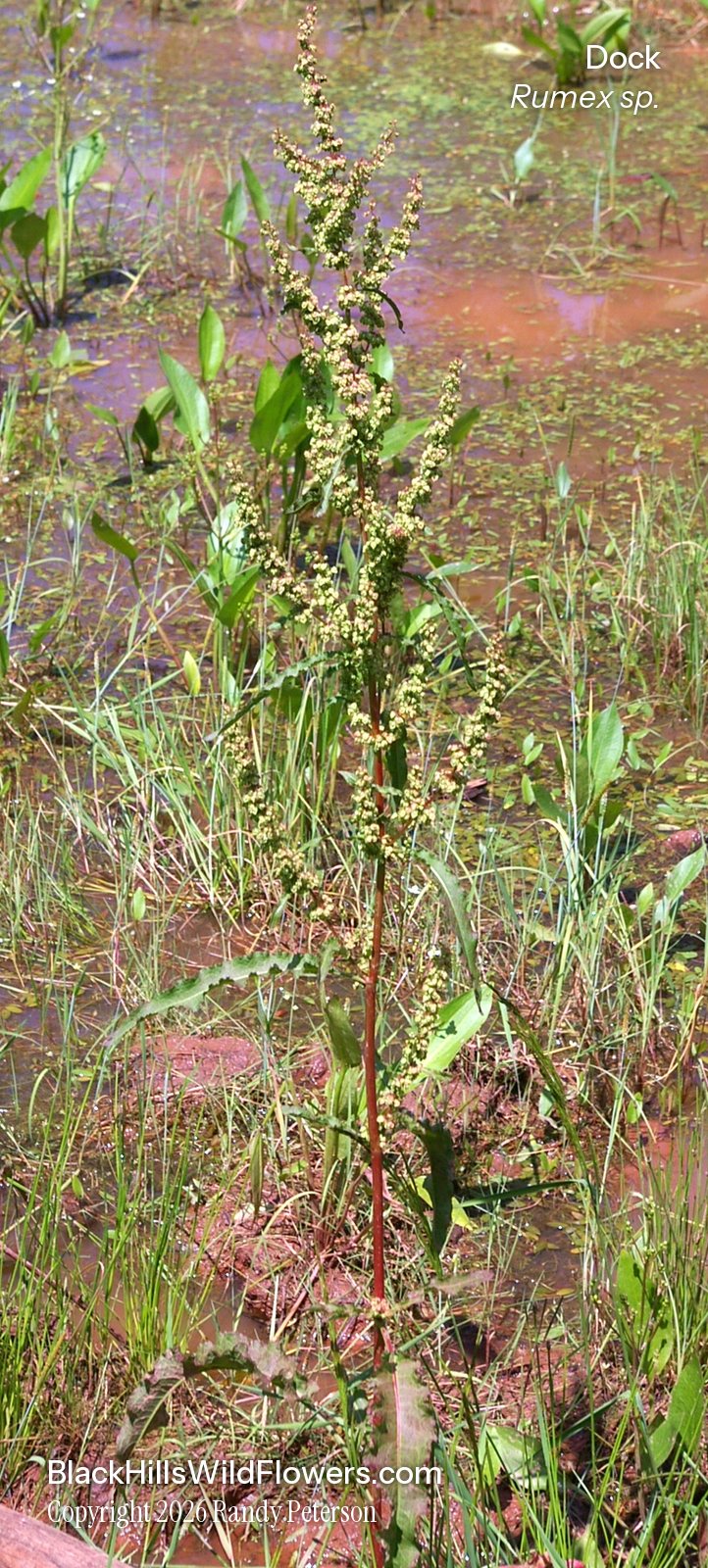
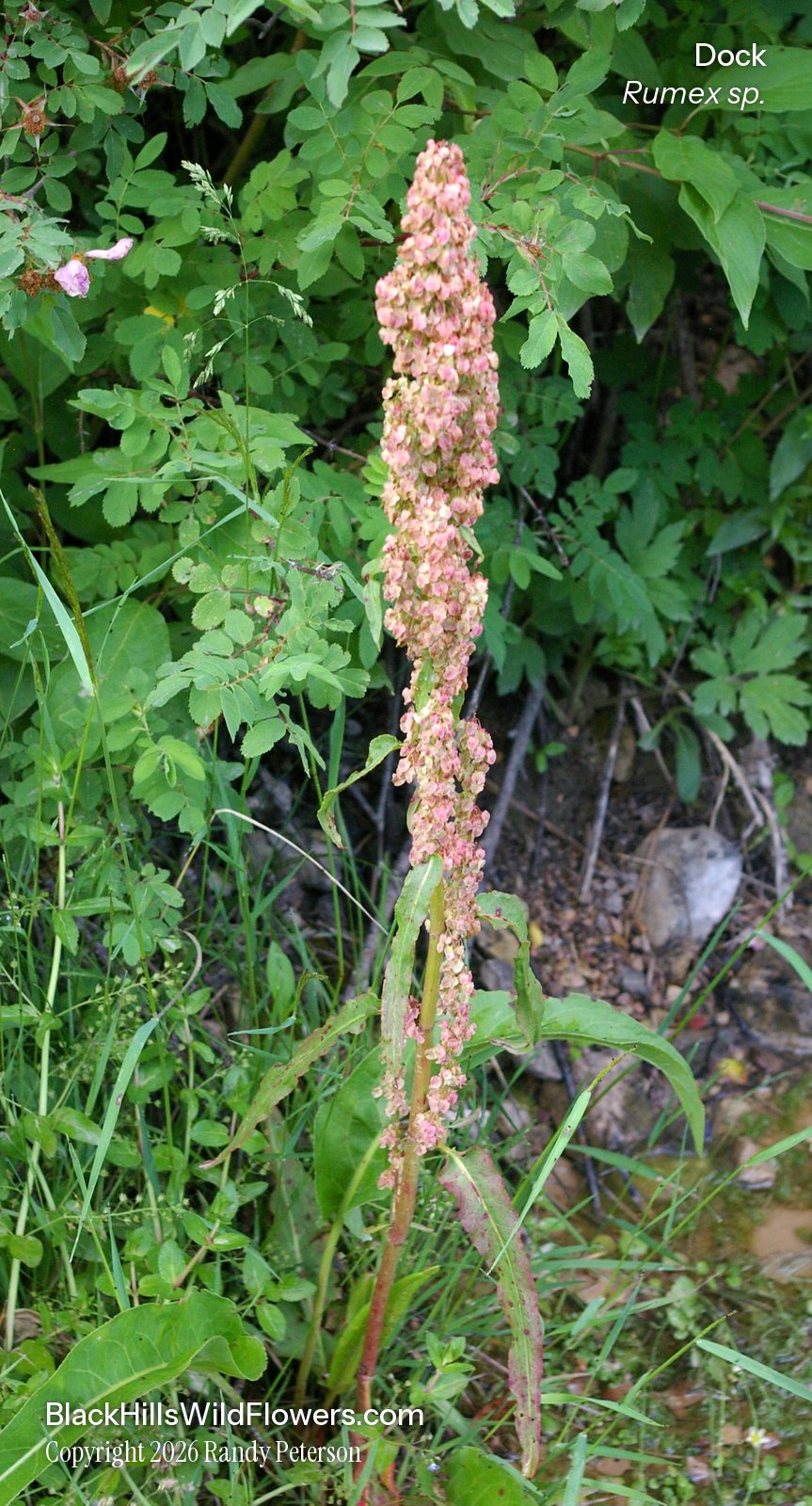
Dock (Rumex species) is the common name for a group of plants in the buckwheat family, with loose clusters of small greenish to reddish flowers and three-sided fruits wrapped in papery wings. South Dakota docks mostly bloom June into August in moist open ground and on disturbed sites, and telling them apart takes close looks at the leaves and ripe fruit. Photographed in the Black Hills.
| Family | Polygonaceae · Buckwheat |
|---|---|
| Blooms | June into August for most South Dakota docks |
| Height | 15–150 cm (6–60 in), depending on species |
| Where | Moist open ground and disturbed sites; sandy dunes and riverbanks for some |
| Traditional use | Sitting Bull College's 1998 Culturally Important Plants of the Lakota lists several docks. It records a poultice of green Water Dock (Rumex altissimus) leaves for boils and an infusion of Western Dock (Rumex aquaticus) as a blood detoxifier. |
Roots, seeds & germination
Root: It varies by species: Patience Dock and Mexican Dock grow from a thick, creeping rootstock, and Veiny Dock from a branching rhizome.
Seed: Three-sided achenes (dry one-seeded fruits), light brown to nearly black depending on species. Veiny Dock's are about 5–7 mm long.
How do you identify Dock?
Look for alternate leaves, small greenish to reddish-brown flowers in a large, loose cluster, and three-sided fruits wrapped in three enlarged inner tepals, or wings. To name the species, check the wings: toothed or smooth, how large, and whether they carry grains (tubercles). Then check whether the leaves are wavy or flat, and dull or shiny.
When does it bloom?
June into August for most South Dakota docks.
Where does it grow?
In South Dakota, Mexican Dock grows in moist open habitats, on disturbed sites and along waterways. Patience Dock, from Eurasia, grows on disturbed sites, roadsides and moist open fields. Veiny Dock grows on sandy dunes and riverbanks in the south and west of the state. Devils Tower National Monument lists Western Dock (Rumex occidentalis), and the 1986 Jewel Cave survey lists only Curly Dock.
Other flowers to compare
Sources: SDSU Open PRAIRIE: Rumex patientia; SDSU Open PRAIRIE: Rumex triangulivalvis; SDSU Open PRAIRIE: Rumex venosus; Minnesota Wildflowers: Curly Dock; Illinois Wildflowers: Curly Dock; National Park Service, Devils Tower National Monument: Native Plants; Marriott and Hartman 1986, A Survey of the Vegetation of Jewel Cave National Monument; Culturally Important Plants of the Lakota (Black Elk and Flying By, Sitting Bull College, 1998), filed with the South Dakota PUC.