Green Gentian
Frasera speciosa
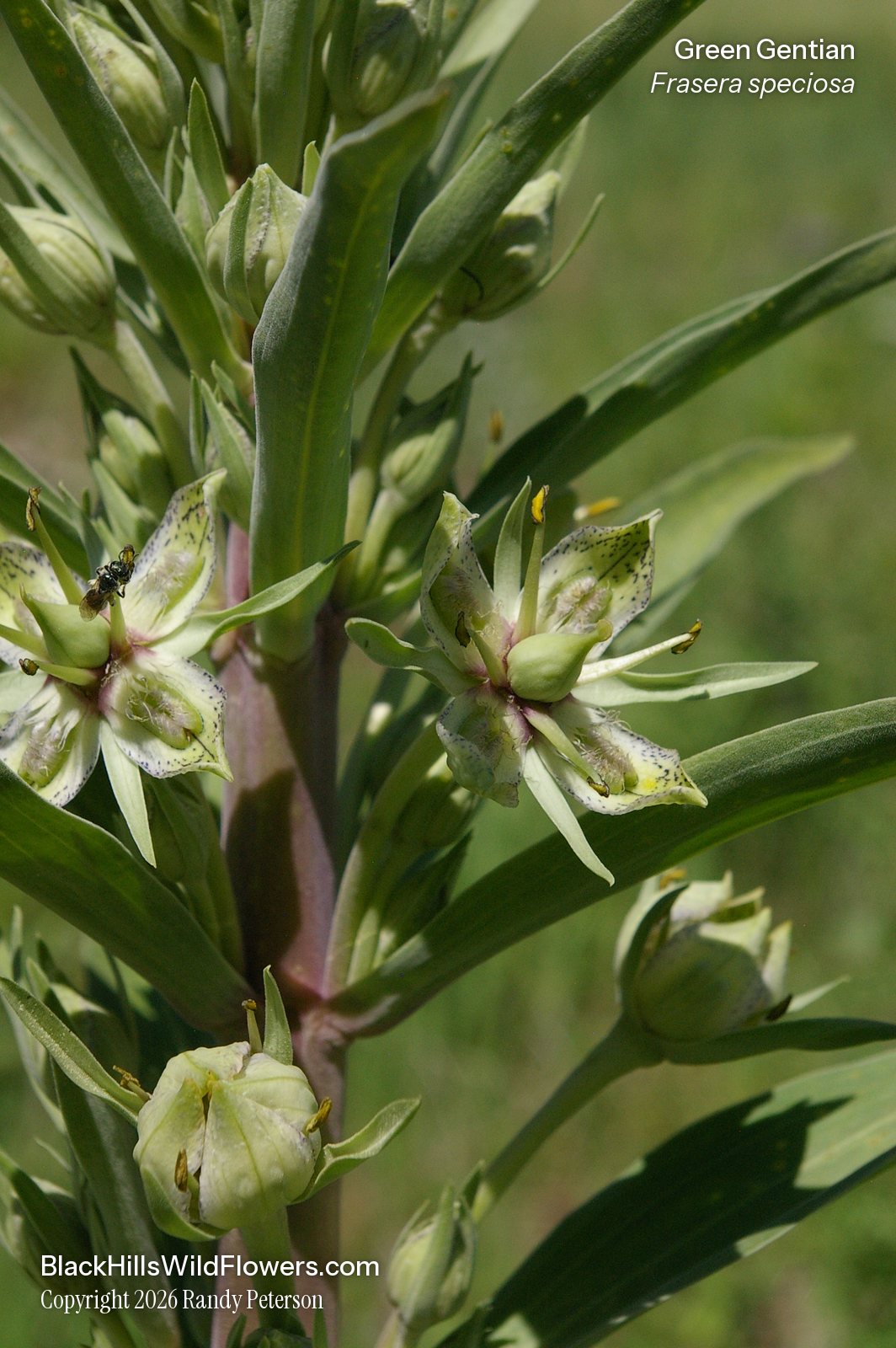
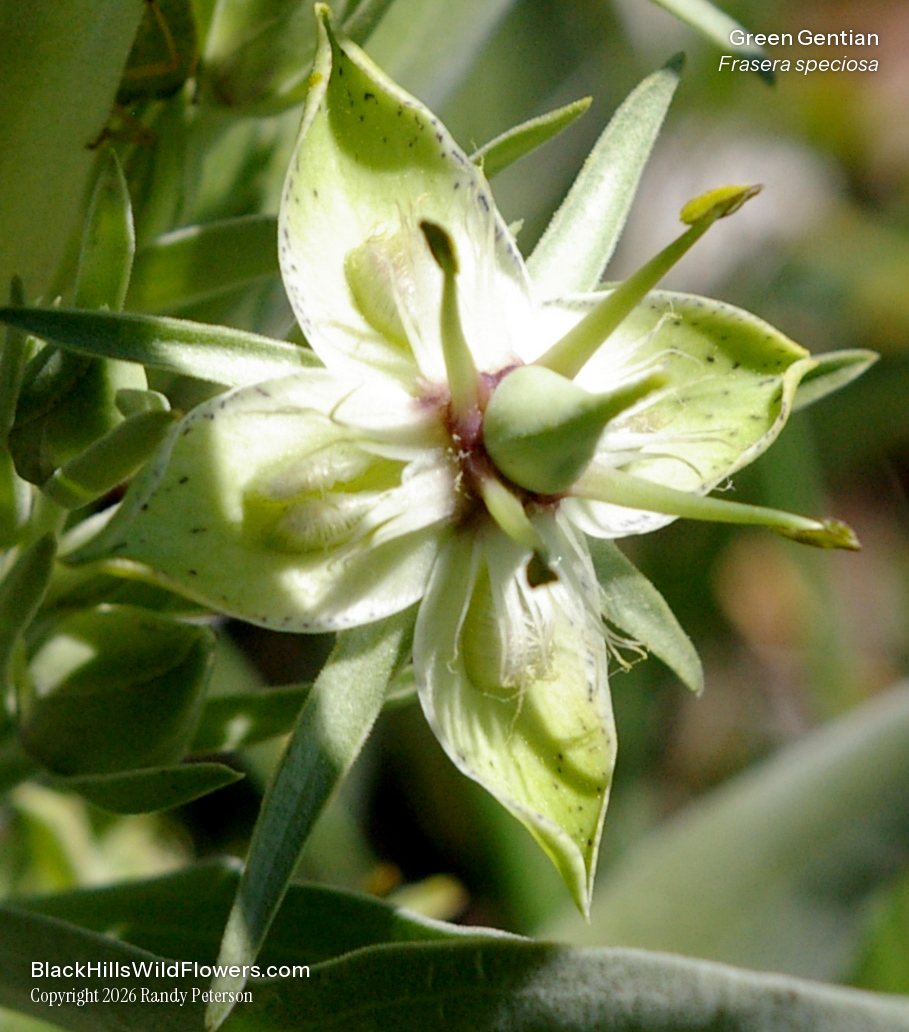
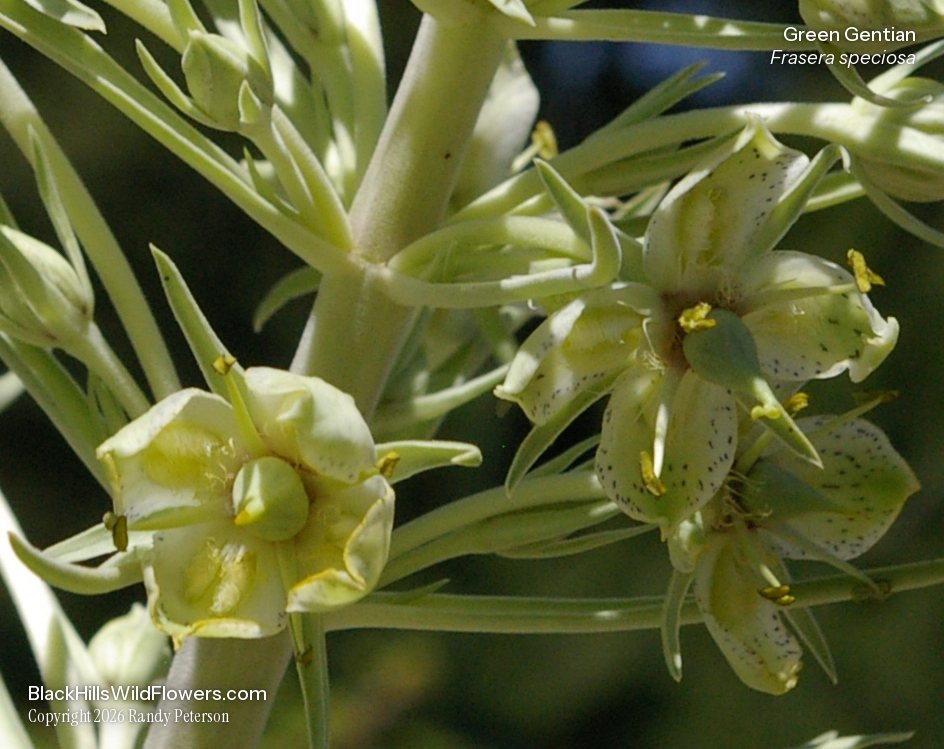
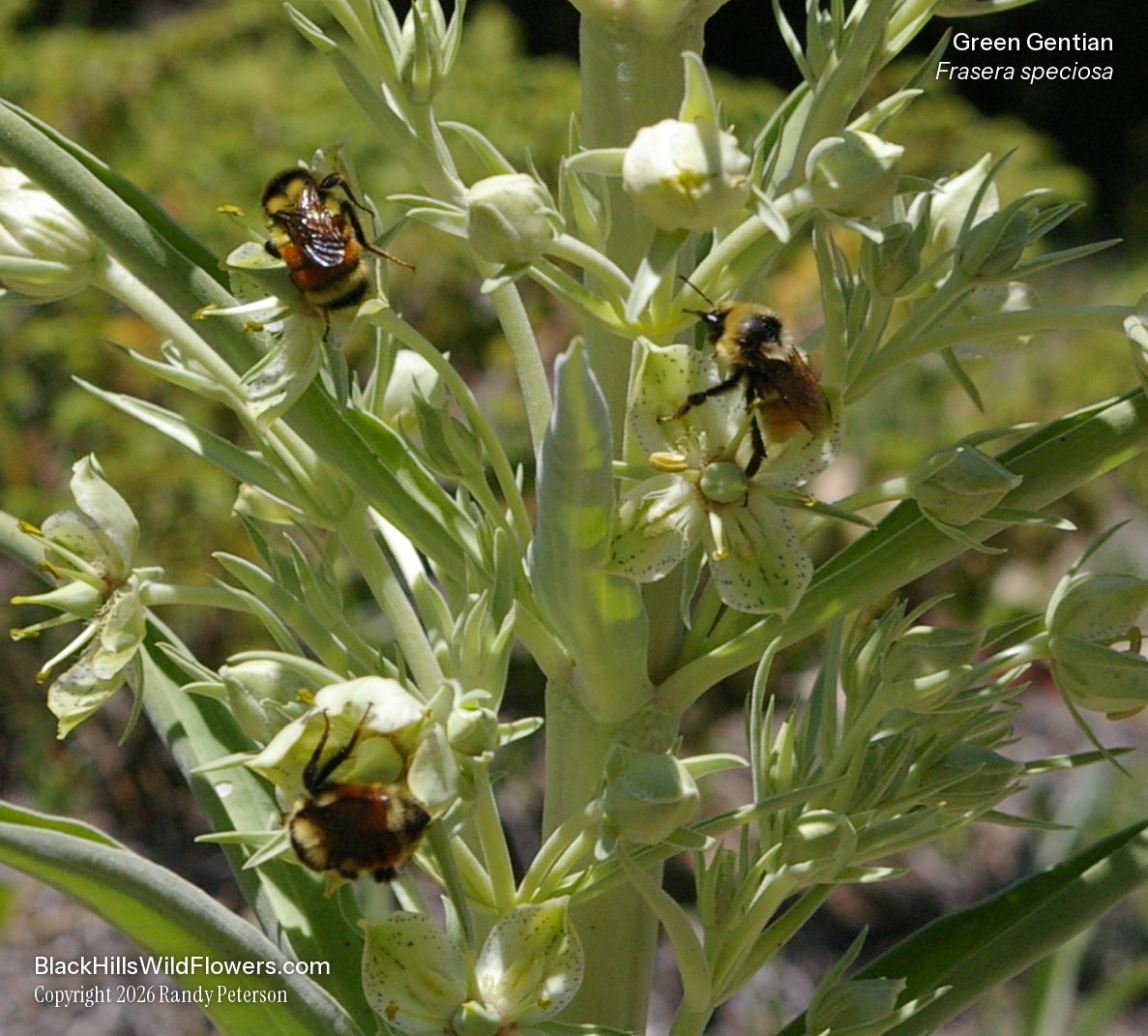
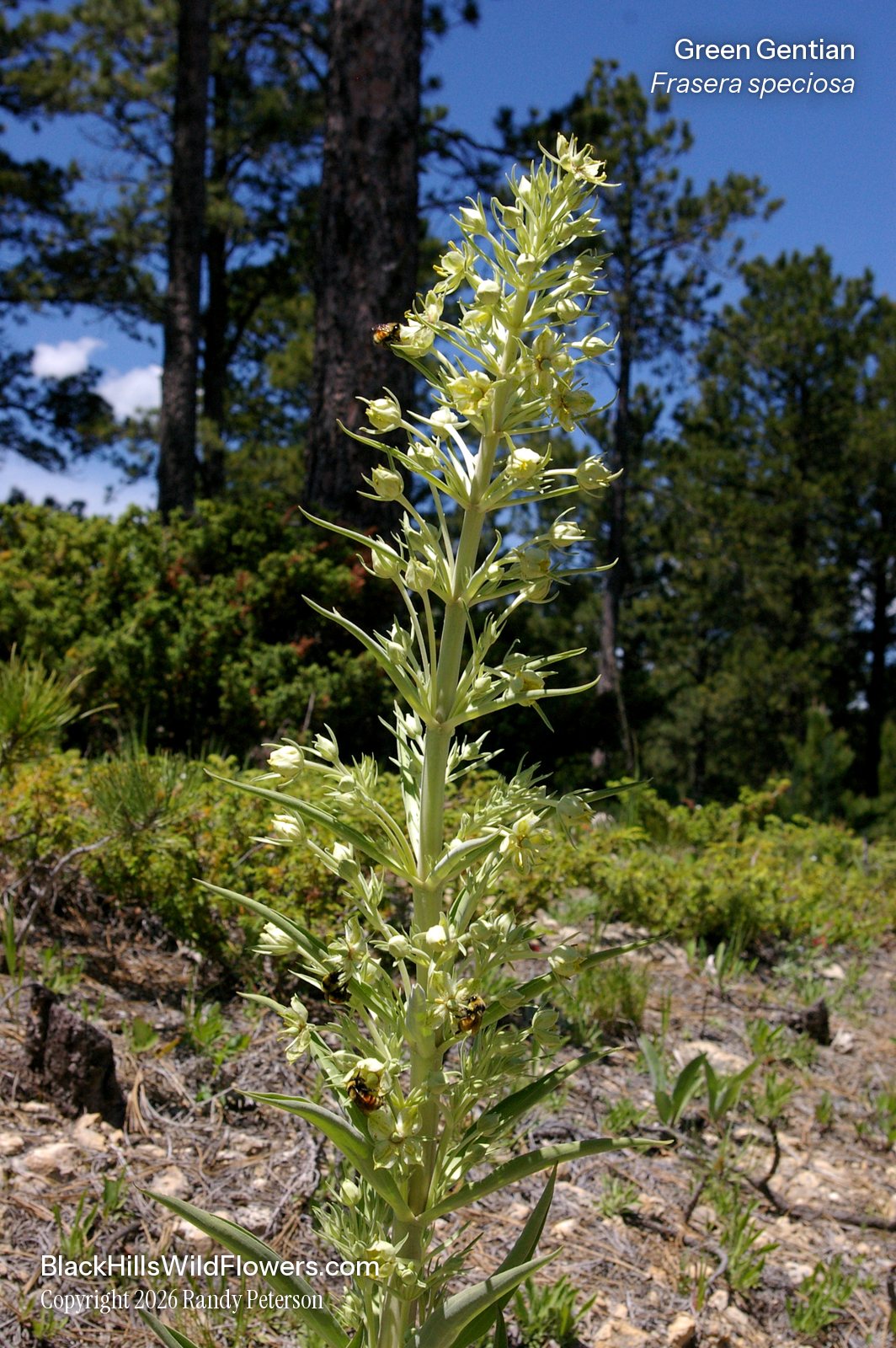
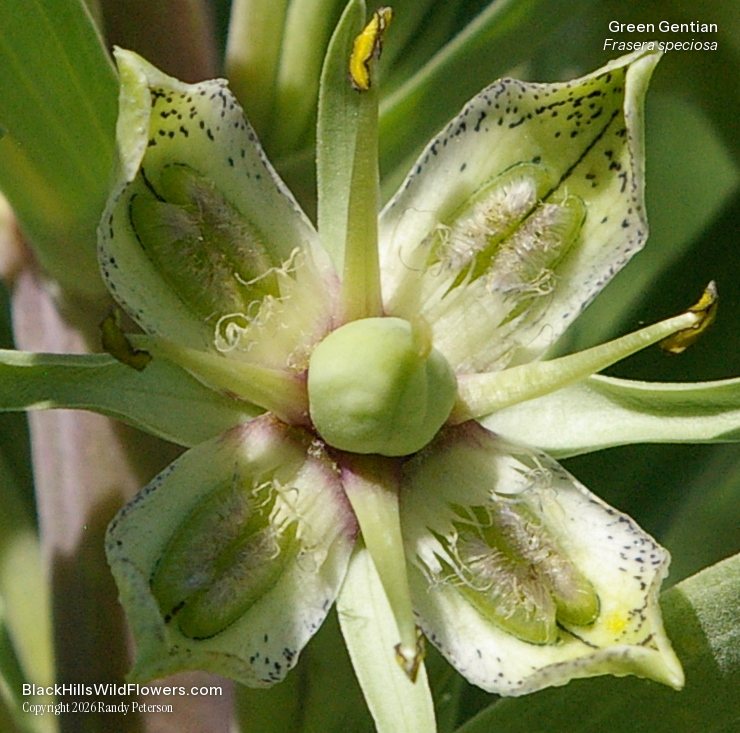
Green Gentian (Frasera speciosa), also called Monument Plant, is a native perennial that grows as a rosette of large leaves for several years, then sends up one tall, unbranched stalk of yellow-green, purple-spotted flowers and dies. It blooms May into August, depending on elevation, in meadows and mountain forests of western South Dakota, and the 1986 plant survey of Jewel Cave National Monument lists it in the Black Hills. Photographed in the Black Hills.
| Family | Gentianaceae · Gentian |
|---|---|
| Status | Native perennial |
| Blooms | May into August, depending on elevation |
| Height | 20–150 cm (8–60 in) |
| Where | Meadows, woodlands and mountain forests |
| Also called | Monument Plant, Elkweed |
Roots, seeds & germination
Root: Grows from a woody base.
Seed: The fruit is an oblong capsule, 1–2 cm long. Capsules are collected as they begin to open and the plant starts to die back. If left standing, the dead parent plant reseeds itself.
Germination: Sow in fall, or plant in late winter as the snow melts.
How do you identify Green Gentian?
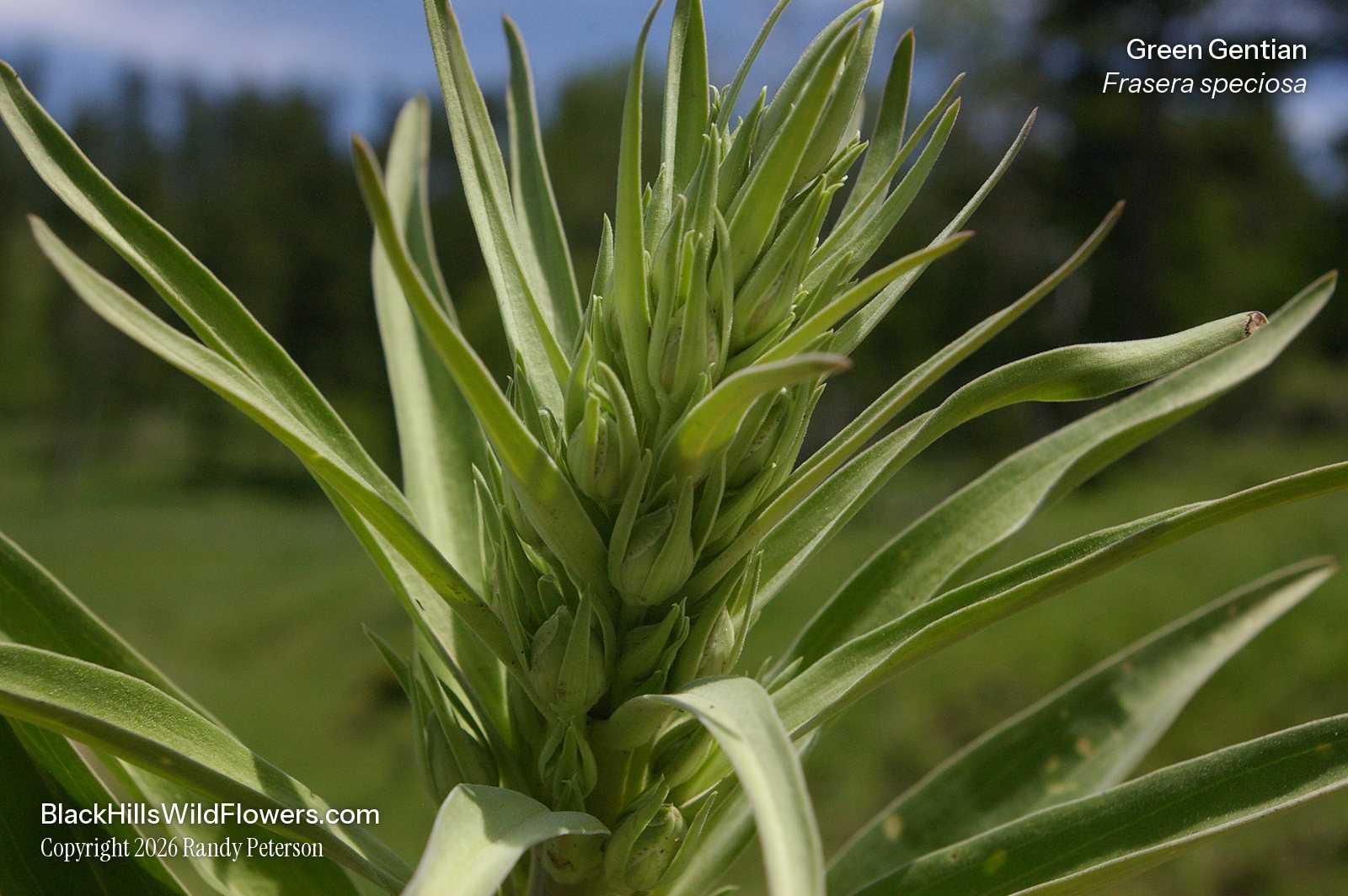
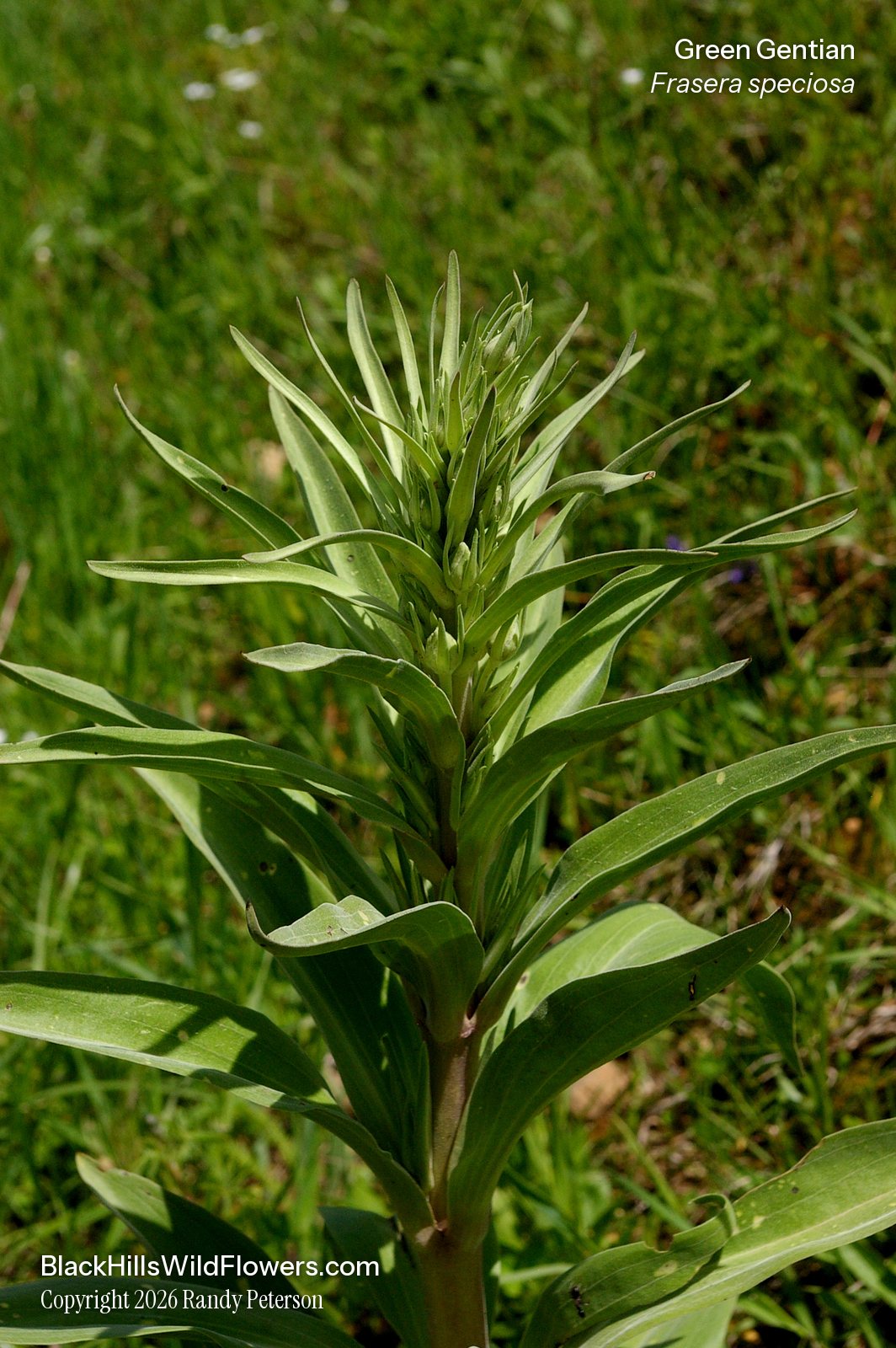
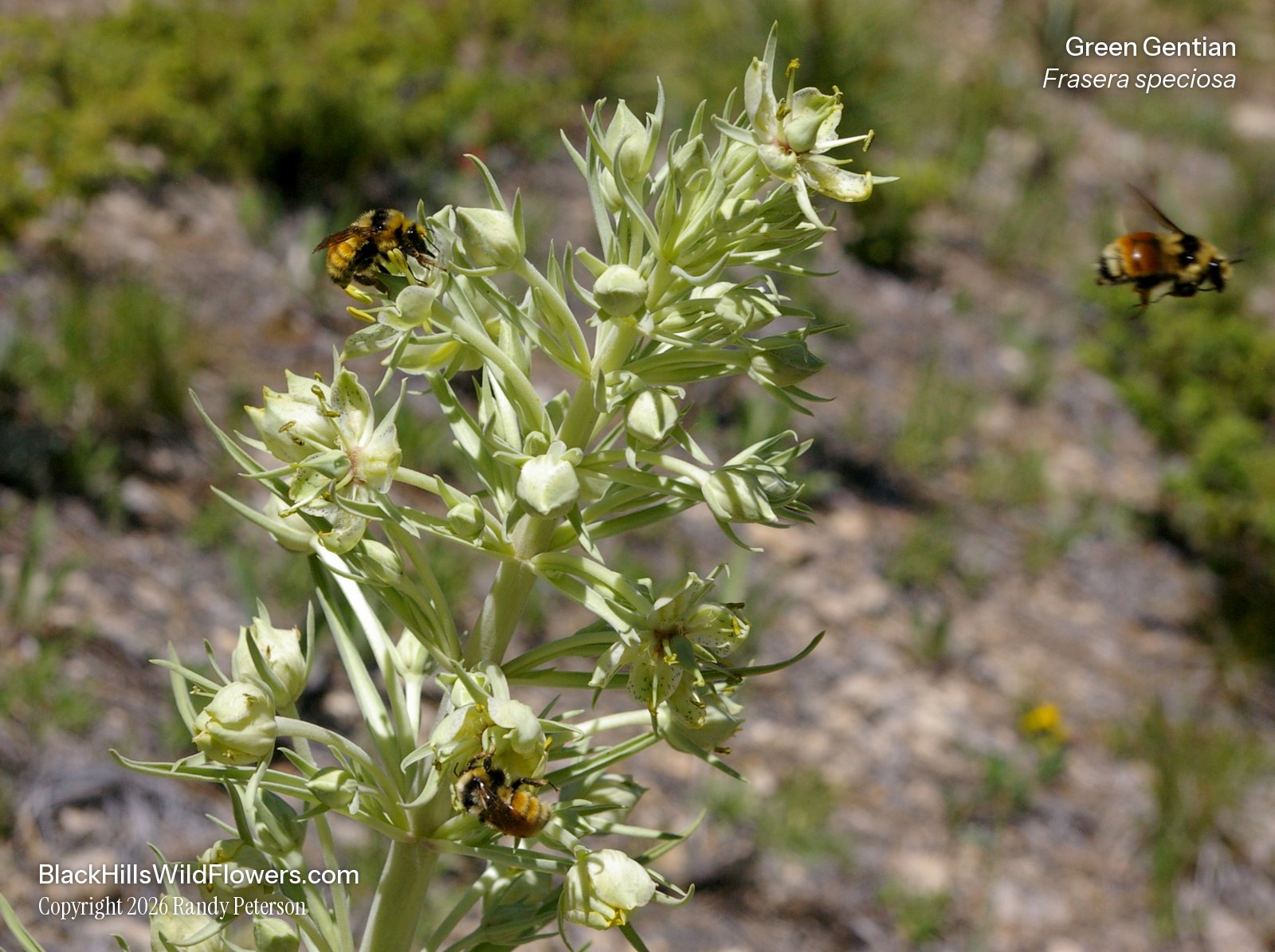
Look for one stout, unbranched stem with lance-shaped leaves in whorls of 3 to 7, rising from a rosette of large leaves. Flowers grow in whorls among leafy bracts along the stem, each with 4 greenish-yellow petals flecked with purple and 2 fringed nectar pits at the base of each petal.
When does it bloom?
May into August, depending on elevation.
Where does it grow?
Meadows, woodlands and mountain forests at moderate to high elevations in western South Dakota. The 1986 Jewel Cave survey lists it. Plants on moister sites bolt sooner than those on drier sites.
Other flowers to compare
Sources: SDSU Open PRAIRIE: Frasera speciosa; Marriott and Hartman 1986, A Survey of the Vegetation of Jewel Cave National Monument; Native Plant Society of New Mexico: Frasera speciosa; Colorado Wildbuds: Frasera speciosa; American Southwest: Frasera speciosa.