Green Comet Milkweed
Asclepias viridiflora
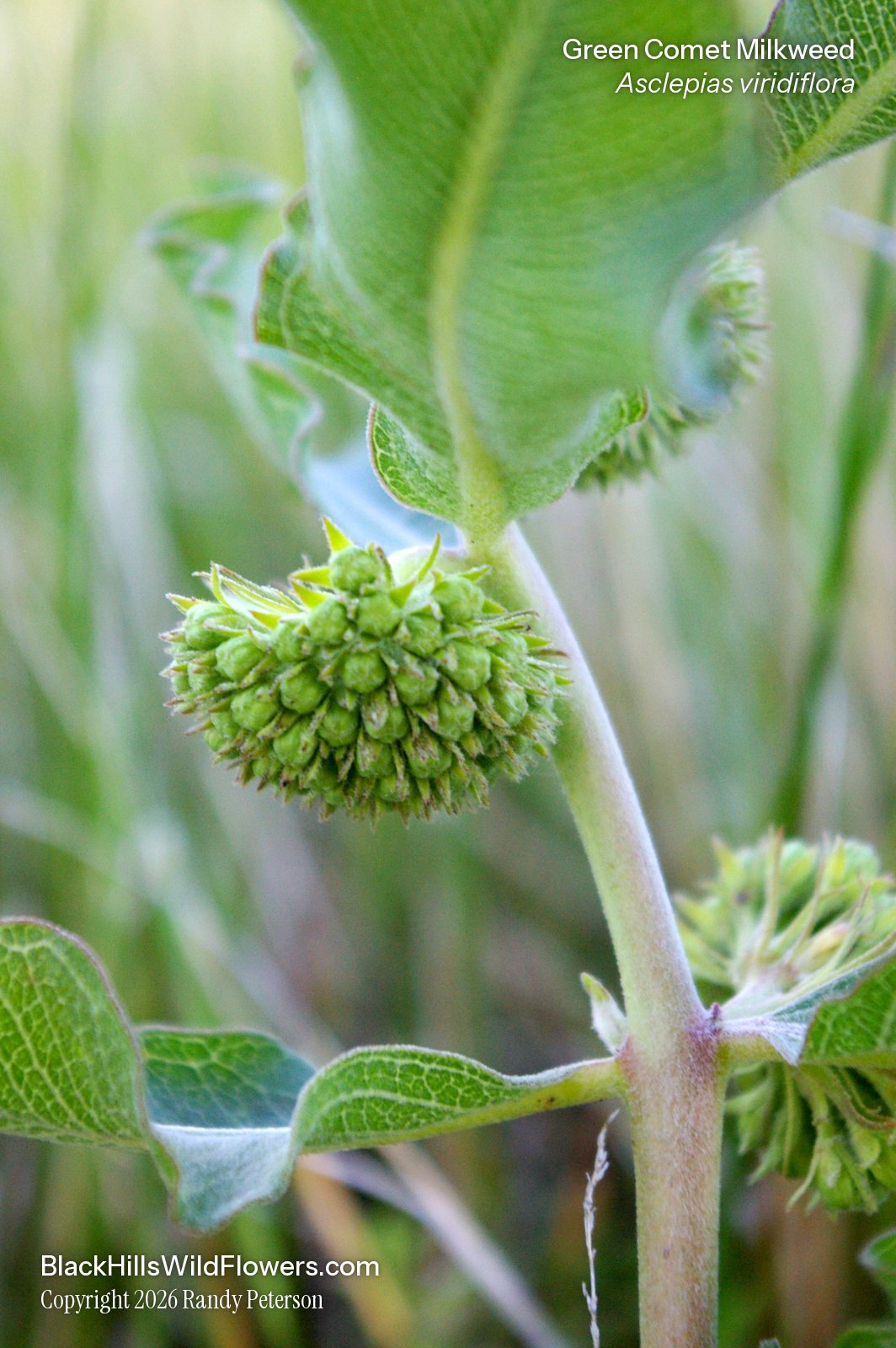
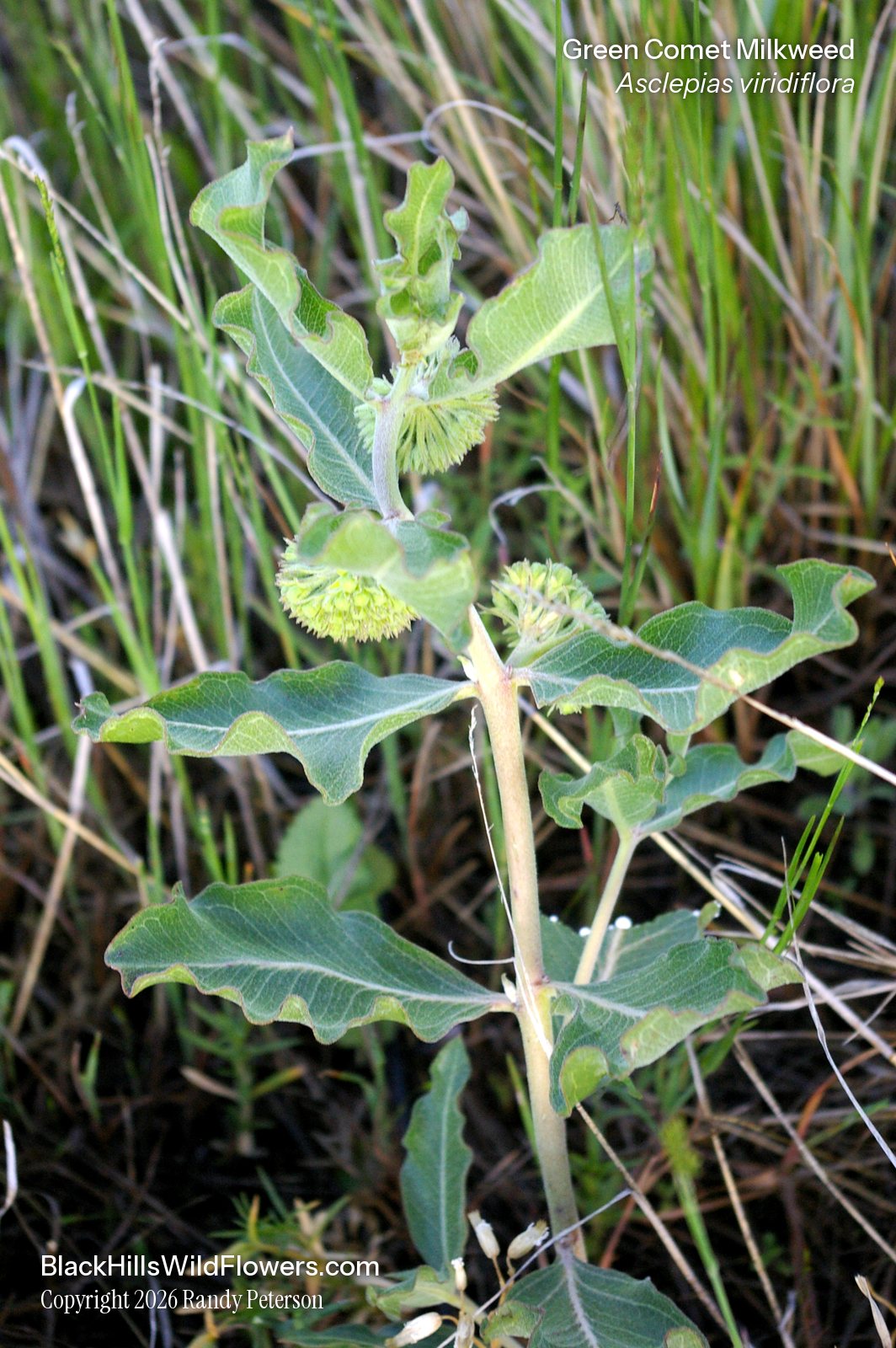
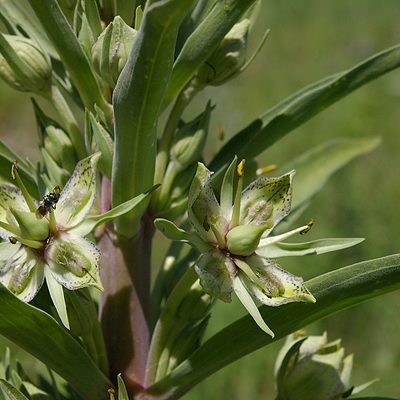
Green Comet Milkweed (Asclepias viridiflora) is a native perennial milkweed, 10–60 cm tall, with milky sap, often wavy leaves and dense round clusters of pale green flowers. It blooms June into August on sandy to rocky prairies through much of South Dakota. Photographed in the Black Hills.
Free photos from other sources
| Family | Apocynaceae · Dogbane |
|---|---|
| Status | Native perennial |
| Blooms | June into August |
| Height | 10–60 cm (4–24 in) |
| Where | Sandy to rocky prairies |
| Also called | Green Milkweed, húčhiŋška (Lakota) |
| Traditional use | Sitting Bull College's 1998 Culturally Important Plants of the Lakota records an infusion of pulverized roots for diarrhea, especially in children, and an infusion given to nursing women to increase milk. |
Roots, seeds & germination
Root: One or two stems grow from a taproot.
Seed: Seeds are 6–7.5 mm long with long tan hairs, released from spindle-shaped pods 7–15 cm long. The best seed comes from unopened brownish pods that split when gently squeezed.
Germination: Seeds need 30 days of cold, moist stratification (chilling in damp conditions) before spring planting. Seeds planted in fall germinate the next spring.
How do you identify Green Comet Milkweed?
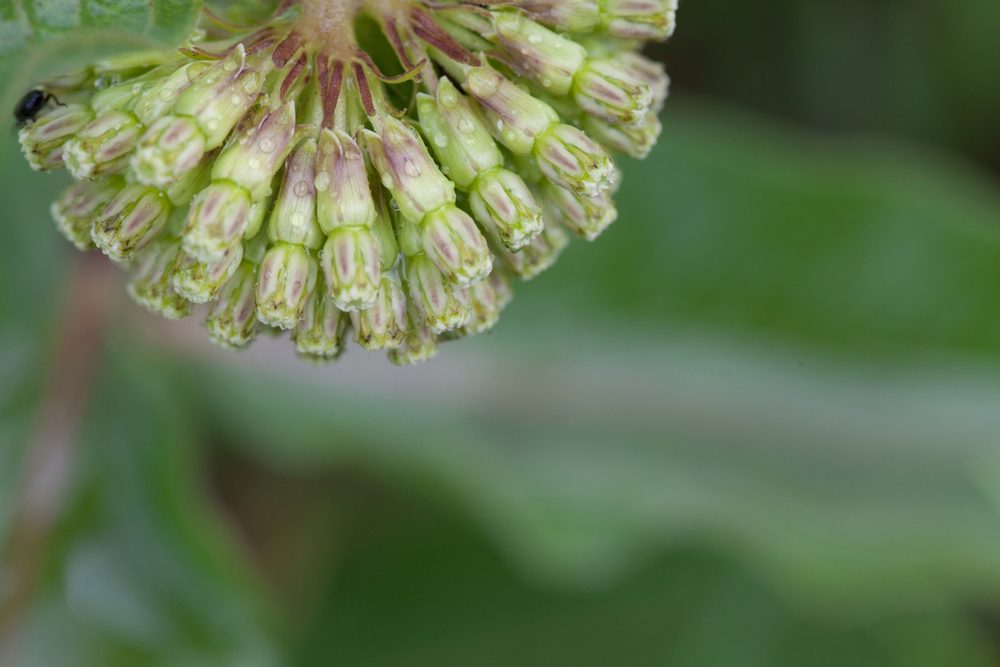
Look for round clusters about 2 inches across, growing from the leaf axils on the upper half of the stem, with 20 to 80 pale green flowers whose petals bend straight back and whose hoods have no horns. Leaves are toothless and mostly opposite, ranging from narrow to nearly round, and the broader ones are often very wavy along the edges.
When does it bloom?
June into August.
Where does it grow?
Sandy to rocky soils in prairies through much of South Dakota. Devils Tower National Monument lists it blooming June to July. The 1986 Jewel Cave survey doesn't list it.
Other flowers to compare
Sources: SDSU Open PRAIRIE: Asclepias viridiflora; Minnesota Wildflowers: Green Milkweed; Kansas Wildflowers: Asclepias viridiflora; National Park Service, Devils Tower National Monument: Native Plants; Marriott and Hartman 1986, A Survey of the Vegetation of Jewel Cave National Monument; Culturally Important Plants of the Lakota (Black Elk and Flying By, Sitting Bull College, 1998), filed with the South Dakota PUC.