Curly Dock
Rumex crispus
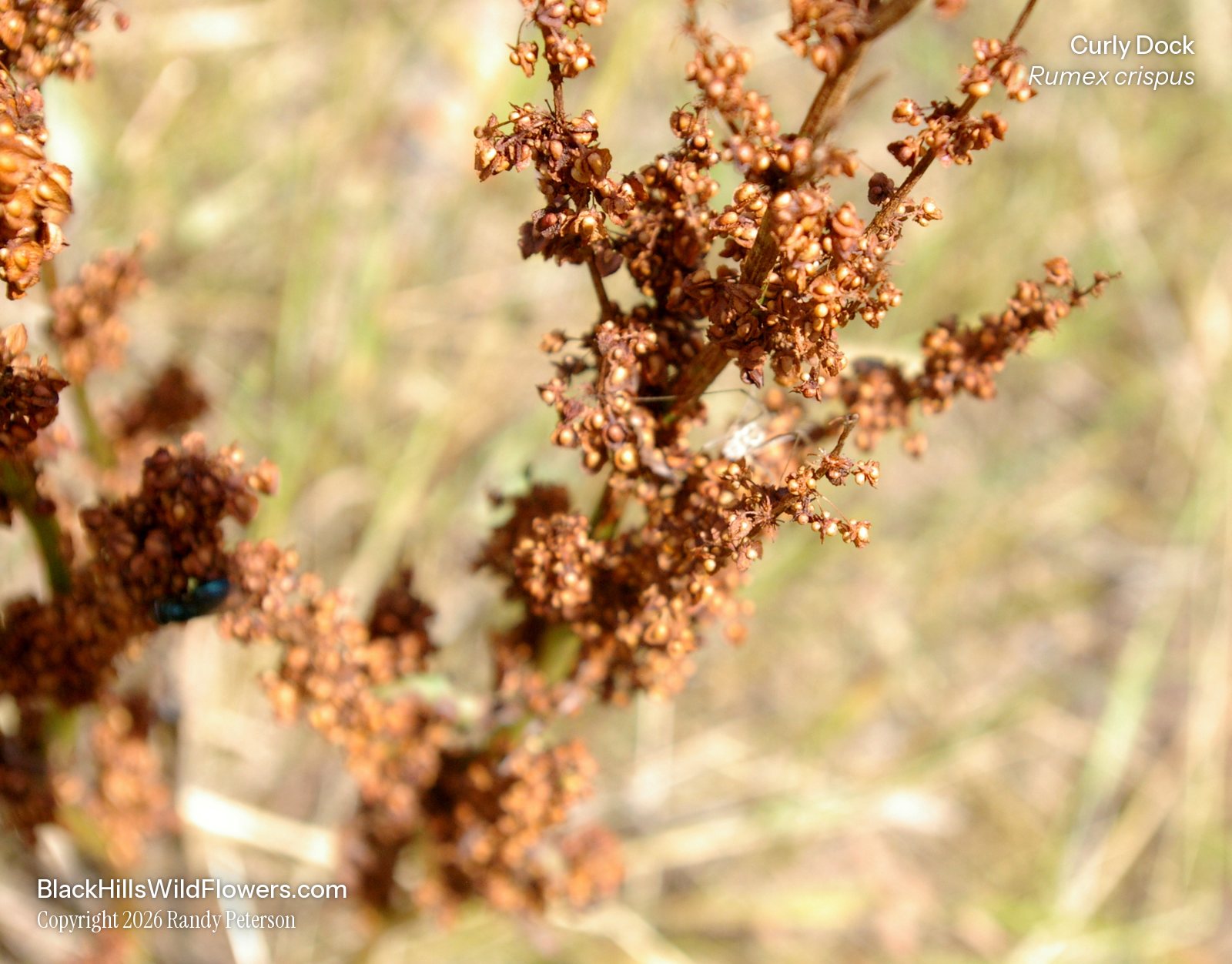
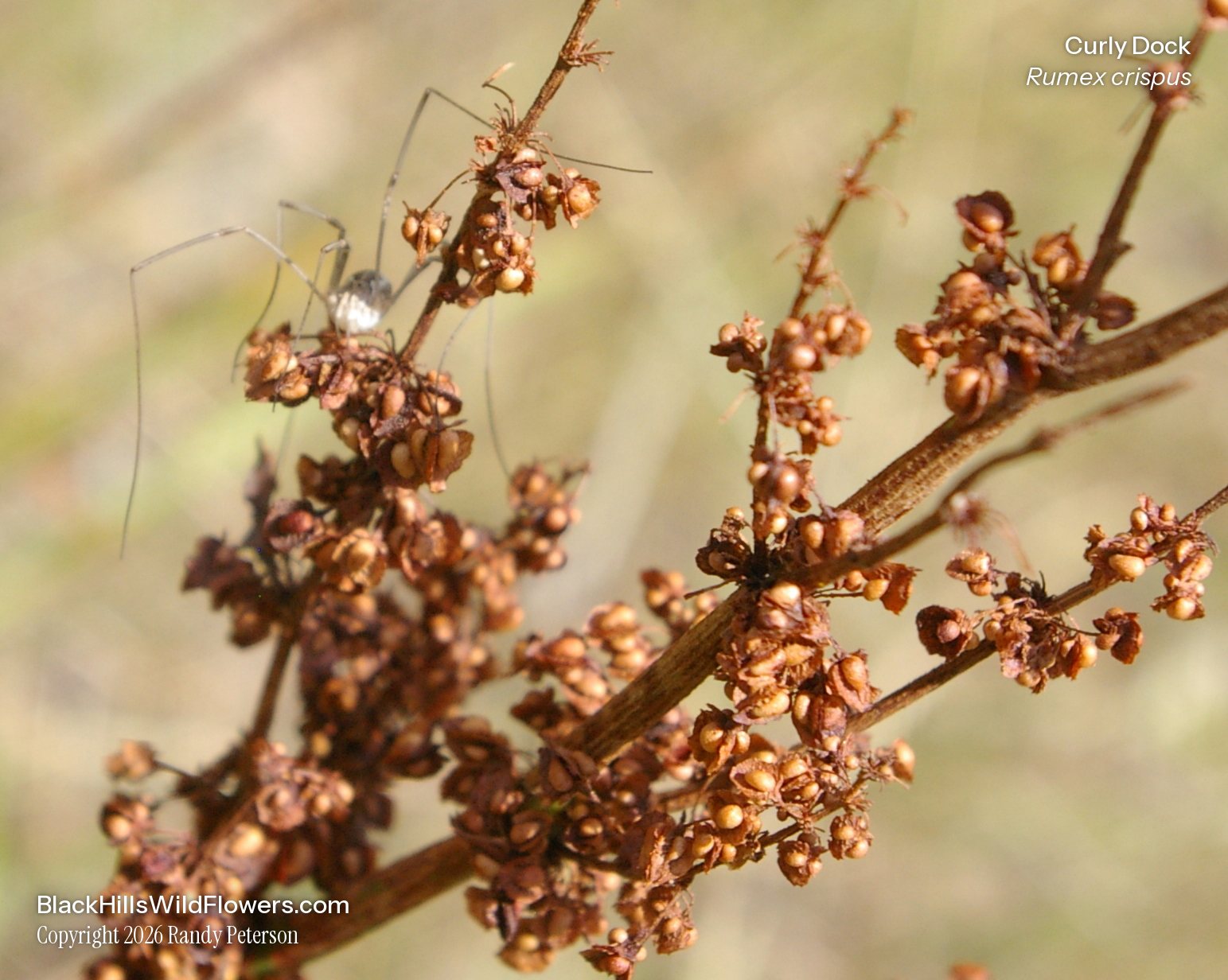
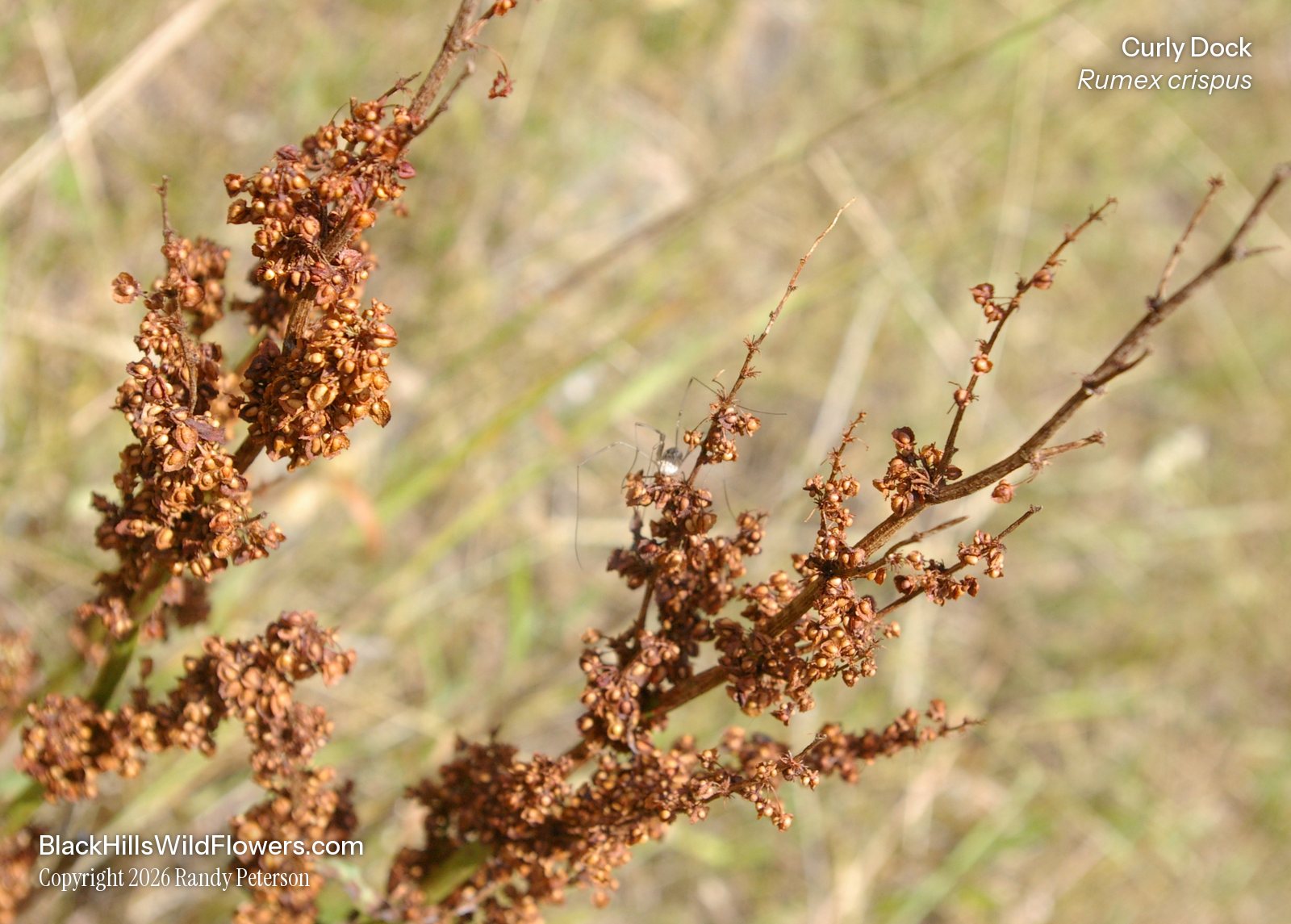
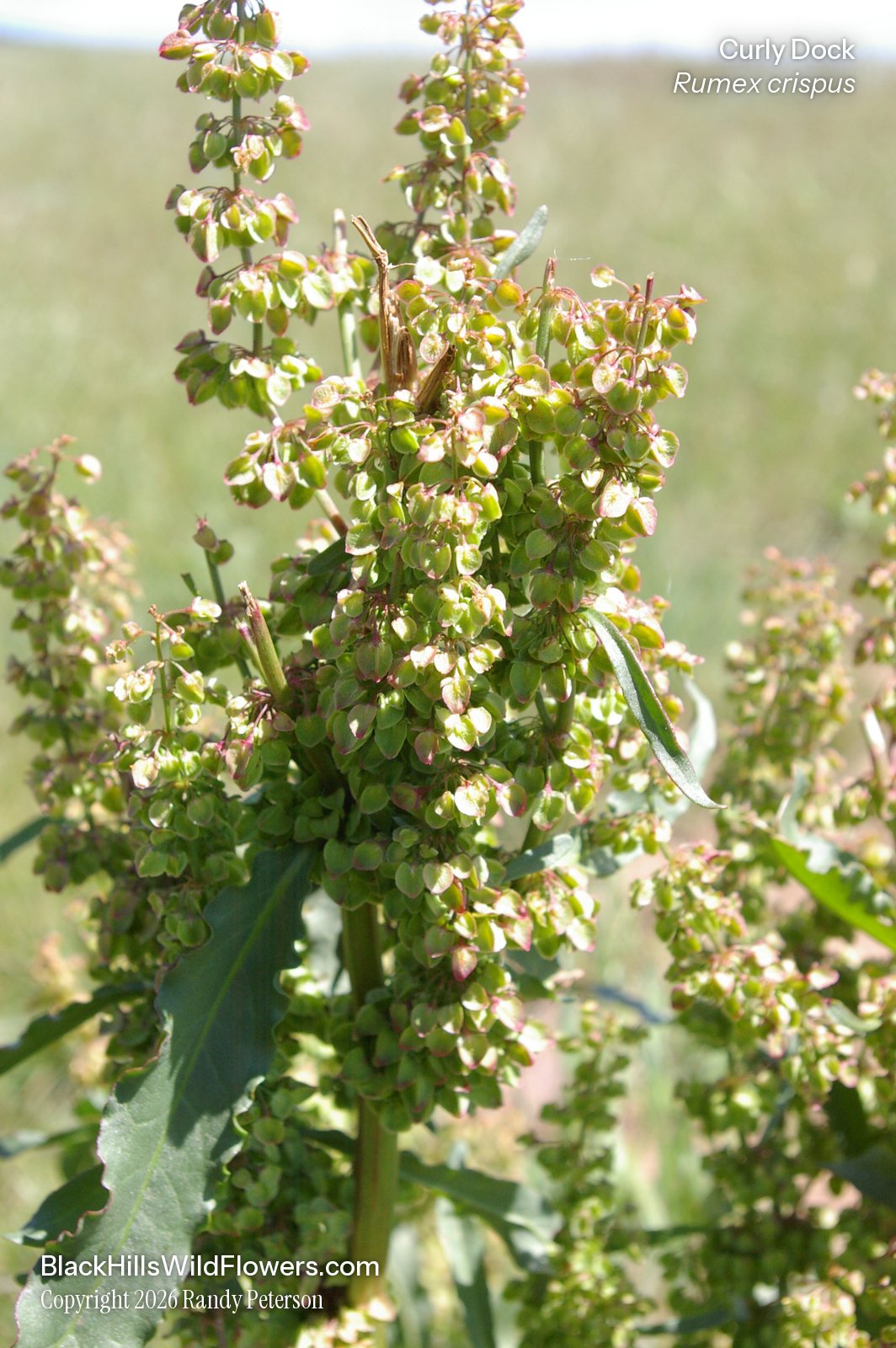
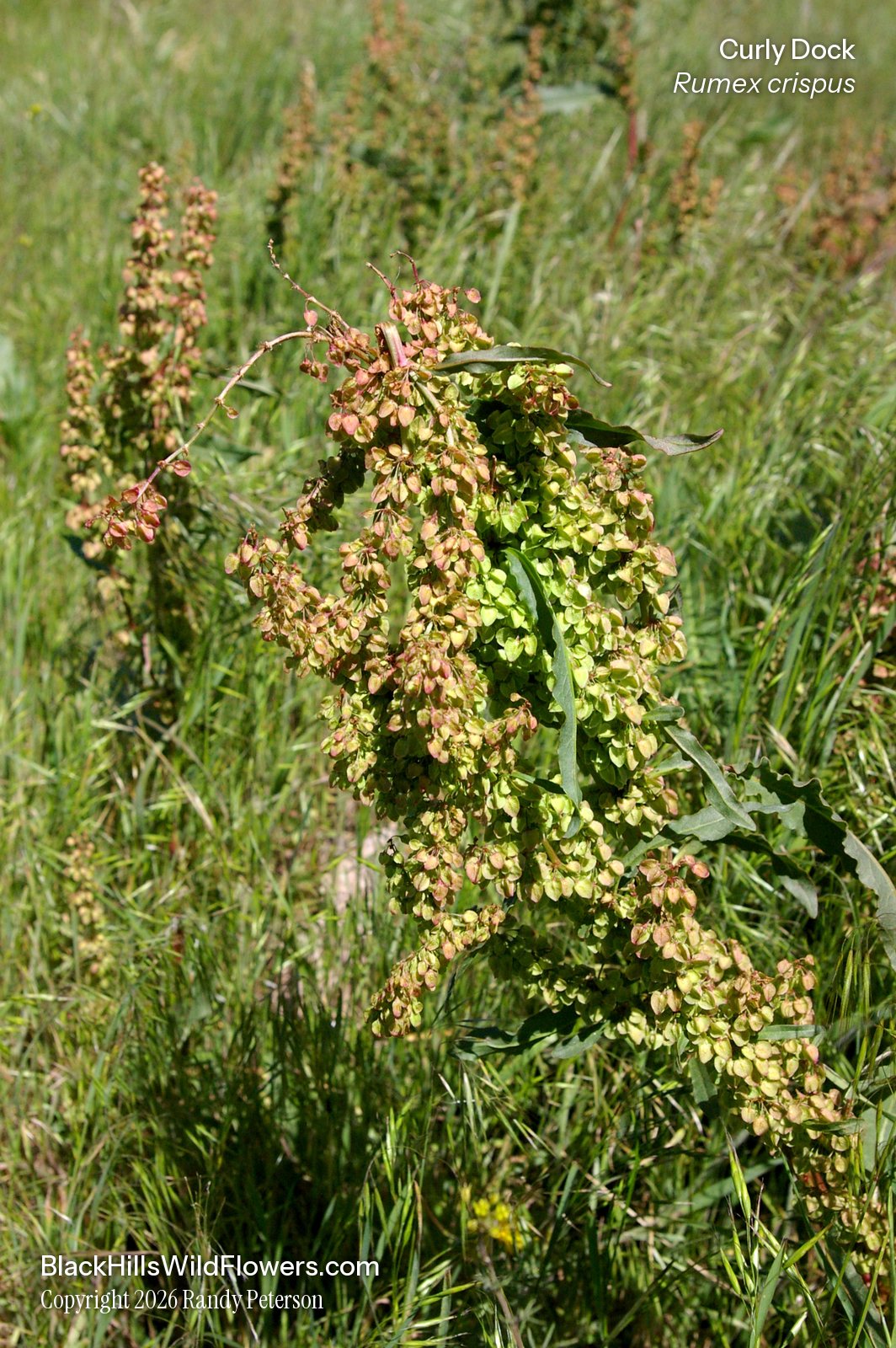
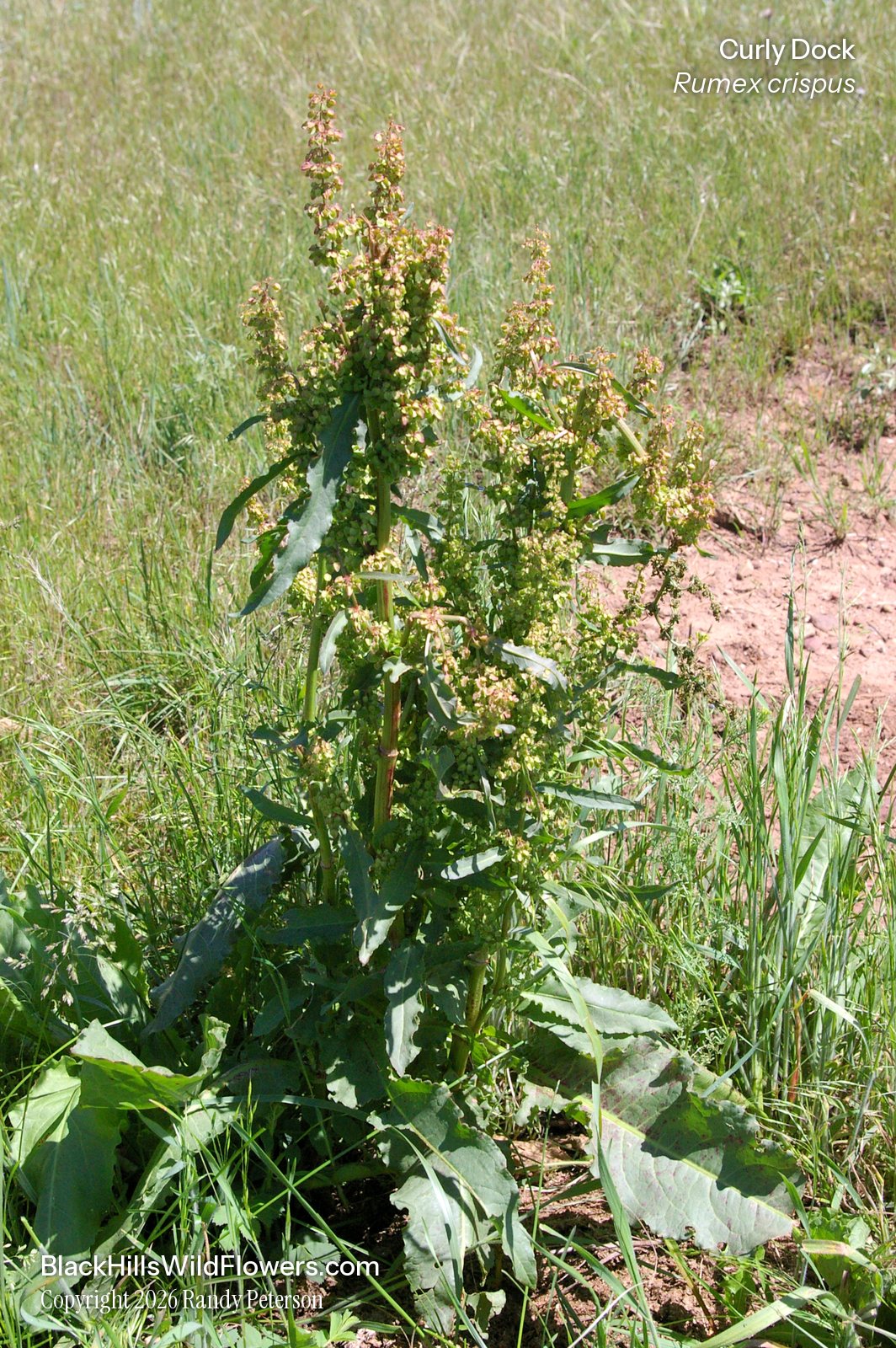
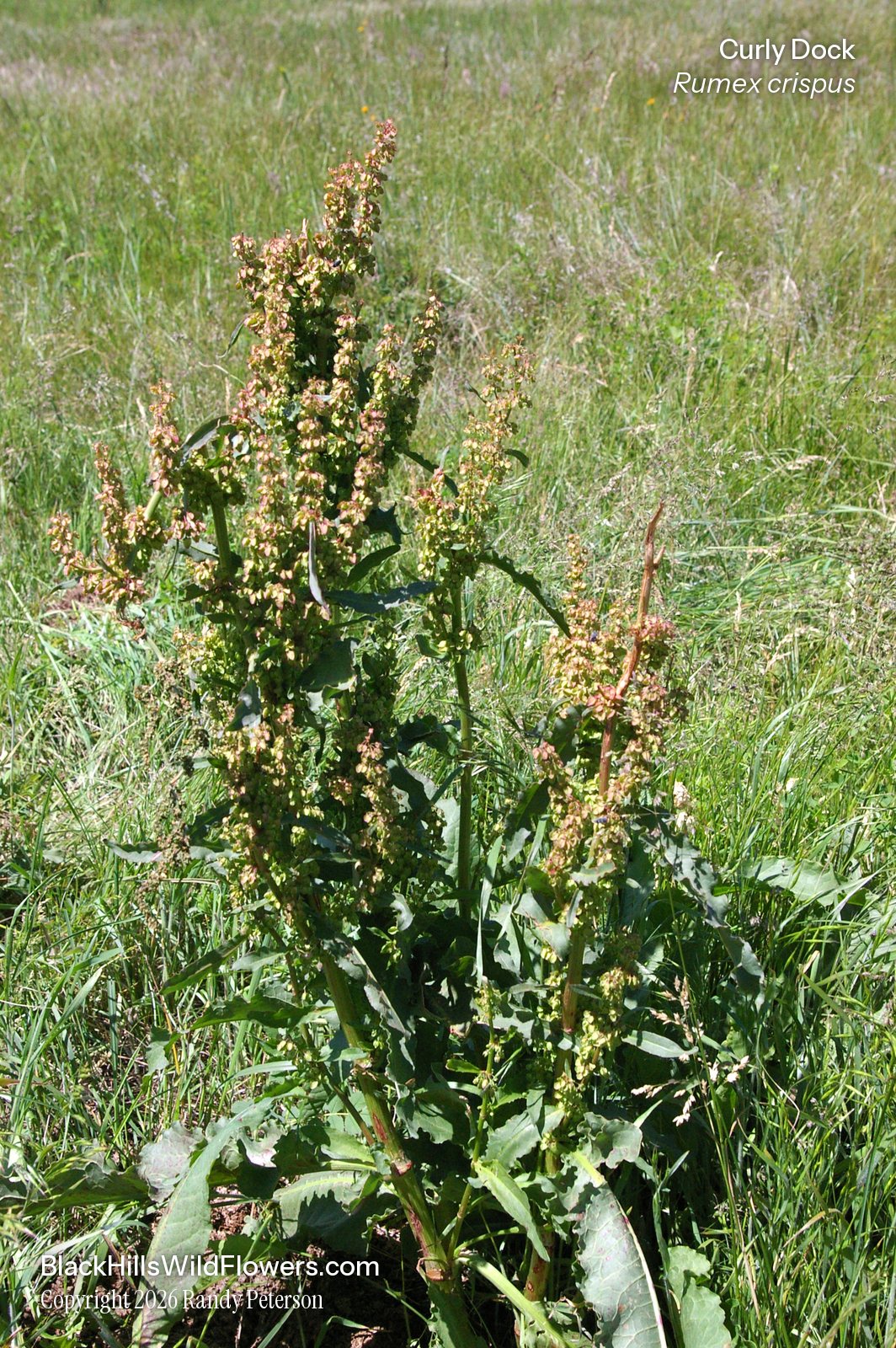
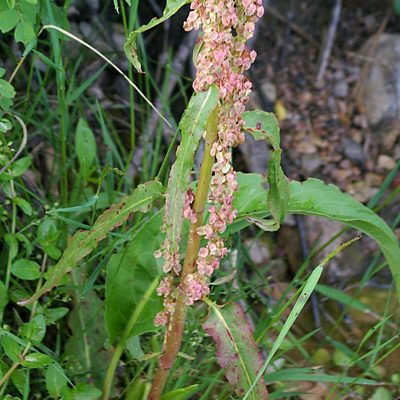
Curly Dock (Rumex crispus) is an introduced perennial weed from Europe, with long leaves that have strongly crinkled, wavy edges and a tall stalk of small greenish flowers that dries rusty brown in seed. It blooms June into July on roadsides, fields and waste ground, and the 1986 plant survey of Jewel Cave National Monument lists it in the Black Hills. Photographed in the Black Hills.
| Family | Polygonaceae · Buckwheat |
|---|---|
| Status | Introduced perennial |
| Blooms | June into July |
| Height | 30–150 cm (12–60 in) |
| Where | Roadsides, fields, waste ground, stream and pond borders |
| Also called | Curled Dock, Yellow Dock, waȟpé skúya (Lakota) |
| Toxicity | The leaves are high in toxic oxalates and can poison sheep when eaten in large amounts. |
| Traditional use | Sitting Bull College's 1998 Culturally Important Plants of the Lakota records that the green leaves were eaten raw and cooked. |
Roots, seeds & germination
Root: A stout taproot, pale yellow inside.
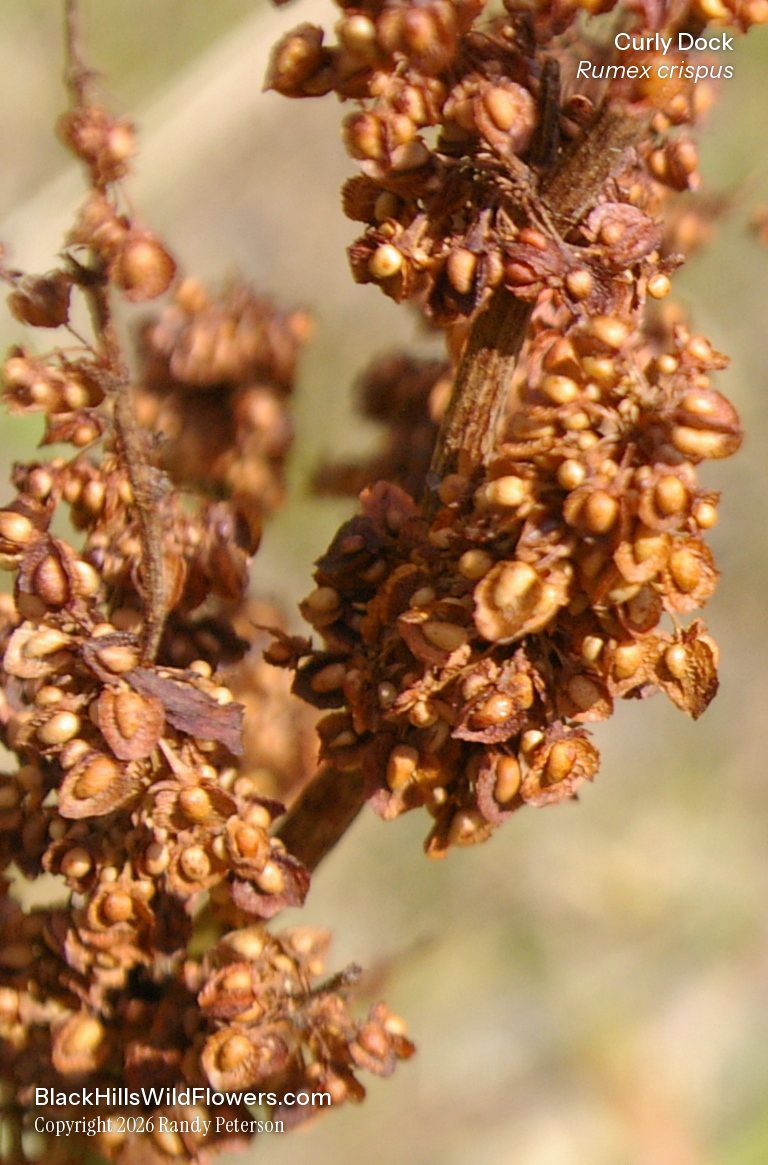
Seed: Three-sided, reddish brown seeds, 2–3 mm long, inside the rusty brown wings. They spread on wind or water and can stay viable in the ground for at least 50 years.
How do you identify Curly Dock?
Look for hairless leaves up to 12 inches long with strongly crinkled, wavy edges, and a stout, ribbed stem ending in branching clusters of whorled flowers. In seed the clusters dry rusty brown, and each seed sits inside three papery wings that have flat to slightly jagged edges and usually a small grain (tubercle) on each. Many other docks have toothed wings, broader flat leaves, or fewer grains.
When does it bloom?
June into July.
Where does it grow?
Fields, roadsides and waste areas in part shade to sun, plus stream and pond borders and moist disturbed ground. The 1986 Jewel Cave survey lists it as an introduced plant.
Other flowers to compare
Sources: Minnesota Wildflowers: Curly Dock; Illinois Wildflowers: Curly Dock; Kansas Wildflowers: Rumex crispus; Marriott and Hartman 1986, A Survey of the Vegetation of Jewel Cave National Monument; Culturally Important Plants of the Lakota (Black Elk and Flying By, Sitting Bull College, 1998), filed with the South Dakota PUC.