Giant Helleborine Epipactis gigantea
Also called Stream Orchid, Chatterbox
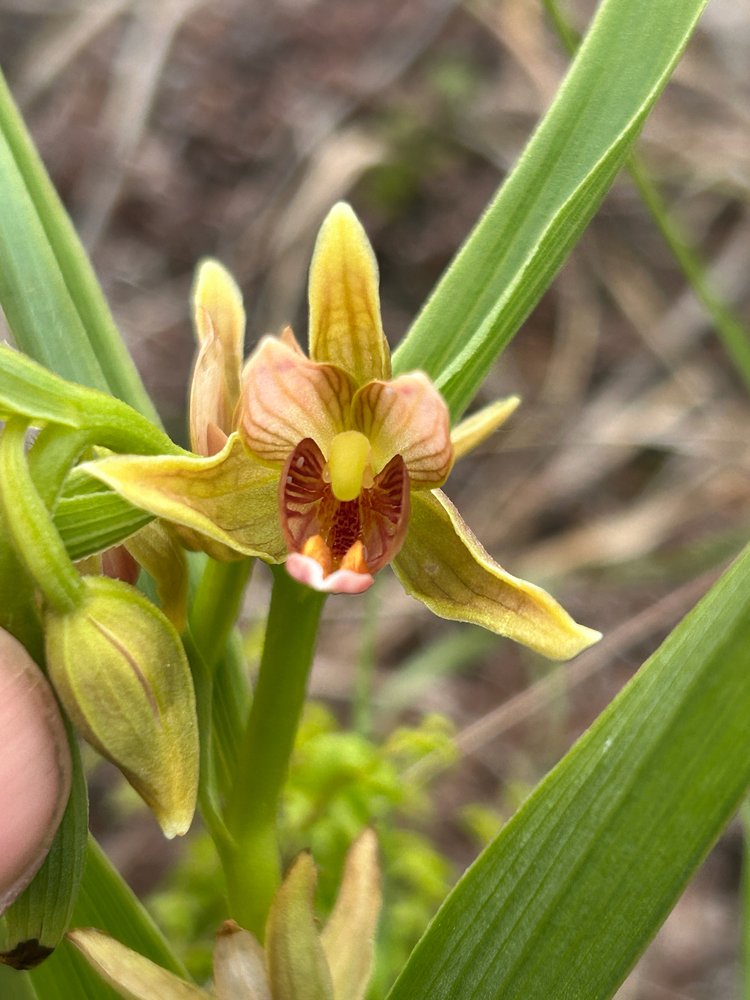
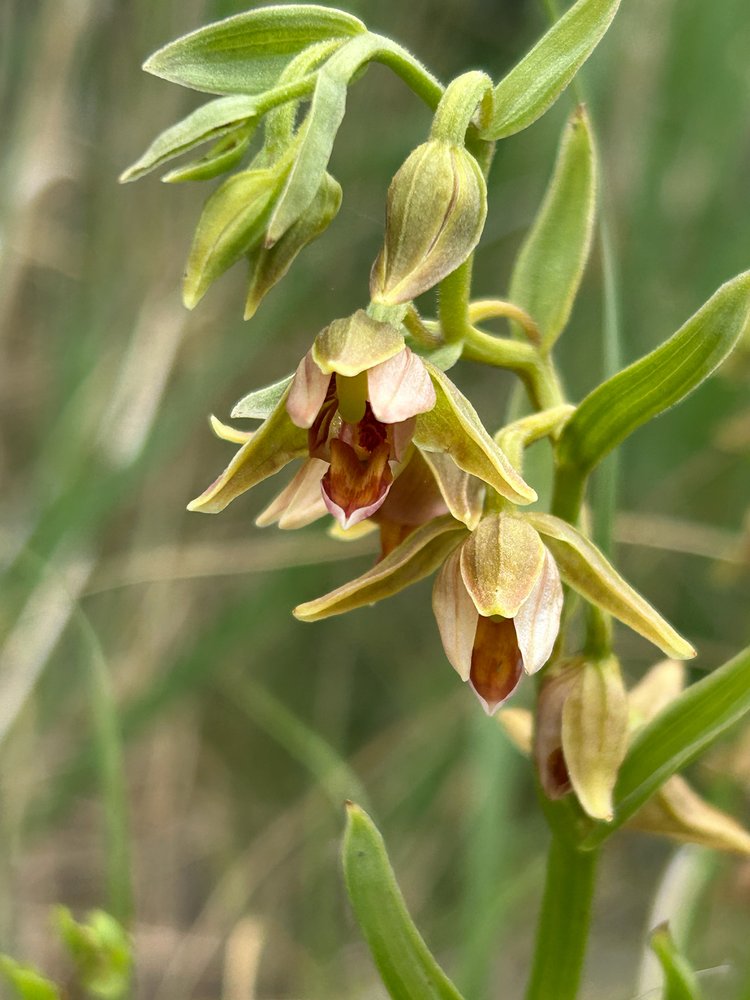
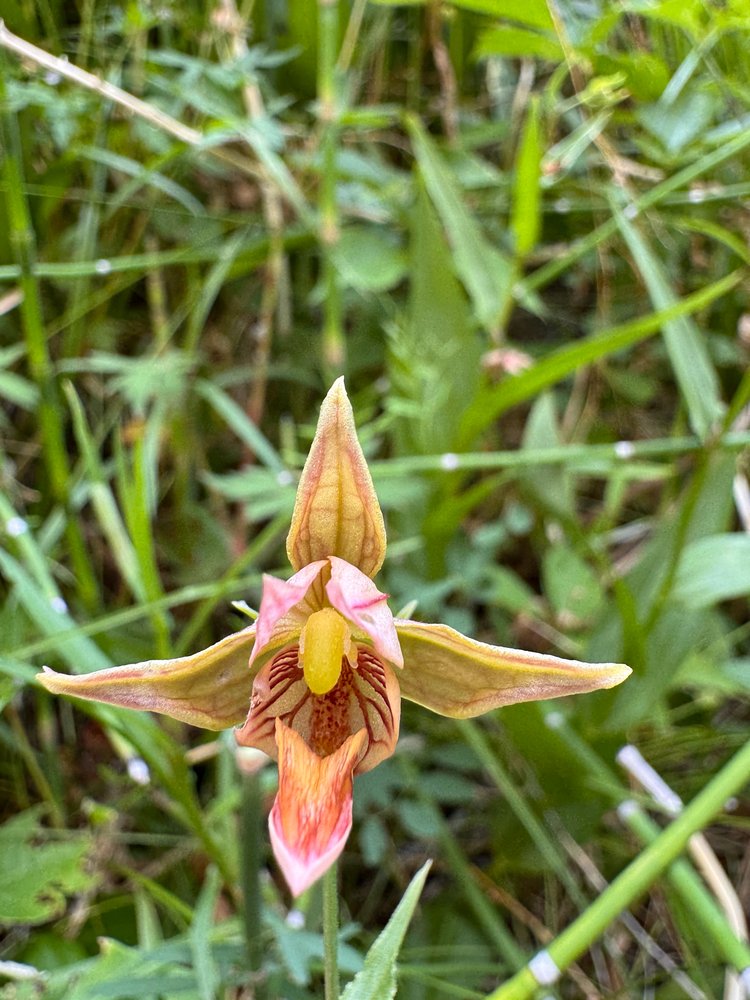
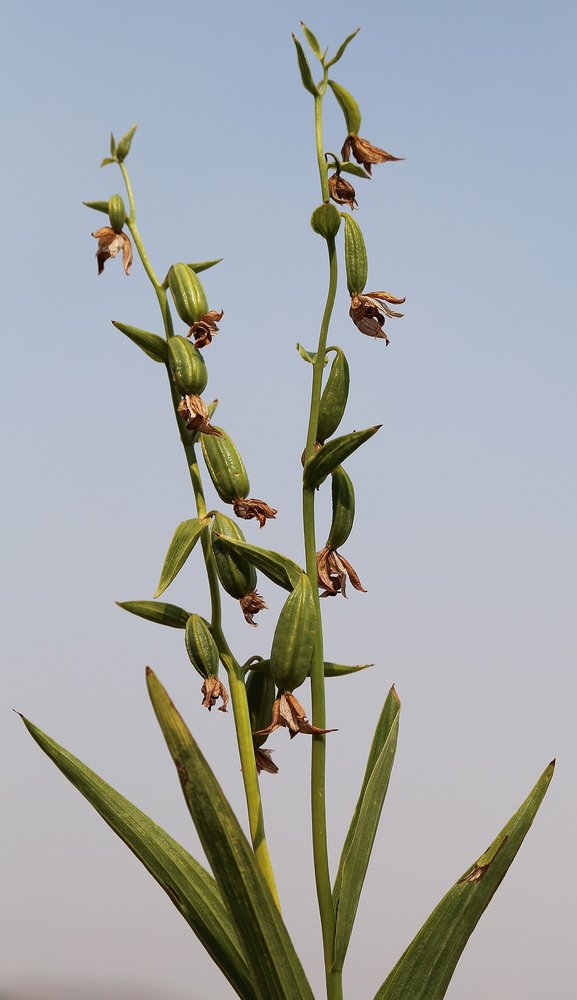
Giant Helleborine (Epipactis gigantea) is a tall native orchid, 30–120 cm (12–47 in), with a leafy stem and a loose, one-sided spike of greenish flowers veined with rose, each with an orange-yellow lip veined with red or purple. In the Black Hills it blooms from mid-June into August on wet, calcium-rich ground that stays warm all year.
Free photos from other sources
| Family | Orchidaceae · Orchid |
|---|---|
| Status | Native perennial |
| Blooms | Mid-June into August |
| Height | 30–120 cm (12–47 in) |
| Where | Wet, calcium-rich ground that stays warm all year |
| Also called | Stream Orchid, Chatterbox |
| Synonym | Amesia gigantea, Helleborine gigantea, Arthrochilium giganteum, Epipactis americana |
| Traditional use | Moerman's database, citing Wyman and Harris (1951), records that the Kayenta Navajo used the plant in a girl's puberty rite, to purify a newborn infant, and as a medicine for general body disease. |
| Note | The Forest Service lists Giant Helleborine as a Region 2 sensitive plant in the Black Hills, and its 2023 draft assessment names it a likely species of conservation concern. South Dakota ranks it S1, critically imperiled, with a single known occurrence in the state. This page gives no locations. |
Traditional use: first drafted by Google AI, then checked against the sources on this page.
Roots, seeds & germination
Root: Short rhizomes (underground stems) send up new shoots that build large clumps of stems; surveys in 2000 and 2001 estimated 3,200 to 4,000 stems in the Black Hills, but the clumps are too dense to count separate plants.
Seed: The hanging capsule is 20–25 mm (0.8–1 in) long and holds microscopic seeds, probably spread by wind or water. Seed set and germination have not been documented in the Black Hills.
Germination: As in most orchids, the seed needs a fungus partner (an endomycorrhiza) to germinate, because it has no stored food, no seed coat and no root or leaf parts of its own. Reported germination averages about 20 percent, and seeds lose viability with age.
How do you identify Giant Helleborine?
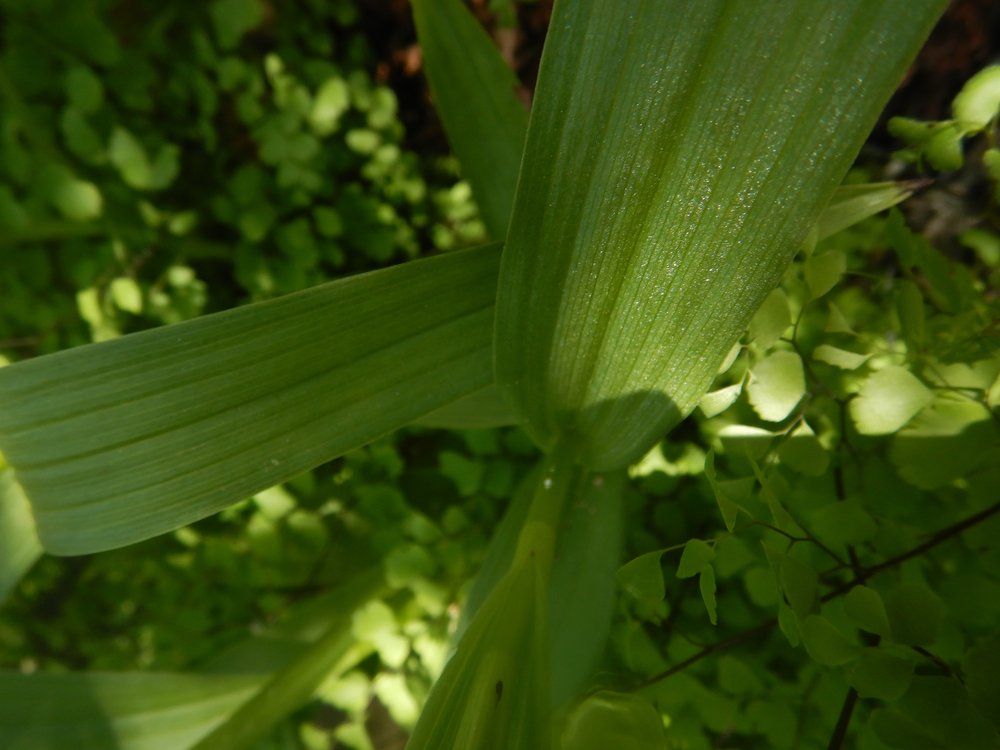
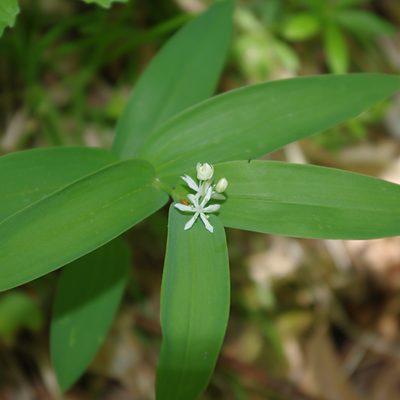
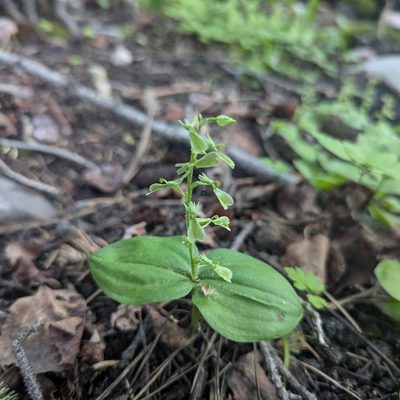
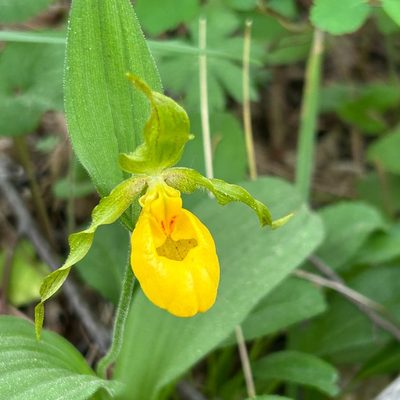
Look for a stem with 4 to 14 alternate, stalkless, pleated leaves 5–20 cm (2–8 in) long that clasp the stem, ending in a loose, mostly one-sided spike of 2 to 32 flowers, each above a leafy bract. The sepals are 16–24 mm (0.6–0.9 in) long, greenish to rose with rose or purple veins, and the two side petals are pink to orange with red or purple veins. The lip, 14–20 mm (0.6–0.8 in) long, is pinched in the middle into two parts: a cupped base veined with red or purple and dotted with small warty red bumps, and an orange-yellow, grooved tip. The capsules hang down and are 20–25 mm (0.8–1 in) long. Before it flowers, the leafy shoot can pass for a bog orchid, which is smaller with fewer, smaller leaves, or for Starry False Solomon's Seal, a much smaller plant that grows with it.
When does it bloom?
Mid-June into August.
Where does it grow?
In the Black Hills: wet, calcium-rich ground that stays warm and moist all year, in partial shade to full sun. Across its range it grows on wet stream shores and bars, seeps, marshes and wet cliffs, often where warm water keeps the ground from freezing hard.
Other flowers to compare
Other orchids in this guide
Sources: Conservation Assessment for Southern Maidenhair Fern and Stream Orchid in the Black Hills, South Dakota and Wyoming (Hornbeck, Reyher, Sieg and Crook 2003), USDA Forest Service; Phase II Amendment to the Black Hills forest plan, Final EIS (2005), section 3-3.2 Flora: Region 2 sensitive plants and species of local concern, USDA Forest Service; Draft Forest Plan Assessment for the Black Hills: At-Risk Species (2023), USDA Forest Service; Flora of North America Vol. 26: Epipactis gigantea, eFloras; Go Orchids: Epipactis gigantea, North American Orchid Conservation Center; Montana Field Guide: Giant Helleborine, Epipactis gigantea (Montana Natural Heritage Program); Rare Plants of South Dakota, SD Natural Heritage Program / SD Game, Fish & Parks; USDA PLANTS profile: Epipactis gigantea (EPGI); Moerman, Native American Ethnobotany database (BRIT): Epipactis gigantea.