Fairy Slipper
Calypso bulbosa var. americana
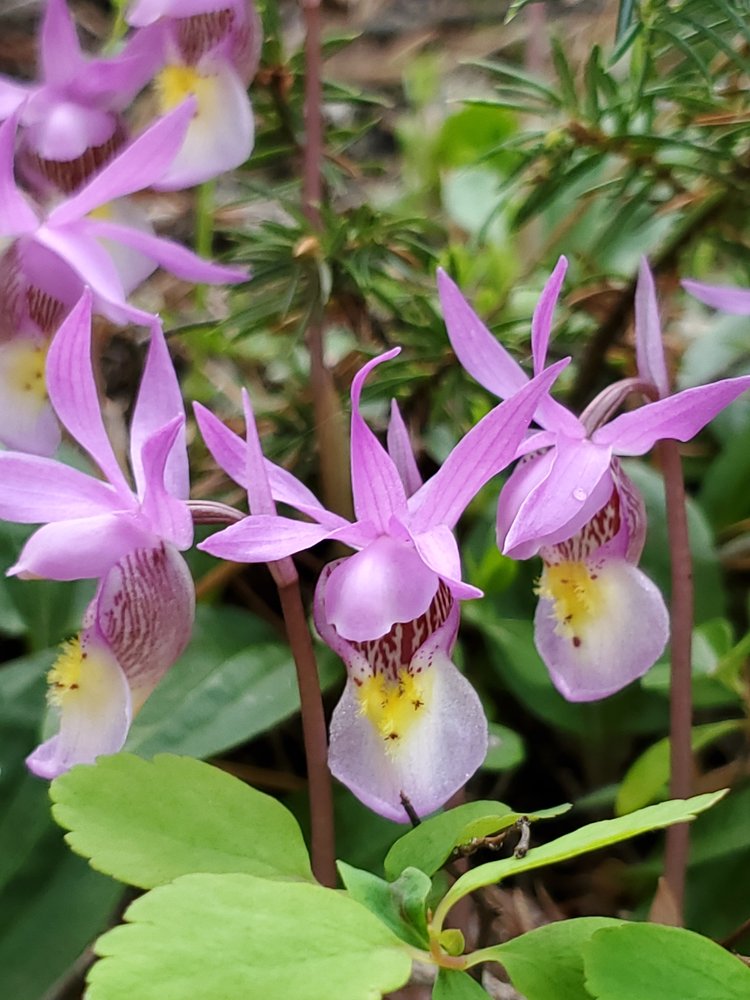
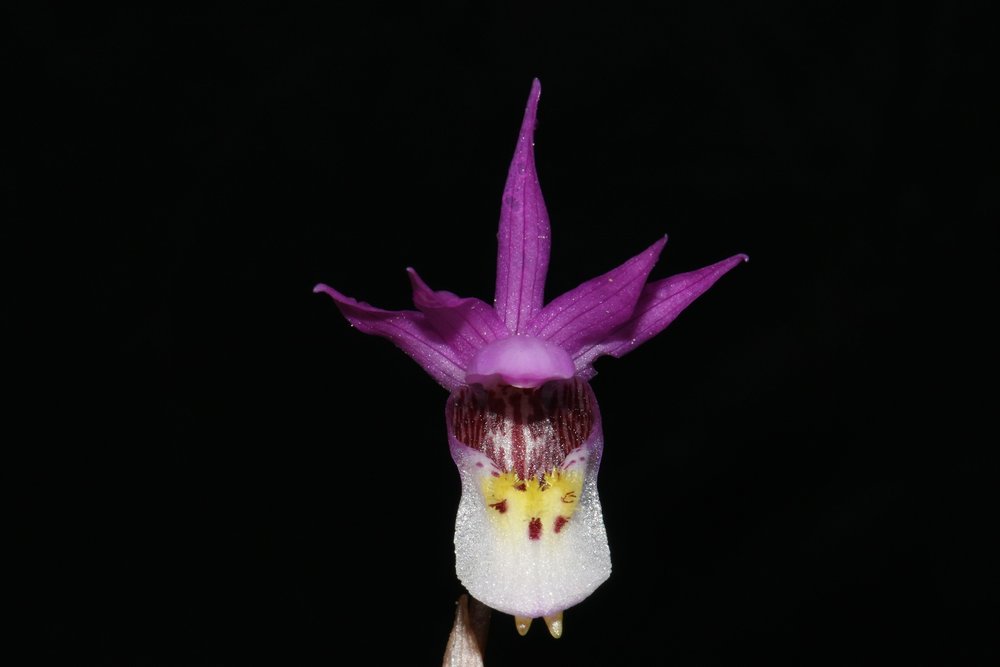
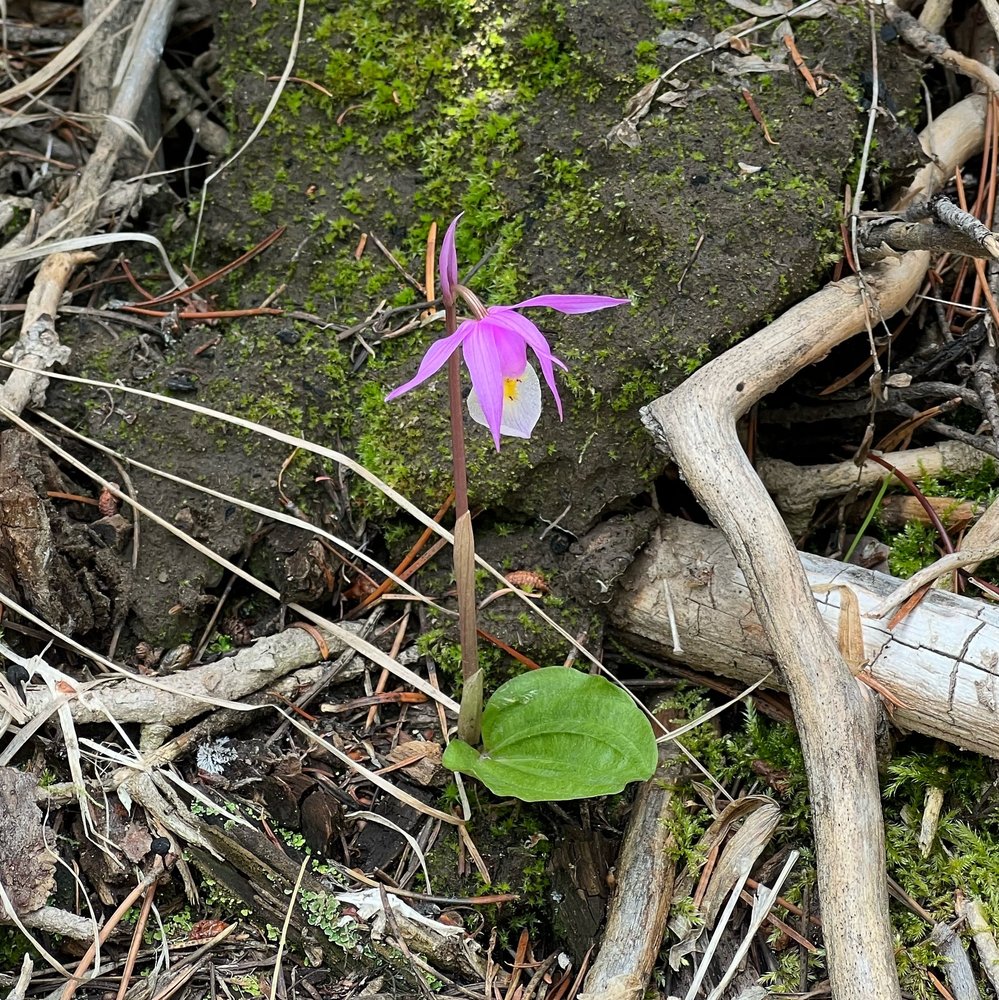
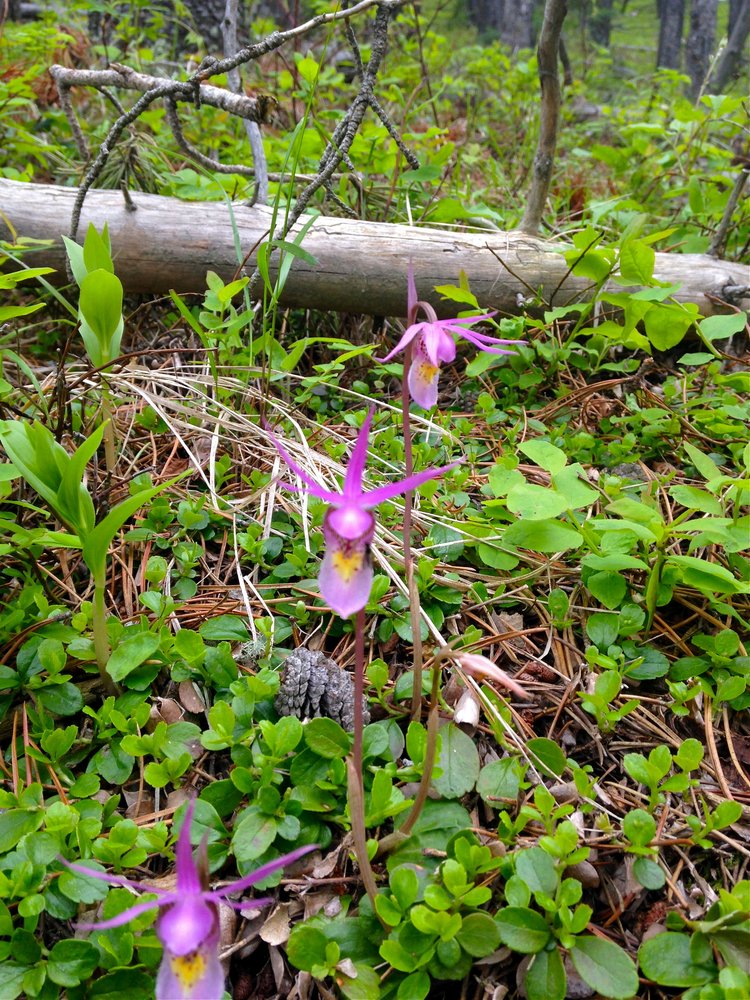
Fairy Slipper (Calypso bulbosa var. americana) is a small native orchid with one leaf and one pink, slipper-shaped flower that carries a tuft of yellow hairs on its lip. In the Black Hills it blooms from late May to mid-June in cool, mossy spruce forest of the higher northern Hills, and South Dakota lists it as a rare plant.
Free photos from other sources
| Family | Orchidaceae · Orchid |
|---|---|
| Status | Native perennial |
| Blooms | Late May to mid-June |
| Height | 5–20 cm (2–8 in) |
| Where | Cool, moist, mossy spruce forest of the higher northern Hills, in deep shade |
| Also called | Calypso Orchid, Calypso, Fairyslipper, Venus' Slipper, Deer-head Orchid |
| Synonym | Calypso americana, Cytherea bulbosa, Calypso borealis, Cypripedium bulbosum |
| Listed | South Dakota Game, Fish and Parks lists it as a rare plant, ranked S3, and Wyoming also ranks it S3. It has no state or federal legal protection. |
Roots, seeds & germination
Root: A small, nearly egg-shaped corm (a swollen underground stem) sits just under the moss, held by a few short, fragile roots, and a new corm forms each year after flowering. The single leaf and the flower stalk both rise straight from the corm, and the Forest Service's Fire Effects Information System says picking the flower inevitably kills the plant because the delicate roots break.
Seed: The flower has no nectar: its yellow hairs fool young queen bumblebees, so few flowers set seed. A pollinated flower forms one capsule holding up to about 20,000 tiny, dust-like seeds with no stored food, which drift on the wind.
Germination: A seed can't sprout unless a suitable soil fungus infects it and feeds the seedling, and the adult plant depends on these fungi too. In greenhouse tests, seed from ripe capsules germinated poorly or not at all, while seed from green, unripe capsules germinated at about 80%.
How do you identify Fairy Slipper?
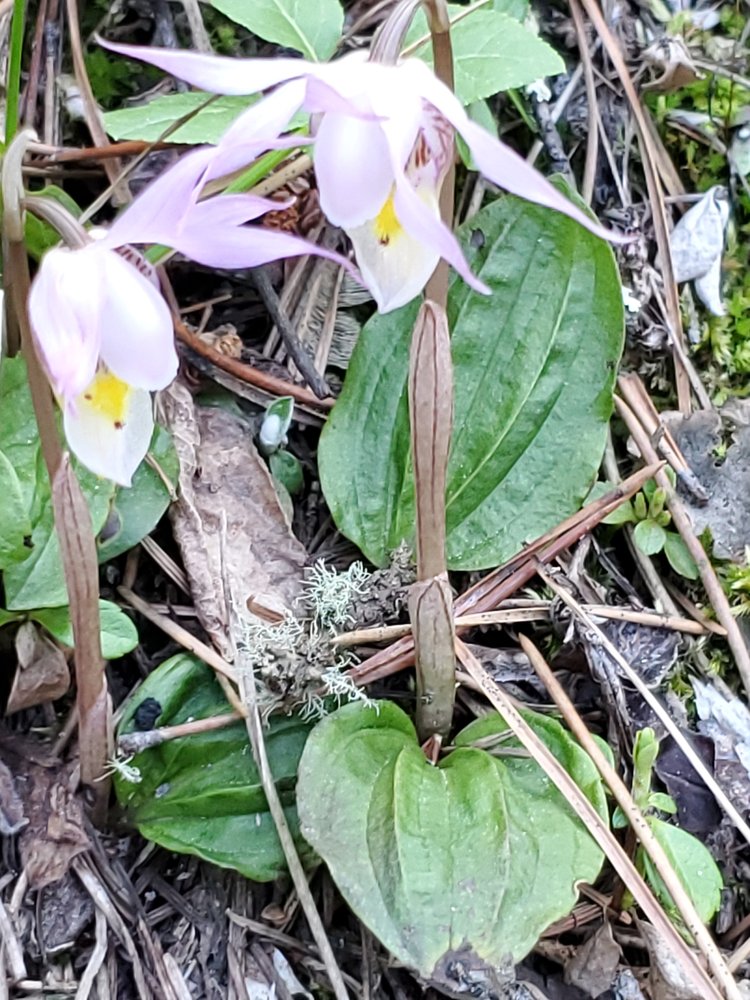
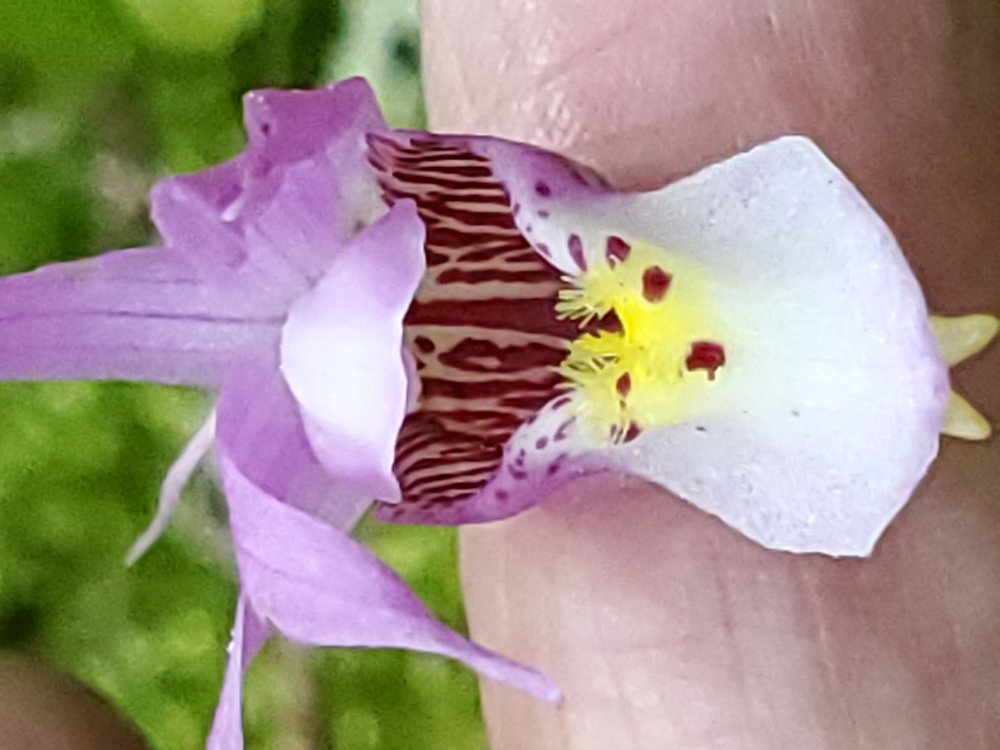
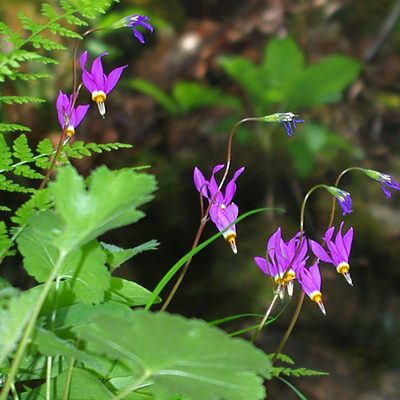
Look for a single oval leaf, 3–6 cm (1¼–2¼ in) long with fine parallel pleats, which may already be withered at flowering, and one nodding flower on a leafless purplish stalk. Five narrow, pointed, pink to lavender sepals and petals stand up like a crown above a whitish to pale pink pouch streaked inside with maroon, with a thick tuft of bright yellow hairs on its front and two small horns beneath the tip. Shooting Star is also pink with swept-back petals, but it has several flowers on each stalk, several leaves and no pouch. Spotted Coralroot, an orchid of the same forests, has no green leaf and a spike of many small purplish-brown flowers.
When does it bloom?
Late May to mid-June.
Where does it grow?
Cool, moist, shaded white spruce forest of the higher, northern Black Hills, usually on north-facing or sheltered ground with deep moss and spongy litter of decaying needles and wood. It avoids sun, bare soil and recently disturbed ground, and favors older, closed-canopy forest. Herbarium specimens and Natural Heritage records from 1927 to 2012 come from Lawrence, Pennington and Custer counties, and Black Hills National Forest botanists collected it in 2006–2010. No records were found on the Wyoming side of the Hills.
Other flowers to compare
Sources: Rare Plants of South Dakota (SD Game, Fish & Parks); NatureServe Explorer: Calypso bulbosa; NatureServe Explorer: Calypso bulbosa var. americana; Fire Effects Information System: Calypso bulbosa (USDA Forest Service); USDA PLANTS: Calypso bulbosa var. americana (CABUA); GBIF occurrence search: Calypso bulbosa, South Dakota; Calypso Orchid (NPS, Klamath Inventory & Monitoring Network); Fairy Slipper, Calypso bulbosa var. americana (Minnesota Wildflowers); Calypso bulbosa (Go Botany, Native Plant Trust); Calypso bulbosa (Michigan Natural Features Inventory); Genus Calypso (Go Orchids, North American Orchid Conservation Center); Calypso bulbosa (Wikipedia; cites FNA, Coleman 2002, Boyden 1982, Moerman 1998); Varieties of Calypso bulbosa in North America (iNaturalist journal post); Sensitive Plant Species and Plant Species of Local Concern Monitoring Implementation Guide, Black Hills NF (2006); Black Hills NF Phase II Amendment FEIS (USFS).