Yellow Lady's Slipper
Cypripedium parviflorum
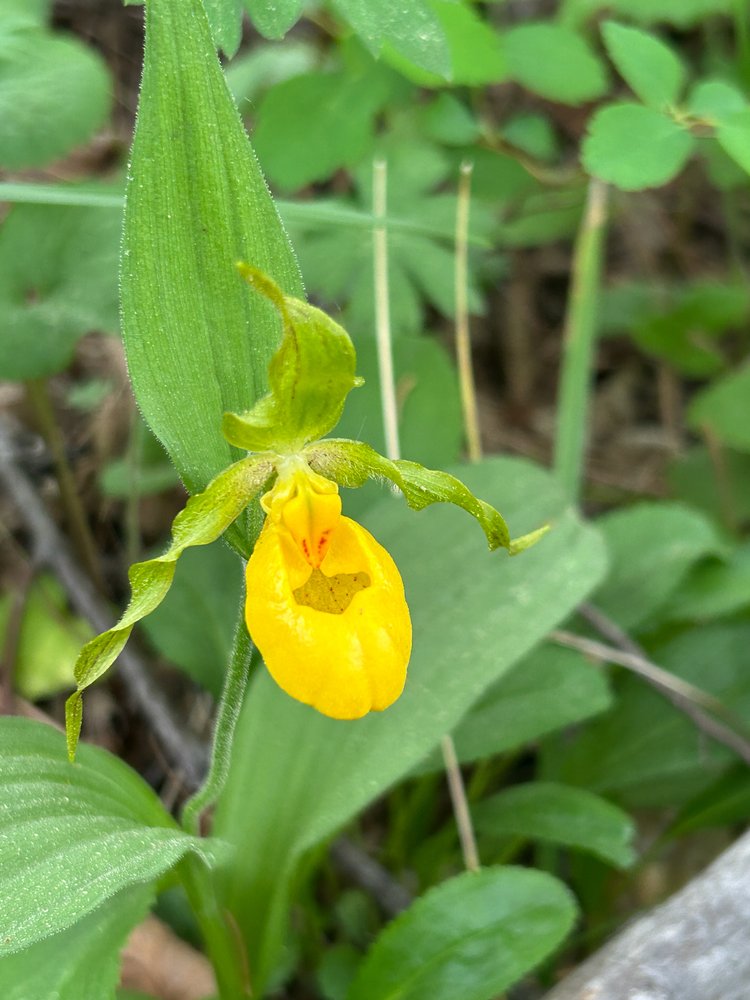
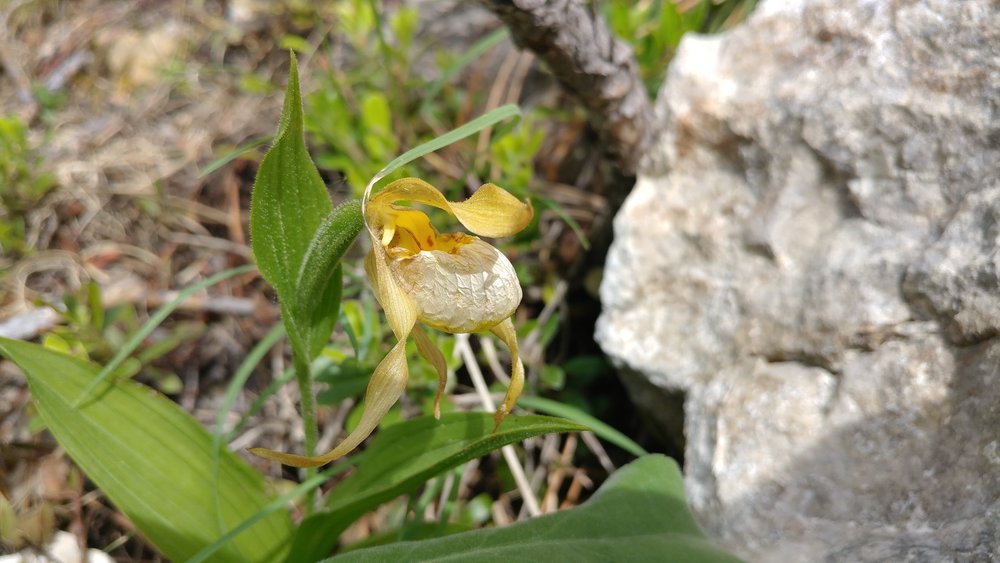
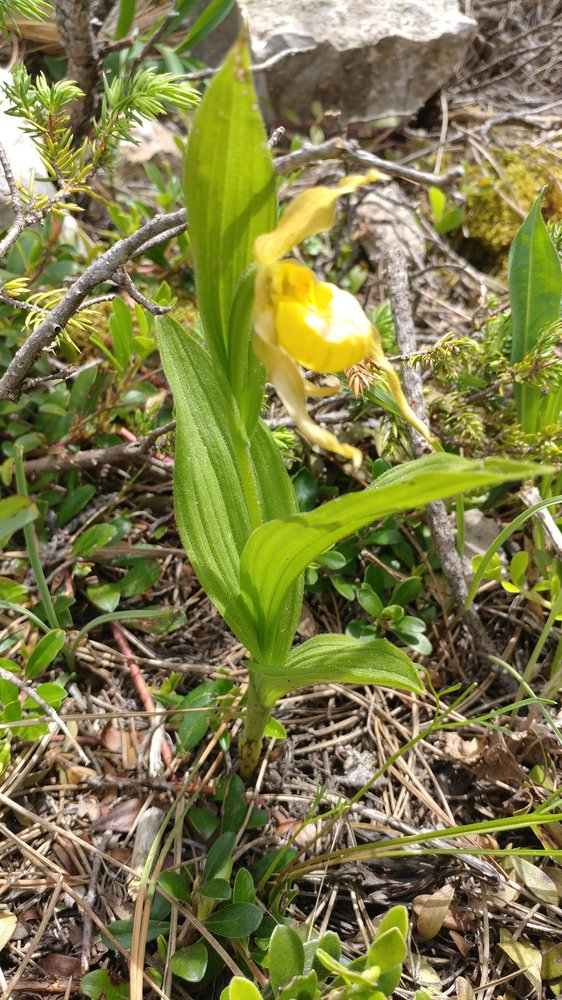
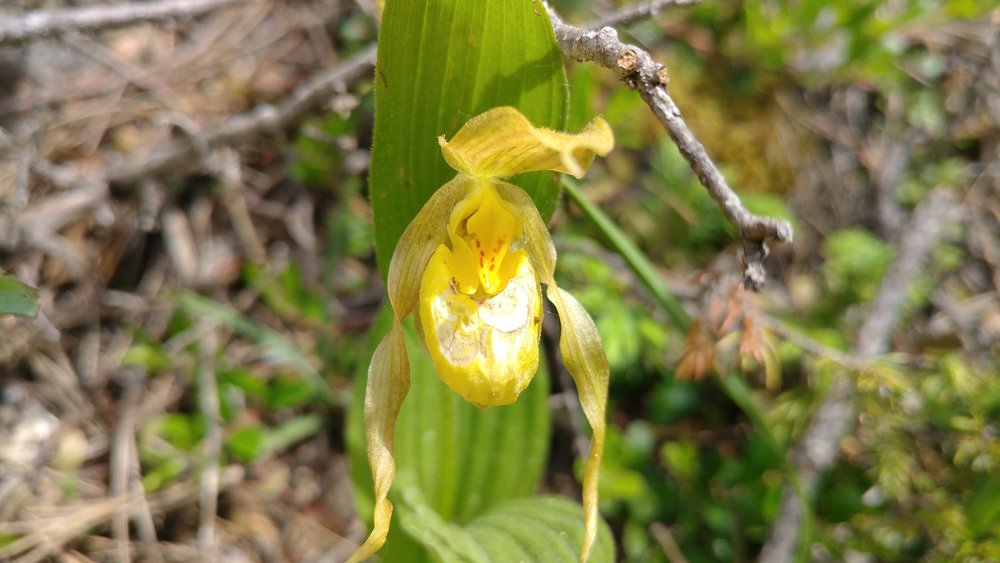
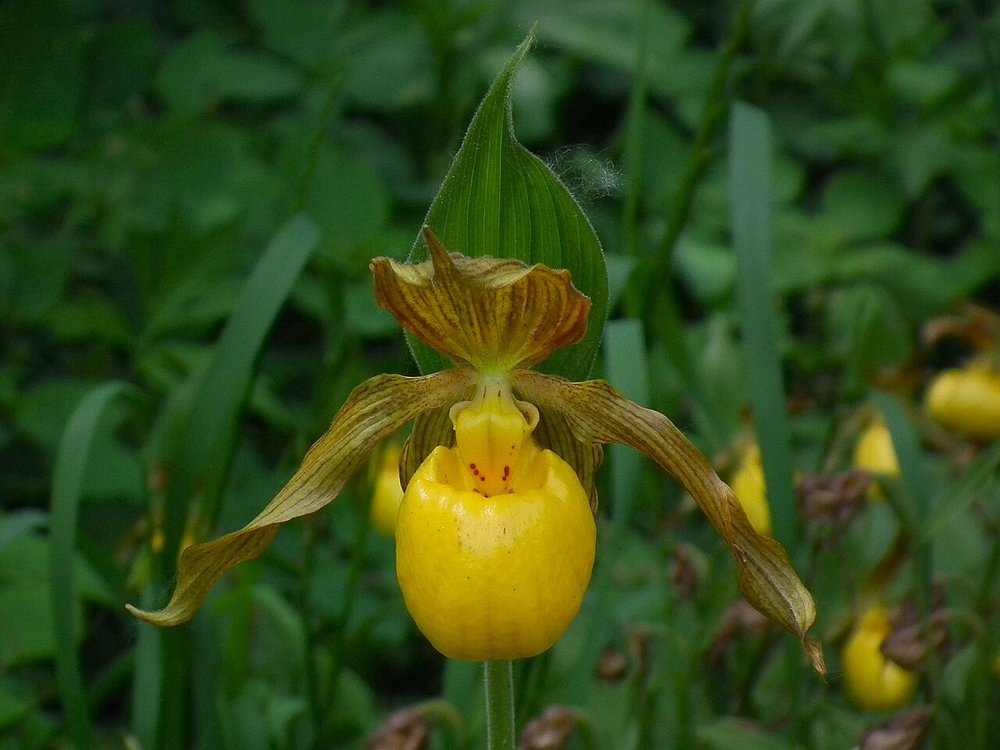
Yellow Lady's Slipper (Cypripedium parviflorum) is the showiest native orchid of the Black Hills, a perennial with a puffed-up, bright yellow pouch framed by long, twisted petals. It blooms from late May into early July, mostly in June, in moist, shady woods and limestone canyons of the northern and central Hills.
Free photos from other sources

| Family | Orchidaceae · Orchid |
|---|---|
| Status | Native perennial |
| Blooms | Late May into early July, mostly June |
| Height | 15–60 cm (6–24 in) |
| Where | Moist, shady woods, canyon bottoms, streambanks, seeps and mossy limestone outcrops |
| Also called | Lesser Yellow Lady's Slipper, Greater Yellow Lady's Slipper, Small Yellow Lady's Slipper, Moccasin Flower, Yellow Moccasin Flower |
| Synonym | Cypripedium pubescens, Cypripedium calceolus var. parviflorum, Cypripedium calceolus var. pubescens |
| Listed | A USDA Forest Service Region 2 Sensitive species on the Black Hills National Forest since December 2003. South Dakota ranks it S3S4, and Wyoming ranks var. pubescens S1S2. |
| Toxicity | The secretion from its glandular hairs is an irritant. |
| Note | Most Black Hills plants are treated as var. pubescens. Older books and labels call it Cypripedium calceolus, a name that now belongs to the European lady's slipper. |
Roots, seeds & germination
Root: A short, creeping rhizome (underground stem) sends out a cluster of long, fleshy roots, and old plants branch underground into clumps of several to 10 or more stems. Even grown plants keep living fungi in their roots and partly rely on them.
Seed: The fruit is an upright, ribbed, hairy capsule about 2–3 cm (1 in) long, holding thousands of dust-fine seeds with no stored food, carried by the wind. Seed set in the wild is low, and most new stems come from the spreading rhizome.
Germination: A seed sprouts in the wild only where it meets the right soil fungus, which feeds the tiny underground seedling for several years before it makes a green leaf, and it can take a decade or more from seed to first flower. Labs can germinate the seed on sterile nutrient jelly without the fungus.
How do you identify Yellow Lady's Slipper?
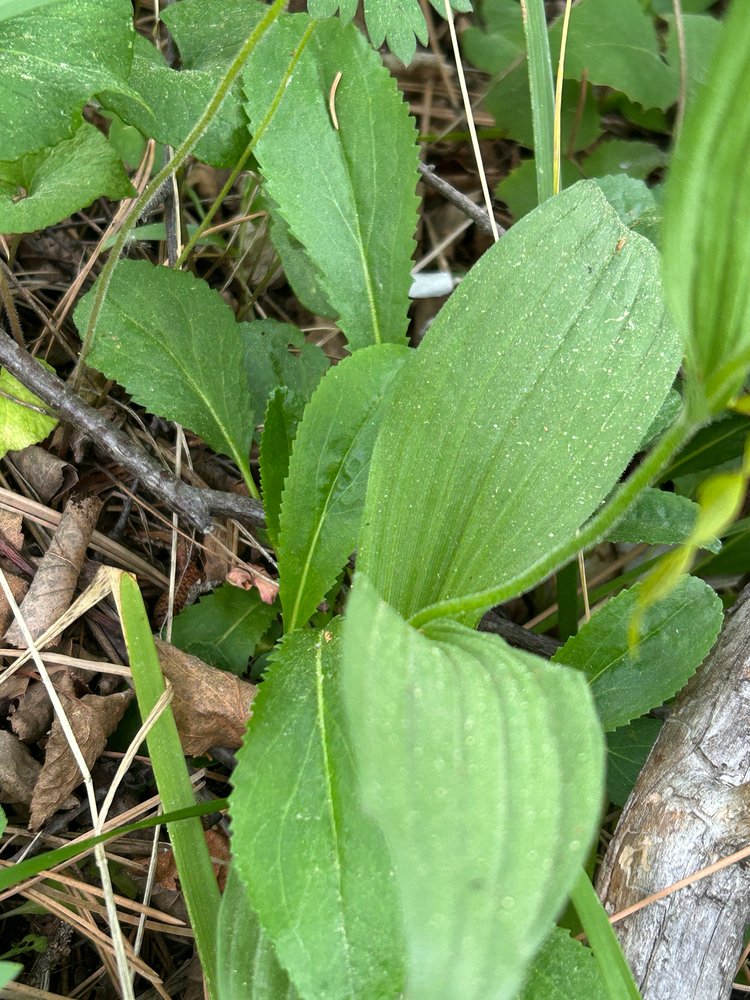
Look for one or sometimes two flowers on top of a leafy stem. The lip is a hollow, glossy yellow pouch 2–5 cm (¾–2 in) long, often with fine red dots inside the opening, under a broad arching sepal, and two long, narrow side petals hang down and twist like a corkscrew, yellow-green with brown streaks to deep reddish-brown. The stem carries 3–6 broad, hairy leaves with strongly pleated parallel veins, and plants often grow in clumps. Another lady's slipper, Cypripedium montanum, has the same twisted brown petals but a white pouch, and Fairy Slipper is much smaller, with a pink slipper and a single leaf at ground level.
When does it bloom?
Late May into early July, mostly June.
Where does it grow?
Cool, moist, partly shaded places: damp limestone outcrops and ledges, shady canyon bottoms and streambanks, seeps, and woods of aspen, paper birch, white spruce and ponderosa pine, often with moss and ferns, mainly on limestone soils in the northern and central Hills. The Black Hills National Forest's 2006 monitoring guide reports roughly 50 to 100 occurrences on the forest. NPSpecies lists it at Wind Cave and Mount Rushmore, and herbarium records come from Lawrence, Meade, Pennington and Custer counties and from Crook County, Wyoming.
Sources: Sensitive Plant Species and Plant Species of Local Concern: Monitoring Implementation Guide, Black Hills NF (May 2006, archived); Black Hills NF Phase II Amendment Final EIS: Region 2 Sensitive species (USDA Forest Service); Black Hills NF Draft Forest Plan Assessment: At-Risk Species (2023); Rare Plants of South Dakota, SD Game, Fish & Parks; Wyoming Natural Diversity Database plant species of concern (via BLM Wyoming); NPSpecies checklist, Wind Cave National Park; NPSpecies checklist, Mount Rushmore National Memorial; GBIF occurrences, Cypripedium parviflorum, South Dakota; GBIF occurrences, Cypripedium parviflorum, Wyoming; iNaturalist research-grade observations, Black Hills places; Cypripedium parviflorum var. pubescens Conservation Assessment, USDA Forest Service Region 9 (M. Deller); Lesser Yellow Lady's Slipper, USDA Forest Service Celebrating Wildflowers; Lady's Slipper Orchids (Cypripedium), USDA Forest Service Celebrating Wildflowers (archived); Shefferson et al. 2007, Evolutionary history of mycorrhizal specificity among lady's slipper orchids (Smithsonian repository); Can you dig up pink lady's slippers? UNH Extension; Cypripedium parviflorum propagation protocol, University of Washington ESRM 412 (2009); Cypripedium parviflorum, Go Orchids (North American Orchid Conservation Center); Small Yellow Lady's-slipper, Minnesota Wildflowers; Cypripedium parviflorum var. pubescens, Plants of the World Online (Kew); Cypripedium parviflorum, Wikipedia; Cypripedium, The Dispensatory of the United States (1918), via Henriette's Herbal; Culturally Important Plants of the Lakota (Black Elk & Flying By 1998).