Shooting Star
Primula pauciflora
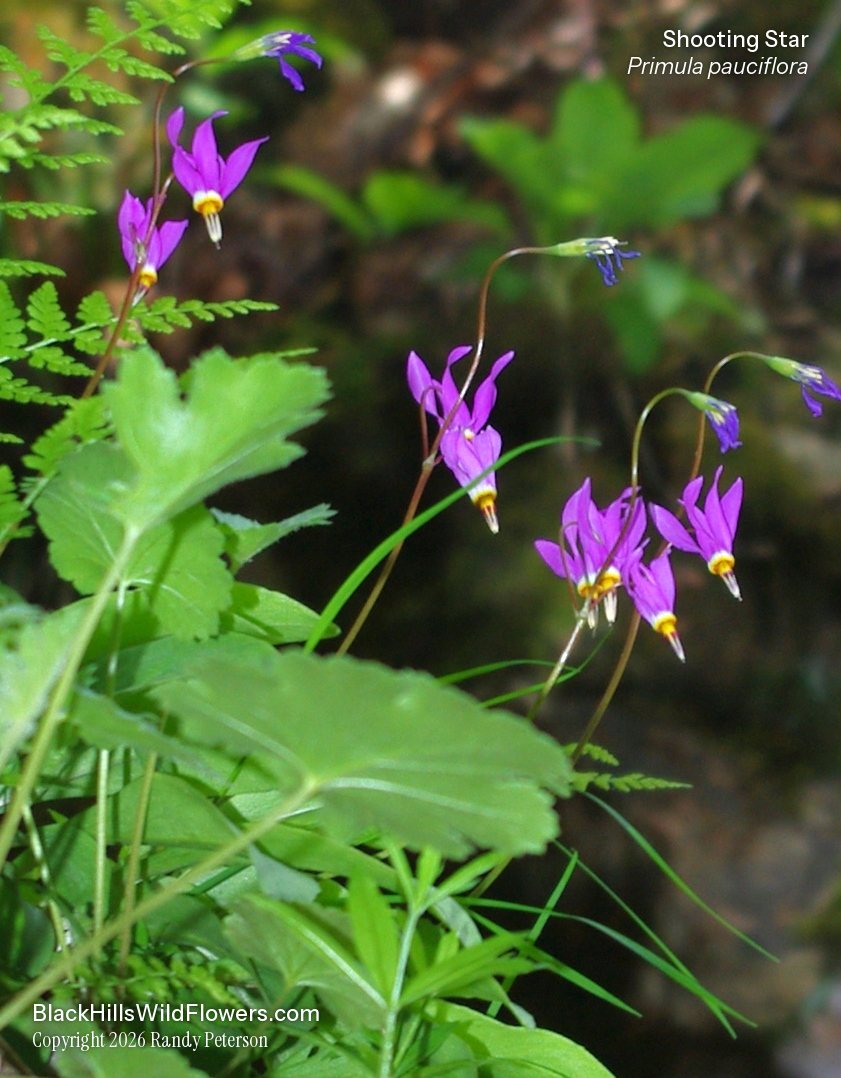
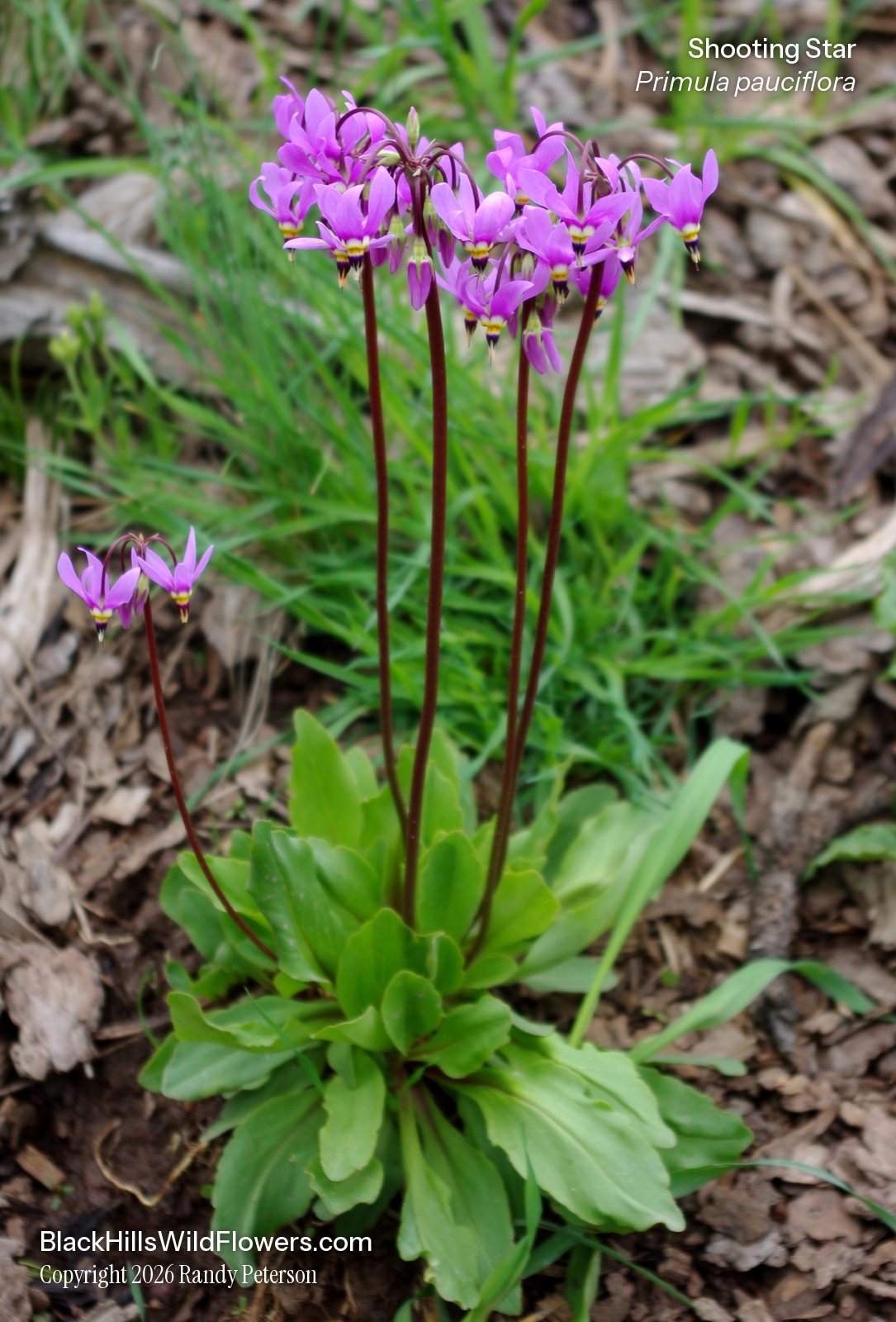
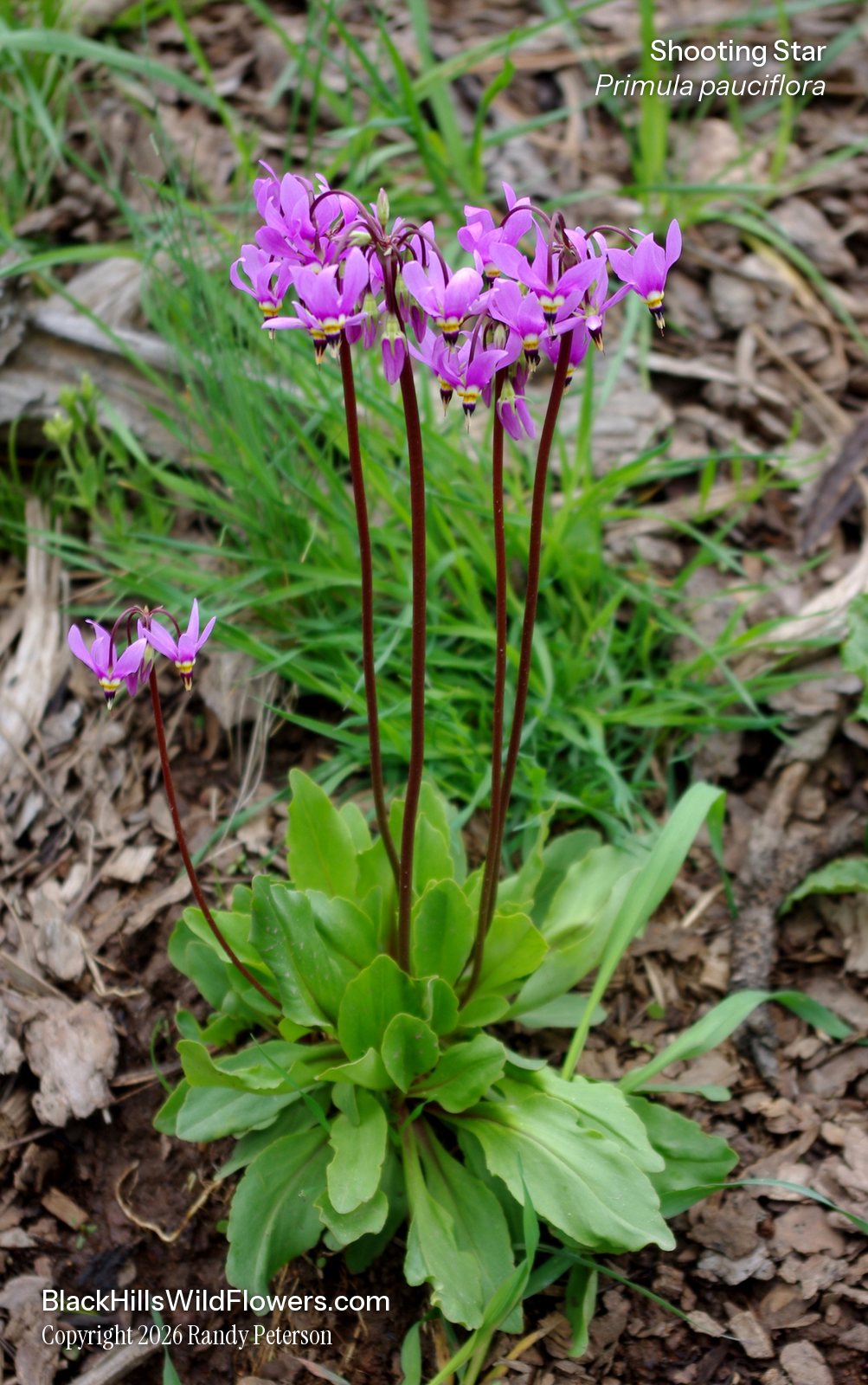
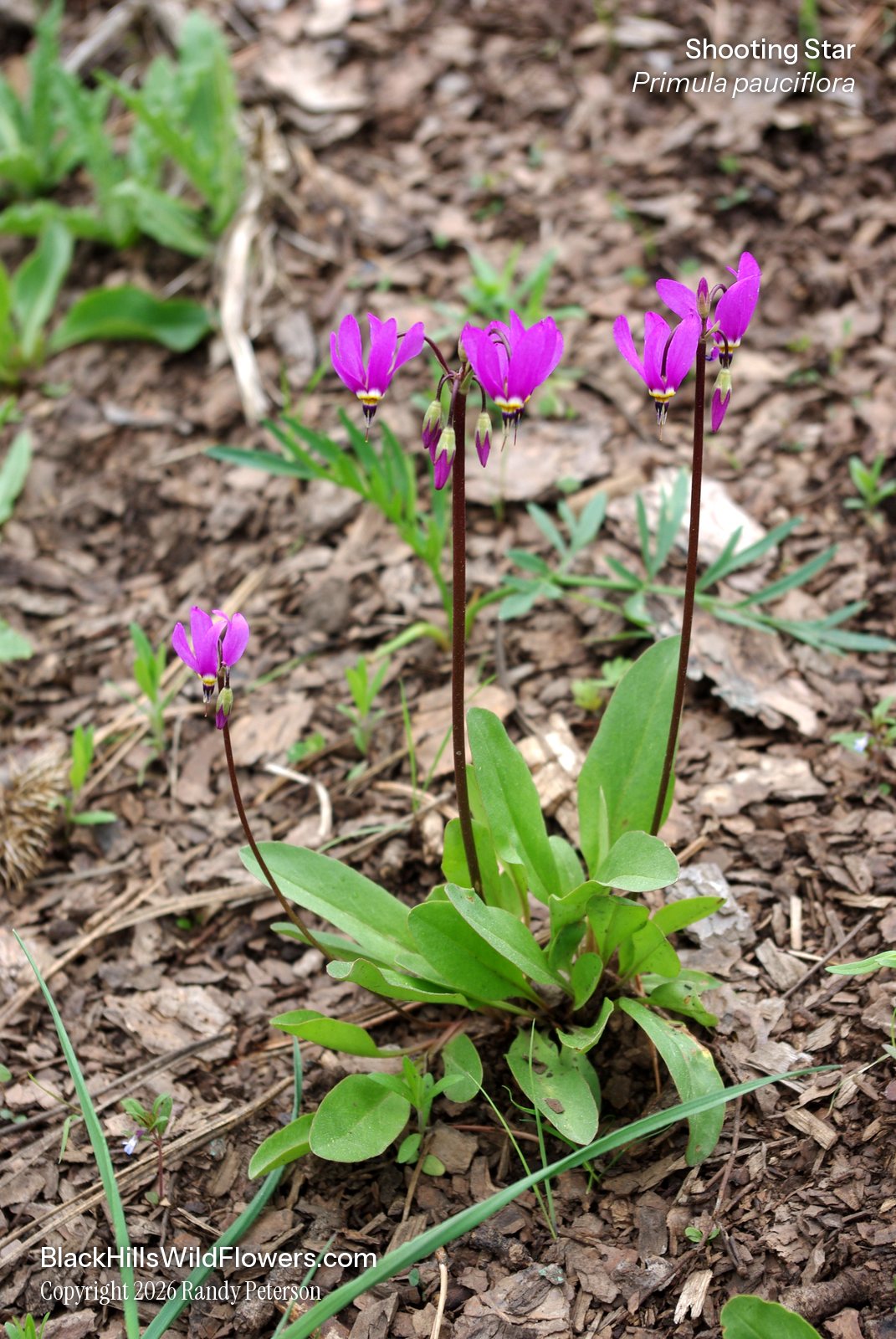
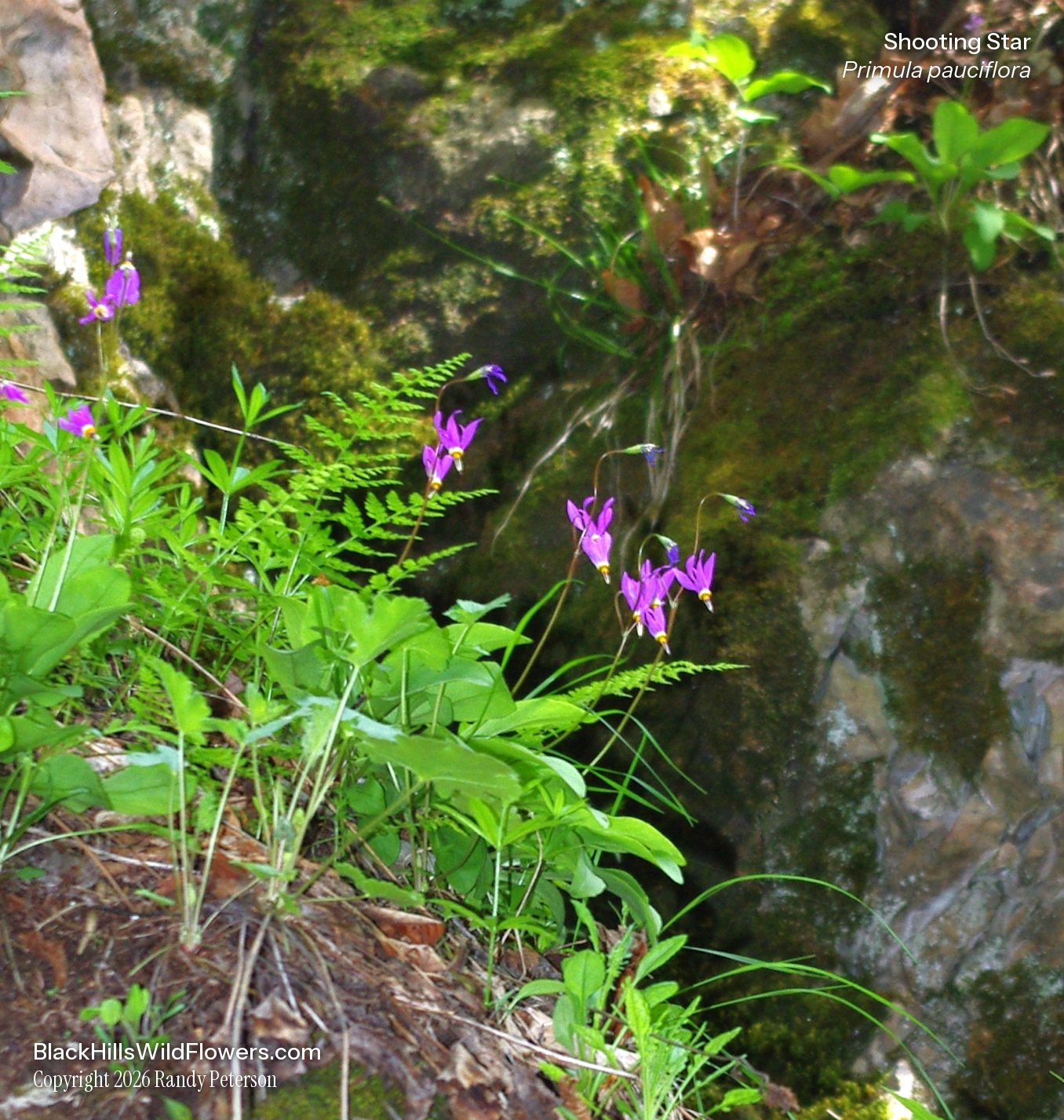
Shooting Star (Primula pauciflora) is a native perennial with a rosette of basal leaves and leafless stalks carrying clusters of downward-pointing magenta to lavender flowers with swept-back petals. It blooms in spring and early summer and is common in open pine forest, meadows and clearings in the Black Hills. Photographed in the Black Hills.
| Family | Primulaceae · Primrose |
|---|---|
| Status | Native perennial |
| Blooms | April into June |
| Height | Up to 50 cm (20 in) |
| Where | Open pine forest, moist meadows and clearings |
| Also called | Darkthroat Shootingstar, Dark Throat Shooting Star |
| Synonym | Dodecatheon pulchellum, Exinia pulchella |
Roots, seeds & germination
Root: White, fibrous roots from a woody base.
Seed: A many-seeded capsule, 7 to 17 mm long, with seeds about 1 mm long.
Germination: Seeds need a cold period of 3 to 4 weeks and light to sprout. Plant very shallowly in fall or early spring.
How do you identify Shooting Star?
The petals bend sharply backward from a yellow and red tube, and the stamens stick out, wrapped around the style. The flowers have a sweet clove scent. All the leaves are at the base, narrowly spoon-shaped with smooth edges, 4 to 25 cm long, and the flower stalk has none.
When does it bloom?
April into June.
Where does it grow?
Common in open pine forest, meadows and clearings in the Black Hills. In western South Dakota it grows in moist prairie meadows and open woodlands.
Sources: Forest Service, Black Hills National Forest: Black Hills Native Plants; SDSU Open PRAIRIE: Dodecatheon pulchellum; National Park Service, Devils Tower: Wildflowers; Southwest Colorado Wildflowers: Primula pauciflora.