Hooded Ladies Tresses Spiranthes romanzoffiana
Also called Hooded Ladies'-tresses, Hooded Lady's Tresses, Hooded Ladiestresses
Hooded Ladies Tresses (Spiranthes romanzoffiana) is a small native orchid with white to ivory flowers packed in a tight spiral, usually three to a turn, on a plant 8–55 cm (3–22 in) tall. It flowers in July and August, and Black Hills herbarium specimens come from moist pine woods, brushy ground and grassy valleys.
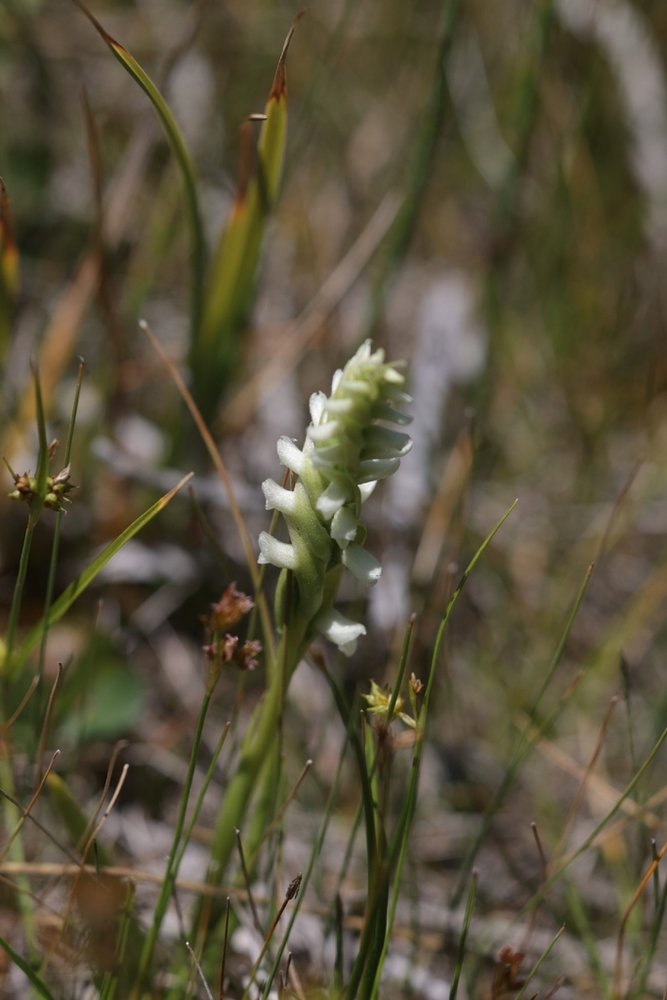
Free photos from other sources
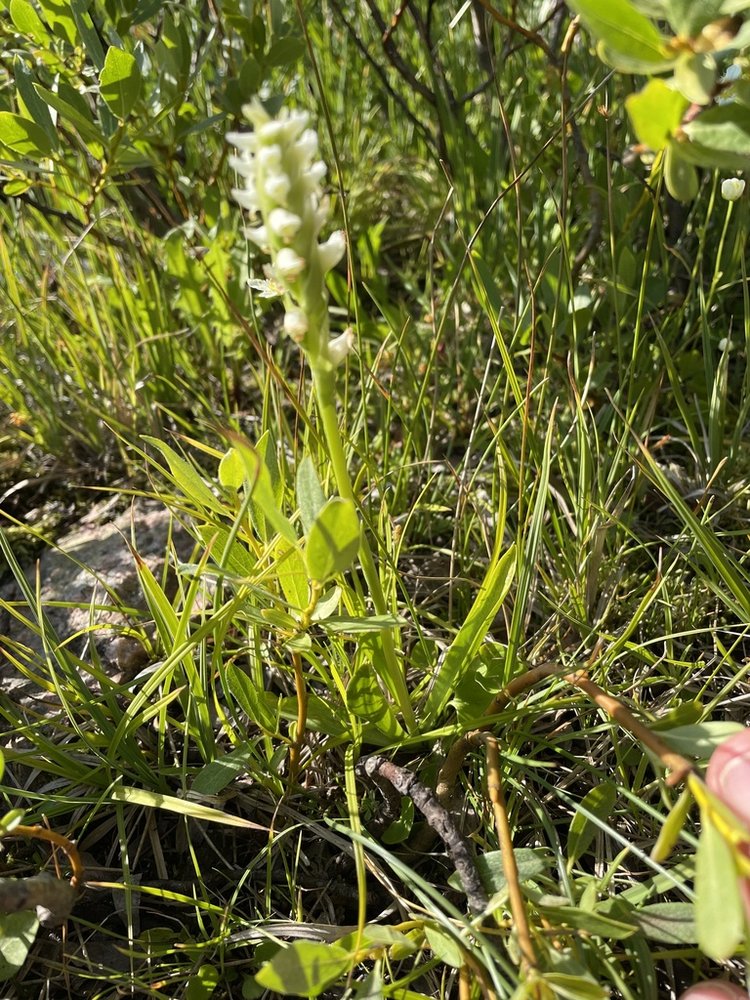
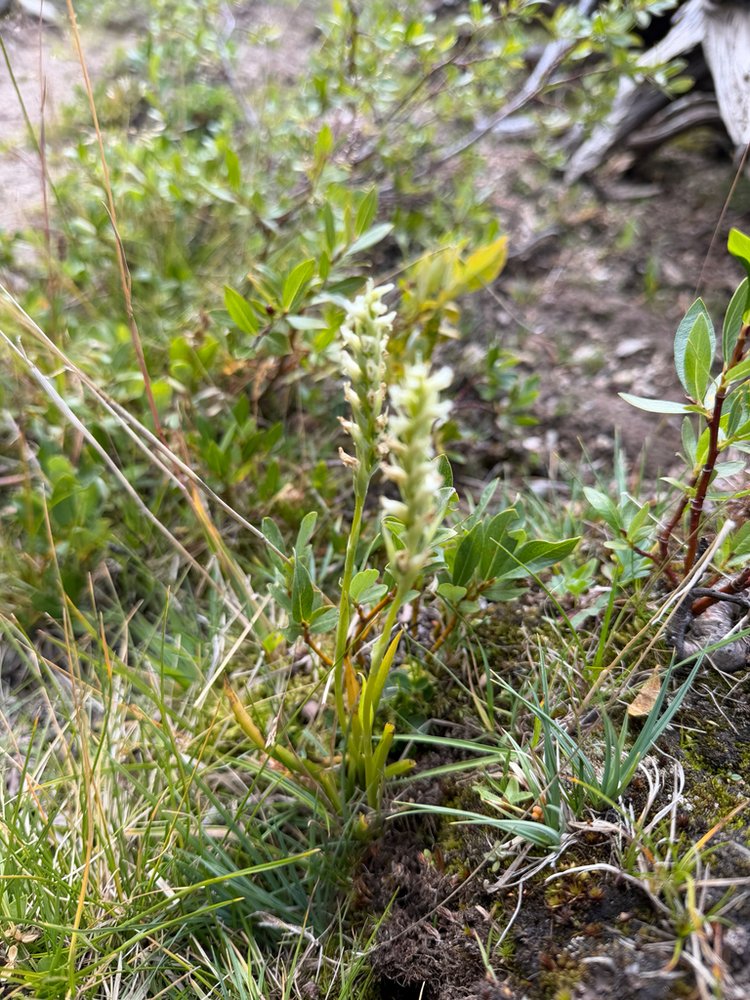
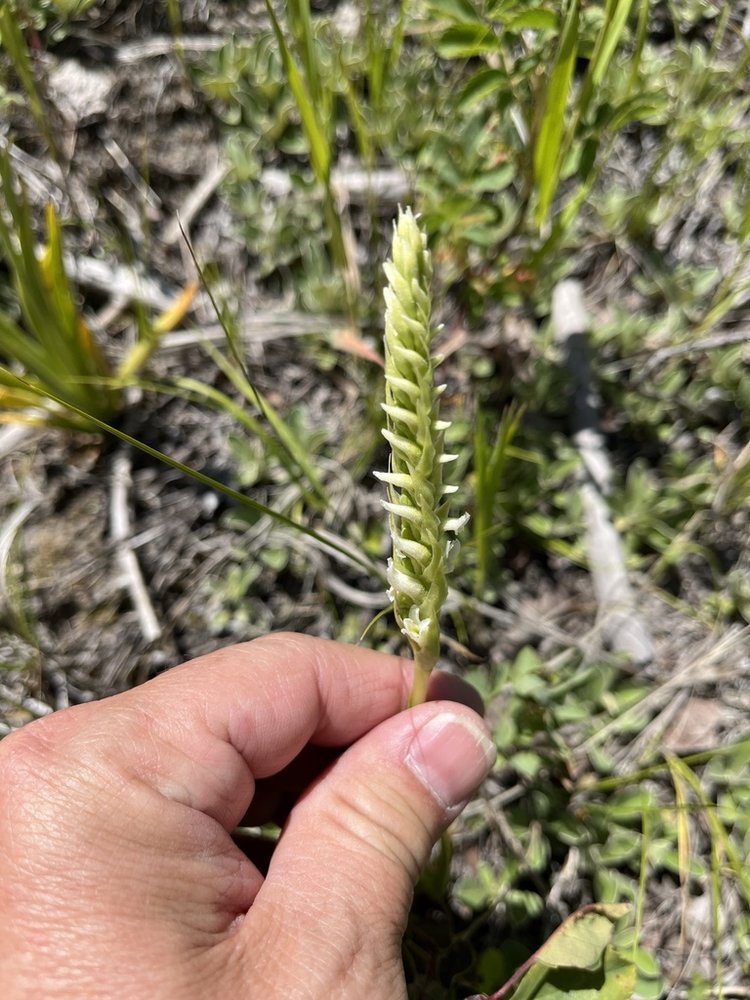
| Family | Orchidaceae · Orchid |
|---|---|
| Status | Native perennial |
| Blooms | July and August |
| Height | 8–55 cm (3–22 in) |
| Where | Moist ground: damp woods, brushy streamsides and wet meadows |
| Also called | Hooded Ladies'-tresses, Hooded Lady's Tresses, Hooded Ladiestresses |
| Synonym | Spiranthes stricta, Spiranthes gemmipara |
| Traditional use | Chamberlin's 1911 account of the Gosiute of Utah records that they used the plant for venereal disease, according to Moerman's database. |
| Note | Nodding Ladies' Tresses (Spiranthes cernua) is a different orchid; South Dakota Game, Fish and Parks lists it for prairies in the northeast of the state. |
Roots, seeds & germination
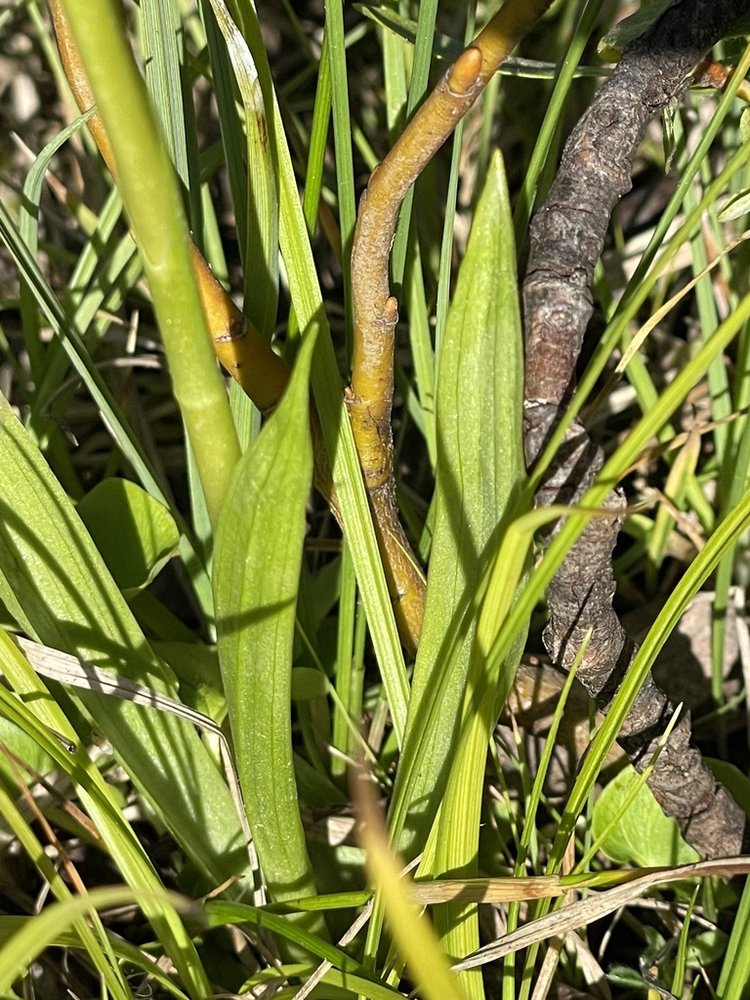
Root: The roots are few to several, swollen and fleshy (tuberous), usually up to about 1 cm (⅜ in) across, and they spread outward or run downward.
How do you identify Hooded Ladies Tresses?
Look for a stiff spike of white to ivory, tube-shaped flowers wound in a tight spiral, usually three flowers to each turn. Each flower is up to about 1.3 cm (½ in) long, with the sepals and upper petals drawn together into a hood and a lip that bends sharply down, wider at its wavy tip. The long, narrow leaves are mostly low on the stem, the lower ones up to about 23 cm (9 in) long, and they shrink to small bracts higher up. Minnesota Wildflowers says the hood is broader than in Nodding Ladies'-tresses (Spiranthes cernua) or Great Plains Ladies'-tresses (Spiranthes magnicamporum), and that Great Plains Ladies'-tresses usually has no basal leaves left by flowering.
When does it bloom?
July and August.
Where does it grow?
Moist ground, as the herbarium labels put it: pine woods, rocky woods, brushy ground, a grassy valley between wooded hills, and a birch and ironwood stand. Flora of North America gives moist to wet meadows, marshes, fens, prairies and stream banks across its range, from sea level to 3,400 m (11,200 ft). Herbarium specimens collected from 1892 to 1993, nearly all in August, come from Lawrence, Custer, Pennington and Meade counties in South Dakota and from Custer State Park, and others come from Crook County, Wyoming. The oldest label gives an elevation of 5,500 ft (1,680 m).
Other orchids in this guide
Sources: Flora of North America Vol. 26: Spiranthes romanzoffiana (Sheviak and Brown), eFloras; Minnesota Wildflowers: Spiranthes romanzoffiana (Hooded Ladies'-tresses); USDA Forest Service Plant of the Week: Hooded ladies'-tresses (Delmatier 2016); GBIF occurrence search: Spiranthes romanzoffiana, South Dakota and Wyoming herbarium specimens (Custer, Lawrence, Pennington, Meade and Crook counties); GBIF specimen 5895874447: Rydberg 1892, Custer, "Alt. 5500 feet"; GBIF specimen 5135205421: Murdoch 1909, Lawrence County, ridge south of Crow Peak; GBIF specimen 727721353: Brooks 1969, Pennington County, "Pine woods, moist"; GBIF specimen 5135204568: Stephens and Brooks 1969, Custer County, "Grassy valley between wooded hills. Moist."; GBIF specimen 2632244664: Hildebrand 1993, Lawrence County, "Betula/Ostrya"; GBIF specimen 177036077: Magrath 1971, Meade County; GBIF specimen 4912248061: Kass 1996, Crook County, Wyoming, "Bebb Willow/ Beaked Sedge comm."; GBIF Backbone Taxonomy: synonyms of Spiranthes romanzoffiana (usage key 2805404); South Dakota Game, Fish and Parks: Rare Plants of South Dakota; Native American Ethnobotany Database (BRIT): Spiranthes romanzoffiana.