Broad-lipped Twayblade Neottia convallarioides also listed as Listera convallarioides
Also called Broad-leaved Twayblade, Swan Orchid
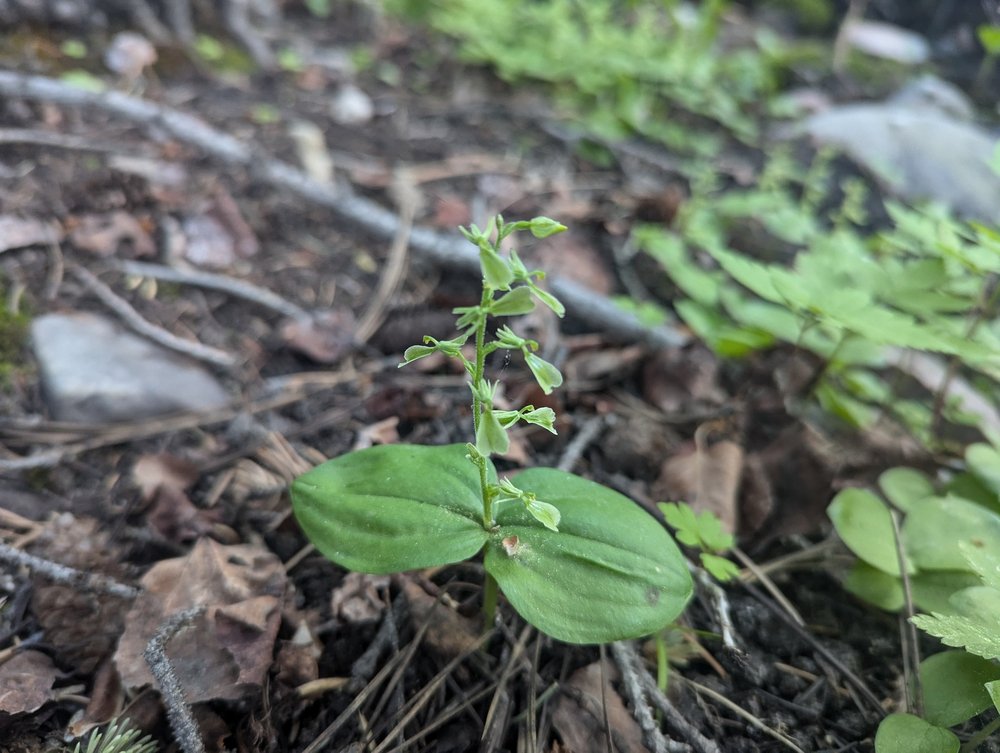
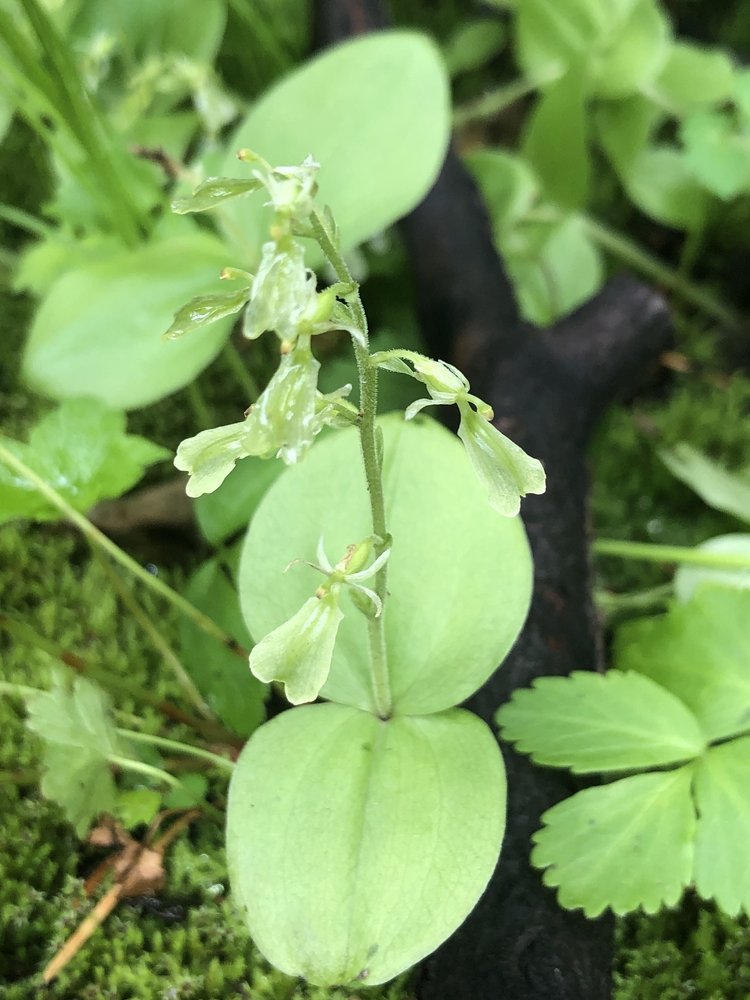
Broad-lipped Twayblade (Neottia convallarioides) is a small native orchid, 5–37 cm (2–15 in) tall, with one pair of broad, rounded leaves set opposite each other partway up the stem and a loose spike of 5 to 20 small yellow-green flowers in July and August. In the Black Hills it grows on saturated ground beside springs and creeks under white spruce, and South Dakota ranks it S1, critically imperiled.
Free photos from other sources
| Family | Orchidaceae · Orchid |
|---|---|
| Status | Native perennial |
| Blooms | July and August; June to September across its range |
| Height | 5–37 cm (2–15 in) |
| Where | Saturated ground beside springs and creeks under white spruce |
| Also called | Broad-leaved Twayblade, Swan Orchid |
| Synonym | Listera convallarioides, Epipactis convallarioides, Bifolium convallarioides, Ophrys convallarioides |
| Note | The Forest Service listed Broad-lipped Twayblade as a species of local concern in the Black Hills in 2005, and its 2023 draft assessment names it a likely species of conservation concern. South Dakota ranks it S1, critically imperiled. This page gives no locations. |
Roots, seeds & germination
Root: A rhizome (underground stem) with slender roots; it spreads by runners and sometimes forms large colonies.
Seed: The capsule is about 8 by 5 mm (0.3 by 0.2 in). As in many orchids, it spreads slowly by seed, and its seedlings are weak.
How do you identify Broad-lipped Twayblade?
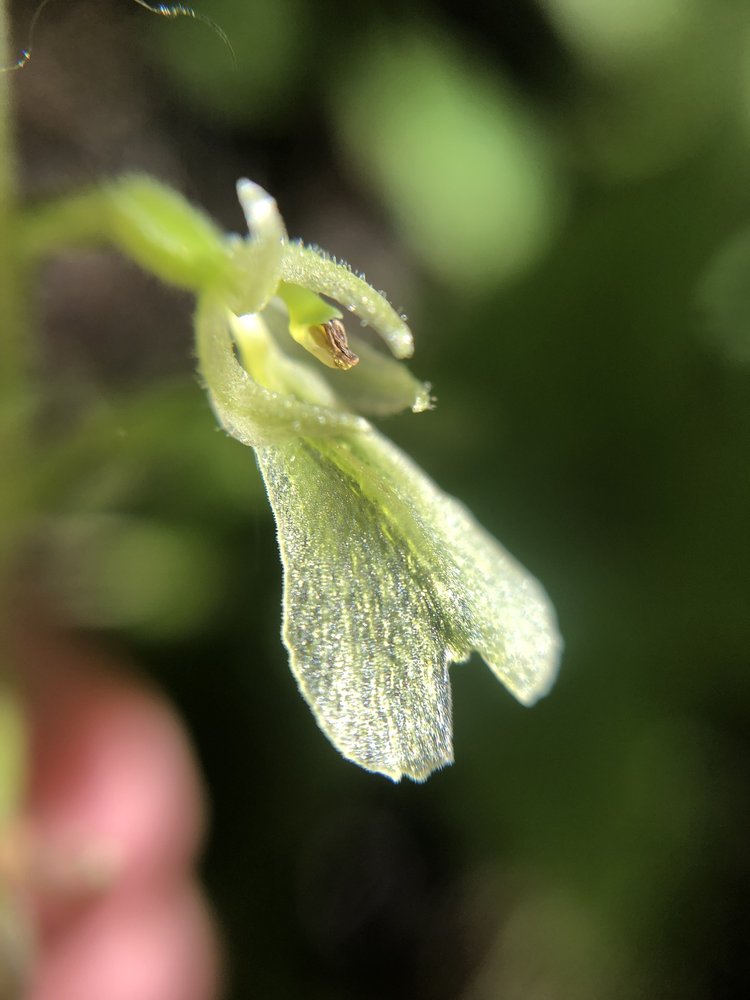
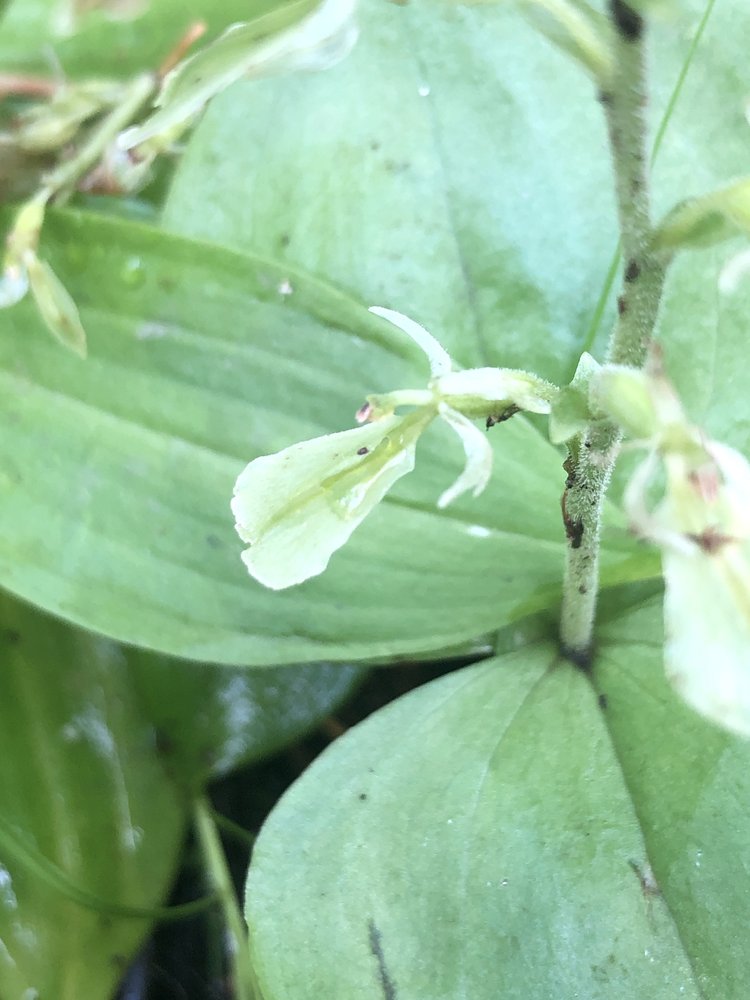
Look for two opposite, oval to nearly round leaves 2–7 cm (0.8–2.8 in) long, held flat out from a juicy green stem; above the leaves the stem and flower stalks are covered in fine, white, gland-tipped hairs. The flowers are yellowish green, sometimes faintly tinged with purple, with small sepals and petals bent back away from the lip. The lip is the big part: 8–13 mm (0.3–0.5 in) long, wedge-shaped, narrow at the base and widening to a shallowly notched tip with a small tooth in the notch, so it looks like a small pair of folded insect wings. The capsules are about 8 mm (0.3 in) long. Colorado's rare plant guide says the round, opposite leaves and the lip that narrows gradually to its base set it apart from the other orchids there.
When does it bloom?
July and August; June to September across its range.
Where does it grow?
Saturated ground beside springs and creeks under white spruce, at about 1,540–1,890 m (5,040–6,200 ft). Across its range it grows on rich humus in open woods and boggy meadows, on cool soil that is neutral or only slightly acid.
Other orchids in this guide
Sources: Flora of North America Vol. 26: Listera convallarioides, eFloras; Go Orchids: Neottia convallarioides, North American Orchid Conservation Center; Montana Field Guide: Broad-leaved Twayblade, Listera convallarioides (Montana Natural Heritage Program); Colorado Rare Plant Guide: Neottia convallarioides, Colorado Natural Heritage Program; Phase II Amendment to the Black Hills forest plan, Final EIS (2005), section 3-3.2.3.5 Broadlipped Twayblade, USDA Forest Service; Draft Forest Plan Assessment for the Black Hills: At-Risk Species (2023), USDA Forest Service; Rare Plants of South Dakota, SD Natural Heritage Program / SD Game, Fish & Parks; ITIS: Neottia convallarioides, accepted name, with Listera convallarioides as a synonym (TSN 894825).