Clustered Broomrape
Aphyllon fasciculatum
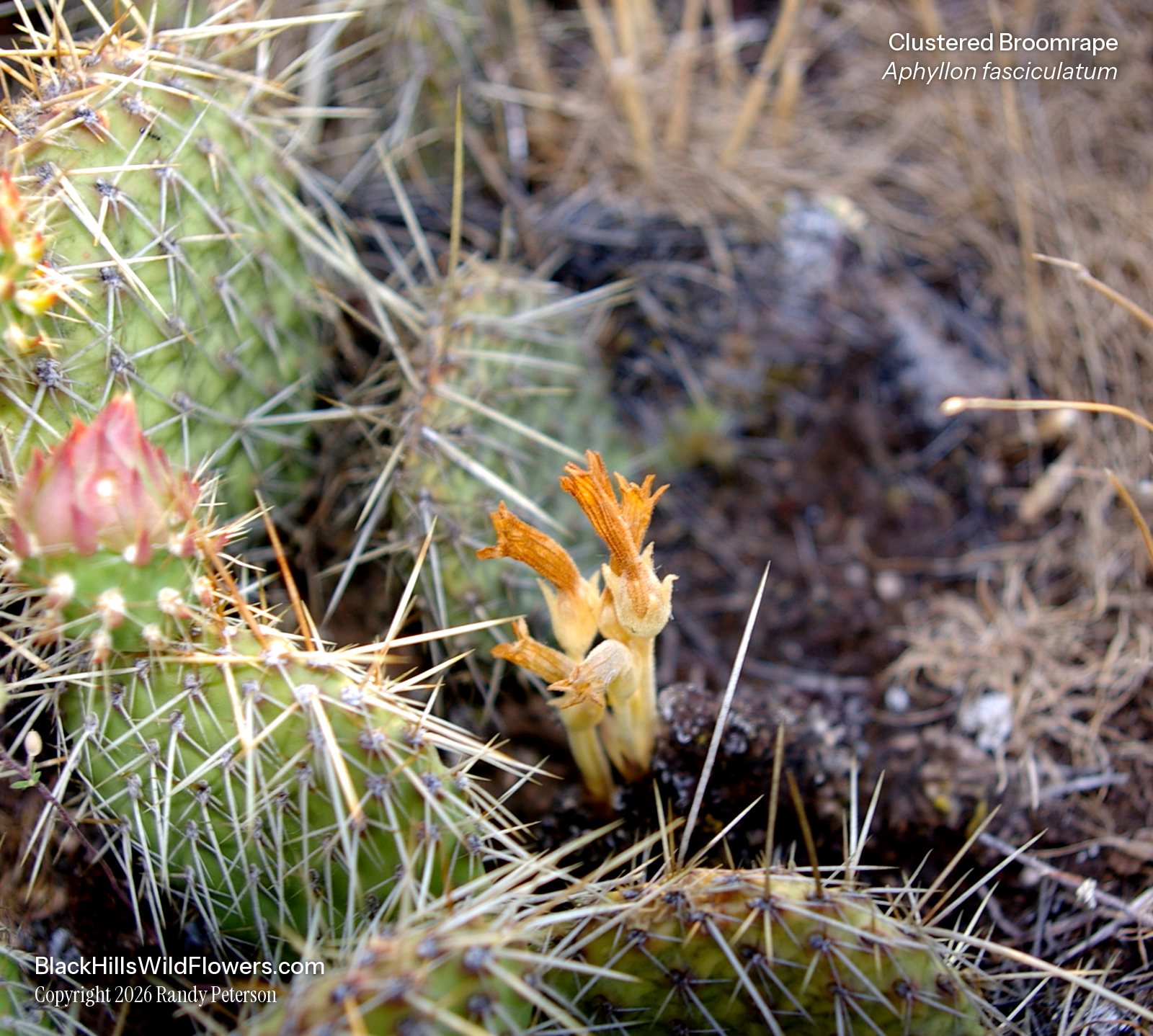
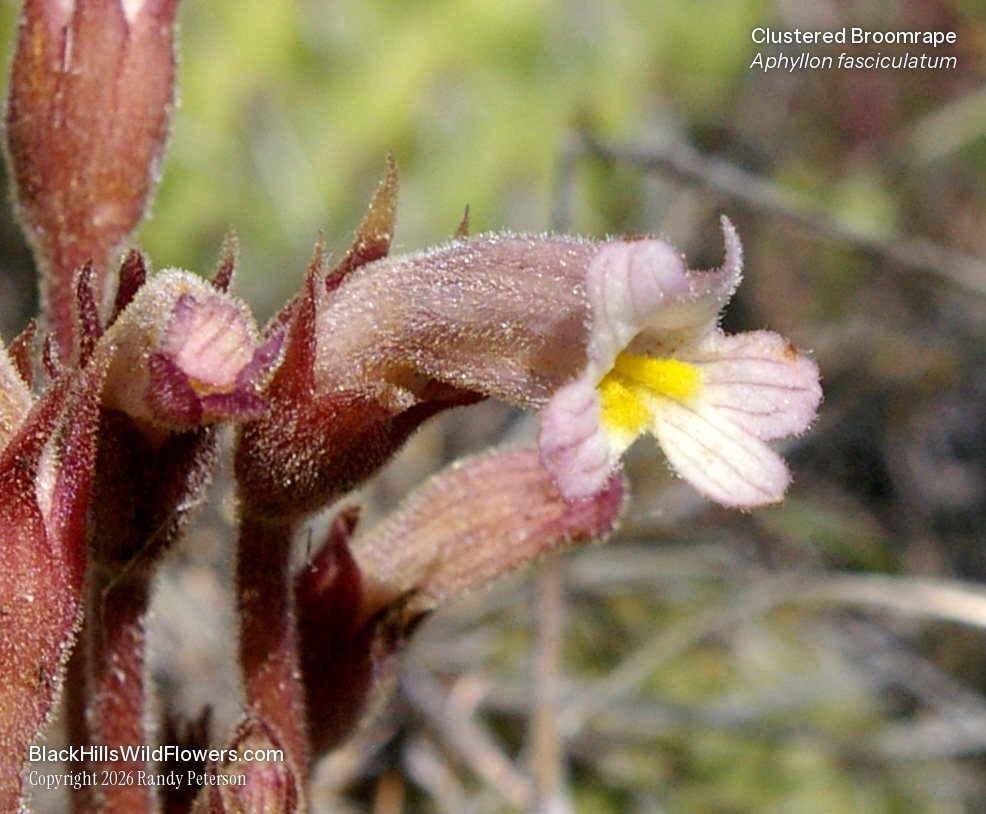
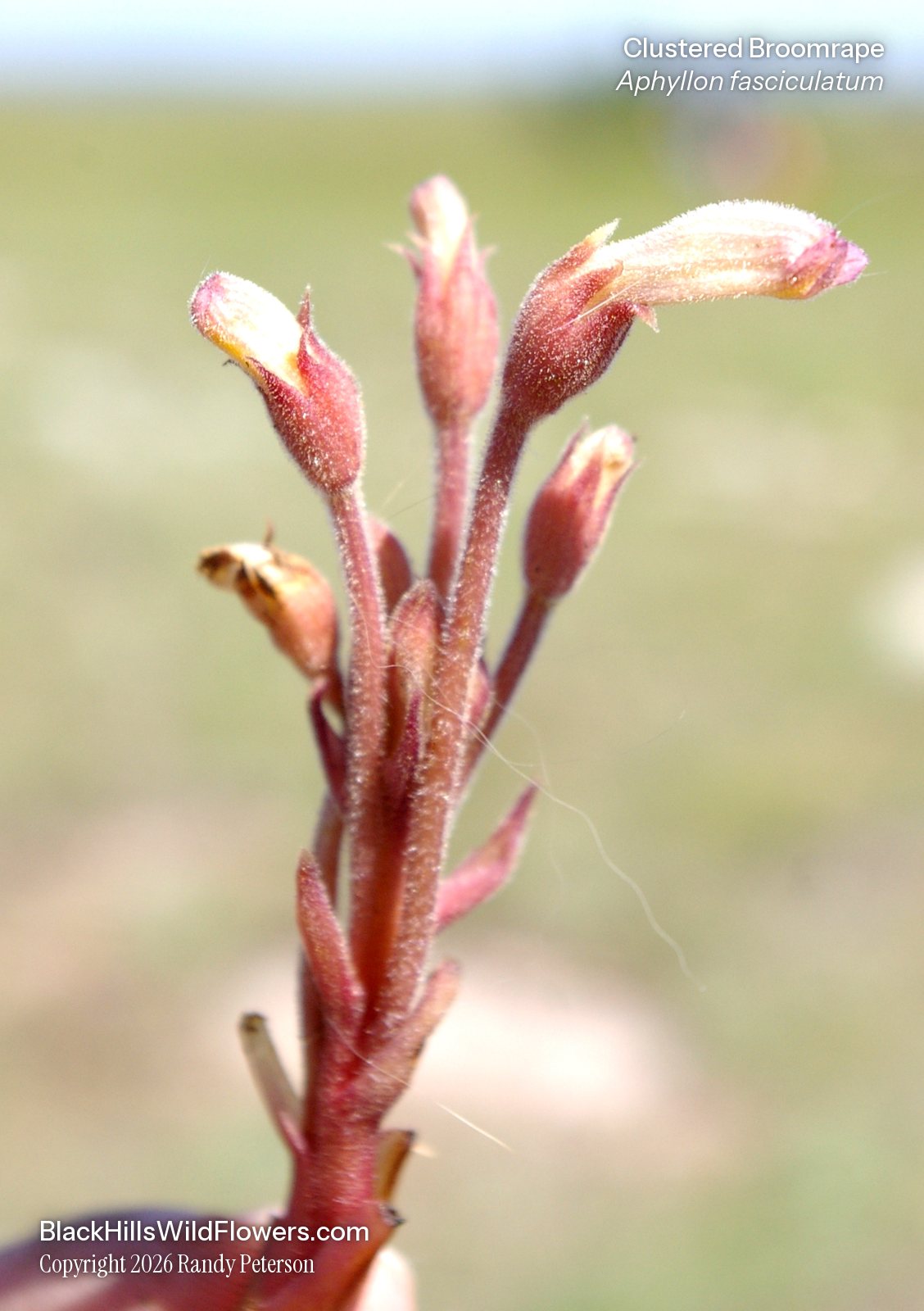
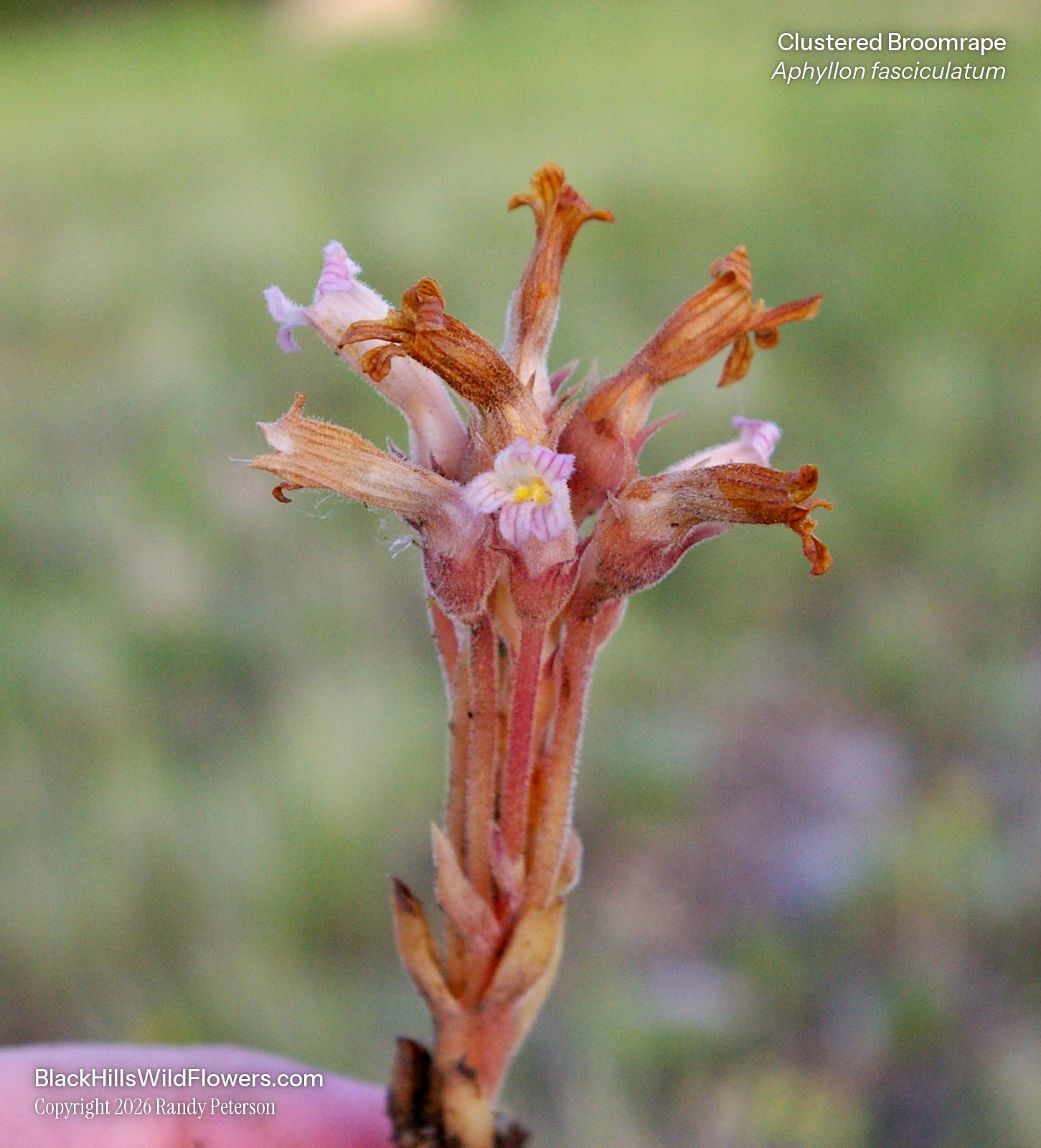
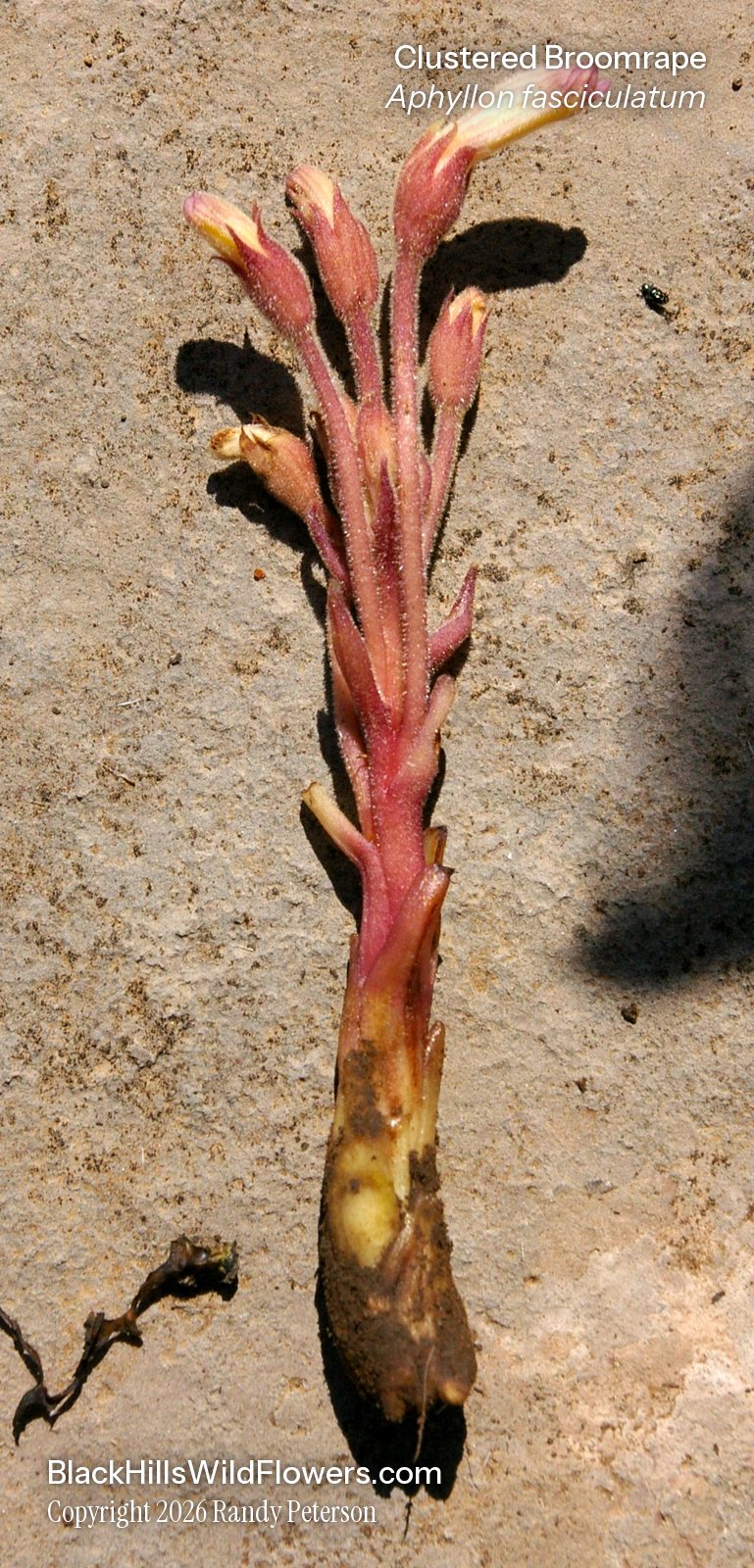
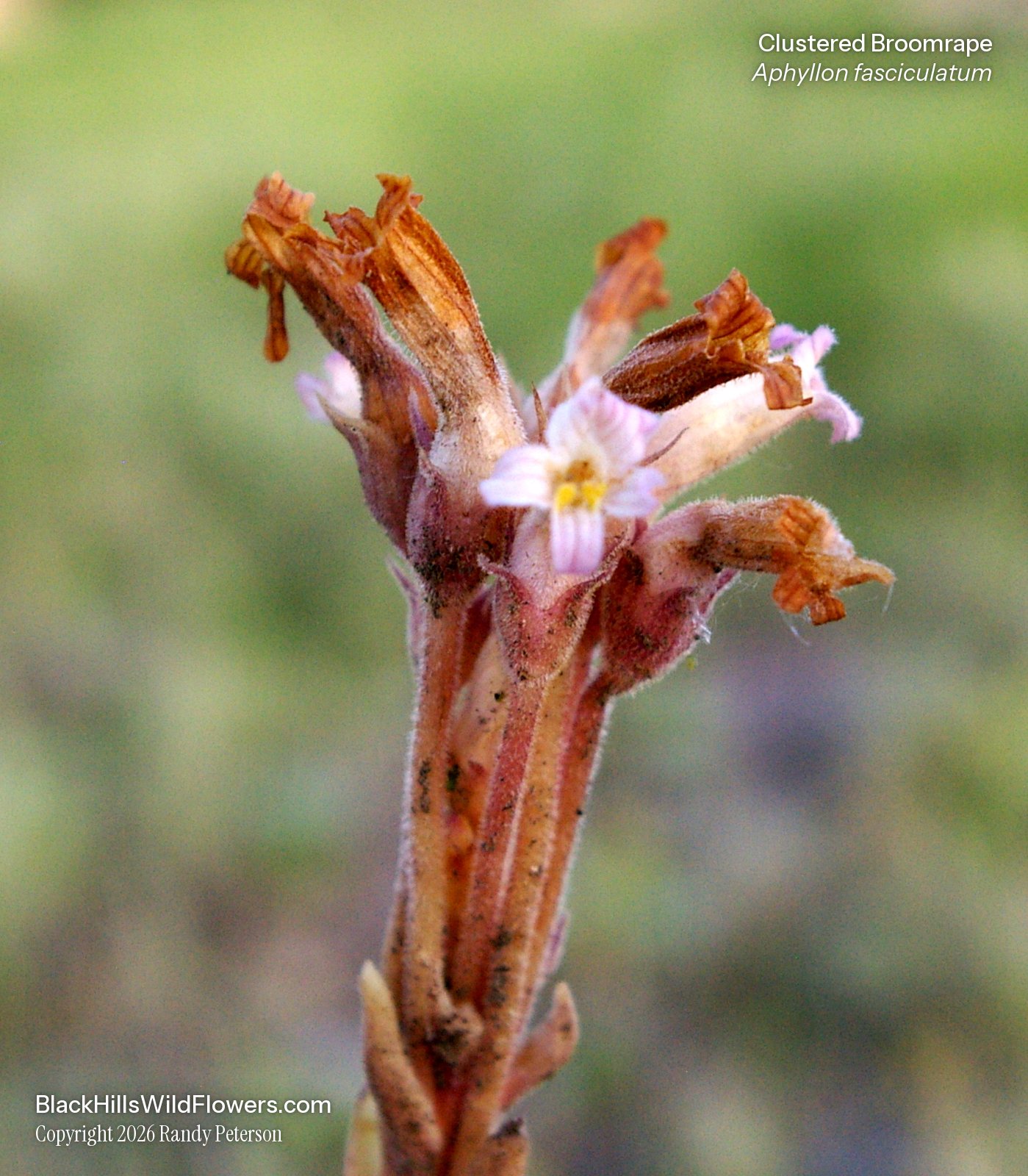
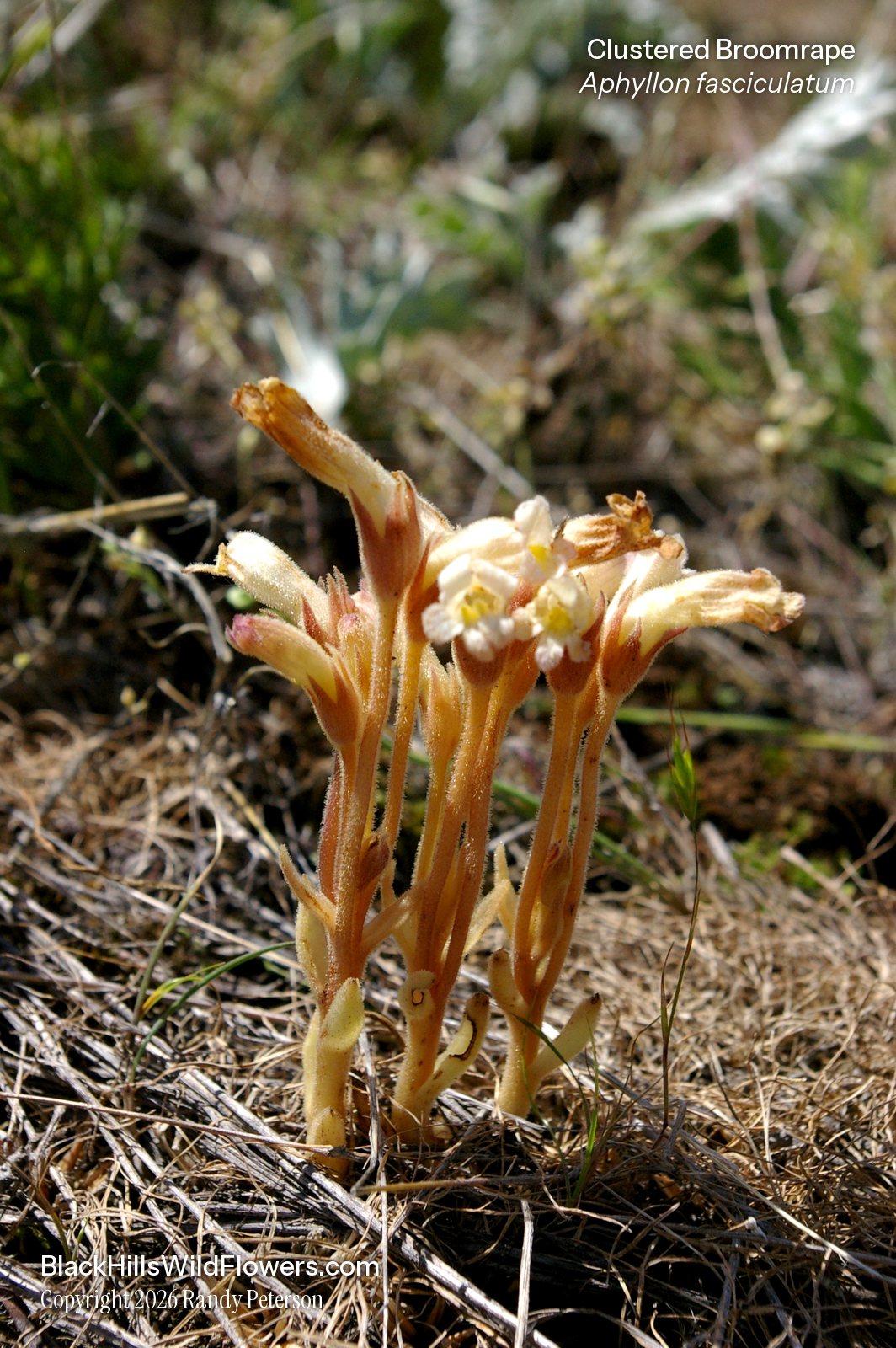
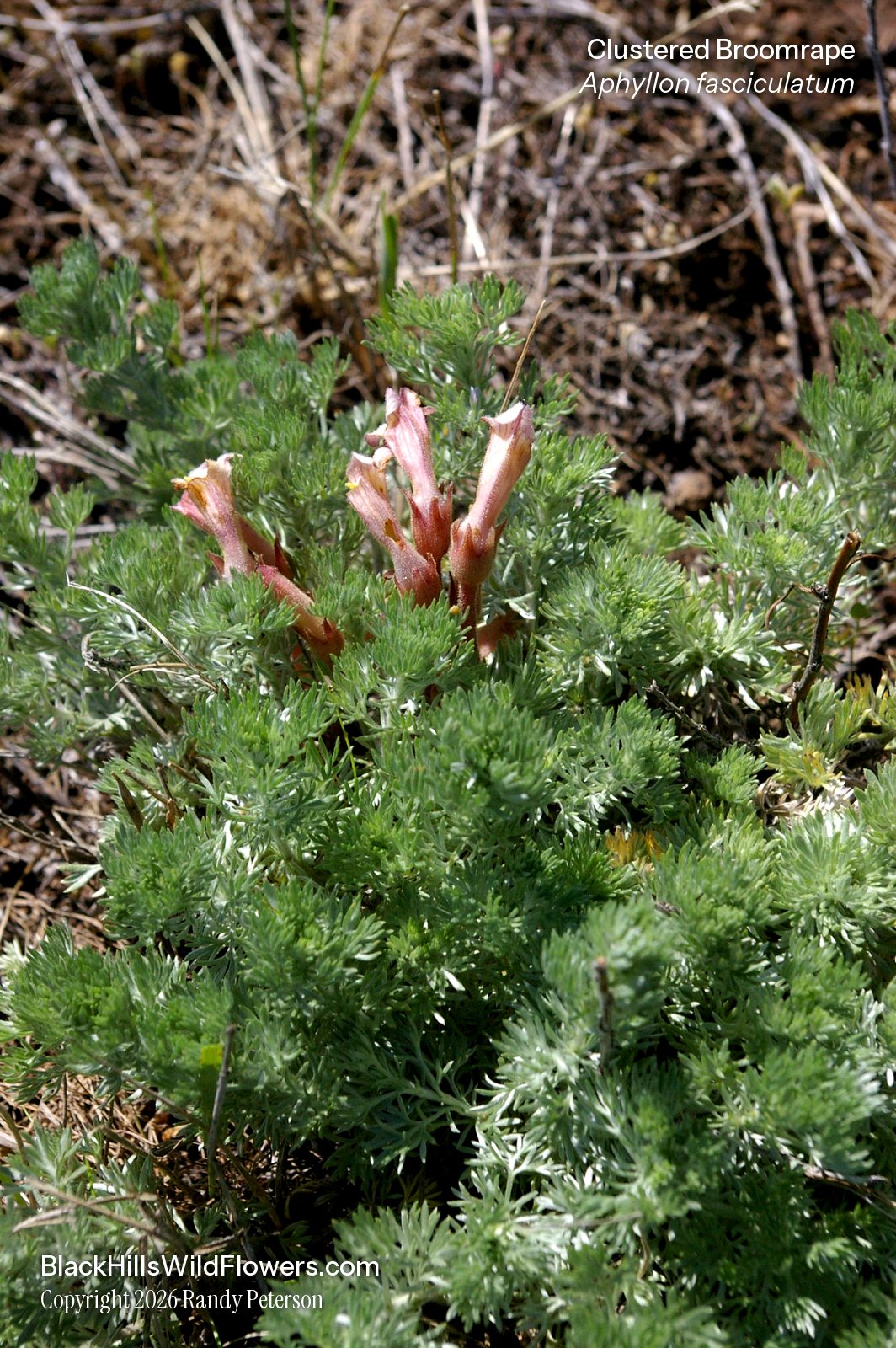
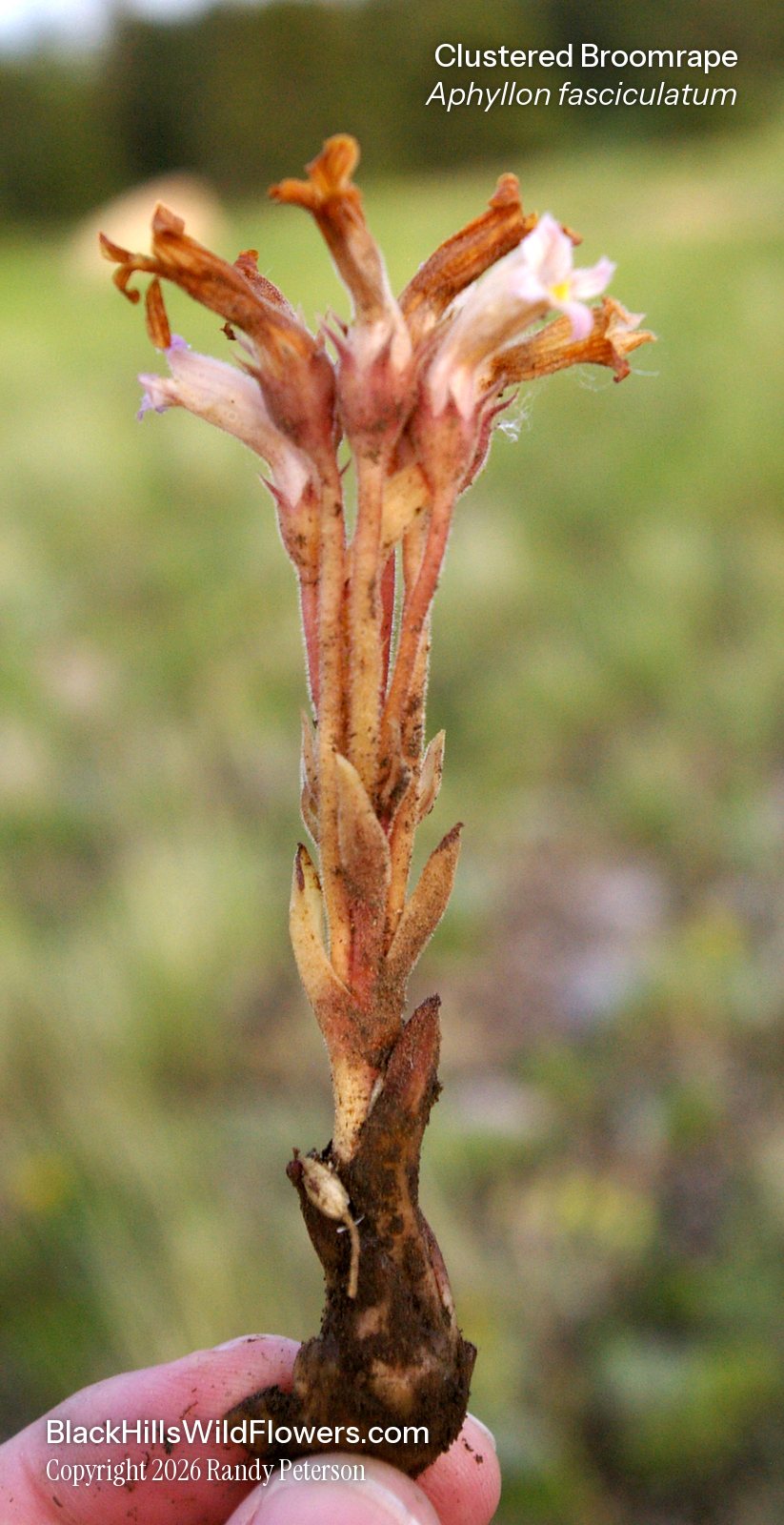
Clustered Broomrape (Aphyllon fasciculatum) is a native root parasite with no green color, short scaly stems and flat clusters of long-stalked, tubular flowers that can be yellow, pink or dark maroon. It feeds mainly on sagebrush and its relatives, and in Minnesota it blooms from June through August in sandy or gravelly prairies, bluffs and woods. Photographed in the Black Hills.
| Family | Orobanchaceae · Broomrape |
|---|---|
| Status | Native annual |
| Blooms | June through August |
| Height | 6–25 cm (2–10 in) |
| Where | Sandy or gravelly prairie, bluffs and open woods |
| Synonym | Orobanche fasciculata, Anoplanthus fasciculatus, Phelypaea fasciculata, Thalesia fasciculata |
Roots, seeds & germination
Root: No real root system of its own. It attaches to the roots of a host plant at the base of its shoot.
Seed: A two-sectioned capsule, 6 to 12 mm, holds many tiny seeds 0.2 to 0.5 mm long.
Germination: Seeds stay buried and mostly dormant, and only those in contact with a host's roots survive.
How do you identify Clustered Broomrape?
There is nothing green on it. The stem is yellowish, grayish tan or reddish brown, half or more of it underground, with pointed scales in place of leaves. Up to 12 long-stalked flowers, 1/2 to 1 1/4 inches long, sit in a flattish cluster, covered with sticky hairs, with a small, usually bright yellow fold on each side of the bottom lobe. One-flowered Broomrape has up to 5 flower stalks and flowers about 3/4 inch long.
When does it bloom?
June through August.
Where does it grow?
Sandy or gravelly soil in prairies, dunes, woods, bluffs and sandstone outcrops. Flora of North America includes South Dakota and Wyoming in its range.
Sources: Flora of North America: Orobanche fasciculata; Minnesota Wildflowers: Orobanche fasciculata (Clustered Broomrape); Boulder County Open Space: Clustered Broomrape; Blue Jay journal: Clustered Broom-rape; South Dakota Game, Fish and Parks: Rare Plants of South Dakota.