Spotted Coralroot Corallorhiza maculata
Also called Summer Coralroot, Spotted Coral-root, Spotted Coralroot Orchid
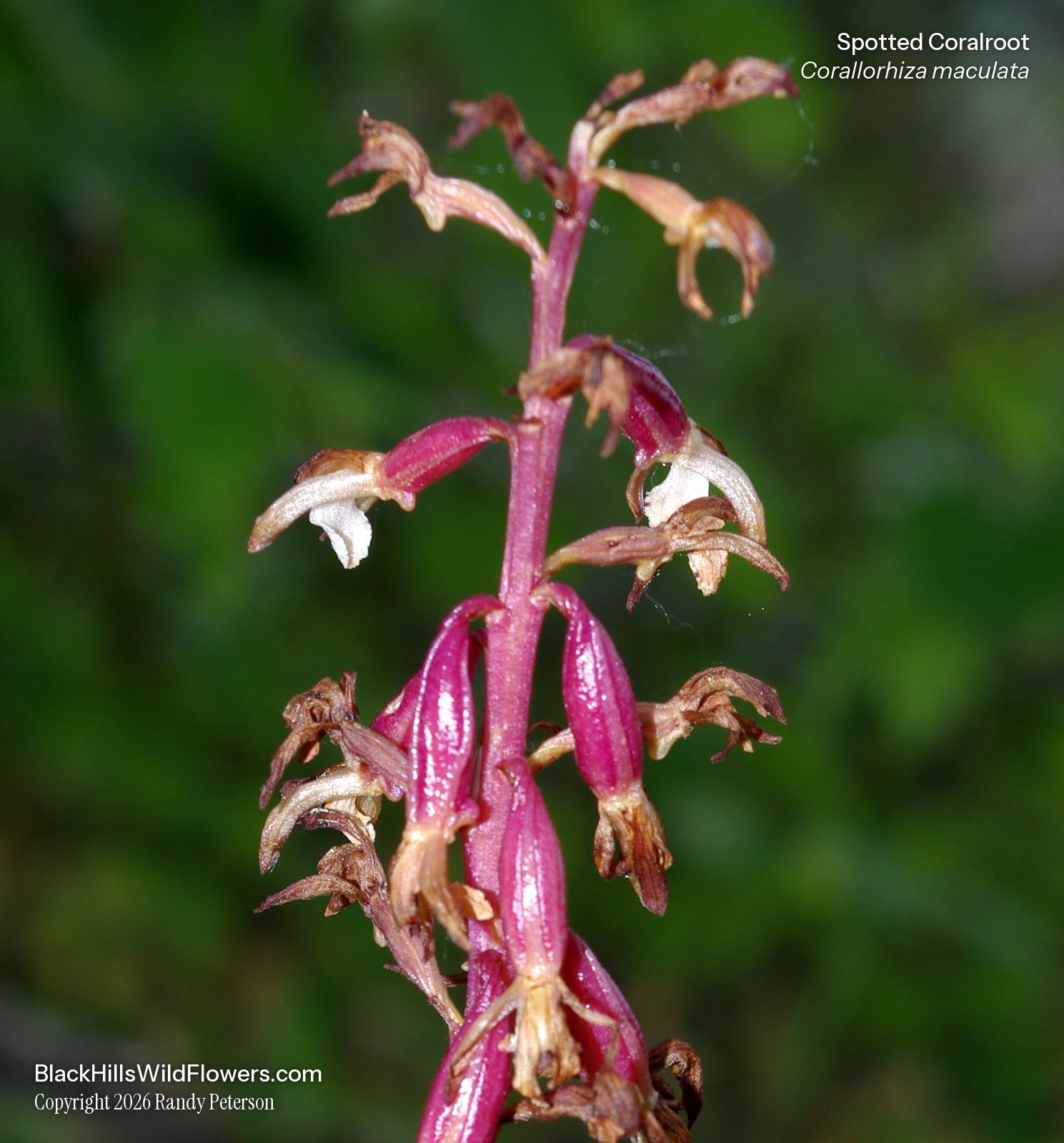
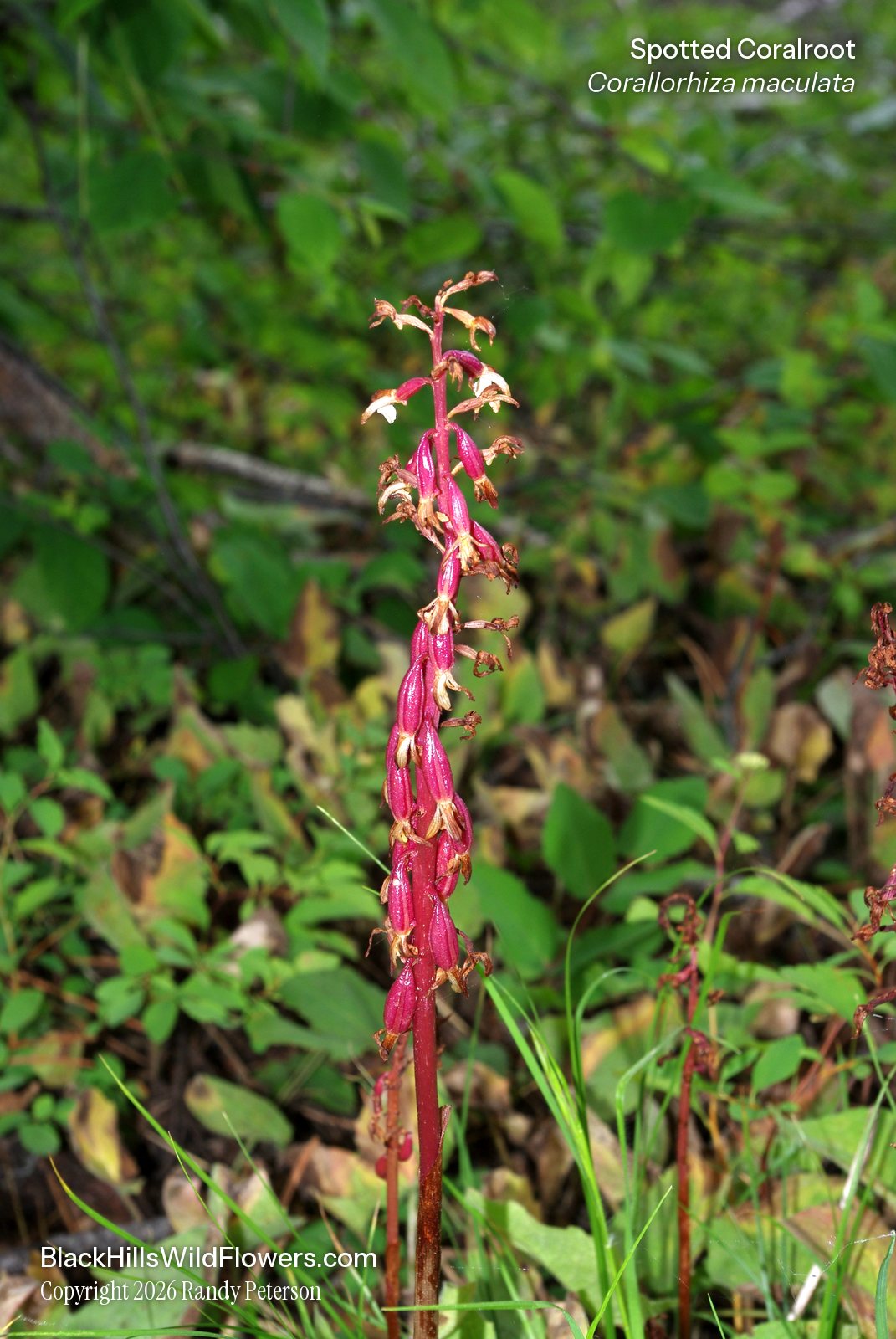
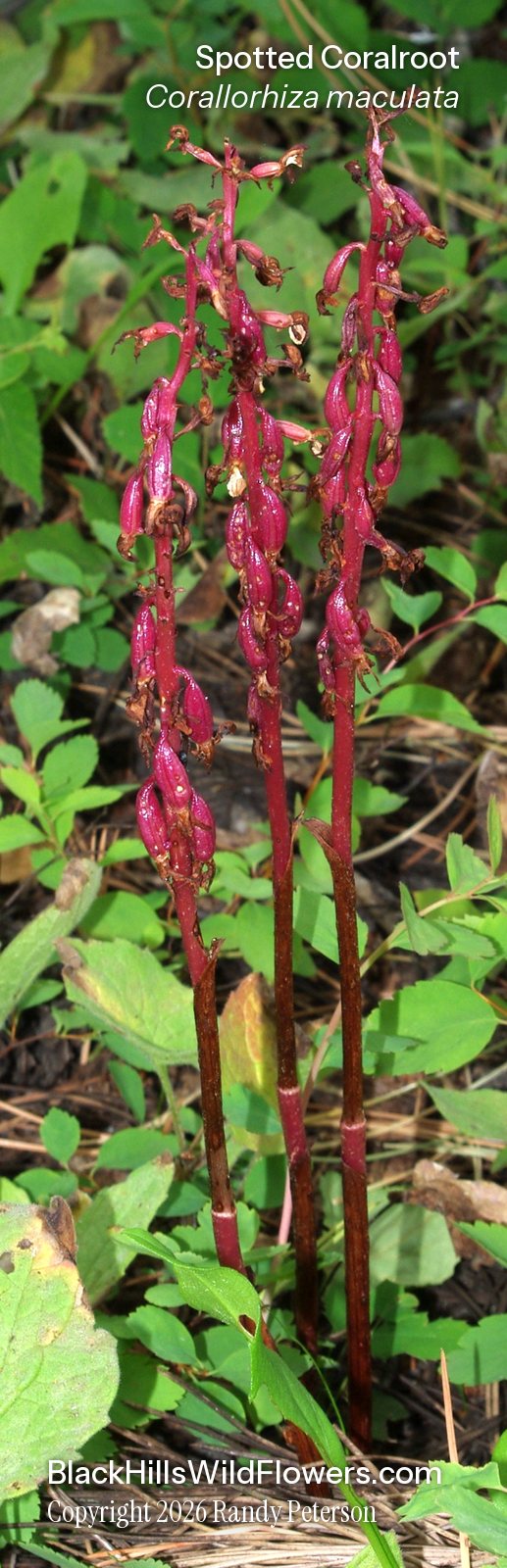
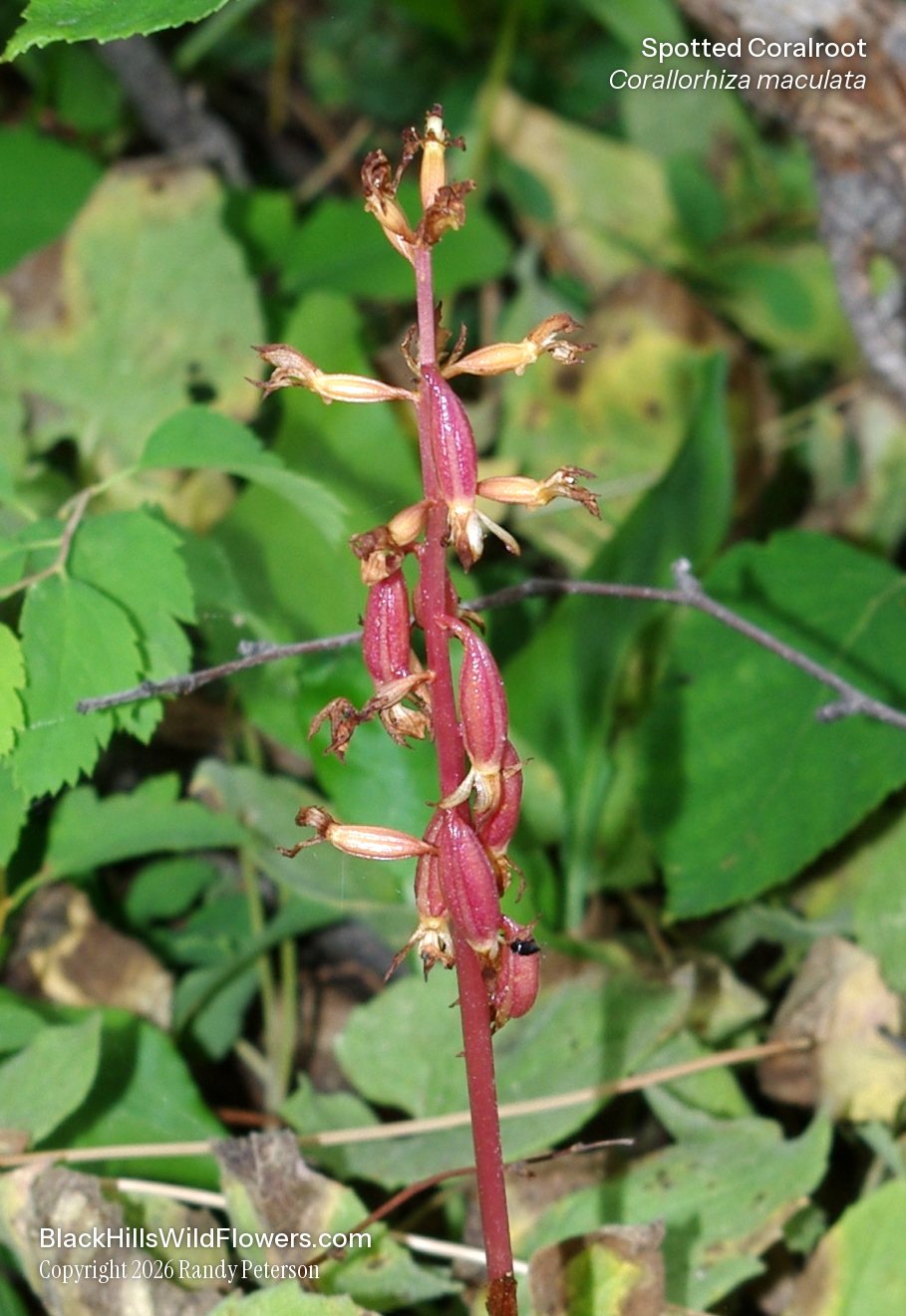
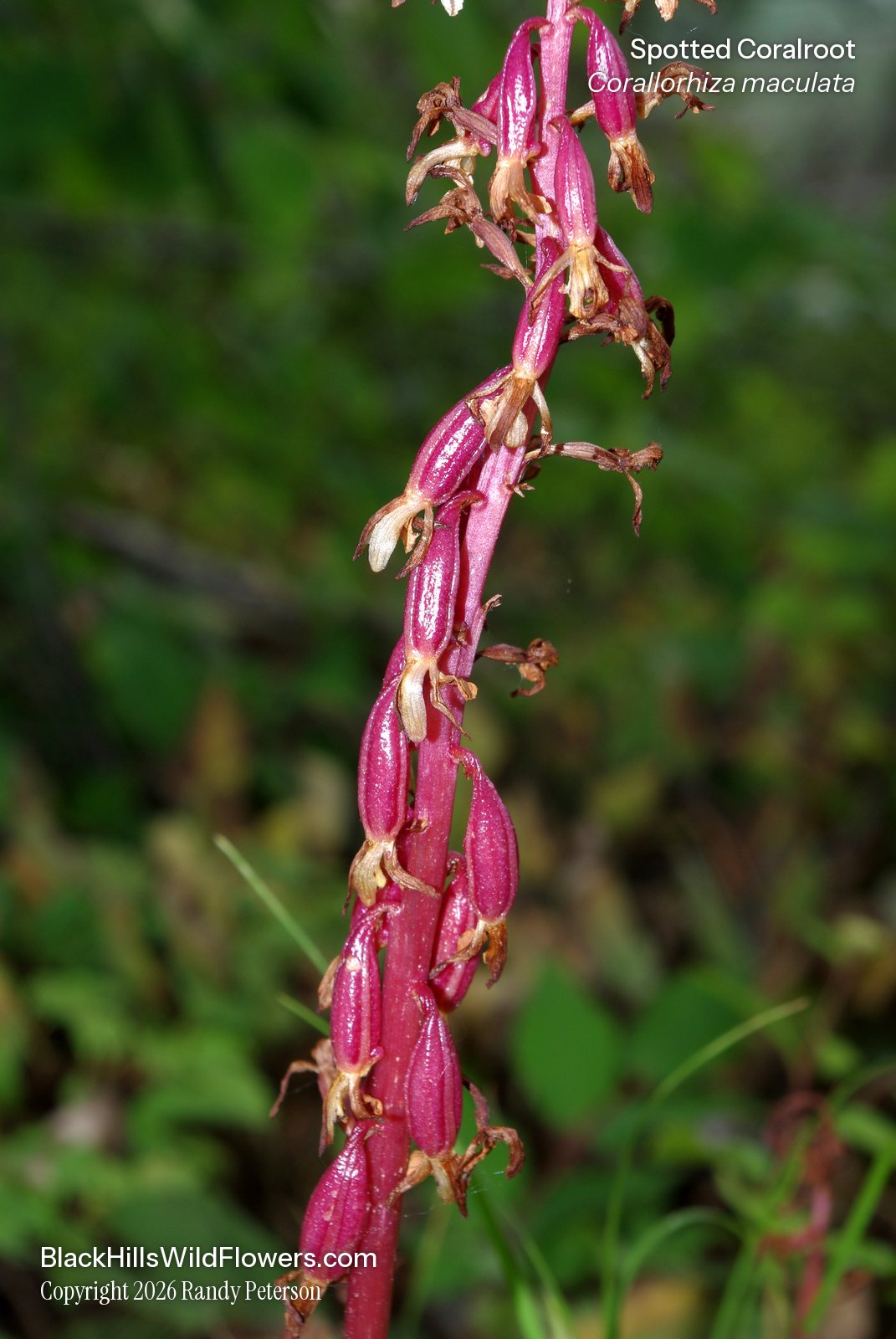
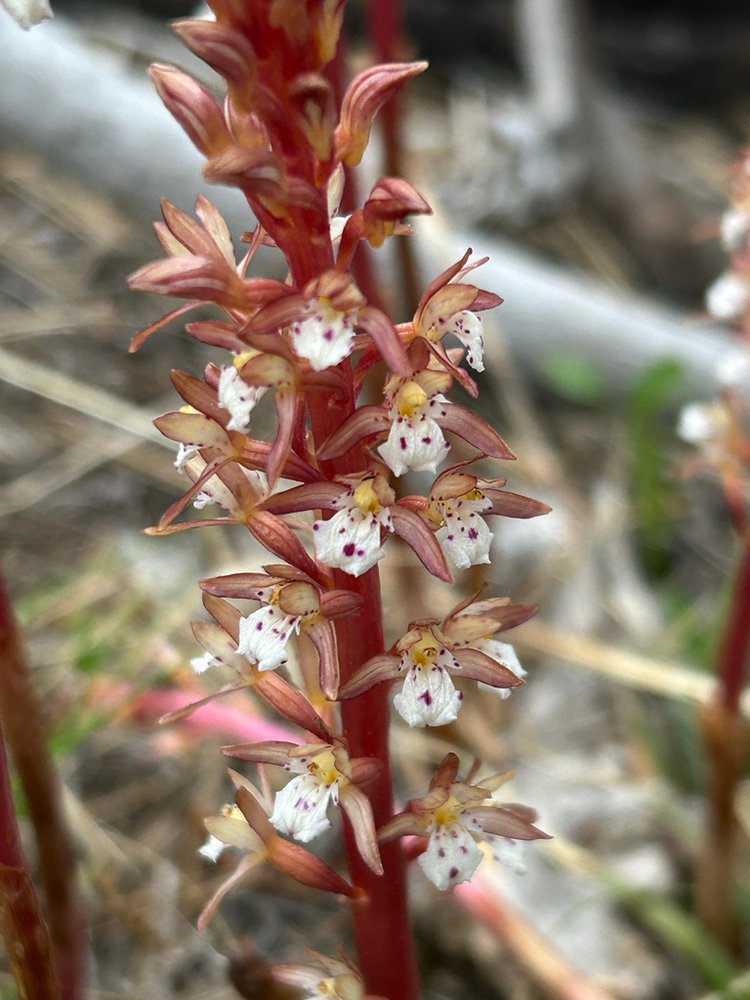
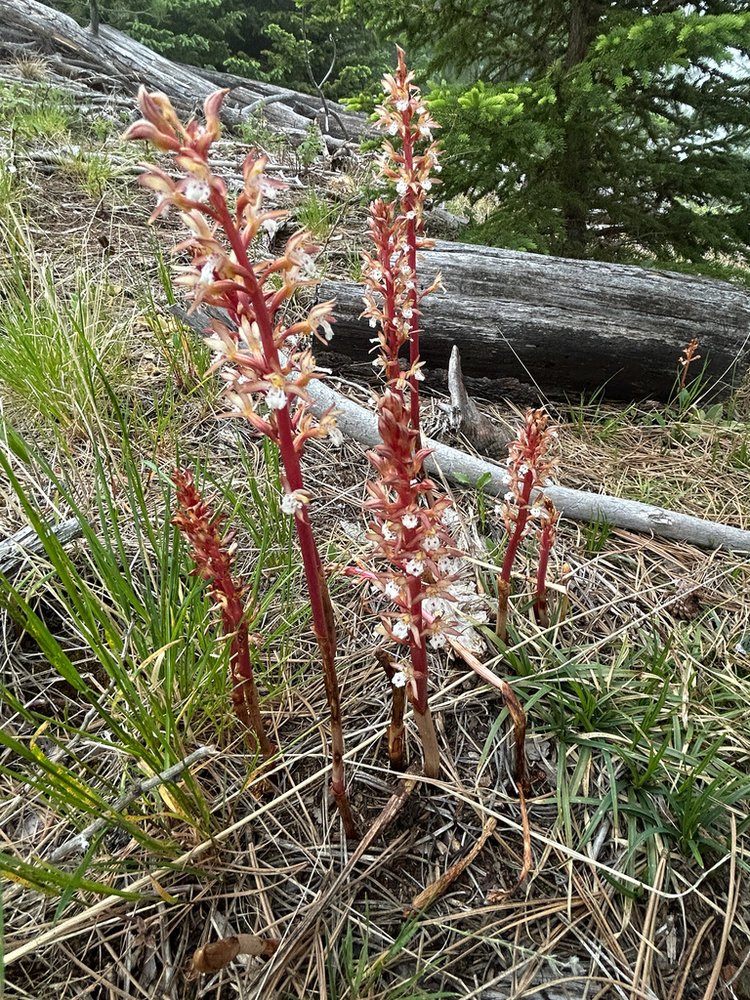
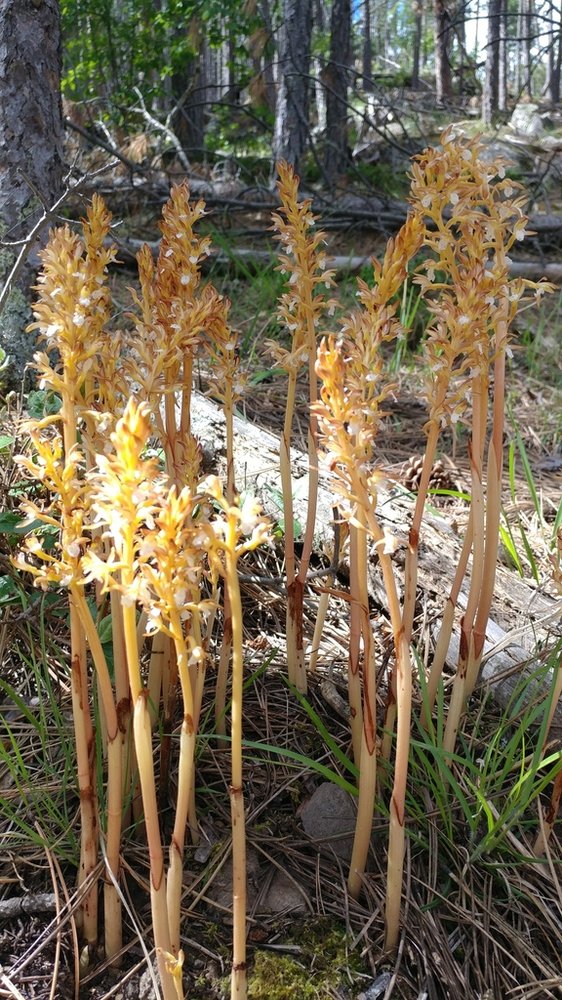
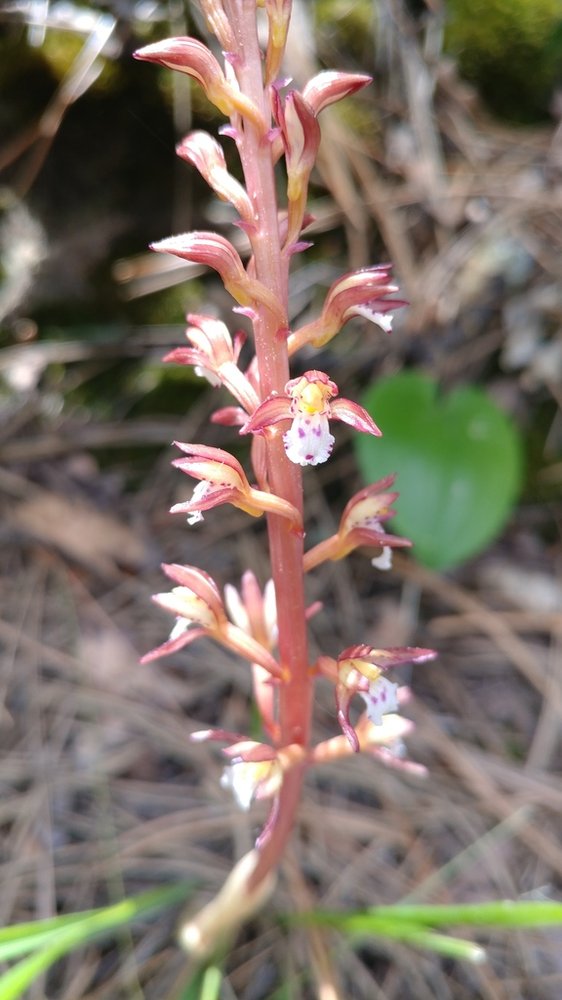
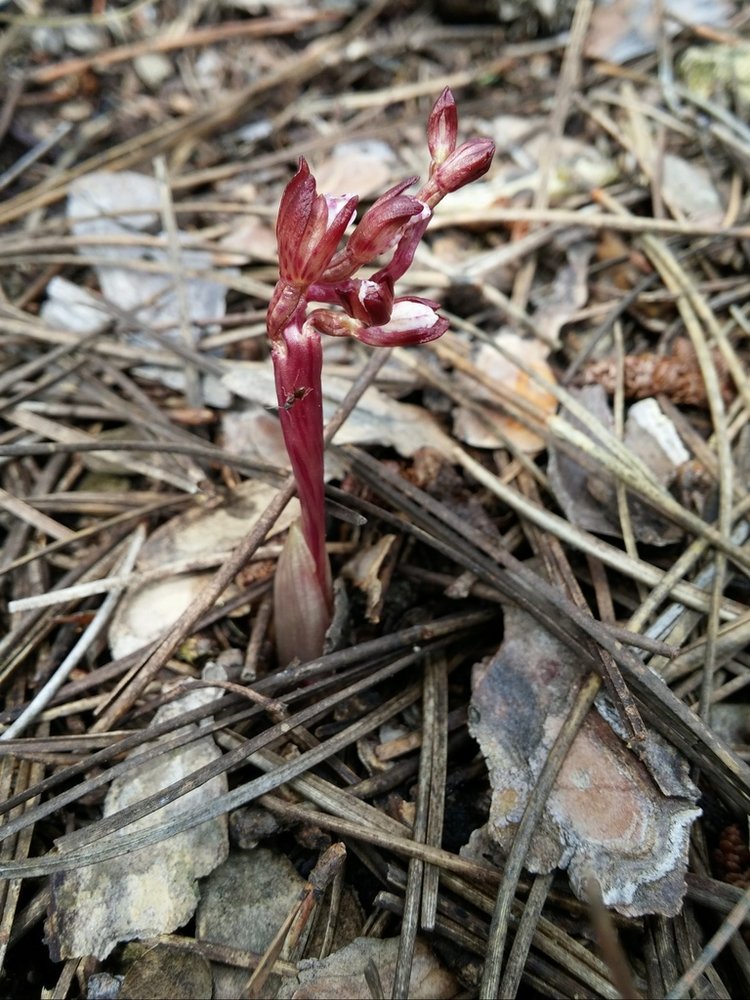
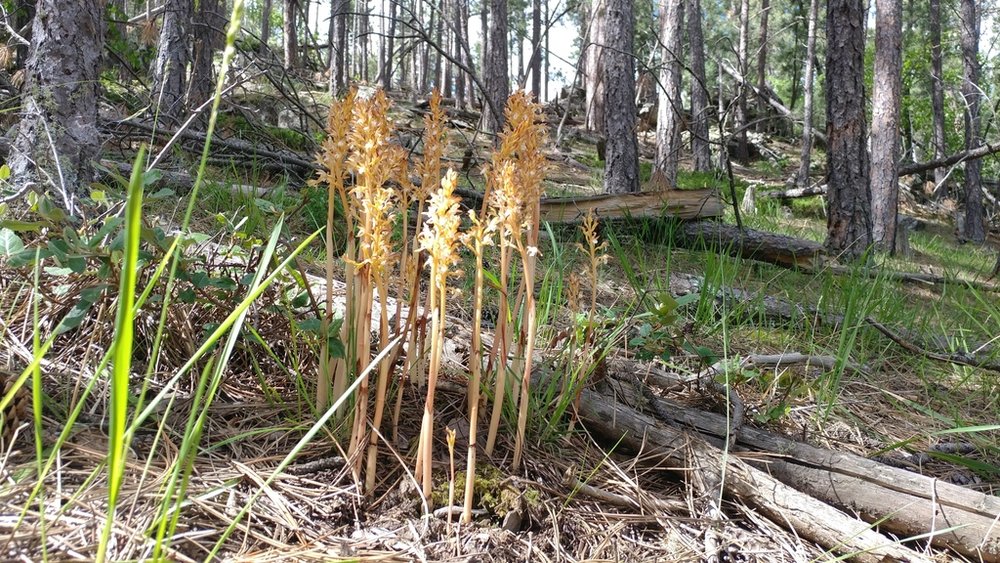
Spotted Coralroot (Corallorhiza maculata) is a native orchid with no green leaves: a red-purple, brown or yellow stalk rises from the needle litter in June and July, carrying small flowers whose white lip is usually spotted with purple. It gets most of its food through soil fungi rather than making its own, and in the Black Hills it grows in shaded pine, spruce, birch and aspen woods, where the National Park Service lists it at Jewel Cave and Mount Rushmore. Photographed in the Black Hills.
Free photos from other sources
| Family | Orchidaceae · Orchid |
|---|---|
| Status | Native perennial |
| Blooms | June into August, most often June and July |
| Height | 15–50 cm (6–20 in) |
| Where | Shaded pine, spruce, birch and aspen forest floor with little other ground cover, often on north-facing slopes and in moist draws |
| Also called | Summer Coralroot, Spotted Coral-root, Spotted Coralroot Orchid |
| Synonym | Corallorhiza multiflora, Cladorhiza maculata, Corallorrhiza maculata |
Roots, seeds & germination
Root: The plant grows from a small, coral-shaped underground stem (rhizome); the genus name means coral root. It has no green leaves and gets most of its food through soil fungi; botanists call a plant like that a myco-heterotroph.
Seed: The fruit is a hanging, oval capsule 9–24 mm (⅜–1 in) long. Flowers can pollinate themselves after they open, and insects also do the job: dance flies and Andrena mining bees have been recorded carrying the pollen masses.
How do you identify Spotted Coralroot?
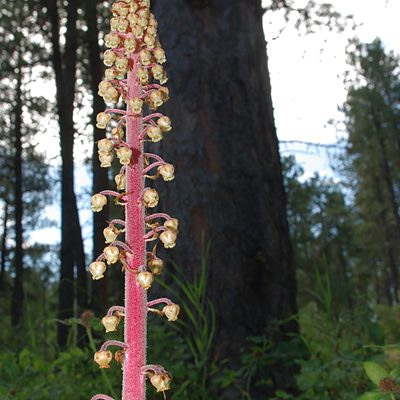
Look for a leafless stalk 15–50 cm (6–20 in) tall, red-purple, brown or yellow, with a few thin sheaths where leaves would be, standing alone or in clumps. Each stalk carries 6 to 41 small flowers: the sepals are brown, tan, red or yellow, the petals are usually spotted with purple, and the lip is white, usually with purple spots, with two small rounded side lobes near its base. The Forest Service says pale yellow-green plants are sometimes mistaken for Early Coralroot (Corallorhiza trifida), which Go Orchids says is smaller and blooms earlier; Montana's field guide gives it a pale yellow stalk 5–25 cm tall, and herbarium specimens of it come from Lawrence, Pennington and Custer counties. Two varieties grow in the region: var. occidentalis has a lip that widens toward the tip and flowers 2 to 4 weeks ahead of var. maculata, whose lip is nearly straight-sided. Spring Coralroot (Corallorhiza wisteriana) also grows in the Hills; Montana's field guide gives it a yellow to purplish stalk 10–30 cm tall, 5 to 20 flowers, and a lip with no side lobes, a fringed edge and sometimes a few tiny spots. Woodland Pinedrops also has only scale leaves and grows in shaded conifer or mixed woods; the Forest Service describes it as 30–100 cm tall and densely glandular-hairy, with nodding reddish to white flowers crowded along the stalk.
When does it bloom?
June into August, most often June and July.
Where does it grow?
Shaded forest floor with little other ground cover: ponderosa pine, white spruce, paper birch and aspen woods, often on north-facing slopes and in moist draws, from about 1,140 to 1,970 m (3,700 to 6,500 ft) on Black Hills herbarium labels. Herbarium specimens from 1892 to 2018 come from Lawrence, Pennington, Custer and Meade counties in South Dakota and Crook and Weston counties in Wyoming. The 1986 Jewel Cave plant survey lists it, the National Park Service lists it at Jewel Cave and Mount Rushmore, and iNaturalist has 23 research-grade Black Hills records, May to July. As with every orchid in this guide, no finer location is given.
Other flowers to compare
Other orchids in this guide
Sources: Flora of North America vol. 26: Corallorhiza maculata (eFloras); Flora of North America vol. 26: Corallorhiza maculata var. maculata (eFloras); Flora of North America vol. 26: Corallorhiza maculata var. occidentalis (eFloras); Spotted coralroot (Corallorhiza maculata), Celebrating Wildflowers — USDA Forest Service; Corallorhiza maculata, Go Orchids — North American Orchid Conservation Center; Spotted Coralroot (Corallorhiza maculata) — Montana Field Guide; Spring Coralroot (Corallorhiza wisteriana) — Montana Field Guide; Early Coralroot (Corallorhiza trifida) — Montana Field Guide; Spotted Coralroot (Corallorhiza maculata var. maculata) — Minnesota Wildflowers; Western Spotted Coralroot (Corallorhiza maculata var. occidentalis) — Minnesota Wildflowers; Pinedrops (Pterospora andromedea), Celebrating Wildflowers — USDA Forest Service; USDA PLANTS Database: Corallorhiza maculata (COMA25); NPSpecies checklist, Jewel Cave National Monument vascular plants; NPSpecies checklist, Mount Rushmore National Memorial vascular plants; Marriott and Hartman 1986, A Survey of the Vegetation of Jewel Cave National Monument; GBIF occurrence search: Corallorhiza maculata, South Dakota herbarium specimens; GBIF occurrence search: Corallorhiza maculata, Wyoming herbarium specimens; GBIF occurrence search: Corallorhiza trifida (Early Coralroot), South Dakota herbarium specimens; GBIF occurrence search: Corallorhiza wisteriana (Spring Coralroot), South Dakota herbarium specimens; iNaturalist: research-grade Spotted Coralroot observations near the Black Hills.