Hooker's Fairybells Prosartes hookeri
Also called Drops-of-gold, Hooker's Mandarin, Hooker's Fairy Bells
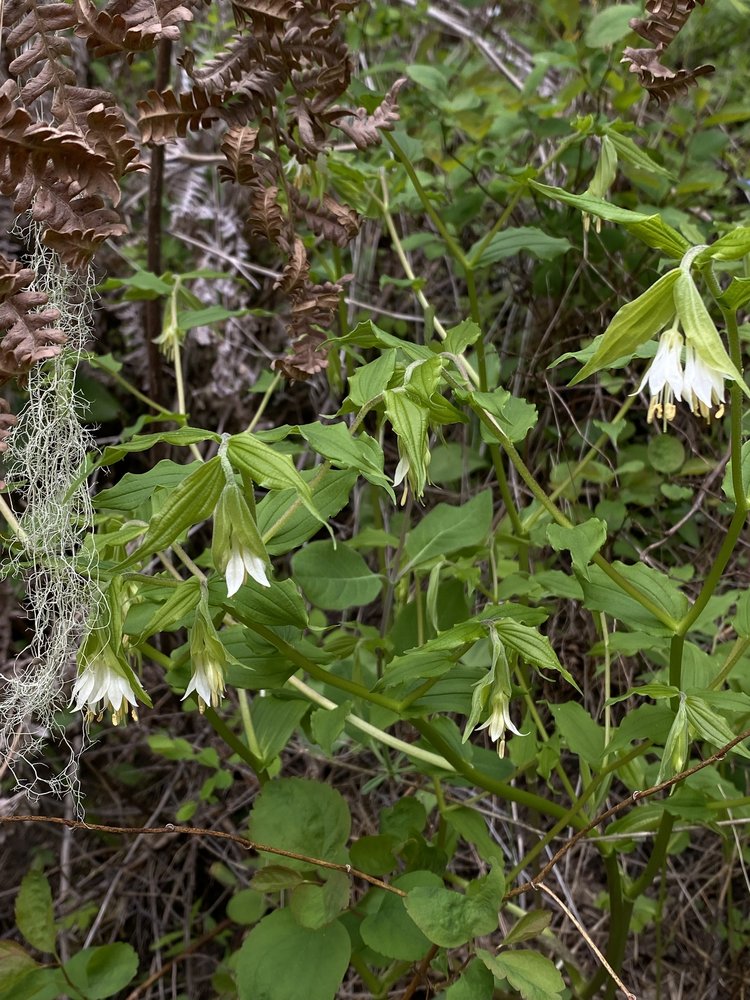
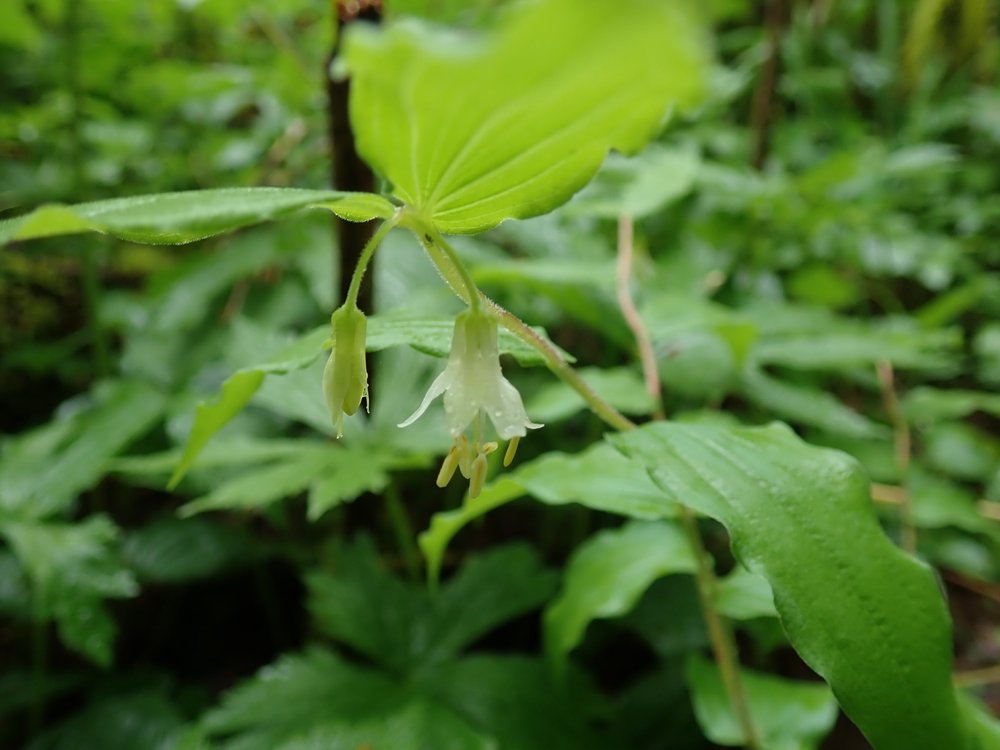
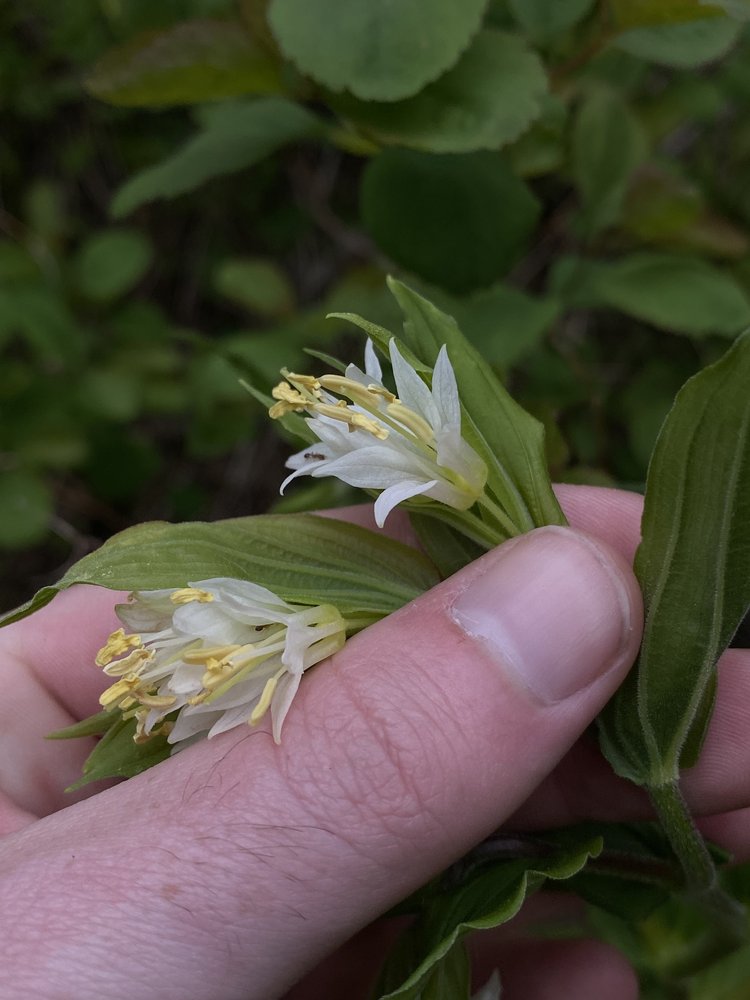
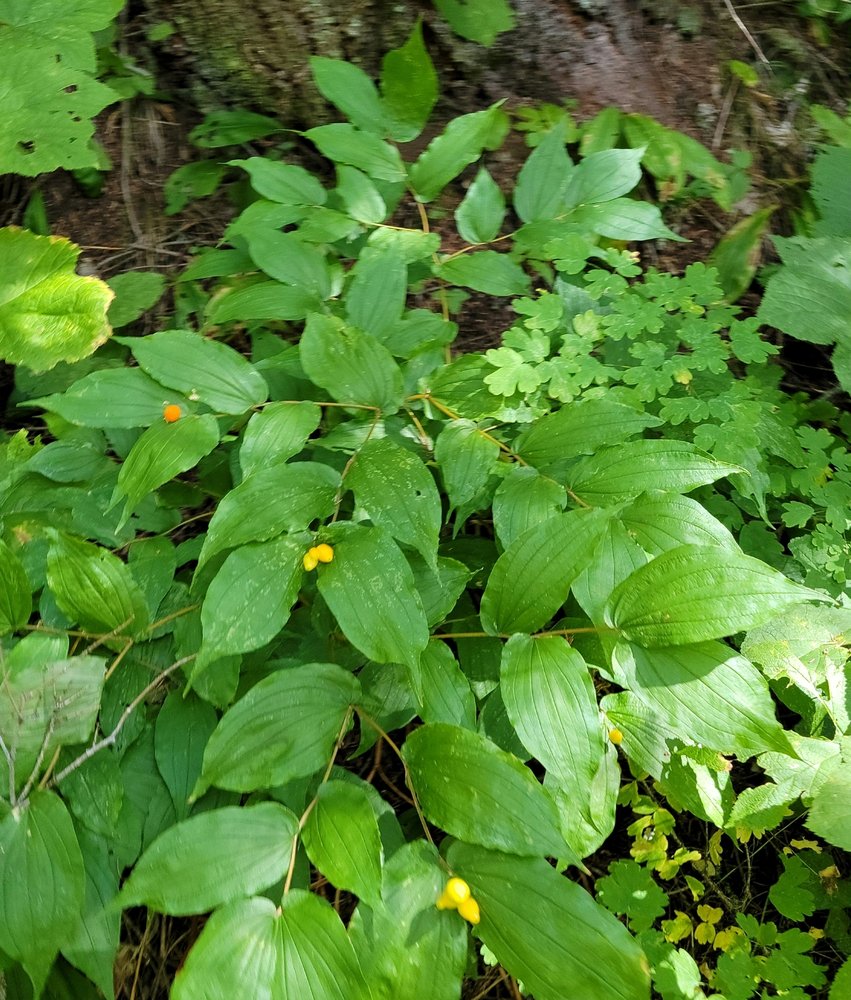
Hooker's Fairybells (Prosartes hookeri) is a native perennial 30–100 cm (12–40 in) tall with a sparingly branched, leafy stem and two or three creamy white flowers at the branch tips from May into July, followed by egg-shaped red berries. In the Black Hills it grows mostly in paper birch and beaked hazelnut woods, often with aspen, and the Forest Service counts it a likely species of conservation concern.
Free photos from other sources
| Family | Liliaceae · Lily |
|---|---|
| Status | Native perennial |
| Blooms | May into July; berries from July into September |
| Height | 30–100 cm (12–40 in) |
| Where | Paper birch, beaked hazelnut and aspen woods |
| Also called | Drops-of-gold, Hooker's Mandarin, Hooker's Fairy Bells |
| Synonym | Disporum hookeri, Disporum oreganum, Disporum trachyandrum, Disporum parvifolium, Prosartes oregana, Prosartes parvifolia |
| Traditional use | Moerman's ethnobotany database records that the Thompson of British Columbia occasionally ate the fruit but did not think it important (Turner and others 1990), and that the Costanoan of California used the fruit for the kidneys (Bocek 1984). |
| Note | Flora of North America's range for this plant leaves out South Dakota and Wyoming. The Black Hills record rests on the Forest Service, whose 2023 draft assessment reports about 104 occurrences here, many not confirmed by herbarium specimens, and names it a likely species of conservation concern, and on South Dakota's rare plant list, which ranks it S2S3, imperiled to vulnerable. This page gives no locations. |
Traditional use: first drafted by Google AI, then checked against the sources on this page.
Roots, seeds & germination
Seed: The berry holds 4 to 6 seeds, each 5–6 mm (about 0.2 in) long.
How do you identify Hooker's Fairybells?
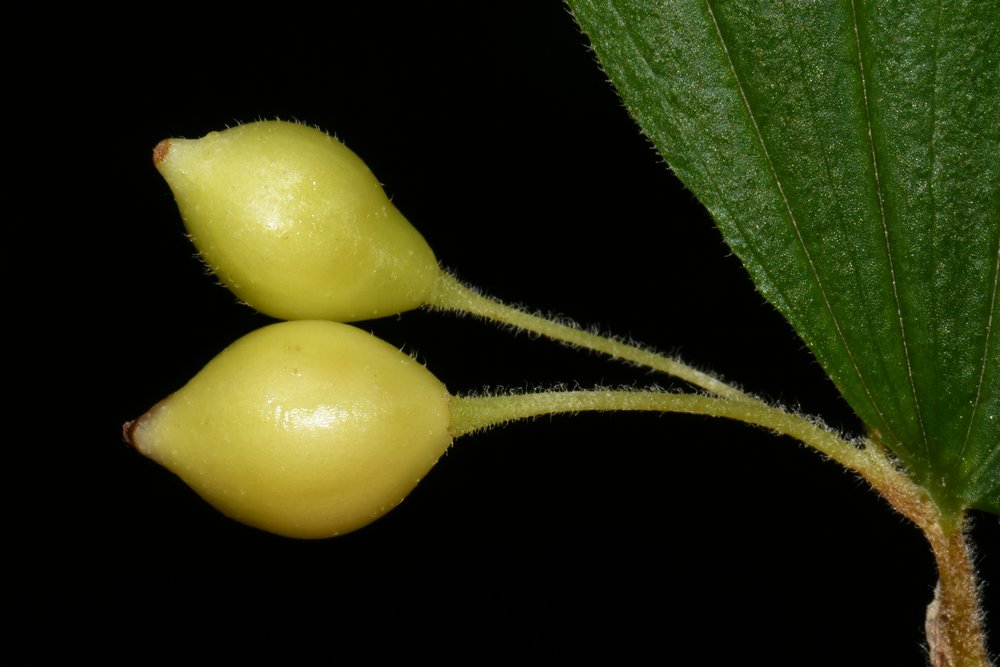
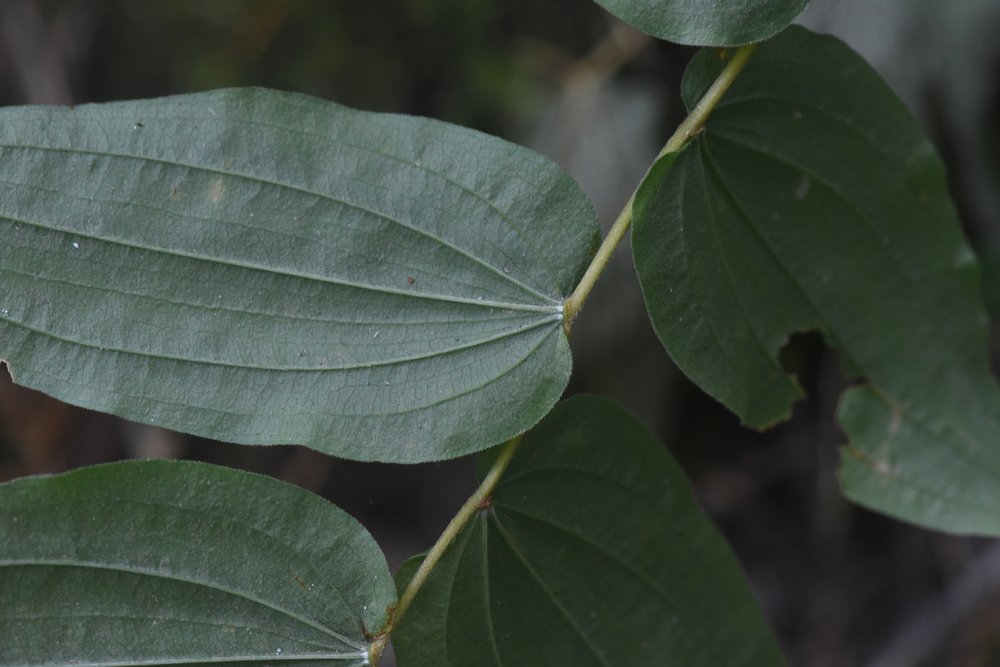
Look for a sparingly branched stem with oval to lance-shaped leaves 3–9 cm (1–3.5 in) long that end in a long tapering point; the leaf edges feel rough because their tiny hairs all point forward. Two or three creamy to greenish white flowers grow at the branch tips, each top-shaped and narrowed at the base, with spreading tepals 8–18 mm (0.3–0.7 in) long; the stamens may stay inside or reach past the tepals. The berry is bright red, egg-shaped, 8–16 mm (0.3–0.6 in) long, with a beak at the tip and 4 to 6 seeds. Rough-fruited Fairybells (Prosartes trachycarpa), also on this site, is the closest lookalike. Flora of North America separates it by its berry, which is round and flattened, 12–18 mm (0.5–0.7 in) wide, rough and warty, with 6 to 12 seeds; by its ovary, which is finely bumpy and becomes three-lobed after bloom; and by its leaves, which end in a short point, have 7 to 9 strong veins and carry scattered flat hairs on their edges.
When does it bloom?
May into July; berries from July into September.
Where does it grow?
Mostly paper birch and beaked hazelnut woods, often mixed with aspen, on open to shaded sites at about 1,340–1,890 m (4,400–6,200 ft). Across its range it grows in damp, shady forests and thickets.
Other fairybells in this guide
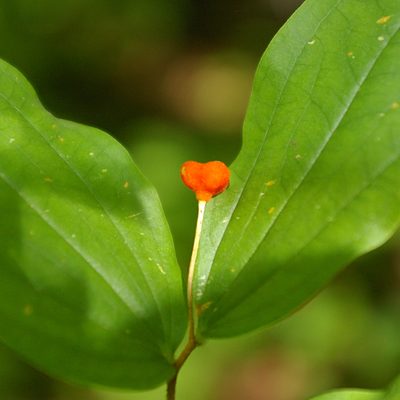
Lily family (Liliaceae): 5 other plants in this guide
Sources: Flora of North America Vol. 26: Prosartes hookeri, eFloras; Flora of North America Vol. 26: Prosartes trachycarpa, eFloras; Flora of North America Vol. 26: Prosartes (genus page with key), eFloras; Montana Field Guide: Hooker's Fairybells, Prosartes hookeri (Montana Natural Heritage Program); Draft Forest Plan Assessment for the Black Hills: At-Risk Species (2023), USDA Forest Service; Rare Plants of South Dakota, SD Natural Heritage Program / SD Game, Fish & Parks; USDA PLANTS profile: Prosartes hookeri (PRHO2); Moerman, Native American Ethnobotany database (BRIT): Prosartes hookeri.