Rough-fruited Fairybells
Prosartes trachycarpa
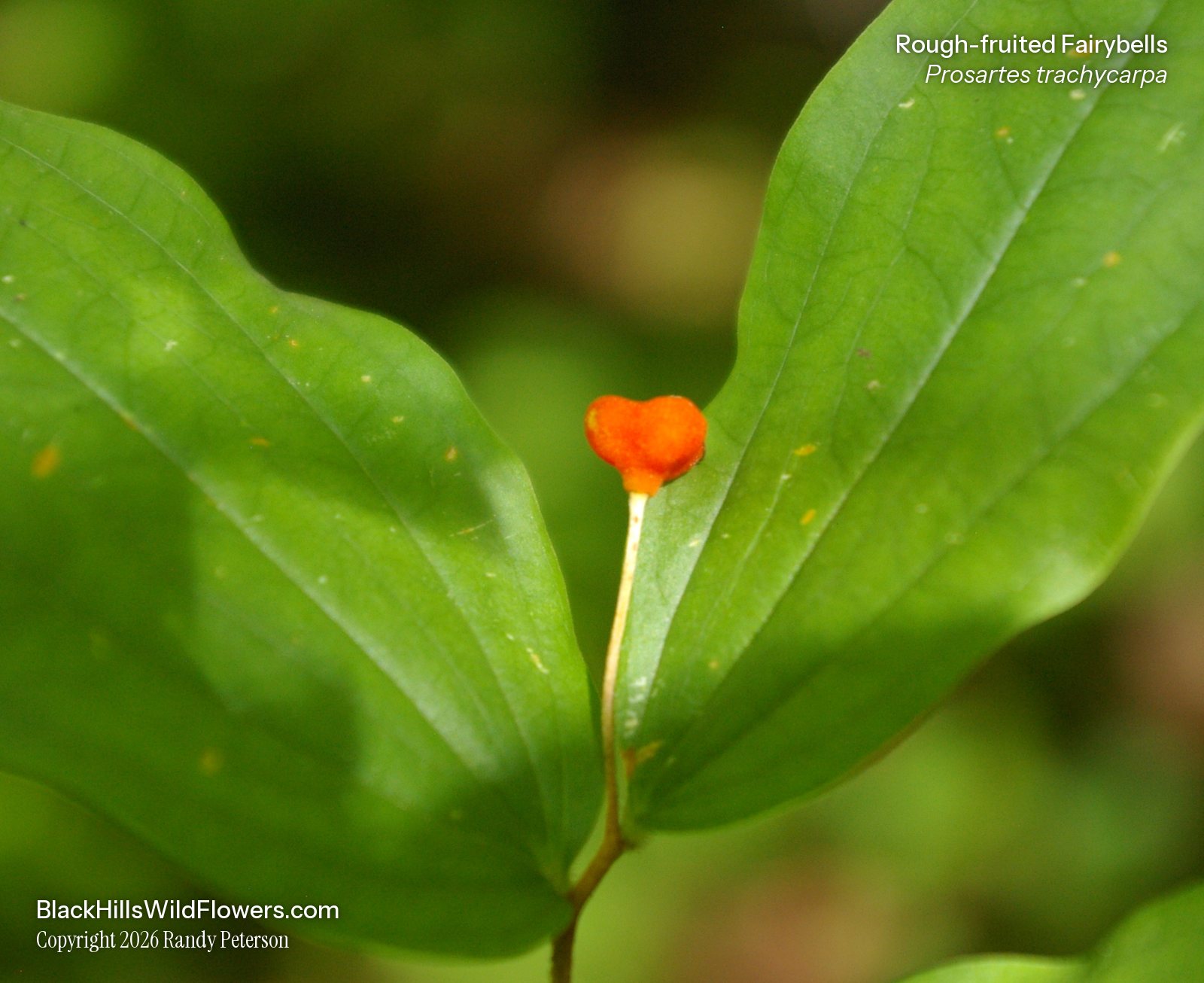
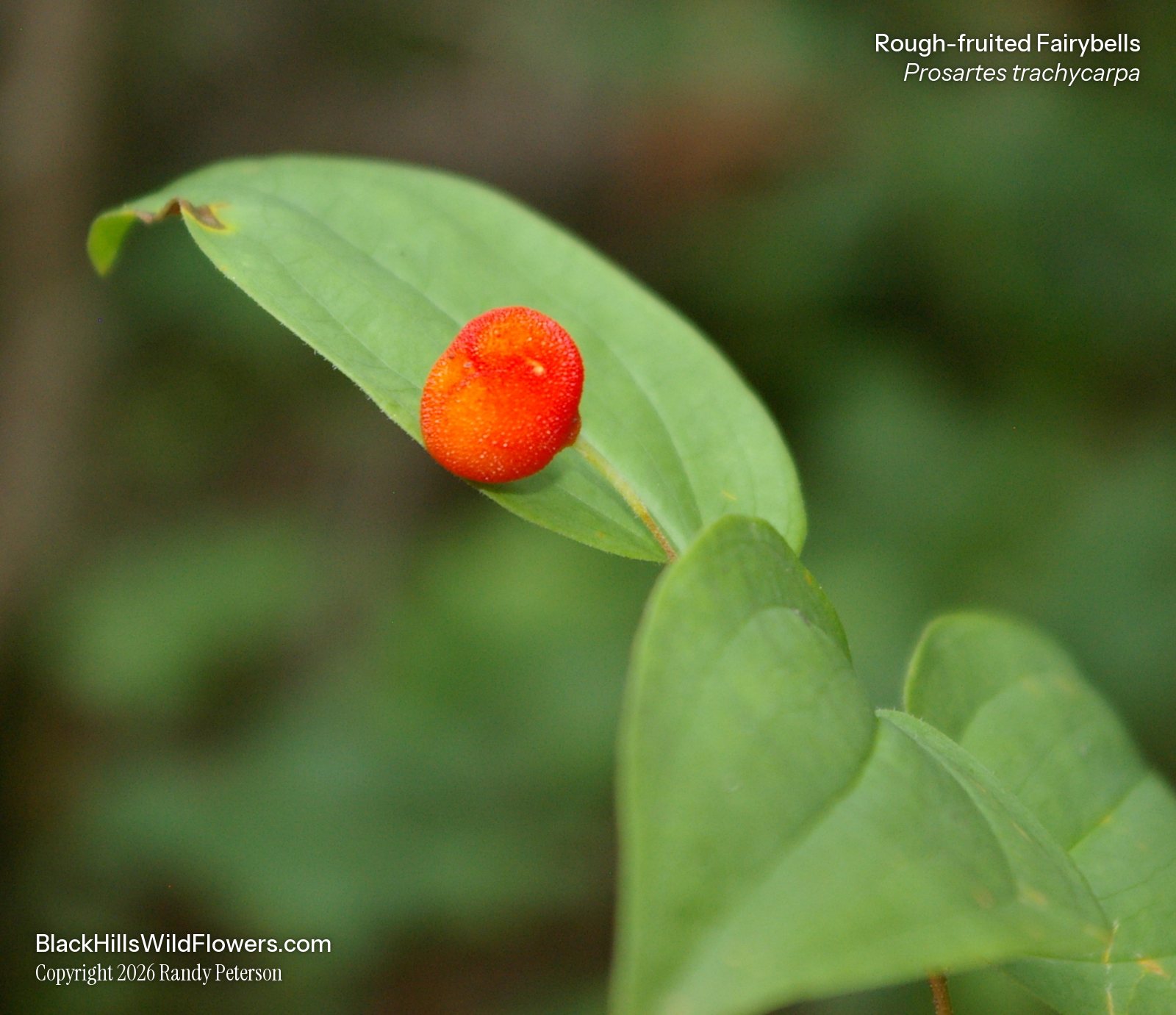
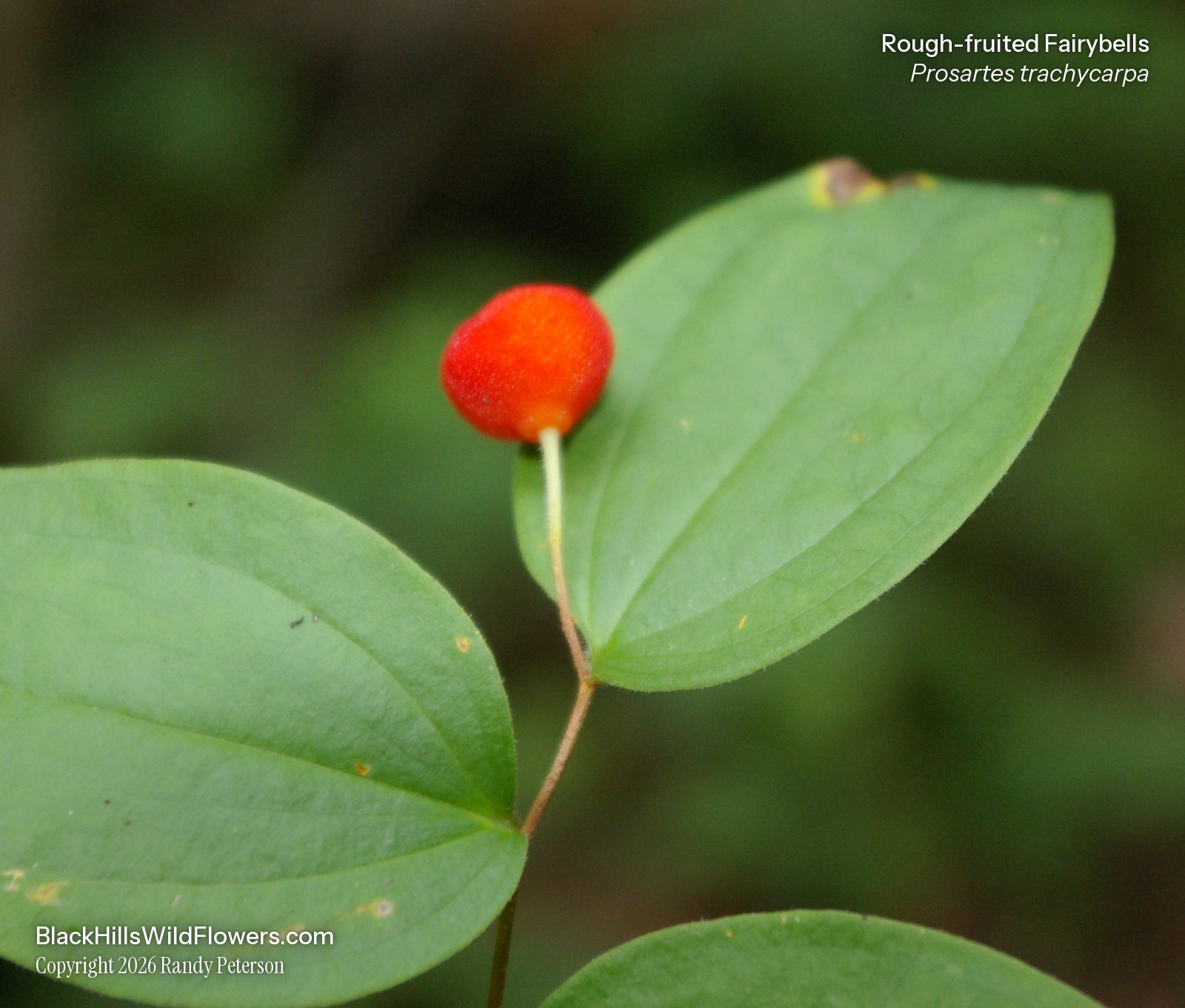
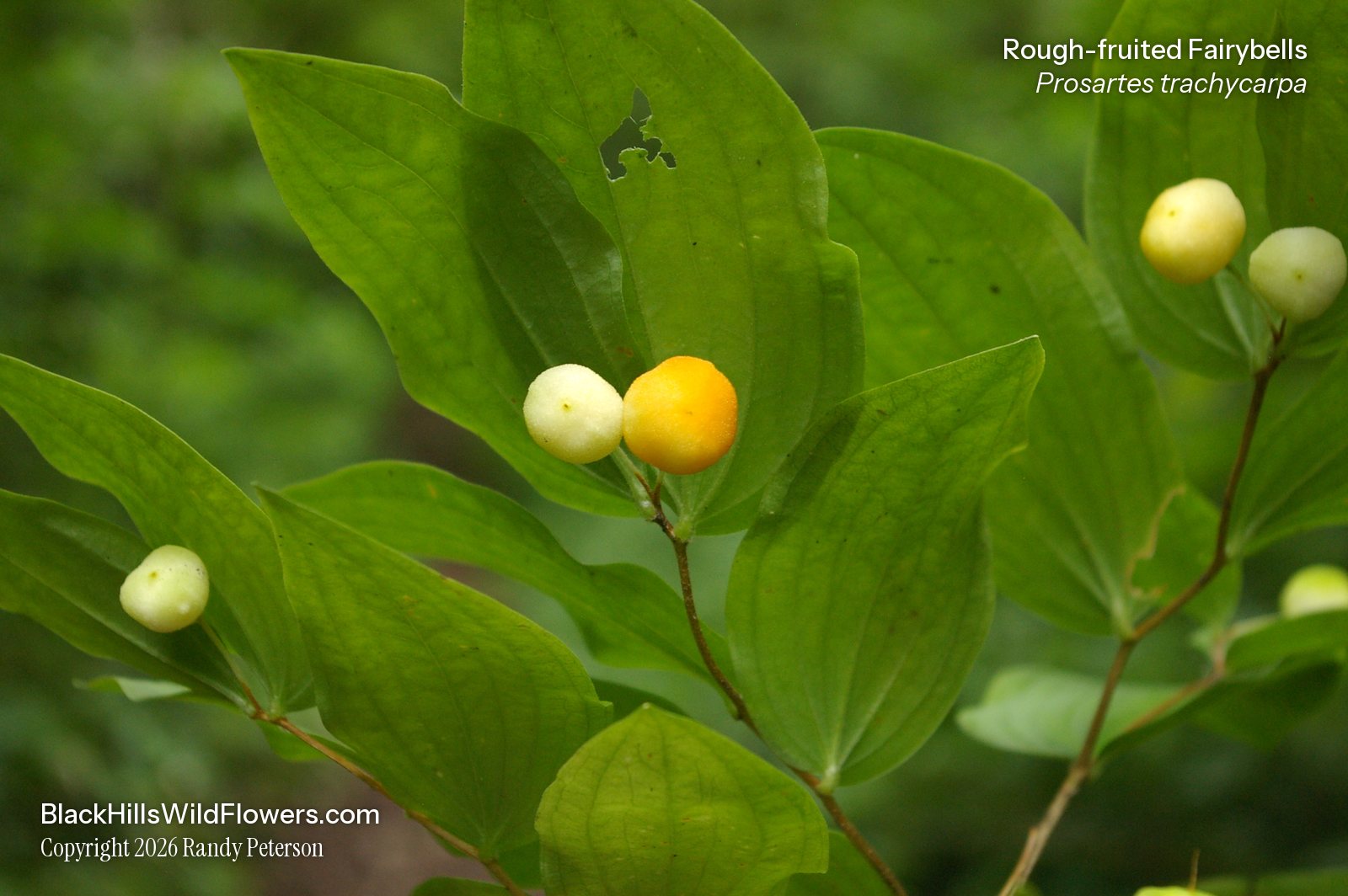
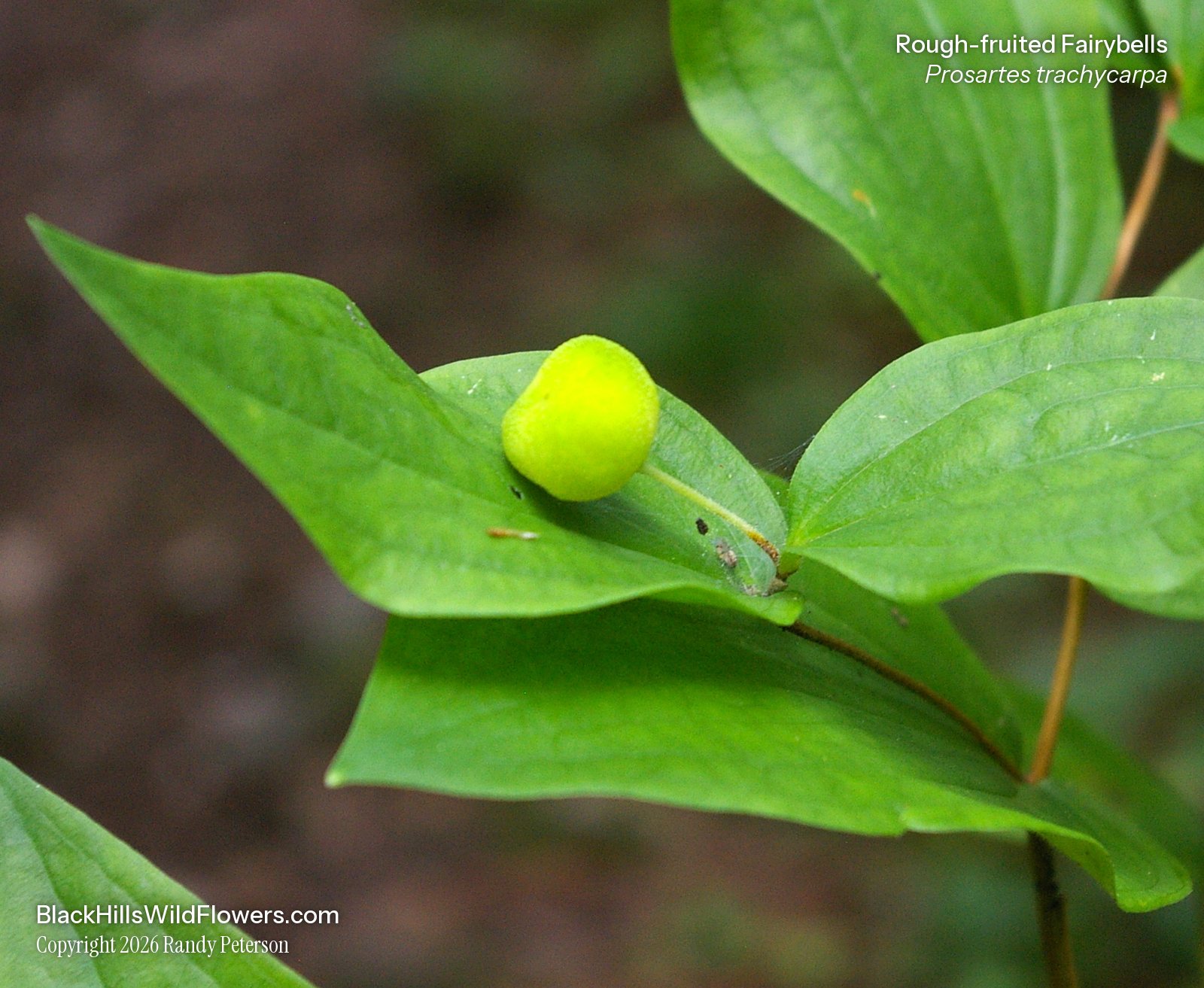
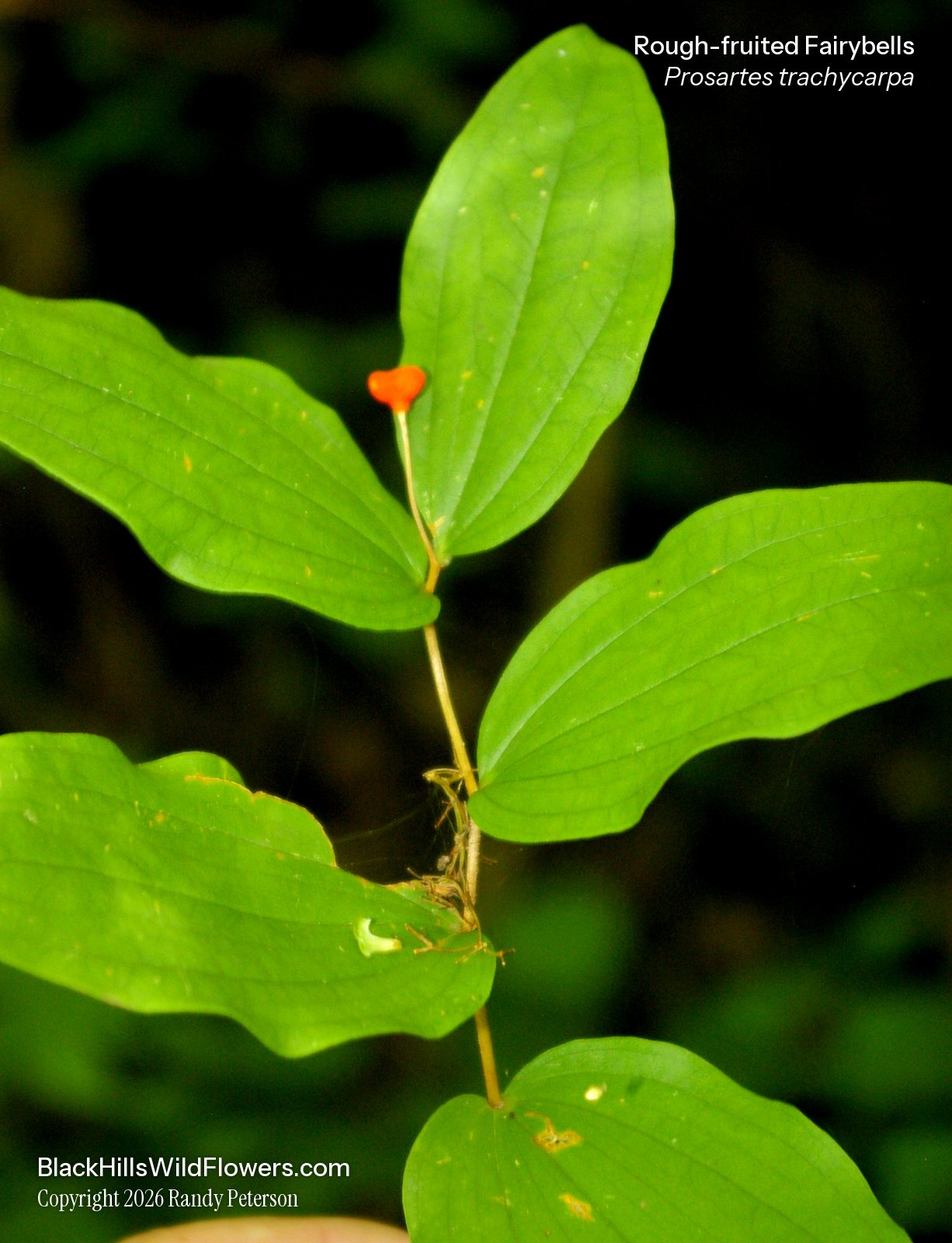
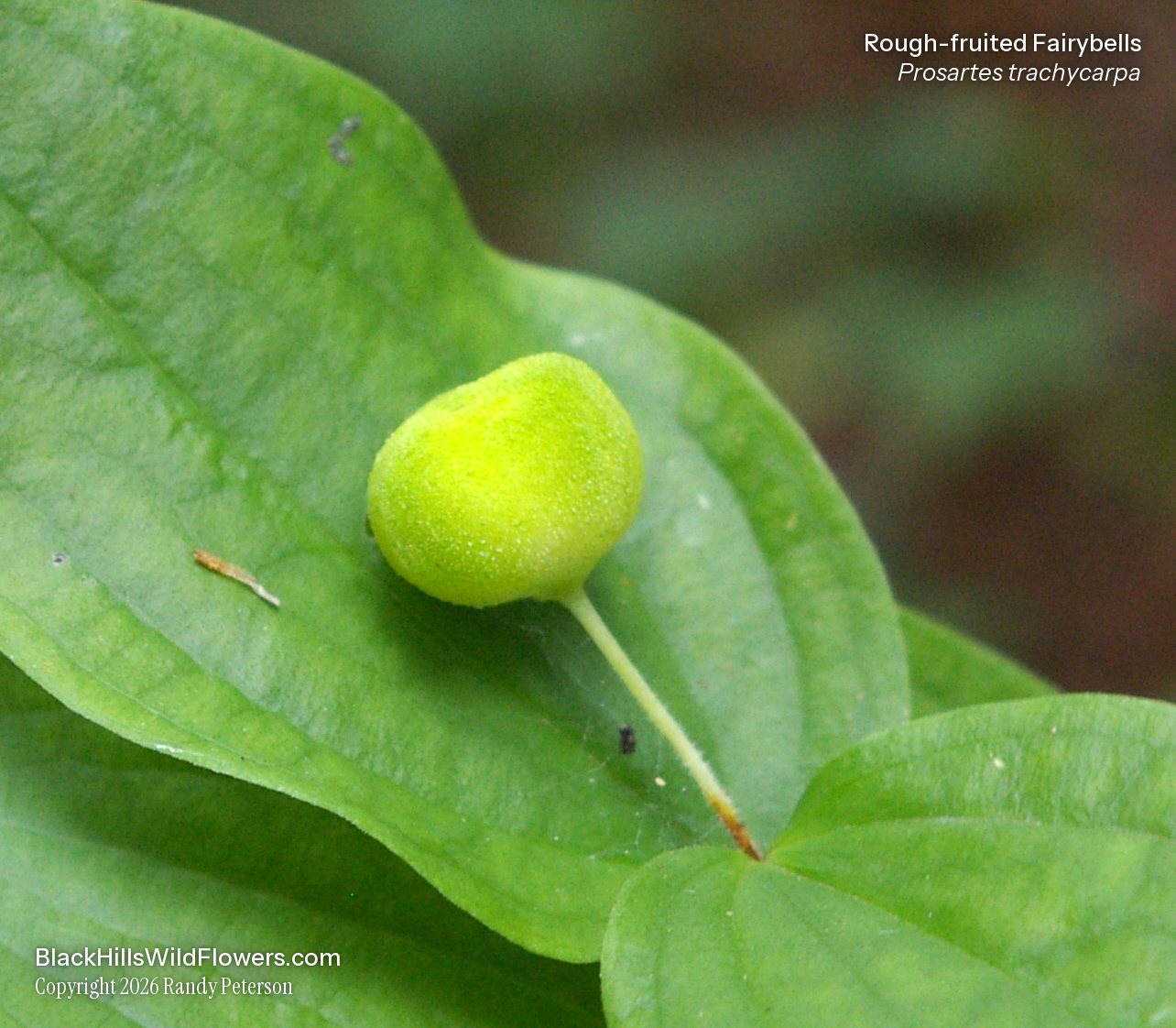
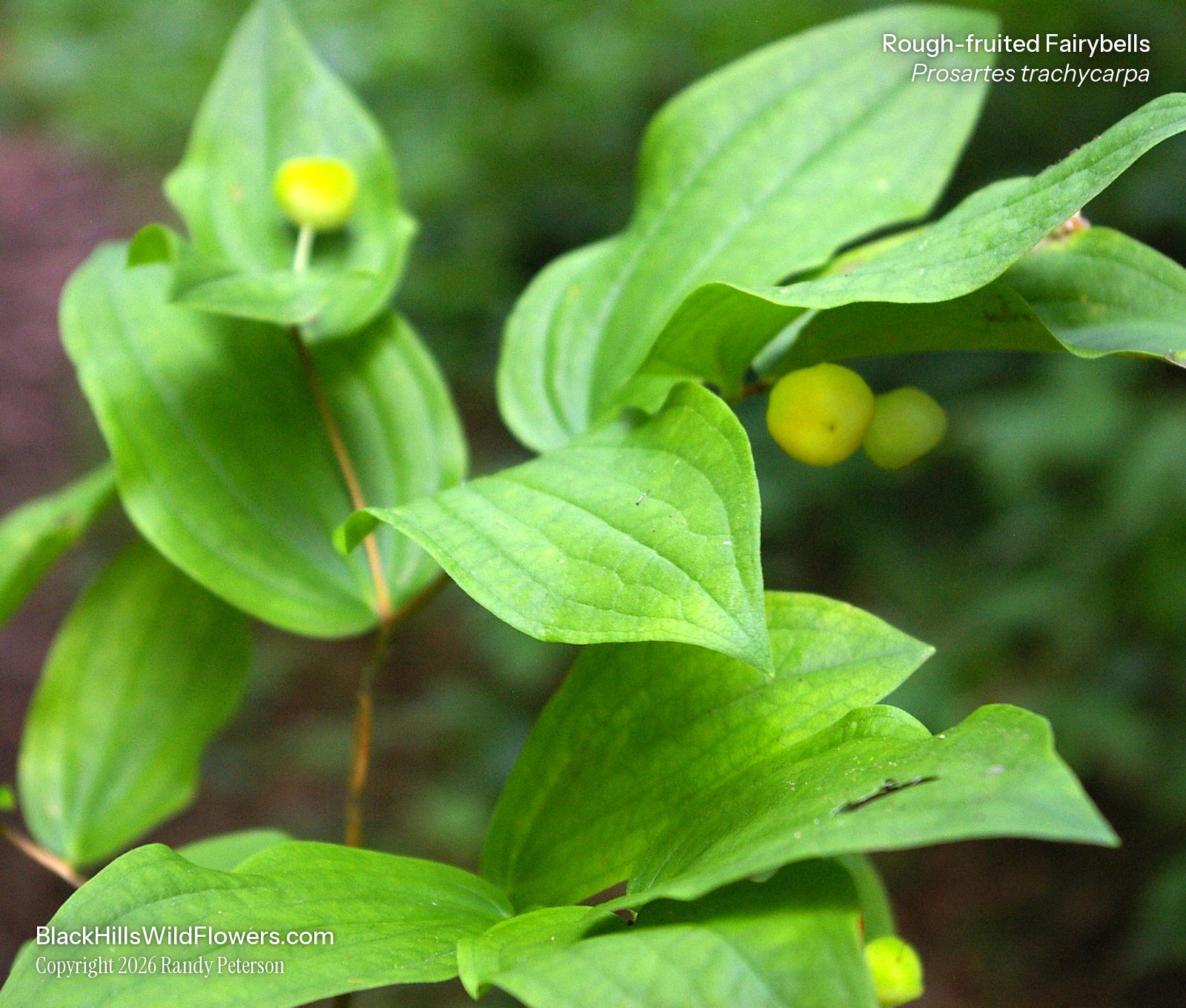
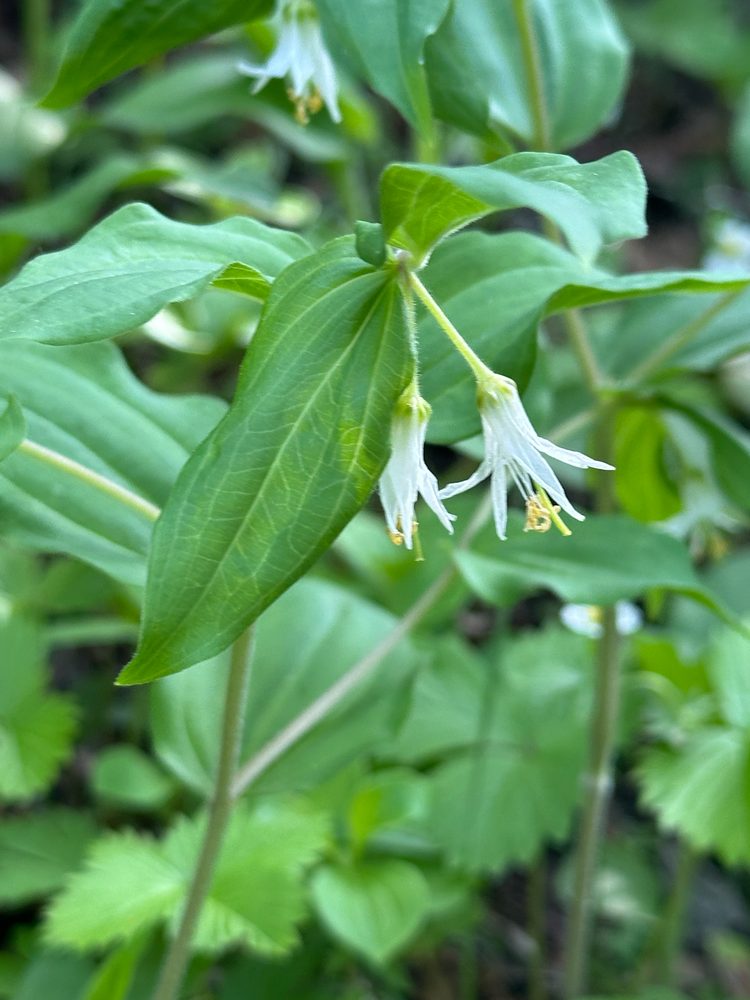
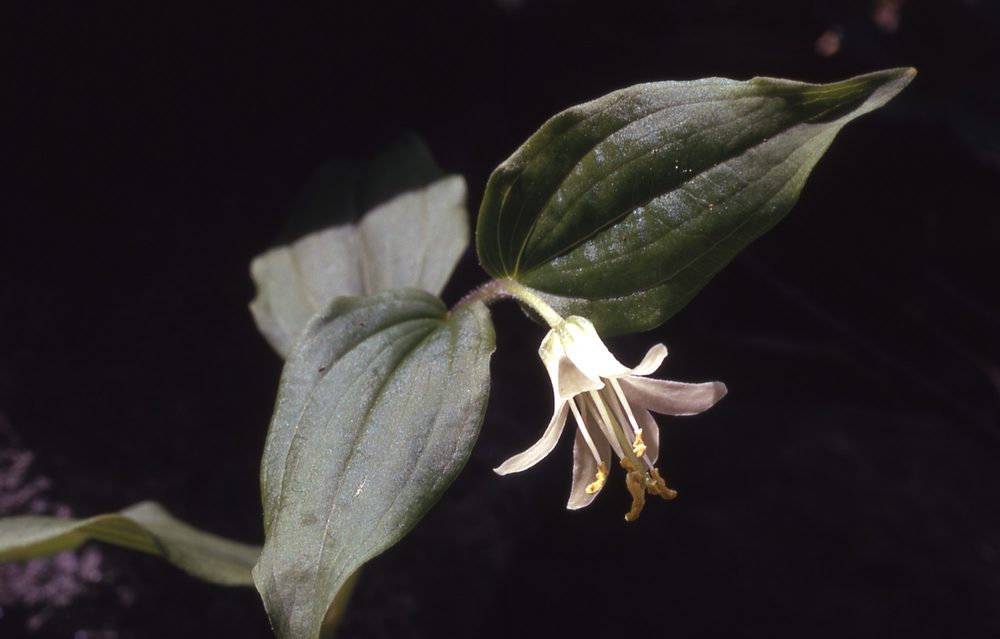
Rough-fruited Fairybells (Prosartes trachycarpa) is a native perennial of moist forest, with drooping greenish-white bell-shaped flowers and round orange to red berries with a rough, warty skin. It blooms May into June and grows from the central to northern Black Hills. Photographed in the Black Hills.
Free photos from other sources
| Family | Liliaceae · Lily |
|---|---|
| Status | Native perennial |
| Blooms | May into June |
| Height | 30–75 cm (12–30 in) |
| Where | Moist, shady forest |
| Also called | Fairybells, Rough-fruited Mandarin |
| Synonym | Disporum trachycarpum |
Roots, seeds & germination
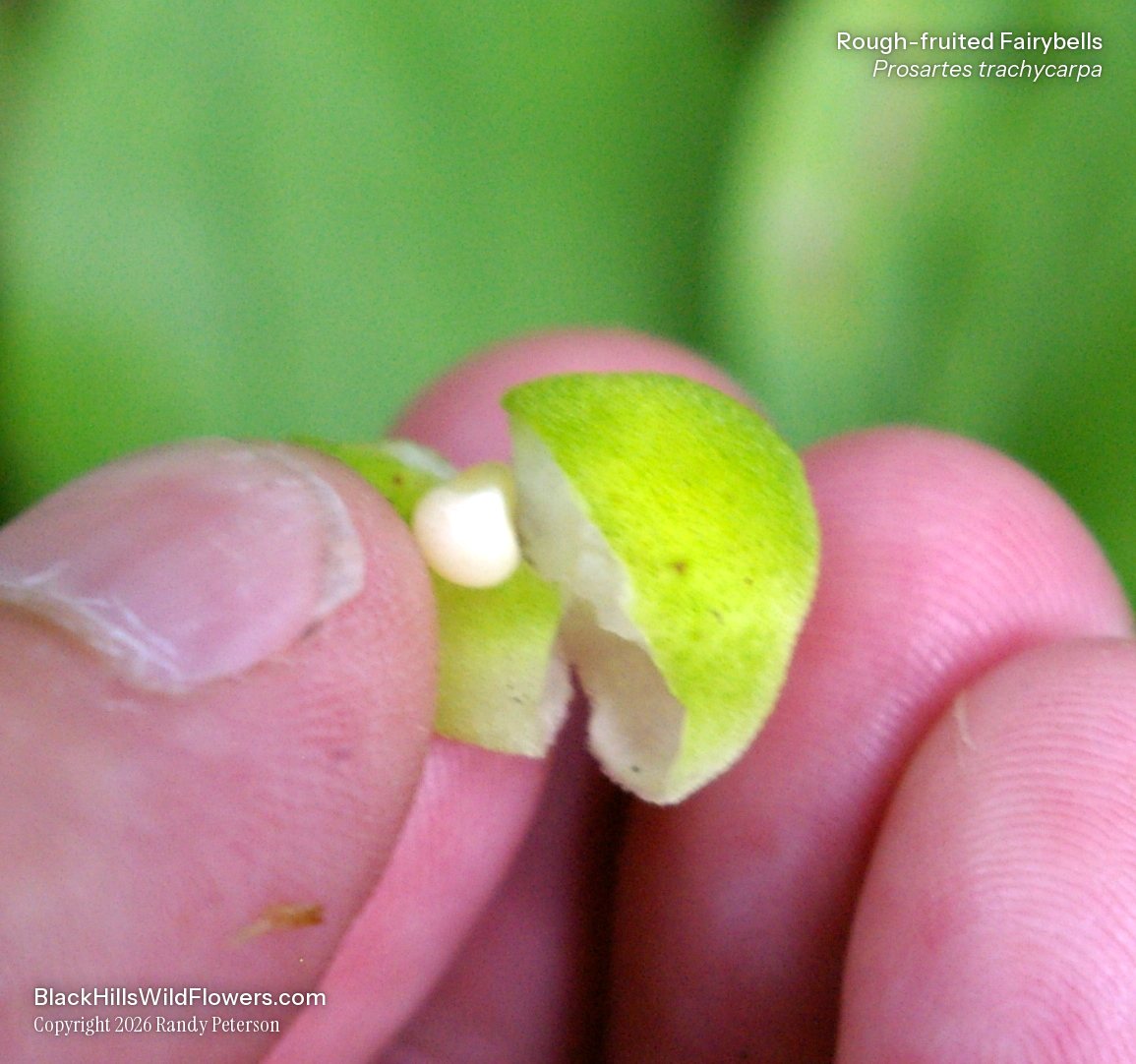
Seed: Each berry holds 6 to 12 seeds.
How do you identify Rough-fruited Fairybells?
Look for 1 or 2 (rarely 3) drooping, narrow bells, 8–15 mm long, at the branch tips, and alternate, pointed leaves that are hairy underneath. The berry is the best mark: 12–18 mm across, reddish orange to bright red, flattened on top, with a warty surface. Twisted-stalks (Streptopus) look similar, but their flowers and fruit come from the leaf axils rather than the branch tips.
When does it bloom?
May into June.
Where does it grow?
Moist forest from the central to northern Black Hills, according to the Forest Service. A Forest Service classification of Black Hills forests names it as a common plant in oak woodland (the Quercus macrocarpa/Ostrya virginiana type), and the 1986 Jewel Cave survey lists it.
Other flowers to compare
Sources: Black Hills National Forest: Black Hills Native Plants; Flora of North America: Prosartes trachycarpa; Minnesota Wildflowers: Rough-fruited Fairybells; National Park Service, Devils Tower National Monument: Native Plants; Marriott and Hartman 1986, A Survey of the Vegetation of Jewel Cave National Monument; Forest Service: Forest Vegetation of the Black Hills National Forest, A Habitat Type Classification (RM-276).