Sego Lily
Calochortus nuttallii
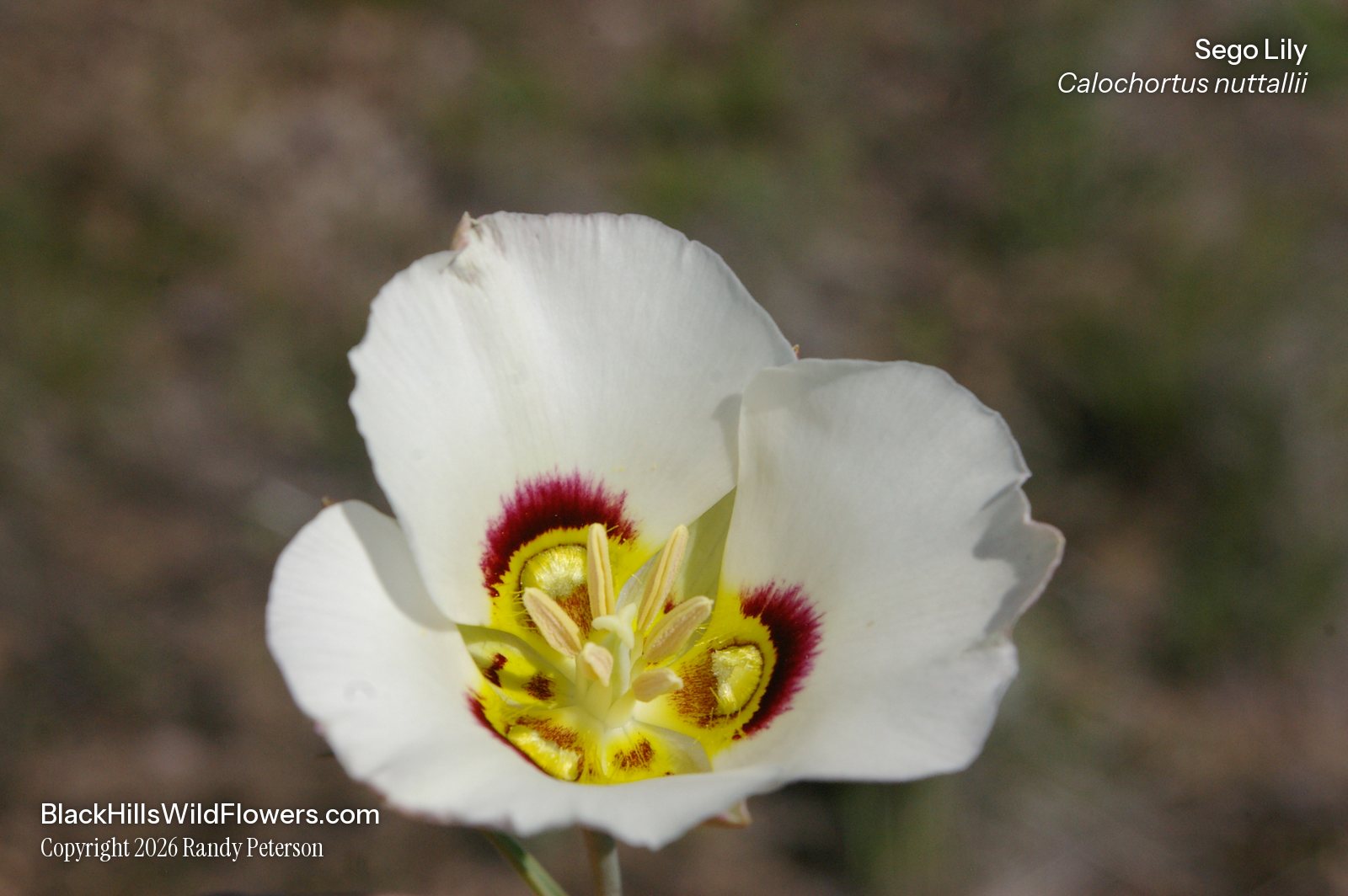
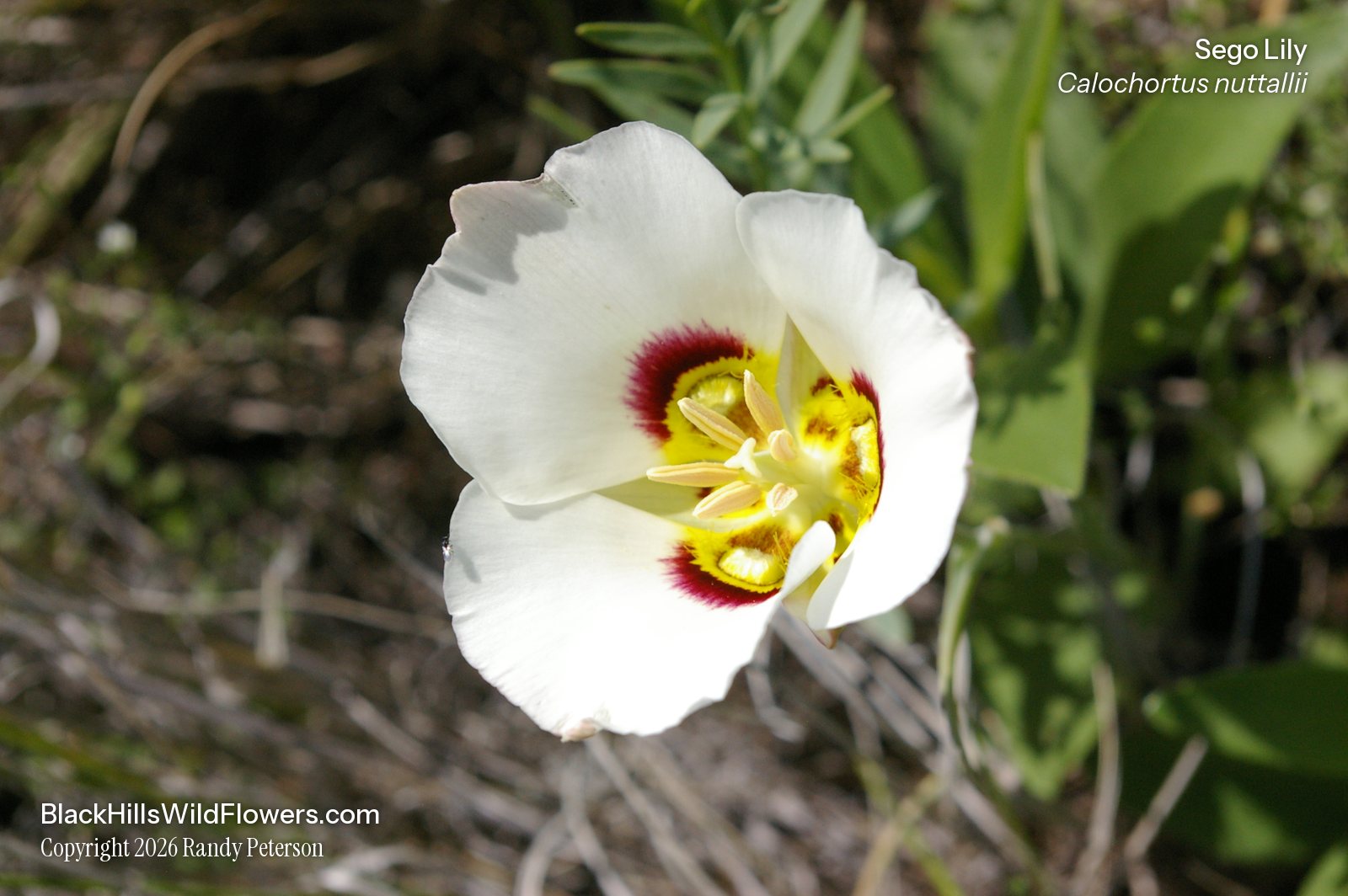
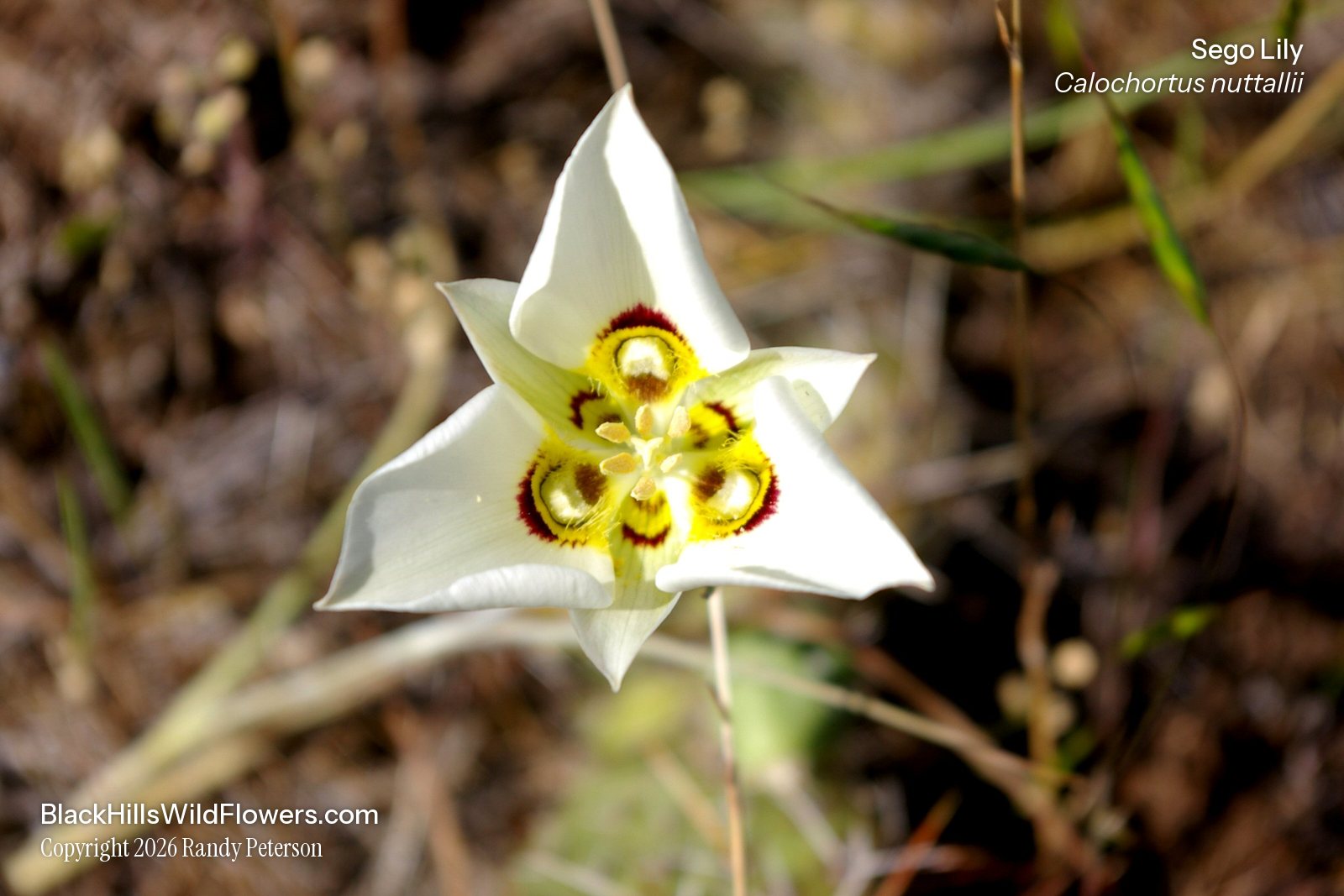
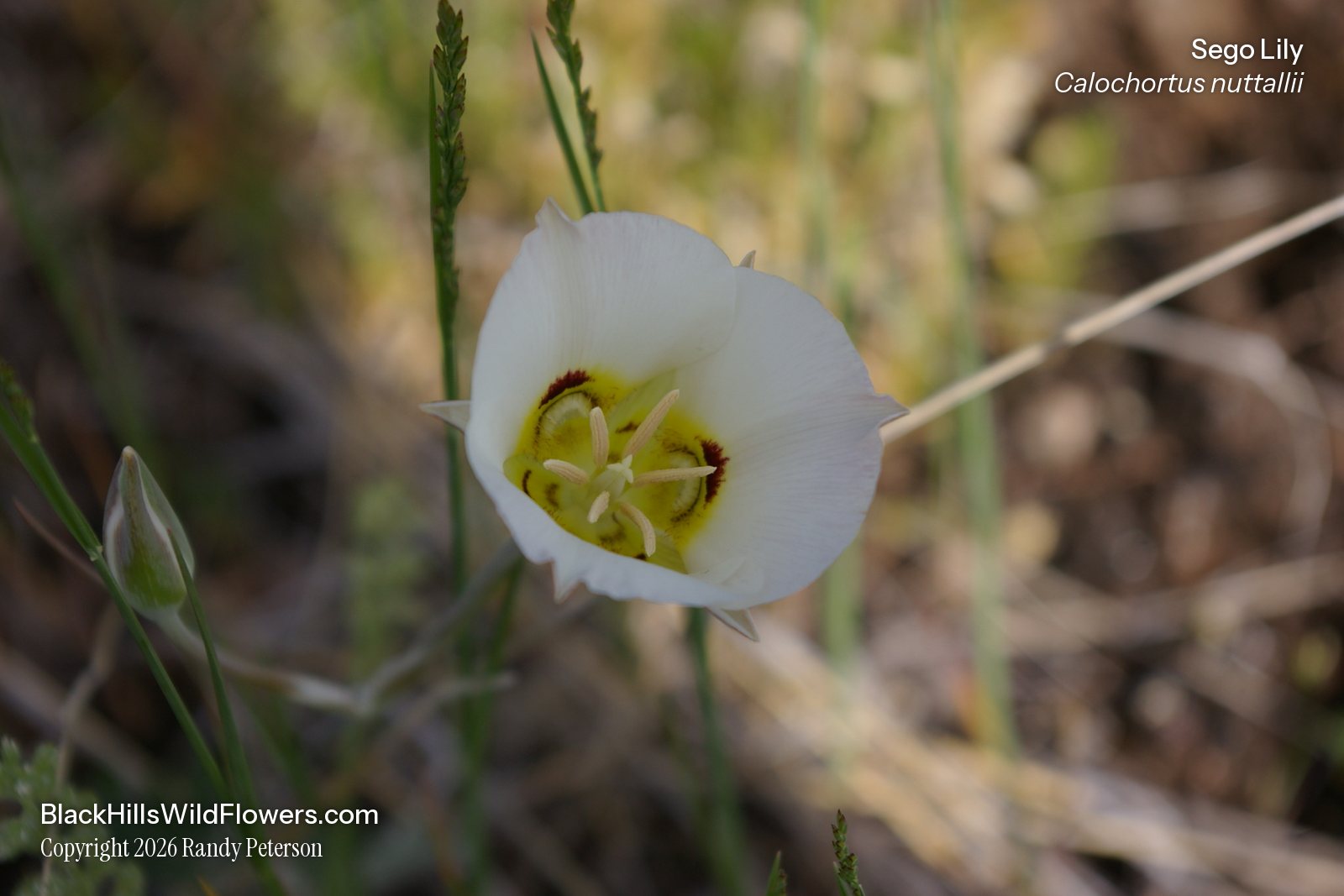
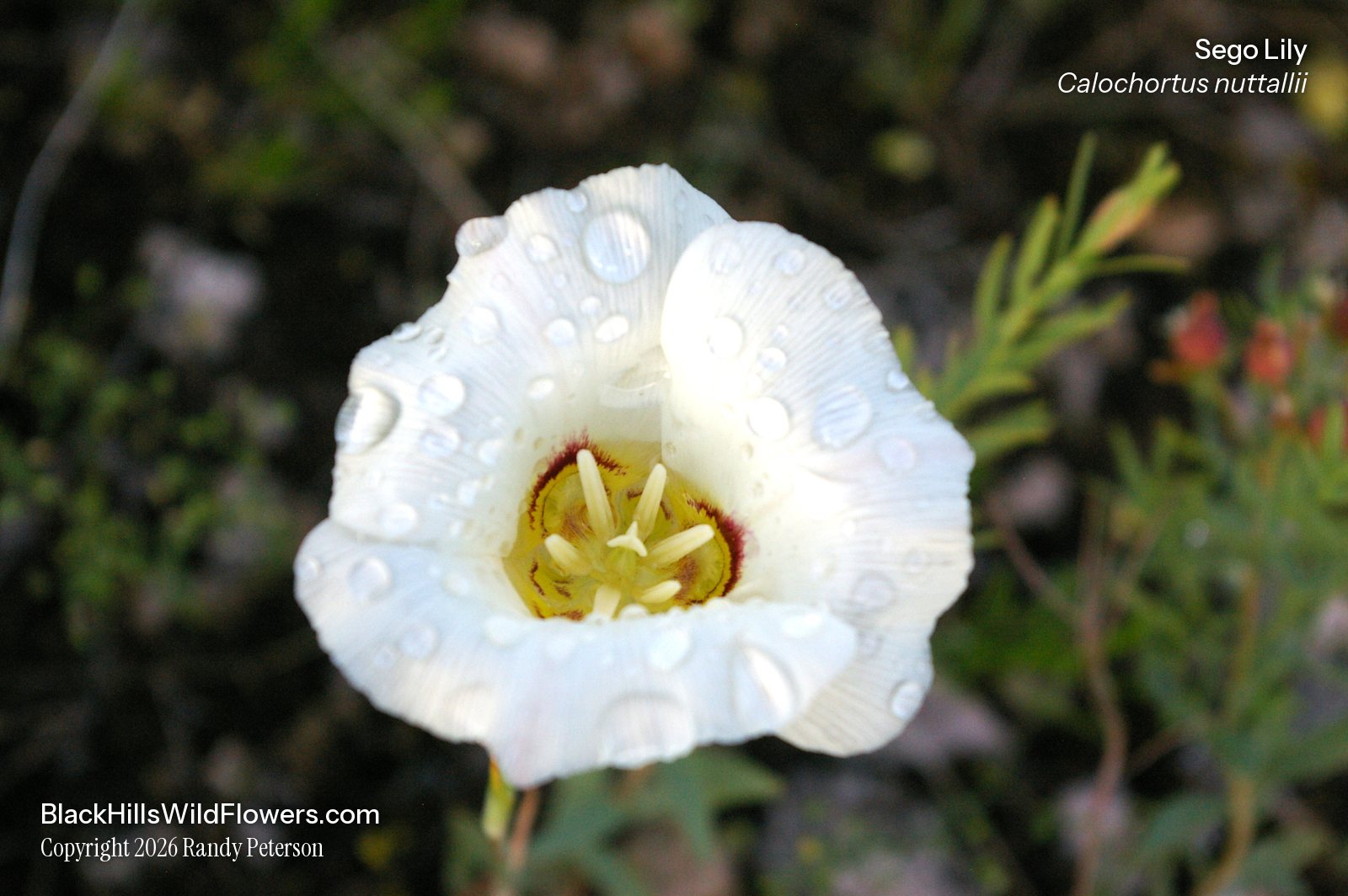
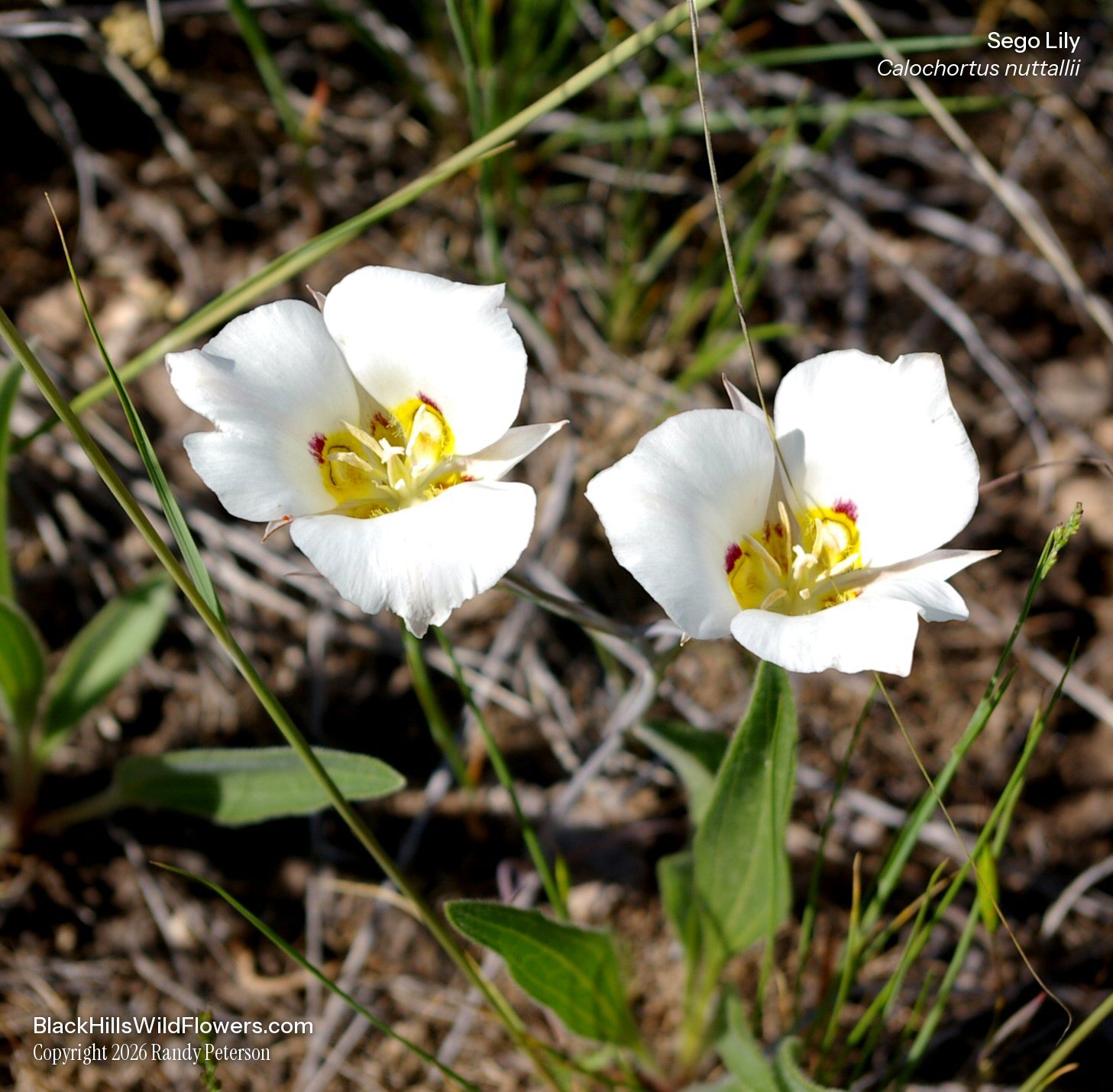
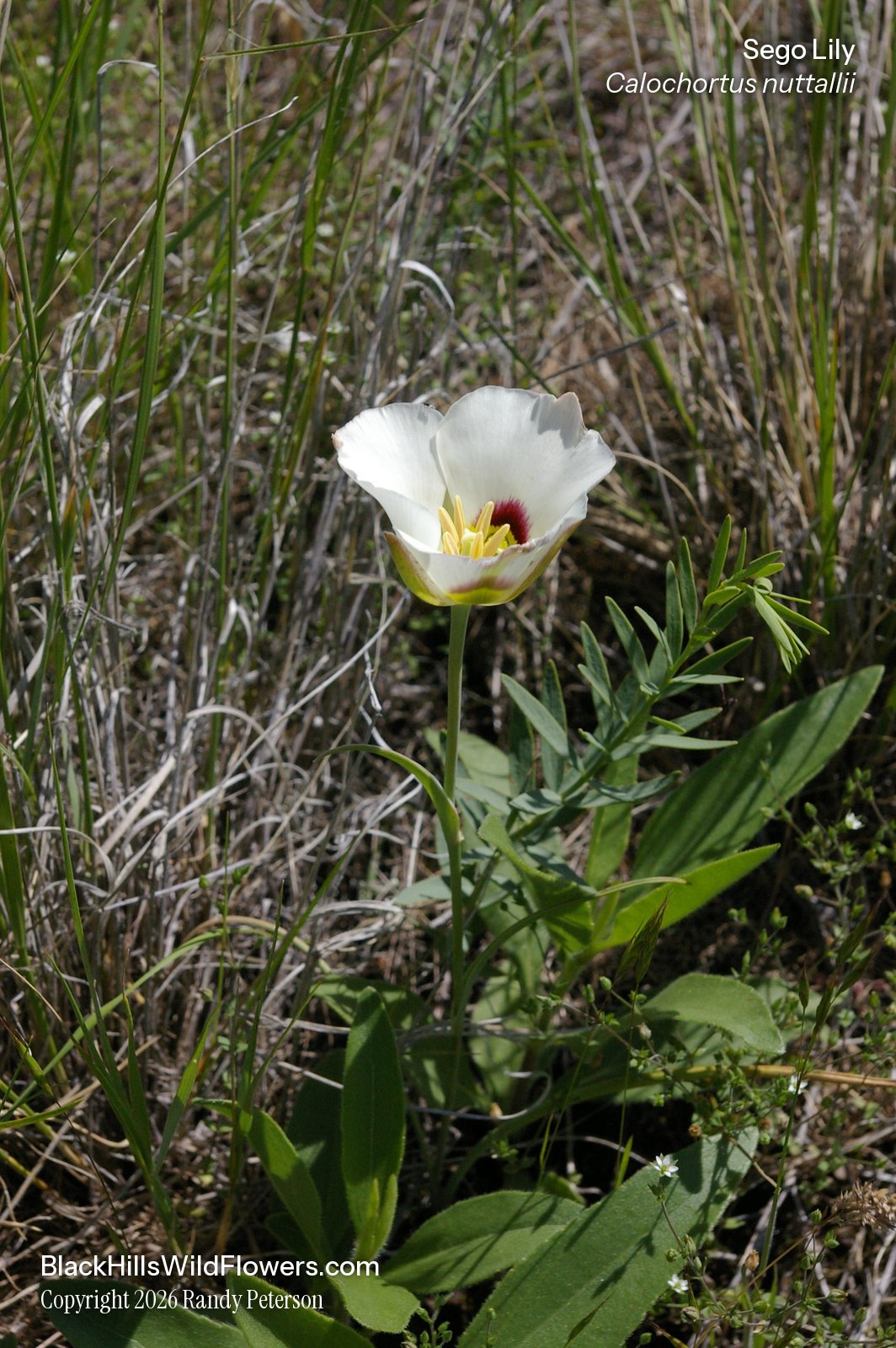
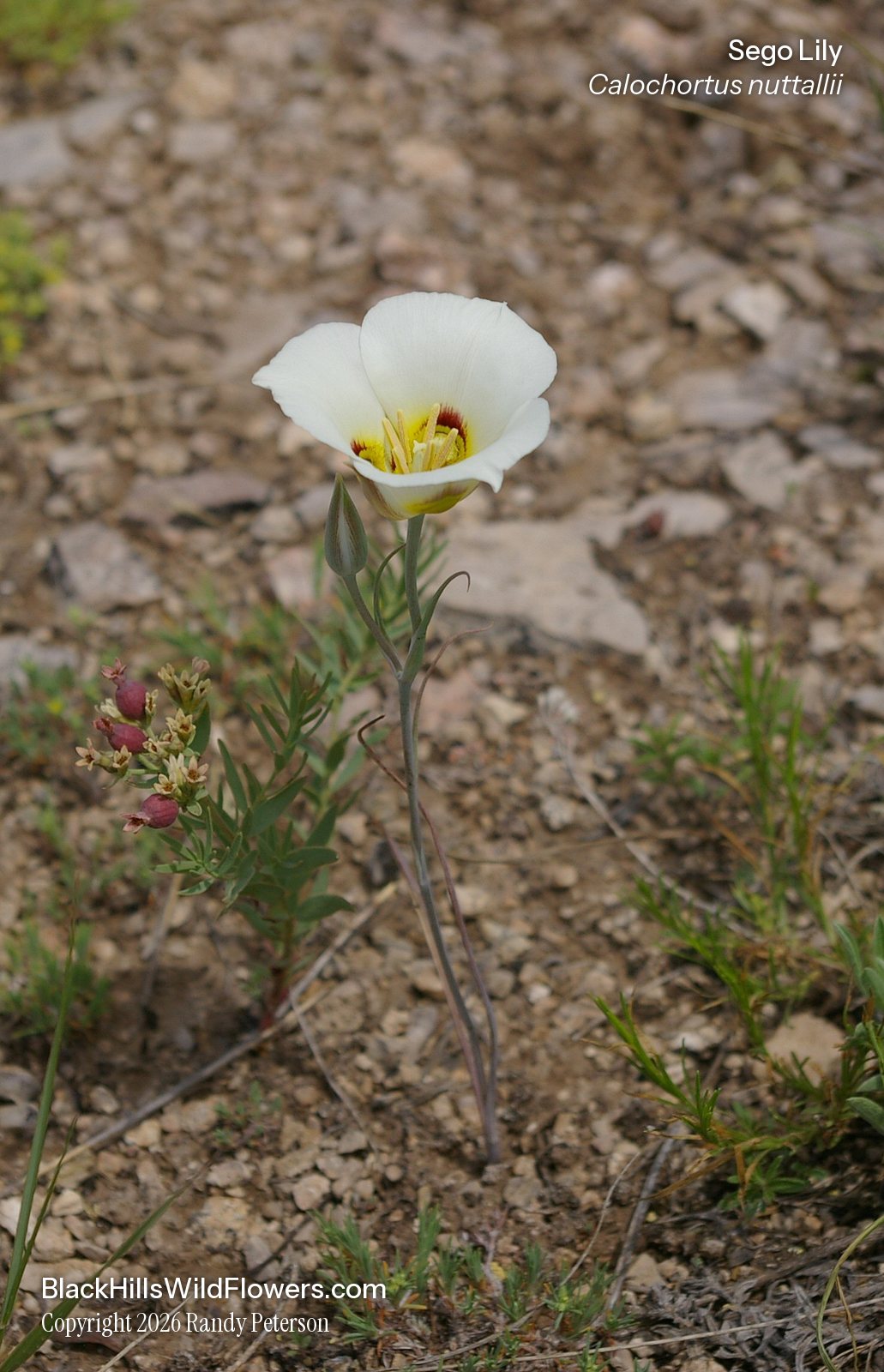
Sego Lily (Calochortus nuttallii) is a native perennial lily that grows from a bulb, with a few narrow leaves and a usually single, cup-shaped white flower with a yellow base. In the Black Hills and western South Dakota it blooms in June and July on dry prairies and in open woods. Photographed in the Black Hills.
| Family | Liliaceae · Lily |
|---|---|
| Status | Native perennial |
| Blooms | June and July |
| Height | 14–44 cm (6–17 in) |
| Where | Dry prairies and open woods |
Roots, seeds & germination
Root: A bulb with a thin, membrane-like coat.
Seed: A narrow capsule, 3–5 cm long, that splits open to release yellowish seeds. Capsules begin to open in June and July.
Germination: Fall sowing gives good germination. Spring planting needs 60 to 90 days of cold treatment.
How do you identify Sego Lily?
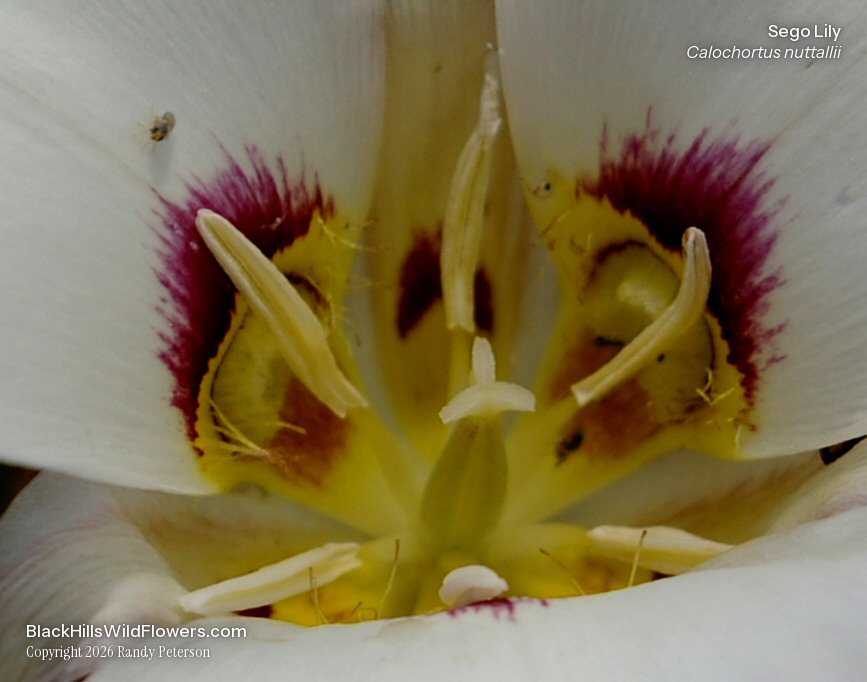
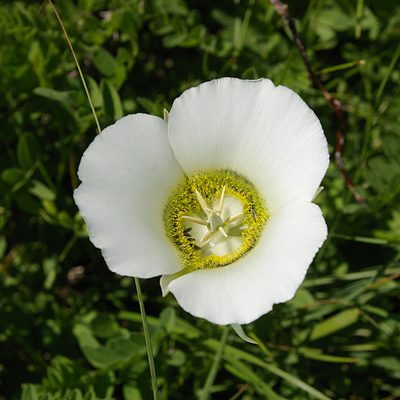
Look inside the flower. Each of the three broad petals has a round gland near the base, ringed by a fringe, with a broken maroon band just above it. Gunnison's Mariposa Lily has an oblong gland topped by a broad band of yellow hairs.
When does it bloom?
June and July.
Where does it grow?
Dry prairies and open woods of the Black Hills and western South Dakota. Wind Cave National Park says creamy-white sego lilies add color to its grasslands, without naming the species.
Other flowers to compare
Sources: SDSU Open PRAIRIE: Calochortus nuttallii; Flora of North America: Calochortus gunnisonii; Southwest Colorado Wildflowers: Calochortus; Native Plant Society of New Mexico: Calochortus gunnisonii; National Park Service, Wind Cave: Plants; National Park Service, Devils Tower: Wildflowers; Native Plant Society of New Mexico: Calochortus nuttallii.