Starry False Solomon's Seal
Maianthemum stellatum
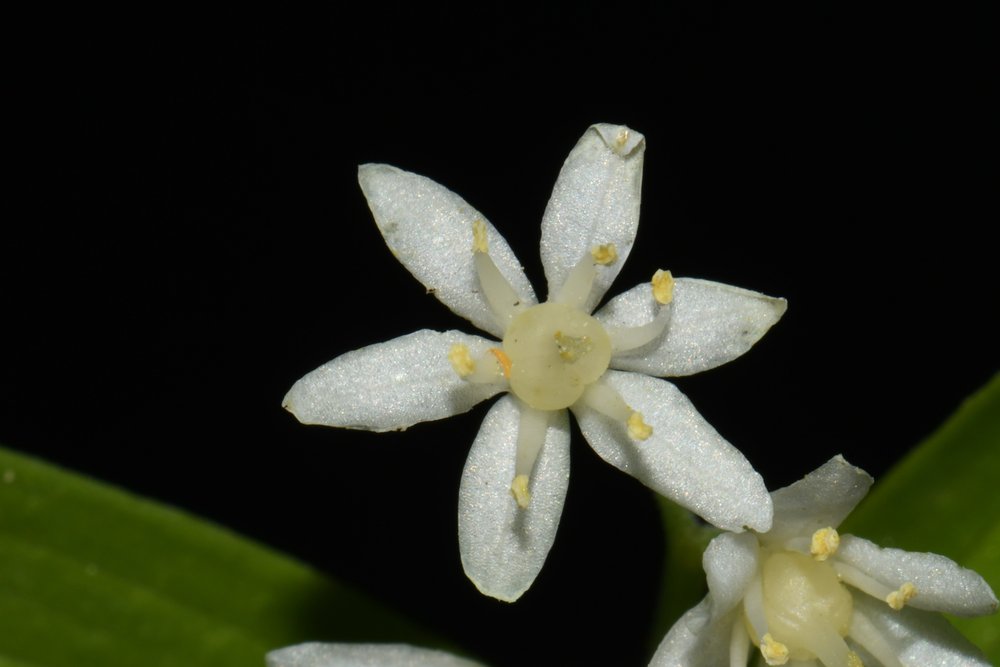
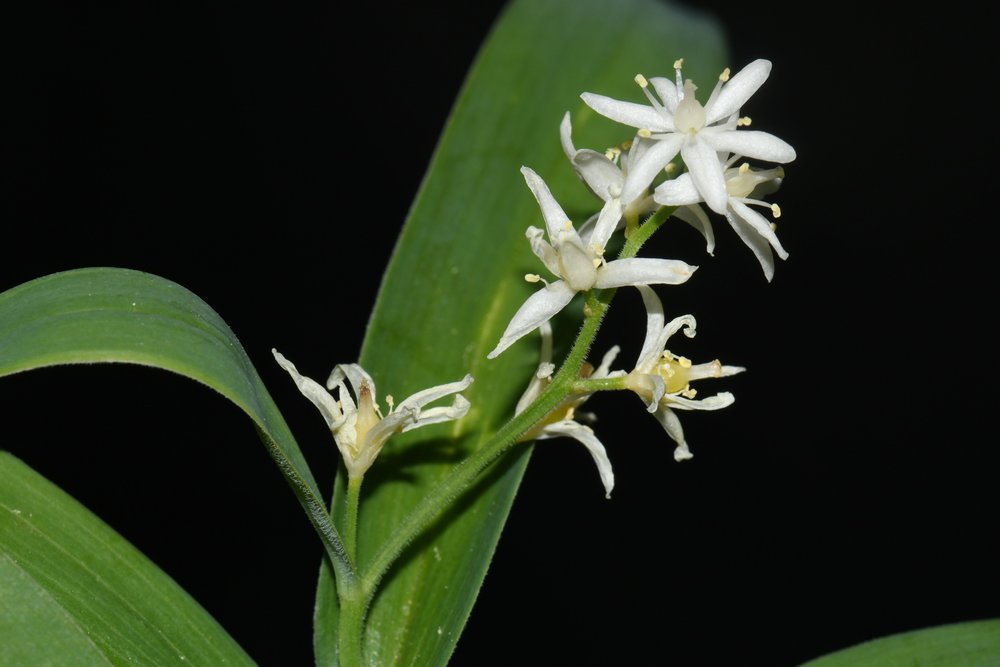
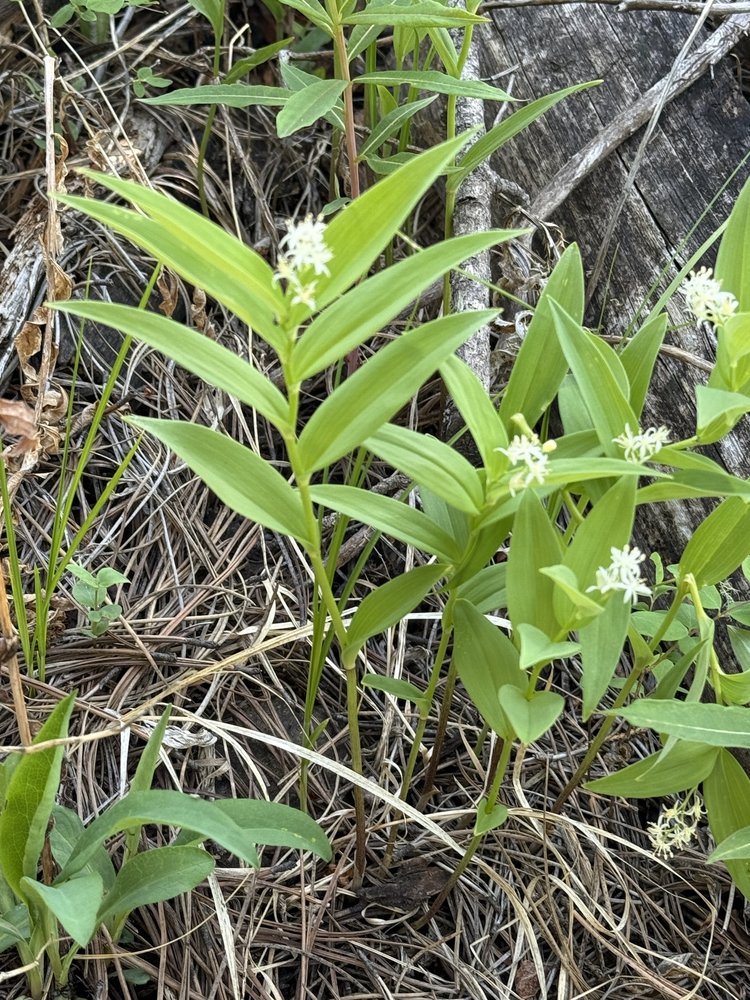
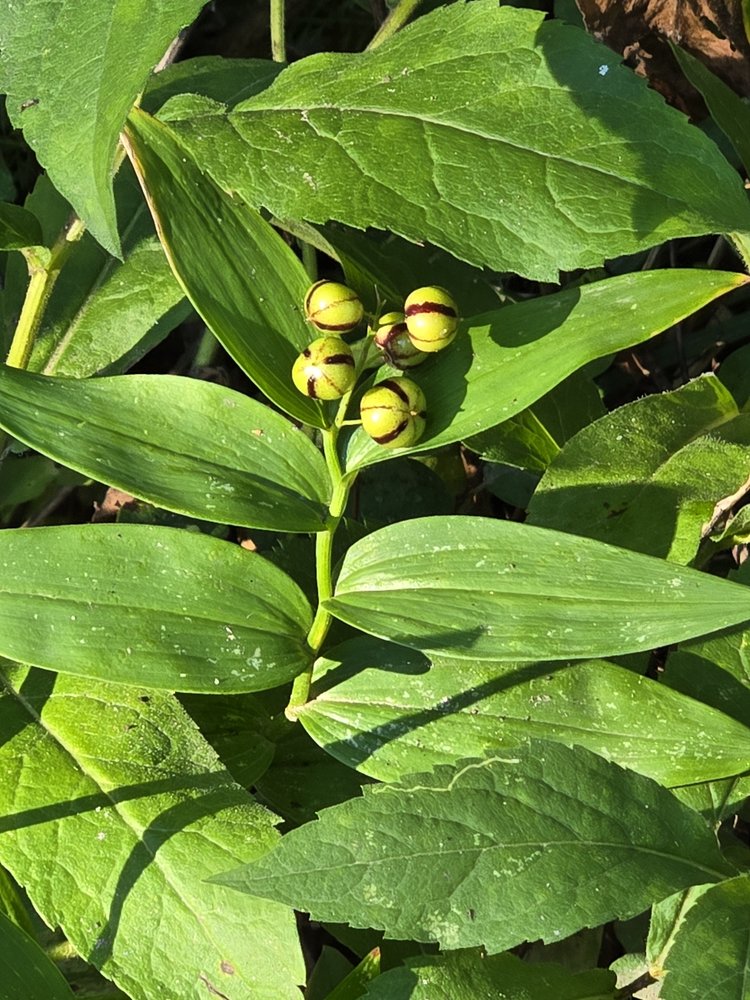
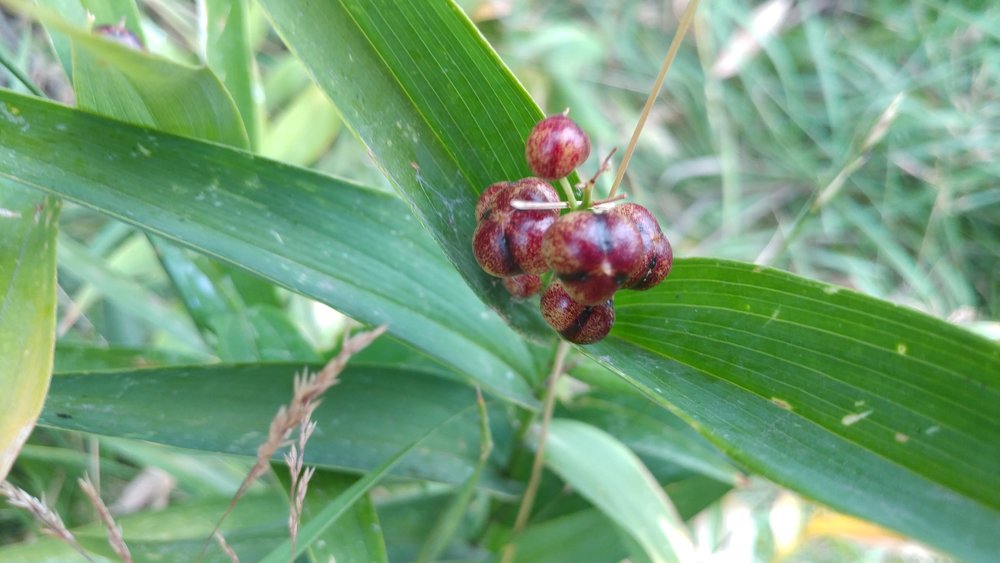
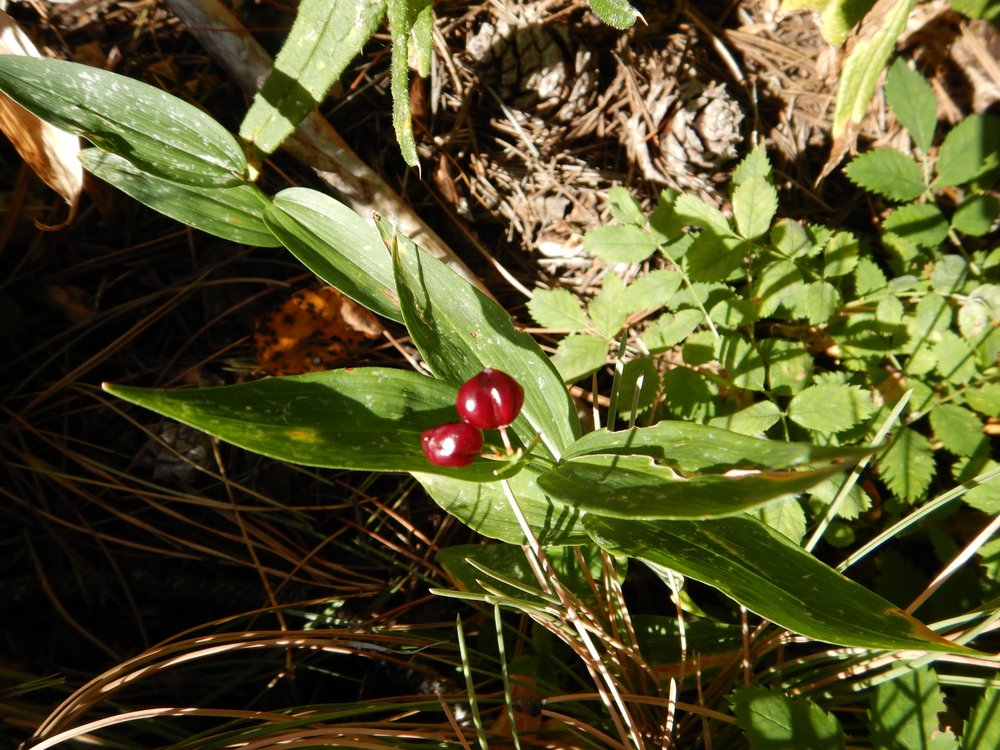
Starry False Solomon's Seal (Maianthemum stellatum) is a native perennial that spreads into patches of leafy, slightly zig-zag stems, each topped by a short spike of a few white, star-shaped flowers. It blooms in May and June and is one of the commonest flowers of Black Hills pine and spruce woods, where its green, dark-striped berries turn red by late summer.
Free photos from other sources
| Family | Asparagaceae · Asparagus |
|---|---|
| Status | Native perennial |
| Blooms | May through June, sometimes into early July |
| Height | 15–65 cm (6–26 in) |
| Where | Pine, spruce and aspen woods, wooded stream banks and forest edges |
| Also called | Starry False Lily-of-the-Valley, Star-flowered False Solomon's Seal, Star-flowered Solomon's Plume, Starry Solomon's Plume |
| Synonym | Smilacina stellata, Convallaria stellata, Vagnera stellata, Smilacina sessilifolia, Unifolium stellatum |
| Traditional use | The Fire Effects Information System records that the Nuxalk of British Columbia ate the ripe berries. |
Roots, seeds & germination
Root: A long, creeping, whitish rhizome that branches through the upper soil and sends up a new stem every so often, which is how one plant becomes a patch. The rhizomes survive light ground fires and resprout.
Seed: A round berry 7–9 mm (about ⅓ in) across holding 1–3 seeds, green with dark stripes at first and red or dark maroon in late summer. SDSU advises keeping cleaned seed cool and moist rather than letting it dry hard.
Germination: Slow. The seeds have deep dormancy, and SDSU says fall-sown seed usually comes up in the second spring; for spring sowing it suggests 90 days cold, 90 days warm and 90 days cold again, all kept moist. Most growers divide the rhizomes instead.
How do you identify Starry False Solomon's Seal?
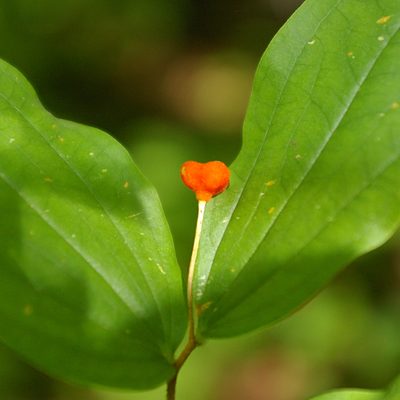
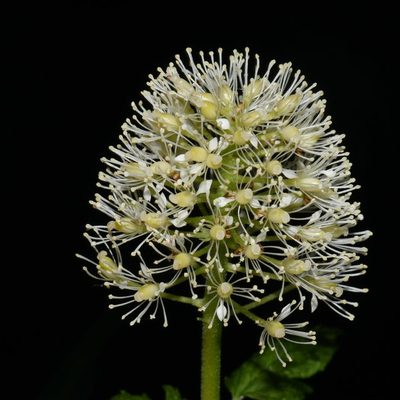
Look for an unbranched stem 15–65 cm (6–26 in) tall that leans a little and bends slightly at each leaf, with about 7–9 narrow, lance-shaped, stalkless leaves in two flat rows, parallel-veined and often folded along the midrib. At the tip is one short spike of about 5–20 white, six-pointed star flowers about 1 cm (⅜ in) across. The round berries are green with dark stripes at first, ripening to dark maroon and then red. Feathery False Solomon's Seal has a fluffy, branched plume of dozens to hundreds of tiny cream flowers and broader leaves, and Smooth Solomon's Seal hangs greenish-white bells from the leaf joints, with nothing at the stem tip.
When does it bloom?
May through June, sometimes into early July.
Where does it grow?
Moist to fairly dry woods, wooded stream banks, aspen groves, thickets and forest edges, from open ponderosa pine to shady white spruce and paper birch canyons, in sun to fairly deep shade. It occurs throughout the Hills, and GBIF holds 131 specimens from all seven Black Hills counties, from about 1,020 to 1,890 m (3,360–6,200 ft). The 1986 Jewel Cave survey lists it as Smilacina stellata, and the National Park Service records it at Wind Cave, Jewel Cave, Mount Rushmore and Devils Tower.
Other flowers to compare
Sources: A Survey of the Vegetation of Jewel Cave National Monument (Marriott & Hartman 1986), lists Smilacina stellata; NPSpecies checklist, Wind Cave National Park vascular plants; NPSpecies checklist, Jewel Cave National Monument vascular plants; NPSpecies checklist, Mount Rushmore National Memorial vascular plants; NPSpecies checklist, Devils Tower National Monument vascular plants; GBIF herbarium specimens of Maianthemum stellatum in the Black Hills (lat 43.3-44.85, lon -104.75 to -103.0); GBIF species page and synonym list, Maianthemum stellatum; USDA PLANTS Database, Maianthemum stellatum (MAST4); Reese, R.N. Liliaceae: Maianthemum stellatum. SDSU Open PRAIRIE, Native Plant Guide; USDA Forest Service Fire Effects Information System (FEIS): Maianthemum stellatum; Minnesota Wildflowers: Starry False Solomon's Seal; Prairie Moon Nursery: Starry Solomon's Plume; University of Washington propagation notes: Maianthemum stellatum (Hebert 2006); Black Elk, L. & W. Flying By. 1998. Culturally Important Plants of the Lakota, Sitting Bull College (entry 183); GBIF herbarium specimens of Maianthemum racemosum in the Black Hills (same box); GBIF herbarium specimens of Polygonatum in the Black Hills (same box); iNaturalist observations of Maianthemum stellatum within 80 km of the central Black Hills.