Red Baneberry
Actaea rubra
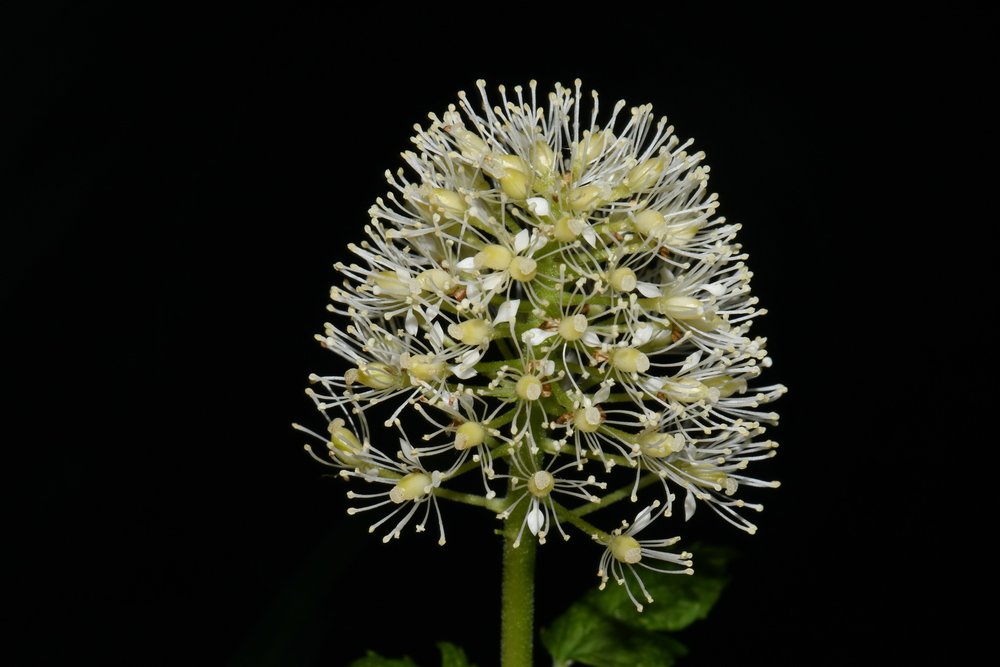
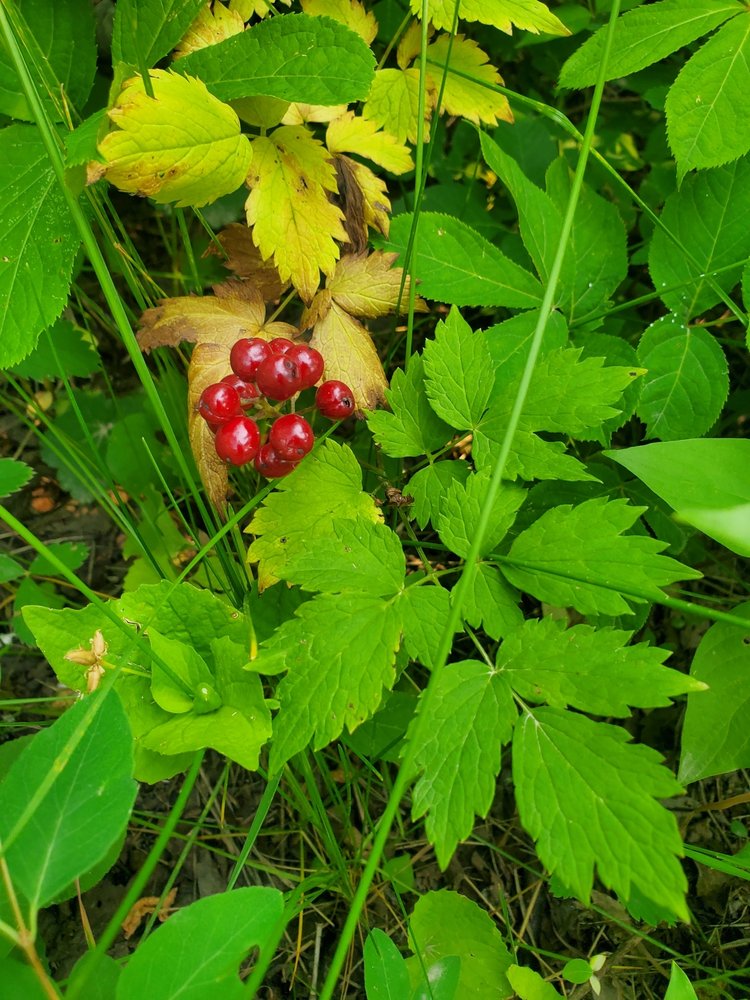
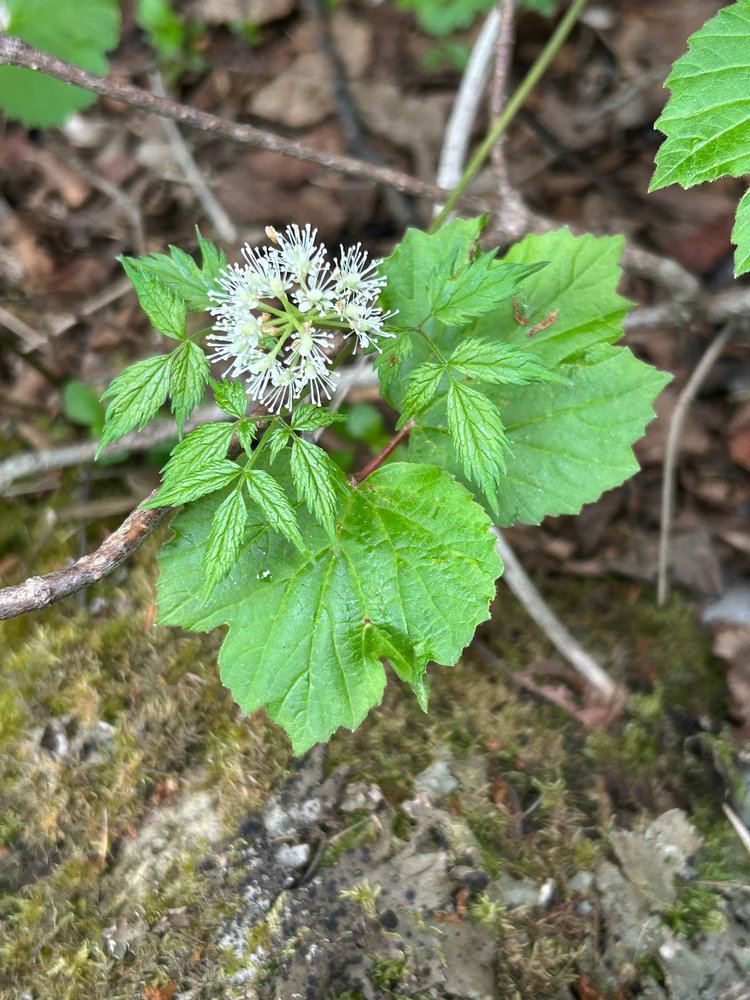
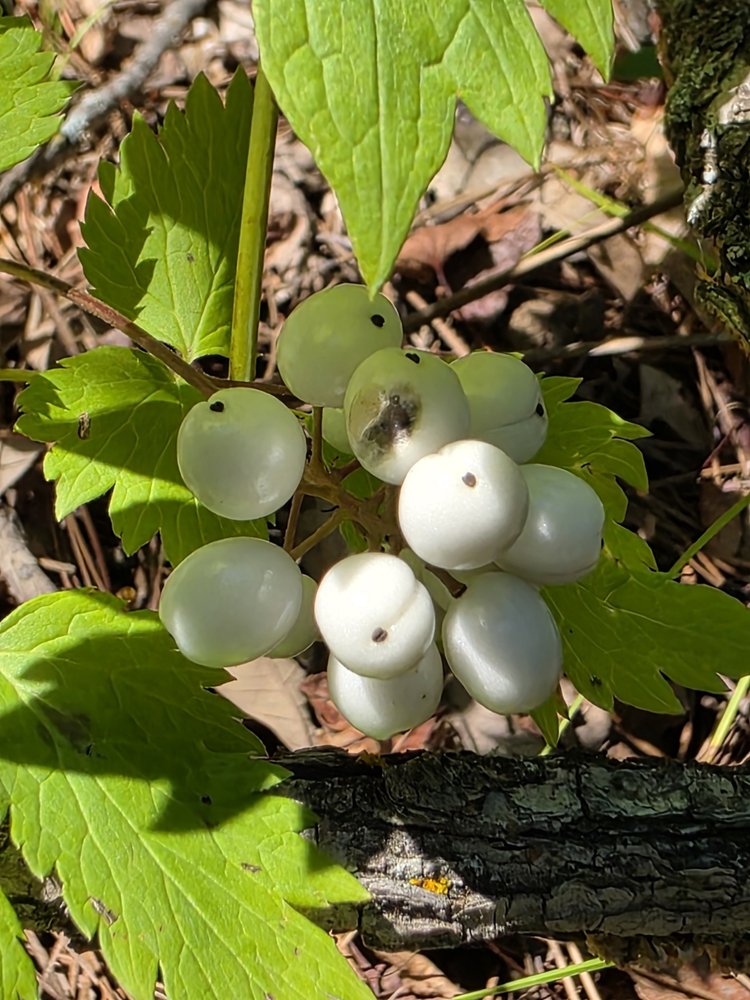
Red Baneberry (Actaea rubra) is a native perennial of cool, shady woods, with large, toothed, divided leaves and fluffy, rounded clusters of small white flowers in late May and June. By July the flowers turn into clusters of shiny red berries, or on some plants white ones, and it grows in moist aspen, birch, spruce and pine woods of the northern and central Black Hills.
Free photos from other sources
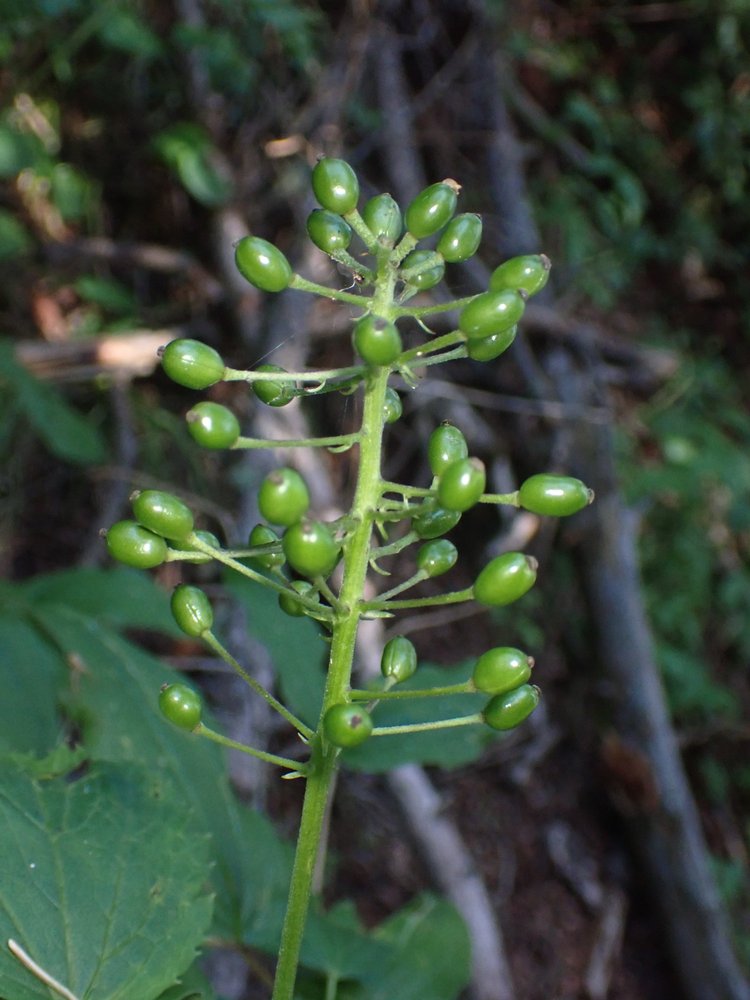
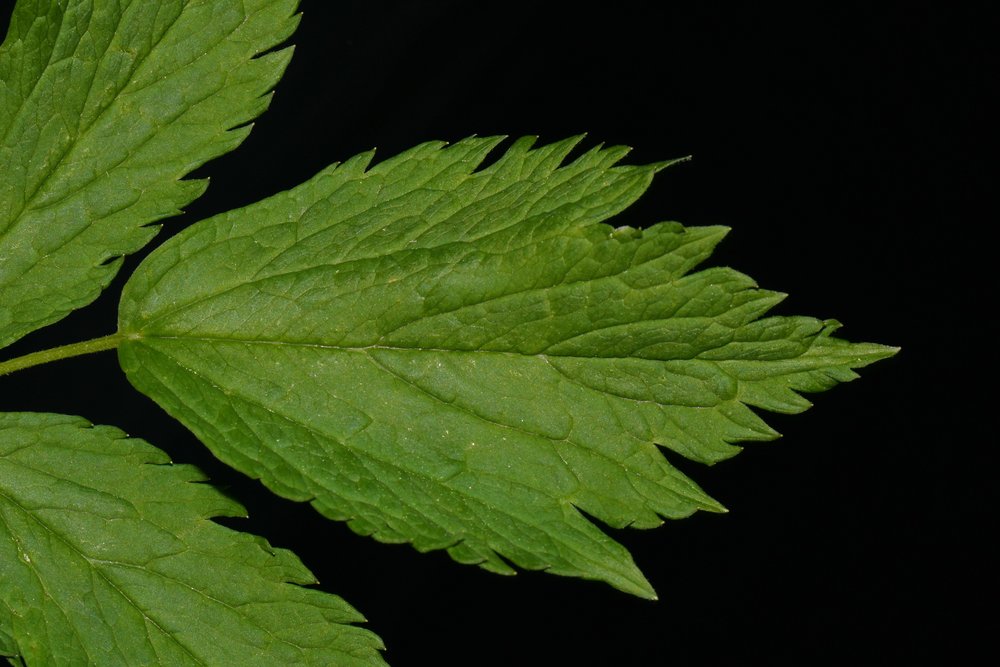
| Family | Ranunculaceae · Buttercup |
|---|---|
| Status | Native perennial |
| Blooms | Late May through June; berries July into September |
| Height | 30–90 cm (12–36 in) |
| Where | Moist, shady aspen, birch, spruce and pine woods and shaded canyon creeks |
| Also called | Baneberry, Western Baneberry, Red Cohosh, Snakeberry, Necklaceweed |
| Synonym | Actaea spicata var. rubra, Actaea arguta, Actaea rubra subsp. arguta, Actaea eburnea, Actaea neglecta, Actaea rubra f. neglecta |
| Toxicity | All parts are poisonous to people, and in large amounts to livestock and pets, the berries and root most of all; they contain heart-affecting compounds and a poisonous oil, protoanemonin. |
Roots, seeds & germination
Root: A short, thick, upright rootstock just under the soil surface, with fibrous roots below, which can put up one to several stems. It survives most fires, and burned plants have resprouted and fruited the same year.
Seed: Each berry is 5–11 mm (¼–⅜ in) long and holds about 9–16 reddish-brown, wedge-shaped seeds 3–4 mm long, ripe by late July into August. Birds eat the berries and spread the seeds, and chipmunks and mice eat and cache them.
Germination: Slow and difficult, because the seed has a double dormancy. Nursery protocols use about 4 weeks of warm, moist treatment followed by 90–112 days of cold, moist stratification, or fresh seed sown outdoors in fall, which may take one to two springs to come up. Seedlings usually flower in their third year.
How do you identify Red Baneberry?
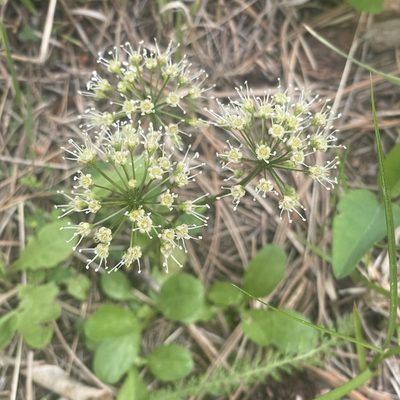
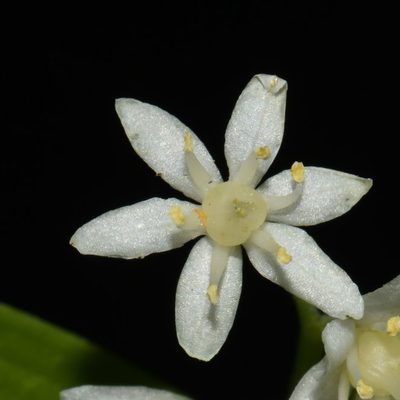
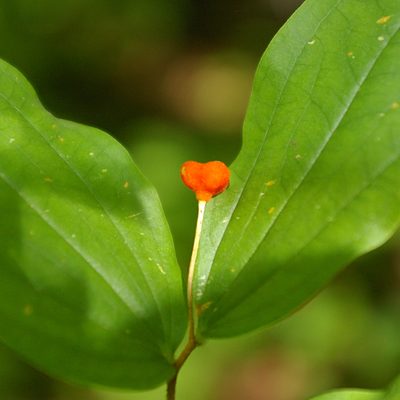
Look in shade for a bushy, branched plant 30–90 cm (1–3 ft) tall, with large leaves split two or three times into groups of sharply and coarsely toothed leaflets. A long bare stalk rises above the leaves and ends in a round, fluffy ball of flowers 2.5–5 cm (1–2 in) across, mostly a puff of white stamens. It ripens to a short spike of glossy, cherry-red or china-white oval berries, each with a small black dot at the tip, on thin green stalks; white-berried plants are the same species. Wild Sarsaparilla holds its greenish-white flower balls and purple-black berries on a separate stalk below a single leaf, and Starry False Solomon's Seal has simple, smooth-edged leaves on an unbranched stem.
When does it bloom?
Late May through June; berries July into September.
Where does it grow?
Cool, moist, rich soil in shade: the understory of aspen, paper birch and white spruce stands, shady pine woods on north slopes and creeks in deep canyons. The Forest Service's habitat-type study of the Black Hills National Forest (Hoffman and Alexander 1987) records it in aspen and white spruce stands, and GBIF holds 163 specimens, most from Lawrence, Pennington and Custer counties, from about 1,205 to 1,981 m (3,950–6,500 ft). The 1986 Jewel Cave survey lists it, and the National Park Service records it at Jewel Cave and Mount Rushmore. It is common in the northern and central Hills and scarce in the dry south.
Other flowers to compare
Sources: USDA Forest Service, Fire Effects Information System (FEIS): Actaea rubra; Flora of North America: Actaea rubra; Plants of the World Online (Kew): Actaea arguta, a synonym of Actaea rubra; Marriott, H. & R.L. Hartman. 1986. A Survey of the Vegetation of Jewel Cave National Monument; Hoffman, G.R. & R.R. Alexander. 1987. Forest Vegetation of the Black Hills National Forest of South Dakota and Wyoming: A Habitat Type Classification. USDA Forest Service Research Paper RM-276; Shepperd, W.D. & M.A. Battaglia. 2002. Ecology, Silviculture, and Management of Black Hills Ponderosa Pine. USDA Forest Service RMRS-GTR-97; NPSpecies checklist service, Jewel Cave NM (JECA) vascular plants; NPSpecies checklist service, Mount Rushmore NMem (MORU) vascular plants; NPSpecies checklist service, Wind Cave NP (WICA) vascular plants; NPSpecies checklist service, Devils Tower NM (DETO) vascular plants; GBIF occurrence search: Actaea rubra preserved specimens, South Dakota and Wyoming; GBIF occurrence search: Actaea pachypoda, Nebraska (nearest records to the Black Hills); Reese, R.N. 2025. Ranunculaceae: Actaea rubra. South Dakota Native Plant Research, SDSU Open PRAIRIE; NC State Extension Gardener Plant Toolbox: Actaea rubra (toxicity); Mahr, S. Baneberry, Actaea spp. Wisconsin Horticulture, University of Wisconsin–Madison Division of Extension; University of Utah Poison Control Center: Baneberry; University of Saskatchewan Gardening: Baneberry; Minnesota Wildflowers: Actaea rubra (Red Baneberry); Lady Bird Johnson Wildflower Center: Actaea rubra; ACRRE, University of Alberta: Actaea rubra species profile (seed and propagation); Native Plant Network propagation protocol for Actaea rubra (course copy, University of Washington ESRM 412); Wikipedia: Actaea rubra (toxicity section, citing Gibbons et al. 1990 and Frohne & Pfänder 2005); Black Elk, L. & W. Flying By. 1998. Culturally Important Plants of the Lakota (checked; baneberry not listed); iNaturalist: Red Baneberry research-grade observations, Black Hills.