Chokecherry
Prunus virginiana
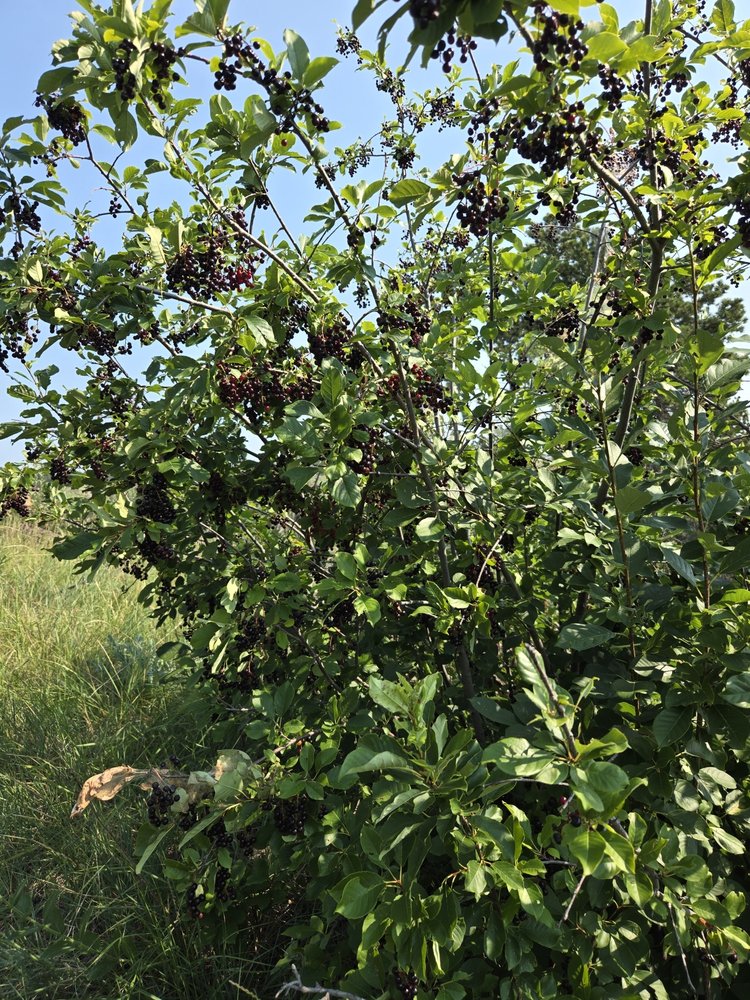
Chokecherry (Prunus virginiana) is a native shrub or small tree that forms thickets in draws, along creeks and at forest edges, and is one of the most common shrubs in the Black Hills. It blooms in May and early June with white, bottlebrush-like spikes of small flowers, and by late July and August it hangs heavy with puckery, purple-black cherries.
Free photos from other sources
| Family | Rosaceae · Rose |
|---|---|
| Status | Native shrub |
| Blooms | May into early June, a few from late April |
| Height | 1–6 m (3–20 ft) |
| Where | Wooded draws, stream banks, canyon bottoms and forest edges |
| Also called | Black Chokecherry, Western Chokecherry, Common Chokecherry, Wild Cherry, čhaŋpȟá (Lakota) |
| Synonym | Prunus virginiana var. melanocarpa, Prunus virginiana var. demissa, Prunus melanocarpa, Padus melanocarpa, Padus virginiana |
| Toxicity | The leaves, bark, twigs and stones release hydrogen cyanide when chewed, crushed or frosted; cattle and sheep that browse the leaves can die quickly, and children have died after chewing the stems and leaves or swallowing the stones. |
| Traditional use | Sitting Bull College's 1998 Culturally Important Plants of the Lakota says the cherries were dried for later, including as dried cherry patties, softened again in water to make a pudding, and mixed with dried meat and fat to make pemmican. Chokecherry branches were tied to Sun Dance poles, and the leaves were made into a tea for Sun dancers. Gilmore (1919) has a photograph of a Teton Dakota woman pounding chokecherries to dry for winter. |
| Note | Black Hills plants are usually called var. melanocarpa (black chokecherry); Flora of North America and the park lists fold it into var. demissa. |
Roots, seeds & germination
Root: A network of rhizomes 1–2 cm (½–¾ in) thick, sending deep roots down at intervals, which is how one plant becomes a thicket. Fire usually kills the stems, but the plant resprouts quickly from the root crown and rhizomes.
Seed: Each cherry holds one seed inside a stony pit. Birds, bears and small mammals eat the fruit and carry the seeds off, which is why chokecherry comes up along fences where birds perch.
Germination: The seed is dormant and needs a moist, cool period, and pulp left on the seed lowers germination. Cold, moist stratification for 90–160 days at 2–5°C (36–41°F) works well, or fresh, cleaned seed can be sown in fall 6–13 mm (¼–½ in) deep for seedlings the next spring.
How do you identify Chokecherry?
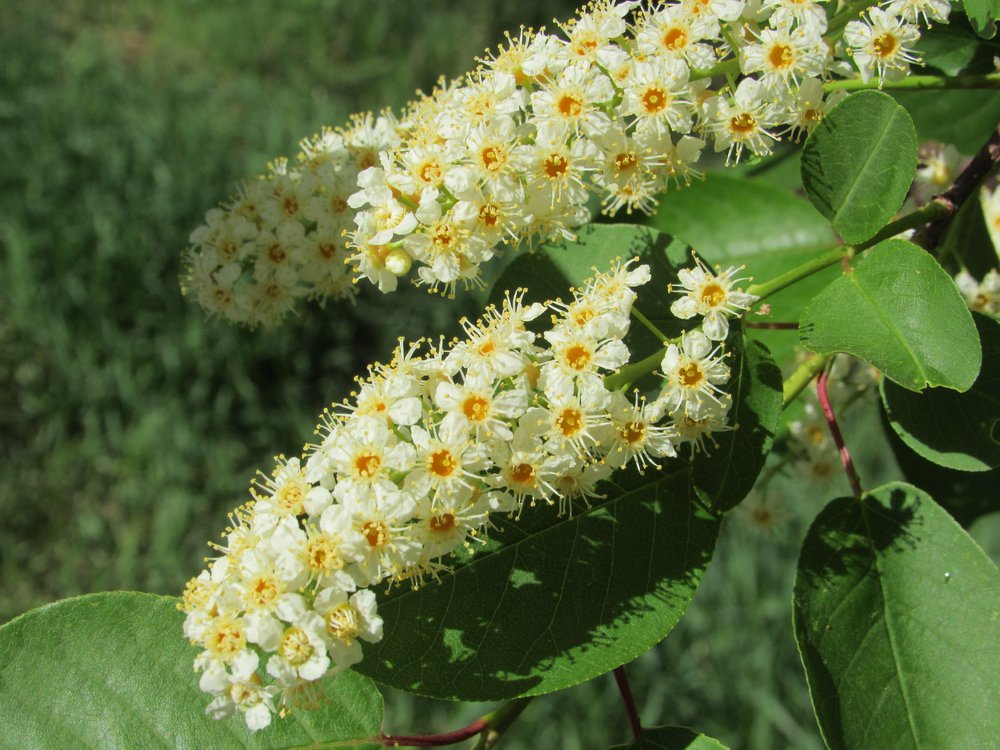
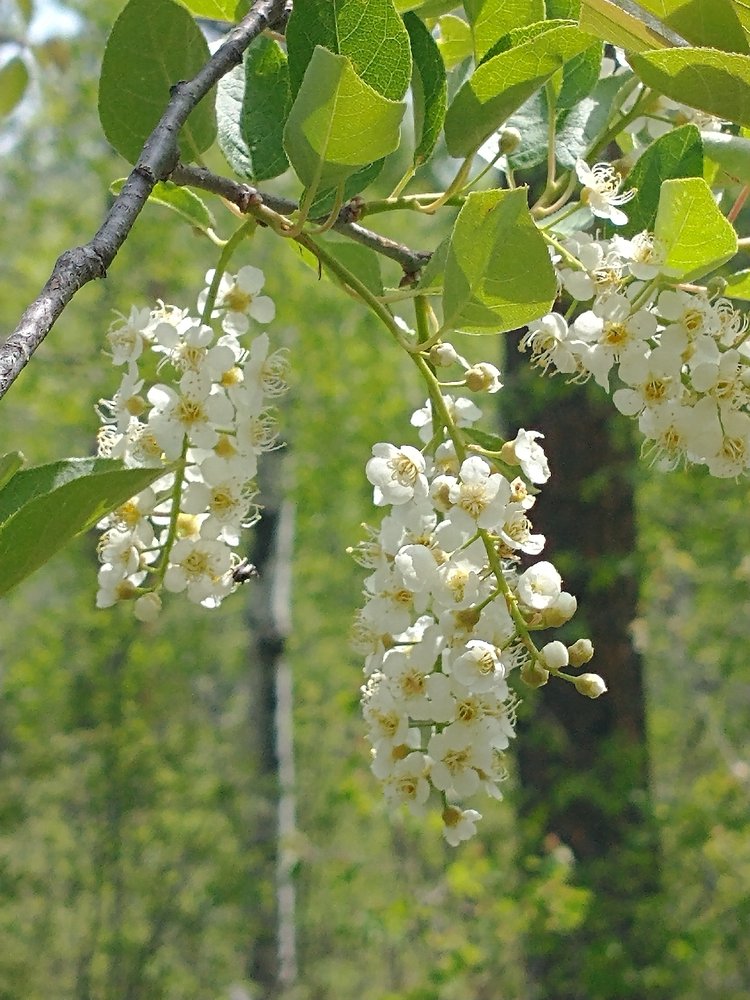
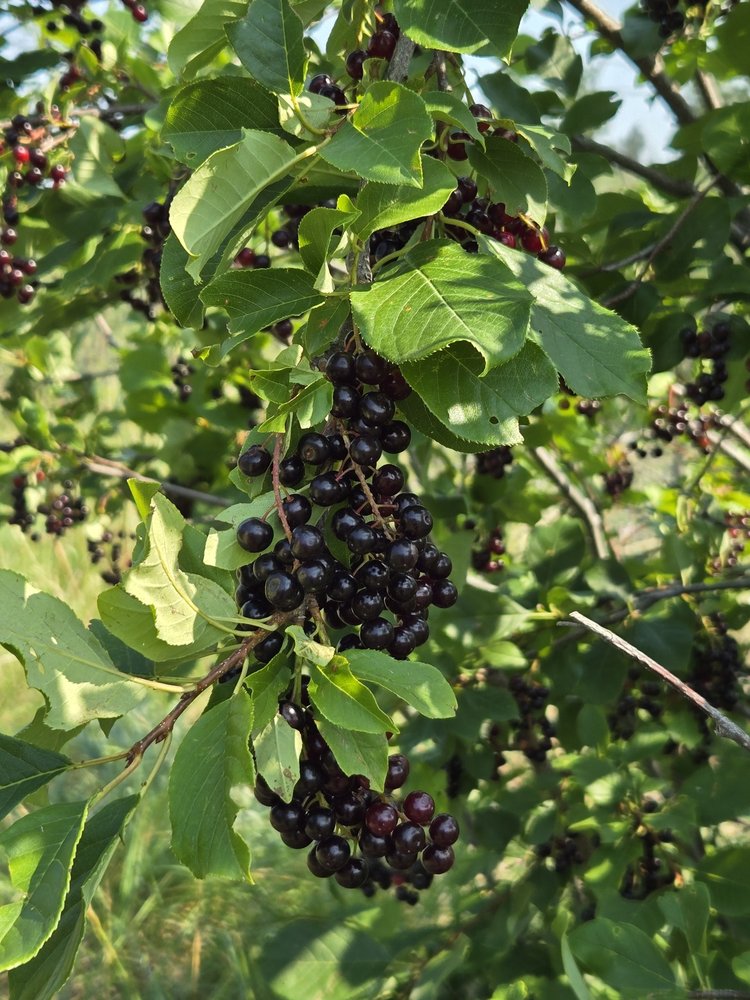
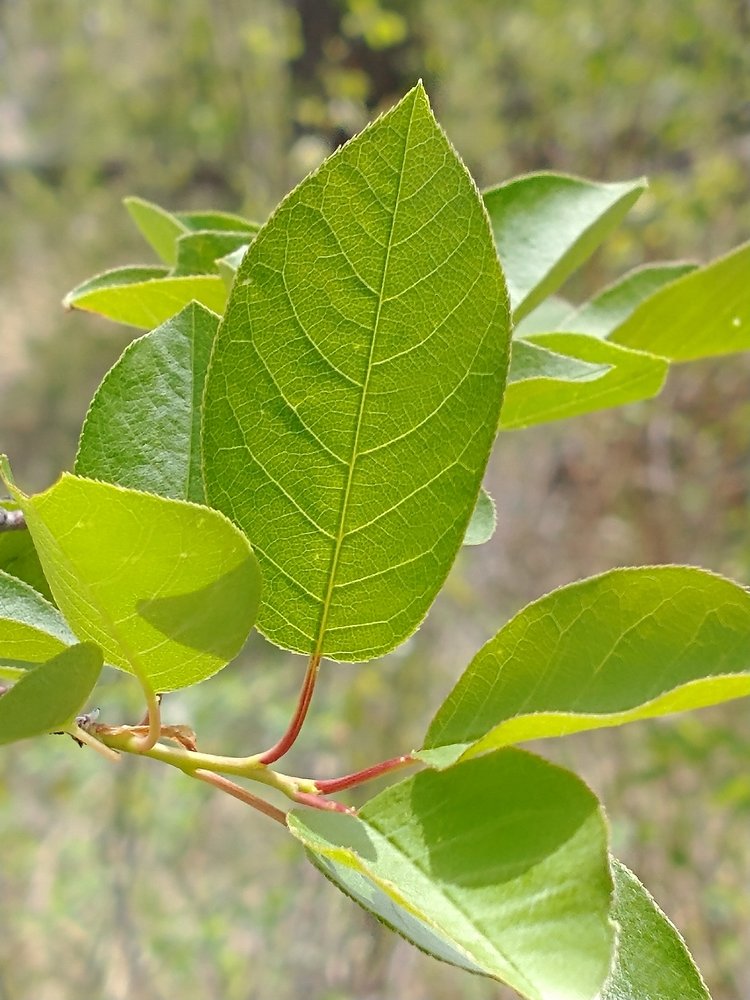
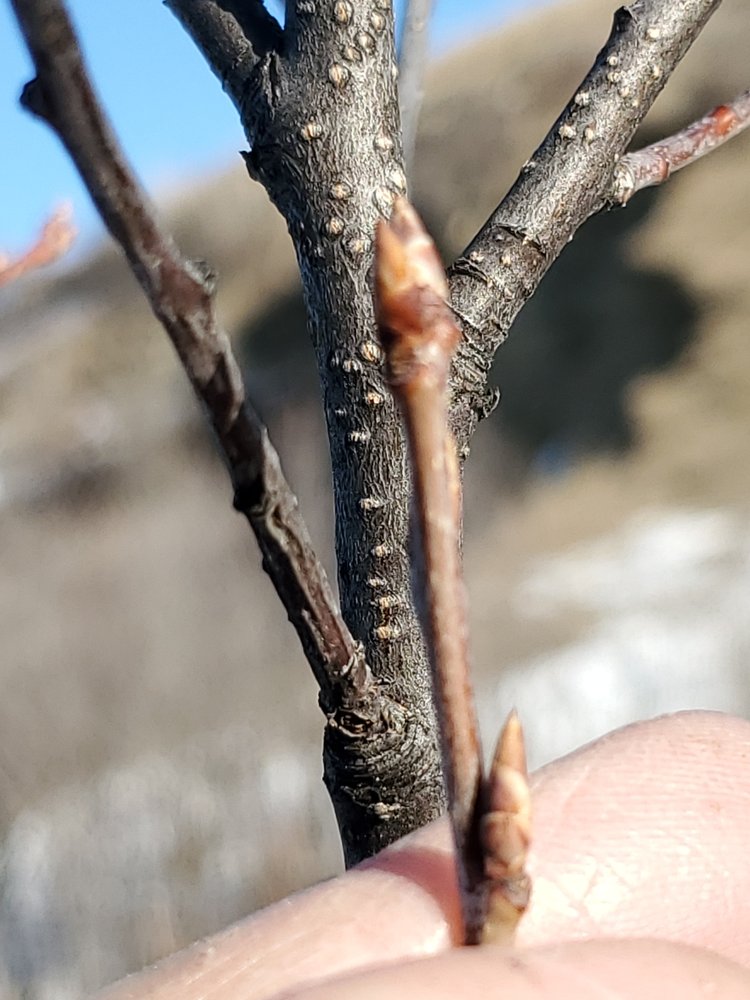
Look for a many-stemmed shrub, often in a dense patch, with broadly oval leaves 2.5–10 cm (1–4 in) long that end in a short, abrupt point and are edged with very fine, sharp teeth. In May the white, five-petaled flowers come packed in long, cylindrical spikes 7–15 cm (3–6 in) long, with a strong, sweet smell. The cherries ripen from red to dark purple-black in long hanging clusters, like a bunch of grapes, and they make your mouth pucker. Pin Cherry has small, flat-topped bunches of flowers and bright red cherries, narrow, long-pointed leaves and shiny reddish bark that may peel in strips.
When does it bloom?
May into early June, a few from late April.
Where does it grow?
Wooded draws and ravines, stream banks, canyon bottoms, springs, the edges of aspen, Bur Oak and Ponderosa Pine stands, roadsides and fencerows, from about 1,070 to 2,180 m (3,500–7,150 ft). It takes part shade but flowers and fruits best in sun at forest edges. The 1986 Jewel Cave plant survey lists it, it is on the Wind Cave, Mount Rushmore and Devils Tower species lists, and about 190 herbarium specimens come from all seven Black Hills counties.
Other plants to compare
Sources: USDA PLANTS Database: Prunus virginiana (PRVI), chokecherry; USDA PLANTS Database: Prunus virginiana var. melanocarpa (PRVIM), black chokecherry; USDA NRCS Plant Guide: Chokecherry, Prunus virginiana L. (Pullman and Manhattan Plant Materials Centers); USDA NRCS Plant Guide: American Plum, Prunus americana Marsh.; Johnson, K.A. 2000. Prunus virginiana. USDA Forest Service Fire Effects Information System (FEIS); USDA Forest Service FEIS: Prunus pensylvanica (pin cherry); ITIS: Prunus virginiana and infraspecific names; Plants of the World Online (Kew): Prunus virginiana var. melanocarpa, treated as a synonym of var. demissa; Black Elk, L. & Flying By, W. 1998. Culturally Important Plants of the Lakota (entry 243, Prunus virginiana, čhaŋpȟá; entry 241, Prunus americana); Gilmore, M.R. 1919. Uses of Plants by the Indians of the Missouri River Region. 33rd Annual Report of the Bureau of American Ethnology (Internet Archive scan); Riggs, S.R. 1890. A Dakota-English Dictionary (ed. J.O. Dorsey). Contributions to North American Ethnology vol. 7 (Internet Archive scan): čaŋpa, čaŋpasapa-wi, wózapi, wasná; Reese, R.N. 2015. Rosaceae: Prunus virginiana. South Dakota Native Plant Research, SDSU Open PRAIRIE; Akta Lakota Museum & Cultural Center (St. Joseph's Indian School): Lakota seasons and moons; Thunder Valley CDC: Ċaŋṗa - Chokecherries; Shakopee Mdewakanton Sioux Community: Ċhaŋphása Wí; Marriott, H. & Hartman, R.L. 1986. A Survey of the Vegetation of Jewel Cave National Monument; NPSpecies checklist, Wind Cave National Park vascular plants; NPSpecies checklist, Jewel Cave National Monument vascular plants; NPSpecies checklist, Mount Rushmore National Memorial vascular plants; NPSpecies checklist, Devils Tower National Monument vascular plants; GBIF occurrence search: Prunus virginiana, preserved specimens, South Dakota and Wyoming; Scianna, J. 2003. Propagation protocol for Prunus virginiana, Bridger Plant Materials Center, Montana. Native Plant Network (RNGR); Friends of the Eloise Butler Wildflower Garden: Pin Cherry; University of Vermont plant ID: Prunus pensylvanica bark; iNaturalist: Prunus virginiana (taxon 54835).