Giant Lousewort Pedicularis procera also listed as Pedicularis grayi
Also called Long-leaved Lousewort, Gray Lousewort
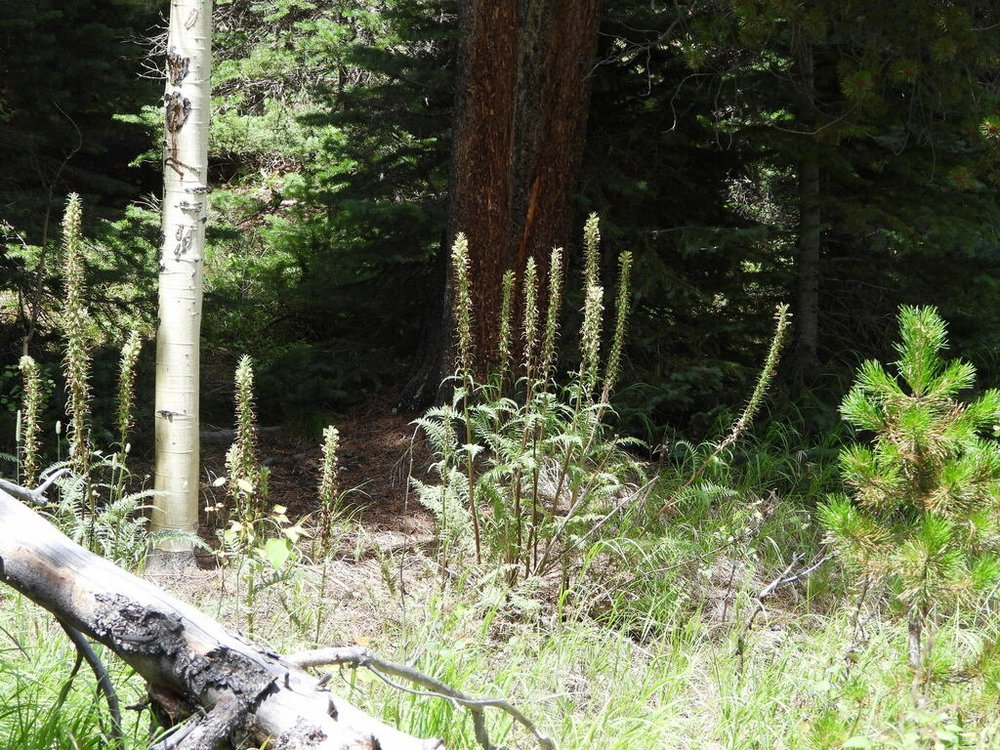
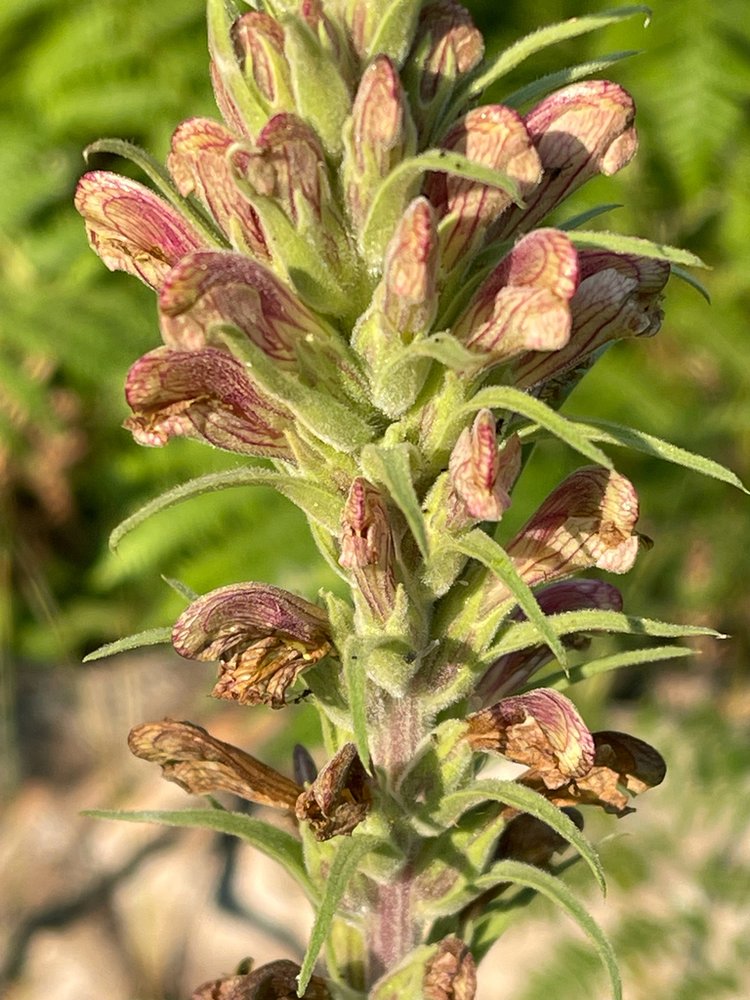
Giant Lousewort (Pedicularis procera) is a tall native perennial that can stand 1–1.5 m (3–5 ft), with a clump of large fern-like leaves and a dense, hairy spike of yellow to greenish-yellow hooded flowers, often streaked with red. It blooms in July and August in moist forest and forest clearings, including aspen stands, in the Black Hills, where it is rare and ranked as an imperiled plant in South Dakota.
Free photos from other sources
| Family | Orobanchaceae · Broomrape |
|---|---|
| Status | Native perennial |
| Blooms | July and August |
| Height | 1–1.5 m (3–5 ft) |
| Where | Moist mixed forest and forest clearings, including aspen stands |
| Also called | Long-leaved Lousewort, Gray Lousewort |
| Synonym | Pedicularis grayi |
| Traditional use | Moerman's database, citing Vestal (1952), records that the Ramah Navajo used the plant in the Mountaintopway ceremony. |
| Note | The U.S. Forest Service's 2023 draft assessment for the Black Hills forest plan lists it as a species of conservation concern, and South Dakota's rare plant list ranks it S2, imperiled. This page gives no locations. |
Traditional use: first drafted by Google AI, then checked against the sources on this page.
Roots, seeds & germination
Seed: A flattened capsule with a beak, which splits open to shed the seed.
How do you identify Giant Lousewort?
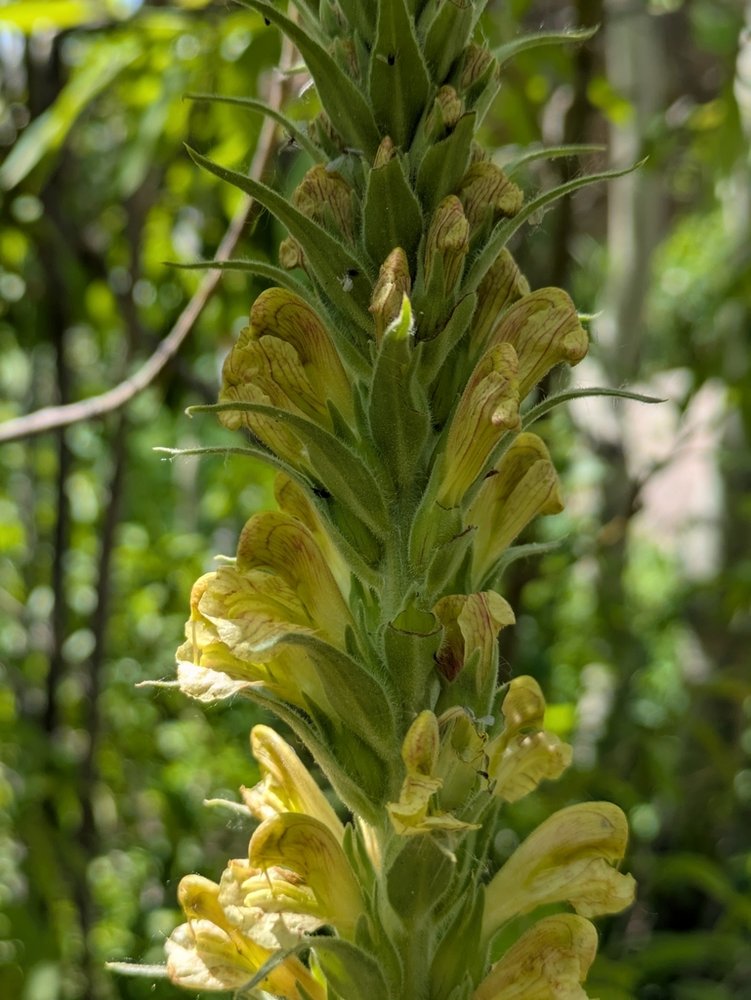
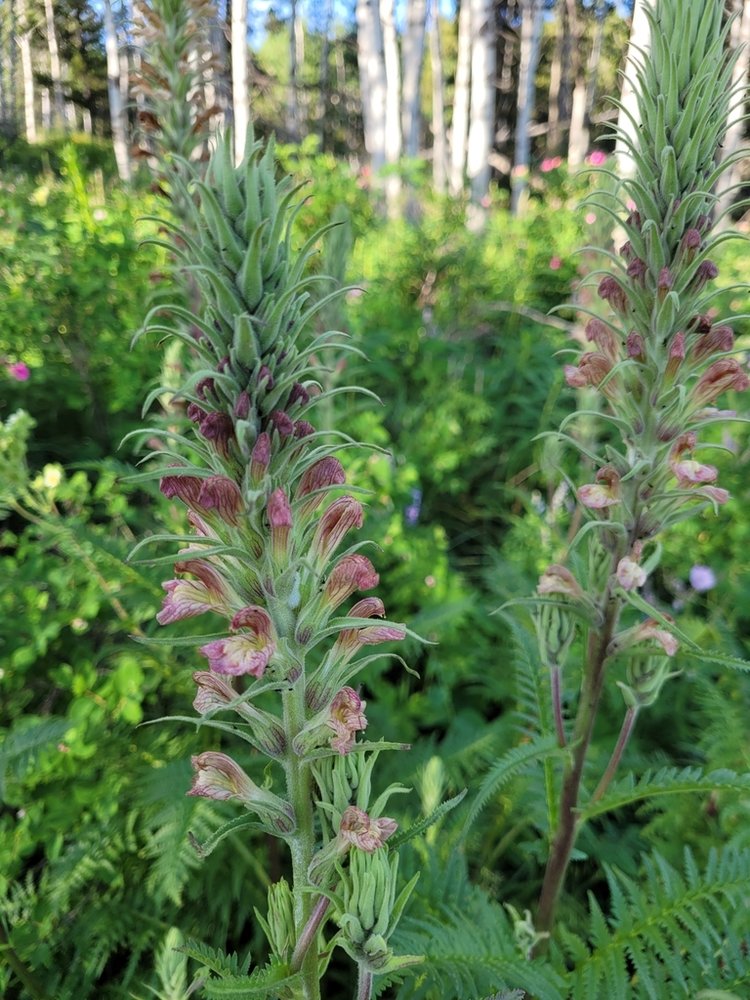
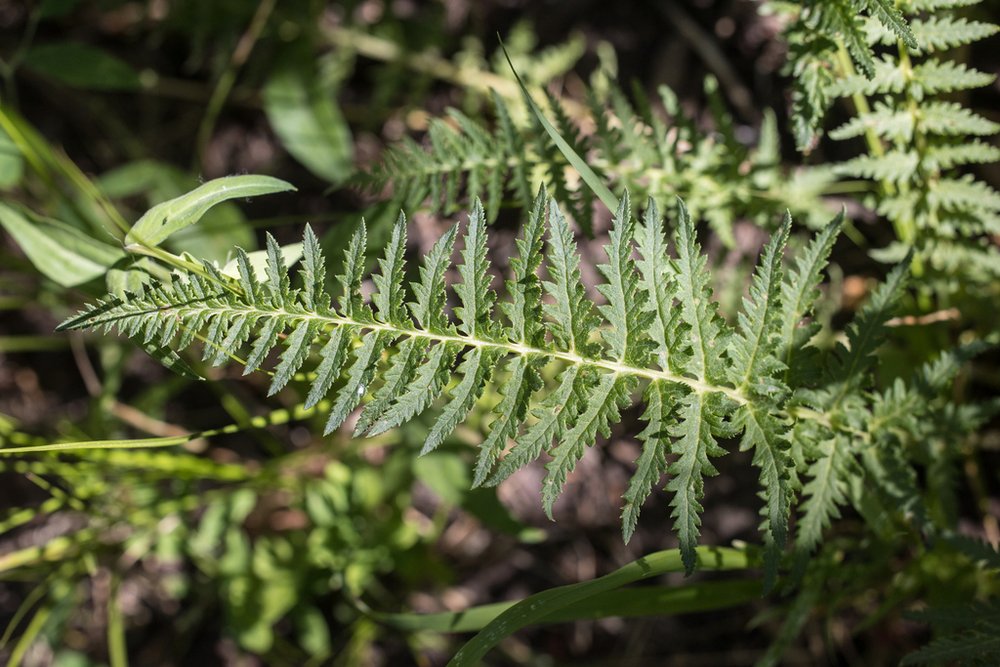
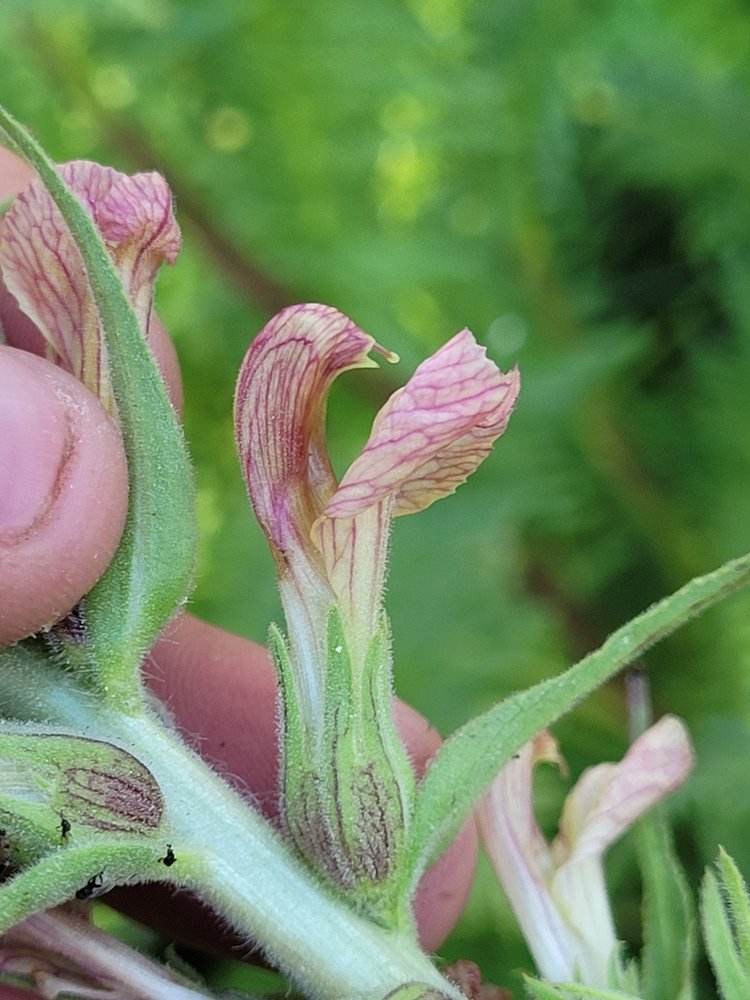
Before it flowers the plant looks like a fern: a clump of leaves up to 60 cm (2 ft) long, each cut almost to the midrib into toothed, deeply notched segments. The flower stalk rises 1–1.5 m (3–5 ft) and ends in a hairy spike 20–50 cm (8–20 in) long packed with flowers and bracts; the lower bracts are deeply cut and often longer than the flowers. Each flower is 25–30 mm (1–1¼ in) long, dull yellow to greenish yellow and often streaked with red or rusty orange; the upper lip is a hood 10–15 mm (⅜–⅝ in) long that curves downward and ends in two small teeth, with no beak, and the calyx below it is 10–15 mm long with five narrow, untoothed lobes. The fruit is a flattened capsule with a beak. Plants often grow in groups, and deer and elk often nip off the flower heads.
When does it bloom?
July and August.
Where does it grow?
Moist ground in mixed forest and forest clearings, including aspen stands, in the Black Hills. The Forest Service lists it among the at-risk plants that use aspen here, and South Dakota's rare plant list places it in mixed forest and clearings in one small, localized part of the Black Hills.
Broomrape family (Orobanchaceae): 4 other plants in this guide
Sources: Revised Forest Assessment: At-Risk Species, draft October 2023 (Giant lousewort: species of conservation concern; at-risk species that use aspen) — USDA Forest Service; Rare Plants of South Dakota (Pedicularis procera, Long-leaved Lousewort, G4G5 S2) — South Dakota Natural Heritage Program, SD Game, Fish and Parks (2018); USDA PLANTS Database: Pedicularis procera A. Gray, giant lousewort (PEPR7); ITIS: Pedicularis procera A. Gray, TSN 504166 (treated as a synonym of Pedicularis grayi A. Nelson); SEINet: Pedicularis procera (description from Martin and Hutchins 1980 and Kearney and Peebles 1969); Lady Bird Johnson Wildflower Center: Pedicularis procera (Giant Lousewort); Giant Lousewort — U.S. National Park Service; Al Schneider: Pedicularis procera (Giant Lousewort) — Wildflower Search; Moerman, Native American Ethnobotany database (BRIT): Pedicularis procera.