Common Tansy
Tanacetum vulgare
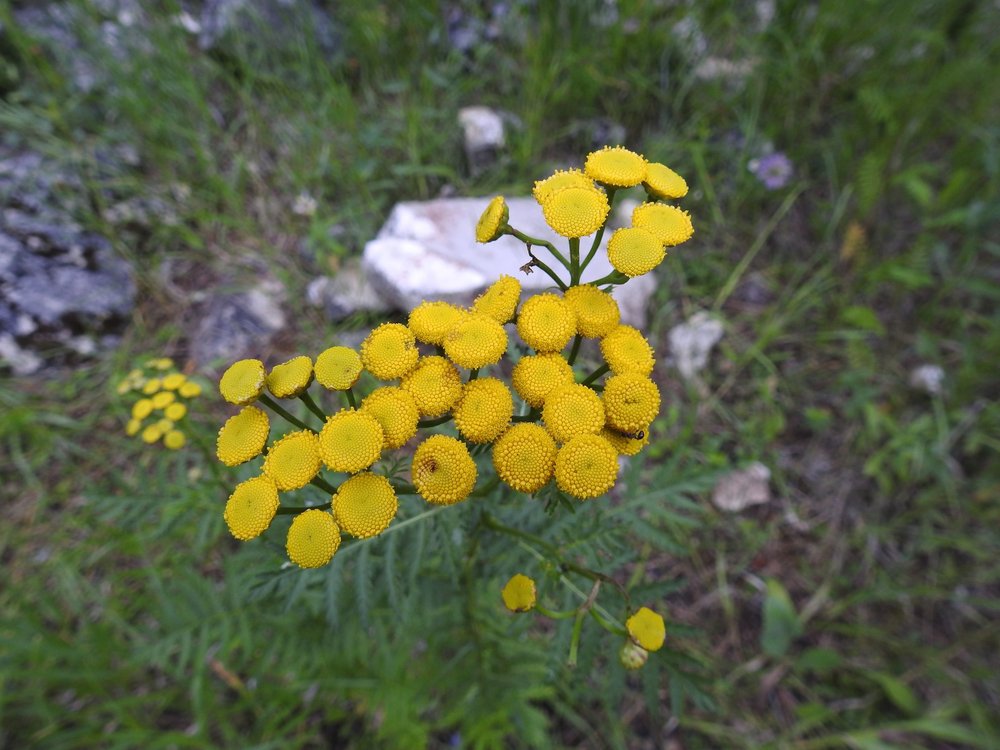
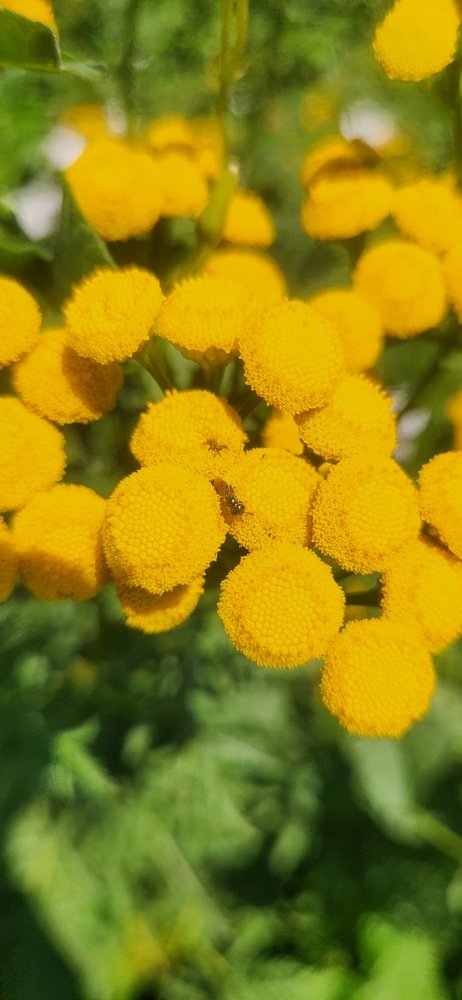
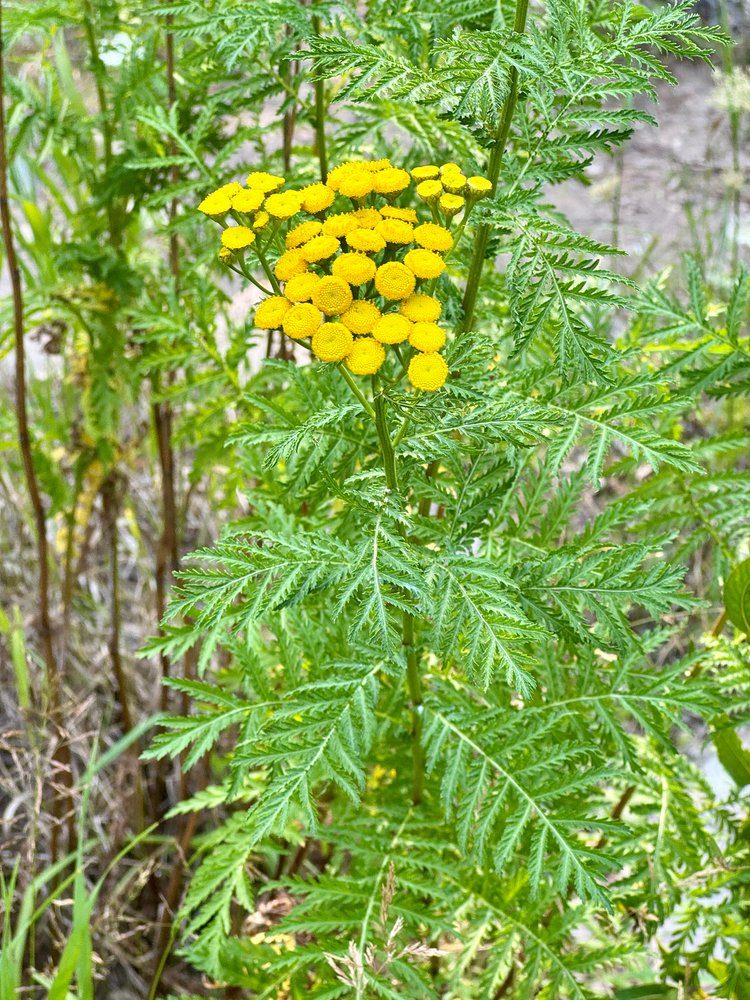
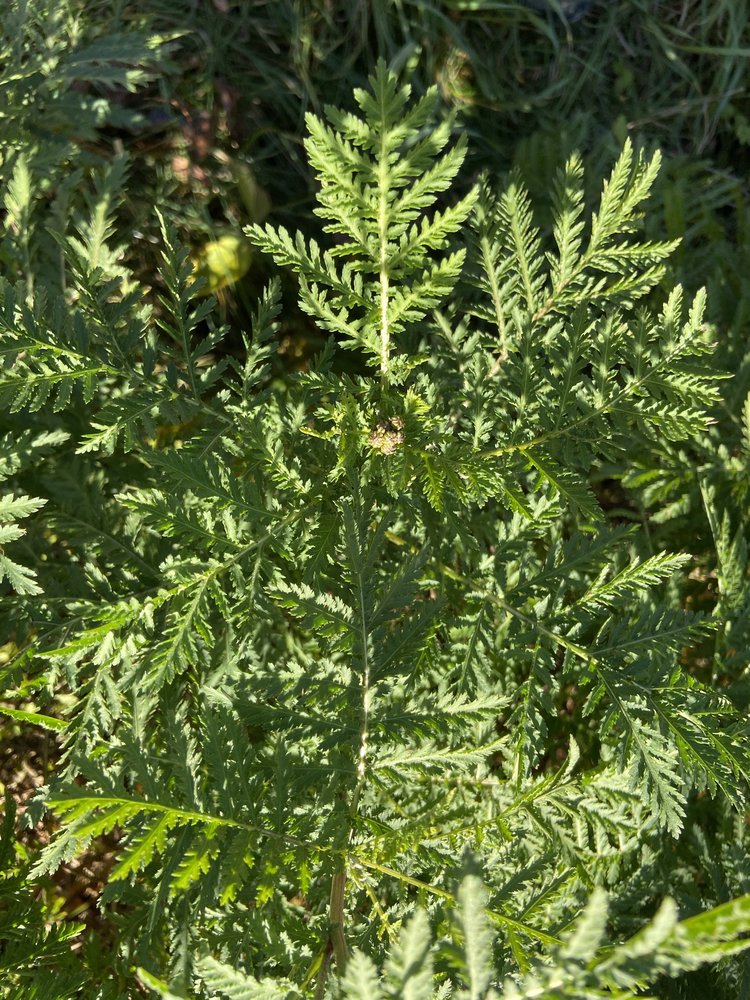
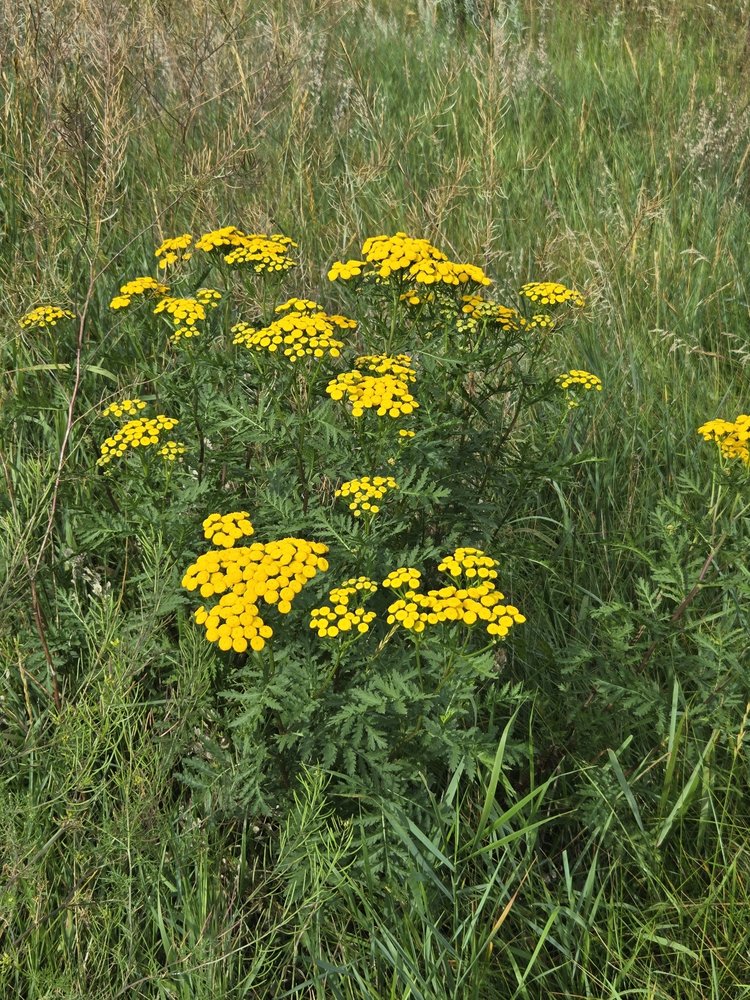
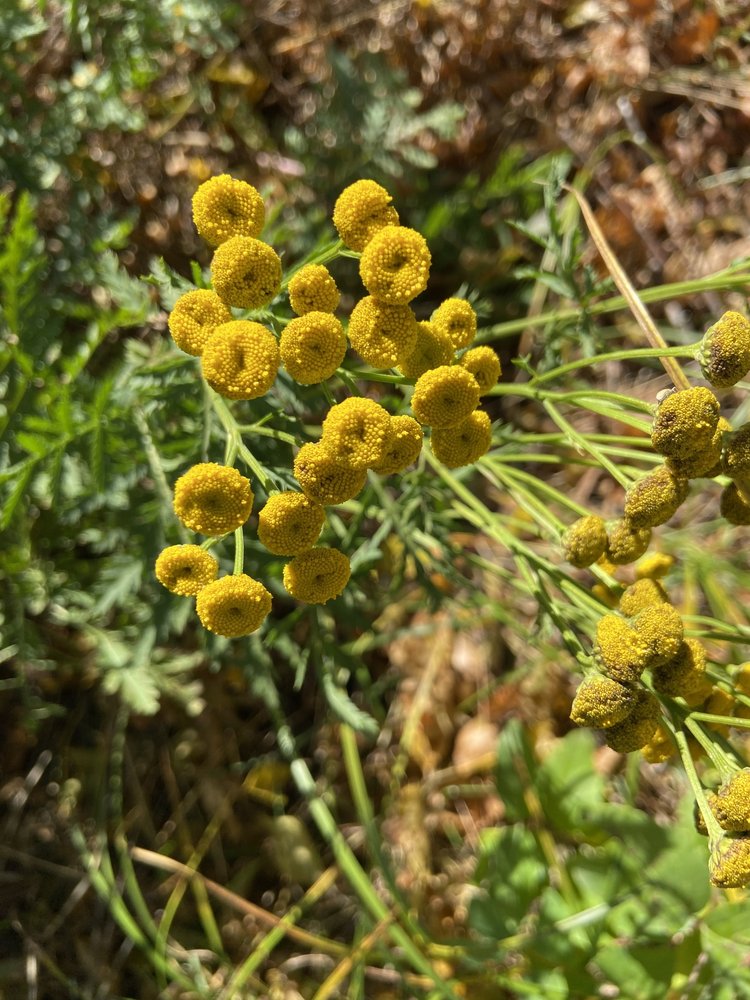
Common Tansy (Tanacetum vulgare) is a strong-smelling perennial from Europe and Asia, with fern-like leaves and flat clusters of yellow, button-like flower heads that have no petals. It blooms from July into September, and in the Black Hills it is a weed of roadsides and creek banks, especially in the northern Hills.
Free photos from other sources
| Family | Asteraceae · Aster |
|---|---|
| Status | Introduced perennial |
| Blooms | July into September |
| Height | 40–150 cm (16–60 in) |
| Where | Roadsides, ditches, creek banks and other moist, disturbed ground |
| Also called | Tansy, Garden Tansy, Golden Buttons, Bitter Buttons, Cow Bitter |
| Synonym | Chrysanthemum vulgare, Tanacetum boreale |
| Listed | The Black Hills National Forest lists it as a priority invasive species. It is locally noxious in Lawrence, Pennington and Butte counties, South Dakota, and a state designated noxious weed in Wyoming. |
| Toxicity | The plant contains thujone, a toxin in its oil; eating large amounts, or taking tansy tea or oil, has caused convulsions and deaths in people, and it has been linked, though not proven, to abortions in cattle. |
Roots, seeds & germination
Root: Thick, branched rhizomes (underground stems) send up new stems close to the parent, so one plant becomes a dense clump. Its dense roots fill the top 60 cm (2 ft) of soil, and it also spreads when rhizome pieces are carried in soil or on equipment.
Seed: Each head makes many tiny achenes (dry, one-seeded fruits) about 1–2 mm long, with 4–5 ribs and a very short crown instead of fluff. A Montana study averaged about 2,500 seeds per plant. Wind moves the seeds only short distances; they spread in water along streams, in hay and soil, and with people and animals.
Germination: Seeds can sprout without a cold period, but more of them germinate after a cold, moist treatment. Seedlings take hold best on open, bare ground and do poorly in thick vegetation.
How do you identify Common Tansy?
Look for a clump of leafy stems, often reddish, topped by a compact, flat-topped cluster of 20 to 200 small yellow heads. Each head is a button 5–10 mm (¼–⅜ in) across made only of tiny disk flowers, with no rays around the edge. The leaves are cut into 4–10 pairs of narrow, toothed segments, like a fern frond, and a crushed leaf has a strong, camphor-like smell.
When does it bloom?
July into September.
Where does it grow?
Moist, disturbed ground: road shoulders and ditches, creek banks and floodplains, picnic areas, meadows, and the edges of pine and aspen woods. It is most common in the northern Hills, where herbarium specimens from Lawrence County go back to 1913 at Deadwood, and it has also been collected in Pennington and Meade counties and in Crook County, Wyoming. The NPSpecies lists for Wind Cave and Mount Rushmore include it, and the Spearfish Canyon Foundation reported it spreading into Spearfish Canyon, tied to vehicle traffic and high water.
Other flowers to compare
Sources: Tanacetum vulgare, Flora of North America vol. 19; Tanacetum vulgare L., USDA PLANTS Database; Tanacetum vulgare, ITIS (TSN 36328); Common Tansy, MontGuide MT199911AG (Montana State University Extension, rev. 2025); Common tansy, monthly weed post (Montana State University Extension, Nov. 2023); Written Findings: Tanacetum vulgare (Washington State Noxious Weed Control Board); Tanacetum vulgare Plant Assessment Form (Cal-IPC); Tanacetum vulgare, NC State Extension Gardener Plant Toolbox; Common Tansy, Minnesota Wildflowers; Exotic invasives: priority species (Black Hills National Forest, USDA Forest Service); Locally noxious weeds and pests by county, updated 2024 (SD Dept. of Agriculture and Natural Resources); Declared weed pests (Pennington County, SD); Wyoming designated noxious weeds, W.S. 11-5-102(a)(xi) (Wyoming Legislature, 2016 appendix); Common Tansy, Wyoming CAPS pest summary (University of Wyoming); Tanacetum vulgare at Wind Cave National Park, NPSpecies; Tanacetum vulgare at Mount Rushmore National Memorial, NPSpecies; Landscape and species (Spearfish Canyon Foundation); GBIF occurrence search: Tanacetum vulgare herbarium specimens, South Dakota and Wyoming; Vegetation of Jewel Cave National Monument (Marriott & Hartman 1986) - checked, not listed.