Maximilian Sunflower Helianthus maximiliani
Also called Maximilian's Sunflower, Michaelmas-daisy, waȟčá zi (Lakota), waȟčá zií (Lakota)
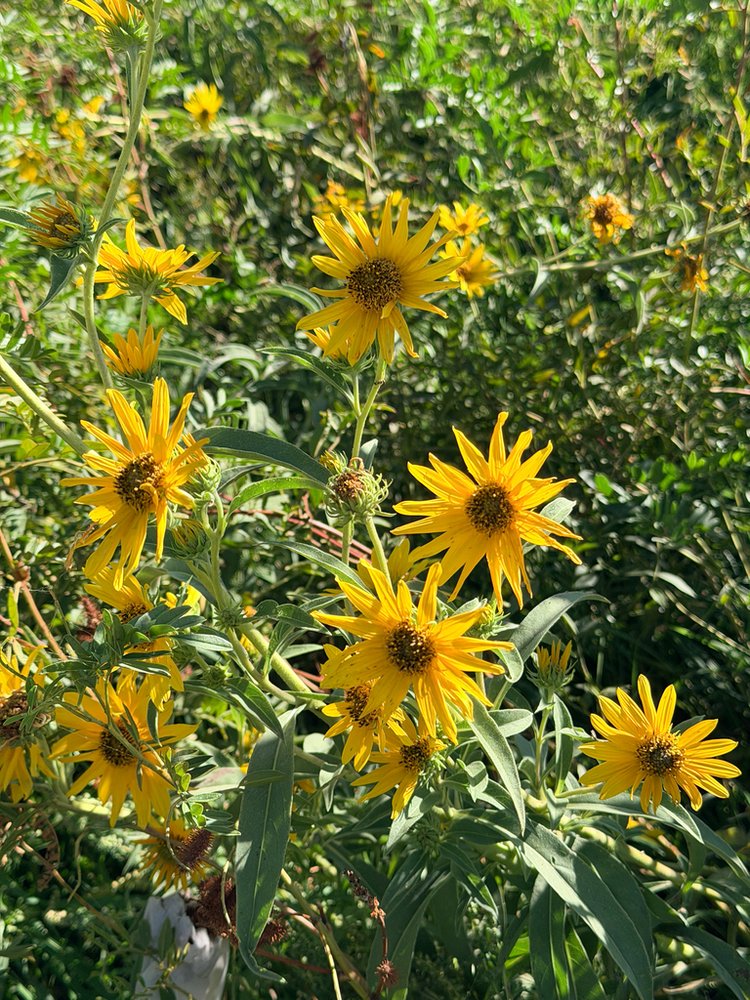
Maximilian Sunflower (Helianthus maximiliani) is a tall native perennial with narrow, grayish-green leaves folded upward along the midrib and many yellow, sunflower-like heads on the upper stem, blooming from August into October. It grows on damp and open prairie, roadsides and waste ground, and in the Black Hills the National Park Service lists it at Wind Cave National Park and Devils Tower National Monument.
Free photos from other sources
| Family | Asteraceae · Aster |
|---|---|
| Status | Native perennial |
| Blooms | August into October |
| Height | 50–250 cm (20–98 in) |
| Where | Damp and open prairie, roadsides, ditches, stream banks and waste ground, often in sandy soil |
| Also called | Maximilian's Sunflower, Michaelmas-daisy, waȟčá zi (Lakota), waȟčá zií (Lakota) |
| Synonym | Helianthus maximilianii, Helianthus dalyi |
| Food use | According to the Forest Service's Fire Effects Information System, the roots can be prepared and eaten like those of Jerusalem artichoke, and tribes of the Great Plains ate them raw, boiled or roasted. |
| Traditional use | Black Elk and Flying By's 1998 list of Lakota plants records that the Lakota sometimes ate the small roots and that the seeds are also edible. |
Traditional use: first drafted by Google AI, then checked against the sources on this page.
Roots, seeds & germination
Root: The plant has a stout, rhizomatous root (SDSU). A perennial root crown and rhizomes send up new stems each year, which lets it spread into dense clusters (USDA plant guide).
Seed: The fruits (achenes) are 3–4 mm long (SDSU, Flora of North America).
Germination: SDSU says no pretreatment is needed, though 30 days of cold treatment increases the sprouting rate.
How do you identify Maximilian Sunflower?
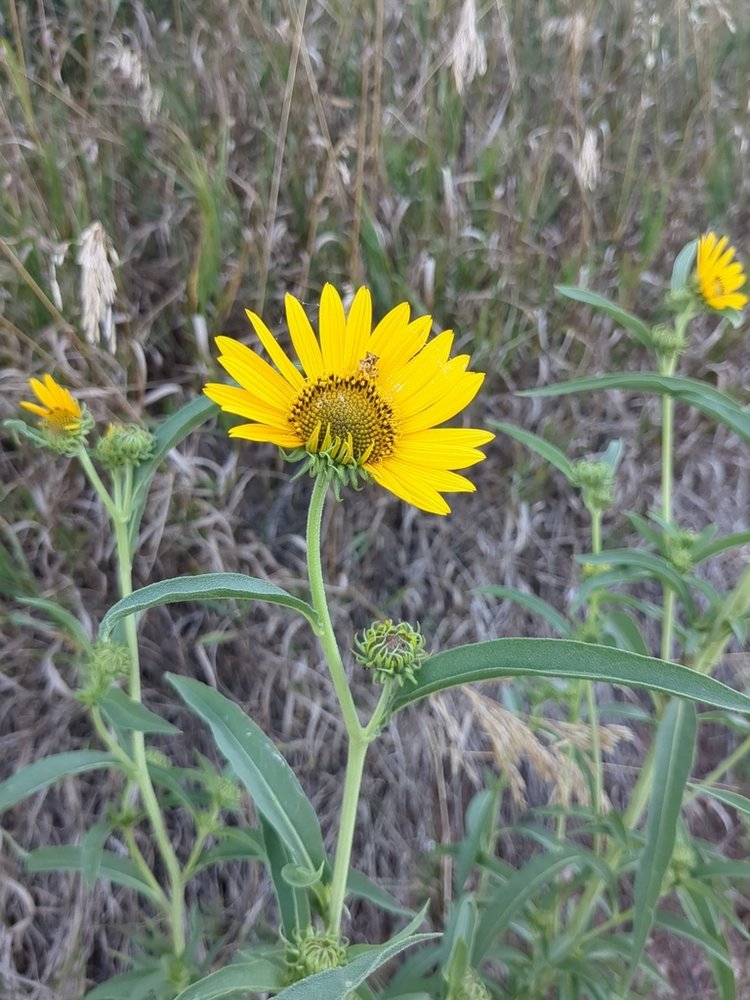
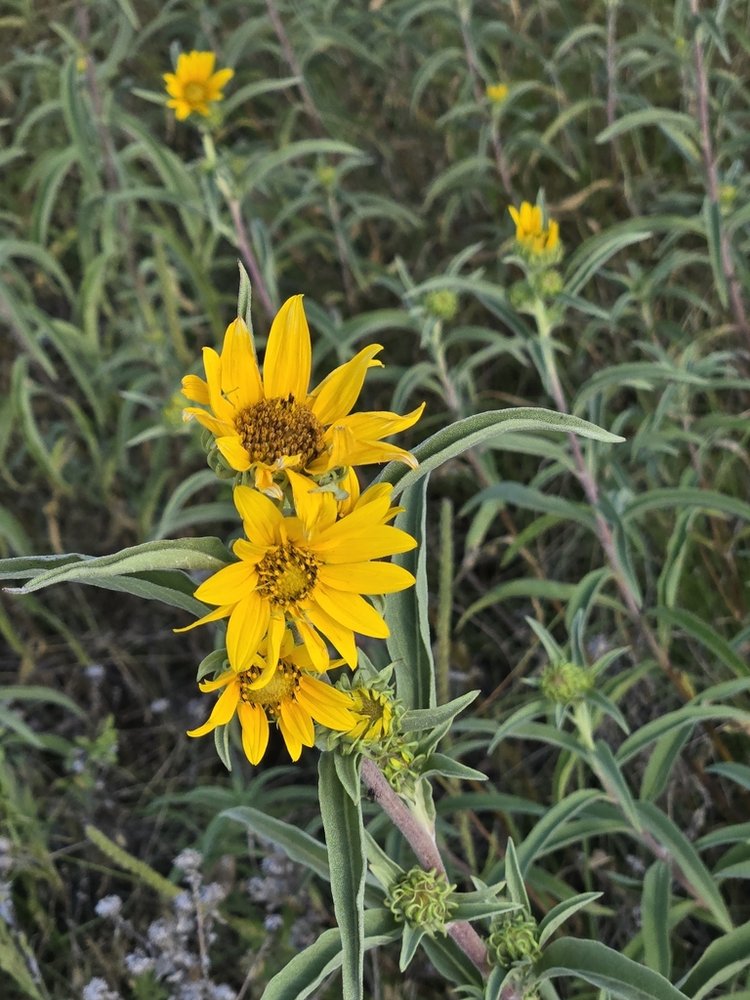
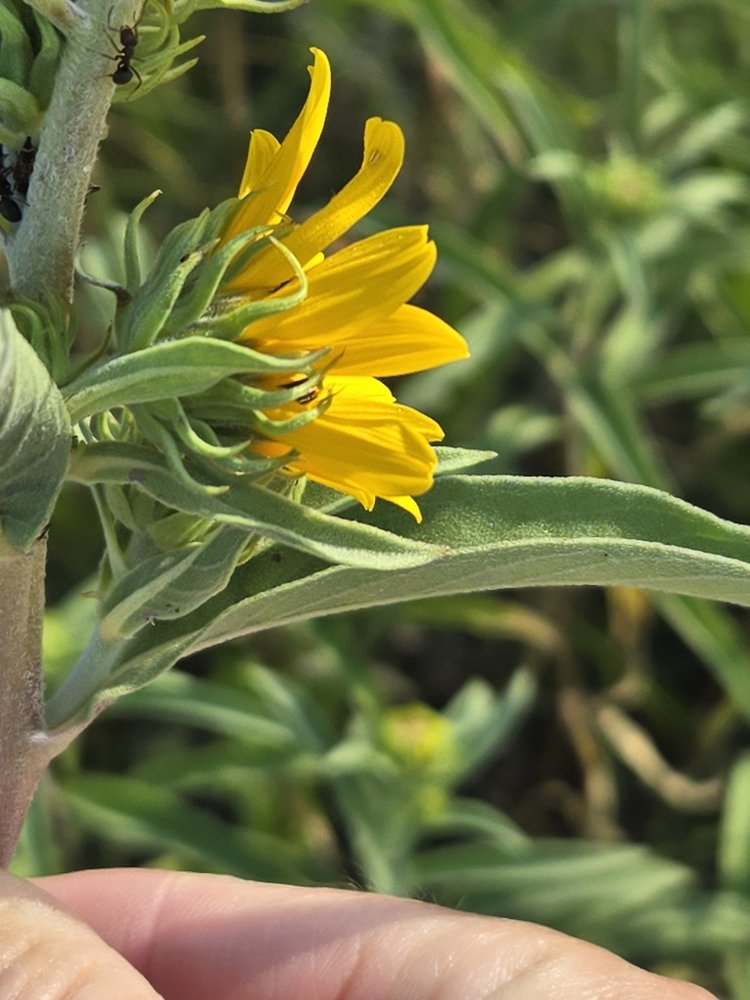
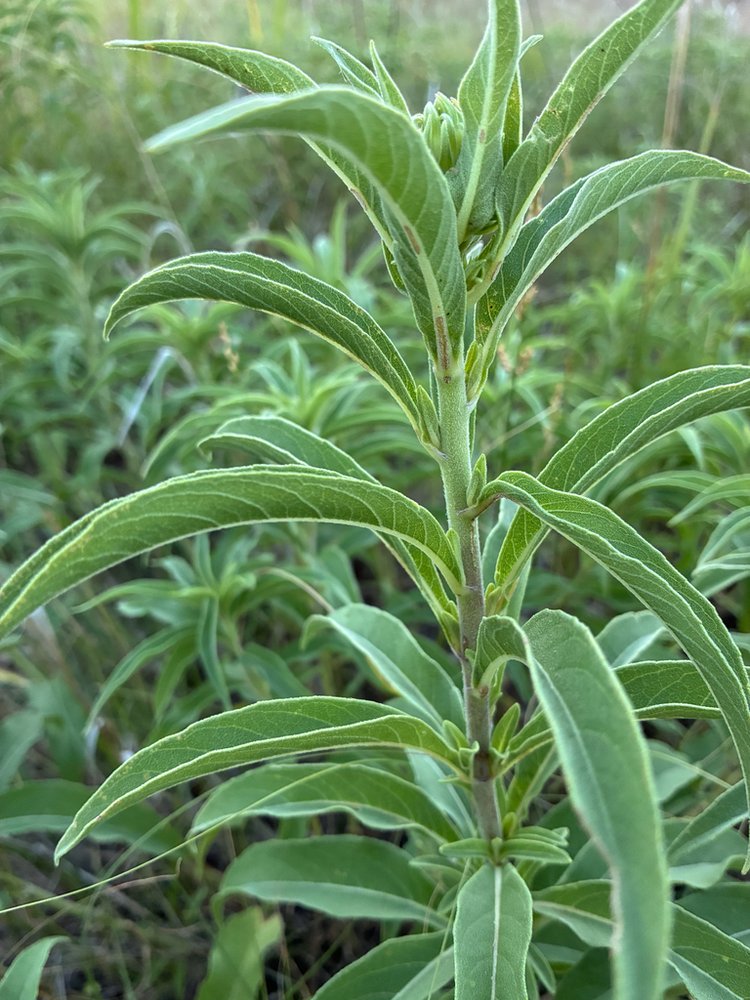
Look for tall, usually unbranched stems 0.5–2.5 m (20–98 in) high, light green to purplish and covered in short white hairs, standing singly or in loose clusters. The lance-shaped leaves, 7–30 cm (3–12 in) long, are very pointed, grayish green, coarsely hairy and rough, and are folded upward along the central vein; SDSU says this narrow, folded, grayish-green leaf sets it apart from other sunflowers. Heads 2.5–7 cm (1–2¾ in) across sit on stalks from the upper leaf axils, often making a long column of flowers at the top, with 15–25 yellow rays, a greenish yellow to dark brown center and long, narrow, spreading bracts behind the head. Minnesota Wildflowers says it most resembles Sawtooth Sunflower (Helianthus grosseserratus), which has coarsely toothed leaves on longer stalks and a hairless stem, while Maximilian Sunflower's leaves are mostly toothless and its stem is rough with short hairs.
When does it bloom?
August into October.
Where does it grow?
Damp and open prairies and waste ground, often in sandy soil, throughout South Dakota (SDSU). Black Hills herbarium labels give stream and creek banks, a wet roadside ditch fed by spring water, a wooded hillside in a canyon, irrigation ditches, roadsides, open grassland and a draw bottom with rich, moist soil. The National Park Service lists it at Wind Cave and Devils Tower, and GBIF holds 26 herbarium specimens from Pennington, Fall River, Lawrence, Custer and Meade counties in South Dakota and Crook County in Wyoming, collected between 1908 and 2008.
Other sunflowers in this guide
Aster family (Asteraceae): 62 other plants in this guide
- Aromatic Aster
- Arrowleaf Balsamroot
- Arrowleaf Sweet Coltsfoot
- Bachelor's Button
- Balsam Ragwort
- Black-eyed Susan
- Blanket Flower
- Blue Lettuce
- Broom Snakeweed
- Bull Thistle
- Canada Hawkweed
- Canada Lettuce
- Canada Thistle
- Chicory
- Common Burdock
- Common Dandelion
- Common Sunflower
- Common Tansy
- Common Yarrow
- Curlycup Gumweed
- Cutleaf Coneflower
- Dotted Gayfeather
- Drummond's Thistle
- Easter Daisy
- False Boneset
- Fetid Marigold
- Field Pussytoes
- Fringed Sagewort
- Hairy Golden Aster
- Heart-leaved Arnica
- Hooker's Townsend Daisy
- Horseweed
- Jerusalem Artichoke
- Lambstongue Groundsel
- Missouri Goldenrod
- Mountain Dandelion
- Musk Thistle
- Oxeye Daisy
- Pearly Everlasting
- Pineapple Weed
- Prairie Coneflower
- Prairie False Dandelion
- Purple Coneflower
- Rocky Mountain Blazing Star
- Rosy Pussytoes
- Rubber Rabbitbrush
- Rush Skeletonplant
- Scotch Thistle
- Silver Sagebrush
- Smooth Blue Aster
- Spotted Joe-Pye Weed
- Stemless Four-nerve Daisy
- Stiff Goldenrod
- Stiff Sunflower
- Threenerve Fleabane
- Wavyleaf Thistle
- Western Ragweed
- White Hawkweed
- White Prairie Aster
- White Sagebrush
- Woolly Groundsel
- Yellow Salsify
Sources: SDSU Open PRAIRIE: Asteraceae: Helianthus maximilianii (R. Neil Reese); Flora of North America Vol. 21: Helianthus maximiliani (Schrader), eFloras; Minnesota Wildflowers: Helianthus maximiliani (Maximilian Sunflower); Kansas Wildflowers and Grasses: Maximilian sunflower (Helianthus maximiliani); USDA PLANTS Database: Helianthus maximiliani (HEMA2); USDA NRCS Plant Guide: Maximilian Sunflower, Helianthus maximiliani; USDA Forest Service Fire Effects Information System: Helianthus maximiliani; NPSpecies checklist, Wind Cave National Park vascular plants; NPSpecies checklist, Devils Tower National Monument vascular plants; GBIF occurrence search: Helianthus maximiliani herbarium specimens, Black Hills counties of South Dakota and Wyoming; GBIF specimen 2512285205: Lawrence County 1942, stream bank; GBIF specimen 2512287206: Lawrence County 1947, wet roadside ditch fed by spring water; Culturally Important Plants of the Lakota (Black Elk and Flying By, 1998), entry 142, filed with the South Dakota PUC; Native American Ethnobotany Database (BRIT): Helianthus maximiliani; South Dakota locally noxious weed list, updated 2024 (DANR); Wyoming Weed and Pest Council: Designated Weed List.