Fetid Marigold
Dyssodia papposa
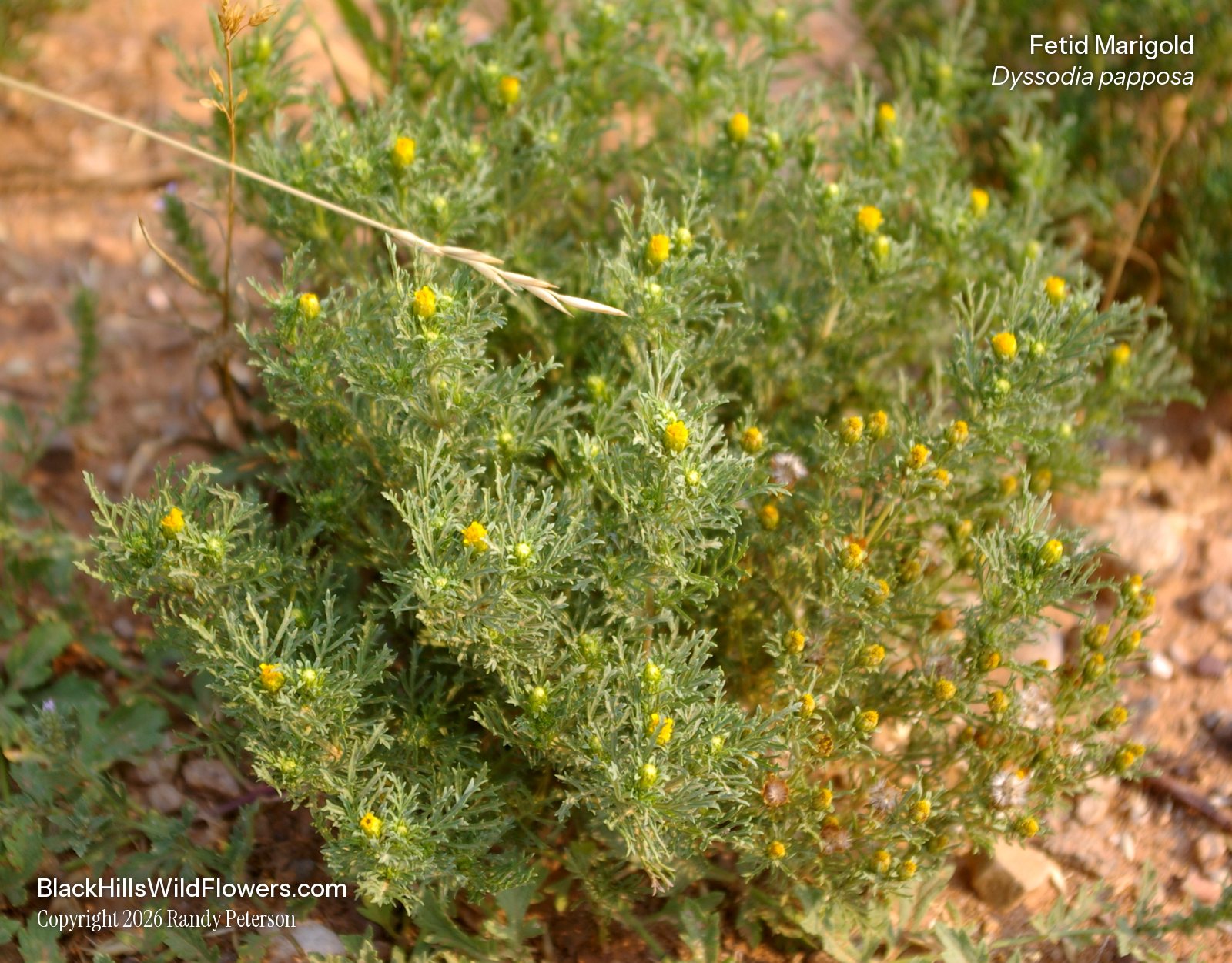
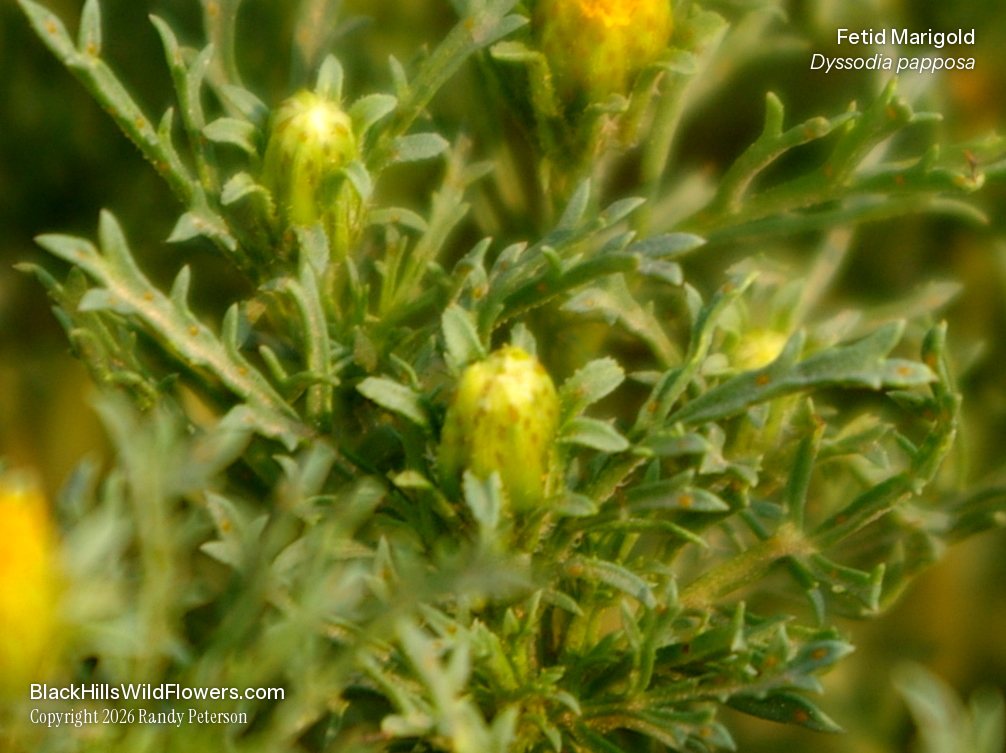
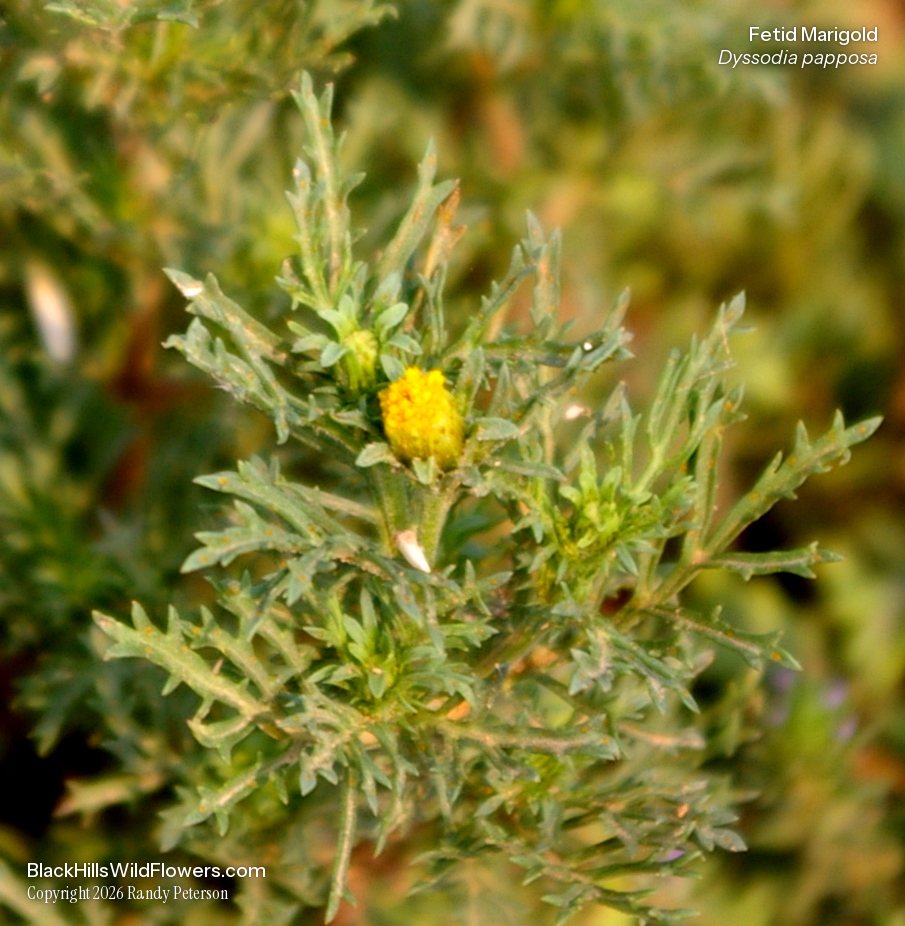
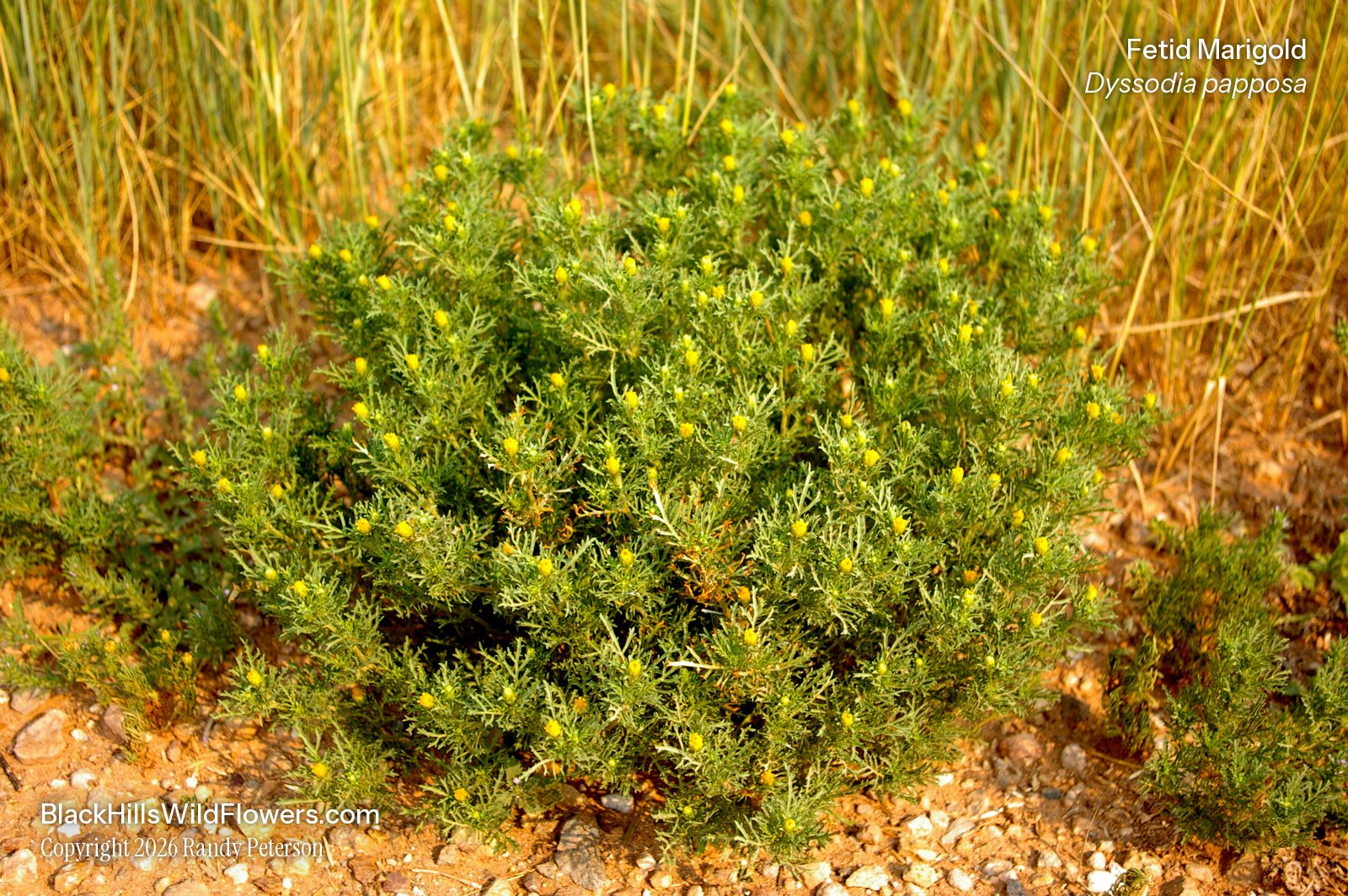
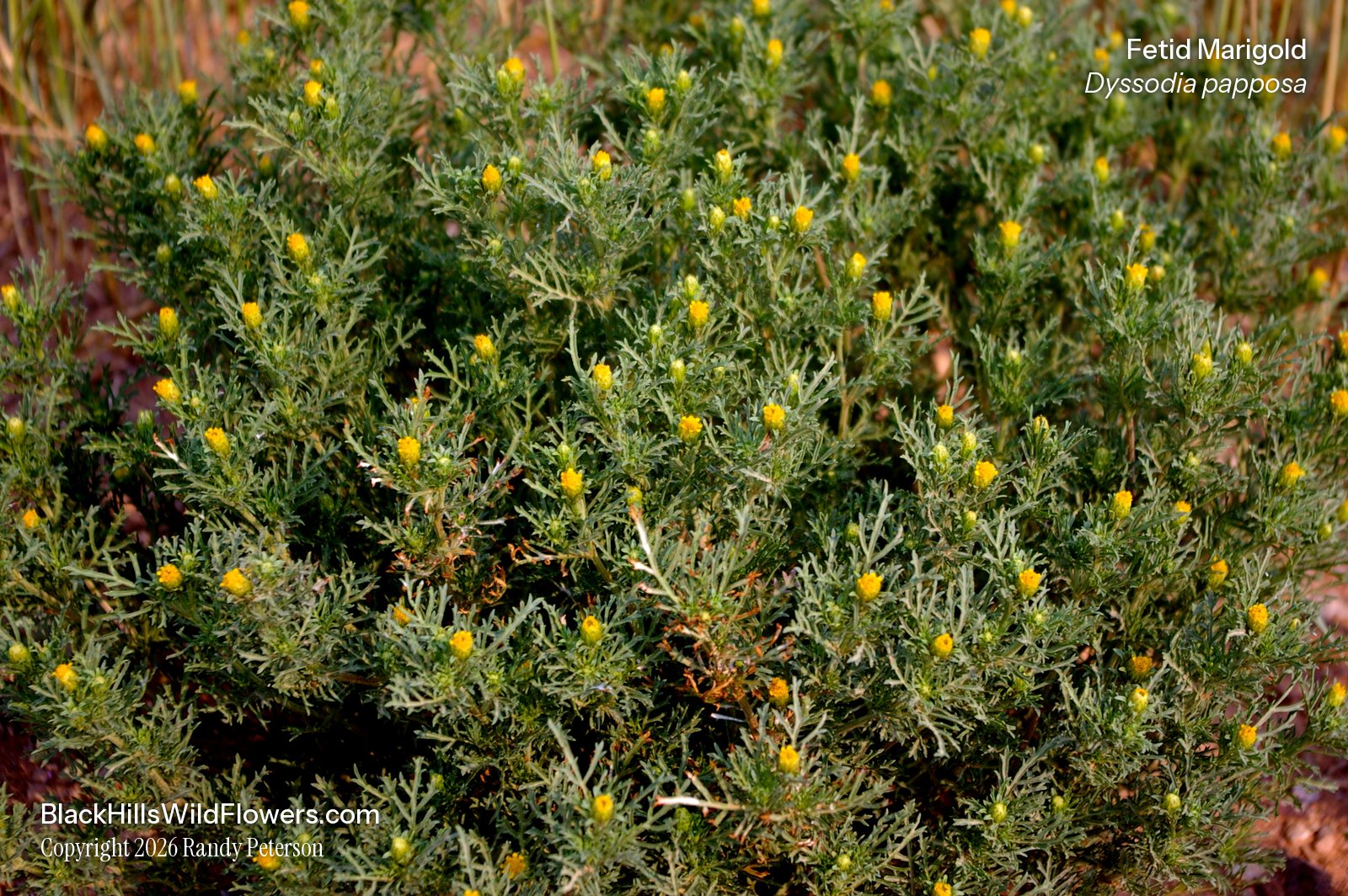
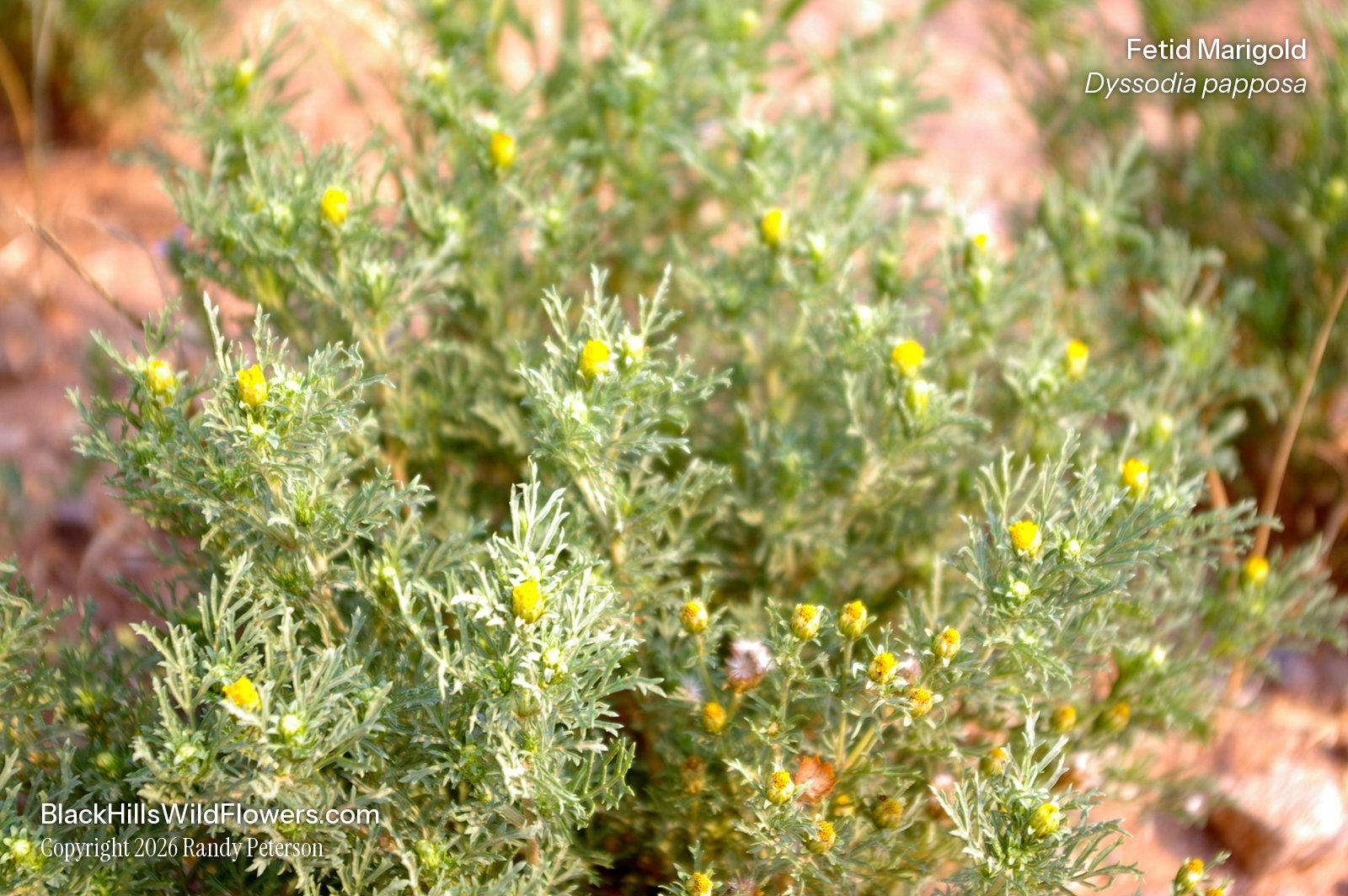
Fetid Marigold (Dyssodia papposa) is a low, bushy native annual with finely divided, gland-dotted leaves, small yellow heads and a strong smell when crushed. It blooms July through September in open fields and disturbed areas of southern and western South Dakota. Photographed in the Black Hills.
| Family | Asteraceae · Aster |
|---|---|
| Status | Native annual |
| Blooms | July through September |
| Height | 10–50 cm (4–20 in) |
| Where | Open fields, roadsides, pastures and other disturbed ground |
| Also called | Prairie Dogweed |
Roots, seeds & germination
Seed: A narrow, hairy achene (a dry one-seeded fruit), 3–3.5 mm long, dark brown to black, tipped with scales and bristles. Collect it after it turns brown in fall.
Germination: Fall sowing works well, and many seeds will also germinate if planted early in spring. It reseeds itself readily.
How do you identify Fetid Marigold?
Look for mostly opposite leaves, sometimes alternate higher on the stem, deeply cut into narrow segments and dotted with orange oil glands, plus small short-stalked heads with up to 8 short yellow rays. A crushed leaf has a strong, pungent smell.
When does it bloom?
July through September.
Where does it grow?
Open fields and disturbed areas in southern and western South Dakota. In Kansas it is most abundant in rocky soil and often grows in prairie dog towns.
Other flowers to compare
Sources: SDSU Open PRAIRIE: Dyssodia papposa; Minnesota Wildflowers: Fetid Marigold; Kansas Wildflowers: Fetid Marigold.