Field Pussytoes Antennaria neglecta
Also called Field Pussy-toes, Pussy Toes
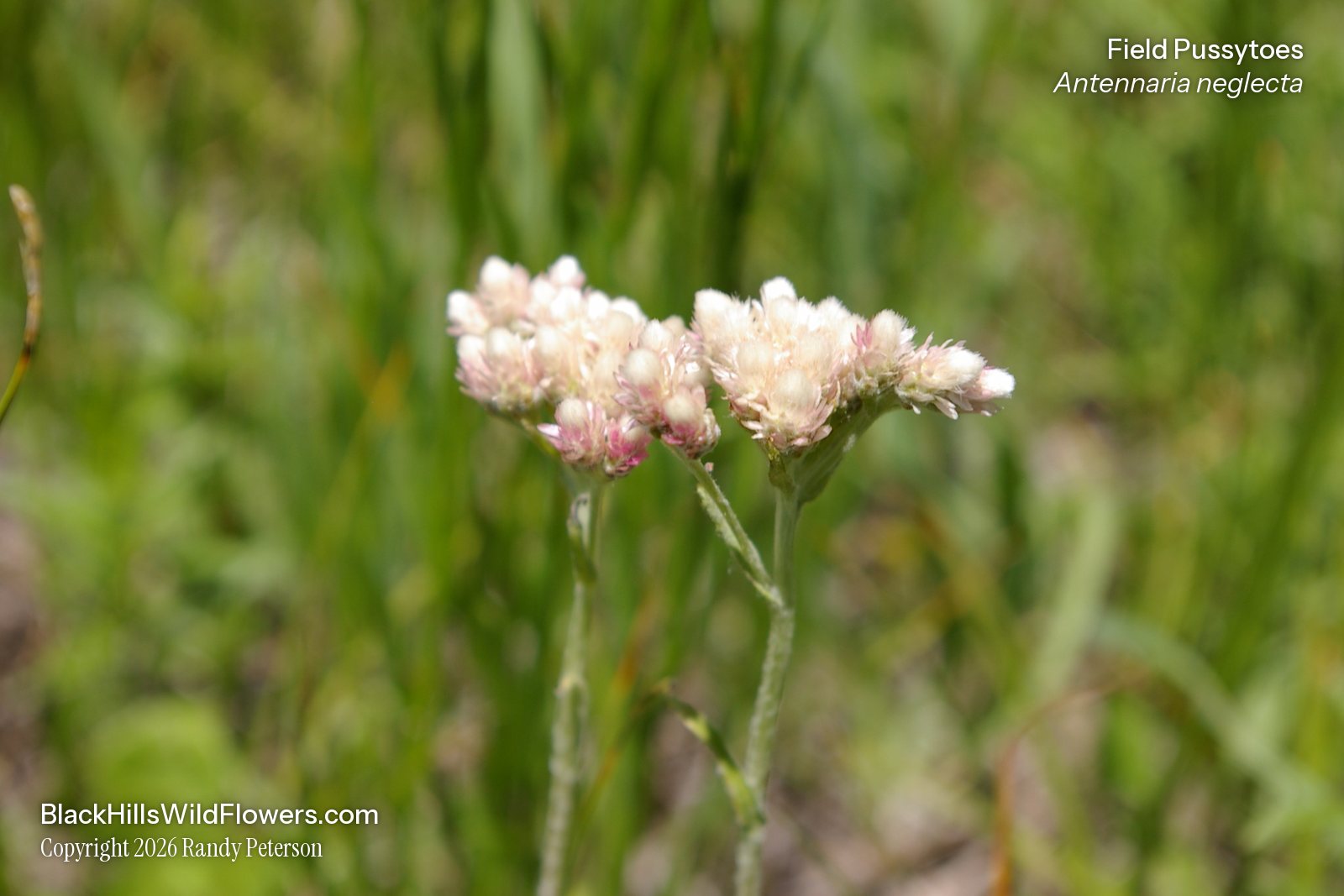
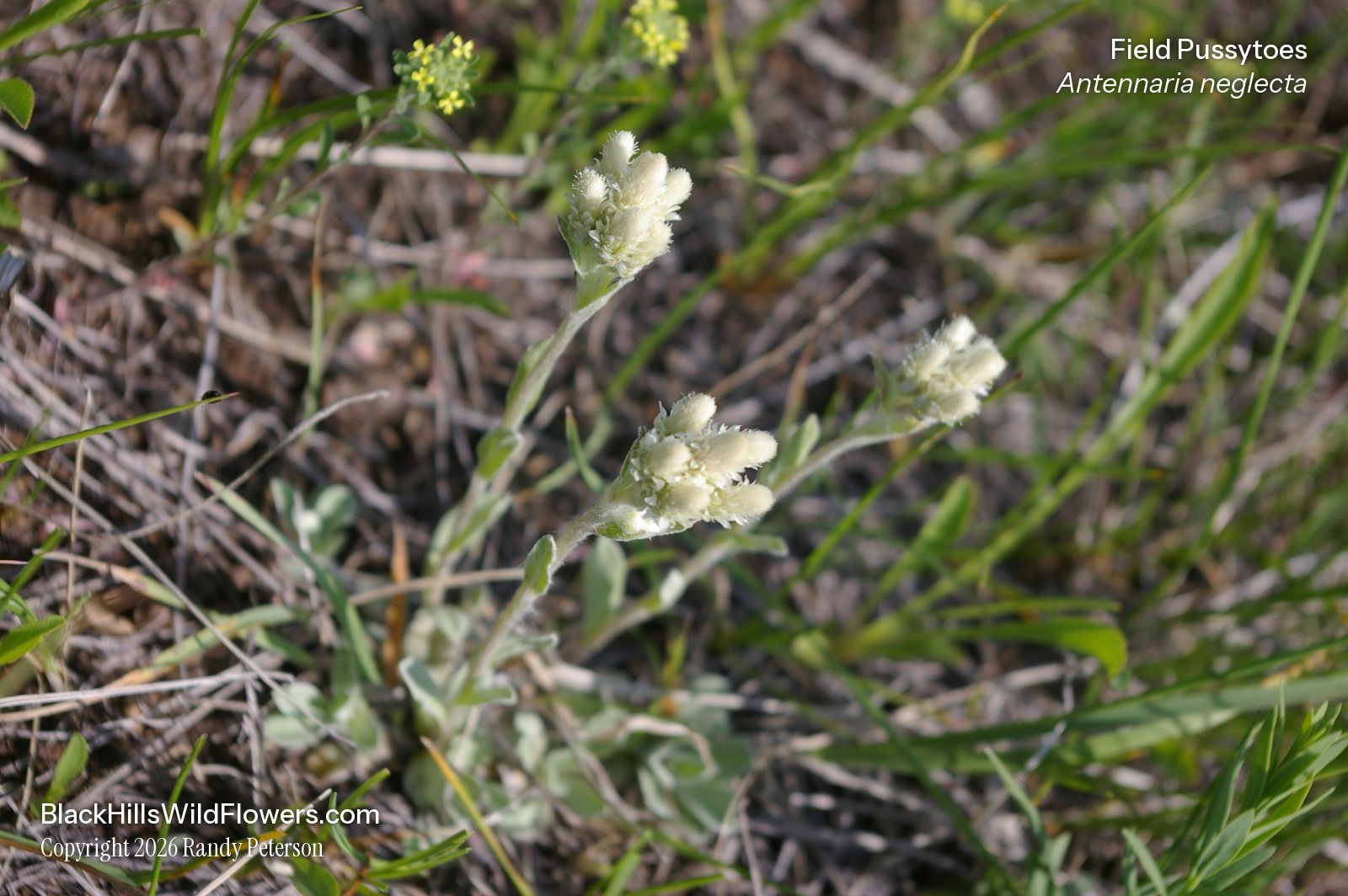
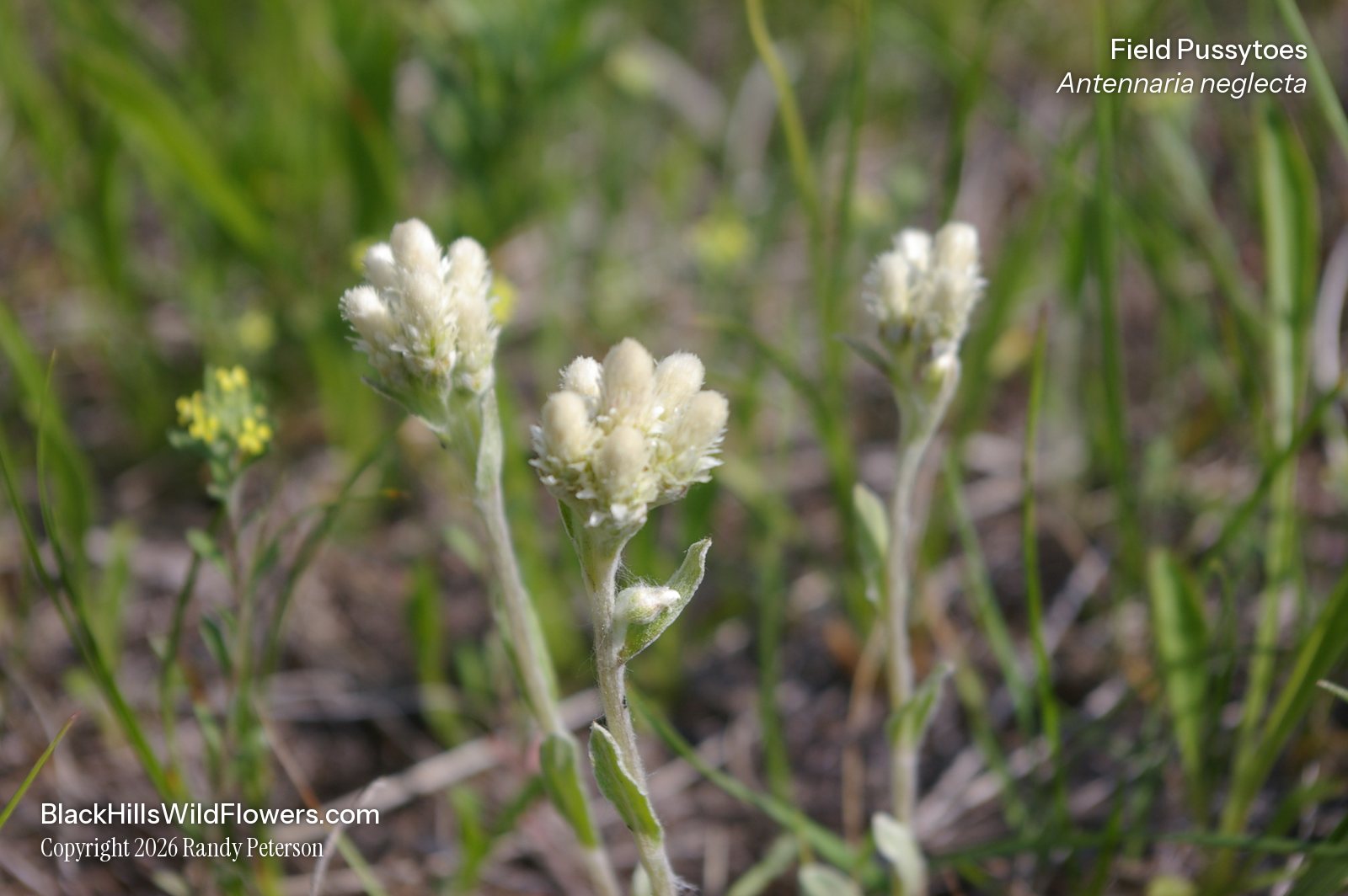
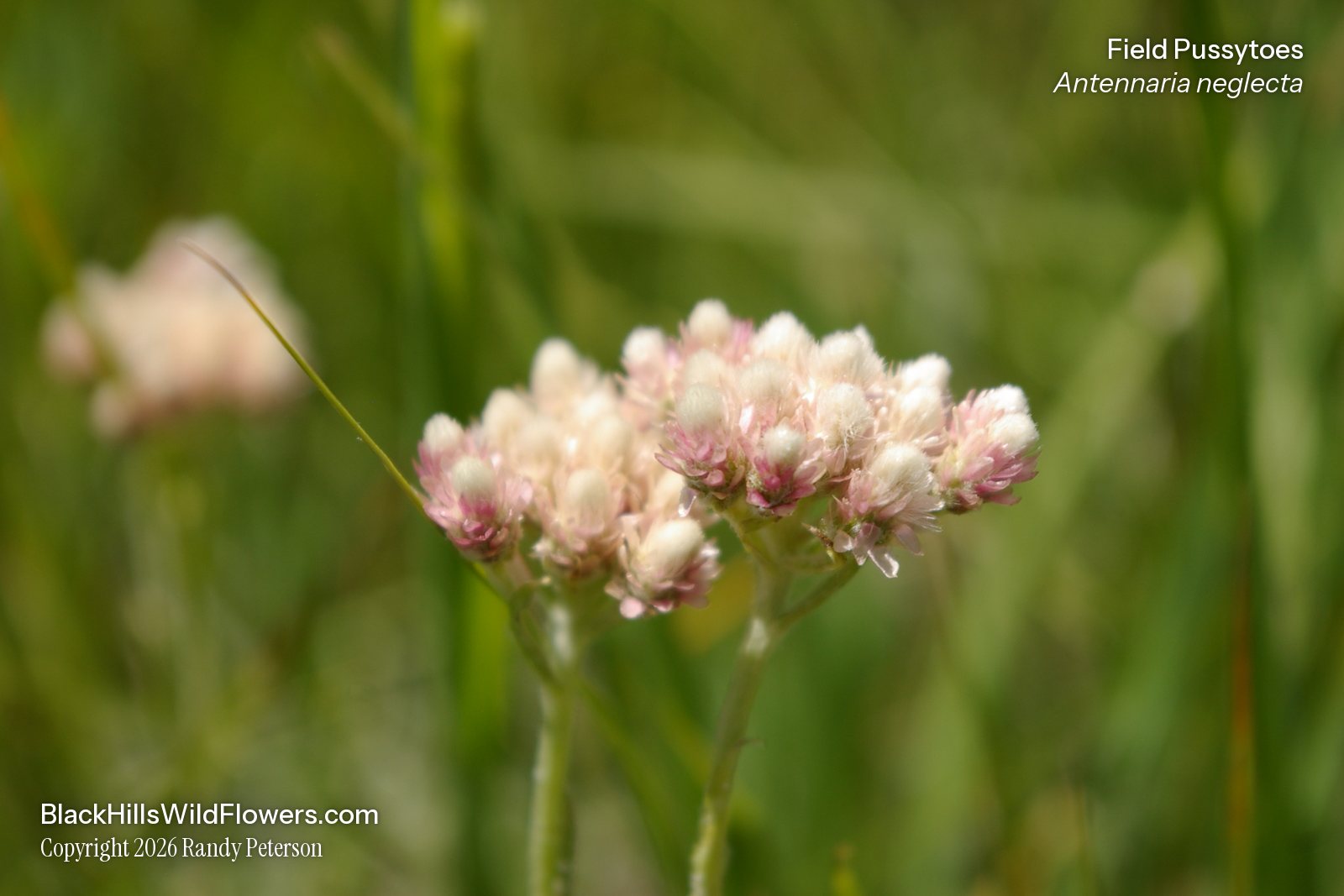
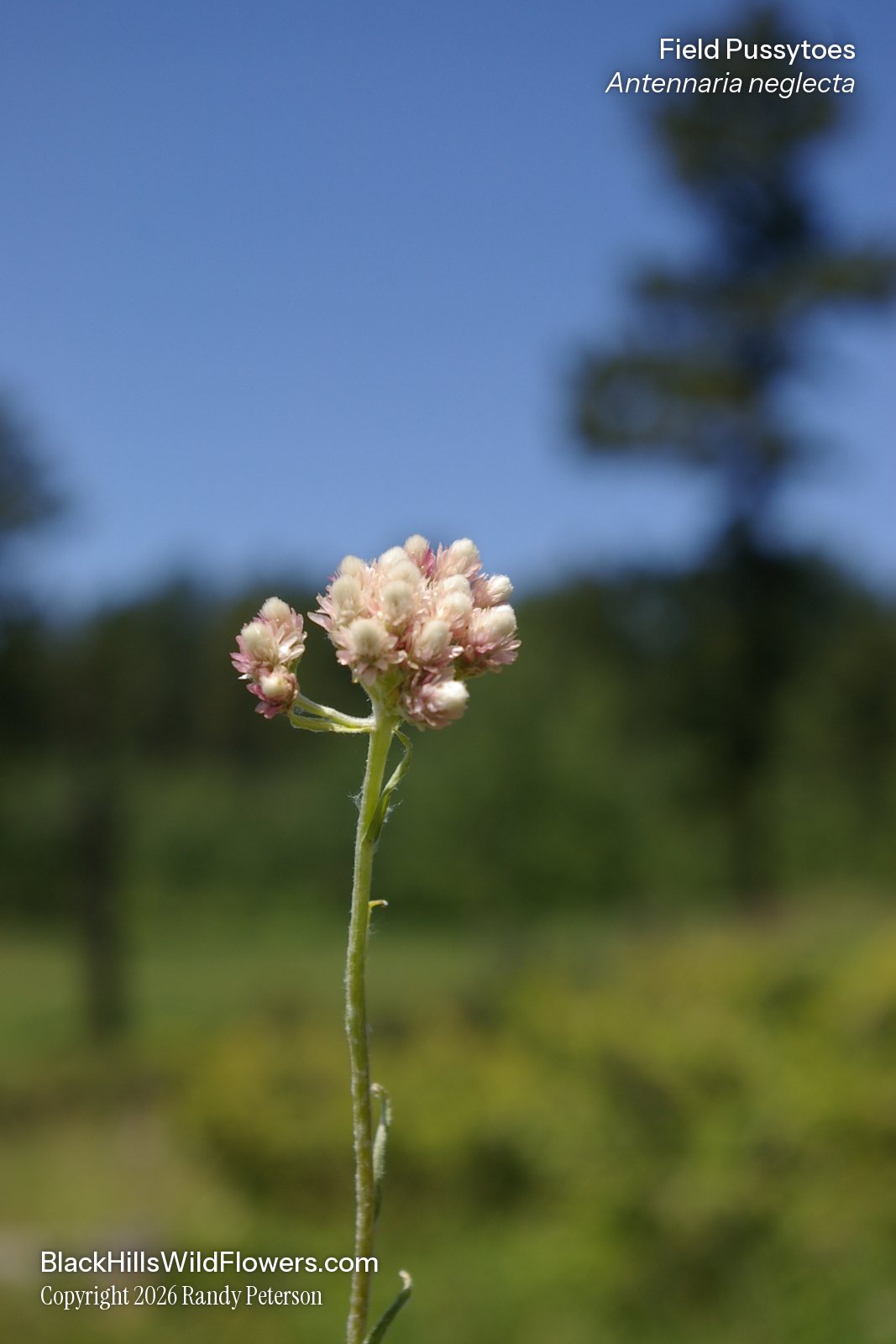
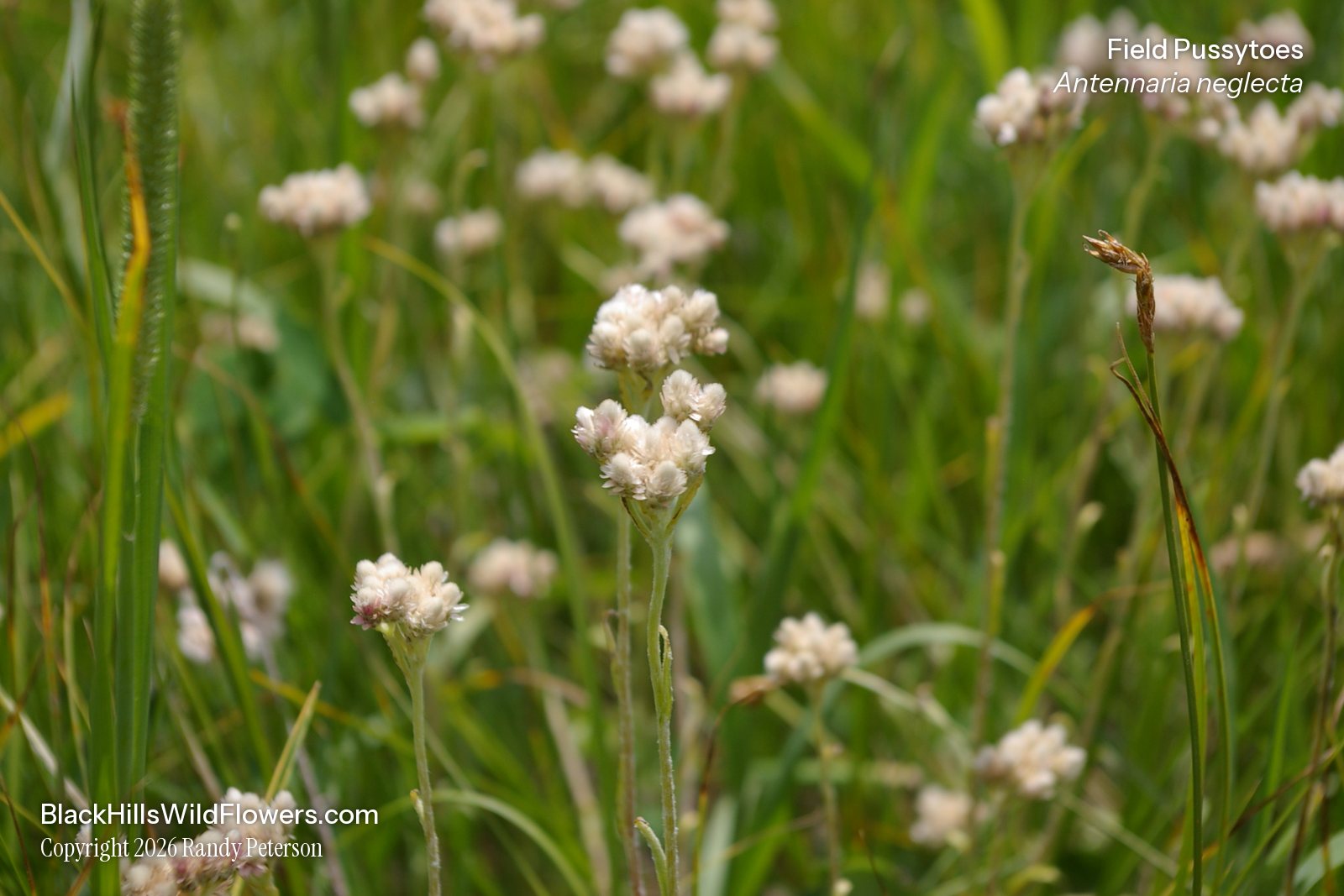
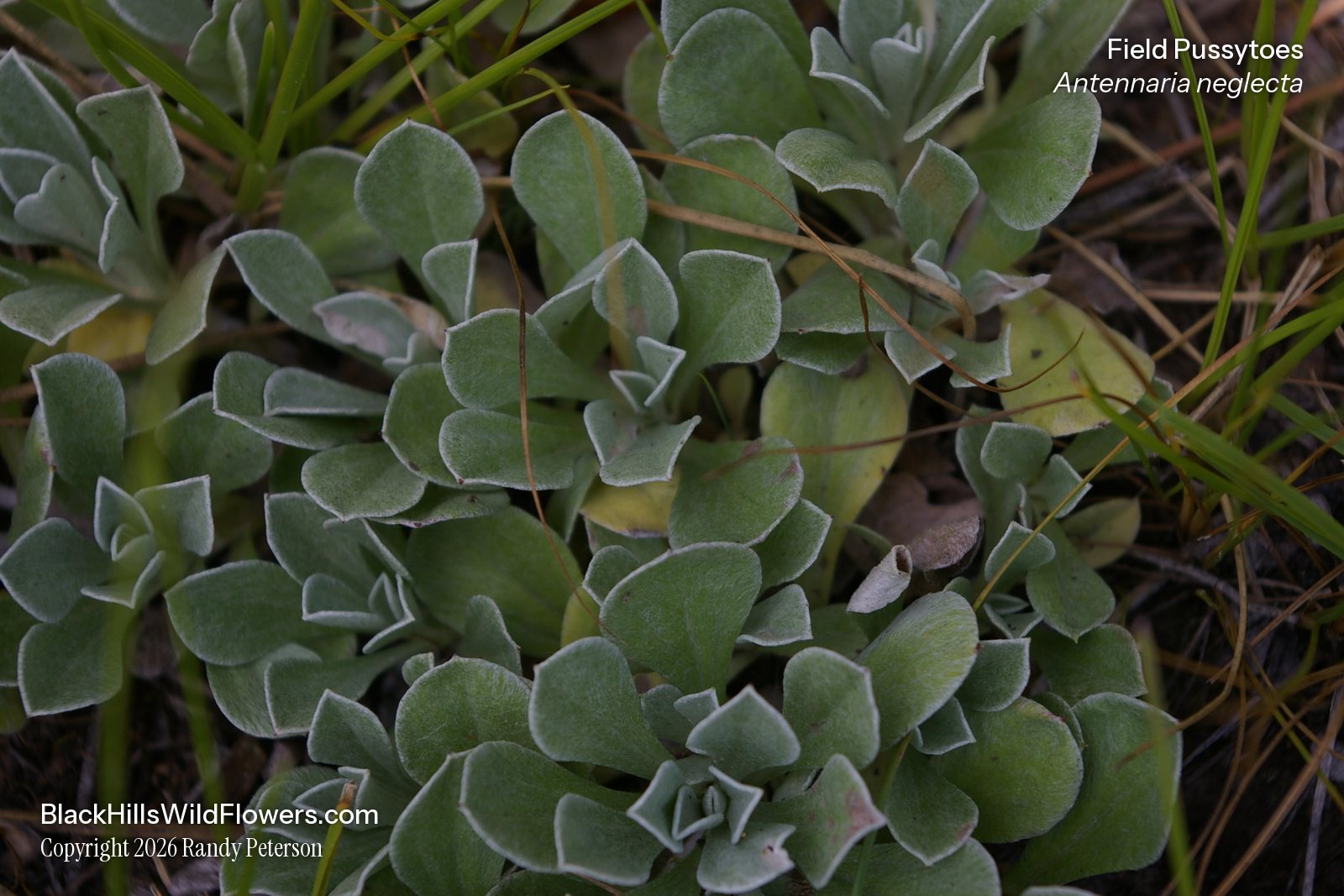
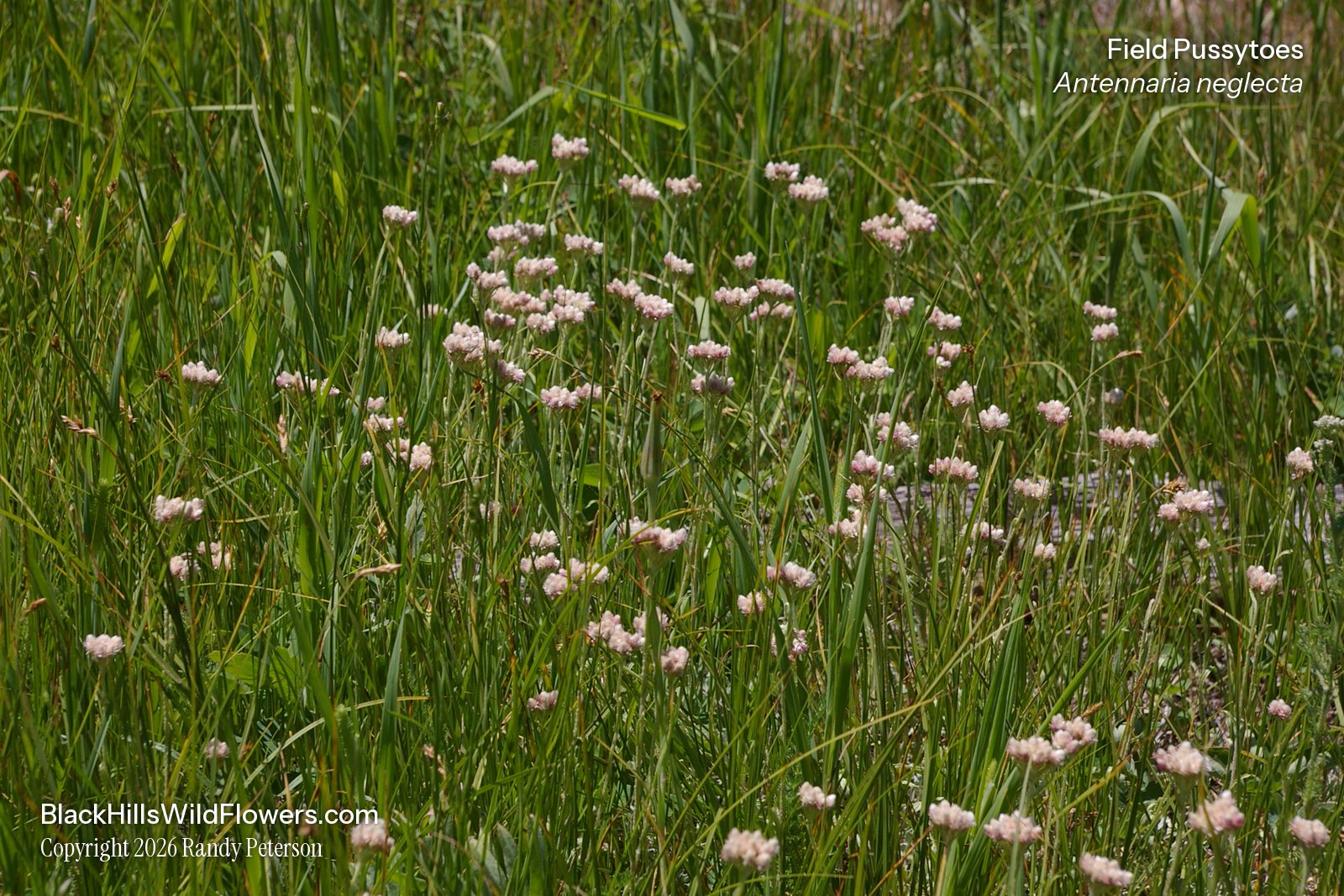
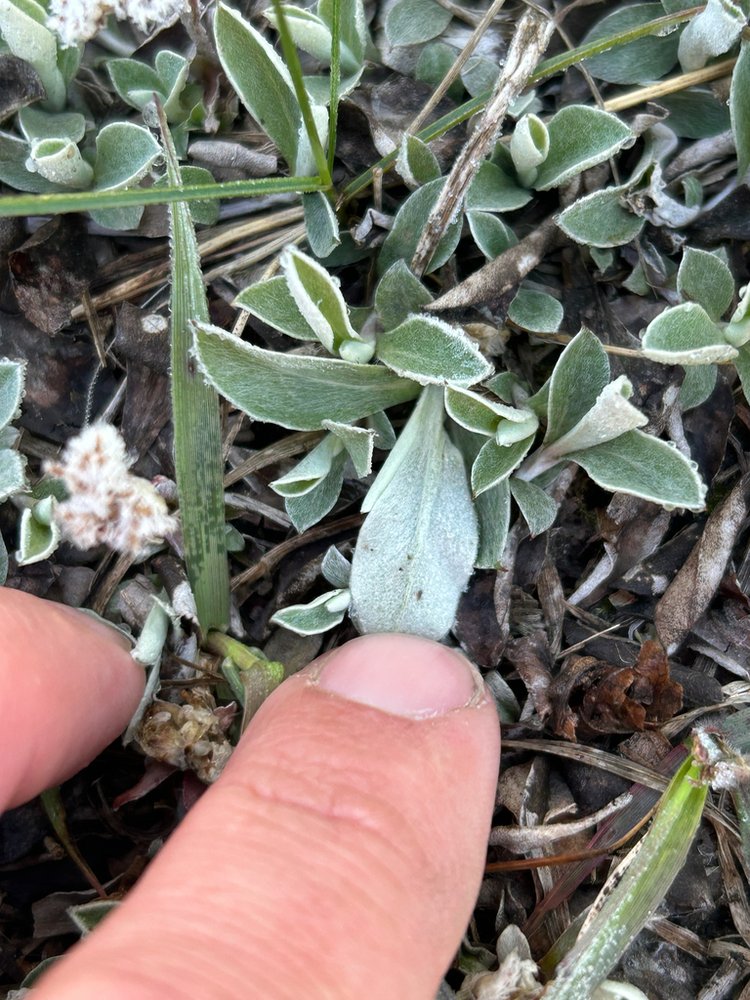
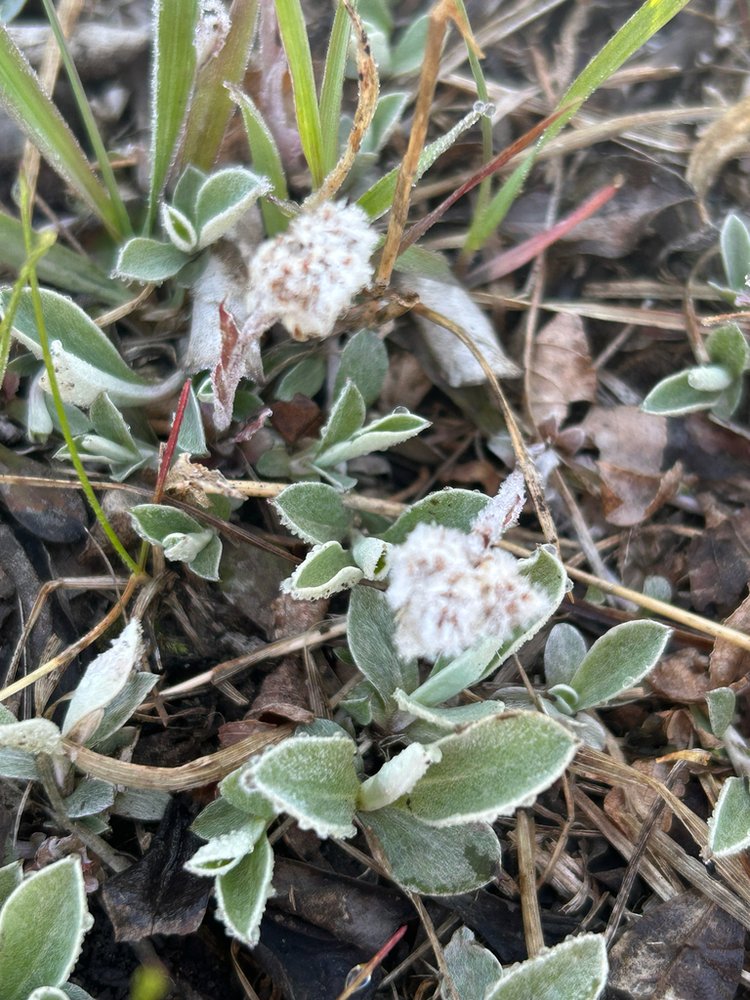
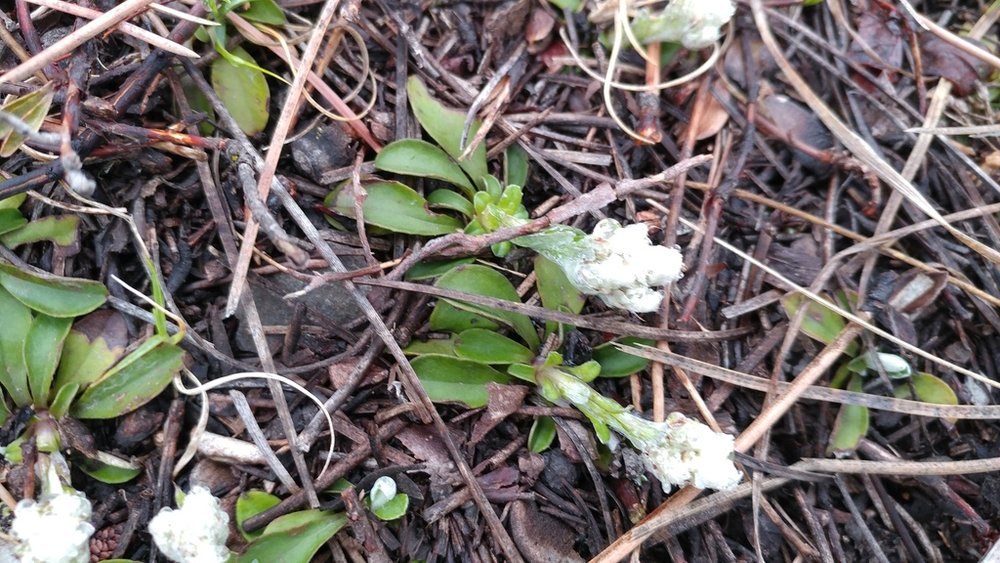
Field Pussytoes (Antennaria neglecta) is a low native perennial that spreads by long runners into colonies of gray-green rosettes and sends up woolly stems 4–25 cm (1½–10 in) tall, each carrying 2 to 8 small fuzzy heads with white bract tips. In the Black Hills it blooms from May into July, mostly in June, in open pine woods, meadows and on grassy slopes, and the National Park Service lists it at Wind Cave and Jewel Cave. Photographed in the Black Hills.
Free photos from other sources
| Family | Asteraceae · Aster |
|---|---|
| Status | Native perennial |
| Blooms | May into July, mostly June |
| Height | 4–25 cm (1½–10 in) |
| Where | Prairie, pastures, dry fields and open pine woodland |
| Also called | Field Pussy-toes, Pussy Toes |
| Synonym | Antennaria campestris, Antennaria neglecta var. campestris, Antennaria athabascensis, Antennaria nebrascensis |
| Note | Pussytoes are hard to name from a phone photo. Without the stem-leaf flags in view, the safe call is Pussytoes (Antennaria). |
Roots, seeds & germination
Root: The plant spreads by lash-like runners 2.5–18 cm (1–7 in) long that carry only small leaves except at the tip and root at the nodes, so one plant becomes a colony. South Dakota State University notes the colonies can be divided.
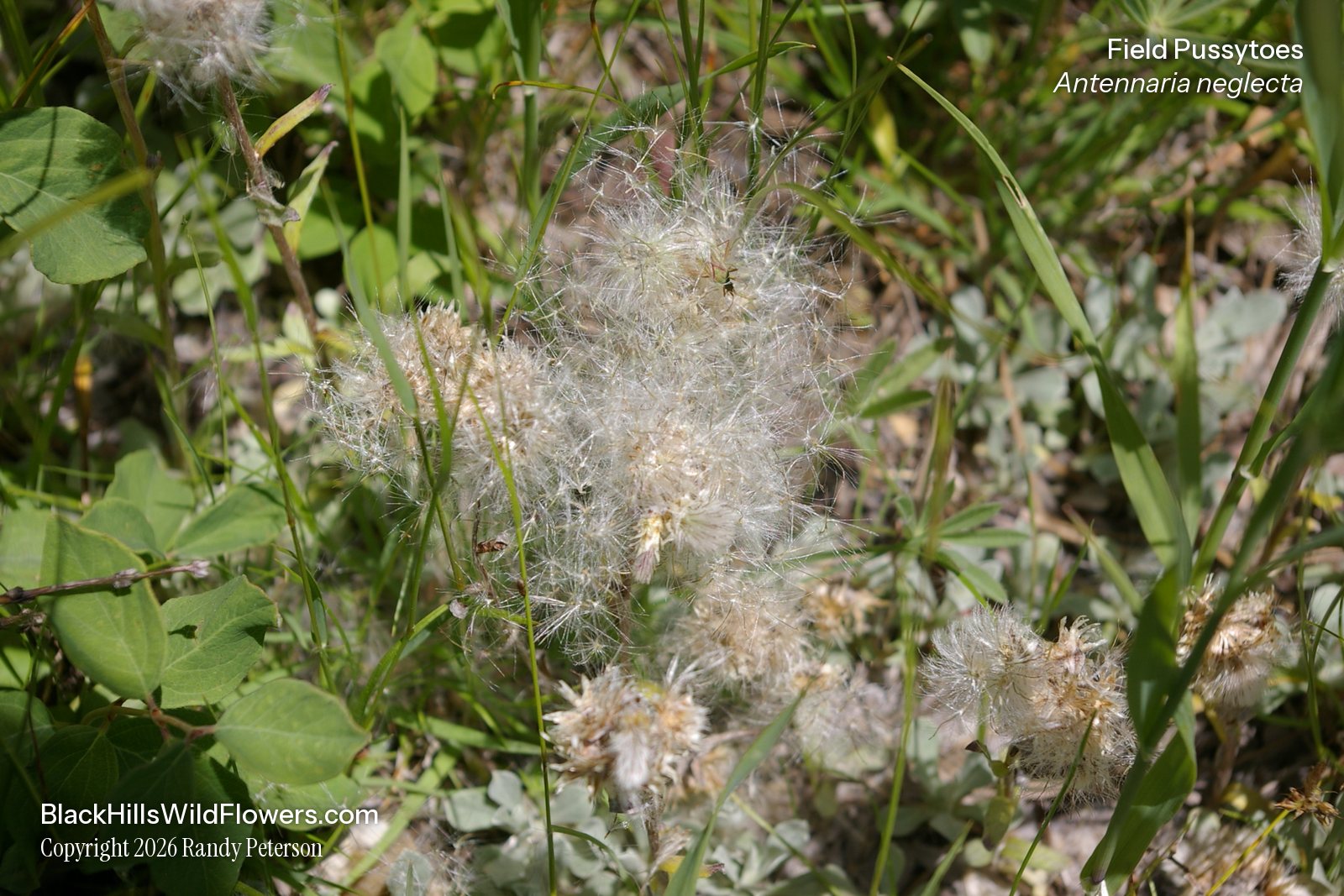
Seed: Each head ripens brown seeds 0.9–1.4 mm long, each with a tuft of white hair 6–9 mm long that carries it on the wind. South Dakota State University collects the seed in late May and June.
Germination: South Dakota State University says the seed is dormant when first collected and that planting in fall encourages it to sprout.
How do you identify Field Pussytoes?
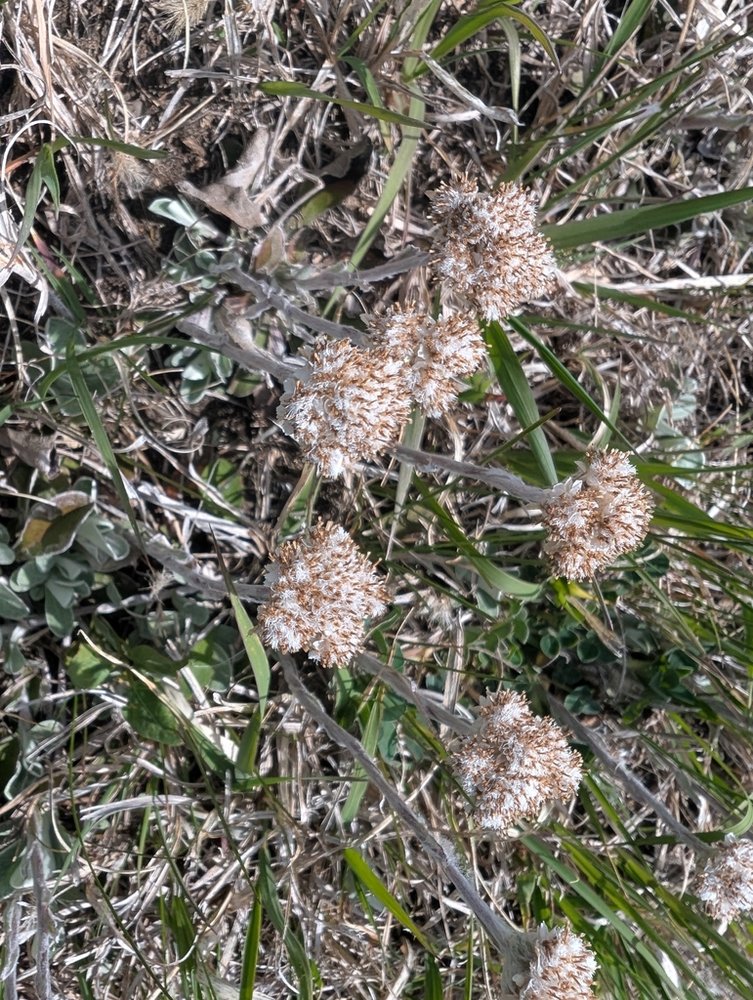
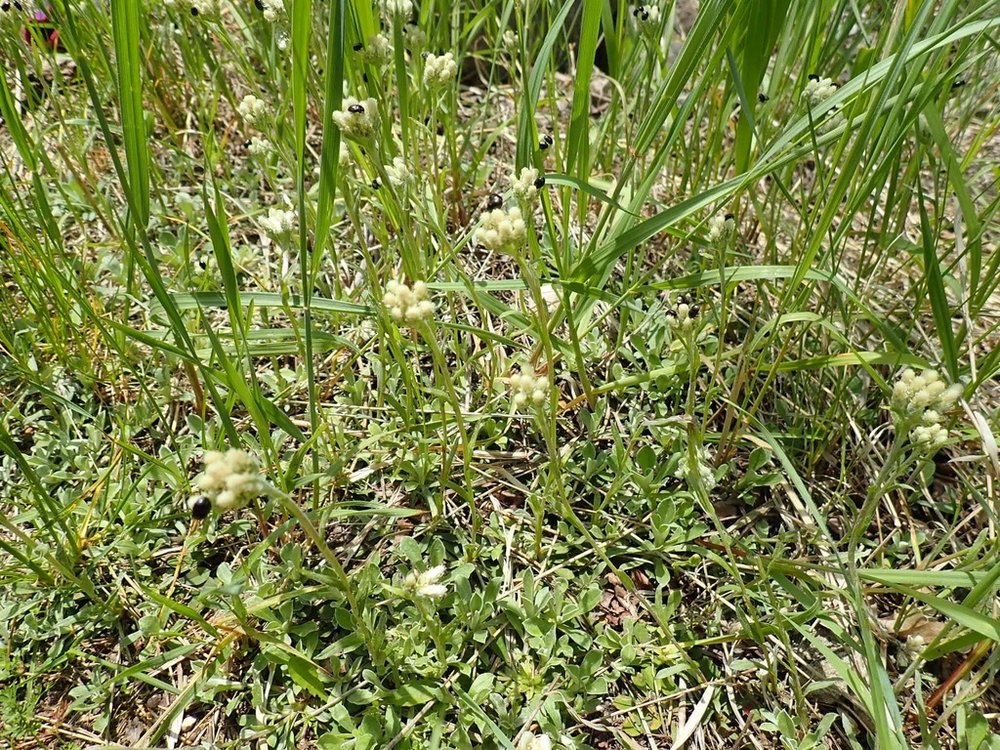
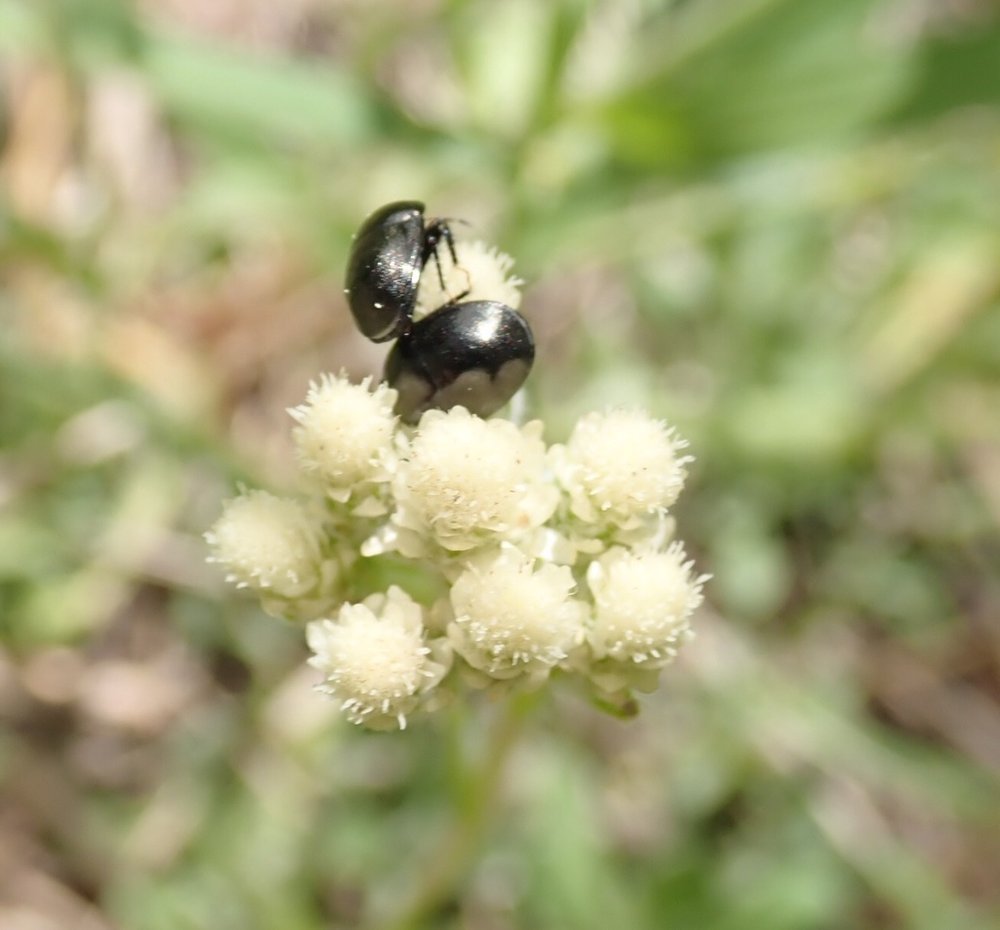
Look for colonies of small gray-green rosettes tied together by long runners, and woolly stems with 2 to 8 heads in a flat to rounded cluster. Three marks pin it down. The mid and upper stem leaves end in a short papery appendage, a flag, which you may need a hand lens to see. The basal leaves are narrowly spatula-shaped, 1.5–6.5 cm (½–2½ in) long, with one vein showing on both sides, silvery white underneath and gray-green and woolly on top until late in the season, when the top can go nearly bald. The bract tips around the heads are all white. Male and female plants grow in separate colonies near each other: female heads are brush-like with many thread-like styles, and male heads are smaller and rounder with a brown column of stamens. Howell's Pussytoes is the closest match and grows in all four Black Hills parks; its stem leaves usually have no flag, its basal leaves are greener and hairless or thinly hairy on top, its bract tips run white to creamy yellow, and male plants are rare. Small-leaf Pussytoes is rarely more than 10 cm (4 in) tall, with basal leaves under 4 cm (1½ in) that are more silvery from denser hair, and male plants are very uncommon. Rosy Pussytoes stands taller than Small-leaf, and its bracts are often rosy pink.
When does it bloom?
May into July, mostly June.
Where does it grow?
Prairie, pastures, dry fields and open woods, and in the Black Hills also meadows at the edge of ponderosa pine, open pine slopes, a granite ridge with common juniper and shaded spruce forest, from about 1,400 to 2,290 m (4,600–7,500 ft) on labeled specimens. The National Park Service lists it at Wind Cave and Jewel Cave, Devils Tower's wildflower list gives it flowering in May and June, and herbarium specimens from 1887 to 2019 come from Pennington, Lawrence, Custer and Fall River counties in South Dakota and Crook County in Wyoming.
Other pussytoes in this guide
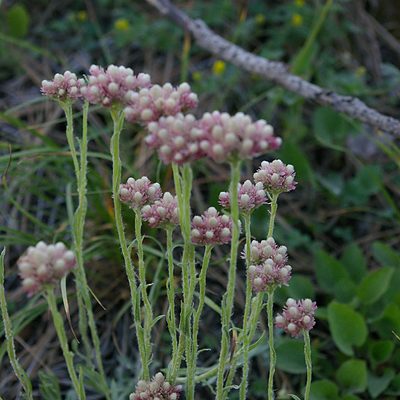
Aster family (Asteraceae): 62 other plants in this guide
- Aromatic Aster
- Arrowleaf Balsamroot
- Arrowleaf Sweet Coltsfoot
- Bachelor's Button
- Balsam Ragwort
- Black-eyed Susan
- Blanket Flower
- Blue Lettuce
- Broom Snakeweed
- Bull Thistle
- Canada Hawkweed
- Canada Lettuce
- Canada Thistle
- Chicory
- Common Burdock
- Common Dandelion
- Common Sunflower
- Common Tansy
- Common Yarrow
- Curlycup Gumweed
- Cutleaf Coneflower
- Dotted Gayfeather
- Drummond's Thistle
- Easter Daisy
- False Boneset
- Fetid Marigold
- Fringed Sagewort
- Hairy Golden Aster
- Heart-leaved Arnica
- Hooker's Townsend Daisy
- Horseweed
- Jerusalem Artichoke
- Lambstongue Groundsel
- Maximilian Sunflower
- Missouri Goldenrod
- Mountain Dandelion
- Musk Thistle
- Oxeye Daisy
- Pearly Everlasting
- Pineapple Weed
- Prairie Coneflower
- Prairie False Dandelion
- Purple Coneflower
- Rocky Mountain Blazing Star
- Rosy Pussytoes
- Rubber Rabbitbrush
- Rush Skeletonplant
- Scotch Thistle
- Silver Sagebrush
- Smooth Blue Aster
- Spotted Joe-Pye Weed
- Stemless Four-nerve Daisy
- Stiff Goldenrod
- Stiff Sunflower
- Threenerve Fleabane
- Wavyleaf Thistle
- Western Ragweed
- White Hawkweed
- White Prairie Aster
- White Sagebrush
- Woolly Groundsel
- Yellow Salsify
Sources: Flora of North America vol. 19: Antennaria neglecta (R. J. Bayer) — eFloras; Flora of North America vol. 19: Antennaria howellii — eFloras; Flora of North America vol. 19: Antennaria parvifolia — eFloras; Flora of North America vol. 19: Antennaria rosea — eFloras; Antennaria neglecta (Field Pussytoes) — Minnesota Wildflowers; Antennaria parvifolia (Small-leaved Pussytoes) — Minnesota Wildflowers; Asteraceae: Antennaria neglecta (R. Neil Reese) — SDSU Open PRAIRIE; Native Plants, wildflowers by color — Devils Tower National Monument, National Park Service; Antennaria neglecta Greene (ANNE) — USDA PLANTS Database; Antennaria neglecta Greene, TSN 36745 — ITIS; NPSpecies checklist, Wind Cave National Park vascular plants — National Park Service; NPSpecies checklist, Jewel Cave National Monument vascular plants — National Park Service; Antennaria neglecta, South Dakota and Wyoming herbarium specimens — GBIF.