Common Dandelion Taraxacum officinale
Also called Dandelion, Blowball, Faceclock, waȟčá zí (Lakota)
Common Dandelion (Taraxacum officinale) is the European weed everyone knows: a rosette of toothed, lobed leaves flat on the ground, a hollow leafless stalk with one yellow head, milky sap, and a round white seed clock. It blooms from April into September, heaviest in late spring, and in the Black Hills it grows on lawns, roadsides, pastures, campgrounds and other disturbed ground, where the National Park Service lists it at Wind Cave, Jewel Cave, Mount Rushmore and Devils Tower.
Free photos from other sources
| Family | Asteraceae · Aster |
|---|---|
| Status | Introduced perennial |
| Blooms | April into September, heaviest in late spring |
| Height | 5–40 cm (2–16 in) |
| Where | Lawns, roadsides, pastures, campgrounds, disturbed ground and open woods, often on damp low ground |
| Also called | Dandelion, Blowball, Faceclock, waȟčá zí (Lakota) |
| Synonym | Leontodon taraxacum, Taraxacum officinale ssp. vulgare, Taraxacum officinale var. palustre |
| Traditional use | Black Elk and Flying By (1998) record the Lakota name waȟčá zí and say a decoction of the root was drunk as a tonic and mild laxative, the dried flowers were made into tea, the roasted roots into a coffee substitute, and the leaves were eaten. |
Roots, seeds & germination
Root: A thick, fleshy taproot full of milky sap, seldom branched, up to 15 cm (6 in) long by one account and 90 cm (3 ft) or more by another. The stem is so short it stays underground, which is why the leaves sit in a rosette on the soil, and the plant sprouts again from the root crown after disturbance.
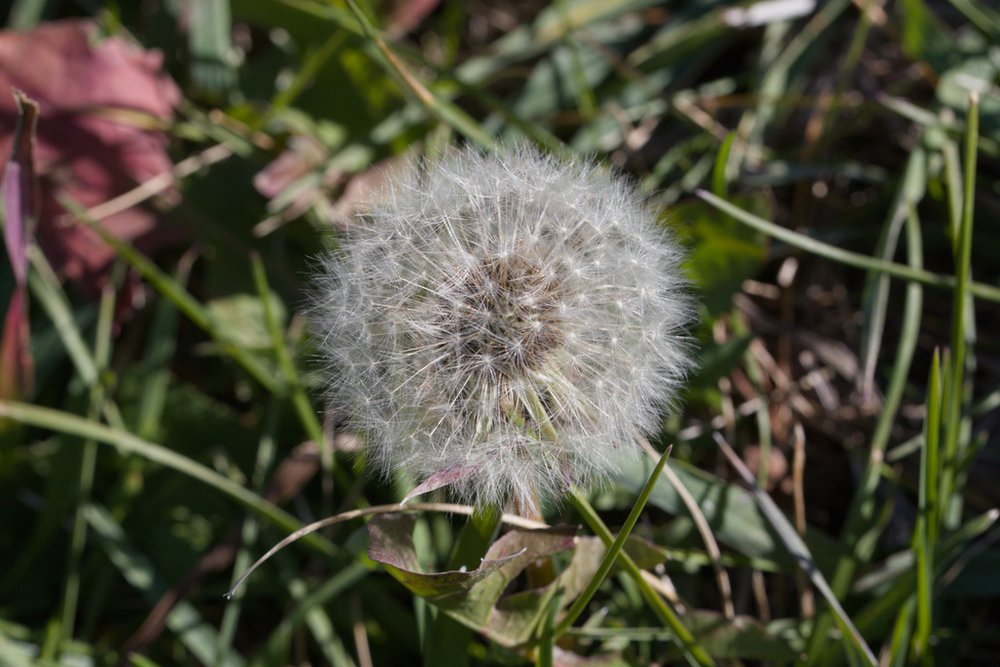
Seed: Each head holds 40 to more than 100 florets, and each one makes a dry seed 2.5–2.8 mm long, olive to gray-brown, on a slender beak 7–9 mm long that ends in a white parachute of hairs. Together the parachutes form the seed clock. The seeds set without pollination and ride the wind for hundreds of meters, and they can stay alive in the soil for up to 5 years.
Germination: The seed sprouts over a wide range of temperatures: in a USDA study fresh seed did best with 16 hours a day at 20 °C (68 °F) and 8 hours at 10 °C (50 °F), and seed became more dormant during a month of storage, most at −15 °C. Thick mulch held back germination in a Wisconsin study, and germination was highest on a burned plot.
How do you identify Common Dandelion?
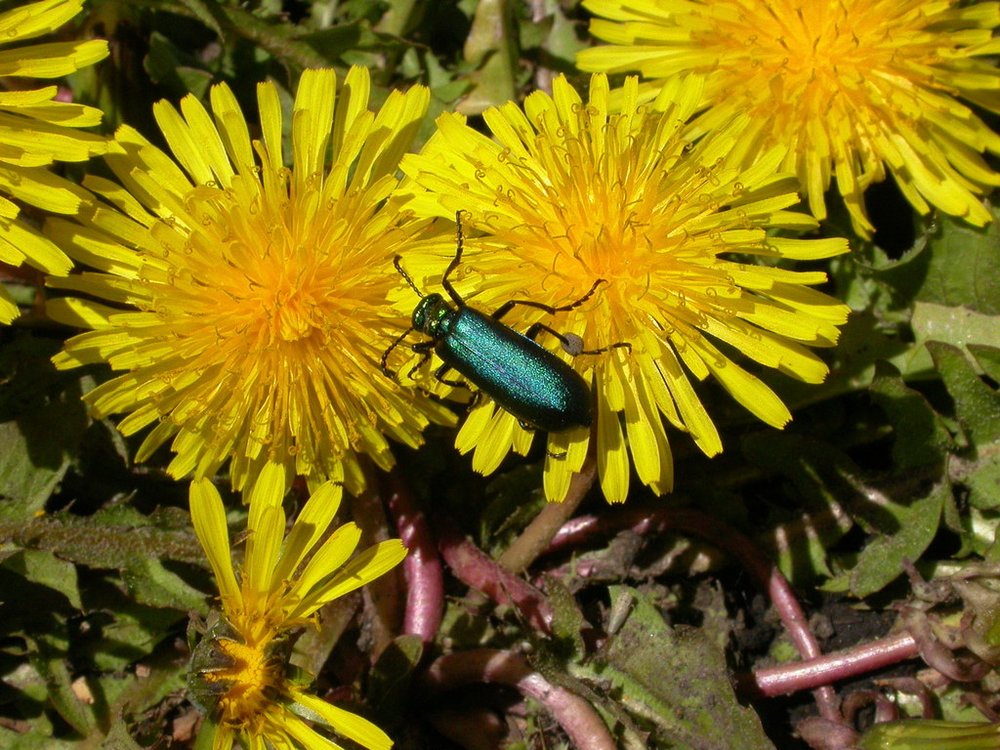
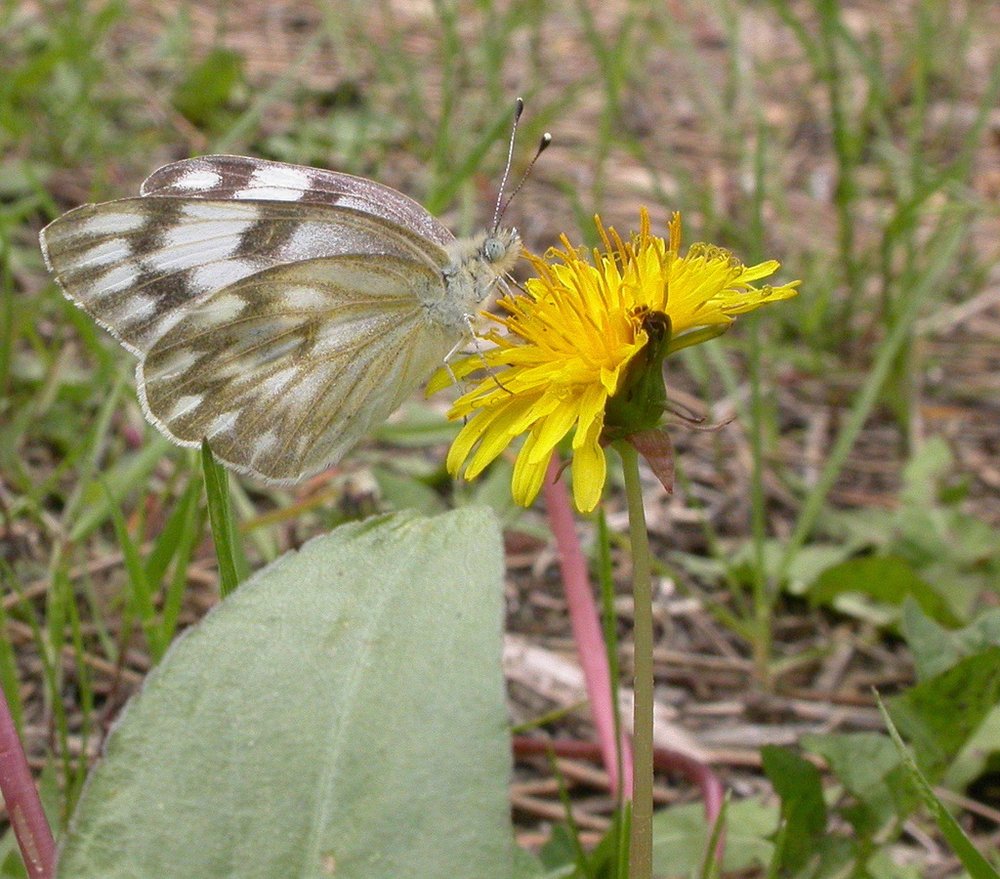
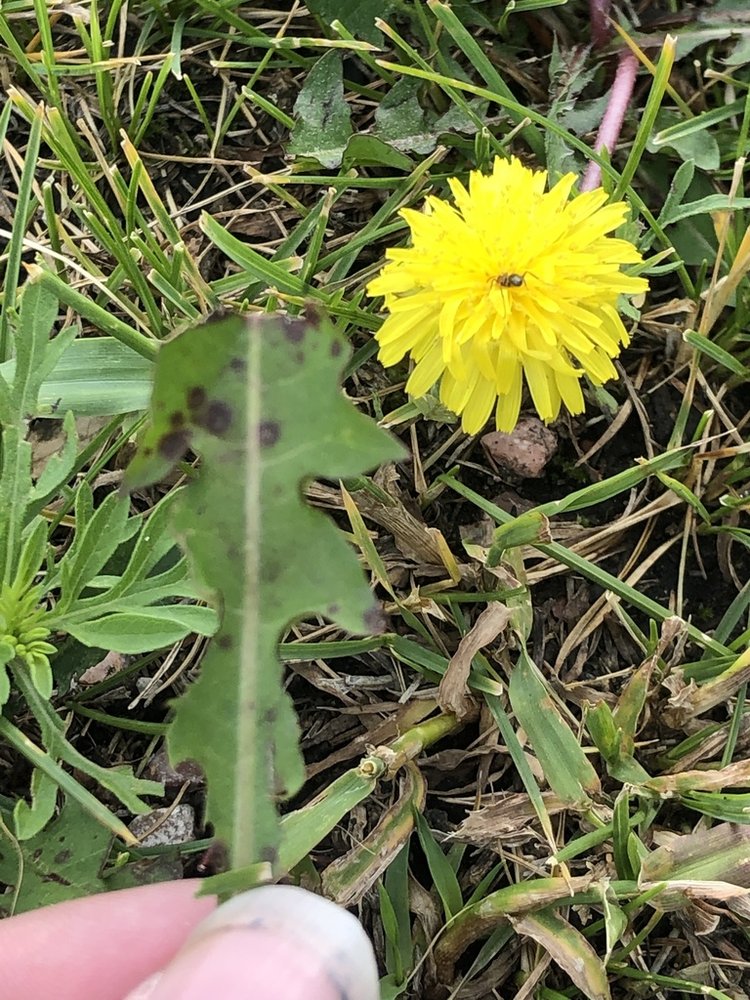
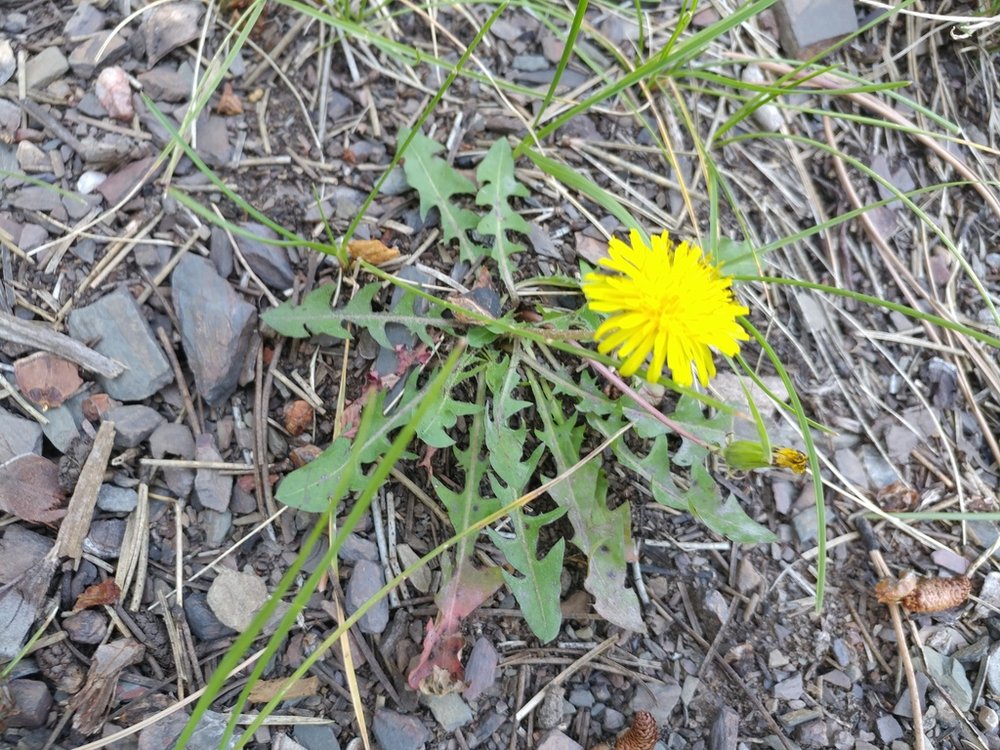
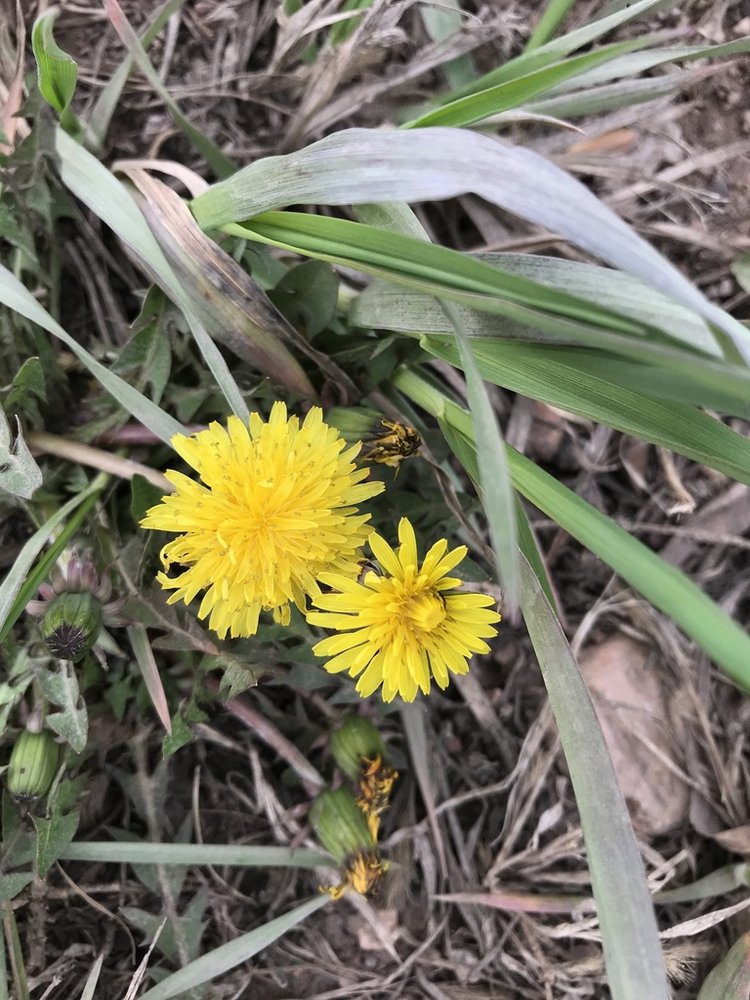
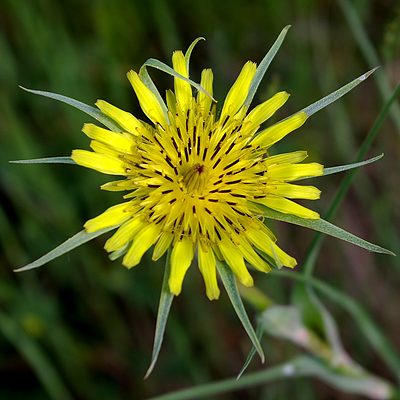
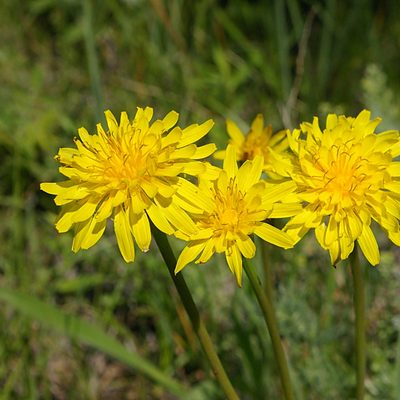
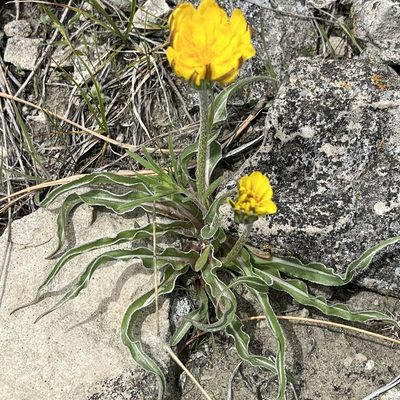
Look under the head: the 12–18 narrow outer bracts bend sharply down and back against the stalk, while the inner bracts stand up around the head. Each head, 2–5 cm (1–2 in) across, sits alone on a hollow, leafless stalk that bleeds milky sap, and is made only of strap-shaped yellow rays, 40 to 100 or more. The leaves all rise from the ground, 5–45 cm (2–18 in) long, broadest toward the tip, cut into sharp, backward-pointing lobes with the end lobe usually the biggest. The seed head is a round white clock, each olive to gray-brown seed on a long slender beak. Red-seeded Dandelion, also in the Hills, has red seeds instead of dull olive ones, heads usually under 2.5 cm (1 in) and leaves more deeply and evenly lobed from the start. Mountain Dandelion, a native of prairie and meadows, has a head that is less full and looks coarser than a dandelion's, a coarser seed head with fewer seeds, long narrow leaves that are usually toothless, and outer bracts that are shorter and broader than the inner ones. Prairie False Dandelion can pass for a dandelion at a glance, but its long, narrow, nearly grass-like leaves with crisp wavy edges set it apart. Yellow Salsify has about 13 green bracts that stick out well beyond its pale lemon-yellow rays, grass-like leaves on a leafy stem, and a seed head about 7.5 cm (3 in) across.
When does it bloom?
April into September, heaviest in late spring.
Where does it grow?
Disturbed ground of every kind, often on damp low ground: lawns, yards, roadsides, waste ground, pastures, old fields, campgrounds, cut-over or burned forest and overgrazed range. The National Park Service lists it at Wind Cave, Jewel Cave, Mount Rushmore and Devils Tower, the 1986 plant survey of Jewel Cave lists it as an exotic, and herbarium specimens since 1892 come from Lawrence, Pennington, Custer and Fall River counties in South Dakota and Crook County in Wyoming: lawns, yards, gardens and waste ground in town, a developed campground, and moist forest openings, meadows and creek bottoms in the Black Hills National Forest.
Other flowers to compare
Other dandelions in this guide
Aster family (Asteraceae): 62 other plants in this guide
- Aromatic Aster
- Arrowleaf Balsamroot
- Arrowleaf Sweet Coltsfoot
- Bachelor's Button
- Balsam Ragwort
- Black-eyed Susan
- Blanket Flower
- Blue Lettuce
- Broom Snakeweed
- Bull Thistle
- Canada Hawkweed
- Canada Lettuce
- Canada Thistle
- Chicory
- Common Burdock
- Common Sunflower
- Common Tansy
- Common Yarrow
- Curlycup Gumweed
- Cutleaf Coneflower
- Dotted Gayfeather
- Drummond's Thistle
- Easter Daisy
- False Boneset
- Fetid Marigold
- Field Pussytoes
- Fringed Sagewort
- Hairy Golden Aster
- Heart-leaved Arnica
- Hooker's Townsend Daisy
- Horseweed
- Jerusalem Artichoke
- Lambstongue Groundsel
- Maximilian Sunflower
- Missouri Goldenrod
- Mountain Dandelion
- Musk Thistle
- Oxeye Daisy
- Pearly Everlasting
- Pineapple Weed
- Prairie Coneflower
- Prairie False Dandelion
- Purple Coneflower
- Rocky Mountain Blazing Star
- Rosy Pussytoes
- Rubber Rabbitbrush
- Rush Skeletonplant
- Scotch Thistle
- Silver Sagebrush
- Smooth Blue Aster
- Spotted Joe-Pye Weed
- Stemless Four-nerve Daisy
- Stiff Goldenrod
- Stiff Sunflower
- Threenerve Fleabane
- Wavyleaf Thistle
- Western Ragweed
- White Hawkweed
- White Prairie Aster
- White Sagebrush
- Woolly Groundsel
- Yellow Salsify
Sources: Flora of North America Vol. 19: Taraxacum officinale (Brouillet 2006), eFloras; Minnesota Wildflowers: Taraxacum officinale (Common Dandelion); Kansas Wildflowers and Grasses: Taraxacum officinale; Illinois Wildflowers: Common Dandelion; Esser, L.L. 1993. Taraxacum officinale, common dandelion. Fire Effects Information System, USDA Forest Service; Mezynski, P.R. & Cole, D.F. 1974. Germination of dandelion seed on a thermogradient plate. Weed Science 22(5): 506–507; Minnesota Wildflowers: Agoseris glauca (False Dandelion); Minnesota Wildflowers: Nothocalais cuspidata (Prairie False Dandelion); Minnesota Wildflowers: Tragopogon dubius (Yellow Goat's Beard); NPSpecies checklist, Wind Cave National Park vascular plants; NPSpecies checklist, Jewel Cave National Monument vascular plants; NPSpecies checklist, Mount Rushmore National Memorial vascular plants; NPSpecies checklist, Devils Tower National Monument vascular plants; Marriott & Hartman 1986. A Survey of the Vegetation of Jewel Cave National Monument; National Park Service, Devils Tower National Monument: Wildflowers; GBIF occurrence search: Taraxacum officinale, South Dakota herbarium specimens; Black Elk, L.S. & Flying By, W.D. 1998. Culturally Important Plants of the Lakota (Sitting Bull College), entry 299; South Dakota DANR: State Noxious Weed and Pest List (checked; dandelion not listed); Wyoming Weed and Pest Council: State Designated Weed List (checked; dandelion not listed).