Stemless Four-nerve Daisy
Tetraneuris acaulis var. acaulis
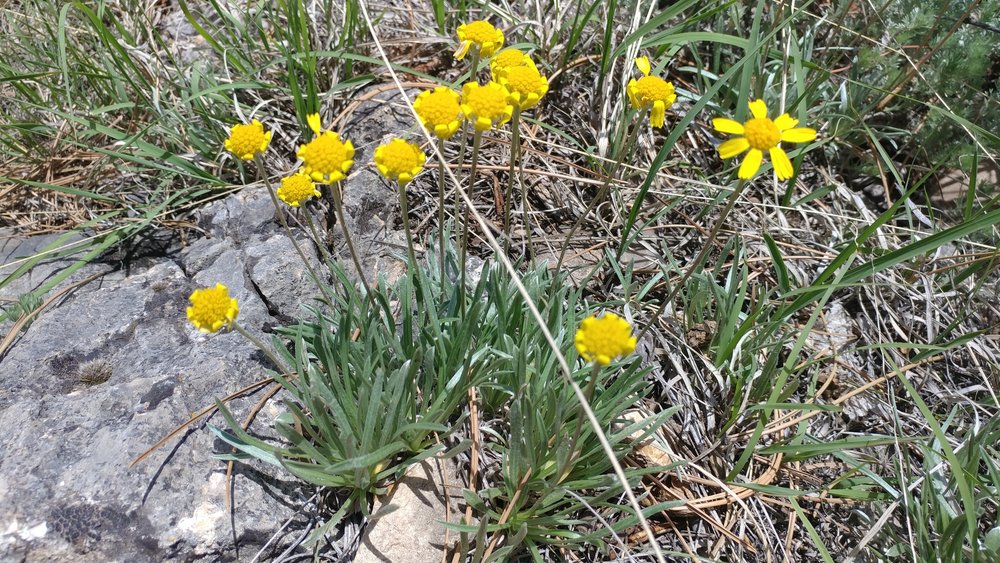
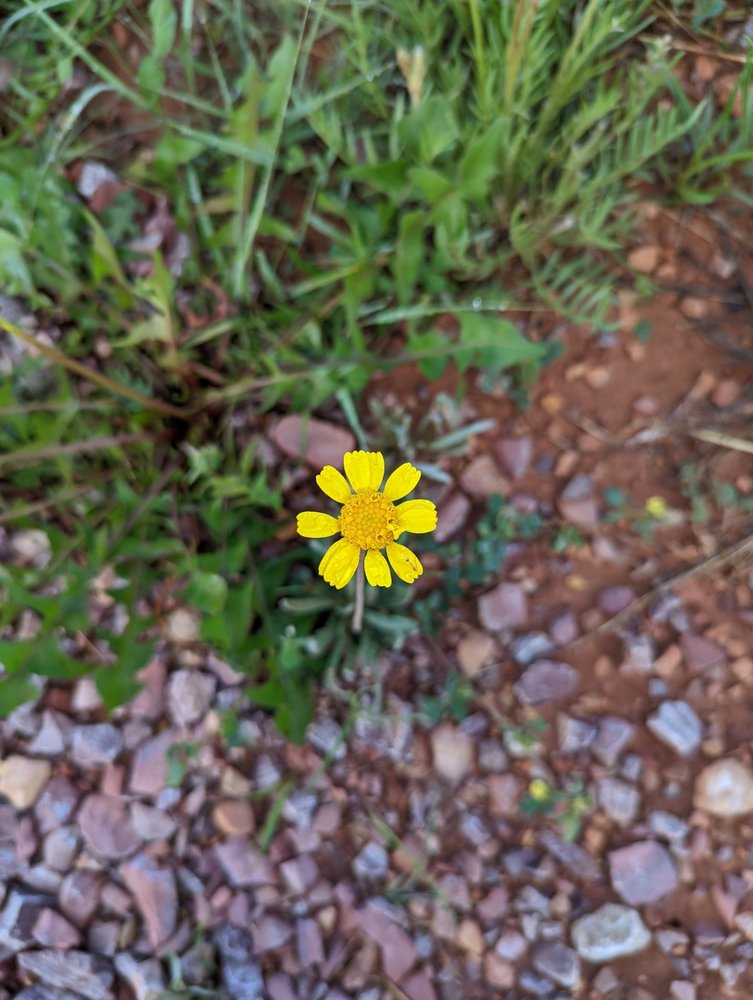
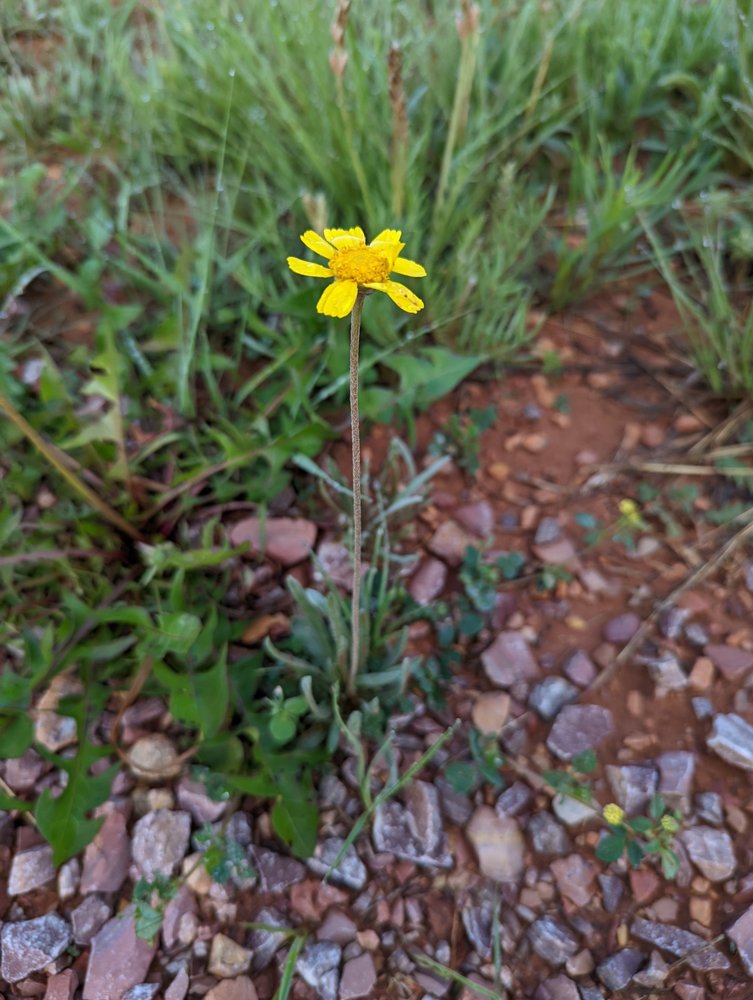
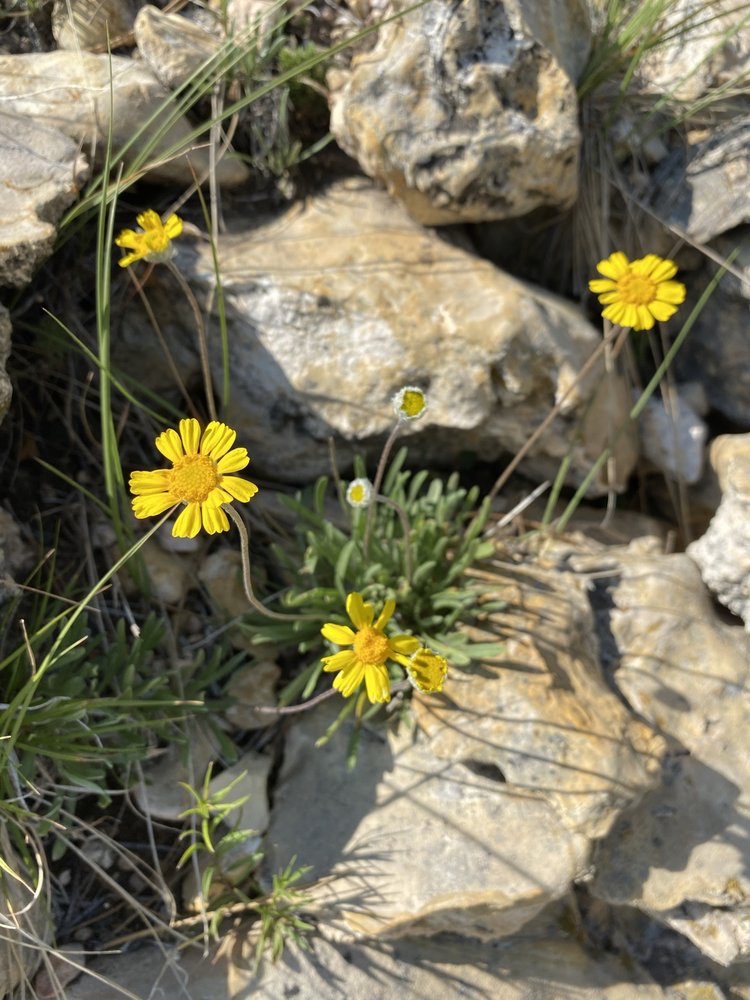
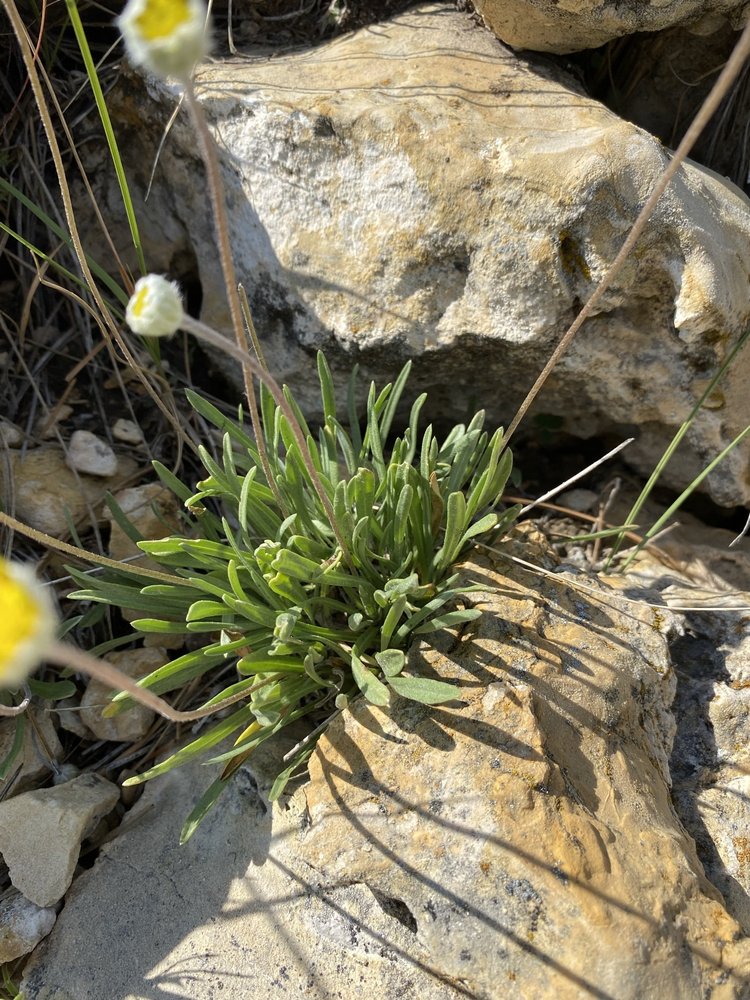
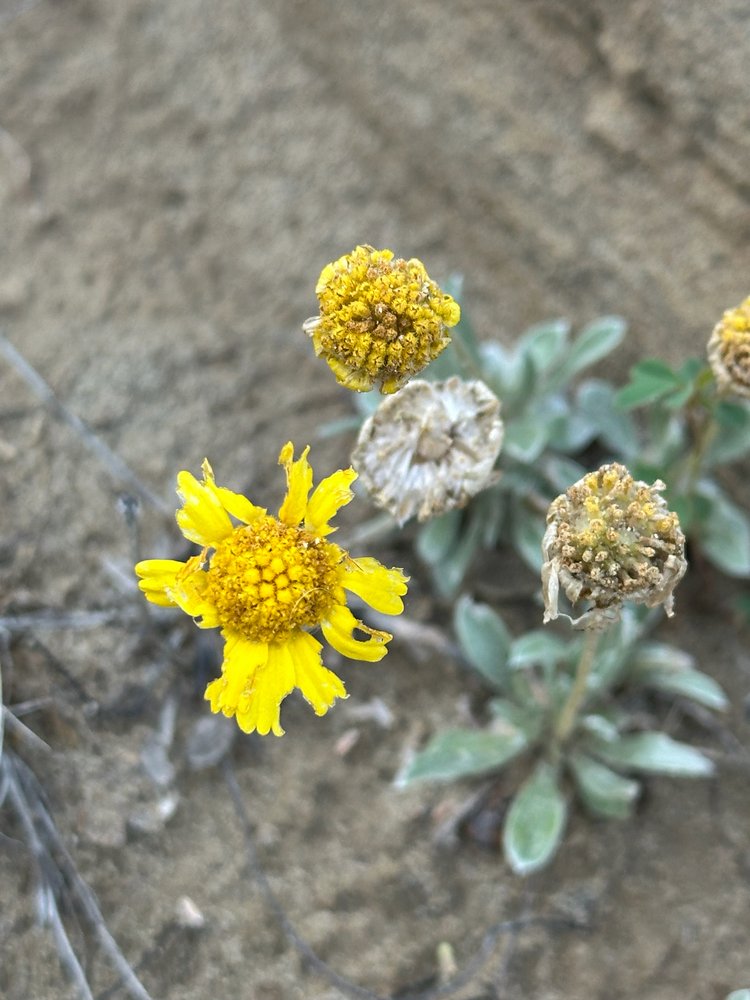
Stemless Four-nerve Daisy (Tetraneuris acaulis var. acaulis) is a low native perennial of the sunflower family, with a tuft of narrow, silvery-silky leaves at ground level and single bright yellow daisies held up on bare stalks. It blooms mostly from May into July, often again in fall, on dry rocky ridges, limestone outcrops and thin prairie soils around the Black Hills.
Free photos from other sources
| Family | Asteraceae · Aster |
|---|---|
| Status | Native perennial |
| Blooms | May into July, often again in September and October |
| Height | 5–30 cm (2–12 in) |
| Where | Dry rocky ridges, limestone and sandstone outcrops, gravelly prairie hills and roadsides |
| Also called | Stemless Hymenoxys, Butte Marigold, Stemless Actinea, Stemless Goldflower, Stemless Rubberweed |
| Synonym | Hymenoxys acaulis, Gaillardia acaulis, Actinea acaulis, Actinella acaulis |
| Note | Older Black Hills lists, including the 1986 Jewel Cave survey, call it Hymenoxys acaulis, Stemless Hymenoxys. |
Roots, seeds & germination
Root: A thick, coarse taproot topped by a short, branched woody crown. Old plants make several crowns, so the leaf tufts form a small mat.
Seed: Each disk flower makes one small, top-shaped achene (a dry, one-seeded fruit) about 2.5–3 mm (⅛ in) long, covered in coarse hairs and topped with 5–8 papery, see-through scales that help it catch the wind. After bloom the head becomes a pale, papery ball of seeds.
Germination: The Native Plant Society of Texas reports that fresh seed sprouts well with no cold treatment. Seedlings grow slowly, need very well-drained soil and full light, and rot if kept wet.
How do you identify Stemless Four-nerve Daisy?
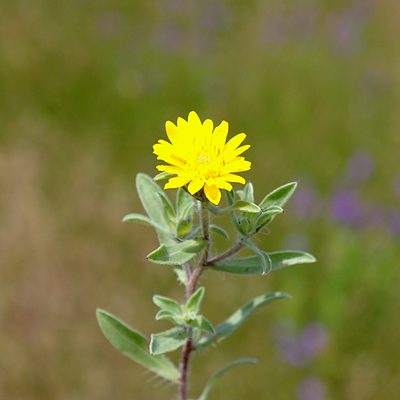
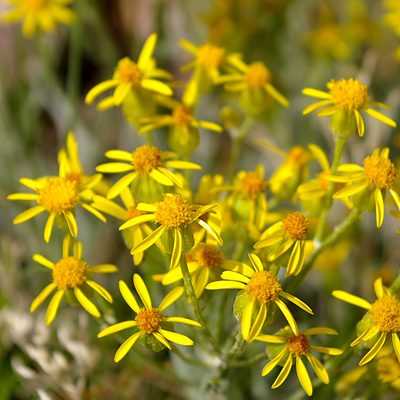
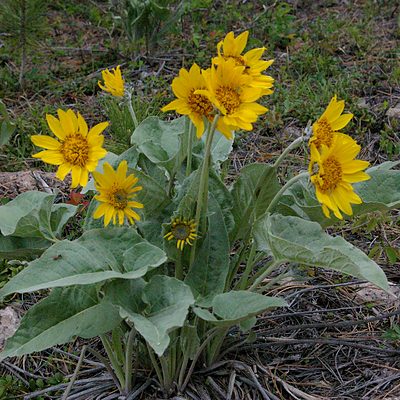
Look for a tuft of narrow, spoon- to strap-shaped leaves, 1.5–8 cm (½–3 in) long, all at the base and covered with flat-lying silky hairs that make them look silvery. Each bare, silky stalk holds one head, 2.5–4 cm (1–1½ in) across, with 8–14 yellow rays around a yellow button center; each ray has three small teeth at the tip and four fine veins that show against the light. The bracts under the head are densely hairy, so buds look like little cotton balls. Hairy Golden Aster has leafy stems and many heads on branched tops, and Woolly Groundsel has broader basal leaves and a flat cluster of several smaller heads on a leafy stem.
When does it bloom?
May into July, often again in September and October.
Where does it grow?
Sunny, dry, open ground with thin soil: limestone ridges and rimrock, sandstone ledges, the red-soil hogback and foothills, gravelly prairie hills, badland edges and roadsides, often in cracks between rocks. The 1986 plant survey of Jewel Cave National Monument lists it as Hymenoxys acaulis, NPSpecies lists it at Wind Cave, Jewel Cave and Devils Tower, and the Black Hills National Forest lists it among mid-summer wildflowers of dry habitats. Herbarium specimens from all seven Black Hills counties go back to 1892.
Other flowers to compare
Sources: Vegetation of Jewel Cave National Monument (Marriott & Hartman 1986); NPSpecies checklist, Wind Cave National Park; NPSpecies checklist, Jewel Cave National Monument; NPSpecies checklist, Devils Tower National Monument; Wildflowers, Jewel Cave National Monument (NPS); Native Plants, Devils Tower National Monument (NPS); Black Hills Native Plants, Black Hills National Forest (USDA Forest Service); Bitterweed (Tetraneuris acaulis var. acaulis), Plant of the Week (USDA Forest Service); Tetraneuris acaulis var. acaulis, SEINet (Flora of North America description); Tetraneuris acaulis, SEINet (Flora of North America species description); Tetraneuris acaulis var. caespitosa, Flora of North America; Tetraneuris acaulis var. arizonica, Flora of North America; Tetraneuris acaulis var. acaulis, Plants of the World Online (Kew); Tetraneuris acaulis var. acaulis, USDA PLANTS Database; Stemless tetraneuris, Kansas Wildflowers and Grasses; Stemless Four-nerve Daisy, Native Plant Society of Texas; Hymenoxys acaulis, Arches National Park (NPS); Tetraneuris acaulis, Wikipedia; GBIF occurrence search, Tetraneuris acaulis; iNaturalist observations near the Black Hills; Culturally Important Plants of the Lakota (Black Elk & Flying By 1998).