White Hawkweed Hieracium albiflorum
Also called White-flowered Hawkweed, Whiteflower Hawkweed
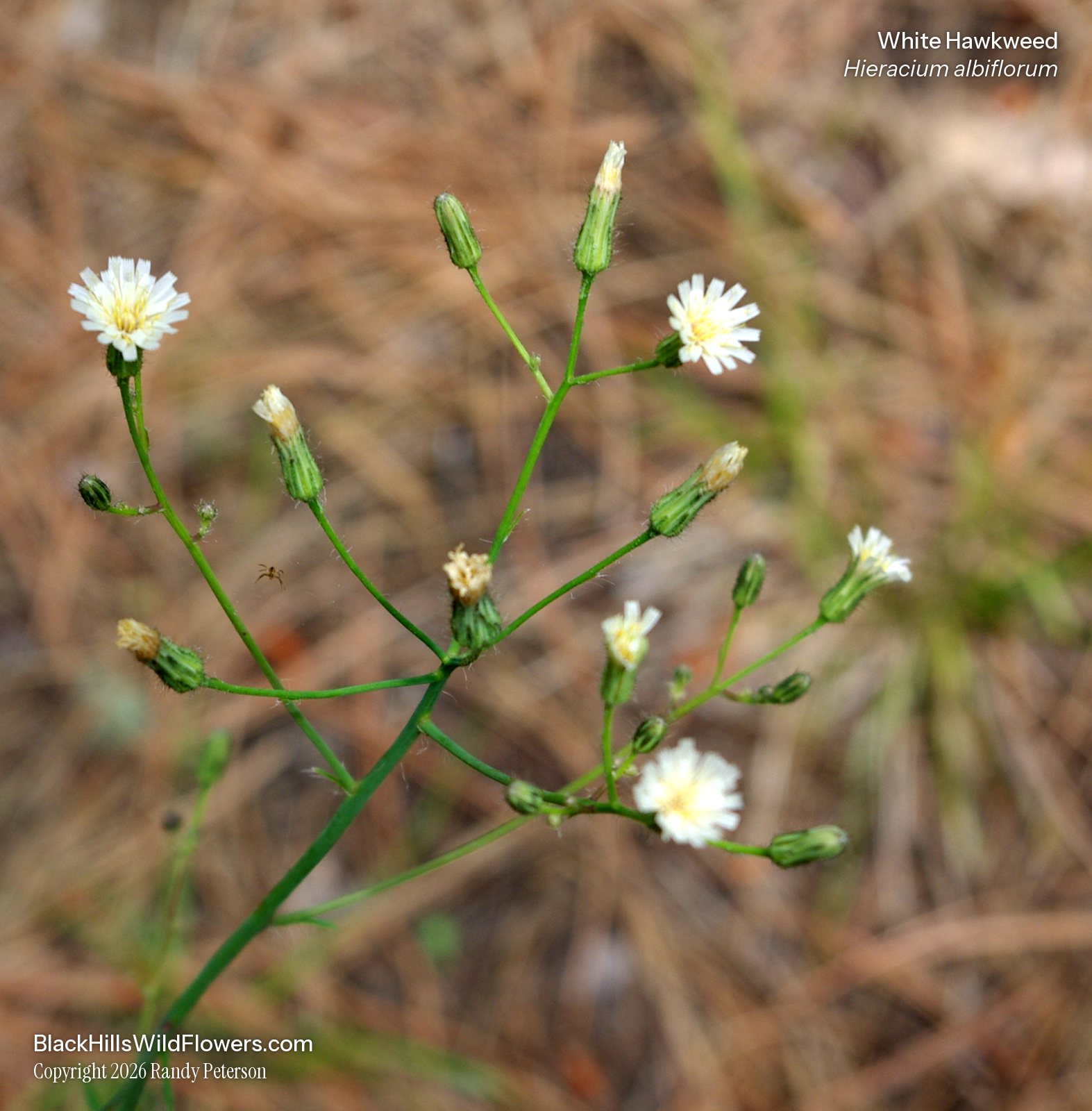
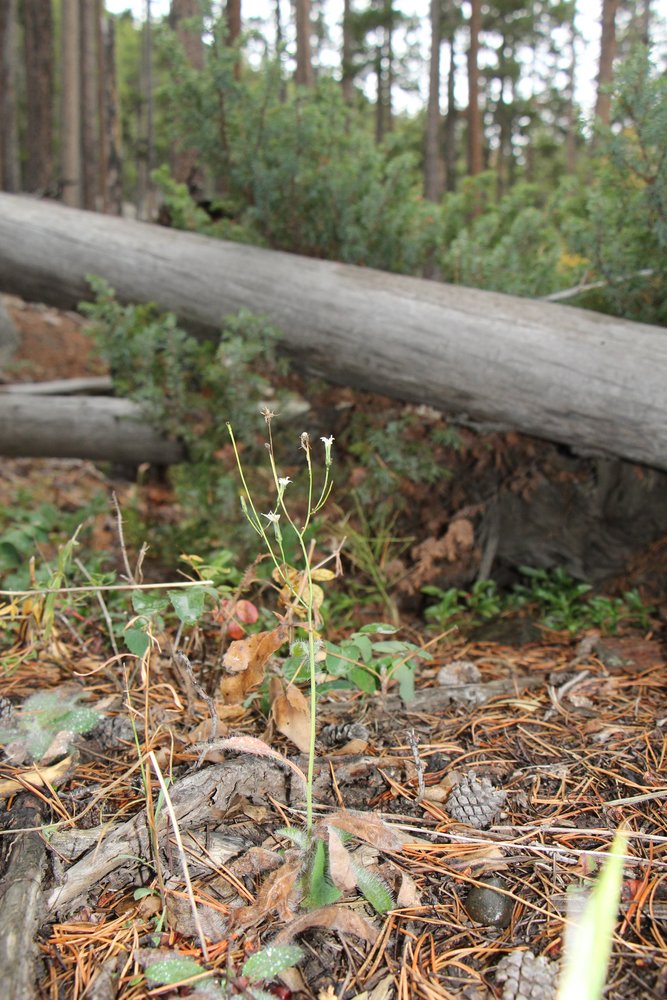
White Hawkweed (Hieracium albiflorum) is a slender native perennial with small white, dandelion-like flower heads on a loose, branched stalk above a tuft of long-haired leaves, and milky juice. In the Black Hills it grows in open pine and spruce woods, where herbarium specimens were collected from June to August. Photographed in the Black Hills.
Free photos from other sources
| Family | Asteraceae · Aster |
|---|---|
| Status | Native perennial |
| Blooms | June into August, mostly July |
| Height | 15–90 cm (6–35 in) |
| Where | Open pine and spruce woods, often dry and rocky, in needle litter |
| Also called | White-flowered Hawkweed, Whiteflower Hawkweed |
| Synonym | Chlorocrepis albiflora |
Roots, seeds & germination
Root: It grows from fibrous roots and a short rhizome (an underground stem).
Seed: The seeds are ribbed, column-shaped achenes 2.5–4 mm long, each topped by 30 to 40 or more straw-colored bristles 5–7 mm long.
How do you identify White Hawkweed?
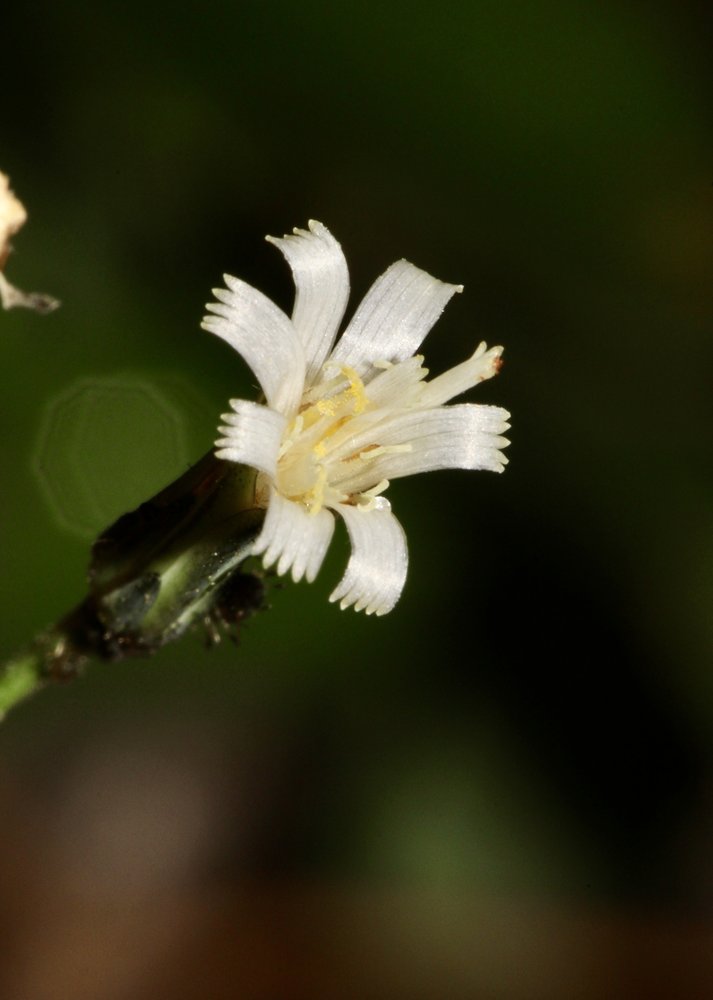
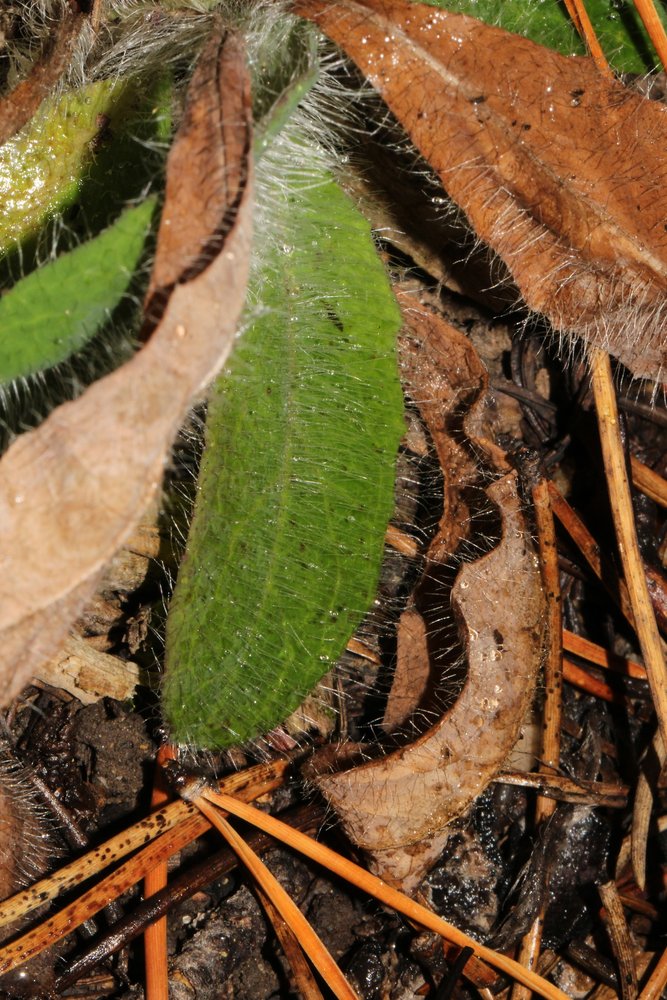
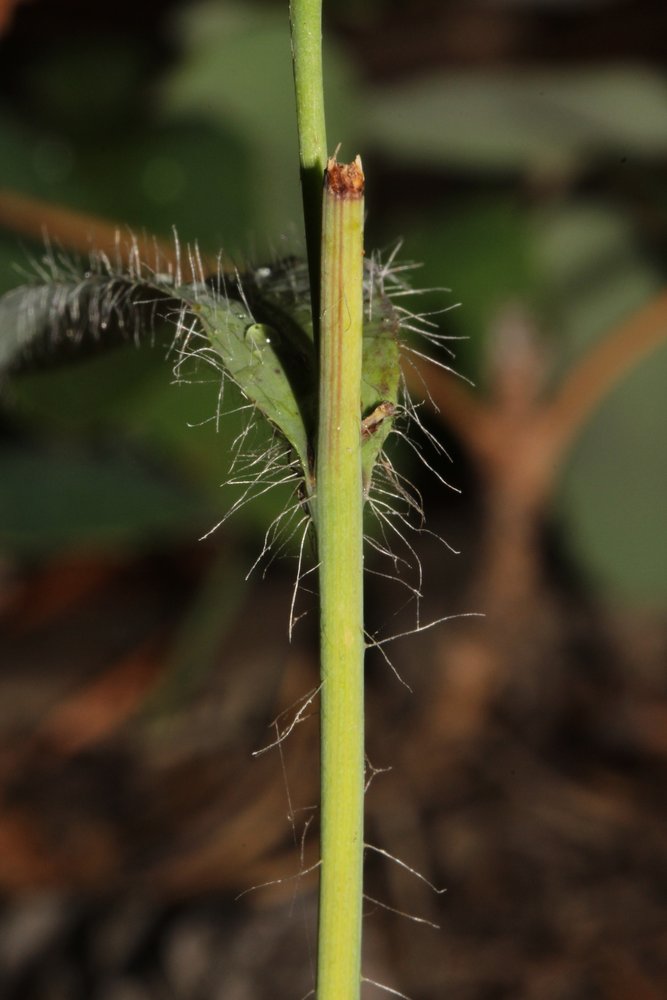
Look for small heads made only of white, strap-shaped florets, 12 to 30 or so per head, on slender stalks in an open, branched cluster. The cup of bracts around each head is narrow and blackish green. Most leaves are at the base: narrow, widest above the middle, 4–10 cm (1½–4 in) long, usually without teeth, and covered on both sides with long, soft hairs; the lower stem has the same long hairs and the upper stem is smooth. A torn leaf gives milky juice. Montana State University's hawkweed key separates it from Canada Hawkweed (Hieracium umbellatum) by flower color: White Hawkweed's flowers are white, Canada Hawkweed's are yellow, and Canada Hawkweed's leaves at the base wither by the time it flowers.
When does it bloom?
June into August, mostly July.
Where does it grow?
Open pine and spruce woods, often on dry, rocky ground in pine needle litter. Black Hills herbarium labels describe open pine woods, open woods on rocky granite soil, dry rocky open woods, upland pine woods on loam, ponderosa pine understory, open pine forest in needle litter with yarrow and snowberry, white spruce forest in a steep drainage, and bur oak and ponderosa pine forest in the Bear Lodge Mountains. The National Park Service lists it at Wind Cave, Mount Rushmore and Devils Tower, and specimens come from Lawrence, Pennington, Custer and Meade counties in South Dakota and Crook County in Wyoming.
Other hawkweeds in this guide
Aster family (Asteraceae): 62 other plants in this guide
- Aromatic Aster
- Arrowleaf Balsamroot
- Arrowleaf Sweet Coltsfoot
- Bachelor's Button
- Balsam Ragwort
- Black-eyed Susan
- Blanket Flower
- Blue Lettuce
- Broom Snakeweed
- Bull Thistle
- Canada Hawkweed
- Canada Lettuce
- Canada Thistle
- Chicory
- Common Burdock
- Common Dandelion
- Common Sunflower
- Common Tansy
- Common Yarrow
- Curlycup Gumweed
- Cutleaf Coneflower
- Dotted Gayfeather
- Drummond's Thistle
- Easter Daisy
- False Boneset
- Fetid Marigold
- Field Pussytoes
- Fringed Sagewort
- Hairy Golden Aster
- Heart-leaved Arnica
- Hooker's Townsend Daisy
- Horseweed
- Jerusalem Artichoke
- Lambstongue Groundsel
- Maximilian Sunflower
- Missouri Goldenrod
- Mountain Dandelion
- Musk Thistle
- Oxeye Daisy
- Pearly Everlasting
- Pineapple Weed
- Prairie Coneflower
- Prairie False Dandelion
- Purple Coneflower
- Rocky Mountain Blazing Star
- Rosy Pussytoes
- Rubber Rabbitbrush
- Rush Skeletonplant
- Scotch Thistle
- Silver Sagebrush
- Smooth Blue Aster
- Spotted Joe-Pye Weed
- Stemless Four-nerve Daisy
- Stiff Goldenrod
- Stiff Sunflower
- Threenerve Fleabane
- Wavyleaf Thistle
- Western Ragweed
- White Prairie Aster
- White Sagebrush
- Woolly Groundsel
- Yellow Salsify
Sources: Burke Herbarium Image Collection (University of Washington): Hieracium albiflorum, white hawkweed; Montana State University Extension, Monthly Weed Post, February 2013: Hawkweed Nomenclature & Identification; Flora of North America Vol. 19-21: Hieracium albiflorum, eFloras; USDA PLANTS Database: Hieracium albiflorum, white hawkweed (HIAL2); NPSpecies checklist, Wind Cave National Park vascular plants; NPSpecies checklist, Mount Rushmore National Memorial vascular plants; NPSpecies checklist, Devils Tower National Monument vascular plants; GBIF occurrence search: Hieracium albiflorum herbarium specimens, South Dakota and Wyoming; GBIF specimen 2512330809: Lawrence County, SD, 1967, open pine woods; GBIF specimen 3769780376: Lawrence County, SD, 1970, open woods on rocky granite soil; GBIF specimen 2512328613: Lawrence County, SD, 1975, dry, rocky open woods; GBIF specimen 2512332809: Meade County, SD, 1990, open pine forest in needle litter; GBIF specimen 2980508734: Pennington County, SD, 2007, white spruce forest in a steep drainage; GBIF specimen 3769782410: Crook County, WY, 1965, bur oak and ponderosa pine forest.