Geyer's Onion Allium geyeri
Also called Geyer Onion, pšíŋ šičámna (Lakota, wild onions in general)
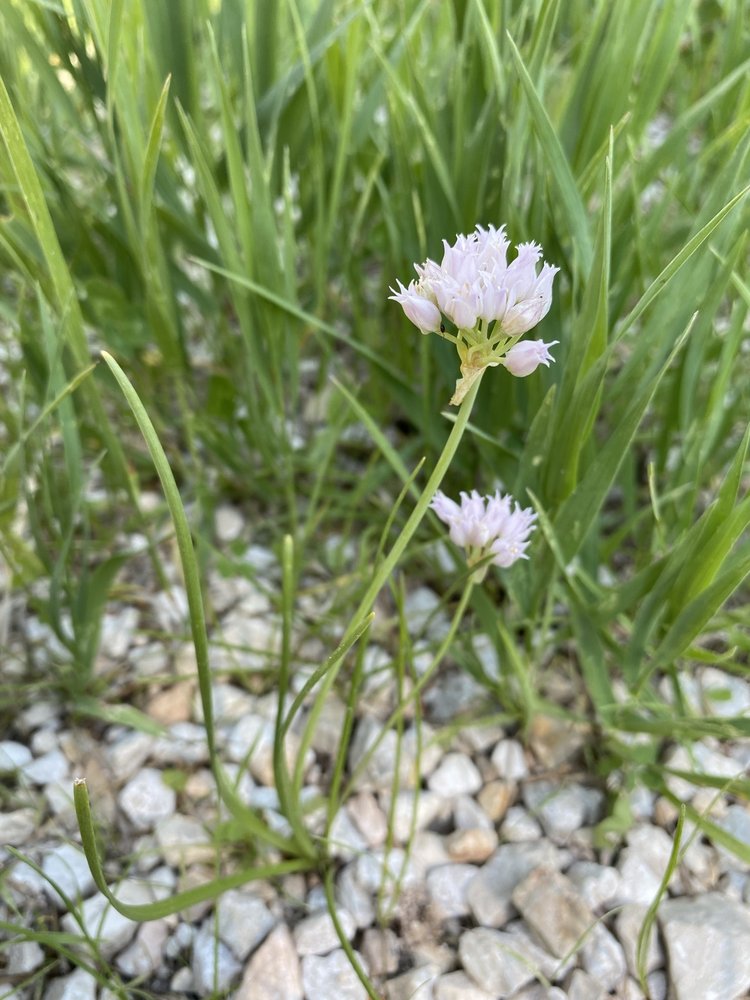
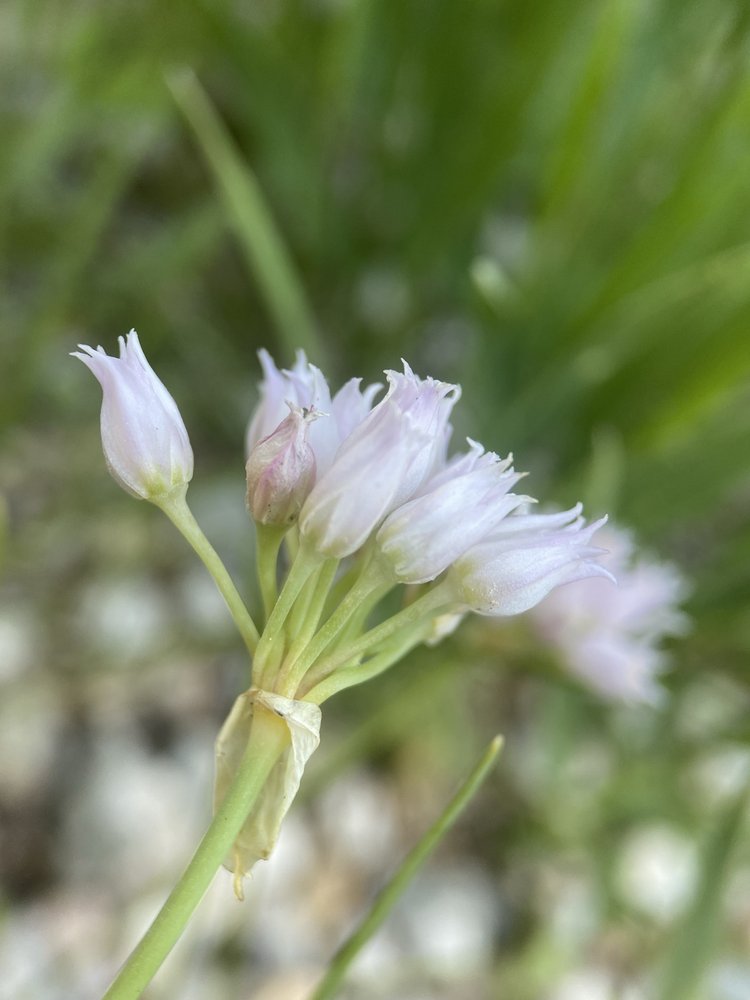
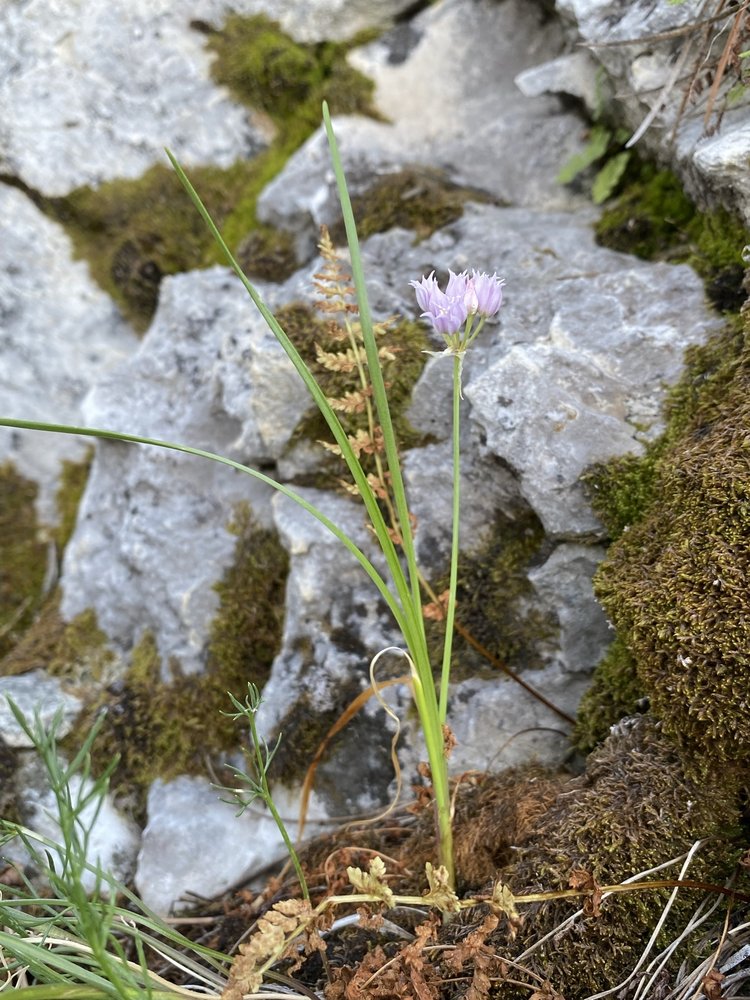
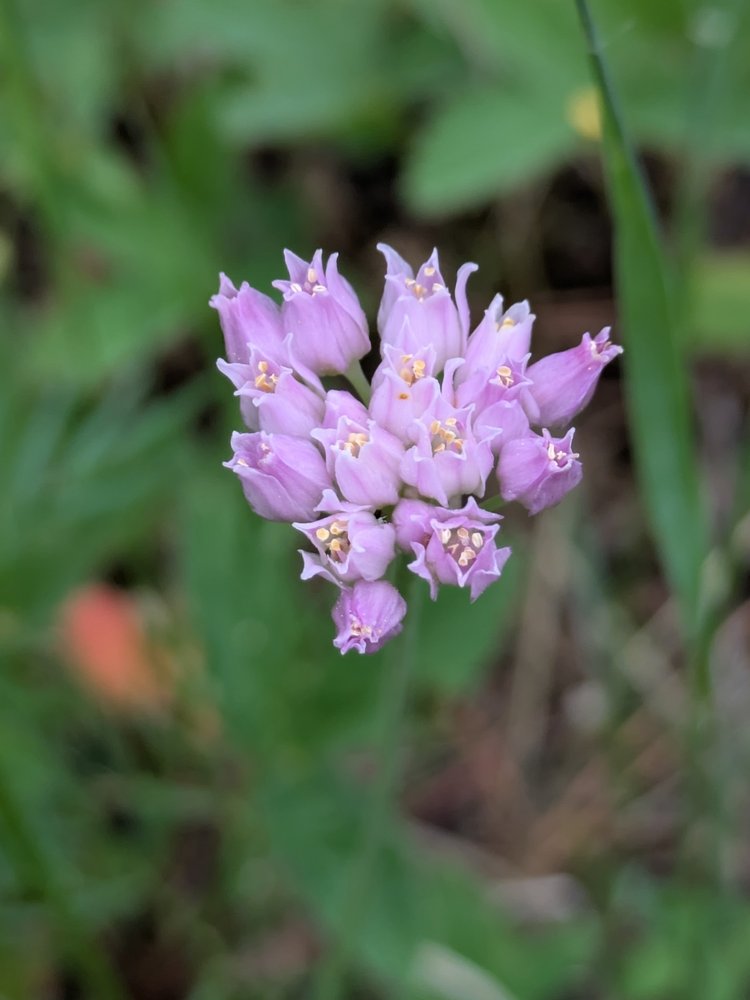
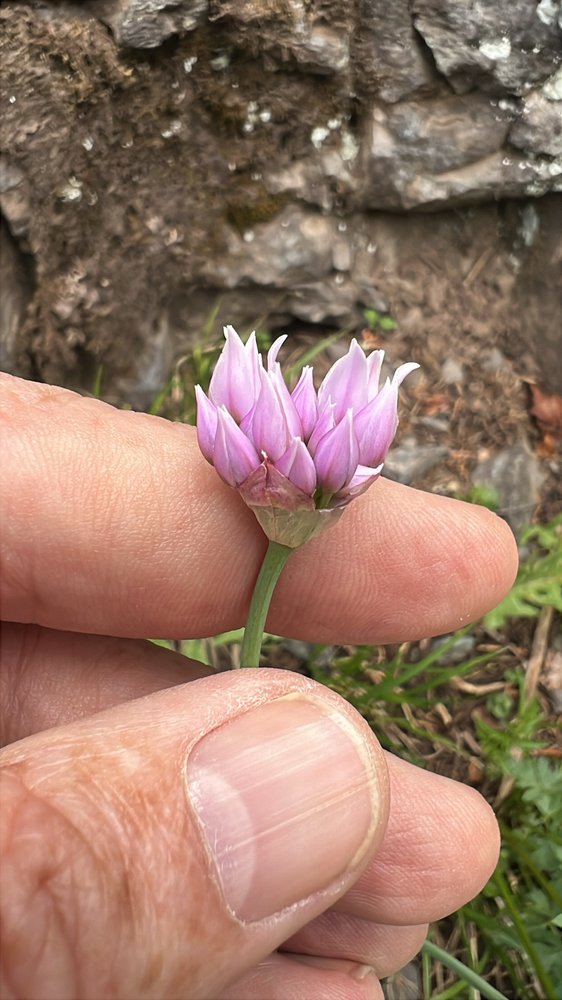
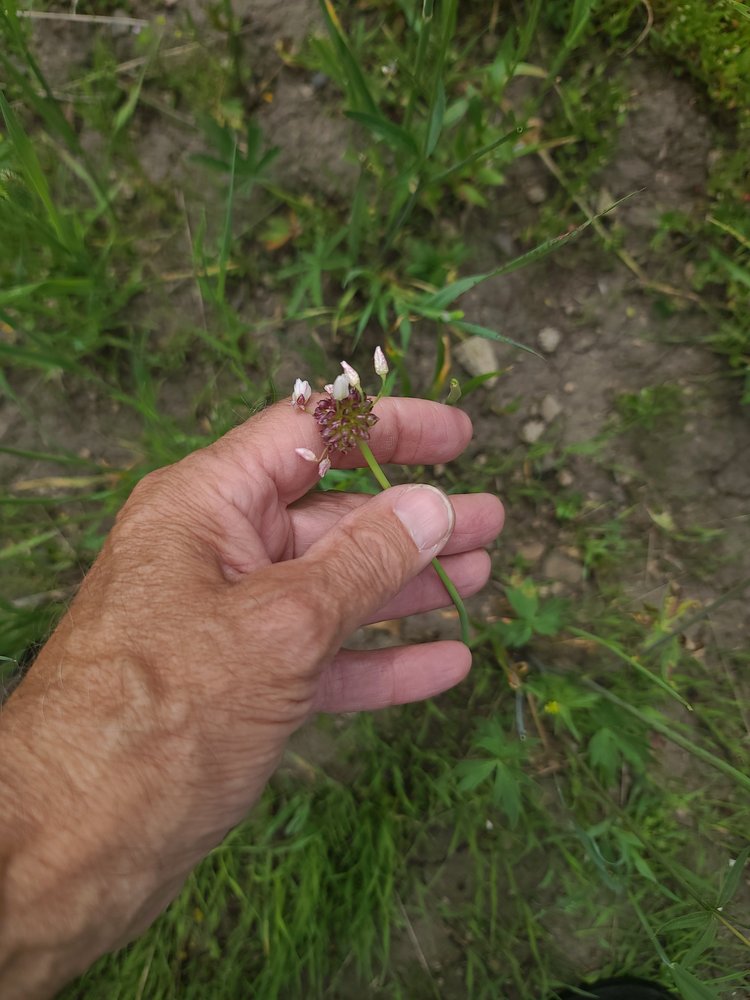
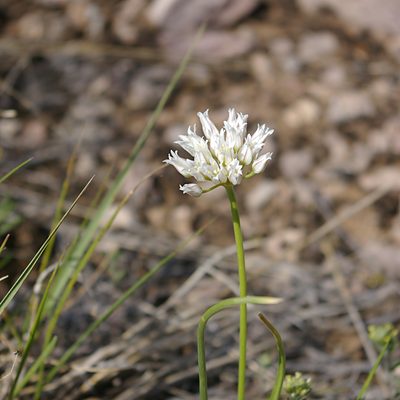
Geyer's Onion (Allium geyeri) is a native wild onion of moist meadows and stream banks, with an erect, compact, rounded cluster of 10 to 25 pink (sometimes white) bell-shaped flowers on a single leafless stem 10–50 cm (4–20 in) tall, three to five narrow grass-like leaves still green at flowering, and a bulb wrapped in a coarse net of gray or brown fibers. It blooms in June and July. In the Black Hills the National Park Service lists it at Jewel Cave, and herbarium specimens come from Custer, Pennington, Lawrence and Fall River counties.
Free photos from other sources
| Family | Amaryllidaceae · Amaryllis |
|---|---|
| Status | Native perennial |
| Blooms | June and July |
| Height | 10–50 cm (4–20 in) |
| Where | Moist meadows, stream banks, moist roadside ditches, and open or limestone slopes in pine and spruce forest |
| Also called | Geyer Onion, pšíŋ šičámna (Lakota, wild onions in general) |
| Traditional use | Black Elk and Flying By (1998) list wild onions (genus Allium) as a Lakota food: the whole plant was cooked in soups and stews or eaten raw, and it was rubbed on bee and wasp stings. Their entry covers wild onions in general, not Geyer's Onion alone. For Geyer's Onion itself, Moerman's database records that Apache people ate the bulbs, that the Chiricahua and Mescalero Apache flavored soups and gravies with them, that the Hopi used them for flavoring, and that the Okanagan-Colville peoples dried and pit-cooked the bulbs before eating them. |
Traditional use: first drafted by Google AI, then checked against the sources on this page.
Roots, seeds & germination
Root: Clusters of 2 to 10 or more egg-shaped bulbs 1–2.5 cm (½–1 in) long, without rhizomes. Each bulb is wrapped in gray or brown outer coats woven into a coarse, open net of fibers, with whitish inner coats.
Seed: After flowering, the flower stalks stiffen and spread, and the tepals stay on around the small capsule. The seeds have a shining coat with a tiny bump on each cell. In var. tenerum most of the flowers are replaced by egg-shaped, pointed bulbils 3–6 mm long.
How do you identify Geyer's Onion?
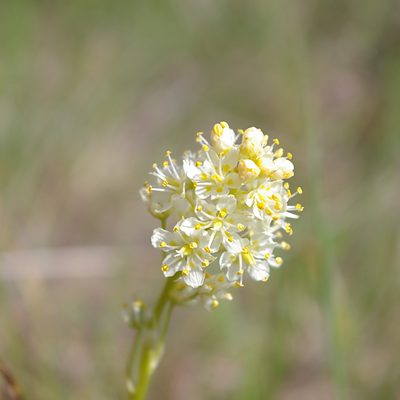
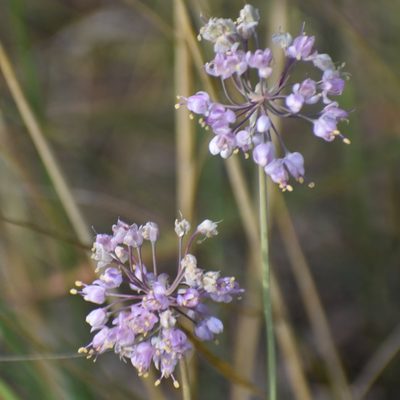
Look for a single, erect, leafless stem 10–50 cm (4–20 in) tall topped by one upright, compact, rounded cluster of 10 to 25 pink to white, urn- to bell-shaped flowers 6–8 mm (¼ in) long, each with six tepals and the stamens tucked inside the flower, with two or three bracts at the base of the cluster. The three to five grass-like leaves are 1–3 mm wide, shorter than the stem and still green at flowering, the bulb is wrapped in a coarse, netted coat of gray or brown fibers, and the whole plant smells of onion. One form, var. tenerum, has only a few flowers and a head of small, pointed bulbils (tiny bulbs) in their place. Nodding Onion's stem bends sharply over at the top so its cluster hangs, its stamens stick out past the tepals, its bulb coat is papery rather than fibrous, and it blooms later, from July. Textile Onion has only two leaves and white flowers with a red or reddish-brown stripe down each tepal, and it grows on dry plains and hills in May and June. Meadow Deathcamas, which people have mistaken for wild onion, has no onion smell; a British Columbia seed manual calls that smell the best way to tell wild onion bulbs from deathcamas.
When does it bloom?
June and July.
Where does it grow?
Low meadows, stream banks and other moist ground. The National Park Service lists it as present at Jewel Cave, and the 1986 plant survey of Jewel Cave lists it with the other two wild onions. Herbarium specimens from 1892 to 2018 come from Custer, Pennington, Lawrence and Fall River counties, with labels naming a moist roadside ditch, limestone under spruce on a steep west-facing slope, an open pine-wooded slope, clay loam in full sun in the Black Hills National Forest, and the limestone country of Custer County at 1,830–1,980 m (6,000–6,500 ft). iNaturalist has 6 research-grade Black Hills records, June and July.
Other flowers to compare
Other wild onions in this guide
Sources: Flora of North America Vol. 26: Allium geyeri (McNeal and Jacobsen), eFloras; Flora of North America Vol. 26: Allium cernuum, eFloras; Flora of North America Vol. 26: Allium textile, eFloras; USDA PLANTS Database: Allium geyeri (ALGE); GBIF species page: Allium geyeri S.Watson; Burke Herbarium Image Collection: Allium geyeri; SEINet: Allium geyeri (FNA description and editor notes); Montana Field Guide: Geyer's Onion, Allium geyeri; NPSpecies checklist, Jewel Cave National Monument vascular plants; Marriott and Hartman 1986, A Survey of the Vegetation of Jewel Cave National Monument; Burton and Burton, A Manual for Growing and Using Seed from Herbaceous Plants Native to the Northern Interior of British Columbia (Symbios Research & Restoration, 2003): Allium cernuum; GBIF occurrence search: Allium geyeri herbarium specimens, South Dakota and Wyoming; iNaturalist: research-grade Allium geyeri observations in the Black Hills; Black Elk & Flying By 1998, Culturally Important Plants of the Lakota (Sitting Bull College); Moerman, Native American Ethnobotany database (BRIT): Allium geyeri.