Textile Onion
Allium textile
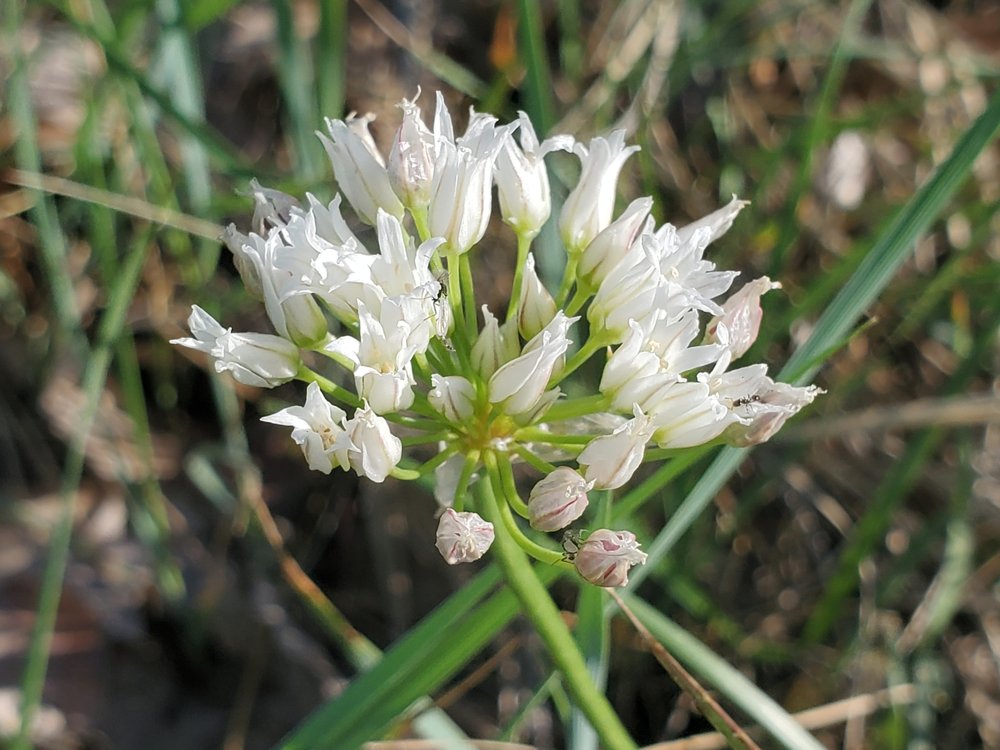
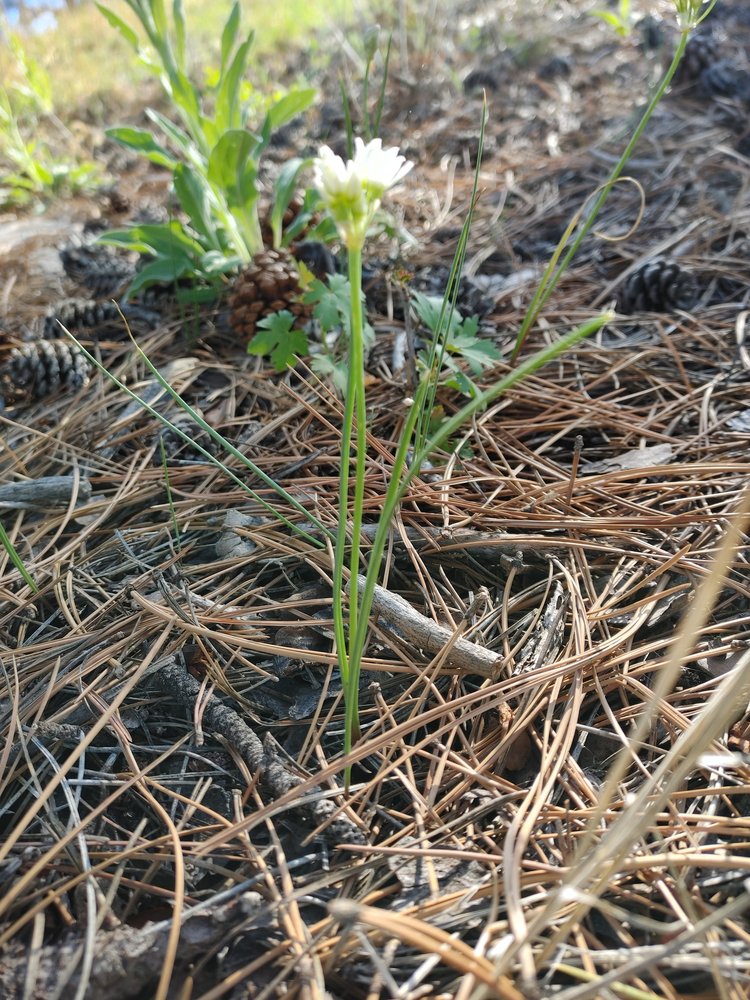
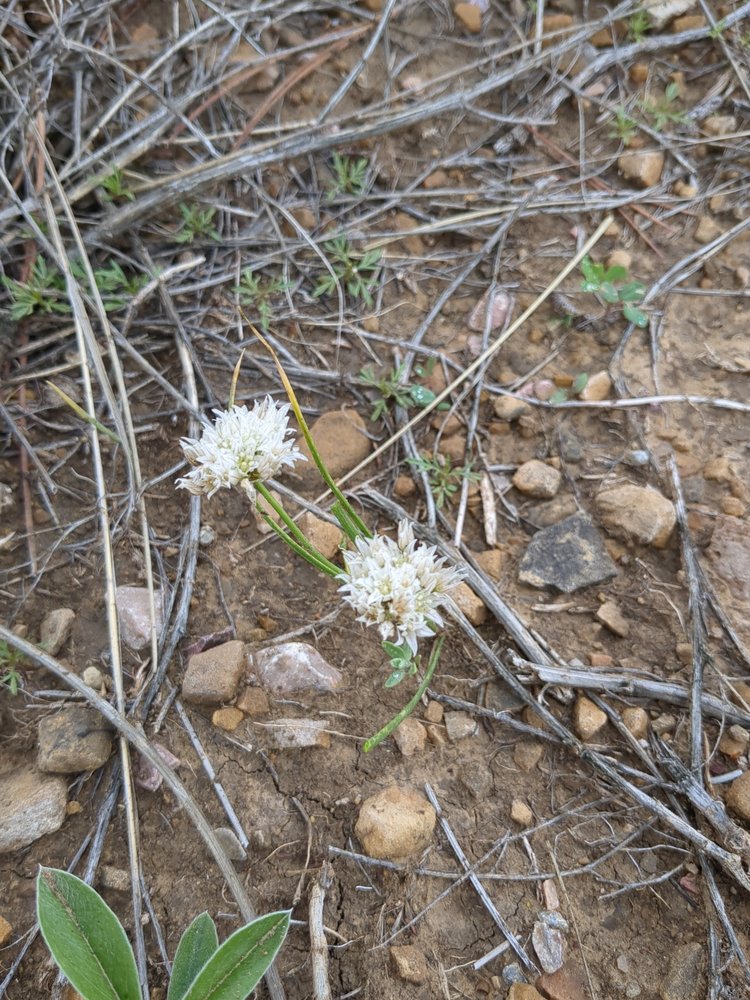
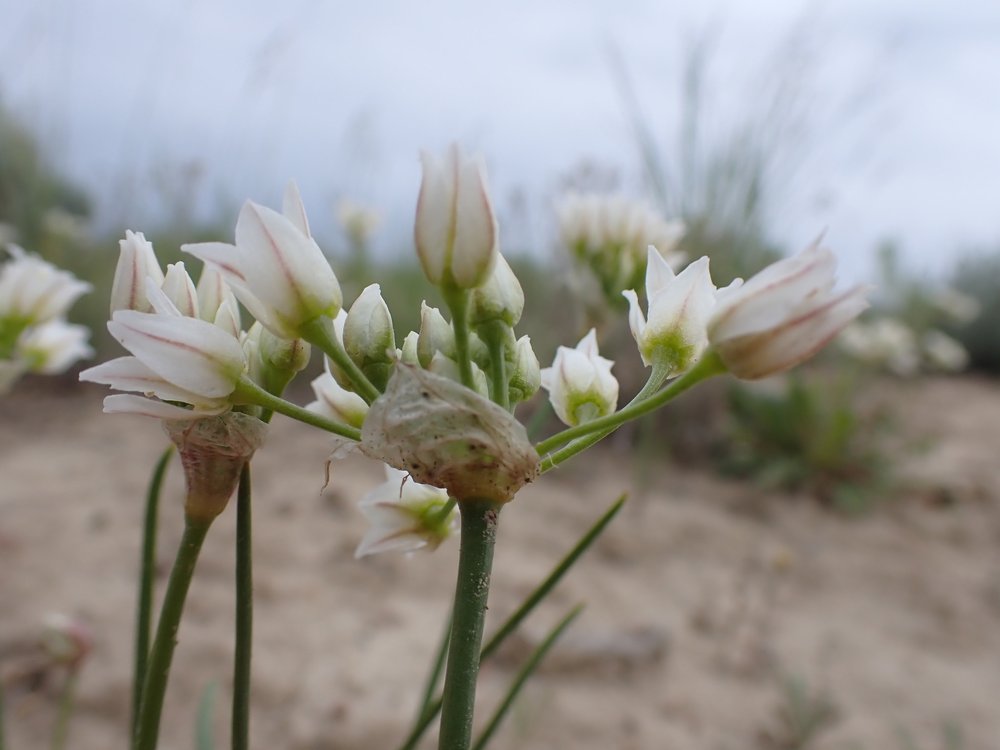
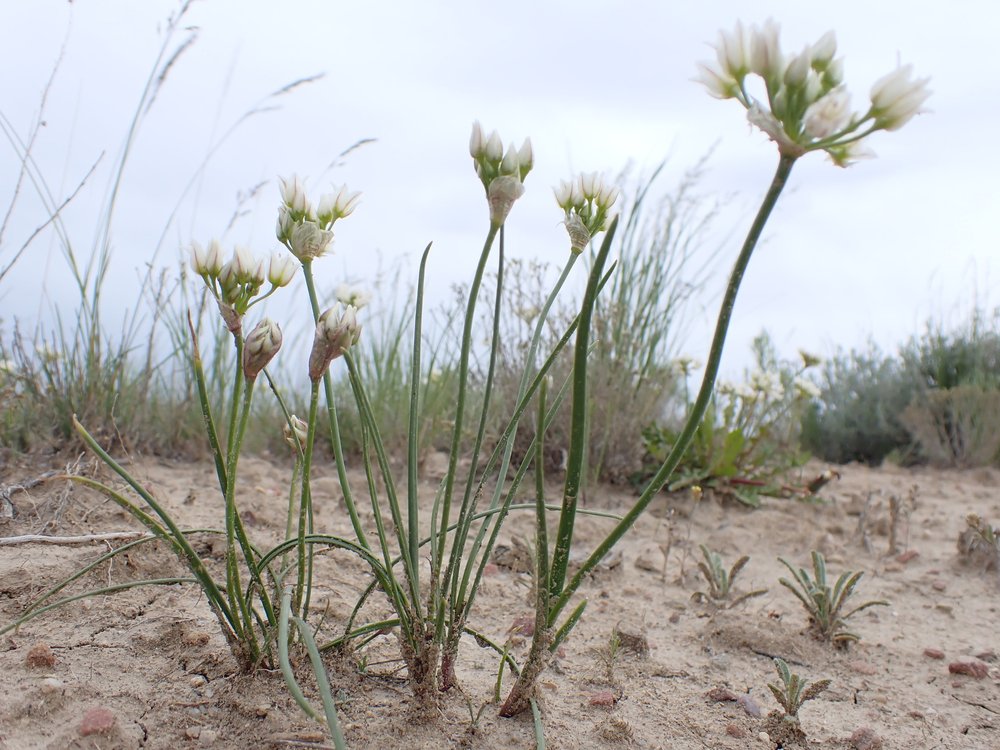
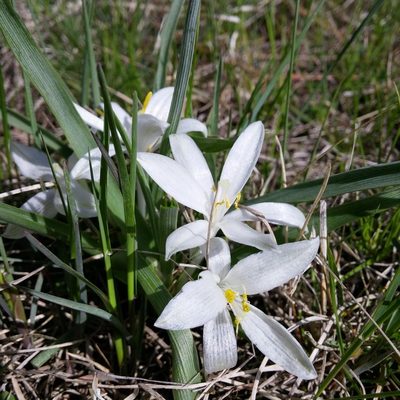
Textile Onion (Allium textile) is a short native wild onion that grows from a small bulb wrapped in a net of fibers like coarse woven cloth, which gives the plant its name. It blooms in May and June, holding a tight, upright cluster of white flowers with a thin red-brown stripe on each petal, on dry prairie and rocky hillsides in the Black Hills, and the National Park Service lists it at Wind Cave, Jewel Cave and Devils Tower.
Free photos from other sources
| Family | Amaryllidaceae · Amaryllis |
|---|---|
| Status | Native perennial |
| Blooms | May through June |
| Height | 10–30 cm (4–12 in) |
| Where | Dry prairie, rocky and clay hillsides and grassy pine openings |
| Also called | Prairie Onion, White Wild Onion, pšíŋ šičámna (Lakota) |
| Synonym | Allium aridum, Allium reticulatum, Allium reticulatum var. playanum, Allium geyeri var. textile |
| Traditional use | Black Elk and Flying By's 1998 Culturally Important Plants of the Lakota (Sitting Bull College), writing of wild onions in general, says they were cooked whole in soups and stews or eaten raw, and rubbed on bee and wasp stings. |
Roots, seeds & germination
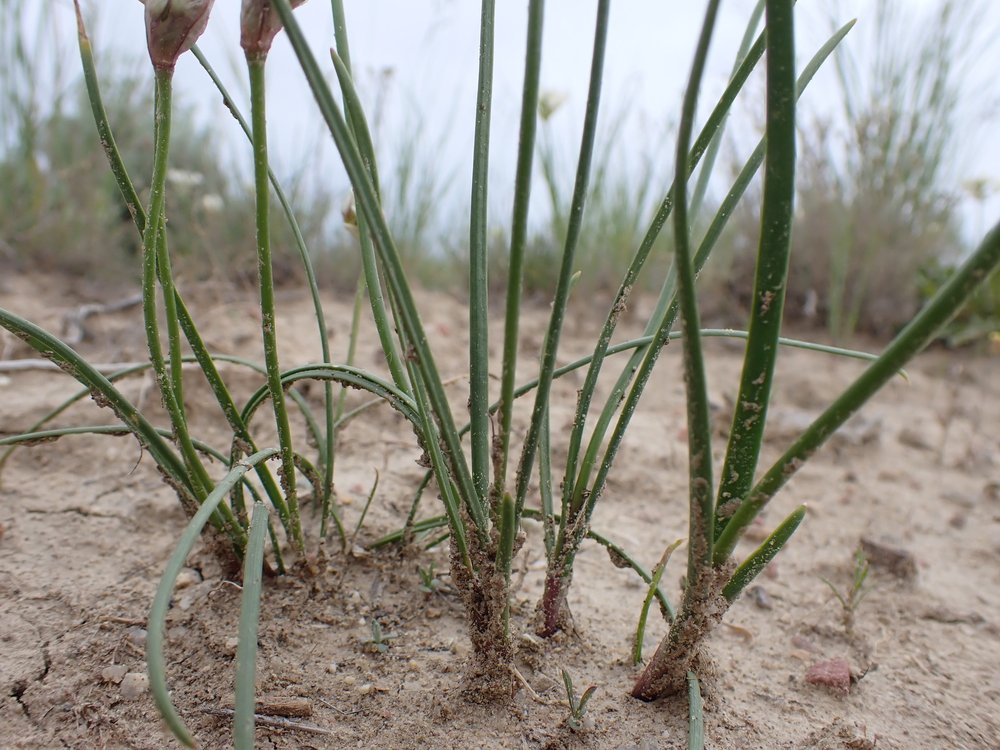
Root: An egg-shaped bulb about 1.2–2.5 cm (½–1 in) long, sometimes two or three together, inside a gray to brown coat made of a fine, open net of fibers, with a tuft of short roots at the base. New bulbs form from the base of the old one, so plants slowly make small clumps.
Seed: A small three-lobed capsule, about 2–3 mm (⅛ in) long, held upright and hugged by the dry outer tepals. It splits into three parts, each with one or two shiny seeds, and can be gathered in June and July.
Germination: The seed is dormant when ripe. SDSU suggests scratching the seed coat or sowing outdoors in fall so winter breaks the dormancy, and bulblets can be dug and replanted in spring.
How do you identify Textile Onion?
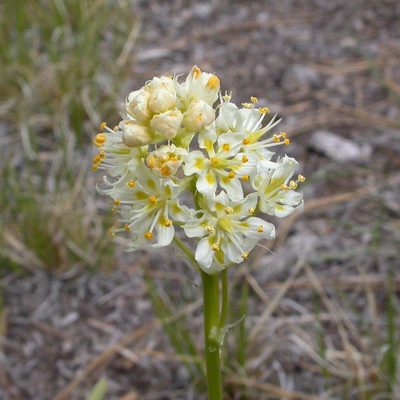
Look for a short, straight, leafless stem 10–30 cm (4–12 in) tall topped by a tight, rounded, upright cluster of 15 to 30 small flowers, all on short stalks from one point. Each flower has six white tepals 5–7 mm (¼ in) long, with a thin red to red-brown stripe down the middle, and the stamens stay inside the flower. There are usually just two thread-thin leaves, 1–3 mm wide, the bulb is wrapped in a gray-brown net of fibers, and the whole plant smells of onion. Meadow Deathcamas, white and blooming in the same weeks and places, has no onion smell, a pointed spike of flowers with a yellow-green spot on each tepal, and several flat, V-folded leaves up to 1 cm (⅜ in) wide.
When does it bloom?
May through June.
Where does it grow?
Full sun on dry, open ground: mixed-grass and shortgrass prairie, rocky limestone and sandstone hillsides, heavy clay slopes, sandy soils, road banks and grassy openings in ponderosa pine. Black Hills specimens come from about 1,070 to 1,550 m (3,500–5,080 ft), and GBIF holds 104 from the seven Black Hills counties, some from the plains just outside the Hills, going back to 1892. The 1986 Jewel Cave survey lists it, and the National Park Service records it at Wind Cave, Jewel Cave and Devils Tower.
Other flowers to compare
Sources: SDSU Open PRAIRIE, Native Plant Profiles: Allium textile (textile onion), R. Neil Reese; Flora of North America: Allium textile; Manske 2017. Autecology of White Wild Onion on the Northern Mixed Grass Prairie. NDSU Dickinson Research Extension Center DREC 17-1126; Minnesota Wildflowers: Allium textile (White Wild Onion); University of Washington ESRM 412 propagation protocol: Allium textile (Drabek 2024); Front Range Wild Ones Germination Guide (2022); USDA PLANTS Database: Allium textile, textile onion (ALTE); ITIS: Allium textile (TSN 42670), accepted name and synonyms; GBIF species page: Allium textile A.Nelson & J.F.Macbr. (synonyms); Black Elk & Flying By 1998. Culturally Important Plants of the Lakota (Sitting Bull College), filed with SD PUC; Gilmore 1919. Uses of Plants by the Indians of the Missouri River Region, BAE 33rd Annual Report (Internet Archive); Galt Museum ethnobotany: Prairie Onion; NPS Arches National Park: Liliaceae Allium textile; USDA ARS Poisonous Plant Research Laboratory: Deathcamas; Native Plant Society of New Mexico, Wildflowers of New Mexico: Allium geyeri; Marriott & Hartman 1986. Vegetation of Jewel Cave National Monument; NPSpecies checklist, Wind Cave National Park vascular plants; NPSpecies checklist, Jewel Cave National Monument vascular plants; NPSpecies checklist, Devils Tower National Monument vascular plants; NPSpecies checklist, Mount Rushmore National Memorial vascular plants; GBIF occurrence search: Allium textile, preserved specimens, South Dakota and Wyoming; iNaturalist: Allium textile research-grade observations, Black Hills area.