Common Starlily
Leucocrinum montanum
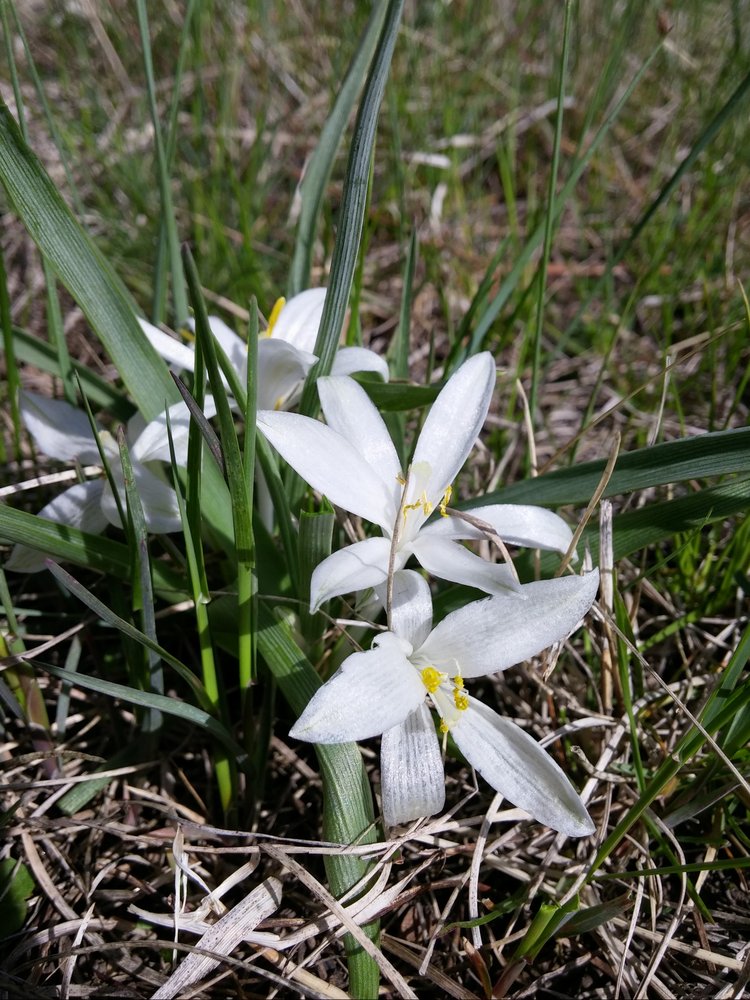
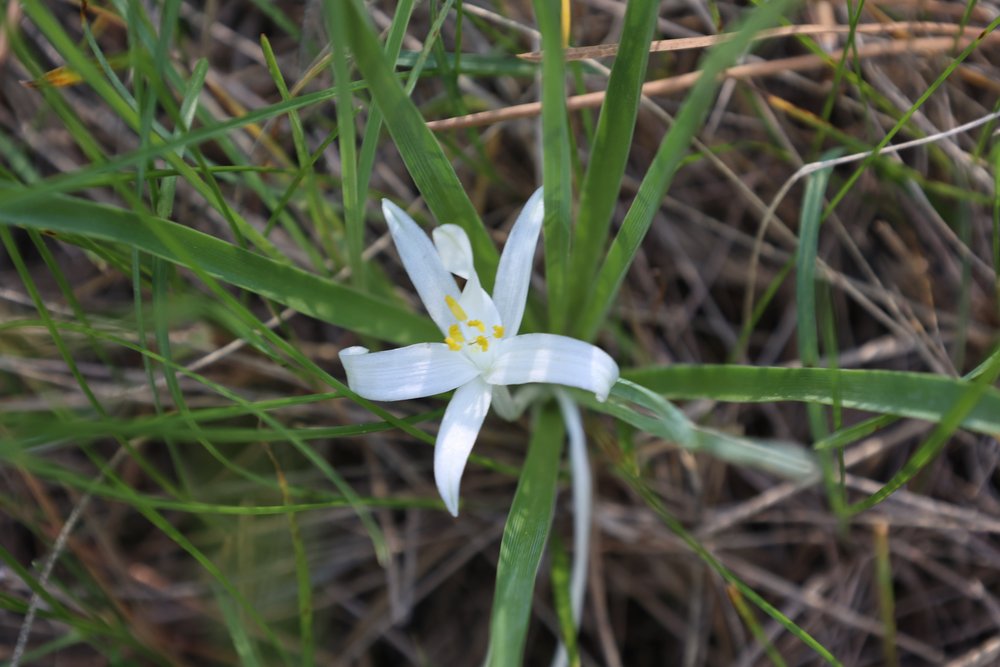
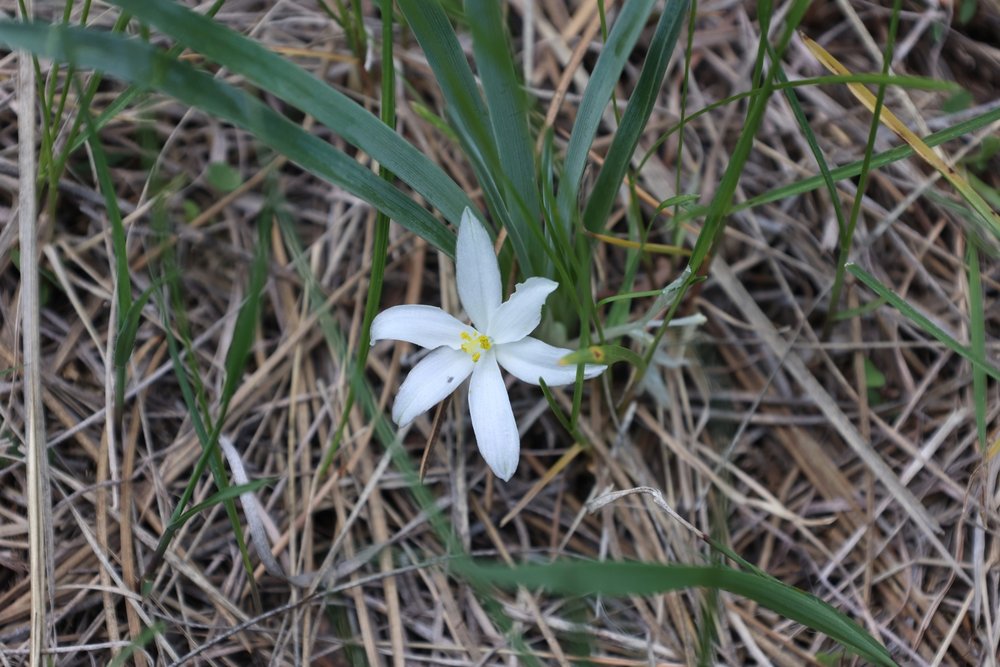
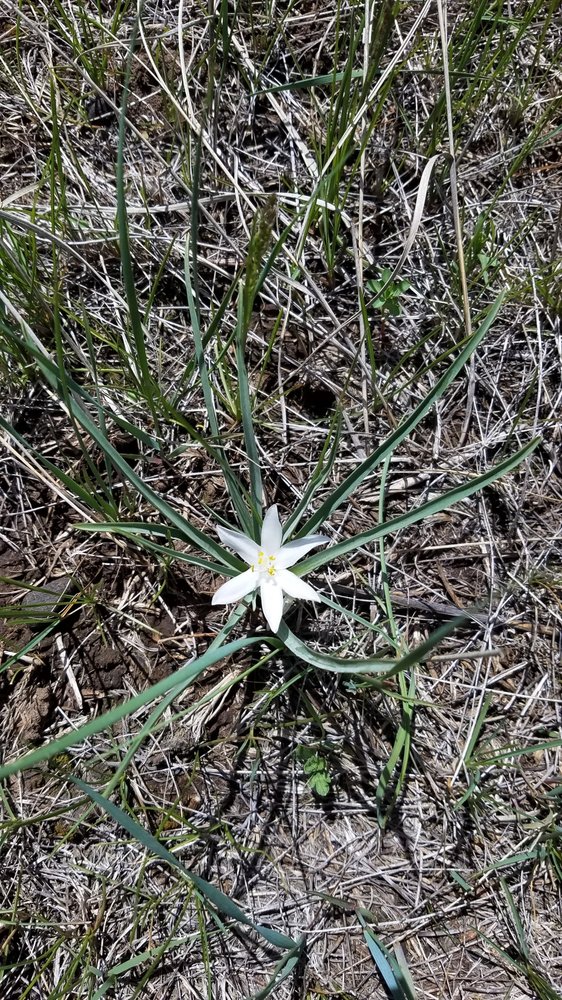
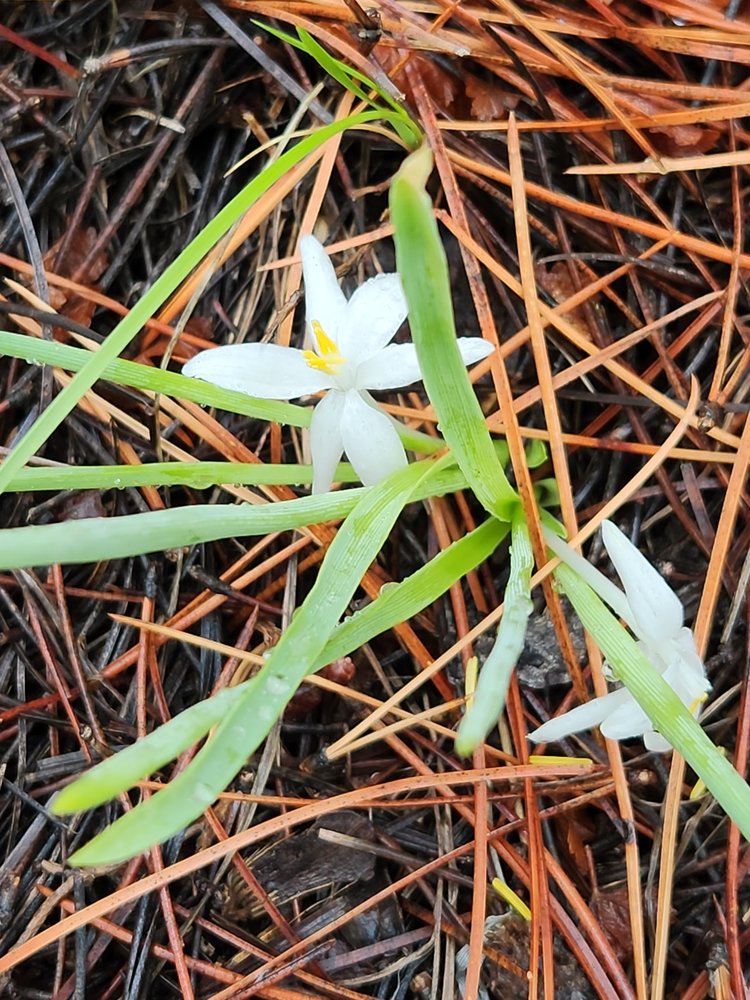
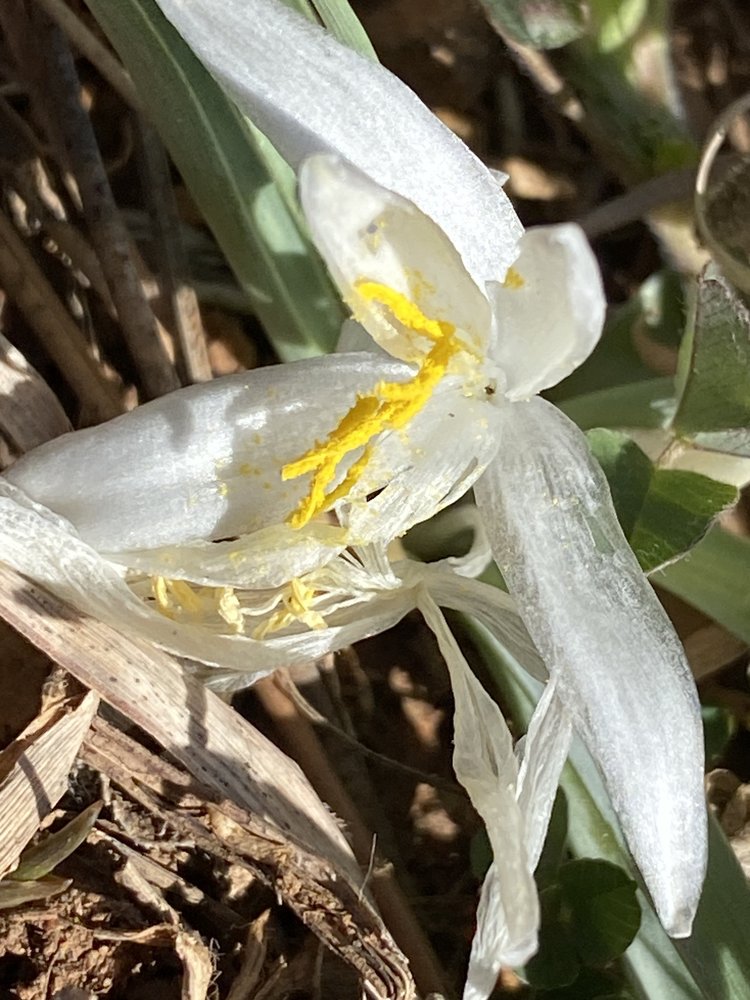
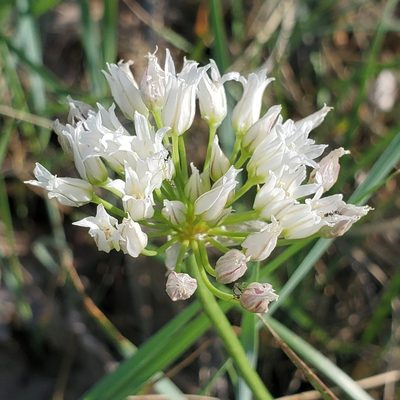
Common Starlily (Leucocrinum montanum) is a native perennial with fragrant, white, six-pointed flowers that sit right at ground level in a tuft of grass-like leaves, with no stem at all. One of the first wildflowers of the Black Hills spring, it blooms in April and May on dry grassland, rocky slopes and open pine woods, and the National Park Service lists it at Wind Cave, Jewel Cave and Devils Tower.
Free photos from other sources
| Family | Asparagaceae · Asparagus |
|---|---|
| Status | Native perennial |
| Blooms | April into May, with a few into early June |
| Height | 5–10 cm (2–4 in) |
| Where | Dry grassland, rocky or sandy slopes and open pine woods |
| Also called | Sand Lily, Star Lily, Mountain Lily, yapízapi iyéčheča (Lakota) |
| Synonym | Leucocrinum montanum var. majus, Leucocrinum montanum var. fibrosum |
| Toxicity | An 1889 report passed on a claim that it is deadly to sheep after the fruit forms; no test or later source confirms it. |
| Traditional use | Black Elk and Flying By's 1998 Culturally Important Plants of the Lakota (Sitting Bull College) says the roots were roasted or cooked in soups and stews, and a root poultice was put on sores and swellings. |
Roots, seeds & germination
Root: A short crown sits a few centimeters below the surface on a cluster of thick, fleshy, cord-like roots, with no bulb. The plant comes up in early spring, flowers and dies back to the roots by early summer.
Seed: The fruit is a small three-sided capsule, 5–8 mm, that ripens underground and splits to release a few black, angled seeds 3–4 mm long. How the seeds reach the surface is still debated.
Germination: Little is published, and no tested protocol was found. Seed is hard to collect because it ripens below ground, and an early report found most dug-up seeds damaged by insects and the sound ones failed to sprout.
How do you identify Common Starlily?
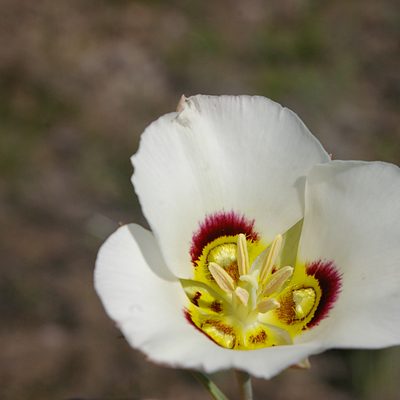
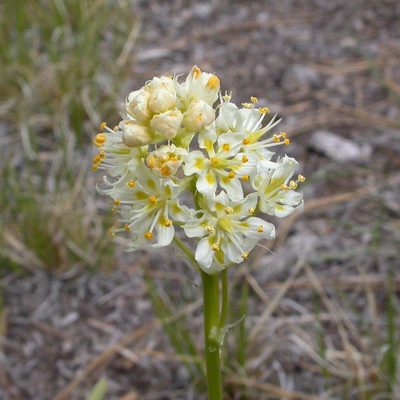
Look for a white, six-pointed star about 4–5 cm (1½–2 in) across, sitting right on the ground in a spray of narrow, grass-like leaves 10–20 cm (4–8 in) long, with no flower stalk at all. The six tepals are alike, pure white and slightly glossy, around six bright yellow anthers, and the flower smells sweet. The ovary stays buried at the crown, so the seed pod ripens underground and the leaves vanish by summer. Sego Lily blooms later, on a stem 15–45 cm (6–18 in) tall, with three broad petals in a cup, and Meadow Deathcamas has many small flowers in a spike on a tall stem.
When does it bloom?
April into May, with a few into early June.
Where does it grow?
Open, sunny, well-drained ground: dry grassland and prairie, rocky or sandy slopes, sagebrush and openings in ponderosa pine woods. GBIF holds herbarium specimens from every Black Hills county, from about 1,030 to 1,920 m (3,400–6,300 ft). The National Park Service lists it at Wind Cave, Jewel Cave and Devils Tower, and iNaturalist also has records from Custer State Park.
Other flowers to compare
Sources: Flora of North America Vol. 26: Leucocrinum (genus treatment, Reveal & Utech); Flora of North America Vol. 26: Leucocrinum montanum; USDA PLANTS Database: Leucocrinum montanum (LEMO4); GBIF: Leucocrinum montanum (taxonomy, Asparagaceae; herbarium specimens); Marriott & Hartman 1986, Vegetation of Jewel Cave National Monument (NPS); NPSpecies checklist: Wind Cave National Park vascular plants; NPSpecies checklist: Jewel Cave National Monument vascular plants; NPSpecies checklist: Devils Tower National Monument vascular plants; Black Elk & Flying By 1998, Culturally Important Plants of the Lakota (Sitting Bull College); Kathy Keeler, A Wandering Botanist: The mysterious star-lily, sand-lily (2020); Wikipedia: Leucocrinum (classification history, APG III/IV, NatureServe ranks); NC State Extension Gardener Plant Toolbox: Leucocrinum montanum; iNaturalist: Common Starlily observations; Black Hills Flowers: Sego Lily.