Meadow Deathcamas
Toxicoscordion venenosum
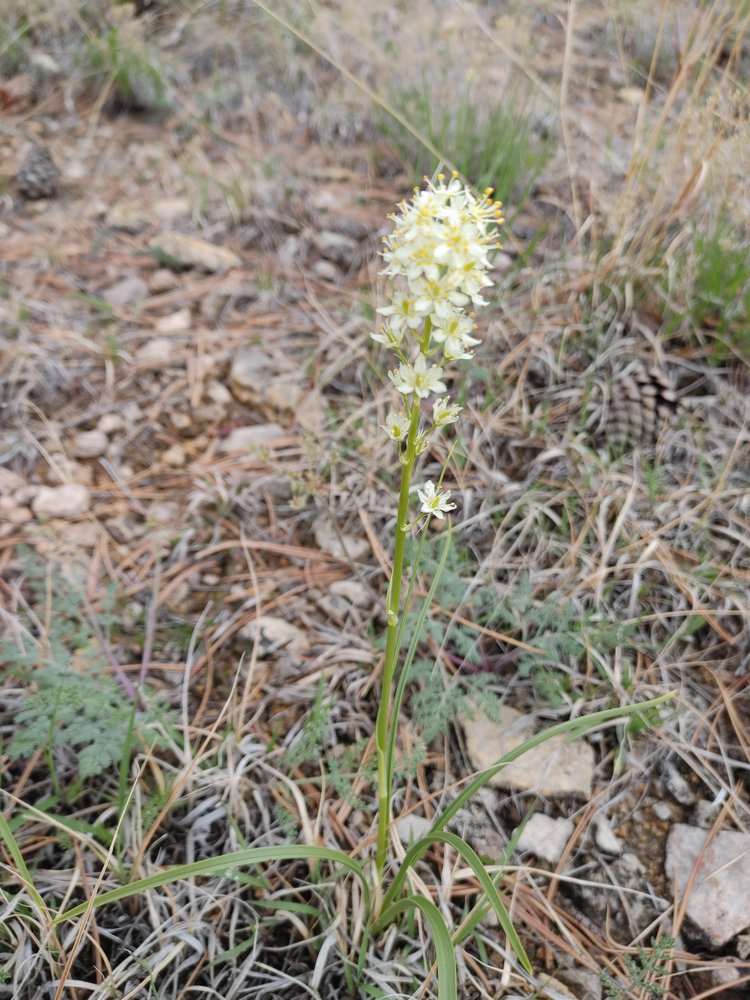
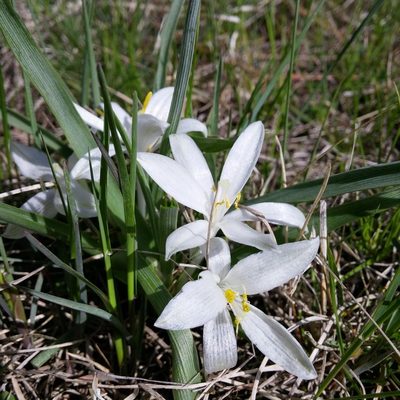
Meadow Deathcamas (Toxicoscordion venenosum) is a native perennial that grows from a bulb and sends up a dense spike of small cream-white flowers above grass-like leaves. It blooms from late April into June in grassy openings, prairie and open pine across the lower and middle Black Hills, and every part of the plant is deadly poisonous to people and livestock.
Free photos from other sources
| Family | Melanthiaceae · Bunchflower |
|---|---|
| Status | Native perennial |
| Blooms | Late April through June, peaking in May |
| Height | 15–70 cm (6–28 in) |
| Where | Grassy openings, prairie, rocky hillsides and open ponderosa pine |
| Also called | Death Camas, Grassy Deathcamas, Poison Camas, Poison Onion, pšíŋ hublóka (Lakota) |
| Synonym | Zigadenus venenosus, Zygadenus venenosus, Zigadenus gramineus, Toxicoscordion gramineum, Zigadenus venenosus var. gramineus, Toxicoscordion venenosum var. gramineum |
| Toxicity | Every part of the plant, bulb, leaves, flowers and seeds, contains steroidal alkaloids, chiefly zygacine, that can kill people and livestock, and dried plants stay poisonous for at least 20 years. |
| Traditional use | Black Elk and Flying By's 1998 Culturally Important Plants of the Lakota (Sitting Bull College) records it, with Mountain Deathcamas, as highly poisonous and avoided. |
| Note | Black Hills plants are the variety gramineum, grassy deathcamas. |
Roots, seeds & germination
Root: An egg-shaped, layered bulb 1–4 cm (½–1½ in) wide, sitting 5–20 cm (2–8 in) underground, with a few short roots. The bulb lives through fire and drought, and the plant regrows from it each spring.
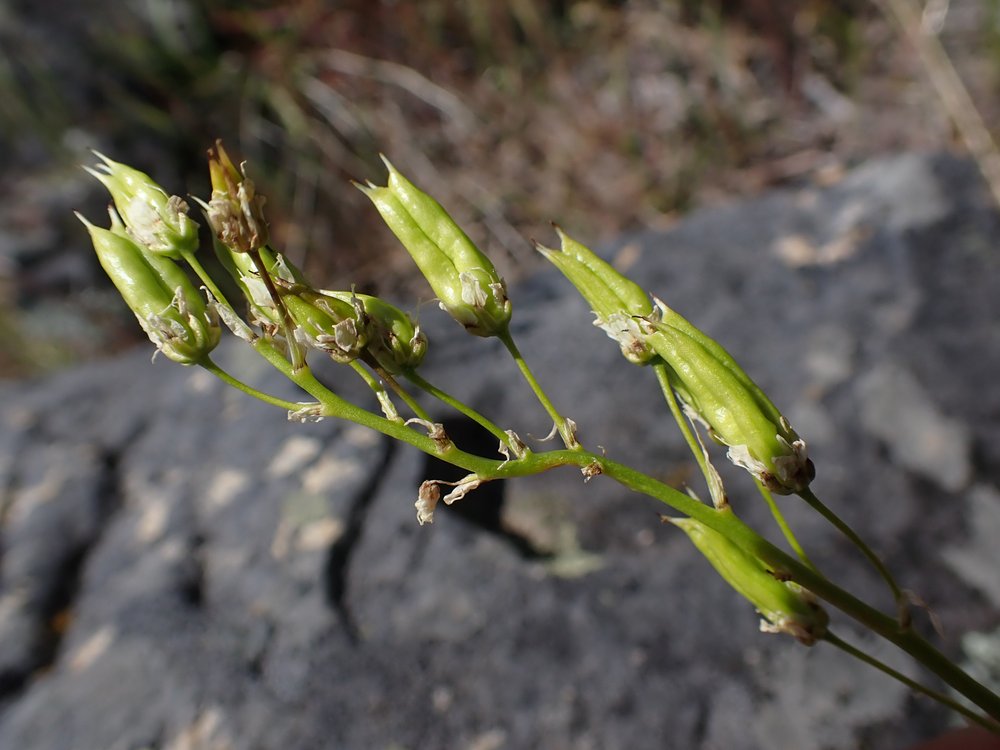
Seed: An upright, three-lobed capsule that dries and splits at the top to release small light-brown seeds, which ripen in July and August. The seeds are poisonous too.
Germination: The seed needs a cold, moist winter. In USDA trials, seed kept cold and moist for 90 days germinated at 90 percent, while untreated seed did not sprout at all. Seedlings form a small bulb the first year and take up to three years to flower.
How do you identify Meadow Deathcamas?
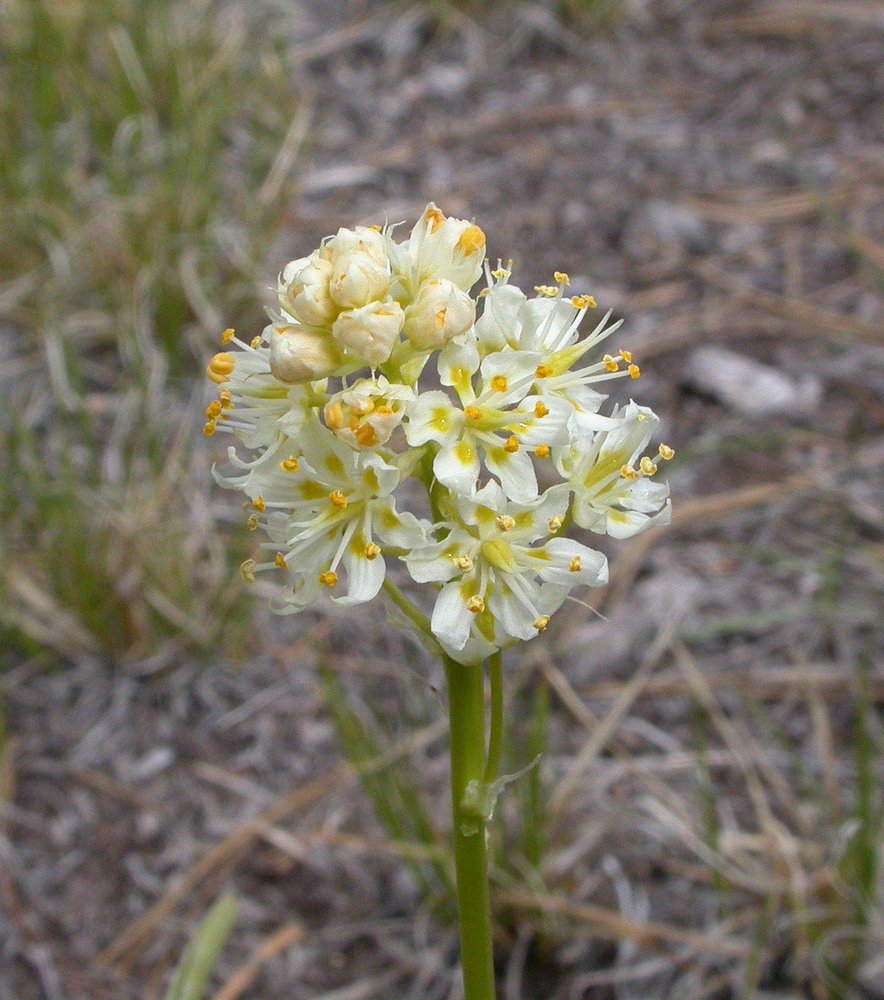
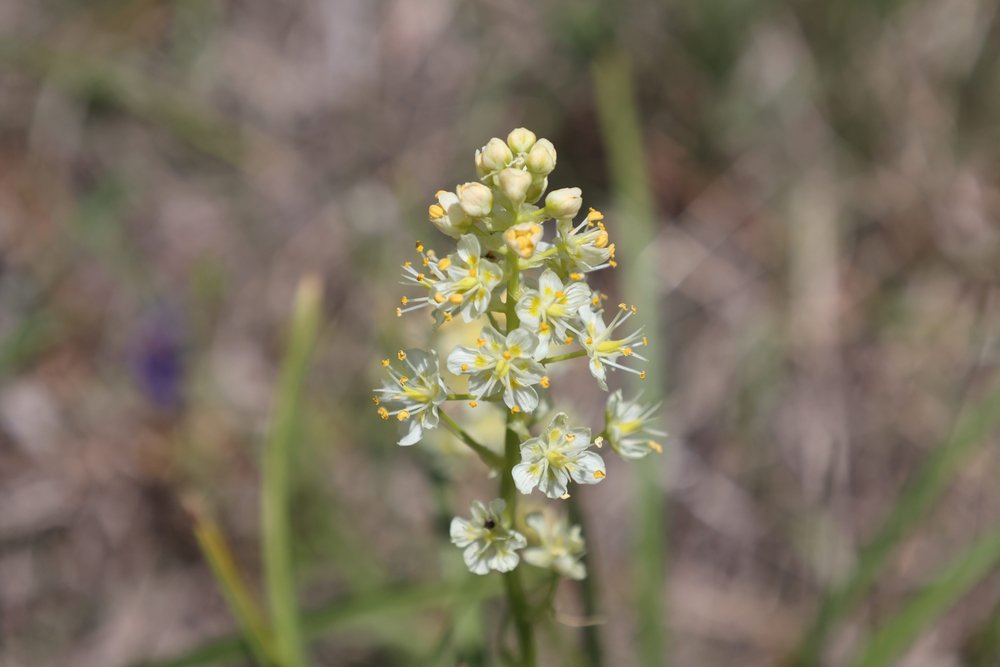
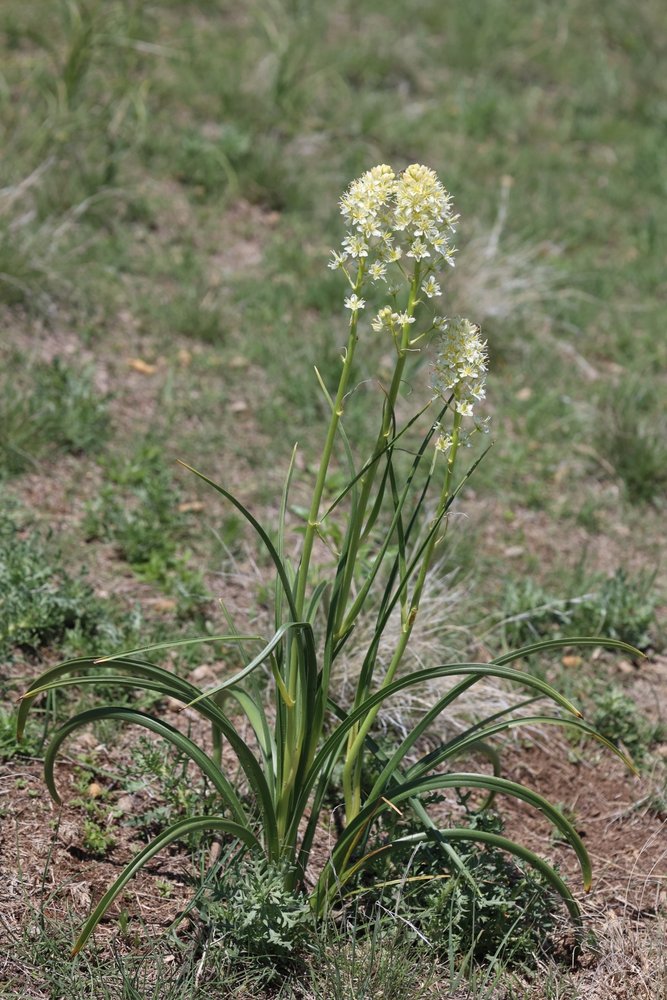
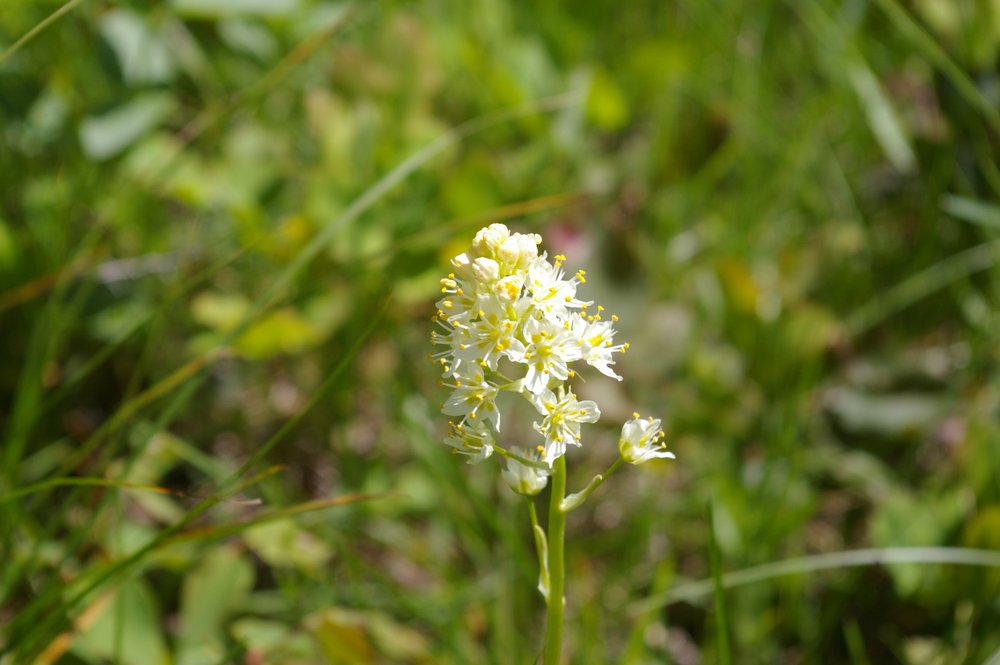
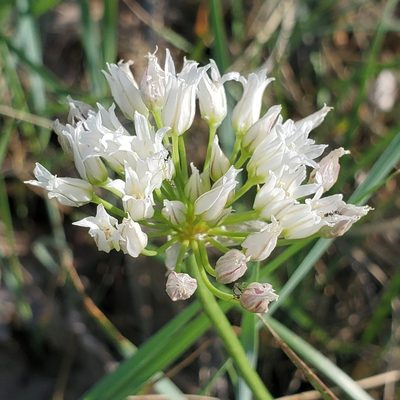
Look for a single stem 15–70 cm (6–28 in) tall ending in a dense, pointed spike of many small cream-white flowers, each with six tepals about 6 mm (¼ in) long, a yellowish-green spot at the base of each tepal, and stamens that stick out. The leaves are mostly at the base, grass-like, up to about 1 cm (⅜ in) wide and folded lengthwise into a V. The bulb and leaves look like a wild onion's, but deathcamas has no onion smell when crushed. Textile Onion, white and blooming in the same weeks and places, smells of onion and holds its flowers in a rounded umbel on a leafless stem. Mountain Deathcamas has larger, looser greenish-white flowers with a dark green, heart-shaped gland on each tepal.
When does it bloom?
Late April through June, peaking in May.
Where does it grow?
Sunny or lightly shaded grassland, meadows, rocky hillsides, open ponderosa pine and pine-oak woods and roadside banks, often on sandy, rocky or shallow soils, including the red soils of the Red Valley. Black Hills specimens run from 905 to 1,898 m (2,970–6,230 ft), and GBIF holds 114 from all seven Black Hills counties. The 1986 Jewel Cave survey lists it, the National Park Service records it at Wind Cave, Jewel Cave and Devils Tower, and iNaturalist has records from Custer State Park.
Other flowers to compare
Sources: USDA NRCS Plant Guide: Meadow Deathcamas, Zigadenus venenosus (Tilley & St. John 2013), archived PDF; USDA ARS Poisonous Plant Research Laboratory: Deathcamas (Zigadenus gramineus, Z. venenosus, Z. paniculatus, Z. nuttallii); Welch, Panter, Gardner & Stegelmeier 2012. The Good and the Bad of Poisonous Plants: an Introduction to the USDA-ARS Poisonous Plant Research Laboratory. J. Medical Toxicology 8:153–159; Welch et al. 2016. The Effect of Co-Administration of Death Camas (Zigadenus spp.) and Low Larkspur (Delphinium spp.) in Cattle. Toxins 8(1):21; Marsh & Clawson 1924. The Meadow Death Camas (Zygadenus venenosus) as a Poisonous Plant. USDA Department Bulletin 1240 (Internet Archive); USFS Fire Effects Information System: Zigadenus venenosus, meadow deathcamas; USDA PLANTS Database: Zigadenus venenosus (ZIVE); University of Washington ESRM 412 Plant Data Sheet: Death Camas; SDSU Open PRAIRIE, Native Plant Profiles: Zigadenus elegans (mountain death camas); SDSU Open PRAIRIE, Native Plant Profiles: Allium textile (textile onion); Manske 2017. Autecology of White Wild Onion on the Northern Mixed Grass Prairie. NDSU Dickinson Research Extension Center DREC 17-1126; US EPA Greenacres: Nodding Onion (Allium cernuum) (archived); American Southwest: Anticlea elegans, mountain death camas; American Southwest: Toxicoscordion venenosum, meadow death camas; Southwest Colorado Wildflowers: Anticlea and Toxicoscordion compared; Wikipedia: Toxicoscordion venenosum (summary of FNA, Kingsbury 1964, Cane et al. 2020); Marriott & Hartman 1986. Vegetation of Jewel Cave National Monument; NPSpecies checklist, Wind Cave National Park vascular plants; NPSpecies checklist, Jewel Cave National Monument vascular plants; NPSpecies checklist, Devils Tower National Monument vascular plants; Black Elk & Flying By 1998. Culturally Important Plants of the Lakota (Sitting Bull College), filed with SD PUC; GBIF occurrence search: Toxicoscordion venenosum, preserved specimens, South Dakota and Wyoming; iNaturalist: Toxicoscordion venenosum research-grade observations, Black Hills area.