Nodding Onion
Allium cernuum
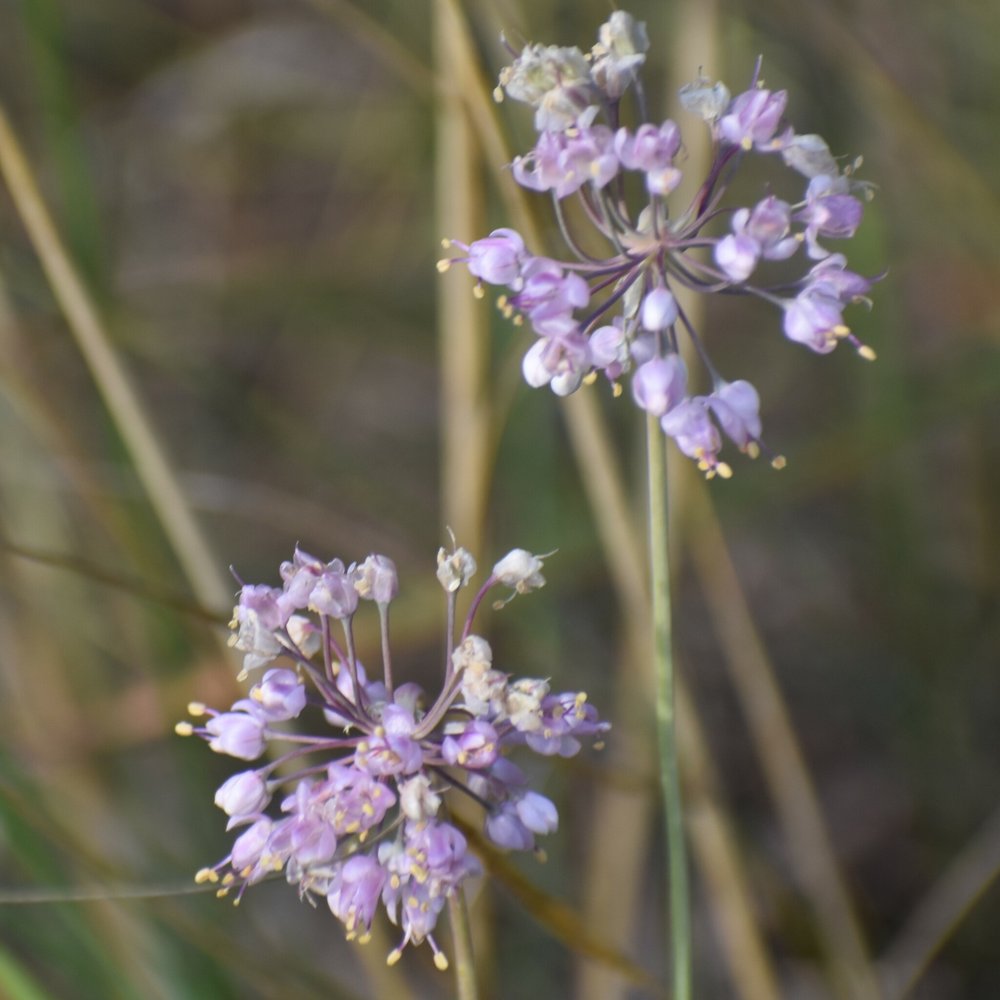
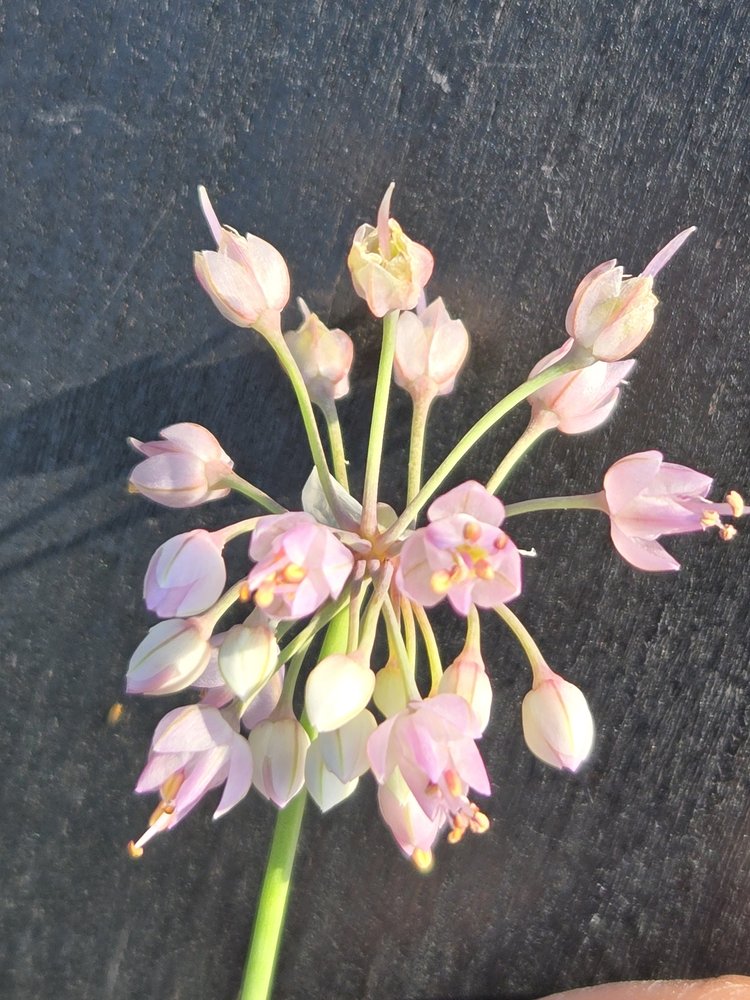
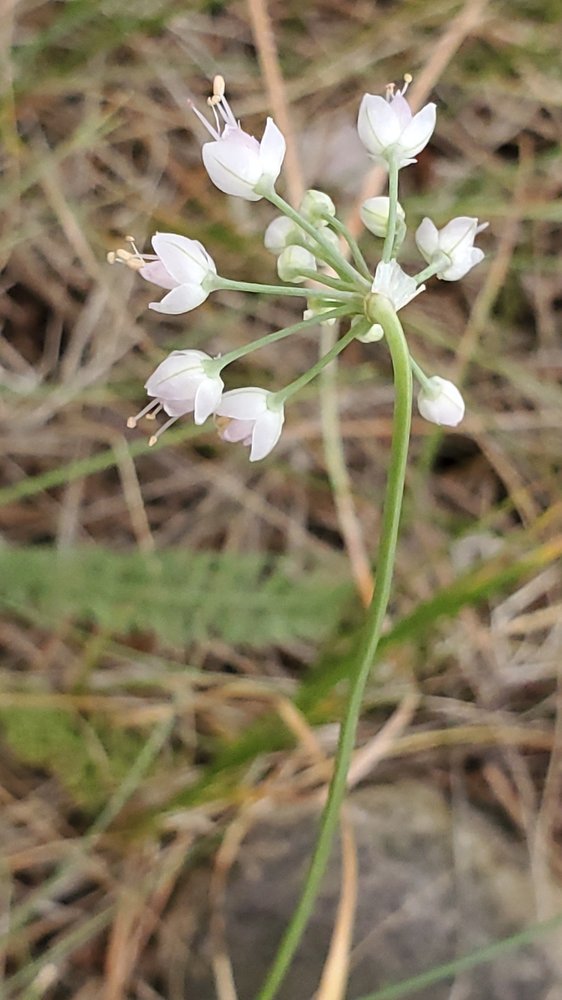
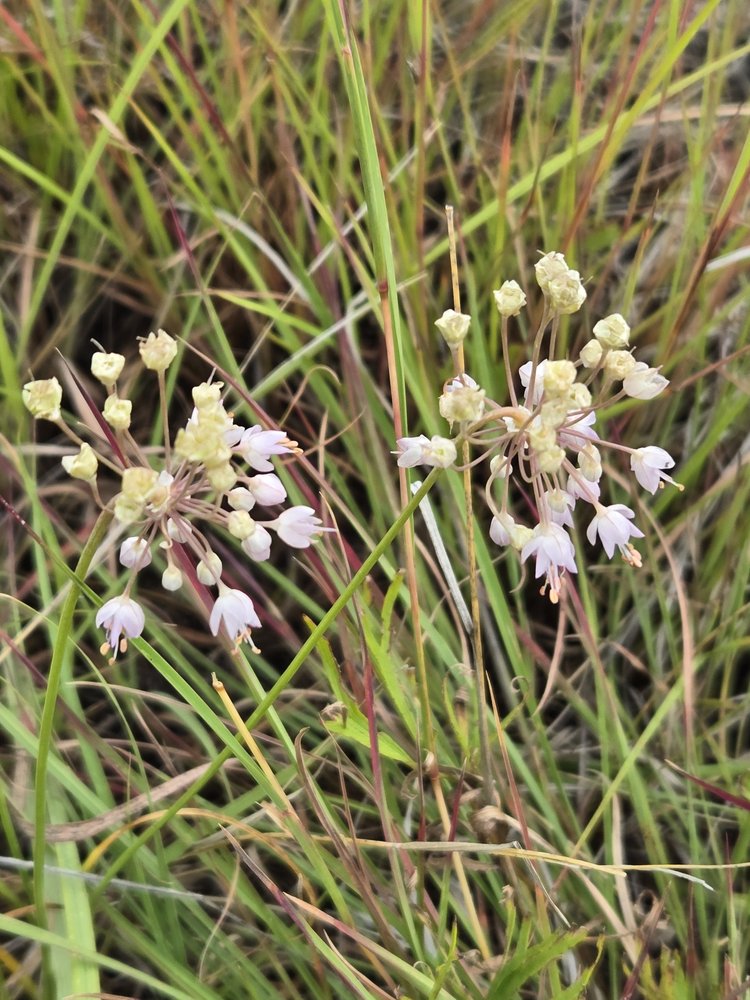
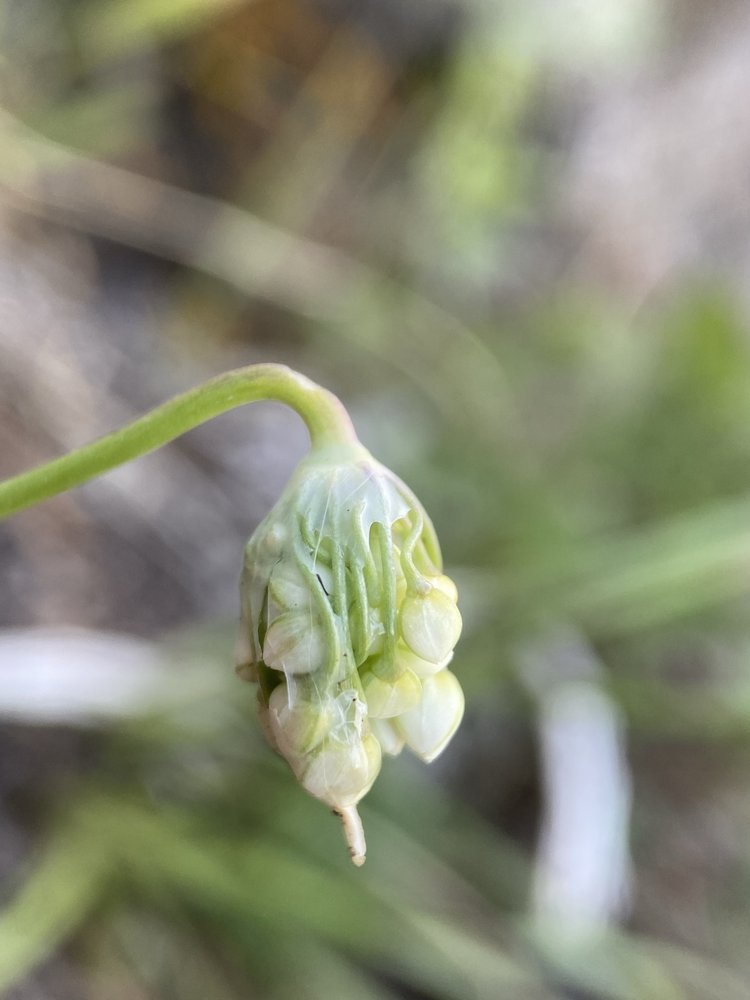
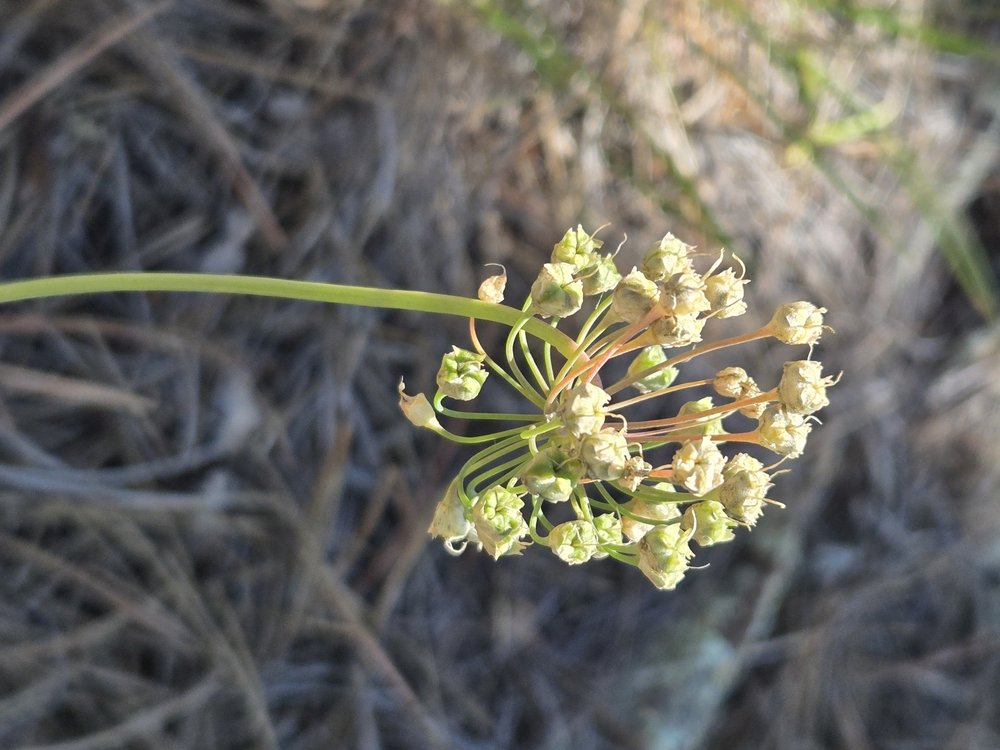
Nodding Onion (Allium cernuum) is a native wild onion with a loose cluster of small pink to nearly white flowers that hangs from the sharply bent top of a leafless stem. It blooms in July and August in open pine forest, meadows and rocky slopes of the Black Hills, mainly in the central and southern Hills, and the whole plant smells of onion when crushed.
Free photos from other sources
| Family | Amaryllidaceae (subfamily Allioideae) · Amaryllis |
|---|---|
| Status | Native perennial |
| Blooms | July through August, a few into early September |
| Height | 20–60 cm (8–24 in) |
| Where | Open ponderosa pine forest, grassy meadows and rocky slopes |
| Also called | Nodding Wild Onion, Wild Onion, pšíŋ šičámna (Lakota) |
| Synonym | Allium cernuum var. obtusum, Allium cernuum var. neomexicanum, Allium recurvatum, Allium allegheniense, Allium oxyphilum, Allium alatum, Allium nutans |
| Traditional use | Sitting Bull College's 1998 Culturally Important Plants of the Lakota says the Lakota cooked wild onions in soups and stews or ate them raw, and rubbed them on bee and wasp stings. The entry covers the wild onions as a group. |
| Note | The Lakota name pšíŋ šičámna, "wild onion", covers the wild onions as a group. |
Roots, seeds & germination
Root: A narrow, cone-shaped bulb that tapers up into the stem, often in clumps of several faintly pink bulbs, with fine roots from its base. Over time the bulb divides and a single plant forms a small cluster.
Seed: A small three-lobed capsule about 4 mm (⅛ in) long splits into three parts, each holding one or a few glossy black, angular seeds about 2–3 mm long. The seed ripens from late August into September and drops easily.
Germination: Fall sowing outdoors gives the seed the cold, moist period it likes; Prairie Moon Nursery suggests 60 days of cold, moist treatment before spring sowing, and the Eastern Illinois University seedling guide gives 30 days. British Columbia trials found untreated seed sprouted best in warm conditions, with the first seedlings after about two weeks.
How do you identify Nodding Onion?
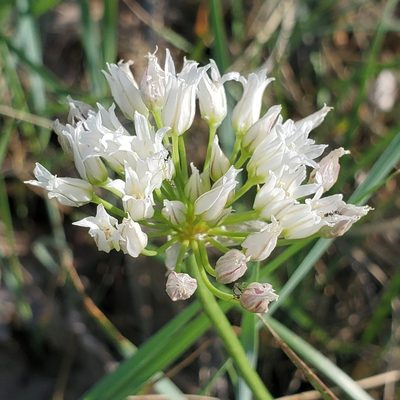
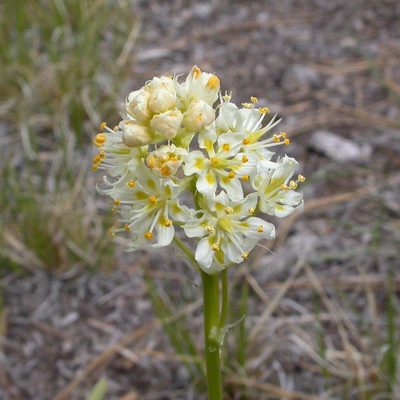
Look for a smooth, leafless flower stem 20–60 cm (8–24 in) tall that bends over at the top like a shepherd's crook, so the cluster of a dozen or more small bell-shaped flowers hangs upside down. The pale pink to rose-lavender flowers have six tepals, the stamens and style stick out past them, and even the bud nods. The grass-like leaves all grow near the base, and a crushed leaf smells strongly of onion. Textile Onion has white flowers in an upright cluster in May and June. Meadow Deathcamas, which is deadly and grows in the same openings, has cream-white flowers strung along an upright spike, V-folded leaves and no onion smell.
When does it bloom?
July through August, a few into early September.
Where does it grow?
Sunny or lightly shaded places: open ponderosa pine forest and pine parkland, grassy meadows in the pines, rocky granite and limestone slopes, road banks and gulches, from about 1,070 to 2,020 m (3,500–6,620 ft). The 1986 plant survey of Jewel Cave lists it, and the National Park Service lists it at Wind Cave and Mount Rushmore. About 97 herbarium specimens from 1892 to 2011 come from Pennington, Custer, Lawrence and Fall River counties in South Dakota and Crook and Weston counties in Wyoming, including the Black Elk Wilderness and the Spearfish Canyon area.
Other flowers to compare
Sources: Black Elk & Flying By 1998. Culturally Important Plants of the Lakota (Sitting Bull College), filed with SD PUC; Gilmore 1919. Uses of Plants by the Indians of the Missouri River Region, BAE 33rd Annual Report (Internet Archive full text); Native American Ethnobotany Database (BRIT): Allium cernuum uses; Native American Ethnobotany Database (BRIT): Allium uses recorded for Lakota; USDA PLANTS Database: Allium cernuum Roth, nodding onion (ALCE2); Gleason & Cronquist 1991, Manual of Vascular Plants of NE US & Canada, via NYBG World Flora: Allium cernuum; Minnesota Wildflowers: Allium cernuum (Nodding Wild Onion); Prairie Moon Nursery: Allium cernuum, Nodding Onion; BC Ministry of Forests, Native Seed Manual: Allium cernuum; University of Washington ESRM 412 propagation protocol: Allium cernuum (Brooks 2006); Eastern Illinois University Prairie Seedling Guide: Allium cernuum; Kansas Wildflowers & Grasses: Allium stellatum (pink wild onion); SDSU Open PRAIRIE, South Dakota Native Plant Research: Allium stellatum; SDSU Open PRAIRIE, Native Plant Profiles: Allium textile (textile onion); Native Plant Society of New Mexico, Wildflowers of New Mexico: Allium geyeri; USDA ARS Poisonous Plant Research Laboratory: Deathcamas; Marriott & Hartman 1986. Vegetation of Jewel Cave National Monument; NPSpecies checklist, Wind Cave National Park vascular plants; NPSpecies checklist, Jewel Cave National Monument vascular plants; NPSpecies checklist, Mount Rushmore National Memorial vascular plants; NPSpecies checklist, Devils Tower National Monument vascular plants; GBIF occurrence search: Allium cernuum, preserved specimens, South Dakota and Wyoming; GBIF species page: Allium cernuum Roth (synonyms); iNaturalist: Allium cernuum research-grade observations, Black Hills area.