Fireweed
Chamaenerion angustifolium
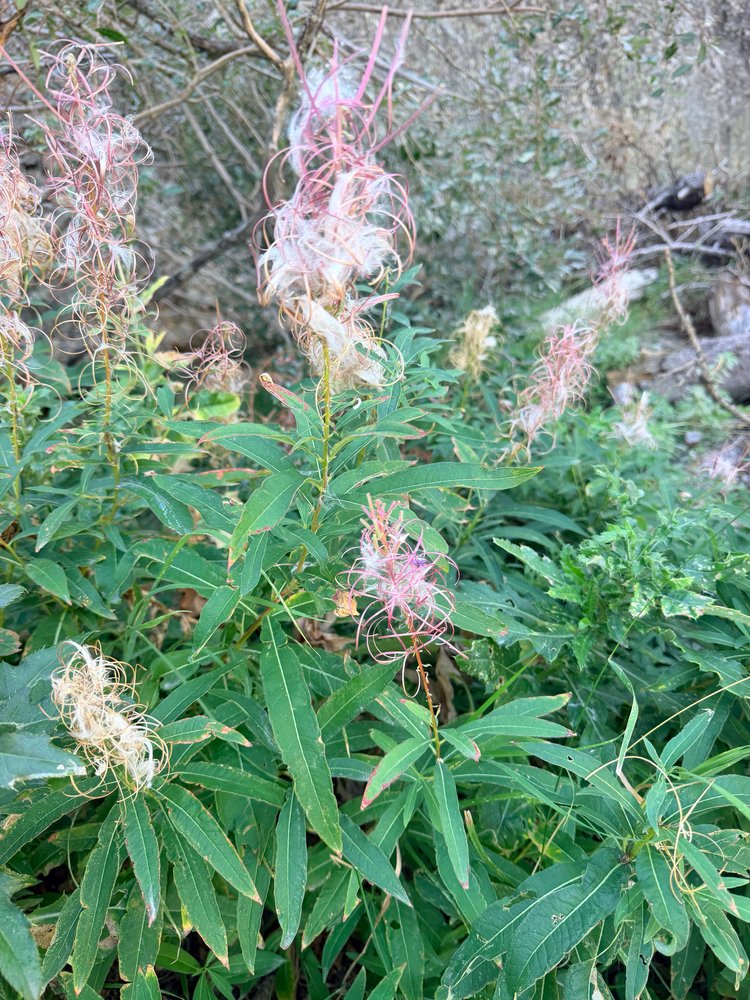
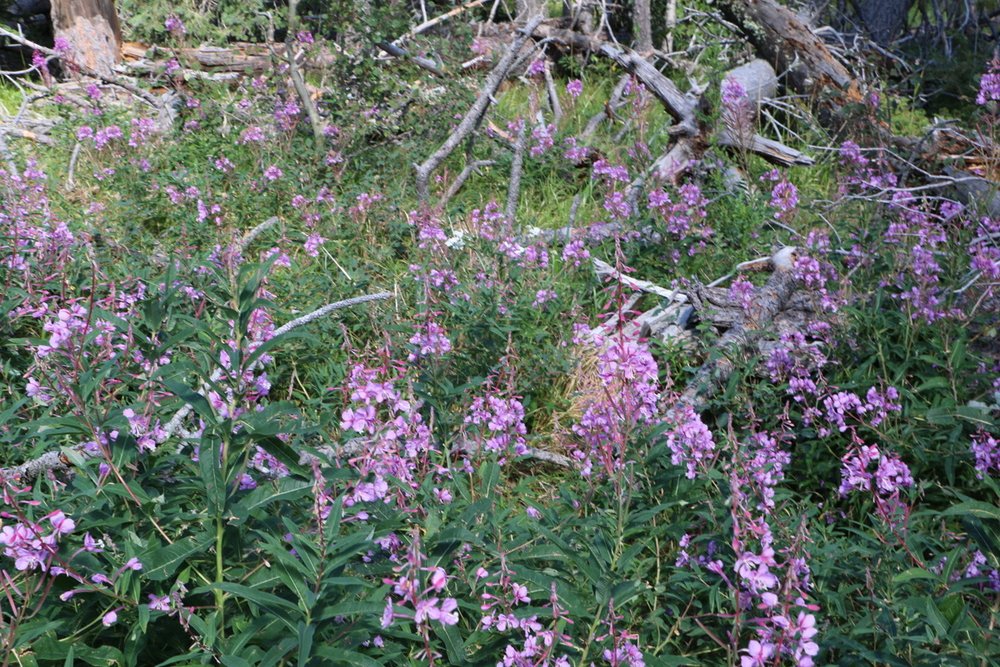
Fireweed (Chamaenerion angustifolium) is a tall native perennial with long spikes of magenta, four-petaled flowers that open from the bottom up from June into September. It spreads by shallow underground runners and is named for the way it fills in burned ground; it also comes up on logged ground and roadsides, and in the Black Hills it grows in the pine and spruce forest, where the National Park Service lists it at Wind Cave, Jewel Cave and Mount Rushmore.
Free photos from other sources
| Family | Onagraceae · Evening Primrose |
|---|---|
| Status | Native perennial |
| Blooms | June into September |
| Height | 30–200 cm (12–79 in) |
| Where | Burns, logged and cleared ground, roadsides, rocky openings and stream edges in pine and spruce forest |
| Also called | Great Willowherb, Rosebay Willowherb, Narrow-leaved Fireweed, Blooming Sally |
| Synonym | Chamerion angustifolium, Epilobium angustifolium, Chamerion angustifolium subsp. circumvagum, Epilobium angustifolium subsp. circumvagum, Epilobium angustifolium var. canescens, Pyrogennema angustifolium |
| Traditional use | Grinnell's 1972 account of the Cheyenne says they drank a tea of the dried leaves or roots for bowel bleeding. |
Roots, seeds & germination
Root: A woody crown with long, shallow rhizomes 0.5–2 cm (¼–¾ in) thick that can run 0.5–5 m (1½–16 ft), sending up new shoots along the way. Most rhizomes lie in the top 15 cm (6 in) of soil, and rhizomes that survive a fire sprout again, as soon as 20 to 30 days after a July or August burn.
Seed: A slender, gray-hairy pod 4–9.5 cm (1½–3¾ in) long splits into four strips that curl back to release 300–500 tiny seeds, each with a tuft of silky white hairs that carries it on the wind. One plant can make about 80,000 seeds a year, but most seeds lose viability within 18 to 24 months, so they don't build up in the soil.
Germination: Sources disagree on a cold period: the USDA plant guide and the Fire Effects Information System say fresh seed isn't dormant and most of it sprouts within about 10 days in warm, moist conditions, while SDSU calls the seed dormant and recommends 60 days of cold, moist treatment before spring sowing. SDSU and the Fire Effects Information System say it needs light to sprout, and the USDA guide found it does best sown on the surface or barely covered; the Fire Effects Information System adds that it needs bare mineral soil.
How do you identify Fireweed?
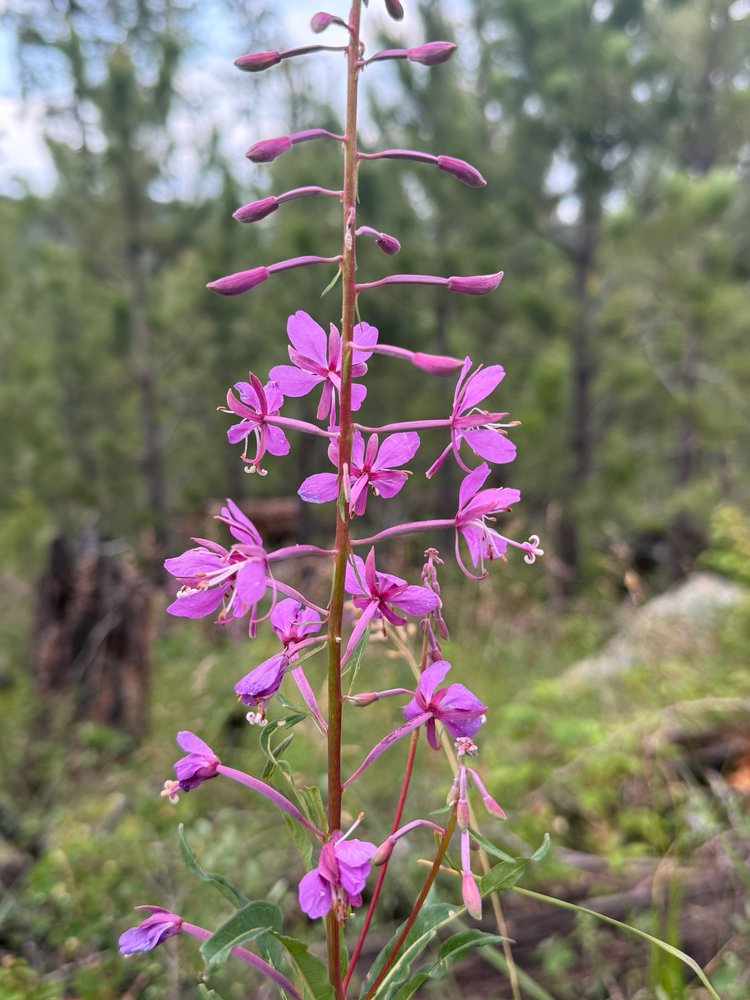
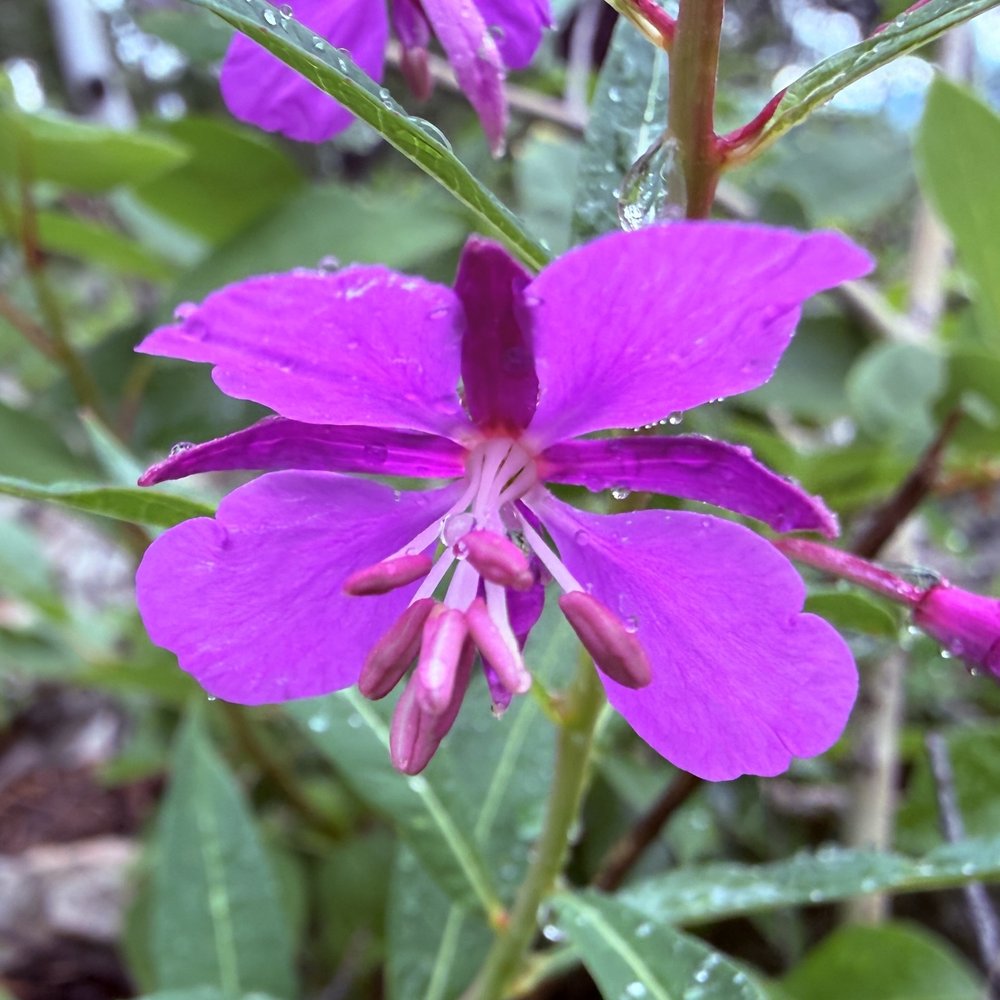
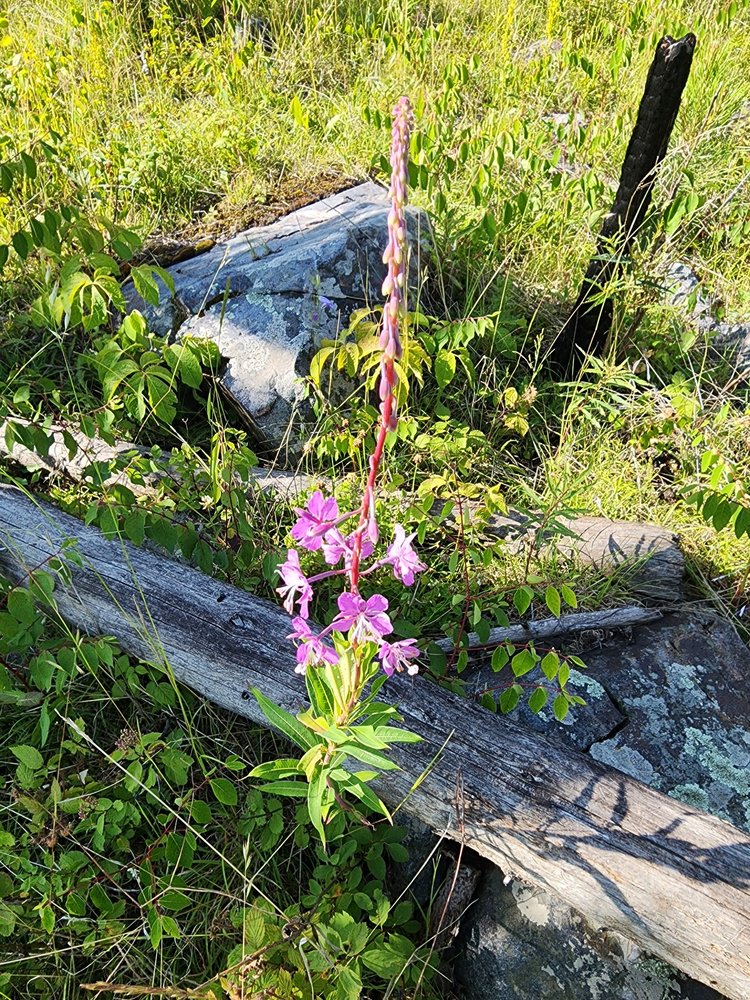
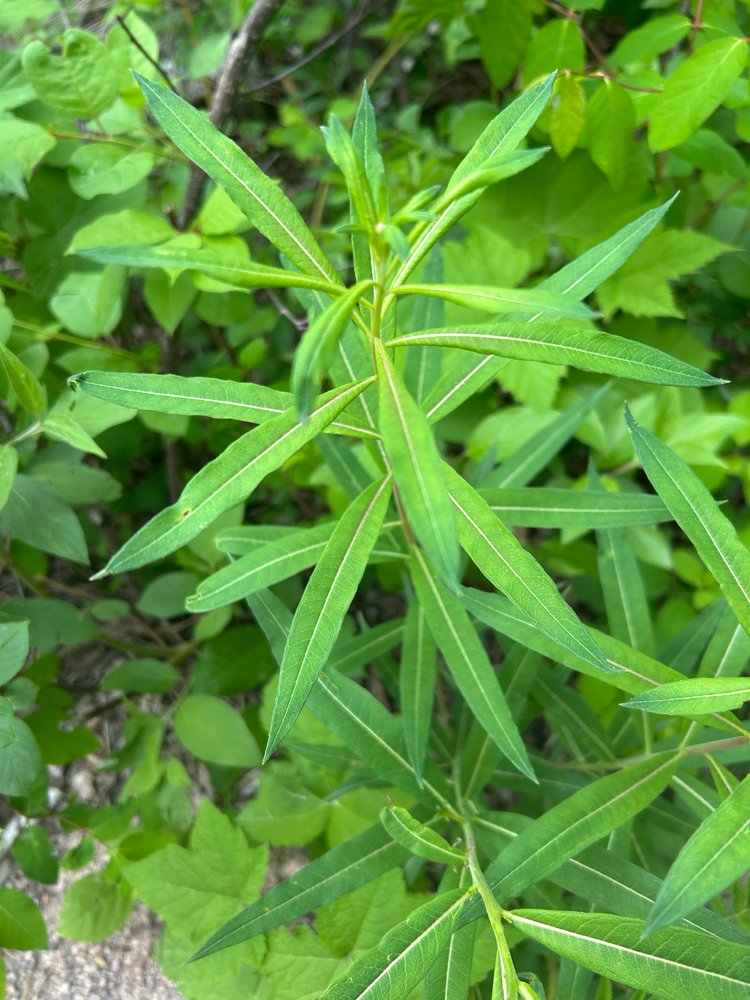
Look for a single, usually unbranched stem topped by a long spike that flowers from the bottom up, so one stalk can carry seed pods below, open flowers in the middle and drooping buds at the tip. Each magenta flower is about 2.5 cm (1 in) across, with 4 rounded petals, narrow darker sepals between them and a long white style ending in a 4-lobed stigma curled back like a cross. The narrow, willow-like leaves spiral up the stem, and their side veins join a vein that loops just inside the edge.
When does it bloom?
June into September.
Where does it grow?
Open, disturbed ground in pine and spruce forest: burns, logged ground, roadsides and road cuts, rocky slopes and talus, and moist spots along creeks. Herbarium labels from 1924 to 1940 record it on burned ground near Hill City, Deerfield and Pactola. The 1986 plant survey of Jewel Cave lists it, the National Park Service lists it at Wind Cave and Mount Rushmore, and specimens come from Custer State Park, Spearfish Canyon, Lawrence, Pennington and Custer counties, and Crook and Weston counties in Wyoming.
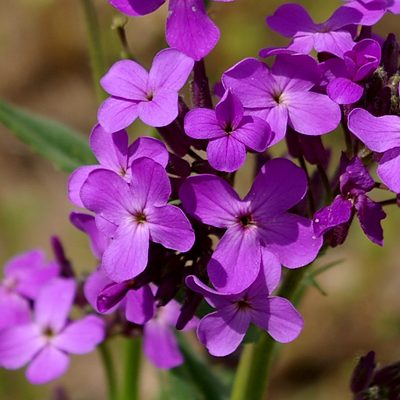
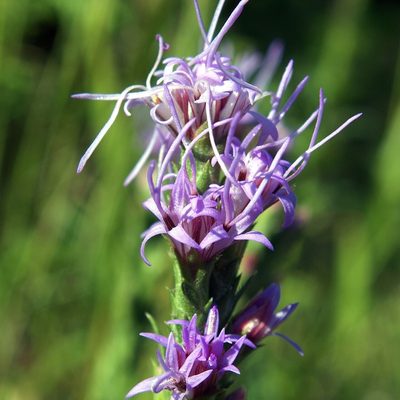
Other flowers to compare
Sources: Marriott and Hartman 1986, A Survey of the Vegetation of Jewel Cave National Monument; NPSpecies checklist, Wind Cave National Park vascular plants; NPSpecies checklist, Jewel Cave National Monument vascular plants; NPSpecies checklist, Mount Rushmore National Memorial vascular plants; Flora of North America Vol. 10: Chamaenerion angustifolium (P. C. Hoch), eFloras; Flora of North America Vol. 10: Chamaenerion angustifolium subsp. circumvagum, eFloras; Flora of North America Vol. 10: genus Chamaenerion (name discussion), eFloras; USDA PLANTS Database: Chamerion angustifolium (CHAN9); USDA NRCS Plant Guide: Fireweed, Chamerion angustifolium (Fleenor 2016); USDA Forest Service Fire Effects Information System: Chamerion angustifolium (Pavek 1992); SDSU Open PRAIRIE: Onagraceae: Chamerion angustifolium ssp. circumvagum (R. Neil Reese); GBIF occurrence search: Chamaenerion angustifolium, South Dakota and Wyoming herbarium specimens; GBIF specimen 2512285633: McIntosh 1924, east of Hill City, "gulches of burned over hill"; GBIF specimen 2512288634: McIntosh 1929, Castle Valley near Deerfield, "in burned gulch"; GBIF specimen 6416865303: Ginter 1928, Sylvan Lake Hill, "old burns, weed type"; GBIF specimen 1988634700: Johnson 1940, Pactola, "burnt-over area"; iNaturalist: research-grade fireweed observations in the Black Hills; Native American Ethnobotany Database (BRIT): Chamerion angustifolium; University of Alaska Fairbanks Cooperative Extension, FNH-00106 Fireweed; U.S. Fish and Wildlife Service: Fireweed (Liebich and Hupp, 2021); Minnesota Wildflowers: Chamaenerion angustifolium (Fireweed); Culturally Important Plants of the Lakota (Black Elk and Flying By, 1998), filed with the South Dakota PUC (checked; fireweed not listed); Gilmore 1919, Uses of Plants by the Indians of the Missouri River Region (checked; fireweed not listed).